Prices from Amazon AU, updated daily. Swipe or use the arrows for more.
Disclosure: This article contains affiliate links to amazon.com.au. If you buy through one of these links iFix may earn a small commission at no extra cost to you. It doesn't change which products we recommend. We focus on what actually lasts based on 16 years of repair-shop experience.
Quick summary9 picks
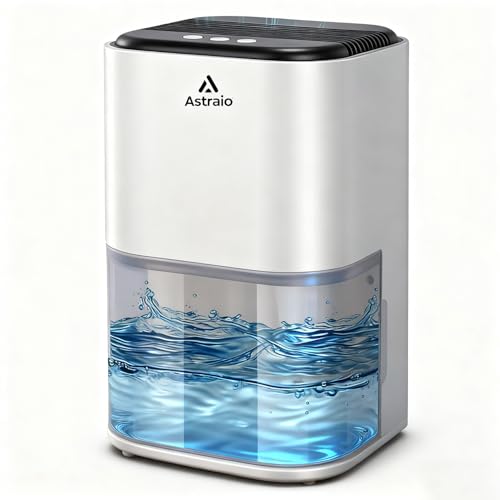
- Entry Pick2000ML Dehumidifiers for Room Damp about$72.66
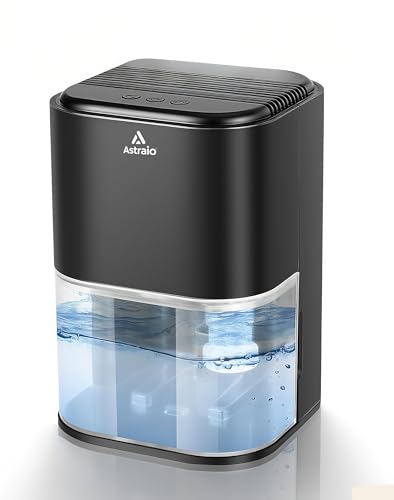
- 2000ML Dehumidifiers for Home about$65.01
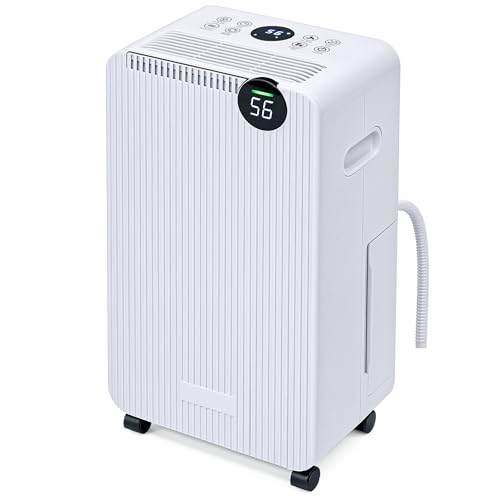
- YOPOWER 15L/Day Dehumidifier for Home Smart… about$159.99
- B: Best Honest Spec Sheet for a Laundry or Spare RoomAusclimate Compact 12L Dehumidifier about$343
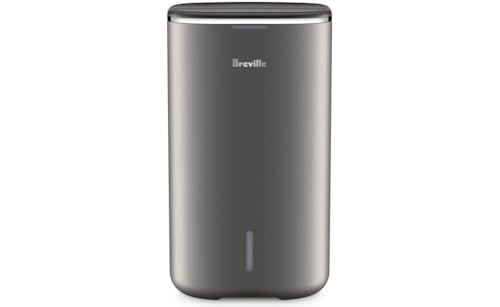
- Breville the Smart Dry Connect Dehumidifier about$349
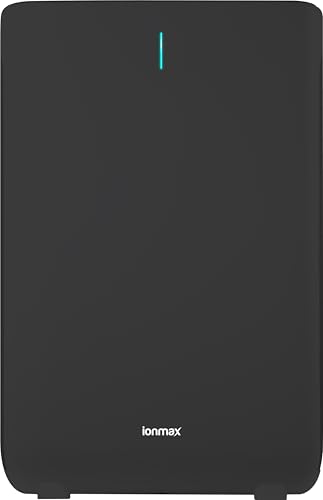
- IONMAX VENTA 8L All Seasons Desiccant… about$428
- Breville about$449
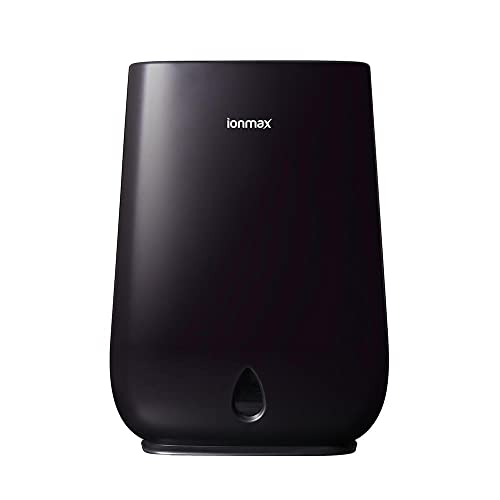
- Most PremiumIonmax Vienne ION630 10L/Day Desiccant… about$492.00
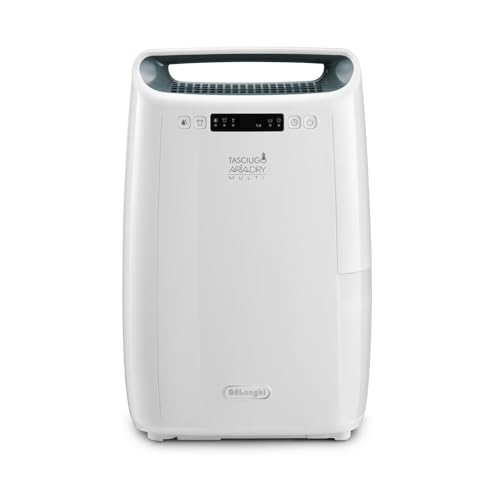
- De'Longhi Tasciugo AriaDry Multi… about$499
Why a repair tech cares about the humidity in your lounge room
Every winter on the Central Coast the same thing happens. The house is shut tight, the heater runs, two people shower, the clothes airer sits in the spare room because it is raining again. By 7am the windows are streaming. That water was in the air at 9pm, and the air gave it up the moment it touched the coldest surface in the room. Glass is usually the coldest surface. It is not the only one.
A laptop that was shut down overnight is cold. So is the back of a TV, the chassis of a games console, the aluminium body of a phone on a windowsill. Damp air condenses onto those surfaces exactly as it does onto the glass, in smaller amounts and in places you cannot see. Over one night that is nothing. Over a winter of nights it is a repeated wetting and drying cycle on a printed circuit board, and that is precisely how corrosion starts. I have written up the mechanism on our water damage explained page, but the short version is that copper traces, solder joints and connector pins grow green and white deposits, resistance creeps up, and one day a keyboard row stops or a HDMI port goes intermittent. The customer swears the thing never got wet. They are right. It got damp, which is slower and harder to prove.
We see this at the Erina workshop every August: MacBooks with corrosion around the keyboard flex, TVs with green fuzz on the T-con board, phones with crusty charge-port pins that have never been near a pool. Coastal salt in the moisture makes the deposits conductive sooner. A dehumidifier will not fix anything already corroded, and this is not a health article. I am talking about boards, timber and possessions, because that is what lands on the Central Coast repair bench and that is what I can actually see.
Compressor or desiccant: the only decision that really matters
There are two ways to pull water out of air and they fail in different places. A compressor dehumidifier is a small fridge: a fan pulls room air over an evaporator coil chilled below the dew point, water condenses and drips into a tank, and the air leaves over the warm condenser coil slightly warmer and drier. The Ausclimate and YOPOWER units here are compressor designs; the Breville Smart Dry listing does not say.
The weakness is cold. As the room drops toward 10 °C the evaporator coil runs below freezing, ices over, airflow collapses, and the machine stops to defrost. The Ausclimate listing states an operating range of 5 to 32 °C with auto defrost, which is honest: it will run at 8 °C but spend much of that time melting its own coil rather than drying your room. Extraction in a cold room is a fraction of the headline. Compressor units also carry a refrigerant charge, a start relay and a run capacitor, and the last two are what we see fail most.
A desiccant dehumidifier has no compressor and no refrigerant. Air passes through a slowly rotating wheel coated in a moisture-absorbing material, an electric element heats a section of the wheel to drive the moisture off, and it condenses on a cool plate into the tank. Because there is no coil to freeze, extraction stays roughly constant down to a few degrees above zero. Breville lists the All Climate 2-in-1 as a desiccant type and says as much: more efficient at lower temperatures than compressor units. The trade is that a heating element draws real power, the outlet air is noticeably warm (in a Central Coast July, a feature), and the wheel drive and heater thermal cut-out become the failure points instead of the compressor. Quieter too, usually. No compressor hum, only fan noise.
My rule after 16 years: an unheated bedroom, a garage workshop, a south-facing study that never gets above 14 °C, buy desiccant. A living room the heater holds at 20 °C, a laundry, a unit with the reverse-cycle running, a compressor unit does the job for less electricity.
The litres-per-day number is a lab number
Every dehumidifier is sold on a litres-per-day figure, and the industry test condition for that figure is 30 °C and 80% relative humidity. The Ausclimate listing says so explicitly (12 L/day at 30 °C and 80% RH). The others do not state the test condition. That is a Darwin wet-season room. It is not a Gosford bedroom at 13 °C and 70% RH in July.
Warm air holds far more water than cold air, and a compressor unit works on the gap between coil and air temperature. Shrink the gap and the water shrinks with it, before you count defrost cycles. So a unit rated 12 L/day will do somewhere in the region of 3 to 5 L in a cold Australian room, and a 15 L/day unit will not do three times the work of a 5 L/day one in that same room. Nobody is lying. The number is just measured somewhere you do not live. The figure I actually want, extraction at 20 °C and 60% RH, none of these four state.
This is also the way to read the YOPOWER listing. Fifteen litres a day for $179.99 against Breville's 10 L/day for $352 looks like Breville has lost the argument. Neither side has. The 15 L figure is a rating-condition figure like everyone else's, and under that test it is probably a larger compressor and coil than the Breville, which is genuinely useful. What the extra money buys with Breville is an Australian service presence, a named humidity sensing system with an indicator light, an app, and a conservative room-size figure (30 m2). What the YOPOWER money buys is a marketplace-brand unit sold by the brand itself with a stated one-year warranty and a drain hose in the box. Both are real products. You are paying for different things, and support matters more on a machine with a compressor in it than on a kettle.
Tank, hose and where the water goes
A 2.1 or 2.4 L tank sounds reasonable until you do the arithmetic. A unit actually pulling 4 L a day from a damp room fills a 2.4 L tank in about 14 hours. It will then stop on the float switch and sit there doing nothing until someone notices. In a spare room that is a weekend. The Ausclimate lists a 2.4 L tank. The YOPOWER lists a 2.1 L tank plus a continuous drain hose in the box. Breville states no tank capacity for either unit, so check before you order.
Continuous drain is a small barbed spigot on the back of the unit that accepts a length of tube and lets the water run by gravity into a floor waste, a laundry tub, or out under a door. It is the single most useful feature on a unit you intend to run all winter. The hose end must sit lower than the spigot, and a hose that kinks or rises backs up and trips the float switch as though the tank were full. On the YOPOWER, continuous drain is listed. On the Ausclimate and the two Brevilles it is not stated one way or the other, which is a question for the retailer.
One bench note. The float switch is a magnet on a plastic float and a reed switch on the board. Scale and biofilm build up over a season, the float sticks, and the unit either refuses to run with an empty tank or keeps running with a full one and overflows onto your floorboards. Wash the tank with mild detergent fortnightly. Thirty seconds, and it prevents a soggy-floor phone call.
Humidistat accuracy and what auto mode is actually doing
Every unit here has a humidistat: a sensor that switches the machine on when the room is wetter than your setpoint and off when it is drier. Breville calls its version SensAir and puts an indicator light on it. The YOPOWER uses a colour LED: blue below 50% RH, green from 50 to 70, red above 70. The Ausclimate states a variable humidistat with electronic touch controls. How useful each is depends on two things no listing states: sensor accuracy and sensor position.
Consumer humidity sensors are a small capacitive element with a polymer film whose capacitance changes as it absorbs water vapour. They are decent, and they drift. The ones we pull from failed boards are often 5 to 10 points off after a couple of years, and they are usually mounted at the air inlet, which is the driest air in the room once the unit has run a few minutes, because the unit is drying it. The result is short-cycling: runs, reads dry, stops, reads damp twenty minutes later, starts. It still works. It just never holds the room quite where the display says.
A $15 hygrometer on the far side of the room tells you the truth. If the display says 50% and the bookshelf says 62%, set the machine 10 points lower than your target and move on. The number I aim for in a room with electronics in it is 50 to 55% RH. Below 40% you start getting static, its own problem for boards, and you are paying to dry air that is already dry. If you run a humidifier somewhere else in the house in the same season, and people do, put the two in different rooms with a closed door between them or they will simply feed each other.
Laundry mode, which the Breville All Climate and the YOPOWER both list, is the machine ignoring the humidistat and running flat out. The Ausclimate's clothes-dryer claim is the same thing with a different label. It is not a tumble dryer, but it will get jeans wearable overnight in a small closed room. The electricity is not free.
What it costs to run, honestly
None of these four listings states a power draw, so I will not invent one. What I can tell you is where the two technologies generally sit. A small compressor dehumidifier in this class commonly draws somewhere between 150 and 300 W while the compressor is running, and close to nothing when it has cycled off on the humidistat. A desiccant unit has a heater in it, so it commonly draws 300 to 600 W, and it draws that whenever it is drying.
At the Australian average tariff of roughly 33c per kWh (my assumption; check your own bill), 250 W costs a bit over 8c an hour, and 500 W costs about 16.5c an hour. Run a compressor unit 8 hours a day and you are looking at around 66c a day, give or take what the humidistat does. A desiccant unit doing the same hours is closer to $1.30, but it is also putting a few hundred watts of heat into the room, so if you were going to run an oil column heater in there anyway, part of that cost is shifted rather than added.
The way to stop guessing is a plug-in energy monitor for a week. I keep a few in the workshop for exactly this, and the ones I rate are in our smart energy monitor guide. You learn what it draws and how much of the day the humidistat has it off. The second number is usually the surprise: a well-set compressor unit in a closed room spends more than half the day idle once it has caught up.
Electrical safety is simple here. These are not high-draw appliances, so a standard 10 A socket (2,400 W limit) is under no strain, but plug it straight into the wall, not the same powerboard as a heater. Check the cord and plug, and look for the RCM compliance mark on the rating plate, particularly on a marketplace-brand unit. A compressor's start current is a brief spike well above its running draw, which is why a tired powerboard with a heater on it sometimes trips when the dehumidifier kicks in.
What to check before you buy, and how to make it last
Room size first, and be honest about doors. The figures here (Breville Smart Dry 30 m2, YOPOWER 25 m2, Breville All Climate 50 m2) assume a closed room. An open-plan living area with a staircase is not a room, it is a building, and a 10 L/day unit in the middle of it will run all day and barely move the needle. Close the door, and put the unit in the room that has the problem, not the room that has the powerpoint.
Then temperature: below about 15 °C for most of the winter, desiccant; heated, compressor. Then drainage: decide now whether you will empty a tank daily or run a hose, because that decides where the unit lives. Then noise, which no listing here states in decibels. A compressor unit has a hum and a fan; a desiccant has only a fan. For a bedroom, the YOPOWER is the only listing that mentions a sleep mode.
Making it last is mostly about the filter and the fan. Every unit here pulls air through a mesh pre-filter; the YOPOWER's is listed as washable and the Breville All Climate adds a HEPA-13 stage, a consumable, and how I feel about consumables is in the air purifier guide. A blocked pre-filter starves the coil, the coil ices, defrost runs more often and the fan works harder. Rinse it monthly. When the fan bearing starts to tick or whine, a fan motor is usually a sensible repair on a $350 unit. A failed compressor usually is not.
Last: the auto-restart feature the Ausclimate lists matters more than it sounds. Coastal power flickers. A unit without auto-restart stops after a blip and stays off until someone notices, and in a spare room that is a week of damp. If you already have a UPS on the home office gear, the dehumidifier does not need one. It just needs to turn itself back on.
The 4 picks, $180 to $449
Prices are Amazon AU at time of writing (15 August 2026) and move week to week. Ranks are Amazon AU category sales ranks, checked the same day.

Breville the Smart Dry Connect Dehumidifier (LAD208WHT)
ASIN B09S5PH75D • $352.00 • Ships from Amazon AU
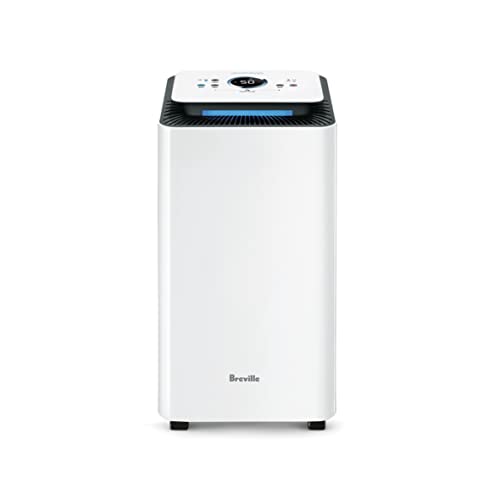
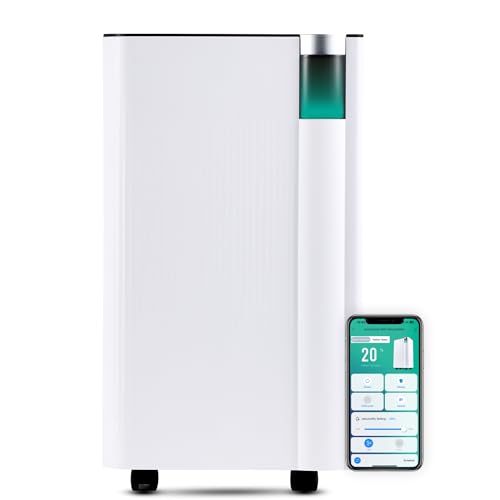
The Smart Dry Connect is the small Breville, rated on the listing at 10 L/day and for small rooms up to 30 m2. That 30 m2 figure is the most conservative room-size claim of the four for its extraction rating, and I read that as Breville being sensible rather than timid. A bedroom, a study, a closed lounge room with the heater on: that is the job. At $352 it is not being sold on litres. It is being sold on SensAir, which is Breville's name for a live humidity sensor driving the on-off cycling, with an indicator light so you can see at a glance whether the room is where you asked it to be. Set it and leave it is the whole pitch.
The other thing you are paying for is Wi-Fi. Breville Home Connect puts the humidity reading and the controls on your phone, and the listing adds Alexa and Google voice control. On a dehumidifier that sounds like a gimmick until you have a spare room at the other end of the house. Being able to check the reading from the couch, or turn it on from work before a wet weekend, is the difference between a unit that runs when it should and one that sits idle because nobody walked past it. It is also the thing most likely to date: app servers get retired, and a unit that depends on one for its best features is a unit whose best features have an expiry you do not control. The buttons still work when that happens. Buy it for the buttons and treat the app as a bonus.
Breville is a brand with Australian service channels, and on a machine with a compressor and a refrigerant charge in it that matters. I would still expect it to be a compressor design, which means the cold-room limits I described above apply, but the listing does not state the technology, the tank size, the operating range or the power draw, so treat those as questions for the retailer. For a heated living space where you want the humidity held without thinking about it, it is the one I would put my own money on.
Honest caveats: The listing does not state the tank capacity, whether there is a continuous drain port, the operating temperature range, the noise level or the power draw. It also does not state the dehumidifier type, and I am assuming compressor. At 10 L/day under test conditions, expect a fraction of that in a cold room. App features depend on Breville keeping the service running.
Best for: A heated bedroom, study or closed lounge room up to 30 m2 where you want set-and-forget humidity control and a reading on your phone.
Extraction: 10 L/day (test conditions not stated) • Room size: Small rooms up to 30 m2 • Humidity control: SensAir live humidity control with indicator light • Connectivity: Wi-Fi via Breville Home Connect app; Alexa and Google voice control • Tank: Not stated on the listing • Type: Not stated on the listing (assumed compressor) • Price: $352 at time of writing • Rank: #106 in Heating, Cooling & Air Quality (Amazon AU)
View on Amazon AU
Ausclimate Compact 12L Dehumidifier
ASIN B0F4KJMK75 • $259.00 • Ships from Amazon AU
The Ausclimate is the only listing of the four that tells you the test condition behind its headline: up to 12 L/day at 30 °C and 80% RH. That is the same condition everyone else is almost certainly using, but putting it in writing is the kind of thing I want from a brand that sells dehumidifiers and not much else. It also states an operating range of 5 to 32 °C with auto defrost, which is the second most useful line on any of these listings, because it tells you what the machine will do at 8 °C on a July morning: run, ice, defrost, run again. Slowly. The 2.4 L tank with auto shut-off is the largest stated tank here, and the electronic touch controls and variable humidistat mean you pick a percentage rather than a vague low-medium-high.
The feature I would buy it for is auto-restart after a power cut. That sounds minor until you have left a unit running in a spare room for a fortnight in winter, come back after a storm took the power out for four minutes on day two, and found the room exactly as damp as you left it. A machine that picks itself up after a blip is a machine that is actually doing the job you bought it for while you are not watching. The listing also states it is usable as a clothes dryer, which in practice means a run-continuously mode for a rack of washing in a closed room. It is a compressor unit, which means it is the right pick for a heated room or a laundry that stays above about 15 °C, and the wrong pick for an unheated garage.
At $259 it sits below the Breville Smart Dry on price and offers more stated extraction and a stated tank size, but no app, no voice control and no branded sensor system. Ausclimate is an Australian dehumidifier specialist, and for a unit that is going to run unattended for months in a laundry, a spare room or a closed study, that is the spec sheet I would trust over the one with Wi-Fi. Check the current listing for drain port and noise level, neither of which is stated here.
Honest caveats: Continuous drain, noise level, room-size figure and power draw are not stated on the listing. The 12 L/day figure is at 30 °C and 80% RH, so real-world extraction in a cold Australian room will be a fraction of that. Compressor design: it will spend time in defrost below about 10 °C.
Best for: A laundry, spare room or closed study that stays above about 15 °C, where you want a plain, clearly specified unit that runs unattended and restarts itself.
Extraction: Up to 12 L/day at 30 °C and 80% RH • Tank: 2.4 L with auto shut-off when full • Controls: Electronic touch controls, variable humidistat • Operating range: 5 to 32 °C, auto defrost • Power cut: Auto-restart • Laundry: Usable as a clothes dryer • Type: Compressor • Price: $259 at time of writing • Rank: #270 in Heating, Cooling & Air Quality (Amazon AU)
View on Amazon AU
Breville the All Climate 2-in-1 Dehumidifier and Purifier (LAD358TTM2IAN1)
ASIN B0DJV633J4 • $449.00 • Ships from Amazon AU
This is the one I would send home with anyone whose damp room is also a cold room. The listing states it is a desiccant type and says why: more efficient at lower temperatures than compressor units. There is no coil to freeze, so the 8 L/day headline does not collapse at 10 °C the way a compressor unit's does, and the outlet air comes out warm because the desiccant wheel is regenerated by a heating element. In an unheated south-facing bedroom on the Central Coast in July, that is not a side effect. It is half the reason to buy it. The listing rates it for spaces up to 50 m2, the largest here, and pairs the dehumidifier with a HEPA-13 purification stage, which is why Amazon has it ranked in Air Purifiers rather than with the other three.
The control side is the same SensAir set-and-forget humidity system as the Smart Dry, with the Breville Home Connect app and Alexa and Google voice control, plus a Laundry mode that overrides the humidistat and runs flat out for a rack of washing. The desiccant mechanism also makes it the quietest architecture of the four on paper: no compressor hum, only a fan and the faint sound of the wheel turning. What it costs you is electricity. A desiccant unit draws its heater whenever it is working, and while the listing does not give a figure, units of this type commonly sit in the 300 to 600 W range when drying. At 33c per kWh that is roughly 10c to 20c an hour while running. That heat goes into the room, so in winter it partly replaces a heater you might run anyway.
The HEPA-13 stage is a consumable, and the listing does not state the filter life or the replacement part price, so look both up before you buy, because on a two-in-one the filter is the repayment schedule. At $449 it is the most expensive unit here, and it earns that only if your room is cold. In a heated lounge room the Ausclimate or Smart Dry will pull the same water for less electricity. For a cold bedroom, a garage study or a granny flat without heating, nothing else on this list is the right tool.
Honest caveats: Tank size, continuous drain, noise level, power draw, HEPA filter life and replacement filter price are not stated on the listing. Desiccant units draw more electricity than compressor units while running and push warm air into the room, which is unwelcome in summer. The 8 L/day figure is lower than the compressor units' headlines, but holds up better in the cold.
Best for: An unheated or cold room up to 50 m2 (bedroom, garage study, granny flat) where a compressor unit would spend half its time in defrost, and where the HEPA stage is a bonus.
Type: Desiccant (listing: more efficient at lower temperatures than compressor units) • Extraction: Up to 8 L/day • Room size: Up to 50 m2 • Purification: HEPA-13 stage • Humidity control: SensAir set-and-forget • Connectivity: Breville Home Connect app; Alexa and Google • Laundry mode: Yes • Price: $449 at time of writing • Rank: #49 in Air Purifiers (Amazon AU)
View on Amazon AU
YOPOWER 15L/Day Dehumidifier with Smart Humidity Control
ASIN B0FKB477K5 • $179.99 • Sold by YOPOWER on Amazon AU
The YOPOWER is the unit that makes the other three look overpriced at first glance, and the honest answer is that it is a different purchase rather than a better or worse one. The listing claims up to 15 L/day, the highest headline here, for spaces up to 25 m2, with an adjustable setpoint from 30 to 80% RH. That 15 L figure is a rating-condition number like everyone else's, and it almost certainly reflects a larger compressor and coil than the Breville Smart Dry, which is a real advantage in a warm laundry and a smaller one in a 13 °C bedroom. The feature list is long for $179.99: Auto, Continuous, Laundry Dry and Sleep modes, two fan speeds, auto defrost, a 24-hour timer and a washable filter, plus a 2.1 L tank or a continuous drain hose in the box, the only stated drain hose on this page.
The humidity display is a colour LED rather than a number: blue below 50% RH, green from 50 to 70, red above 70. That is less precise than a percentage readout, but it is readable from across the room, and the machine still cycles on your chosen setpoint underneath it. What you are giving up, and what explains the price gap to Breville, is the support side. YOPOWER is a marketplace brand sold by the brand itself on Amazon AU with a stated one-year warranty. If the compressor relay sticks in year two, there is no Australian service network to ring; there is a marketplace returns process, and after the warranty there is a repair bench or a bin. That is not a reason to avoid it. It is a reason to price it as a two-to-three-year appliance and be pleased if it runs longer.
Before you plug it in, look for the RCM compliance mark on the rating plate and check the cord and plug, as I would with any marketplace unit. Then put it on a plug-in energy monitor for a week, because the listing does not state power draw. For a laundry or a bathroom-adjacent hallway where you want the most water pulled per dollar and you are prepared to do the ownership work yourself, it is a sensible buy. For a unit you expect to still be running in 2032, spend more.
Honest caveats: Marketplace brand with a one-year warranty and no stated Australian service network; post-warranty repair is on you. Power draw, noise level, operating temperature range and the test condition behind the 15 L/day figure are not stated. The colour LED is less precise than a numeric display. Compressor design: expect reduced extraction and defrost cycling in cold rooms.
Best for: A warm laundry or closed room up to 25 m2 where you want maximum extraction for the outlay, a drain hose in the box, and you accept a marketplace support model.
Extraction: Up to 15 L/day (test conditions not stated) • Room size: Spaces up to 25 m2 • Setpoint: 30 to 80% RH adjustable • Modes: Auto, Continuous, Laundry Dry, Sleep; 2 fan speeds; auto defrost • Indicator: Colour LED: <50% blue, 50 to 70% green, >70% red • Tank / drain: 2.1 L tank or continuous drain hose (included) • Timer / filter: 24 h timer; washable filter • Warranty: 1 year (stated on listing); sold by YOPOWER • Rank: #72 in Heating, Cooling & Air Quality (Amazon AU)
View on Amazon AUSide-by-side comparison
| Product | Price | Best for |
|---|---|---|
| 2000ML Dehumidifiers for Room Damp | ~$72.66 | |
| 2000ML Dehumidifiers for Home | ~$65.01 | |
| YOPOWER 15L/Day Dehumidifier for Home Smart… | ~$159.99 | |
| Breville the Smart Dry Connect Dehumidifier | ~$349 | |
| De'Longhi Tasciugo AriaDry Multi… | ~$499 | |
| Breville | ~$449 | |
| IONMAX VENTA 8L All Seasons Desiccant… | ~$428 | |
| Ionmax Vienne ION630 10L/Day Desiccant… | ~$492.00 | |
| Ausclimate Compact 12L Dehumidifier | ~$343 | B: Best Honest Spec Sheet for a Laundry or Spare Room |
What we see fail at the bench: dehumidifiers
Dehumidifiers are not a big part of what comes through the door in Erina, but the ones that do fail in predictable places, and the failure usually tracks the architecture. Compressor units die at the compressor's supporting electronics. Desiccant units die at the heater or the wheel drive. Both die at the float switch and the control board, and both are usually killed early by a blocked filter that nobody rinsed. Here is what that looks like up close.
Start relays, run capacitors and the compressor that hums but never starts
A compressor needs a kick to get going. That kick comes from a start relay (often a PTC thermistor type) and a run capacitor, and both are consumables that the listings never mention. When the relay sticks or the capacitor loses value, the compressor hums for a few seconds, trips its thermal overload, rests, and tries again. The fan keeps running, the display looks normal, and the tank stays empty. Owners think the humidistat is wrong. A relay or capacitor is an inexpensive part and a sensible repair on a $350 unit. A seized compressor or a refrigerant leak is not, because the labour and the regassing cost more than the machine.
Float switches, control boards and the water that was supposed to stay in the tank
The irony of a dehumidifier is that the board sits a few centimetres from a tank of water. The float switch is a magnet and a reed switch; scale and biofilm make the float stick, and a stuck float either locks the unit out with an empty tank or lets it overflow with a full one. Overflow runs down the inside of the case, finds the board, and we see exactly the green corrosion around the relay and the sensor header that the machine was bought to prevent elsewhere. Wash the tank fortnightly, keep the unit level so the float hangs freely, and if the tank-full light comes on with an empty tank, that is the float, not the board, nine times out of ten.
Blocked filters, tired fan bearings and a desiccant heater cut-out that opens once too often
Every failure here gets worse when airflow drops. A pre-filter clogged with lint starves a compressor coil, which ices, defrosts, ices again, and spends its life cycling. On a desiccant unit the same blockage lets heat build around the regeneration element until the thermal cut-out opens; they are rated for a finite number of trips and eventually stay open, and the unit blows cool air and dries nothing. The fan motor itself runs thousands of hours a winter on a small bearing, and when it starts to tick or squeal it is a replaceable part. Rinse the filter monthly, keep the inlet clear of the wall, and listen to the fan. Those three habits are most of the difference between a three-year unit and a ten-year one.
Decision tree: which one should you actually buy?
- The spare room is unheated and sits around 12 °C all winter. Which one? → The Breville All Climate 2-in-1 at $449. It is the only desiccant unit here, and desiccant is the only architecture that keeps pulling water at that temperature without stopping to defrost. The warm outlet air is a bonus in that room.
- The lounge room runs at 20 °C with the reverse-cycle on and the windows still stream every morning? → The Breville Smart Dry Connect at $352 if you want the reading on your phone and a set-and-forget sensor, or the Ausclimate Compact 12L at $259 if you would rather have a stated tank size and auto-restart and do not care about an app. Both are compressor units and both are the right technology for a heated room.
- I want a rack of washing dry by morning in the laundry, and the unit will run all day unattended? → The Ausclimate Compact 12L at $259: stated clothes-dryer use, a 2.4 L tank with auto shut-off, and auto-restart after a power cut so a storm does not leave it idle for a week. If you can route a hose to the laundry tub, the YOPOWER at $179.99 includes one in the box.
- I want the most water pulled for the least outlay and I am fine doing my own filter rinsing and tank washing? → The YOPOWER 15L at $179.99. Highest headline extraction here, a drain hose and a washable filter included, and a one-year warranty from a marketplace brand. Check the RCM mark on the rating plate and put it on a plug-in energy monitor for the first week.
- There is a laptop or TV in the damp room and I want the humidity held at a safe level for the electronics? → Any of the four set to 50 to 55% RH, with a $15 hygrometer on the far side of the room to check the machine's own sensor against. In a heated room I would choose the Ausclimate at $259; in a cold one the Breville All Climate at $449. Keep the unit out of the same powerboard as the heater.
- My dehumidifier hums, trips, and the tank stays empty, or the tank-full light is on with an empty tank? → That is a start relay, run capacitor or stuck float switch in most cases, and all three are sensible repairs. Bring it in to our Erina workshop and we will tell you within a day whether it is a $40 part or a compressor, and if the damp has already got into a laptop or TV in that room, bring that too.
Frequently asked questions
Is a compressor or a desiccant dehumidifier better for an Australian winter?
It depends on the room temperature, not the state. A compressor unit is a small refrigerator: it chills a coil below the dew point and water condenses on it. Below about 15 °C the coil starts icing and the unit spends a growing share of its time in defrost, so extraction falls away. A desiccant unit uses a moisture-absorbing wheel regenerated by a heating element, so it has no coil to freeze and keeps working in the cold, but it draws more electricity while running and pushes warm air into the room. Heated living room, laundry or a unit with reverse-cycle on: compressor. Unheated bedroom, garage or south-facing study: desiccant. Of the four here only the Breville All Climate is desiccant.
Why does a 12 L/day dehumidifier only collect a couple of litres in my bedroom?
Because the litres-per-day figure is measured at 30 °C and 80% relative humidity, which is a tropical wet-season room, not a Central Coast bedroom in July. Warm air holds far more water than cold air, and a compressor unit works on the gap between the coil temperature and the air temperature, so in a 13 °C room there is less water available and a smaller gap to work with, before you even count the time spent defrosting. A unit rated 12 L/day will typically pull 3 to 5 L in a cold Australian room. Nobody is lying on the box; the test is just done somewhere you do not live. The Ausclimate is the only one of these four that prints the test condition on the listing.
Does a dehumidifier stop condensation damaging my laptop or TV?
It reduces the cause. Condensation forms when damp air touches a surface colder than its dew point, and a cold laptop lid or the back of a TV that has been off all night qualifies just as a window does. Holding the room at around 50 to 55% RH lifts the dew point gap so that moisture is far less likely to form on those surfaces, which slows the wetting-and-drying cycle that starts corrosion on a circuit board. It will not reverse corrosion that has already started, and it does nothing for a device stored in an unheated cupboard or car. Pair it with a standalone hygrometer so you know the room is actually at the number the machine displays.
Tank or continuous drain, and how often will I empty it?
A 2.1 or 2.4 L tank fills in roughly half a day if the unit is genuinely pulling 4 L from a damp room, after which the float switch shuts it off and it sits idle until someone notices. For a room you walk through daily that is fine. For a spare room, laundry or anything you want to run unattended for weeks, a continuous drain hose running by gravity to a floor waste or laundry tub is the feature to insist on. The hose end must sit lower than the spigot or the water backs up and trips the float. Of the four here only the YOPOWER lists a drain hose in the box; the others do not state it either way, so check the current listing.
How much does a dehumidifier cost to run in Australia?
None of the four listings states power draw, so measure your own with a plug-in energy monitor. As a guide, small compressor units in this class commonly draw 150 to 300 W while the compressor is running and very little when the humidistat has cycled it off; desiccant units commonly draw 300 to 600 W whenever they are drying because of the heating element. At the Australian average tariff of roughly 33c per kWh (my assumption), 250 W is a bit over 8c an hour and 500 W about 16.5c an hour. A compressor unit cycling through an 8-hour day might cost around 66c; a desiccant unit closer to $1.30, with some of that returned as heat into the room.
What usually goes wrong with a dehumidifier and is it worth repairing?
On compressor units the start relay and run capacitor are the common failures: the unit hums, trips on thermal overload, and the tank stays empty while the fan runs. Both are inexpensive parts and sensible repairs. A seized compressor or refrigerant leak generally is not, because the labour costs more than the machine. On desiccant units the regeneration heater's thermal cut-out and the wheel drive are the usual suspects. On both, a stuck float switch from scale in the tank either locks the unit out or lets it overflow onto the board, and a clogged filter shortens the life of everything downstream. Rinse the filter monthly, wash the tank fortnightly, and listen for a ticking fan.
Related buying guides
Condensation already got into the laptop or TV?
Corrosion from a damp winter shows up as a dead keyboard row, a flickering HDMI port or a charge port that only works at one angle, and the owner swears it never got wet. We see it every August. Bring it in to our Erina workshop: 16 years of board-level work on the Central Coast, and we will tell you straight whether it is a clean and a reflow or a board that is past saving.
Visit our Erina workshop Book Online