Prices from Amazon AU, updated daily. Swipe or use the arrows for more.
Disclosure: This article contains affiliate links to amazon.com.au. If you buy through one of these links iFix may earn a small commission at no extra cost to you. It doesn't change which products we recommend. We focus on what actually lasts based on 16 years of repair-shop experience.
Quick summary8 picks
- Entry PickAmazon Basics Ironing Board Tabletop 77 x… about$31.92
- WULAR Ironing Board 90 × 30 cm with Steam… about$59.48
- Joseph Joseph Pocket Folding Space-Saving about$68.99
- WULAR Ironing Board 120 × 38 cm with Steam… about$91.19
- Joseph Joseph Glide Easy-Store Ironing… about$104.99
- Joseph Joseph Pocket Plus Folding Space-Saving about$109.97
- Sunbeam SB8400 Couture Ironing Board with… about$149
- Most PremiumJoseph Joseph Glide Ironing Board 130 x… about$149.97
Why a repair shop is writing about ironing boards
An iron is a 2,000W-plus heater with a thermostat, a steam chamber and a cord that gets dragged across a board hundreds of times a session. A lot of what goes wrong with irons starts with what they sit on: an iron that falls off a wobbly board cracks its soleplate or its water tank, a rest that's too small tips a hot iron onto the floor, and a cord that catches on a leg gets yanked out of the iron's body a little more every week. The board is the iron's workplace, and a bad one shortens the iron's life.
This guide covers freestanding full size boards, tabletop boards that sit on a table or a counter, and a board built with a shelf for a steam generator. I've left out wall-mounted fold-down boards, which need fixing into a wall, sleeve boards, and covers sold on their own. If you're choosing the iron itself, our steam irons and generators guide covers that side.
The six picks run from $31.92 to $149.97 at time of writing. Five are sold by Amazon AU and one by HUA-AU, an Australian storefront that passed my retail check. I read every listing for surface size, height range, leg locking, the iron rest, the cover and padding, and how it stores. Where a listing leaves something out, I say so on its card.
I dropped three listings before writing. One Joseph Joseph Glide Plus board listing carries the feature list of a kitchen utensil set. An elesories board says 110 by 33cm in its title and 90 by 30cm in its own features. A Violety board gives its sizes and load in inches and pounds with no part number. A listing that can't describe itself properly isn't one I'd send anyone to.
Full size, tabletop or steam generator board
A full size board is the one to get if you iron shirts, trousers or bedding every week. The full size picks have surfaces from 120 by 38cm to 135 by 45cm, which fits a whole trouser leg or the back of a shirt in one go. They stand on folding legs at a set of heights, and they need somewhere to live, usually a laundry or behind a door, since even a slim one folds to the length of the board.
Tabletop boards are small boards on short legs that sit on a table, a desk or the kitchen counter. The Amazon Basics board is 77 by 29cm and the Joseph Joseph Pocket lists its size as 90cm. They suit a unit or a share house where a few shirts a week get pressed, and they store in a cupboard. The catch is that you iron sitting or standing at table height, and a shirt hangs off both sides, so they're slower for big loads.
A steam generator board is a full size board with a sturdy shelf at one end for the generator's base station. The Sunbeam SB8400 is the one pick built that way, with a steam generator tray, a retractable iron rest and a garment rail. A steam generator's base holds the water tank and the boiler, and it's much heavier and bulkier than an iron, so it needs a shelf rather than a small rest.
Most people are best served by a full size board with a good iron rest. Go tabletop if space really is the limit, and go for a generator shelf if you already own a steam generator or plan to buy one.
Leg locks, height and wobble
A wobbly board is the most common reason an iron ends up on the floor. The legs on a folding board cross in an X and lock at a set of heights with a lever or a trigger under the board. When the lock doesn't fully engage, the board can drop a notch under the weight of an iron and a pressed hand, and that sudden drop is what tips an iron off the rest. Always check the lock has clicked before you put a hot iron on the board.
Height matters more than people think. Joseph Joseph lists seven height positions on both Glide boards. The WULAR 120cm board lists a range of 68 to 89cm. A board set too low has you leaning over it, and a hand leaning on the board pushes harder on the legs and the lock. Set it so your elbow is a little above the surface while standing, and you'll press with the iron's weight rather than your own.
Feet are the other half of stability. The Amazon Basics board lists anti-slip feet caps, and the WULAR board lists non-slip feet. Feet caps wear through and fall off over a few years, and a bare steel leg on tiles slides as soon as you push sideways. Check the caps every so often and replace a missing one, since they're a common, inexpensive part.
Stand the board on a flat floor, away from a door swing, and don't lean on the narrow end. The pointed end is the least supported part of any board, and the iron rest end carries the weight of the iron, so press near the middle where the legs are.
Iron rests and steam generators
The iron rest is where a hot iron spends half its life, so it's worth reading closely. Joseph Joseph lists a heat resistant silicone iron rest on both Glide boards, which grips the iron's heel and doesn't scratch it. The WULAR lists a steel iron rest, and the Sunbeam lists a retractable rest that folds away when you want the full board. The Amazon Basics and Joseph Joseph Pocket tabletop boards don't list a separate rest, so the iron stands on its heel on the board itself.
Stand the iron upright on its heel on the rest, not flat, and make sure its heel sits fully on the rest rather than half on and half off. A heel that's half on is how irons fall when the board's knocked. Never leave an iron standing on a tabletop board's cover between shirts for long, since the heat sits in the padding right where you work.
Steam generators are a different load. Their base station holds a tank of water and a boiler, and it weighs far more than an iron on its own. Putting one on a rest built for an iron overloads the rest and the end of the board, and it can tip the whole board. The Sunbeam's listing describes a sturdy steam generator shelf for exactly this reason. If you own a generator and buy a board without a shelf, stand the base on a stable table beside the board instead.
Whatever the rest, keep the iron's cord off the floor and out of a walkway, and let the iron cool on the rest before you move the board. A board folded with a hot iron still on it is a burn and a dropped iron waiting to happen.
Covers, padding and what steam does to a board
The cover does most of the work. A good cover has padding underneath that gives the fabric a little cushion, so creases press out rather than shine. Padding compresses with heat and steam over a few years, the cover scorches and goes thin at the iron rest end, and the iron starts to leave shiny marks on dark fabrics. That's when to replace the cover, not the board.
The covers differ more than the frames. The Sunbeam lists a machine-washable, reversible, 100 percent cotton cover with 500 grams of felt padding and a non-stick EasyGlide side. The WULAR lists a three layer foam, felt and fabric cover. The Joseph Joseph Glide lists an easy-change cover with what the brand calls DripShield, which is meant to stop water dripping through, and both Glide boards list a cord toggle that tightens the cover in place. The Pocket lists a cotton cover with a padded underlay.
Steam has to go somewhere. It passes through the cover and condenses on the steel mesh or board underneath, and a board left damp in a closed laundry can rust where the steam hits most. Brown marks that come up through a cover are usually rust from the mesh below. After a long session, leave the board open for a while so it dries before you fold it away, and replace a cover that shows rust marks before they transfer to a white shirt.
When you buy a replacement cover, match the surface size exactly. A 130 by 38cm board needs a cover made for that size, and a loose cover creases under the iron.
Power, cords and the 2,400W socket
Irons and steam generators are some of the biggest loads in a house. Many draw 2,000 to 2,400W or more, which sits right at the limit of a standard Australian 10A wall socket, about 2,400W. Plug the iron straight into a wall socket, not into a powerboard shared with a heater or a kettle, and don't run it through a coiled extension lead. A coiled lead carrying that much current can get hot enough to soften its own insulation.
A smart plug for an iron only makes sense if the plug is rated for a full 10A load. Many are, and some aren't, so check its rating against the iron's before you rely on it. Our smart plug picks list the ratings, and a smart plug with a timer is a sensible backstop if you're forgetful about switching off. An iron with auto-off is better still.
Cords fail at the iron end. Every stroke flexes the cord where it enters the iron, and a cord dragged over the end of the board or caught on a leg bends there harder. Once the outer sheath splits or the cord gets hot near the iron, stop using it. Most boards have a cord holder or a rest that keeps the cord up off the board, which lets it follow the iron rather than drag. The Violety board I dropped listed one, and the Sunbeam's rail does a similar job for clothes.
Check every iron and generator you buy carries the RCM mark for Australia, and keep water out of the plug and socket. Fill a steam iron at the sink, not over the board next to the power point.
Kids, phones and storing a board
An ironing board is a tall, narrow table with a heater on one end, which makes it a real hazard around small kids. A child pulling on the cord can bring the iron down off the rest, and a toddler leaning on the narrow end can tip the board. Set up away from where kids play, keep the cord out of reach, and fold the board away once the iron is cool. The Amazon Basics board lists a safety lock that keeps it folded when stored.
Phones end up on ironing boards more than they should, propped at the end for a podcast. Steam condenses on a phone the same way it does on the mesh, and a phone left beside a steaming iron, or knocked off when the board drops a notch, is one of the more avoidable ways to damage one. Keep it on a table nearby. If a phone has been steamed or dropped and isn't right afterwards, our water damage explainer covers what to do, and our Erina phone repair workshop can check it.
Storage is where boards differ most day to day. Both Joseph Joseph Glide boards fold slim and come with a separate hanging hook, the Pocket has a hanging hook and an integrated compartment that stores the iron, and the Amazon Basics board has a V-shaped hook. Hang a board rather than leaning it against a wall, where it can slide down and drop.
Let the iron cool completely, about half an hour, before you put it in any storage compartment or a cupboard. A warm iron in an enclosed space can mark the cover it's stored against.
Checking a board on arrival and keeping it right
Set the board up the day it arrives, before you put an iron near it. Open and close the legs, step through every height and check the lock clicks at each one, and push gently on the surface at every height to feel for a drop or a wobble. Check every foot cap is fitted, the iron rest is screwed or clipped on firmly, and the cover sits tight with no gaps at the edges. Return it while you still can if a lock slips.
Every few months, check the rivets and screws where the legs cross and where the rest attaches. A leg rivet that's worn loose lets the board twist, and a rest with a loose screw is the part that lets an iron fall. Tighten screws gently and replace a board whose leg rivets have worn, since they can't usually be redone at home.
Wash a washable cover as its label says, dry it fully, and refit it while it's slightly damp if the label allows, so it shrinks taut. Never iron on a cover that's still wet through. Keep the board in a dry spot, since a damp laundry is where rust starts.
For clothes that hate an iron, a garment steamer is often the better tool, and our garment steamer picks cover handheld and standing steamers.
The 6 picks, $31.92 to $149.97
Prices are Amazon AU at time of writing (2026-11-18) and move week to week. Ranks are Amazon AU sales ranks in the Ironing Boards category, checked the same day, with the overall Amazon AU rank alongside. The two Joseph Joseph Glide boards share one category rank, and so do the Joseph Joseph Pocket boards, so read those as the range's rank.

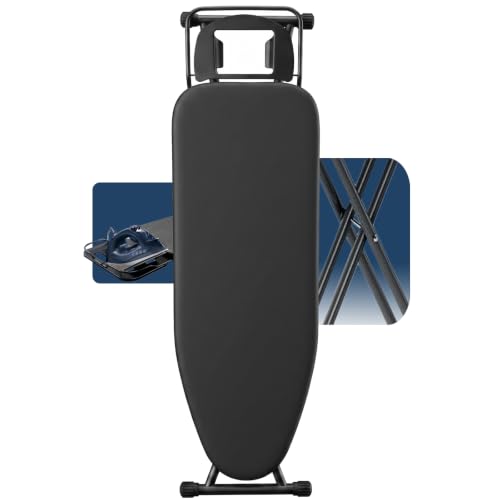
Joseph Joseph Glide Ironing Board 130 x 38cm, Silicone Iron Rest, DripShield Cover
ASIN B08QMJHKWT • $149.97 • Ships from Amazon AU
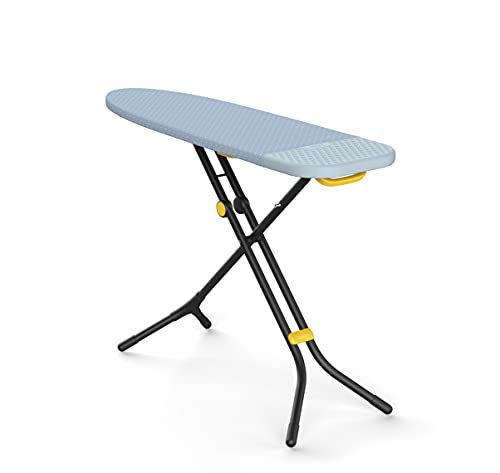
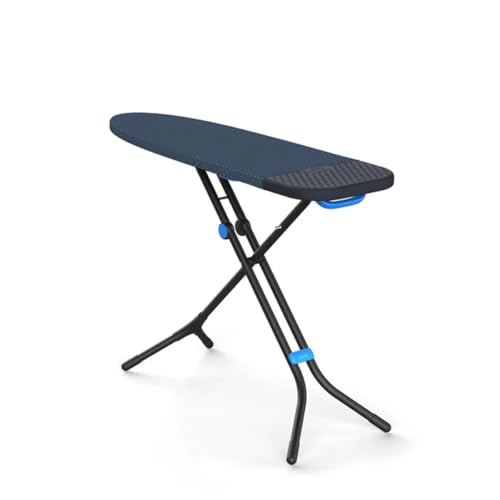
The Joseph Joseph Glide is the board I'd buy for most homes, because its listing ticks off the things that keep an iron safe: a full size surface, seven heights and a silicone iron rest. It's listed at $149.97, sold by Amazon AU, the highest-priced of the six picks, and ranks #9 in Amazon AU's Ironing Boards category and #10,602 overall, a category rank it shares with the Glide Easy-Store. Its part number is 50006. The surface is 130 by 38cm, big enough for a full trouser leg or a shirt back. Amazon AU sells it directly, so a return or a faulty lock goes back through Amazon rather than a marketplace shop. The Black/Blue colour is the one listed here, and the price is for the board with its cover.
The listing describes fast, easy set up with seven height positions, a heat resistant silicone iron rest, and an easy-change cover with what Joseph Joseph calls DripShield, meant to stop water from the iron dripping through. A cord toggle pulls the cover tight, so it doesn't creep under the iron, and a separate hanging hook is included for storage. It folds compact and slimline, which suits a laundry door or a narrow cupboard gap. Seven heights cover sitting and standing, and a silicone rest is the kind I'd want for a heavy steam iron, because it holds the heel rather than letting it slide. A cover that resists drips also means less water reaching the steel under it, which is where boards rust. The listing doesn't give a weight, but a slim fold makes it easy to carry from the laundry.
Check the leg lock clicks at the height you use before the iron goes on. Stand the iron fully on the silicone rest, and leave the board open to dry after a long session. Replace the cover when it shines or shows marks. Push gently on the surface at your height to feel for any drop before you start. Keep the cord off the floor and away from the legs, and plug the iron straight into a wall socket rather than a powerboard. Hang it on its hook between uses, since a board leaning on a wall can slide down. Check the rest's fixings every few months and tighten them gently.
Honest caveats: It's the highest-priced pick, and the listing doesn't state a height range in centimetres or a load. It has no shelf for a steam generator, so a generator's base needs its own table. Its category rank is shared with the Easy-Store.
Best for: A full size board with seven heights, a silicone iron rest and a cover that resists drips.
Price: $149.97 (Amazon AU) • Type: Full size, freestanding • Surface: 130 x 38cm • Heights: 7 positions • Iron rest: Heat resistant silicone • Cover: Easy-change, DripShield, cord toggle • Storage: Folds slim, hanging hook included • Part number: 50006 • Rank: #9 in Ironing Boards, #10,602 overall on Amazon AU, listing shared
View on Amazon AU
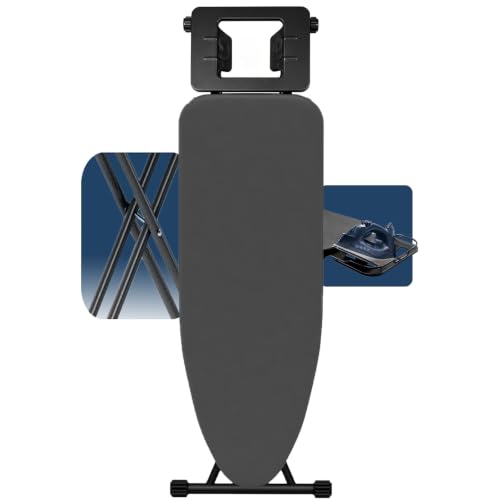
Sunbeam SB8400 Couture Ironing Board, Steam Generator Tray, 135 x 45cm
ASIN B076JJTZVS • $149 • Ships from Amazon AU
The Sunbeam SB8400 Couture is the pick if you own a steam generator, because it's the one board of the six built with a shelf for the generator's base. It's listed at $149, sold by Amazon AU, and ranks #7 in Amazon AU's Ironing Boards category and #9,471 overall. Its part number is SB8400. It's also the biggest board of the six, at 135 by 45cm, the widest surface of the picks, which takes a shirt across the board rather than half of one. Amazon AU sells it directly, and Sunbeam is a long-standing name in Australian appliances, which usually makes covers easier to find than for a no-name board.
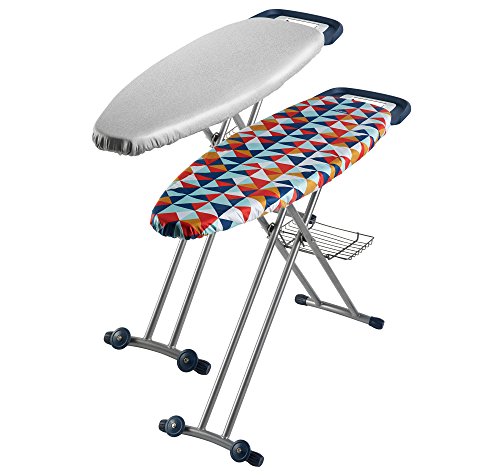
The listing describes dual leg construction for heavy duty strength, a sturdy steam generator shelf that keeps the board clear, a retractable iron rest that folds away for more room, and a rail to hang shirts as you finish them. The cover is machine-washable, reversible, 100 percent cotton with a print side and a non-stick EasyGlide side, over extra thick 500 gram felt padding. The title also lists glider wheels, which help move a heavy board to where you want it. Dual legs spread the load of a heavy generator base and a pressed hand, which is exactly what a generator board needs. A garment rail is a small thing that stops freshly pressed shirts piling up on a chair and creasing again. The extra thick padding is also kinder to buttons and seams.
Stand the generator base on its shelf, never on the iron rest. Plug the generator straight into a wall socket, and wash the cover as its label says. Fold the rest away before you fold the board. Keep the generator's hose clear of your feet and the board's legs, since a hose snagged on a leg can drag the base off its shelf. Let the generator cool before you move the board on its glider wheels. Leave the board open to dry after a long steam session, since a big board holds a lot of damp. Check the shelf's fixings every few months, because it carries the heaviest load.
Honest caveats: The listing doesn't state a height range, number of height positions or the board's weight, and a board this size needs a big space to store. Its shelf is the point of it, so if you don't use a steam generator, a lighter board will do the same job.
Best for: Steam generator owners who want a proper shelf for the base and a big, padded surface.
Price: $149 (Amazon AU) • Type: Full size, steam generator board • Surface: 135 x 45cm • Generator: Steam generator tray • Iron rest: Retractable • Cover: Reversible cotton, 500g felt padding • Extras: Garment rail, glider wheels • Part number: SB8400 • Rank: #7 in Ironing Boards, #9,471 overall on Amazon AU
View on Amazon AU
WULAR Ironing Board 120 x 38cm, Steel Iron Rest, Height 68 to 89cm
ASIN B0H6XQ86NT • $91.19 • Sold by HUA-AU on Amazon AU
The WULAR 120cm board is the value full size pick, and the one of the six that states its height range in centimetres. It's listed at $91.19, sold by HUA-AU, which passed my retail check, and ranks #4 in Amazon AU's Ironing Boards category and #3,429 overall, a rank its smaller 90cm sibling shares. Its part number is 075-B3-3. The surface is 120 by 38cm, a little shorter than the Glide boards but just as wide, and it adjusts from 68 to 89cm high. A shared rank across sizes means the listing as a whole sells well, not necessarily this size. The board is a few centimetres shorter than the Glide, which few people notice in use.
The listing describes a three layer cover of foam, felt and fabric, a steel frame, a dedicated iron rest, and non-slip feet. It folds for storage in a cupboard or a laundry. The listing is clear that the same listing sells three sizes, 90 by 30cm, 110 by 34cm and 120 by 38cm, and asks you to check the size before you order, which is good advice: the 120cm board is the full size one, so make sure that's the option you've selected. A three layer cover gives more cushion than a thin cotton one, and a steel rest suits a standard steam iron. The listing doesn't say how the rest is attached or whether it suits a steam generator, so I'd treat it as an iron rest only. The non-slip feet are the right call on tiles, where bare steel legs slide.
Pick the 120 by 38cm option when you order. Check the feet and the rest's fixings when it arrives, and press near the middle of the board. Plug the iron straight into a wall socket. Check the size on the box matches the 120 by 38cm you ordered before you open it fully, so a wrong size can go straight back. Test the lock at every height, keep the cord clear of the legs, and plug the iron into a wall socket. Let the board dry open after steaming, and replace the cover when it flattens. Check the feet every few months, since a missing cap lets the leg slide on tiles.
Honest caveats: One listing sells three sizes, so it's easy to order the small one by mistake. The listing doesn't state the number of height positions or what the iron rest is lined with, and it has no generator shelf. Its rank is shared with the 90cm board.
Best for: A full size board with a stated height range for well under the premium boards' price.
Price: $91.19 (HUA-AU) • Type: Full size, freestanding • Surface: 120 x 38cm • Height: 68 to 89cm • Iron rest: Steel • Cover: 3 layer foam, felt and fabric • Feet: Non-slip • Part number: 075-B3-3 • Rank: #4 in Ironing Boards, #3,429 overall on Amazon AU, listing shared across sizes
View on Amazon AU
Joseph Joseph Glide Easy-Store Ironing Board, 130cm, Grey
ASIN B08QMR1TKM • $104.99 • Ships from Amazon AU
The Joseph Joseph Glide Easy-Store is the pick for the Glide's size and storage at a lower price. It's listed at $104.99, sold by Amazon AU, and ranks #9 in Amazon AU's Ironing Boards category and #10,603 overall, the same category rank as the Glide. Its part number is 50005, different from the Glide's 50006, so it's a separate model rather than a colour option. Its size is listed as 130cm, the same board length as the Glide. Amazon AU sells it directly. It's grey, where the Glide listed here is black and blue, and the two share the same fold and hook design.
The listing describes the same compact, slimline fold, fast set up with seven height positions, an easy-change cover with a heat resistant silicone iron rest, a separate hanging hook, and a cord toggle that keeps the cover tight. What it doesn't mention is the DripShield cover the Glide lists, which is the practical difference between the two listings. If you mostly iron dry or use a steam iron lightly, that may not matter much. A silicone rest and a cord toggle on a slim board is a good combination for a small laundry, where the board gets folded and hung every time. The listing doesn't state the width, so measure it before you buy a replacement cover rather than assuming it matches the Glide.
Hang it on its hook rather than leaning it on a wall. Check the lock at every height when it arrives, and stand the iron fully on the rest. Replace the cover when it shines. Measure the surface when it arrives so you know the cover size you'll need later. Keep the iron's cord up off the board and clear of the legs, and plug the iron straight into a wall socket. Leave it open to dry after steaming, since a slim board folded damp holds moisture against the mesh. Check the leg rivets every few months for play.
Honest caveats: The listing doesn't state a surface width, height range or load, and it doesn't mention the DripShield cover the Glide lists. It has no generator shelf. Its category rank is shared with the Glide, so it isn't its own rank.
Best for: A slim folding full size board with seven heights and a silicone rest, for less than the Glide.
Price: $104.99 (Amazon AU) • Type: Full size, freestanding • Length: 130cm • Heights: 7 positions • Iron rest: Heat resistant silicone • Cover: Easy-change, cord toggle • Storage: Folds slim, hanging hook included • Part number: 50005 • Rank: #9 in Ironing Boards, #10,603 overall on Amazon AU, listing shared
View on Amazon AU
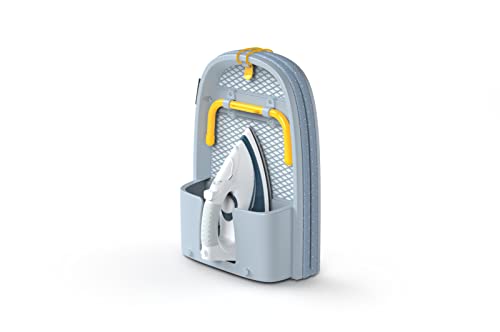
Joseph Joseph Pocket Folding Tabletop Ironing Board, Regular, Cotton Cover
ASIN B08QNBGL6Q • $68.99 • Ships from Amazon AU
The Joseph Joseph Pocket is the tabletop pick for a unit or a small house, and the best ranked board of the six overall. It's listed at $68.99, sold by Amazon AU, and ranks #2 in Amazon AU's Ironing Boards category and #1,328 overall, a category rank shared with the Pocket Plus and Pocket Max. Its part number is 50009, and its size is listed as 90cm, longer than the Amazon Basics tabletop board. Amazon AU sells it directly, and a #1,328 overall rank is the strongest of the six picks, which tells you plenty of people are ironing on a table.
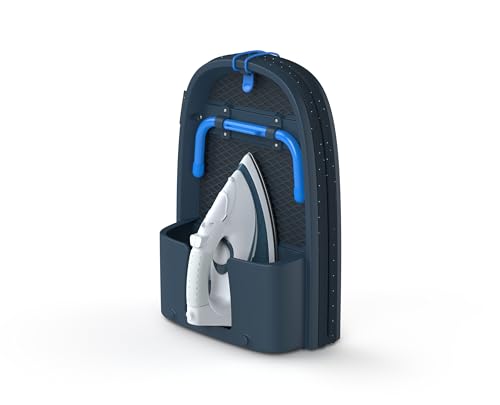
The listing describes a compact folding design, an integrated iron storage compartment, a separate hanging hook, an easy-change 100 percent cotton cover with a padded underlay, and what it calls a generous ironing surface. The storage compartment is the clever part, because it keeps the iron and the board together in one cupboard. It doesn't list a separate iron rest or the board's width, so the iron stands on its heel on the board between strokes. Keeping the iron in the board means it doesn't end up on a shelf where it can fall, and the hanging hook lets the whole kit hang inside a cupboard door. A padded underlay under the cotton cover matters more on a tabletop board, since a hard table beneath it otherwise shows through as shine on dark fabric.
Let the iron cool for half an hour before it goes in the compartment. Use it on a stable table, not a wobbly one, and keep the cord clear of the table edge. Stand the iron on its heel, never flat on the cover. Put a folded towel under it on a polished table, since a hot board can mark some finishes. Don't put a hot iron in the compartment, and empty the iron's water tank before it goes in so nothing leaks into the cover. Keep the cord clear of the table edge, where it can catch and pull the iron off, and fold the board away once the iron is cold.
Honest caveats: The listing doesn't state the board's width, height or a separate iron rest. Tabletop boards are slower for large loads, since clothes hang off both sides. The rank is shared across the Pocket range, so it isn't this board's alone.
Best for: A tabletop board with somewhere to store the iron, for a small home.
Price: $68.99 (Amazon AU) • Type: Tabletop • Length: 90cm • Iron storage: Integrated compartment • Cover: Cotton, padded underlay • Iron rest: Not stated on the listing • Storage: Folds, hanging hook included • Part number: 50009 • Rank: #2 in Ironing Boards, #1,328 overall on Amazon AU, listing shared
View on Amazon AU
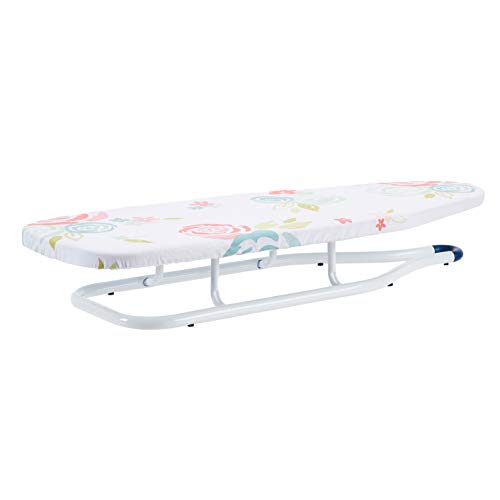
Amazon Basics Tabletop Ironing Board, 77 x 29cm
ASIN B0825JXFXS • $31.92 • Ships from Amazon AU
The Amazon Basics tabletop board is the value pick and the lowest-priced of the six, for pressing a shirt or two a week on a table. It's listed at $31.92, sold by Amazon AU, and ranks #6 in Amazon AU's Ironing Boards category and #6,677 overall. Its part number is 11.530.5DC1-19. The surface is 77 by 29cm, the smallest of the six picks, which suits shirts, pillowcases and small items rather than trousers or bedding. Amazon sells it under its own brand, so a return is simple. A part number on the listing is a small thing, but it means a replacement can be matched to the same board.
The listing is clear and practical: a folding design that takes up less space, a V-shaped hook for storage, a safety lock that keeps it closed when folded, extra thick padding for a smooth surface, a heavy duty steel frame, and anti-slip feet caps. The safety lock is the feature I'd point out in a house with kids, since a tabletop board that unfolds when someone pulls it off a shelf can pinch fingers. There's no separate iron rest listed. A steel frame on a tabletop board is better than plastic legs, which can soften if a hot iron rests near them. The extra thick padding helps on a hard table, though the listing doesn't say what the padding is made of or whether the cover can be replaced.
Check every foot cap is fitted before it goes on a polished table. Stand the iron on its heel, and don't leave it on the cover between shirts. Hang it by its hook to store. Use it on a solid table, not a folding card table that flexes. Stand the iron on its heel, keep the cord clear of the table edge, and switch the iron off at the wall when you finish. Let it cool before you fold the board and hang it on its hook. Wipe the cover with a damp cloth if it marks, and check the feet caps every few months.
Honest caveats: At 77 by 29cm it's the smallest surface of the six, slow for anything bigger than a shirt. The listing doesn't state a separate iron rest or a height. Its floral cover isn't listed as removable. Check its feet caps on arrival.
Best for: A small, low-cost tabletop board with a folding safety lock for the odd shirt.
Price: $31.92 (Amazon AU) • Type: Tabletop • Surface: 77 x 29cm • Frame: Heavy duty steel • Padding: Extra thick • Feet: Anti-slip caps • Safety: Lock when folded • Part number: 11.530.5DC1-19 • Rank: #6 in Ironing Boards, #6,677 overall on Amazon AU
View on Amazon AUSide-by-side comparison
What fails first: boards, covers and the irons on them
Ironing boards fail mechanically, and when they do the iron usually pays for it. The three faults that matter most are a leg lock that slips, a cover worn through at the rest end, and a cord that's been dragged and bent at the iron for years.
Leg locks that slip a notch
A folding board's lock wears at its teeth or its trigger, and once it doesn't fully engage, the board can drop a notch when you lean on it. That sudden drop is what throws an iron off its rest, cracking a soleplate or a water tank. Test the lock at your height every time you set up, press near the middle rather than the pointed end, and replace a board whose lock slips, since the lock usually isn't a part you can buy on its own.
Covers scorched thin and rust coming through
Covers wear fastest at the iron rest end, where the iron sits hot between strokes, and the padding underneath flattens until the iron starts to shine dark fabric. Brown marks that come up through the cover are usually rust from the steel mesh below, where steam has condensed and the board's been folded away damp. Let the board dry open after a long session and replace the cover before rust reaches a white shirt.
Cords bent at the iron end
Every stroke flexes an iron's cord where it enters the body, and a cord that catches on the end of the board or a leg bends there harder. Over time the conductors inside break strand by strand, the cord gets warm near the iron, and the iron cuts in and out. Stop using an iron whose cord is warm, split or kinked, keep the cord up off the board, and never repair a mains cord with tape.
Decision tree: which one should you actually buy?
- One board for a family's weekly ironing? → The Joseph Joseph Glide lists 130 by 38cm, seven heights, a silicone rest and a drip-resistant cover.
- Own a steam generator? → The Sunbeam SB8400 Couture is the board with a shelf for the generator's base and a 135 by 45cm surface.
- Full size for less, with a stated height range? → The WULAR 120 by 38cm board adjusts from 68 to 89cm, but select the 120cm size when you order.
- Want the Glide's fold without the DripShield cover? → The Joseph Joseph Glide Easy-Store is the same length with seven heights and a silicone rest.
- Small unit, a few shirts a week? → The Joseph Joseph Pocket tabletop stores the iron in its own compartment, and the Amazon Basics board is the smallest and simplest.
- Phone steamed or knocked off the board? → Switch it off and dry the outside, then bring it into our Erina workshop and we'll check it before you spend anything.
Frequently asked questions
What size ironing board do I need?
For weekly shirts, trousers and bedding, a full size board of around 120 by 38cm or bigger fits a full trouser leg or a shirt back in one go. The Joseph Joseph Glide boards are 130cm and the Sunbeam is 135 by 45cm. If you only press a few shirts and space is tight, a tabletop board like the 77 by 29cm Amazon Basics or the 90cm Joseph Joseph Pocket stores in a cupboard, but it's slower for big loads because clothes hang off both sides.
Can I put a steam generator on any ironing board?
Not safely on the iron rest. A steam generator's base holds the water tank and the boiler, and it's much heavier than an iron, so it overloads a rest built for an iron and can tip the board. Use a board with a generator shelf, like the Sunbeam SB8400, or stand the base on a stable table beside the board. Keep the hose clear of your feet and plug the generator straight into a wall socket.
Why are there brown marks coming through my ironing board cover?
Usually rust. Steam passes through the cover and condenses on the steel mesh or board underneath, and a board folded away damp in a closed laundry rusts where the steam hits most. The rust then marks the cover from below and can transfer to a white shirt. Leave the board open to dry after a long session, store it somewhere dry, and replace the cover once marks appear. A cover with a drip-resistant layer helps a little.
Can I plug an iron into a powerboard?
It's better not to. Many irons and steam generators draw 2,000 to 2,400W or more, which is the whole capacity of a standard Australian 10A socket, about 2,400W. On a powerboard shared with a kettle or a heater, that's easy to overload. Plug the iron straight into a wall socket, don't use a coiled extension lead, and if you use a smart plug as a timer, check it's rated for a full 10A load first.
Is a tabletop ironing board worth it?
For a small home and a light ironing load, yes. A tabletop board stores in a cupboard and sets up in seconds on a table. The trade is speed: you iron at table height, clothes hang off both sides, and trousers and bedding take much longer. The Joseph Joseph Pocket keeps the iron in its own compartment, and the Amazon Basics board has a safety lock when folded. Make sure the table you use is stable.
How often should I replace an ironing board cover?
When it stops doing its job rather than on a schedule. Replace it once the padding has flattened and the iron starts leaving shiny marks on dark fabric, when it's scorched thin at the iron rest end, or as soon as rust marks come through. Measure the board's surface and buy a cover made for that exact size, since a loose cover creases under the iron. On a well looked after board, a cover can last a few years.
Related buying guides
Phone steamed or knocked off the board?
Steam and a drop are an easy way to damage a phone without noticing straight away. If it's fogging, crackling or not charging after a session at the ironing board, switch it off and bring it into our Erina workshop. We'll check it and tell you what it needs before you spend anything.
Visit our Erina workshop Book Online