Prices from Amazon AU, updated daily. Swipe or use the arrows for more.
Disclosure: This article contains affiliate links to amazon.com.au. If you buy through one of these links iFix may earn a small commission at no extra cost to you. It doesn't change which products we recommend. We focus on what actually lasts based on 16 years of repair-shop experience.
Quick summary8 picks
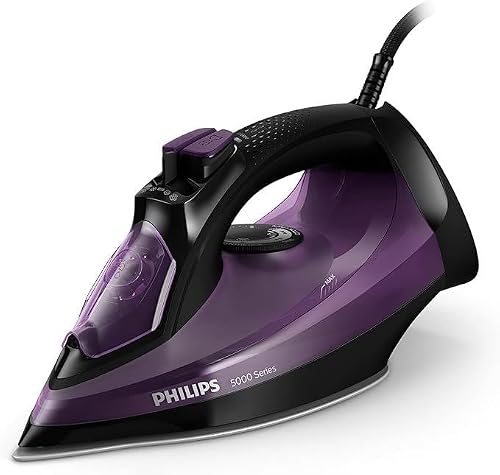
- Entry PickPhilips Steam Iron 5000 Series about$75400W.
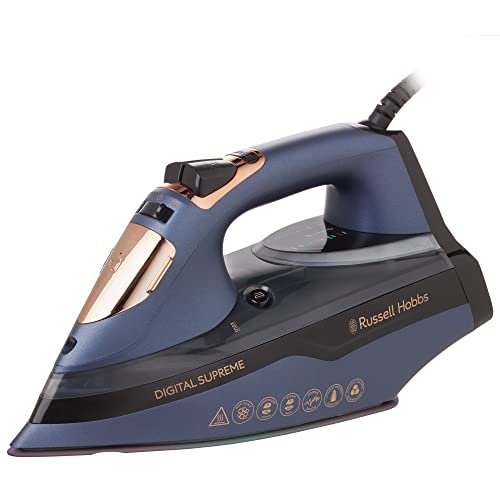
- Russell Hobbs Digital Supreme Iron about$76
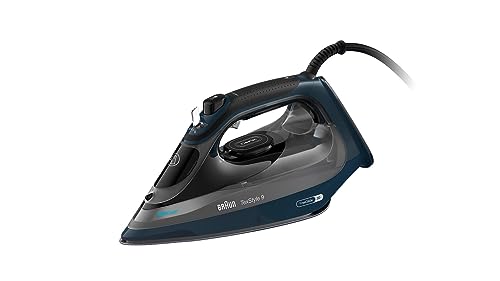
- Braun Household TexStyle 9 Steam Iron about$1282400W.
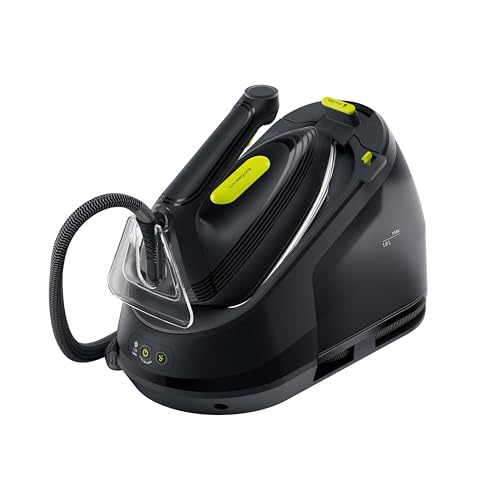
- Braun CareStyle 3 Steam Generator Iron about$1352200W.
- Philips Azur 8000 Series Steam Iron - 55… about$1782400W.
- Philips OneTurn about$1791800W.
- Philips Steam Generator 6000 Series about$3482400W.
- Most PremiumBraun CareStyle 9 Steam Generator Iron about$399OLED, 2400W.
Steam iron or steam generator
A steam iron carries its water in a small tank inside the iron, usually 300 to 350ml, and makes steam by dripping that water onto the hot soleplate. A steam generator moves the water into a separate base with a tank of a couple of litres and a boiler or pump that pushes steam down a hose to the iron. That's the whole difference, and it decides what each one is good at.
The steam iron is the simpler, smaller tool. It heats up quickly, fits in a cupboard and is fine for a few shirts in the morning or a weekly pile for one or two people. The three irons in this guide run from $75 to $178. You'll refill the tank more often, and the steam is lighter, but there's less to go wrong and less to store.
A steam generator is for big piles. The base holds 1.8 to 2 litres among the three picks here, so you can work through a basket without stopping, and the pressurised steam goes through thick fabric like denim and linen far better. The trade-off is size, a heavier base on the ironing board and a higher price, from $135 for the Braun CareStyle 3 to $399 for the Braun CareStyle 9.
If you're not sure, count the shirts. A household doing a big basket every week, with work shirts, school uniforms and bed linen, gets real time back from a generator. Someone ironing three or four things a week is better off with a good steam iron and the extra cupboard space. And if most of what you iron is hanging, a garment steamer may suit you better than either.
Continuous steam, boost and bar pressure
Listings quote steam in three ways. Continuous steam, in grams per minute, is the steady flow while you iron, and it's the number that does most of the work. Boost, or steam shot, is a short burst in grams when you press a button for a stubborn crease. Pressure, in bar, only appears on steam generators, and it's what pushes steam deep into thick fabric.
Among the three irons, the Philips Azur 8000 states 55g a minute with a 240g boost, the Russell Hobbs RHC570 50g with a 180g shot and the Philips 5000 45g with a 180g boost. The generators are in a different league: the Braun CareStyle 3 states 130g a minute, a 500g boost and 7.5 bar, and the Philips 6000 generator a 600g boost and 8 bar, without a continuous figure.
The Braun CareStyle 9 doesn't give steam figures at all. Its listing describes Auto Steam, which reads the iron's movement and releases steam as you go, plus a Turbo mode, so it's hard to compare it on numbers. I'd treat it as a generator you buy for the features, not for a figure on the box.
Bigger numbers aren't always better in practice. Lots of steam on a thin cotton shirt just makes it damp, and a boost held too long leaves water spots. The continuous figure matters most for everyday ironing, and the boost matters for linen, denim and the crease that's been in a shirt since it came out of the dryer.
Soleplates and temperature settings
The soleplate is the part that touches the clothes, and a good one glides without dragging or snagging. Philips calls theirs SteamGlide Plus on the 5000 and SteamGlide Elite on the Azur 8000, Russell Hobbs uses a ceramic soleplate, and Braun's FreeGlide 3D plate curves up at the edges so it rides over buttons and seams instead of catching on them.
Temperature control is where the brands differ most. The Philips Azur 8000 and the Philips 6000 generator use what Philips calls OptimalTEMP, one setting for every ironable fabric, and Philips says on the listing that the iron won't burn any ironable fabric. The Russell Hobbs has Colour Control, which shows the right temperature for the fabric you've chosen, and the Braun generators use an iCare mode for all fabrics.
One setting for everything is easy, and it's the main reason people pay more for the Philips irons, but it isn't magic. Synthetics like some activewear and printed fabrics can still go shiny or melt if the label says not to iron them, and no soleplate fixes that. Check the care label first, and iron the inside of anything with a print on it.
Look after the soleplate and it'll glide for years. Let it cool before you put it away, never iron over zips or metal buttons, and wipe off any starch or melted residue with a damp cloth while it's cool. Don't use steel wool or an abrasive pad on a coated plate, because once the coating is scratched, it drags on every shirt after that.
Limescale is what kills them
Most irons don't die from a broken element. They die from limescale, the white mineral crust that hard water leaves behind when it boils off. It builds up in the steam chamber and the vents, the steam drops off, and then flakes of it start coming out of the soleplate onto a clean white shirt. In a steam generator it builds up in the boiler, which is harder to get at.
Every pick handles this differently. The Philips 5000 has a calc clean button, the Russell Hobbs has an anti-scale cartridge plus self clean and power shot functions, the Braun CareStyle 3 has Easy CalcClean, and the Braun CareStyle 9 has AutoClean, which the listing says tells you when descaling is needed and runs it in just over two minutes. The Azur 8000 and the Philips 6000 generator listings don't mention a descaling system.
Use the scale function as often as the manual says, not when the iron starts spitting, because by then the vents are already partly blocked. Hard water areas need it more often. Follow the manual on what water to use, since some makers want plain tap water and some suggest mixing in distilled, and the wrong choice can void a warranty or make the iron spit.
A 2,400W iron and a 10A socket
An iron is one of the most power-hungry things you'll plug in at home. Four of the six picks are rated at 2,400W: the Philips 5000, the Azur 8000, the Philips 6000 generator and the Braun CareStyle 9. The Braun CareStyle 3 is 2,200W, and the Russell Hobbs listing doesn't give a wattage. A standard Australian 10A socket supplies 2,400W, so a 2,400W iron is right at the limit on its own.
That's fine on a wall socket by itself. It's not fine on a powerboard with a fan heater, a kettle or anything else that heats, because two heating appliances on one board can draw well past what the board and the wall socket are built for. If you need more reach, plug the iron into a different wall socket rather than an extension lead, and our powerboard guide covers which boards are rated for what.
Running cost is easy to work out. At the Australian average of roughly 33c a kWh, a 2,400W iron flat out costs about 79c an hour. In practice the thermostat switches the element on and off once it's hot, so a real hour of ironing costs less. If you want to see the actual figure, a smart energy monitor will show you exactly what the iron draws.
Check the cord every so often, especially where it enters the iron. That join flexes on every stroke, and over the years the wires inside can fray even when the outside looks fine. A cord that's hot, kinked or has a split in the outer sleeve means the iron should be retired, because a damaged cord on a 2,400W appliance isn't something to tape up.
Safety around the ironing board
A hot iron on a wobbly board is the main hazard, and a heavy steam generator base adds to it. Put the base on a sturdy board with a proper rest, or on a sturdy table beside it, rather than balancing it on a narrow end. The Philips 6000 generator has a carry lock that clips the iron to the base, which makes it safer to move around the house and keeps the hot plate away from your hand.
Kids and cords are the other risk. A child pulling the cord or the steam hose can bring a hot iron down off the board, so keep the cord short, run it away from where kids walk, and never leave an iron on and unattended with little ones around. Let it cool somewhere out of reach rather than standing it on the floor.
Philips says on its 6000 generator listing that the iron won't burn ironable fabric even if it's left resting on the clothes. That's useful if you're distracted, but it's about the fabric, not about the iron being safe to leave on. The listings for these six don't state an auto shut-off, so switch off at the wall when you're done.
Steam is hotter than it looks, and pressurised steam from a generator comes out with real force. Keep fingers away from the soleplate vents when you press boost, and don't steam a shirt while you're wearing it. If you're steaming curtains or a hanging garment vertically, hold the iron a little away from the fabric and keep your other hand clear.
Ironing boards, space and storage
A steam generator needs a bit more planning than an iron. The base sits on the board or beside it, the hose has to reach without dragging the base around, and the whole thing takes more cupboard space when you pack it away. A board with a wide, solid rest for the base is worth more than a fancy cover, and a wobbly board is the first thing I'd replace.
Vertical steaming is handy for curtains, blazers and anything that hates being pressed flat. The Azur 8000 and the Philips 5000 both mention vertical steam, and the Braun CareStyle 9 mentions vertical ironing. For a lot of hanging clothes, though, a dedicated garment steamer is quicker, and they pair well with an iron for the things that need a sharp crease.
Empty the tank after each session, especially on a steam generator, so water doesn't sit in the boiler between uses. Store the iron upright on its heel, cool and dry, with the cord loosely coiled rather than wrapped tightly around the handle. If your clothes are drying flat or on a rack, our drying rack picks help cut down the creases before they ever reach the board.
How I picked these six
I looked at steam irons and steam generators sold new by Amazon AU between about $50 and $750, then picked three irons and three generators from the best-ranked of each type. All six are sold by Amazon AU. I left out handheld garment steamers, which have their own guide, cordless and travel irons, and a second colour of the Azur 8000 whose listing gives a smaller tank under a different model code.
The irons are ranked in Amazon AU's Steam Irons category and the generators in Steam Generator Irons, both checked on the day. The Russell Hobbs sits at #4 in Steam Irons and the Azur 8000 at #3, while the Braun CareStyle 3 is #2 in Steam Generator Irons, the CareStyle 9 #3 and the Philips 6000 generator #5. The #1 in that category on the day was a Philips all-in-one system with its own built-in board, which is a different kind of purchase, and #4 was an ordinary steam iron filed in the generator category. I read every listing for steam figures, wattage, tank size, soleplate and scale control.
Where a listing doesn't give a figure, the card says so rather than guessing. Prices change week to week, and irons are a common Christmas and Black Friday item, so check the price on the day. If you're comparing an iron that isn't one of these six, the same checks apply: steam first, then scale control, then the wattage against your socket.
The 6 picks, $75 to $399
Prices are Amazon AU at time of writing (2026-11-12) and move week to week. Ranks are Amazon AU sales ranks in the Steam Irons or Steam Generator Irons category, checked the same day.

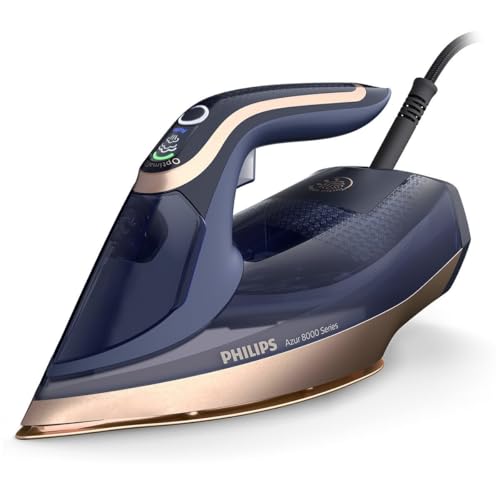
Philips Azur 8000 Series Steam Iron DST8050/21, 2,400W, 240g Boost
ASIN B0BCHXQ3CT • $178 • Ships from Amazon AU
This is the steam iron I'd start most people on. It's Philips' Azur 8000, model DST8050/21, sold by Amazon AU for $178, and it ranks #3 in Amazon AU's Steam Irons category and #505 overall, the best overall rank of the six picks. The listing gives 2,400W, 55g a minute of continuous steam and a 240g boost, the highest continuous and boost figures of the three irons, with a 350ml water tank. Philips is the biggest name in irons on Amazon AU, and three of the six picks are Philips, so it's worth knowing the Azur sits above the 5000 Series in the range. A model code ending in a different number is often a different colour with different specs, which is why I've quoted the full code.
OptimalTEMP is the reason to pay more for it. It's one temperature setting for every ironable fabric, so you don't have to turn the dial down for a silk blouse and back up for a cotton shirt, and Philips says on the listing it won't burn any ironable fabric. The SteamGlide Elite soleplate is Philips' top coating, and vertical steam lets you take creases out of a hanging shirt or curtains without the board. For a weekly pile of mixed fabrics, it's the most capable iron here. The 2,400W rating is what gets it hot quickly, which matters on a weekday morning with one shirt to do before work. Its 350ml tank is the joint largest of the three irons, level with the Russell Hobbs, so refills come less often.
The listing doesn't mention a descaling system, so check the manual for how to clean the scale out before you need to. A second colour, the light blue DST8020/20, lists a 300ml tank, so check the model code if the tank size matters. At 2,400W it needs a wall socket of its own. Empty the tank after each session, let the plate cool before you store it, and check the cord where it enters the iron. Don't iron over zips or metal buttons, since a scratch in the Elite coating drags on every shirt after it.
Honest caveats: No descaling system is mentioned on the listing, so check the manual for how to clean it. At 2,400W it sits right at the limit of a standard 10A socket, so don't share a powerboard with a heater. It costs more than twice the Philips 5000 for more steam and the single temperature setting.
Best for: A weekly pile of mixed fabrics, where one temperature setting and strong steam get it done faster.
Price: $178 (Amazon AU) • Model: DST8050/21 • Type: Steam iron • Power: 2,400W • Steam: 55g/min continuous, 240g boost • Tank: 350ml • Soleplate: SteamGlide Elite, OptimalTEMP single setting • Descaling: Not stated on the listing • Rank: #3 in Steam Irons (Amazon AU)
View on Amazon AU
Philips 5000 Series Steam Iron DST5030/80, 2,400W, 180g Boost
ASIN B09BNT8LL4 • $75 • Ships from Amazon AU
The Philips 5000 is the lowest-priced of the six at $75, and it's the iron I'd pick for someone who irons a few things a week and wants a known brand. Amazon AU sells it under model DST5030/80, and it ranks #7 in Steam Irons and #783 overall. The listing gives 2,400W, 45g a minute of continuous steam and a 180g boost, with a SteamGlide Plus soleplate and vertical steam for hanging clothes. At #783 overall it's a very popular iron, not far behind the Azur 8000 and the Russell Hobbs on Amazon AU's website-wide list. It's the iron I'd buy for a uni student, a granny flat or as a spare, where cupboard space and price matter more than every last gram of steam.
It has the two features I'd want on any iron at this price. A drip stop keeps water from spitting out of the plate at low temperatures, which is what leaves spots on delicate fabrics, and an integrated calc clean button flushes the scale out of the steam chamber. Use that button as often as the manual says and the steam stays strong for years. The SteamGlide Plus plate is a step below the Azur's Elite coating, but it's non-stick and easy to wipe clean. Vertical steam works with the iron held upright near a hanging shirt or a curtain, and the 180g boost matches the Russell Hobbs' steam shot, so it handles a stubborn crease well for the money. The 2,400W rating means it heats quickly.
The listing doesn't give a tank size, and it doesn't have the Azur's single temperature setting, so you'll set the dial for each fabric. The 45g figure is the lowest continuous steam of the three irons, which shows on thick linen and denim. At 2,400W it needs its own wall socket. Run the calc clean regularly, store it upright on its heel, and keep the cord loosely coiled rather than wrapped tight. Wipe any starch off the plate with a damp cloth while it's cool, and never use steel wool on the coating.
Honest caveats: The listing gives no tank size, and the 45g continuous steam is the lowest of the three irons. There's no single temperature setting, so the dial has to suit each fabric. At 2,400W it needs a wall socket to itself.
Best for: A few shirts a week, where a simple iron with a calc clean button is all you need.
Price: $75 (Amazon AU) • Model: DST5030/80 • Type: Steam iron • Power: 2,400W • Steam: 45g/min continuous, 180g boost • Tank: Not stated on the listing • Soleplate: SteamGlide Plus, drip stop • Descaling: Calc clean button • Rank: #7 in Steam Irons (Amazon AU)
View on Amazon AU
Russell Hobbs Digital Supreme Steam Iron RHC570, 350ml Tank
ASIN B09CQCLXYN • $76 • Ships from Amazon AU
The Russell Hobbs is the iron for a hard water house. It's the Digital Supreme, model RHC570, sold by Amazon AU for $76, and it ranks #4 in Steam Irons and #593 overall. Its standout is triple cleaning: an anti-scale cartridge that catches minerals before they reach the steam chamber, plus self clean and power shot functions. The listing gives a 50g steam rate, a 180g steam shot and a 350ml water tank. Russell Hobbs is a long-running name in Australian laundries, and at #593 overall it's one of the best-ranked irons on Amazon AU's whole list. This listing sells the navy and champagne finish, and other colours may carry different model codes, so check the RHC number before you order.
Colour Control is Russell Hobbs' way of helping with temperature. It shows the right setting for the fabric you've picked, which is easier than reading the tiny symbols on a dial, though you still choose the fabric yourself. The soleplate is ceramic with what the listing calls UV protection, aimed at keeping colours from fading. The 350ml tank matches the Azur 8000's, and with 50g of continuous steam it sits between the two Philips irons on steam for about the same price as the Philips 5000. The listing doesn't explain exactly how self clean and power shot work, so read the manual, but between them and the cartridge it lists more scale control than either Philips iron.
The listing doesn't give a wattage, which is unusual for an iron, so check the plate on the iron or the manual before plugging it into a powerboard. An anti-scale cartridge only works while it's fresh, so find out what a replacement costs before you buy. The listing doesn't say how long a cartridge lasts. Empty the tank after each use, run the self clean as the manual says, and let it cool upright before it goes away. Keep the soleplate clean with a damp cloth while it's cool, and don't scrape the ceramic coating.
Honest caveats: The listing doesn't state a wattage, so check the rating plate before sharing a socket. The anti-scale cartridge needs replacing over time, and the listing doesn't give its life or price. Colour Control guides the setting but doesn't set the temperature for you.
Best for: Hard water houses, where an anti-scale cartridge keeps the steam vents clear for longer.
Price: $76 (Amazon AU) • Model: RHC570 • Type: Steam iron • Power: Not stated on the listing • Steam: 50g continuous, 180g shot • Tank: 350ml • Soleplate: Ceramic, Colour Control • Descaling: Anti-scale cartridge, self clean, power shot • Rank: #4 in Steam Irons (Amazon AU)
View on Amazon AU
Braun CareStyle 3 Steam Generator Iron IS3257BK, 7.5 Bar, 1.8L Tank
ASIN B0GQ54Z7T6 • $135 • Ships from Amazon AU
This is the steam generator I'd start with, and at $135 it's the lowest-priced generator of the three by a long way. It's Braun's CareStyle 3, model IS3257BK, sold by Amazon AU, and it ranks #2 in Steam Generator Irons. The listing gives 2,200W, 7.5 bar of pressure, 130g a minute of continuous steam and a 500g boost, more than double the continuous steam of any of the three iron picks, with a removable 1.8 litre tank. The 500g boost is for the creases a steady flow won't shift, like a linen shirt that's dried in a heap at the bottom of the basket. That boost is well over double the 240g of the strongest iron pick, which gives you a sense of the gap between the two types.
That pressure is the difference you feel. Steam at 7.5 bar goes through a thick cotton shirt or a linen tablecloth in one pass where an iron needs two, and the 1.8 litre tank gets through a whole basket without a refill. The FreeGlide 3D soleplate curves up at the edges so it rides over buttons and seams, Eco iCare mode gives one safe temperature for all fabrics, and Easy CalcClean protects the boiler from scale. DoubleSteam is Braun's name for the system behind the numbers, and the listing claims up to twice the steam of a traditional iron, which fits the 130g against 45 to 55g on the irons. The ComfortPro handle is shaped for a long session at the board.
It's the compact one of the three generators, but the base still needs a solid rest on the board. At 2,200W it's a little under a standard socket's 2,400W, so it still wants a wall socket to itself. The listing doesn't give a weight. Run the CalcClean as often as the manual says, empty the tank after each session, and coil the steam hose loosely so it doesn't kink where it joins the base. Let the base cool before packing it away, since the boiler stays hot for a while after the iron feels cool.
Honest caveats: The base takes more room than an iron, both on the board and in the cupboard. The listing doesn't give a weight or a hose length. At 2,200W it's close to a standard socket's limit, so it shouldn't share a powerboard with a heater.
Best for: A big weekly basket on a sensible budget, where pressure and a 1.8L tank cut the ironing time.
Price: $135 (Amazon AU) • Model: IS3257BK • Type: Steam generator iron • Power: 2,200W • Steam: 130g/min continuous, 500g boost, 7.5 bar • Tank: 1.8L removable • Soleplate: FreeGlide 3D, Eco iCare mode • Descaling: Easy CalcClean • Rank: #2 in Steam Generator Irons (Amazon AU)
View on Amazon AU
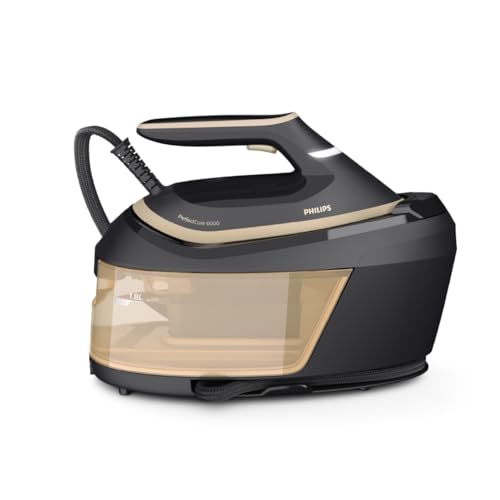
Philips 6000 Series Steam Generator PSG6064/80, 8 Bar, 600g Boost, 1.8L Tank
ASIN B0CLBT2F8N • $348 • Ships from Amazon AU
The Philips 6000 generator is the pick for the thickest fabrics and the biggest boost. It's model PSG6064/80, sold by Amazon AU for $348, and it ranks #5 in Steam Generator Irons. The listing gives 2,400W, 8 bar of pressure and a 600g steam boost, the highest pressure and boost of the six picks, with a 1.8 litre detachable tank that Philips says gives up to an hour and a half of continuous use. That hour and a half from one tank is a figure none of the other five listings gives, and it's the figure that matters on a full basket of work shirts and bed linen. The model code PSG6064/80 is the one to quote if you ever need a replacement hose or tank.
It brings the single OptimalTEMP setting from the Azur 8000 to a generator, and Philips says on the listing it won't burn any ironable fabric even if it's left resting on the clothes or the board. The SteamGlide Advanced soleplate is a lightweight plate with what Philips calls a nano-titanium layer. The safety carry lock clips the iron to the base so you can carry the whole thing around the house without touching the hot plate, which I'd want with kids around. Pressure is the number to look at for thick fabrics, and 8 bar is the highest stated of the three generators, ahead of the Braun CareStyle 3's 7.5 bar. Its 2,400W rating is also 200W more than the CareStyle 3.
The listing doesn't give a continuous steam figure or mention a descaling system, so check the manual for how to clean the boiler before you need to. At 2,400W it sits right at the limit of a 10A socket, so it needs a wall socket of its own. It ranks #5, below both Braun generators. Empty the tank after each session, keep the hose loosely coiled, and store it with the iron locked to the base. Fill it at the sink through the large filling door the listing describes, and wipe the hose clean before you coil it.
Honest caveats: No continuous steam figure and no descaling system are mentioned on the listing. At 2,400W it needs a wall socket to itself. The no-burn claim covers fabric, not leaving the iron switched on, and there's no auto shut-off stated. It also costs more than double the Braun CareStyle 3.
Best for: Thick fabrics and big baskets, where 8 bar and a 600g boost get through linen and denim fast.
Price: $348 (Amazon AU) • Model: PSG6064/80 • Type: Steam generator iron • Power: 2,400W • Steam: 600g boost, 8 bar, continuous not stated • Tank: 1.8L detachable, up to 1.5 hours stated • Soleplate: SteamGlide Advanced, OptimalTEMP • Safety: Carry lock • Rank: #5 in Steam Generator Irons (Amazon AU)
View on Amazon AU
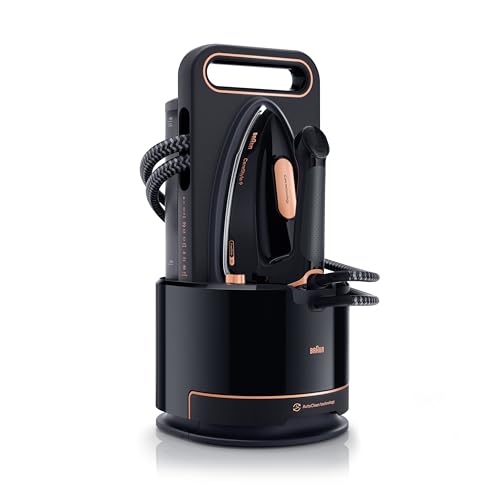
Braun CareStyle 9 Steam Generator Iron IS9095BK, 2,400W, 2L Tank
ASIN B0DF87K6GL • $399 • Ships from Amazon AU
The Braun CareStyle 9 is the generator for someone who wants it to think for them, and at $399 it's the most expensive of the six. It's model IS9095BK, sold by Amazon AU, and it ranks #3 in Steam Generator Irons. The listing gives 2,400W, a detachable 2 litre tank, the biggest of the picks, and Braun's FreeGlide 3D soleplate that rides over buttons and pockets. It's the top of Braun's CareStyle range, and the price reflects the electronics in it rather than more steam on paper. The 2 litre tank means the fewest refills of the six on a big day of ironing, and the base lets you park the iron upright on the board between pieces.
Its two big features are about doing less. Auto Steam reads the iron's movement and releases the right amount of steam as you go, so there's no button to hold, and the iMode OLED selector offers six settings including iCare for fabric protection, Turbo for tough creases and Eco for less energy. AutoClean is the other one: the listing says it recognises when descaling is needed and runs it for you in just over two minutes, which takes care of the thing that kills most generators. Eco mode is worth using on lighter fabrics, since it uses less energy and water on things that don't need full steam. The OLED selector is a small screen on the iron, which is the one part of this generator I'd treat gently.
The listing doesn't give any steam figures, pressure or continuous output, so I can't compare it on numbers with the other two generators. It's a lot more than the CareStyle 3 for features rather than stated steam. The base parks the iron upright on the board, which the listing says is very stable. At 2,400W it needs its own wall socket. Run AutoClean when it asks, empty the tank after use, and keep the hose loosely coiled. Clean the soleplate with a damp cloth while it's cool, and try not to drop the iron, since the screen is the part least likely to survive it.
Honest caveats: The listing gives no steam output, boost or pressure figures, so it can't be compared on numbers. It costs the most of the six, nearly three times the CareStyle 3. At 2,400W it needs a wall socket of its own.
Best for: Big baskets for someone who wants automatic steam and automatic descaling.
Price: $399 (Amazon AU) • Model: IS9095BK • Type: Steam generator iron • Power: 2,400W • Steam: Auto Steam and Turbo mode, figures not stated • Tank: 2L detachable • Soleplate: FreeGlide 3D, iMode OLED with 6 settings • Descaling: AutoClean • Rank: #3 in Steam Generator Irons (Amazon AU)
View on Amazon AUSide-by-side comparison
What fails first: irons and steam generators
Irons don't often come into our workshop, since most aren't worth a paid repair, but the faults inside them are the same ones we see in every heating appliance with a thermostat, a thermal fuse and a cord that flexes all day. Knowing which part has gone tells you whether it's a cleaning job, a new cord or time to retire it.
Spitting, flaking and weak steam
An iron that spits water or drops white flakes onto clothes is nearly always full of limescale, not broken. The scale blocks the steam vents and the chamber behind them, so water pools and comes out as drips instead of steam. Run the descale or calc clean function, several times if it's bad, and follow the manual on water. On a steam generator the same build-up sits in the boiler, which is why the generators with a cleaning system, like the CareStyle 3 and CareStyle 9, are easier to keep going.
Won't heat, or heats and cuts out
An iron that's dead cold with the light off is often a failed thermal fuse, a small safety part that blows when the iron overheats and stays open. It can also be a broken wire in the cord, usually right where it enters the iron. An iron that heats and then cuts out early usually has a thermostat that's worn or out of calibration. None of these are worth a paid repair on a $75 iron, but a frayed or hot cord means stop using it straight away.
Generator pumps that go quiet
Steam generators push water into the boiler with a small pump, and when the pump wears out or the inlet gets blocked with scale, you hear it buzz without much steam coming through. Sometimes descaling clears it, and sometimes the pump is finished. Running a generator with the tank empty is hard on the pump, so keep an eye on the water level. If a generator trips the safety switch in your fuse box, unplug it and don't use it again until it's checked.
Decision tree: which one should you actually buy?
- Want one good steam iron for a weekly mixed pile? → The Philips Azur 8000 at $178 has 55g of continuous steam, a 240g boost and one temperature setting for every fabric.
- Only ironing a few things a week? → The Philips 5000 at $75 has a 180g boost, a drip stop and a calc clean button.
- Live in a hard water area? → The Russell Hobbs RHC570 at $76 has an anti-scale cartridge plus self clean, with a 350ml tank.
- Doing a big basket every week on a sensible budget? → The Braun CareStyle 3 generator at $135 gives 7.5 bar, 130g of continuous steam and a 1.8L tank.
- Want automatic steam and descaling? → The Braun CareStyle 9 at $399 has Auto Steam, a 2L tank and AutoClean that descales for you.
- Iron tripped the power or the phone took a splash of steam? → Unplug the iron and don't use it again if it tripped the safety switch. If a phone got a blast of steam and is acting up, switch it off and bring it into our Erina workshop, and we'll check it and tell you the cost before you spend anything.
Frequently asked questions
Is a steam generator better than a steam iron?
For big piles, usually yes. A steam generator keeps its water in a separate base with a 1.8 to 2 litre tank and pushes pressurised steam to the iron, so it gets through thick fabric faster and doesn't need refilling mid-basket. The Braun CareStyle 3 gives 130g of continuous steam against 55g from the best of the three iron picks. For a few shirts a week, a steam iron is smaller, simpler and easier to store, and it does the job well.
Can I plug an iron into a powerboard?
On its own, usually, but not with another heating appliance on the same board. Four of the six picks are 2,400W, which is the full output of a standard 10A socket, and the Braun CareStyle 3 is 2,200W. Two heating appliances on one board can draw well past what the board and socket are built for. Plug the iron straight into a wall socket where you can, and never daisy-chain powerboards to reach the ironing board.
Why is my iron spitting white flakes?
That's limescale, the mineral crust hard water leaves behind when it boils off. It builds up in the steam chamber and vents, then breaks off onto the clothes. Run the iron's descale or calc clean function, more than once if it's bad, and follow the manual on what water to use. The Philips 5000 has a calc clean button, the Russell Hobbs an anti-scale cartridge and the Braun generators Easy CalcClean and AutoClean.
What does OptimalTEMP mean on a Philips iron?
It's Philips' single temperature setting that's meant to suit every ironable fabric, so you don't have to change the dial between silk and cotton. Philips says on the Azur 8000 and the 6000 generator listings that the iron won't burn any ironable fabric. It still doesn't make non-ironable fabrics safe, so check the care label on synthetics and prints, and it doesn't mean the iron is safe to leave switched on unattended.
How much does it cost to run an iron in Australia?
Less than most people expect. At roughly 33c a kWh, a 2,400W iron running flat out costs about 79c an hour. Once it's hot, the thermostat cycles the element on and off, so a real hour of ironing costs less than that. A steam generator uses more while it's heating its boiler, but you'll usually finish the basket faster. A smart energy monitor will show you the exact figure for your iron.
How long should a steam iron last?
Several years with care, and most die from limescale rather than a broken part. Use the descale or calc clean function as often as the manual says, empty the tank after each use, store the iron upright on its heel and keep the cord loosely coiled. Replace an iron with a frayed, hot or damaged cord straight away. A thermal fuse or thermostat failure on a low-cost iron usually isn't worth a paid repair.
Related buying guides
Phone caught in the steam?
Steam gets into phones the same way water does, through the speaker, the charge port and the seams, and a phone left on the ironing board takes more of it than you'd think. If yours is fogged, glitchy or won't charge after a session, switch it off and bring it into our Erina workshop. We'll check it and tell you what it needs before you spend anything.
Visit our Erina workshop Book Online