Prices from Amazon AU, updated daily. Swipe or use the arrows for more.
Disclosure: This article contains affiliate links to amazon.com.au. If you buy through one of these links iFix may earn a small commission at no extra cost to you. It doesn't change which products we recommend. We focus on what actually lasts based on 16 years of repair-shop experience.
Quick summary8 picks
- Entry PickPyle Outdoor Bluetooth Speakers Pair about$179.99
- Yamaha NS-AW194 Pair of Outdoor Speakers about$189100 Hz refresh.
- Polk Audio Atrium 4 All-Weather Outdoor… about$2954.5" screen.
- Yamaha NS-AW294 Pair of Outdoor Speakers about$337.9280 Hz refresh.
- Polk Audio Atrium 5 Outdoor Speakers about$359.99
- Yamaha NS-AW592 Pair of Outdoor Speakers about$361.1455 Hz refresh.
- Polk Audio Atrium 8 Outdoor Speaker about$383.99125W.
- Most PremiumPolk Audio Atrium 6 Outdoor Speakers White about$439.99
Why a repair shop is writing about outdoor speakers
Outdoor speakers are the one bit of home audio that lives in the weather. A speaker under the eaves gets hot afternoon sun, salty air if you're near the coast, rain blown sideways in a southerly and the odd spider moving into the port, and over a few summers that's what decides whether it still sounds right. We see the results in the shop: corroded terminals, cone surrounds gone brittle and powered speakers with water in the electronics.
There are two kinds, and they fail in different ways. Passive speakers, like the Polk Atrium and Yamaha picks, have no electronics inside apart from a crossover, and they run off an amplifier indoors through speaker cable. Powered Bluetooth pairs, like the Pyle pick, have the amplifier and the radio built in, which means a power supply and a circuit board that both have to cope with being outside.
The five picks run from $180 to $440 at time of writing: three Polk Atrium models, the Yamaha NS-AW194 pair and a Pyle Bluetooth pair. All five are sold by Amazon AU and passed our AU retail check. I've read every listing and said where one leaves out power handling, impedance or how it's powered, because most of them leave something out.
If the phone or laptop you stream from has a charging port that's gone loose or a speaker of its own that crackles, that's a different job, and our Erina workshop can tell you what it needs before you spend anything on it. Bluetooth that keeps dropping is often the phone rather than the speakers, so it's worth ruling that out first.
Passive or powered: the choice that decides everything else
A passive outdoor speaker is a box with drivers and a crossover. It needs an amplifier to drive it, usually a stereo amp or an AV receiver inside the house, with speaker cable run through the wall or the eaves. That's more work up front, but it puts every part that can fail electrically somewhere dry, and the speakers outside are about as simple as electronics gets.
A powered Bluetooth pair carries its own amplifier, so you mount the speakers, give them power and pair a phone. The Pyle pick works this way, with a built-in amplifier and Bluetooth named on its listing. The catch is power. The Pyle listing doesn't describe its power supply at all, so check what's in the box, look for an Australian plug and an RCM mark, and work out where it plugs in before you drill anything.
Mains power outdoors is where people get into trouble. A plug pack left in an open powerpoint on the patio sees moisture, and a cord run out a window gets pinched in the frame. In Australia a new outdoor powerpoint has to be installed by a licensed electrician, and it should be a weatherproof outlet on an RCD-protected circuit. Speaker cable is low voltage, so running that yourself is fine.
My leaning, most of the time, is passive. In my experience a decent passive pair usually outlasts the electronics in a powered one, the amp can be swapped or upgraded indoors, and you can stream to the amp from anything. If you need an amp to go with them, our stereo amplifiers guide covers ones with Bluetooth and the speaker outputs you'll need.
What all-weather actually means on a listing
None of the five listings quotes an IP rating, which is pretty common with installed outdoor speakers. Instead they use phrases like all-weather, weather-resistant and marine grade, and those mean different things depending on the maker. The useful version is when a listing names the tests behind the claim. The Polk Atrium 6 listing names industrial and military environmental standards, including UV, salt-fog and immersion tests.
The Yamaha NS-AW194 listing states drip, water and UV resistant cabinets and powder-coated grilles. The Atrium 4 says certified all-weather and weather-resistant without naming tests, and the Atrium 8 says it's built for rain, sun and extreme conditions. The Pyle says waterproof and marine grade in its title, but its features say weather-resistant construction and give no rating, so I'd treat it as fine under cover rather than something to hose down.
Sun does more damage than rain on the Central Coast. UV breaks down plastic cabinets and cone surrounds over years, and a speaker on a north or west wall cooks every summer afternoon. Under the eaves, angled down and out of direct sun, is the spot to aim for, even with speakers that claim UV resistance. Salt air near the beach goes after terminals and bracket screws, which is why the Atrium 6's salt-fog test is worth having near the coast.
Water mostly gets in from above. Mount the speakers so rain runs off the top rather than pooling, leave a drip loop in the cable so water falls away before it reaches the terminal, and don't point any of them straight up as a pool-deck uplighter. Our water damage explainer covers what moisture does to electronics once it's inside.
Woofer size, coverage and how loud is loud enough
Woofer size is the closest thing to a loudness number most outdoor listings give. The Atrium 4 uses a 4.5 inch woofer, the Yamaha a 10cm one, about 4 inches, the Atrium 6 and the Pyle 5.25 inch, and the Atrium 8 a 6.5 inch woofer with two tweeters. Bigger woofers move more air, which matters outside because there are no walls bouncing the bass back at you.
Outdoors, bass falls away fast. A speaker that sounds full in a lounge room can sound thin on an open deck, so most people are better off going one size up from what they'd pick indoors. For a small courtyard or a balcony, a 4 to 4.5 inch woofer is usually plenty for background music. For a big deck or a pool area, 5.25 to 6.5 inch is the range I'd look at.
Only the Atrium 8 states a power handling figure, 125 watts. The others don't state watts or impedance, so check the maker's own spec sheet against your amp before you buy, and don't expect a small amp to push a pair to party volume outside. In my experience an amp run flat out into distortion cooks more tweeters than a bigger amp ever does.
Neighbours are part of sizing too. Sound carries a long way across backyards on a still night, and NSW noise rules can apply to amplified music from a home. Aim the speakers at where you sit, not out over the fence, and you'll get more volume where it counts with less for anyone next door to complain about.
Stereo, mono and the one-speaker trick
Stereo outdoors only really works when you sit in front of a pair. Around a pool or along a long deck, people move about, and someone standing near the left speaker hears mostly half the mix. That's why a lot of installers run outdoor speakers in mono, or use a speaker that plays both channels on its own.
The Atrium 8 is that kind of speaker. Its listing names an integrated switch that lets one speaker play stereo by itself, or two speakers run as left and right. It's sold as a single speaker, not a pair, so one Atrium 8 can cover a small patio by itself, and a second can be added later without changing the setup much.
The other four picks are sold as pairs: the Atrium 4 and Atrium 6, the Yamaha and the Pyle. For a pair under one stretch of eaves, normal left and right stereo is fine. For speakers far apart, say one by the pool and one by the barbecue, most amps can be set to mono or the source can be mixed down, and that keeps every spot hearing the whole song.
An AV receiver with a second zone output is the neat way to run outdoor speakers from the same box as the TV, with their own volume. Our AV receivers guide covers which ones have zone 2, and a plain stereo amp with a speaker A and B switch does a simpler version of the same job.
Cable, mounting and an install that lasts
Speaker cable outdoors should be rated for it. Ordinary indoor cable's jacket goes brittle in the sun and cracks, and once water wicks up the copper it turns green and the sound starts cutting out. UV-stable outdoor or direct-burial cable costs a bit more and saves pulling it all out in a few years. Keep runs tidy along the eaves or in conduit rather than across the lawn.
All five listings include brackets. The Atrium 4 and Atrium 6 use Polk's Speed-Lock system, where you fix the bracket first and the speaker clicks in, gets aimed and is tightened down. The Yamaha brackets adjust through 81 degrees left, right, up and down, and mount the speaker upright or on its side. The Atrium 8 and Pyle listings name an included bracket without much detail.
Fix the brackets into something solid. A speaker hanging off cladding screws works loose in the wind and buzzes, and a fascia board is often thinner than it looks. Into a stud, a rafter or masonry with proper fixings is the job. Stainless screws are worth the small extra near the coast, since plated ones rust and stain the wall below.
Angle the speakers slightly down toward where people sit. It keeps rain off the front, pushes sound into the space rather than over it, and it's one of the easiest changes to how a pair sounds outside. If outdoor audio is part of a wider smart home plan, our smart home on a budget guide covers where the money is worth spending.
Choosing between the five
For most covered patios, the Polk Atrium 4 pair is the one I'd buy. It's compact enough to tuck under the eaves, it has a 4.5 inch woofer and Polk's Speed-Lock brackets, and the listing's warranty field says 5 years. It needs an amp, like every passive pick here. Polk calls it compact for tight, out of the way installs, and it is, which matters under a low patio roof.
The Yamaha NS-AW194 suits a small courtyard or balcony, with the most specific weatherproofing description of the five and a stated 100Hz to 20kHz response, though its warranty field says 1 year. The Atrium 6 pair is the step up for a big deck or a coastal house, with a 5.25 inch woofer and the UV, salt-fog and immersion tests named.
The Atrium 8 is the pick if one speaker has to do the job, with its stereo switch, 6.5 inch woofer and 125 watt rating, and it holds the best category rank of the five. The Pyle Bluetooth pair is the one if you have no amp and don't want one, as long as the power supply checks out when it arrives. Both suit someone who wants the passive route and will run cable back to an amp inside the house.
Whichever you choose, mount them under cover, angle them down, use outdoor-rated cable and keep the amp inside. That's most of what decides whether outdoor speakers last ten summers or two. The one habit worth adding is a look at the terminals and brackets once a year, before summer, since that's when loose screws and green copper are easy to catch early.
The 5 picks, $180 to $440
Prices are Amazon AU at time of writing (2026-11-22) and move week to week. Ranks are Amazon AU category ranks in Outdoor Speakers, checked the same day. The Pyle pick shares its rank with sibling sizes and colours on the same listing.

Polk Audio Atrium 4 All-Weather Outdoor Speakers (Pair)
ASIN B00378KMF0 • $295 • Ships from Amazon AU
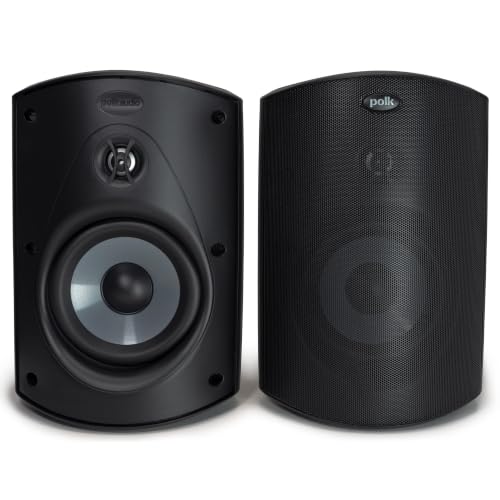
The Polk Audio Atrium 4 pair, model AM4085-A, costs $295 at time of writing, sold by Amazon AU, and returns #11 in Outdoor Speakers on Amazon AU when I checked. It's a passive two-way speaker with a 4.5 inch Dynamic Balance polypropylene woofer and a 3/4 inch anodised aluminium dome tweeter in each box, sold as a pair, and it needs an amplifier to run. Amazon AU sells it directly, so a fault on arrival is an Amazon return rather than a marketplace dispute. The listing's warranty field states 5 years, the same as the other two Polk picks and well ahead of the Yamaha and Pyle fields. Each box is small enough to fit between rafters or tuck into the corner of an alfresco ceiling line.
The listing names a compact design for tight, out of the way installations, certified all-weather durability and a weather-resistant build for patios and decks. Polk's Speed-Lock system mounts the bracket first, then the speaker clicks in, gets aimed and is tightened down, which makes a one-person install on a ladder realistic. The listing doesn't state power handling, impedance or the tests behind its all-weather claim, so I'd check Polk's own spec sheet against your amp before ordering. Speed-Lock also means the speaker comes off its bracket for winter or for painting the wall without unscrewing anything, then clicks back in at the same angle.
This is the pair I'd buy for most covered patios, alfresco areas and balconies, since it's small enough to sit neatly under the eaves and its warranty field runs five years. Pair it with a stereo amp indoors and outdoor-rated cable, and angle both speakers slightly down toward the seating. For a long deck or a pool area I'd look up the range to the Atrium 6 or the Atrium 8, since the 4.5 inch woofer runs out of bass in a big open space. Under a normal patio roof, though, it's the size I'd fit nine times out of ten, and it leaves room to add a second pair on the same amp later if the amp's rated for it.
Honest caveats: Passive, so it needs an amplifier and speaker cable run to it. No power handling, impedance or IP rating is stated, and the all-weather claim names no tests. The 4.5 inch woofer gives less bass on a big open deck than the larger picks. Dimensions are listed in inches.
Best for: Most covered patios and balconies, run from an amp indoors.
Type: Passive two-way, pair • Woofer: 4.5 inch polypropylene • Tweeter: 3/4 inch aluminium dome • Mounting: Speed-Lock bracket • Weatherproofing: All-weather (no tests named) • Warranty: 5 years (listing field) • Model: AM4085-A • Seller: Amazon AU • Rank: #11 in Outdoor Speakers (Amazon AU)
View on Amazon AU
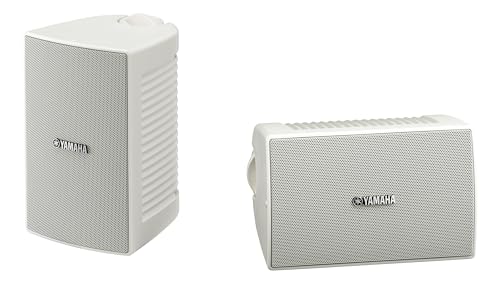
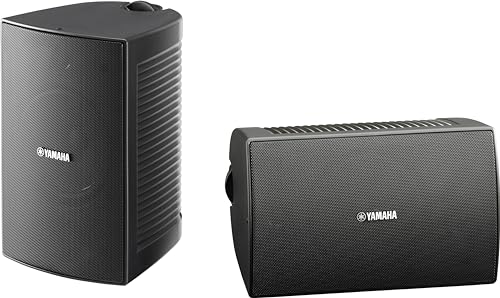
Yamaha NS-AW194 Outdoor Speakers (Pair, White)
ASIN B005EOWGBI • $189 • Ships from Amazon AU
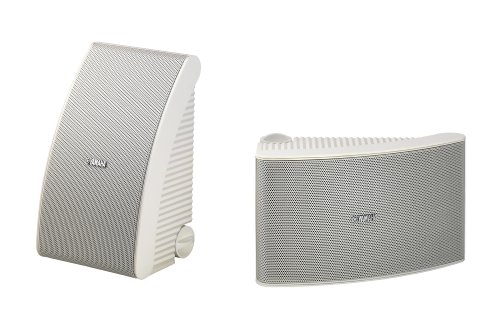
The Yamaha NS-AW194 pair, model ANSAW194WH in white, costs $189 at time of writing, sold by Amazon AU, and returns #21 in Outdoor Speakers on Amazon AU when I checked. It's a passive two-way bass-reflex speaker with a 10cm, about 4 inch, waterproof cone woofer and a 2.5cm fluid-cooled balanced dome tweeter, with a stated response of 100Hz to 20kHz. Amazon AU sells it directly, so a fault on arrival is an Amazon return. The listing mentions two sizes and two colours in the range, so check you've got the NS-AW194 in the colour you want before ordering. It's the smallest woofer of the five picks, so it's built for close listening rather than filling a yard.
The listing states drip, water and UV resistant cabinets and powder-coated grilles, which is the most specific weatherproofing description of the five. The supplied brackets mount the speakers upright or on their side and move through 81 degrees left, right, up and down, and push-type terminals take bare speaker wire without tools. The listing also says it suits indoor installs, so a pair can sit in a garage, a games room or an enclosed patio as well as outside. Like the Polk picks, it needs an amp indoors to drive it. Push terminals are quicker than screw posts, but check each wire is fully home and the insulation is stripped back far enough, since a loose strand is the usual cause of one side cutting out.
This is the one for a small courtyard, a balcony or under a pergola, where background music is the job and a compact white box suits the wall. The 100Hz lower limit means bass is light, so keep expectations to background music and use stainless fixings near the beach. If the courtyard is bigger than you thought once they're up, a second pair on the same amp covers more ground better than turning one pair up hard. Keep them under cover anyway, because a UV-resistant cabinet still lasts longer out of direct afternoon sun, and the brackets make it easy to angle them away from the worst of it.
Honest caveats: Passive, so it needs an amplifier. The listing's warranty field says 1 year, against 5 years on the Polk picks. No power handling, impedance or IP rating is stated. The 100Hz lower limit means light bass outdoors, so it won't thump at party volume.
Best for: Small courtyards and balconies wanting background music.
Type: Passive two-way bass-reflex, pair • Woofer: 10cm waterproof cone • Tweeter: 2.5cm balanced dome • Response: 100Hz to 20kHz (stated) • Weatherproofing: Drip, water and UV resistant (stated) • Brackets: 81 degree adjustment • Warranty: 1 year (listing field) • Seller: Amazon AU • Rank: #21 in Outdoor Speakers (Amazon AU)
View on Amazon AU
Polk Audio Atrium 6 Outdoor Speakers (Pair, White)
ASIN B00378KMG4 • $439.99 • Ships from Amazon AU
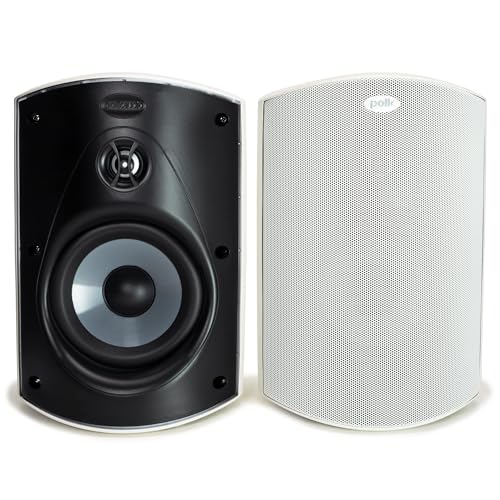
The Polk Audio Atrium 6 pair, model AM6088-A in white, costs $440 at time of writing, sold by Amazon AU, and returns #6 in Outdoor Speakers on Amazon AU when I checked. It's a passive two-way speaker with a 5.25 inch Dynamic Balance polypropylene woofer, a 1 inch anodised aluminium dome tweeter and Polk's PowerPort bass vent. Amazon AU sells it directly, so a fault on arrival is an Amazon return, and the listing's warranty field states 5 years. The rank puts it among the better-selling outdoor speakers on Amazon AU. White suits light eaves and cladding, so check it matches the house before you order.
Its weatherproofing claim is the best documented of the five: the listing says it's built to meet industrial and military environmental standards, including UV, salt-fog and immersion tests. The Speed-Lock mounting system allows one-handed installation with fixed angle settings, and Polk pitches it at medium to large outdoor spaces. PowerPort is Polk's vented port design, which the listing says gives extra bass output and smoother airflow, and on an open deck that extra low end is where a larger box earns its keep. Those named tests don't add up to an IP rating, but they're more detail than any other listing here gives, which is why I'd trust it nearest the salt.
This is the pair for a big deck, a pool area or a house near the beach, where salt air and full sun wear a speaker out faster. Run it from an amp with some headroom, since a bigger space tempts you to turn it up, and check Polk's spec sheet for impedance first. Near the beach, use stainless screws on the brackets and a dab of dielectric grease on the terminals after wiring, and give the grilles a rinse with fresh water every few months to stop salt building up. On a big deck a pair of these, angled down from the eaves toward the seating, covers more ground than a single larger speaker, and the Speed-Lock brackets make re-aiming them easy after you've lived with them a while.
Honest caveats: Passive, so it needs an amplifier. No power handling, impedance or IP rating is stated, though the named tests are more than the others give. This listing is the white version, so check the colour before ordering. Dimensions are listed in inches.
Best for: Big decks, pool areas and coastal houses.
Type: Passive two-way, pair • Woofer: 5.25 inch polypropylene • Tweeter: 1 inch aluminium dome • Bass: PowerPort vent • Weather testing: UV, salt-fog, immersion (stated) • Warranty: 5 years (listing field) • Model: AM6088-A • Seller: Amazon AU • Rank: #6 in Outdoor Speakers (Amazon AU)
View on Amazon AU
Polk Audio Atrium 8 Outdoor Speaker (Single, Black)
ASIN B00378KMIC • $383.99 • Ships from Amazon AU
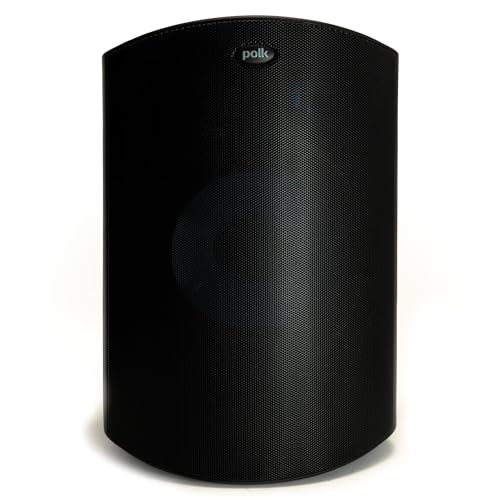
The Polk Audio Atrium 8, part ATRIUM8B in black, costs $384 at time of writing for a single speaker, sold by Amazon AU, and returns #1 in Outdoor Speakers on Amazon AU when I checked, the best category rank of the five. It's a passive speaker with a 6.5 inch woofer and dual tweeters, and the listing states 125 watts of power handling. Amazon AU sells it directly, so a fault on arrival is an Amazon return, and the listing's warranty field states a 5 year manufacturer warranty, matching the other Polk picks. It's the only single-speaker listing among the five picks, so read the price as one box.
The feature that sets it apart is an integrated single and dual input switch. Set one way, a single Atrium 8 plays both stereo channels on its own; set the other, two of them run as left and right. The listing names a rugged enclosure built for rain, sun and extreme conditions, and an included bracket for walls, ceilings or outdoor structures. That switch is why it suits a spot where there's only room, or cable, for one speaker. It's also the largest woofer of the five, which helps on an open patio where bass falls away fast. For a corner of a patio or the end of a long deck, one box playing both channels beats a stereo pair where half the seats hear one side.
This is the pick if one speaker has to cover a patio, or if you'd rather start with one and add a second later. Mount it under cover, angled down toward the seating, and use outdoor-rated cable back to the amp. Run it in single-speaker stereo mode first, and if one box isn't enough once you've lived with it, add a second and flip the switch to dual. Check your amp can drive it, since it's the biggest woofer of the five and the 125 watt rating is the only power figure any pick states. Under cover and angled down, it suits a bigger space than the Atrium 4 can fill on its own.
Honest caveats: Sold as a single speaker, not a pair, so two cost about double the listed price. Passive, so it needs an amplifier, and one-speaker stereo usually means running both amp channels to it. No impedance or IP rating is stated, and the weather claim names no tests.
Best for: One speaker covering a patio, with room to add a second.
Type: Passive, single speaker • Woofer: 6.5 inch • Tweeters: Dual • Power handling: 125W (stated) • Stereo: Single or dual input switch • Warranty: 5 years (listing field) • Model: AM8085-A • Seller: Amazon AU • Rank: #1 in Outdoor Speakers (Amazon AU)
View on Amazon AU
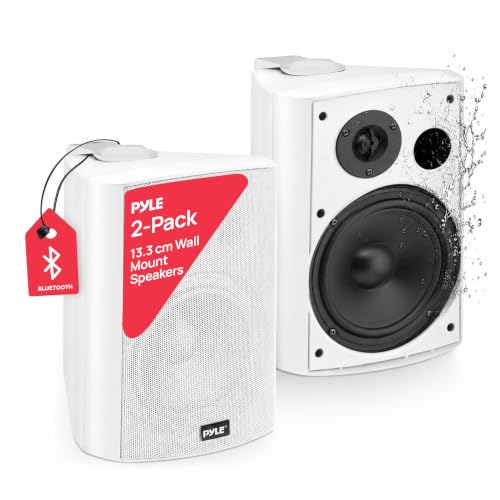
Pyle PDWR51BT 5.25 Inch Bluetooth Outdoor Speakers (Pair, White)
ASIN B01954Q028 • $179.99 • Ships from Amazon AU
The Pyle PDWR51BT pair, in white, costs $180 at time of writing, sold by Amazon AU, and returns #5 in Outdoor Speakers on Amazon AU when I checked, a rank shared across its listing family of sizes and colours. It's a powered two-way pair with a built-in amplifier and Bluetooth, 5.25 inch speakers and adjustable wall-mount brackets included. Amazon AU sells it, so a fault on arrival is an Amazon return, and the listing's warranty field states 1 year limited. The same listing family also covers 6.5 inch and black versions, so check the size and colour before ordering. Of the five picks, it's the only one that doesn't need an amplifier.
The listing names Bluetooth streaming from a phone, tablet or laptop, a marine grade waterproof design in the title, and weather-resistant construction for patios, gardens, decks and pools. It doesn't state an amplifier power figure, a Bluetooth range or version, an IP rating or anything about the power supply, which is the gap that matters on a powered outdoor speaker. Before you mount it, unpack it, check the power supply for an Australian plug and RCM mark, and test Bluetooth from where you'll actually sit. A powered speaker that fails a basic check is a return, not a project. That missing detail is why it sits behind the passive picks for me, even though it's the simplest to get playing once it's up on the wall and paired.
This is the pair if you've got no amplifier and no plans for one, and a covered spot near a weatherproof powerpoint to run it from. Keep the power supply indoors or in a weatherproof outlet, never in an open powerpoint, and pair it from a phone kept outside. It suits a granny flat, a garage or a covered pergola where running cable to an amp inside isn't practical. If the power supply turns out to be a plug pack, keep it indoors and run the low-voltage lead out to the speakers, rather than leaving the plug pack outside. If the Bluetooth range doesn't reach from where you sit, move the speakers closer to the seating before you drill a second set of holes.
Honest caveats: The power supply isn't described, so check for an Australian plug, a 220 to 240V rating and an RCM mark on arrival. No IP rating, amp power or Bluetooth version is stated. The warranty field says 1 year limited. The amp and radio live outside, so keep it well under cover.
Best for: No amp in the house and none wanted.
Type: Powered two-way pair • Speakers: 5.25 inch • Input: Bluetooth • Weatherproofing: Marine grade (title, no rating) • Power supply: Not described on the listing • Warranty: 1 year limited (listing field) • Model: PDWR51BTWT • Seller: Amazon AU • Rank: #5 in Outdoor Speakers (Amazon AU, listing shared)
View on Amazon AUSide-by-side comparison
| Product | Price | Best for |
|---|---|---|
| Pyle Outdoor Bluetooth Speakers Pair | ~$179.99 | |
| Yamaha NS-AW194 Pair of Outdoor Speakers | ~$189 | |
| Polk Audio Atrium 4 All-Weather Outdoor… | ~$295 | |
| Yamaha NS-AW294 Pair of Outdoor Speakers | ~$337.92 | |
| Polk Audio Atrium 5 Outdoor Speakers | ~$359.99 | |
| Yamaha NS-AW592 Pair of Outdoor Speakers | ~$361.14 | |
| Polk Audio Atrium 8 Outdoor Speaker | ~$383.99 | |
| Polk Audio Atrium 6 Outdoor Speakers White | ~$439.99 |
What we see fail in the workshop: outdoor speakers
Outdoor speakers mostly fail slowly. The owner notices one side getting quieter or crackly over a summer, and by the time it's looked at, the cause has usually been building for years. These are the three faults we see most, and nearly all of them come down to where and how the speaker was mounted, so a bit of care at install time prevents most of them.
Corroded terminals and cable
The most common fault isn't the speaker at all. Water runs down the cable, sits in the terminal and turns the copper green, and the connection goes intermittent before it fails, so one side cuts in and out after rain or in the wind. The fix is usually cutting back to clean copper and re-terminating. The prevention is a drip loop so water falls away before the terminal, outdoor-rated cable and a terminal that isn't facing up. On the coast, a dab of dielectric grease on the terminals after wiring slows the salt down a lot.
Sun-rotted surrounds
The ring of foam or rubber that holds the woofer cone in place is what UV goes after. In full afternoon sun it hardens, cracks and eventually tears, and the speaker buzzes or rattles on bass notes. Polypropylene cones like the Polk woofers hold up better than paper, but the surround still ages. Once a surround splits, an outdoor speaker is usually a replacement rather than a repair, since the labour costs more than the box is worth. Mounting under the eaves, out of direct sun, adds years, and a speaker on a north or west wall in full sun is the one I'd expect to fail first.
Water in powered speakers, and cooked tweeters
Powered Bluetooth speakers add a circuit board and a power supply to the list. Moisture that gets past a seal corrodes the amp board, and the usual signs are a speaker that won't power on, hums or keeps dropping Bluetooth. That board is rarely sold as a part. Passive speakers have a different weak point, the tweeter. Turning a small amp up until it distorts sends a harsh clipped signal into the tweeter, and outside, where everything sounds quieter, people do it a lot. A bigger amp run within its limits is kinder to tweeters than a small one flat out.
Decision tree: which one should you actually buy?
- Covered patio, want the best all-rounder? → The Polk Atrium 4 pair, run from a stereo amp indoors.
- Small courtyard or balcony, background music? → The Yamaha NS-AW194 pair, with its 1-year warranty field in mind.
- Big deck, pool area or a house near the beach? → The Polk Atrium 6 pair, with UV, salt-fog and immersion tests named.
- Only room or cable for one speaker? → The Polk Atrium 8, which plays stereo from one box with its input switch.
- No amp and don't want one? → The Pyle PDWR51BT Bluetooth pair, once you've checked its power supply for an Australian plug and RCM mark.
- Phone or laptop you stream from playing up? → If its charging port is loose or its Bluetooth keeps dropping, bring it into our Erina workshop and we'll tell you what it needs before you spend anything.
Frequently asked questions
Do outdoor speakers need an amplifier?
Passive outdoor speakers do, and that includes the Polk Atrium and Yamaha picks. They run from a stereo amp or an AV receiver inside the house through speaker cable. Powered pairs like the Pyle Bluetooth pick have the amplifier built in, so they only need power and a phone to pair with. Passive is more work to install but keeps the electronics indoors, and in my experience that's usually why a passive pair lasts longer outside.
Can outdoor speakers be left out in the rain?
Most are built to handle rain under cover, but none of the five picks states an IP rating, so I wouldn't leave any of them in open, driving rain if there's a choice. Mount them under the eaves, angled slightly down, with a drip loop in the cable. The Polk Atrium 6 names UV, salt-fog and immersion tests, and the Yamaha states drip, water and UV resistant cabinets. The Pyle says weather-resistant with no rating, so keep it well covered.
What size outdoor speaker do I need?
Go a size up from what you'd use indoors, because bass falls away fast in the open with no walls to reflect it. For a balcony or small courtyard, a 4 to 4.5 inch woofer like the Yamaha or the Atrium 4 usually does the job for background music. For a big deck or pool area, look at 5.25 to 6.5 inch woofers like the Atrium 6 or the Atrium 8. Check your amp can drive them before you buy.
Do I need an electrician to install outdoor speakers?
Not for passive speakers. Speaker cable is low voltage, so mounting the speakers and running cable back to an amp indoors is a reasonable DIY job if you fix the brackets into something solid. Powered speakers need mains power outside, and in Australia a new outdoor powerpoint has to be installed by a licensed electrician. It should be a weatherproof outlet on an RCD-protected circuit, and plug packs shouldn't sit in an open outlet in the weather.
Why do Bluetooth outdoor speakers keep dropping out?
Usually the phone is too far away or there's a wall in the way. Bluetooth range drops a lot through brick, glass and metal, so a phone left inside the house often loses the speakers on the patio. Keep the phone outside near the speakers, or run passive speakers from an amp with Bluetooth or streaming indoors. The Pyle listing doesn't state a Bluetooth range or version, so test it in your space before you mount it permanently.
How long do outdoor speakers last?
It depends mostly on sun, salt and how they're mounted. A passive speaker under the eaves, out of direct sun, often lasts many years, and the usual end is a cone surround that's gone brittle or corroded terminals. A speaker in full afternoon sun or salt spray ages much faster. Powered speakers add an amp board that moisture can reach. Warranty fields on the picks run from 1 year on the Yamaha and Pyle to 5 years on the Polk picks.
Related buying guides
Speaker gone quiet or crackly?
If an outdoor speaker has gone quiet on one side, crackles in the wind or a powered pair won't turn on after rain, it's usually corrosion, a split surround or water in the amp. Bring it into our Erina workshop and we'll tell you whether it's worth fixing before you spend anything.
Visit our Erina workshop Book Online