Prices from Amazon AU, updated daily. Swipe or use the arrows for more.
Disclosure: This article contains affiliate links to amazon.com.au. If you buy through one of these links iFix may earn a small commission at no extra cost to you. It doesn't change which products we recommend. We focus on what actually lasts based on 16 years of repair-shop experience.
Quick summary8 picks
- Entry PickEdifier MR4.5 Bi-Amped Studio Monitor about$28950Hz refresh, 4.5" screen, 80W.
- Polk Audio Monitor XT15 Bookshelf Speakers… about$330.241" screen.
- Yamaha NS-BP102 Pair of Bookshelf Speakers… about$331.951" screen.
- Audioengine A2+ Wireless Computer Speakers about$397
- Yamaha HS4 B Compact 2-Way Powered 4.5-Inch… about$47860 Hz refresh, 4.5" screen, 26W.
- Edifier R2750DB MKII Powered Bookshelf… about$5497" screen, 144W.
- Polk Audio Signature Elite ES20 Bookshelf… about$84944Hz refresh, 1" screen.
- Most PremiumKEF Coda W Wireless HiFi Speaker about$1,116.50200W.
Passive or powered: where the amplifier lives
Every speaker needs an amplifier, and the only real question is where it sits. A passive speaker like the Polk Monitor XT15 is just drivers, a crossover and a box, so you need a stereo amplifier to drive them or a receiver sitting on the shelf beside it. A powered speaker has the amp built into the cabinet, usually inside one of the pair, and you plug your phone, TV or computer straight into it. That one choice decides what else you have to buy, what can fail and what it costs to fix later.
Passive pairs are the older, simpler idea, and I still like them for anyone who already owns an amp or wants to upgrade one part at a time. There's nothing in the box that can go out of date. A good passive speaker from ten years ago is still a good passive speaker today, and if the amp dies you swap the amp, not the speakers. The catch is the extra box, the speaker cable and the fact that the total price is the speakers plus the amp, not just the number on the speaker listing.
Powered speakers are where most people end up now, mostly because they're one purchase and one power point. You get Bluetooth, sometimes HDMI or USB, and the amp is matched to the drivers by the people who designed them. The trade-off is that the electronics and the speakers live and die together. If the amp board fails out of warranty, you're looking at a repair on a board that's specific to that model, and some brands don't sell those boards to anyone outside their own service network.
For this guide I picked one passive pair and four powered pairs, because that's roughly how the Amazon AU sales ranks split right now. The passive Polk is the best seller in the category by rank, which tells you plenty of people are still pairing speakers with an amp they already have. The four powered picks cover a desk, a small studio, a TV and a living room, so the right one mostly comes down to what you're plugging in.
Impedance, sensitivity and matching an amp
If you go passive, two numbers matter more than the wattage on the box. Impedance, quoted in ohms, is how hard the speaker is for the amp to drive. Most home speakers are rated at 6 or 8 ohms, and Polk lists the XT15 as compatible with both 4 and 8 ohm amps, which is a loose way of saying it isn't a difficult load. Sensitivity tells you how loud the speaker gets from a given amount of power, and a higher figure means a smaller amp will do.
The mistake I see most is people chasing big amp wattage to protect small speakers, or the reverse. A tiny 20W amp pushed into clipping will kill a tweeter faster than a 100W amp running comfortably, because a clipped signal sends square-edged energy straight to the smallest driver. In my experience, an amp with a bit more headroom than you think you need, run at sensible volume, is the safest pairing. You'll hear it when it starts to strain, and that harsh, gritty sound is your cue to turn it down.
Speaker cable doesn't need to be exotic. For bookshelf runs of a few metres, ordinary 16 gauge copper is fine, and the money is better spent elsewhere. What does matter is the termination. Loose strands at the binding posts can touch the other terminal and short the amp output, and that's a fault we see after people move house and rewire in a hurry. Twist the strands tight, use banana plugs if your amp takes them, and check both ends before you switch on.
If the speakers are going on a TV, think about an AV receiver rather than a two-channel amp. A receiver gives you HDMI switching, room correction and bass management for a sub later. A stereo amp gives you a cleaner path for music and fewer menus. Neither is wrong, it just depends on whether the speakers spend more time on films or records.
Powered speakers: inputs that matter
With powered speakers, the inputs decide whether the pair fits your setup or ends up on Marketplace in six months. Bluetooth is on all four powered picks here, but the codec varies. The Edifier R2750DB MKII supports LDAC, the Audioengine A2+ supports aptX HD and the KEF Coda W supports aptX Adaptive and aptX Lossless. In practice, the codec only matters if your phone supports it, and most iPhones only send AAC, so don't pay extra for a codec your phone can't use.
HDMI eARC is the input to look for if the speakers are going under a TV. It lets the TV send sound to the speakers over one cable and lets the TV remote control the volume. Of the picks here, only the Edifier R2750DB MKII lists HDMI eARC, along with optical and coaxial. Optical works fine for stereo TV sound too, but you usually lose remote volume control unless the speakers learn your TV remote, and that's fiddly.
For a computer, USB is the cleaner path. The Audioengine A2+ connects over USB-C and has its own 24-bit DAC, so the computer sends digital audio and the speaker handles the conversion. That avoids the hiss and buzz you sometimes get from a laptop's headphone socket, especially while it's charging. Studio monitors like the Yamaha HS4 go the other way, with balanced XLR/TRS combo inputs that suit an audio interface and ignore Bluetooth altogether.
Check for a subwoofer output too. The Edifier lists a dedicated sub out, which makes adding a small subwoofer later a one-cable job. Without one, you're relying on the sub's own high-level inputs or a splitter, and that's where hum and level problems usually start.
Placement, stands and the wall behind them
Where you put bookshelf speakers changes the sound more than most upgrades. A speaker jammed into a bookshelf cavity sounds boomy because the shelf walls reinforce the bass, and a rear-ported speaker pushed against a wall does the same thing. Pull them forward so the front baffle is roughly level with the shelf edge, and give rear ports at least 15 to 20 cm of space behind them if you can.
Height matters as much as distance. Tweeters are directional, so they sound best when they're roughly at ear height and pointed at you. On a desk, that usually means a pair of angled pads or small stands, because flat on the desk they fire at your chest. The Yamaha HS4 comes with anti-slip pads in the box, which helps with vibration but not the angle. A couple of dense rubber wedges under the front edge fix that for a few dollars.
Stands are worth it for a living room pair. A solid, filled stand at the right height gets the speaker off a resonant cabinet and away from the wall, and it's the single biggest change I'd make before spending more on speakers. If you have kids or pets, look for stands with a top plate you can fix the speaker to, because a 4 kg box falling off a stand onto a tiled floor is a cracked cabinet and a dented woofer.
Leave a gap between the speakers too. A rough triangle, with the two speakers and your seat at the corners, is the usual starting point. Move them in small steps and listen to a voice you know well. If the singer sounds like they're in the middle and the bass doesn't swamp everything, you're close enough.
Bookshelf speakers, a soundbar or a subwoofer
A lot of people looking at bookshelf speakers are really trying to fix TV sound. If that's you, a pair like the Edifier R2750DB MKII on HDMI eARC will usually beat a soundbar at the same money for music and dialogue width, because the two speakers are physically further apart. A soundbar wins on tidiness and on surround tricks, and it's a better choice if there isn't room for two boxes beside the TV.
Bass is the other trade-off. Small bookshelf speakers roll off in the low end, and Yamaha lists the HS4's response as starting at 60 Hz at minus 10 dB, which is honest and tells you there's not much below that. For music on a desk that's fine. For films, you'll probably want a subwoofer eventually, and a sub out on the speakers or amp makes that much easier.
I wouldn't buy bookshelf speakers expecting them to fill a big open-plan room at party volume. They're happiest in a bedroom, study or average lounge, at normal listening levels. Push a small pair hard enough to fill a large space and you're into the clipping territory that blows tweeters, which brings us back to the faults we actually see.
What goes wrong with each type
Passive speakers are mostly mechanical. The failures we see are blown tweeters from clipping, torn or perished woofer surrounds on older foam designs, and loose crossover joints after a speaker has been dropped. Tweeters are usually a replaceable part on mainstream brands, and surrounds can be redone, so a passive pair is generally worth fixing if the cabinet is in good shape.
Powered speakers bring the usual electronics faults. The amp board and power supply sit in a warm box with no fan, and the electrolytic capacitors in the supply are the parts that age first. Symptoms are a pop at switch-on that gets worse, hum that wasn't there before, or a speaker that cuts out after twenty minutes as it warms up. Bluetooth modules also fail, usually as dropouts or a pair that won't re-pair after a firmware update.
Then there's the cable between the two speakers. Many powered pairs, the Edifier and Audioengine included, put the amp in one speaker and run a cable to the other. A crushed or kinked link cable gives you one dead speaker and a lot of head-scratching. Swap the cable before you assume the amp has failed, because it's the most common fault by a long way and the easiest to rule out.
Power supply quality matters here too. Some powered speakers use an external brick, and the knock-off replacements sold online are often the same as the no-name power supplies we test for phones: no proper isolation, wrong voltage under load and no RCM mark. If the original brick dies, get the correct replacement from the brand or have the speaker checked at our Erina workshop before you plug in a generic one.
Warranty and who is actually selling them
Warranty on these picks runs from one year to five, and it's worth reading before you choose. Polk lists a 5 year warranty on the Monitor XT15, Audioengine lists 3 years on the A2+, KEF lists 2 years, and both the Yamaha HS4 and Edifier R2750DB MKII list 12 months. For passive speakers, a shorter warranty matters less because there's less to fail. For powered pairs, it's the amp board you're insuring, and a longer term counts for more.
Seller matters as much as the warranty. The Polk, Yamaha and KEF listings here are sold by Amazon AU, the Audioengine A2+ is sold by Audioengine AU and the Edifier is sold by Ventchoice Australia. That's good news for returns and for Australian Consumer Law, which sits on top of any manufacturer warranty. I've avoided overseas sellers and import listings, because a powered speaker shipped from overseas may carry a different plug, a different supply and no local support.
Keep the box for the first few months if you have the room. Powered speakers that fail early often do it in the first few weeks, and a return goes much more smoothly when the speakers go back in the packaging they came in.
Power use and electrical safety
Powered speakers draw very little power compared with a heater or kettle. As a rough example, a pair drawing 50W while playing for four hours a day uses 0.2 kWh, which is about 6.6c a day at the AU average tariff of roughly 33c/kWh. The listings here don't publish standby draw, so if that matters to you, plug them into a smart plug with energy monitoring and read the real figure after a week.
Plug a hi-fi into a surge-protected powerboard, not a double adaptor hanging off the wall. Amp power supplies are a common storm casualty on the Central Coast, and a decent surge board costs far less than a replacement amp board. Check for the RCM mark on the speaker or its power supply, keep the cables tidy and away from heaters, and don't run a powerboard off another powerboard.
If a speaker ever smells hot, buzzes loudly with no input, or trips the safety switch, unplug it at the wall and leave it unplugged. Those are power supply faults, not sound problems, and they're the ones worth getting looked at before the speaker goes back on the shelf.
The 5 picks, $330 to $1,116
Prices are Amazon AU at time of writing (3 November 2026) and move week to week. Ranks are Amazon AU category sales ranks, checked the same day.

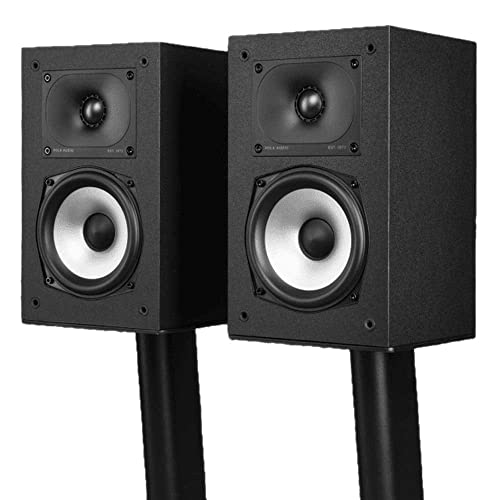
Polk Audio Monitor XT15 Passive Bookshelf Speakers (Pair)
ASIN B09BMXVQFT • $330.24 • Ships from Amazon AU
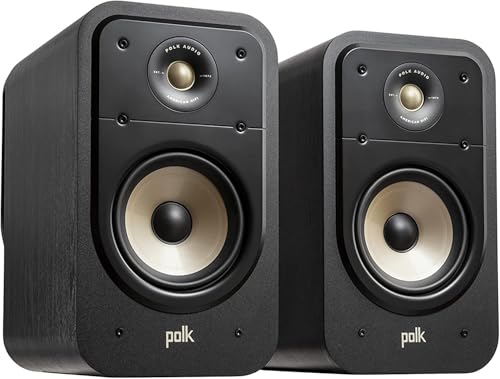
The Polk Monitor XT15 is the pair I'd start with if you already own an amp or a receiver. It's $330 from Amazon AU and ranks #6 in Amazon AU's Bookshelf Hi-Fi Speakers category, the best rank of any speaker I looked at in this band. It's a passive two-way design with a 1 inch tweeter and a 5.25 inch woofer, so there's no amp, no Bluetooth and nothing to update. Polk says it works with both 4 and 8 ohm amps, which in practice means most home amplifiers and AV receivers will drive it without fuss. The part number is MXT15BK and the listing weight is 9 lb. It's the speaker I'd suggest to most people asking where to start.
Polk designed the XT series to match the rest of its Monitor XT range, so these can start as a stereo pair and later become the front or rear speakers in a surround setup with the matching centre, towers and sub. The listing mentions Dolby Atmos and DTS:X, but that's really about the receiver they're connected to, not the speakers themselves. What matters more for most people is that the cabinet is compact enough for a shelf or a desk, and the speakers can sit on stands or any flat surface. It's a sensible, low-risk way into proper hi-fi sound without buying into a closed system. You can also swap the amp later without touching the speakers.
This is the pick for anyone pairing speakers with a stereo amp or receiver they already own. Polk lists a 5 year warranty, which is the longest here, and Amazon AU is the seller. Budget for the amp if you don't have one, plus a few metres of speaker cable. Give the rear port some room from the wall. Keep the volume below the point where it sounds harsh. As a passive pair, it's also the easiest one here to repair later. A tweeter or a surround is a common part on Polk speakers, so a fault years from now usually isn't the end of them.
Honest caveats: Honest caveats: these are passive, so you need a separate amp or receiver, and that adds to the real cost. The listing doesn't state sensitivity or a power handling figure. The Atmos and DTS:X claims depend on the receiver, not the speakers. The 9 lb weight on the listing doesn't say whether it's per speaker or the pair.
Best for: People who already own a stereo amp or AV receiver and want a well-ranked passive pair with a long warranty.
Type: Passive 2-way bookshelf (pair) • Drivers: 1 inch tweeter, 5.25 inch woofer • Impedance: 4 and 8 ohm amp compatible • Amp needed: Yes, separate amp or receiver • Part number: MXT15BK • Warranty: 5 years (listing) • Seller: Amazon AU • Rank: #6 in Bookshelf Hi-Fi Speakers (Amazon AU)
View on Amazon AU
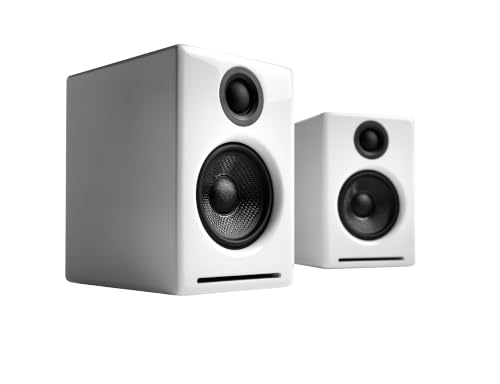
Audioengine A2+ Wireless Powered Desktop Speakers, White
ASIN B07MYW4Q8S • $397 • Sold by Audioengine AU on Amazon AU
The Audioengine A2+ is the pair I'd put on a desk. It's $397 from Audioengine AU and ranks #7 in Amazon AU's Bookshelf Hi-Fi Speakers category, right behind the Polk. These are small powered speakers built for nearfield listening, which means sitting about an arm's length away rather than across a room. The amp is built in, and the cabinets are real wood rather than plastic, which helps cut the boxy resonance plastic desktop speakers often have. The part number on this white version is A2+BT-WHT and Audioengine lists a 3 year warranty, which is good for a powered pair at this price. It's also sold by the brand's own Australian storefront.
Connection is where the A2+ earns its spot. It has a built-in 24-bit DAC that takes digital audio from a computer over USB-C, so you skip the computer's own headphone output and the hiss or charging buzz that often comes with it. There's Bluetooth 5.3 with aptX HD for phones and tablets, plus RCA and 3.5 mm inputs for a TV, a turntable with its own preamp or a games console. Audioengine says setup doesn't need an app, which I like, because an app is one more thing that can stop being supported. The listing doesn't state the amplifier power, so I can't compare it directly with the others on output.
This is the one for a home office, a bedroom or a study desk. The listing weight is 6 lb and the speakers are about 7 inches tall, so they fit under most monitors. Angle them up toward your ears with pads. Use the USB-C input from a computer for the cleanest sound. Check the link cable between the speakers if one goes quiet. For a desk setup, it's the easiest pick here to live with. If you later want more bass on the desk, a small sub is the usual next step rather than bigger speakers.
Honest caveats: Honest caveats: the listing doesn't state the amplifier power or frequency response. These are desktop speakers, so they won't fill a large lounge at volume. There's no sub out listed and no HDMI. The amp lives in one speaker, so the link cable between them is a single point of failure worth keeping undamaged.
Best for: A computer desk, home office or bedroom where you want USB-C, Bluetooth and a small footprint.
Type: Powered desktop speakers (pair) • Inputs: USB-C, RCA, 3.5 mm, Bluetooth • Bluetooth: 5.3 with aptX HD • DAC: Built-in 24-bit • Cabinet: Real wood • Part number: A2+BT-WHT • Warranty: 3 years (listing) • Seller: Audioengine AU • Rank: #7 in Bookshelf Hi-Fi Speakers (Amazon AU)
View on Amazon AU
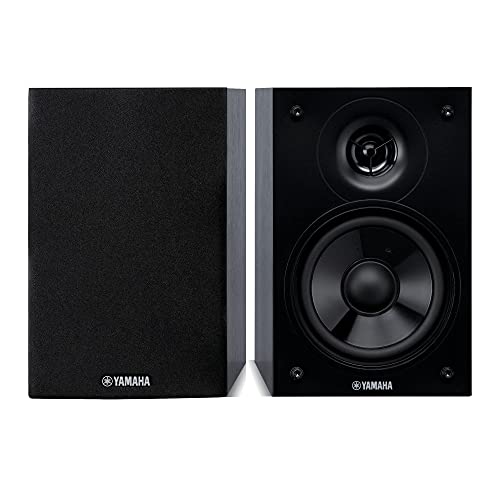
Yamaha HS4 Compact Powered Studio Monitor Speakers, Black (Pair)
ASIN B0F2N3K7VH • $478 • Ships from Amazon AU
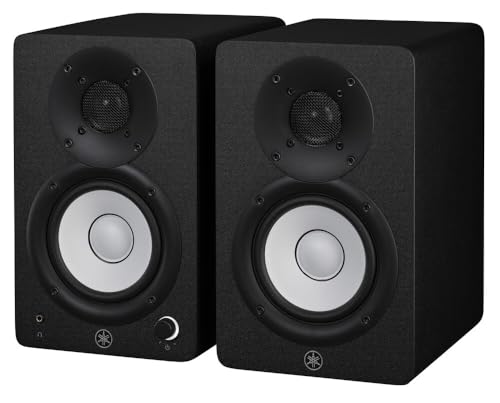
The Yamaha HS4 is a pair of compact powered studio monitors, and it's the pick for anyone recording, editing video or making music at home. It's $478 from Amazon AU and ranks #22 in Amazon AU's Bookshelf Hi-Fi Speakers category. Each speaker has a 4.5 inch cone woofer and a 1 inch dome tweeter in an MDF cabinet. Yamaha lists 26W plus 26W of output into 6 ohms, and a frequency response of 60 Hz to 22 kHz at minus 10 dB. The model number is VFS1030. Those numbers are modest, and that's deliberate: studio monitors are built to sound accurate rather than impressive. That's what you want when you're mixing something that has to sound right on other speakers.
The inputs are aimed at studio gear. There's an XLR/TRS combo socket for an audio interface or mixer, plus RCA and a stereo mini jack for a computer or phone. The power button, volume knob and a headphone socket are on the front, which is handy when the speakers sit either side of a monitor. On the back you get ROOM CONTROL and HIGH TRIM switches, which let you cut the extra bass you get when a speaker sits close to a wall. One class-D amp drives both speakers, so there's a single speaker cable between them, and Yamaha includes that cable along with a stereo mini to RCA lead and anti-slip pads.
This is the pair for a home studio or an editing desk. There's no Bluetooth listed, so it's a wired-only setup. Yamaha lists a 12 month warranty and Amazon AU is the seller. Use the ROOM CONTROL switch if they're near a wall. Keep the speaker cable between them away from chair wheels. Don't expect deep bass from a 4.5 inch woofer. For accurate sound on a desk, it's the one I'd buy. If you also want Bluetooth for casual listening, the Edifier MR5 is a close alternative with wireless built in. Keep the box for the first few weeks, because early amp faults usually show up then.
Honest caveats: Honest caveats: there's no Bluetooth, HDMI or USB input listed, so it's wired only. Bass stops around 60 Hz at minus 10 dB, so you'll want a sub for films. The 12 month warranty is short for a powered pair. Both speakers rely on one amp, so a fault in that speaker silences both.
Best for: Home studios, podcasting and video editing desks that need accurate sound and balanced inputs.
Type: Powered 2-way studio monitors (pair) • Drivers: 4.5 inch woofer, 1 inch dome tweeter • Output: 26W + 26W (6 ohm, dynamic) • Response: 60 Hz to 22 kHz (-10 dB) • Inputs: XLR/TRS combo, RCA, stereo mini • Model: VFS1030 • Warranty: 12 months (listing) • Seller: Amazon AU • Rank: #22 in Bookshelf Hi-Fi Speakers (Amazon AU)
View on Amazon AU
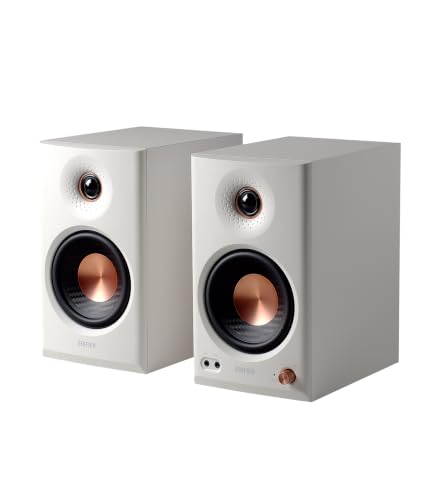
Edifier R2750DB MKII Powered Bookshelf Speakers, Walnut
ASIN B0FYHFZF65 • $549 • Sold by Ventchoice Australia on Amazon AU
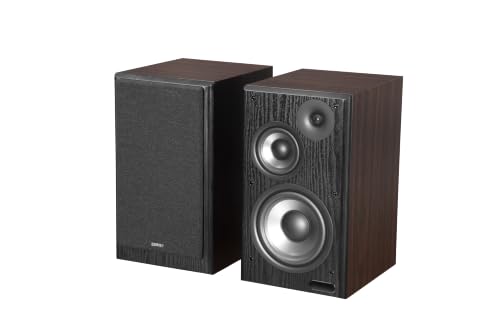
The Edifier R2750DB MKII is the pair I'd put beside a TV. It's $549 from Ventchoice Australia and ranks #41 in Amazon AU's Bookshelf Hi-Fi Speakers category. It's the biggest speaker here, a three-way design with a 7 inch bass driver, a 4.5 inch mid-range driver and a 1 inch silk dome tweeter in each cabinet. Edifier lists 144W RMS in total from a quad-amplified design, which means separate amp channels for the different drivers. The listing also says it handles 24-bit/96kHz audio and carries Hi-Res Audio and Hi-Res Audio Wireless certification. The model is listed as R2750DB MKII. In my experience, three-way speakers this size fill an average lounge without needing a sub.
The inputs are what make it a TV speaker. It's the only pick here that lists HDMI eARC, so the TV sends sound over one cable and your TV remote should control the volume. There's also optical, coaxial and a line input, plus Bluetooth with LDAC for phones that support it. A dedicated sub out means you can add a subwoofer later without splitters. Edifier includes a remote, there are rear knobs for source, volume, bass and treble, and the EDIFIER ConneX app adds four sound presets and a 9-band EQ. That's a lot of control for the money, and most people will set it once and leave it.
This is the pick for a lounge where the speakers sit either side of the TV. The listing weight is about 36 lb, so check your TV unit can take it. Edifier lists a 1 year warranty. Keep the HDMI cable short and good quality. Plug it into a surge-protected powerboard with the TV. Use the sub out if you add a subwoofer. For TV and music in one box, it's the strongest pick here. Keep the walnut cabinets out of direct sun, because the veneer can fade.
Honest caveats: Honest caveats: the warranty is 1 year, which is short for a powered pair with this many electronics in it. These are big, heavy speakers that won't suit a small shelf. The listing doesn't say whether the 36 lb weight is the pair or the shipping box. Its rank is the lowest of the picks.
Best for: Living rooms that want speakers on the TV via HDMI eARC, with room to add a subwoofer later.
Type: Powered 3-way bookshelf (pair) • Drivers: 7 inch bass, 4.5 inch mid, 1 inch silk dome tweeter • Power: 144W RMS total, quad-amplified • Inputs: HDMI eARC, optical, coaxial, line in, Bluetooth LDAC • Sub out: Yes • Extras: Remote, ConneX app with 9-band EQ • Warranty: 1 year (listing) • Seller: Ventchoice Australia • Rank: #41 in Bookshelf Hi-Fi Speakers (Amazon AU)
View on Amazon AU
KEF Coda W Wireless HiFi Speakers (Pair), Nickel Grey
ASIN B0GZT34VLQ • $1,116.50 • Ships from Amazon AU
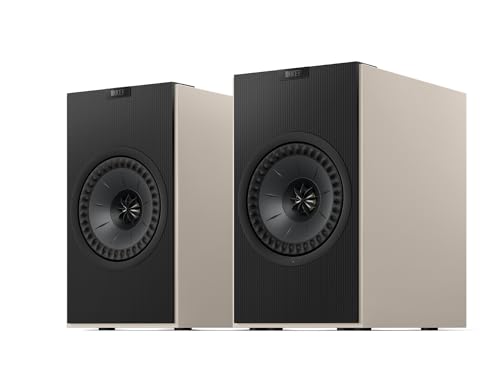
The KEF Coda W is the premium pair here, and it's for a living room where music matters more than TV. It's $1,116 from Amazon AU and ranks #14 in Amazon AU's Hi-Fi Speaker Systems category. Each speaker uses KEF's 5.25 inch 12th generation Uni-Q driver, which puts the tweeter in the middle of the woofer so the sound comes from a single point. In practice that gives you a wider, steadier stereo image, and it's less fussy about where you sit. KEF lists 200W of combined system power, run through its Music Integrity Engine, which is KEF's name for the DSP tuning inside the speakers. KEF's Uni-Q design has been around for decades, so it's a well-proven idea rather than a new experiment.
Connection is simpler than the Edifier, and aimed at music. There's Bluetooth 5.4 with aptX Adaptive and aptX Lossless, which KEF quotes at CD quality, 16-bit/44.1kHz, if your phone supports it. The more useful feature for a lot of people is the built-in phono preamp, so most turntables plug straight in without a separate preamp box. There's also an RCA line input for a turntable that has its own preamp, or for a CD player. The listing doesn't mention HDMI or optical, so it's not the pair I'd buy for TV sound. It was released in October 2025, so it's the newest design in this guide.
This is the pick for a turntable and a phone in a nice room. KEF lists a 2 year manufacturer warranty and Amazon AU is the seller. Check the current listing for inputs before you buy. Give it stands and some space from the wall. Plug it into a surge board with the turntable. If music is the main job and you want one tidy system, it's the one I'd pick. Keep the firmware current through KEF's app if it prompts you, because Bluetooth fixes often arrive that way. A newer design also means parts and boards should stay available for a good while yet.
Honest caveats: Honest caveats: the listing doesn't mention HDMI, optical or USB inputs, so TV use is limited. Bluetooth quality depends on your phone supporting aptX. It's double the price of the Edifier, and you're paying for driver design and finish rather than features. The listing doesn't give a part number or weight.
Best for: Music-first living rooms with a turntable, where one tidy wireless pair beats an amp and speakers.
Type: Powered wireless hi-fi speakers (pair) • Driver: 5.25 inch 12th gen Uni-Q • Power: 200W combined system power • Bluetooth: 5.4, aptX Adaptive and aptX Lossless • Inputs: Phono, RCA line, Bluetooth • Released: October 2025 • Warranty: 2 years manufacturer (listing) • Seller: Amazon AU • Rank: #14 in Hi-Fi Speaker Systems (Amazon AU)
View on Amazon AUSide-by-side comparison
What we see fail in the workshop: bookshelf and powered speakers
Speakers come in for three reasons, and none of them are mysterious. Passive pairs mostly arrive with a blown tweeter or a woofer that's been pushed too hard. Powered pairs come in with amp and power supply faults, usually after a storm or a few hot summers. And a surprising number turn out to have nothing wrong with them except the cable or the setting.
Blown tweeters from clipping
A blown tweeter is the classic passive speaker fault. It usually happens when a small amp is pushed into clipping, which sends harsh, square-edged energy to the smallest driver in the box. The symptom is a dull, muffled sound from one side, or no treble at all. On mainstream brands, a replacement tweeter is often available, and fitting one is a straightforward solder job. The real fix is behind it, though: either a bigger amp with more headroom or keeping the volume below the point where it starts to sound gritty.
Amp boards and power supplies in powered pairs
Powered speakers put the amp and power supply in a closed cabinet with no fan, and heat ages the electrolytic capacitors first. Early signs are a louder pop at switch-on, a low hum that wasn't there before, or one speaker cutting out once the pair warms up. Storms take out power supplies too, usually as a pair that's completely dead. Many of these faults are repairable at component level, but some brands don't sell boards outside their service network, so we'll tell you whether parts exist before you spend anything.
Link cables, settings and Bluetooth
Plenty of speakers come in with nothing wrong inside. A powered pair with one silent speaker is often a damaged link cable between the two, crushed under a desk leg or chewed by a pet. Bluetooth dropouts can be a firmware issue or interference from a 2.4 GHz router sitting right beside the speaker. Hum is usually a ground loop between a TV, a computer and the speakers. We check those first, because swapping a cable or moving a router costs nothing compared with a board repair. It's also why we ask what changed just before a fault started.
Decision tree: which one should you actually buy?
- Already own a stereo amp or AV receiver? → Get the passive Polk Monitor XT15 ($330). It's the best-ranked pair here, has a 5 year warranty and works with most home amps.
- Speakers for a computer desk? → The Audioengine A2+ ($397) has USB-C with its own DAC, Bluetooth and a compact footprint, with a 3 year warranty.
- Recording, podcasting or editing video? → The Yamaha HS4 ($478) gives you balanced XLR/TRS inputs and room controls. It's wired only.
- Want better TV sound with speakers rather than a soundbar? → The Edifier R2750DB MKII ($549) is the only pick with HDMI eARC, plus optical and a sub out.
- Music first, with a turntable? → The KEF Coda W ($1,116) has a built-in phono preamp and Uni-Q drivers. It's the premium pick for a music room.
- Speaker humming, cutting out or dead after a storm? → That's usually the amp board or power supply. Bring it into our Erina workshop and we'll tell you whether it's worth fixing before you spend anything.
Frequently asked questions
Should I buy passive or powered bookshelf speakers?
Buy passive if you already own a stereo amp or AV receiver, or you want to upgrade parts separately over time. Passive speakers have nothing inside to go out of date and are generally easier to repair. Buy powered if you want one purchase with Bluetooth and inputs built in, and you don't want an extra box on the shelf. Powered speakers are simpler to set up, but the amp and the speakers fail together, so warranty length matters more on a powered pair.
Do bookshelf speakers need a subwoofer?
Not for most music at normal volume on a desk or in a bedroom. Small speakers roll off in the low bass, and Yamaha lists the HS4 as starting at 60 Hz at minus 10 dB, so you'll notice the gap on films and some electronic music. If the speakers are on a TV, a sub usually makes a bigger difference than a more expensive pair of speakers. A speaker or amp with a dedicated sub out, like the Edifier R2750DB MKII, makes adding one later a simple job.
What size amplifier do I need for passive bookshelf speakers?
Match the amp to the speaker's impedance first, and most home amps handle 6 to 8 ohm speakers like the Polk Monitor XT15 without trouble. After that, more headroom is usually safer than less. A small amp pushed into clipping sends harsh energy to the tweeter and blows it faster than a bigger amp at sensible volume. If you hear the sound turn harsh or gritty as you turn it up, that's the amp running out of power, and the cue to turn it down.
Can I connect powered speakers to my TV?
Yes, and HDMI eARC is the cleanest way. It sends the TV sound over one cable and lets the TV remote control the volume. Of the picks here, the Edifier R2750DB MKII lists HDMI eARC, along with optical and coaxial. Optical also works for stereo TV sound, but volume control is usually separate. Speakers without HDMI or optical, like the KEF Coda W in this guide, are better suited to music than TV.
How far from the wall should bookshelf speakers be?
Give rear-ported speakers at least 15 to 20 cm from the wall behind them if you can, and pull them forward so the front sits roughly level with the shelf edge. Closer to the wall usually means more bass, but it can turn boomy and muddy. Tweeters should be near ear height and pointed toward where you sit. Small angled pads on a desk or solid stands in a lounge make a bigger difference than most people expect.
Why is one of my powered speakers silent?
Check the link cable between the two speakers first. Most powered pairs, including the Edifier and Audioengine picks here, put the amp in one speaker and run a cable to the other, and a crushed or loose cable is the most common reason one side goes quiet. Also check the balance setting on the source. If a new cable doesn't fix it, the fault is likely in the amp board, and that's worth having checked before replacing the pair.
Related buying guides
Speaker humming, crackling or dead after a storm?
Most powered speaker faults are on the amp board or power supply: tired capacitors causing hum, a supply taken out by a surge, or a Bluetooth module dropping out. Passive pairs usually need a tweeter or a surround. Bring them into our Erina workshop and we'll check the cable, the amp and the drivers, and tell you whether parts exist before you spend anything.
Visit our Erina workshop Book Online