Prices from Amazon AU, updated daily. Swipe or use the arrows for more.
Disclosure: This article contains affiliate links to amazon.com.au. If you buy through one of these links iFix may earn a small commission at no extra cost to you. It doesn't change which products we recommend. We focus on what actually lasts based on 16 years of repair-shop experience.
Quick summary8 picks
- Entry PickFosi Audio MC351 2.1 Channel Integrated… about$300165W.
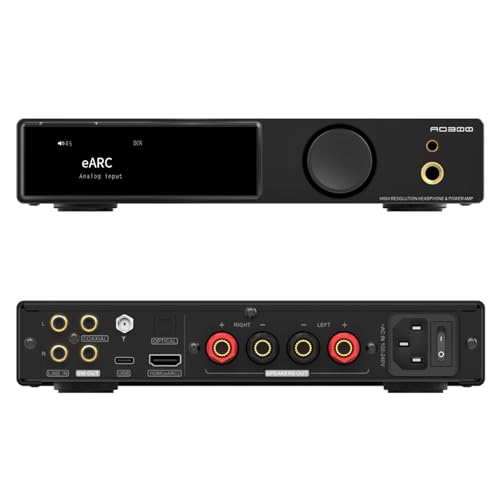
- SMSL AO300 PRO DAC Amplifier | CS43131… about$399165W.
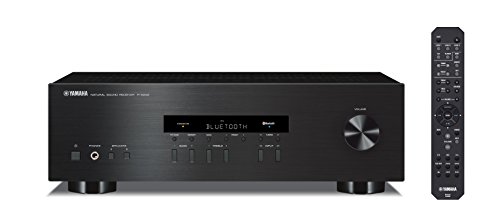
- Yamaha R-S202 2-Channel Natural Sound… about$47940 Hz refresh, 100W.
- Yamaha A-S301 2-Channel Integrated about$70060W.
- Yamaha A-S501 2-Channel Integrated about$1,00085W.
- Yamaha R-N600A 2-Ch Network Amp - 80W RMS… about$1,19980W.
- Marantz Stereo 70s Slimline Network Stereo… about$1,54775W.
- Most PremiumYamaha A-S701 2-Channel Integrated about$1,599100W.
A stereo amp or an AV receiver?
A stereo amplifier drives two speakers, sometimes with a subwoofer output, and that's all it tries to do. An AV receiver drives five or more speakers and decodes surround sound from a TV or player. If your main use is music and you've got a good pair of bookshelf or floorstanding speakers, a stereo amp usually sounds better for the same money, because all of it goes into two channels rather than being spread across five or seven.
If you want surround sound for movies, our AV receiver guide is the better place to start. The two categories overlap more than they used to, though. The Marantz Stereo 70s on this page has six HDMI inputs and HDMI eARC, so it handles a TV and consoles like an AV receiver does, but it still only drives two speakers.
The other split is between plain integrated amplifiers and network amplifiers. An integrated amp like the Yamaha A-S301 takes inputs from a turntable, CD player, TV or streamer and amplifies them. A network amp like the Yamaha R-N600A builds the streamer in, connecting to Wi-Fi or Ethernet and playing services directly. I'll cover which is the better choice further down, because it's mostly a question of how long the streaming side stays supported.
I've kept this guide to amplifiers sold new by Amazon AU or brand storefronts on the Amazon AU site, and left out tube amps, car amps, monoblocks and standalone preamps. Tube amps are a different hobby with their own valve replacement costs, and most people searching for a stereo amp want one box that drives a pair of speakers. Prices on hi-fi gear move around a lot through the year, so the figures here are a snapshot, and the ranks are site-wide because Amazon AU doesn't publish a subcategory rank for these.
Class AB and class D, in plain terms
The amplifier class describes how the output stage, the part that drives the speakers, works. Class AB amps, like the Yamaha A-S series and the R-N600A, use output transistors that run partly on all the time. They waste a fair bit of energy as heat, which is why they have big heatsinks and a heavy internal power transformer. Yamaha lists a custom-made power transformer and aluminium-extruded heatsinks on the A-S301, A-S501 and A-S701.
Class D amps, like the Fosi Audio MC351 and the AIYIMA A80, switch their output transistors fully on and off at a very high frequency. They waste far less energy, run much cooler and can be tiny. Both the Fosi and AIYIMA use the Texas Instruments TPA3255 chip, which is a very common class D amp chip in this price range. They usually run from an external power brick rather than a big internal transformer.
Which sounds better is an old argument, and I'm not going to settle it. Well-designed amps of either type sound clean at normal listening levels. What matters more to me is how they fail and how easy they are to fix. Class AB amps with discrete parts are usually repairable, even years later. Class D amps built around a single chip often cost less to replace than repair once the chip or the board goes.
There's also the power supply to think about. Class D amps that run from an external brick depend completely on that brick, and a poor-quality replacement can cause hum, noise or worse. If the original brick fails, replace it with one that matches the voltage, current rating and polarity exactly. Our guide to what poor power supplies do explains why a mismatched brick is a bad idea.
Watts per channel, and what your speakers actually need
Power figures on amplifier listings are messy. Yamaha quotes the A-S301 at 60W per channel RMS and 95W maximum, which is a fair way to state it. The Fosi MC351 claims up to 165W per channel plus 350W for the sub in 2.1 mode, and I'd treat that as a peak figure under ideal conditions rather than what you'll get continuously. RMS is the figure to compare, and not every listing gives it.
Most home speakers don't need much power to play at normal levels. A pair of typical bookshelf speakers in a lounge room might draw a few watts most of the time, with short peaks much higher. More power mainly gives you headroom, so the amp doesn't clip and distort on loud passages. A clipping amp is actually harder on tweeters than a bigger amp playing cleanly, which surprises a lot of people.
The thing I'd check is speaker impedance. Most home speakers are 6 or 8 ohms, and some are 4 ohms, which makes an amp work harder. None of the listings on this page state a minimum impedance, so look it up in the manual before pairing an amp with 4-ohm speakers. Running an amp below its rated impedance at high volume is a common way to overheat it.
Speaker sensitivity matters as much as amp power. It's the figure, in decibels, that tells you how loud a speaker plays from one watt, and a difference of a few decibels is the same as doubling the amplifier's power. Efficient speakers can sound loud and clean on a modest amp like the A-S301, while some small, inefficient bookshelf speakers need more power to fill a room. Check the speaker's sensitivity figure before deciding you need the bigger amp, because it's usually the easier fix to get right.
Streaming built in, or add a streamer later?
Network amps like the Yamaha R-N600A and Marantz Stereo 70s are convenient. They connect to your Wi-Fi, play services directly and can be controlled from a phone app. Yamaha lists Tidal and Spotify, along with a DAB+ tuner, and Marantz has HEOS built in with AirPlay 2 and Bluetooth. Yamaha's own listing notes that services may change or be discontinued without notice, which is the honest catch with any streaming hardware.
An amplifier can easily last fifteen or twenty years, but the network module inside it relies on apps and service support that usually don't. When a streaming platform changes its system or the maker stops updating the app, built-in streaming can stop working while the amp itself is fine. That's why I like the idea of a plain integrated amp plus a separate streamer, which you can replace for a few hundred dollars when it ages.
Our streaming device picks cover the boxes that can feed an amp, and most of them connect over optical or HDMI. That said, if you want one box, no extra remotes and good app control, a network amp from a big brand like Yamaha or Marantz is a sensible choice. Just be realistic about how long the streaming part will be supported compared with the amplifier.
Turntables and phono stages
A turntable's output is tiny, and it needs a phono stage to boost it and correct its tone before it reaches the amp's normal inputs. Some amps have a phono stage built in, marked as a phono input, and some don't. The Marantz Stereo 70s listing names a dedicated phono input, and the Yamaha R-N600A listing talks about playing vinyl records. The A-S301 and A-S501 listings don't mention phono, so check the manual if vinyl matters to you.
If your turntable has a built-in preamp switch, you can plug it into any normal line input and the amp's phono stage doesn't matter. Many entry-level turntables have this. If yours doesn't, and your amp has no phono input, you'll need a separate phono preamp, which adds another box and another power supply to the setup.
Built-in phono inputs on most amps are designed for moving magnet cartridges, the common type on most home turntables. Moving coil cartridges need more gain and are less commonly supported. None of the listings here state which cartridge types they support, so if you've got a higher-end turntable, check the manual before assuming it'll work with the built-in input.
Connecting the TV
Plenty of people buy a stereo amp to make their TV sound better, and the connection matters. The Yamaha A-S301, A-S501 and A-S701 all have digital inputs, and Yamaha says the optical input is for the TV and the coaxial input is for a Blu-ray player. Optical works fine for stereo TV sound, but the TV remote usually won't control the amp's volume, so you end up juggling two remotes.
HDMI eARC fixes that. The Marantz Stereo 70s connects to the TV's eARC port, and in most setups the TV remote then controls the volume and the amp switches on with the TV. It also has six HDMI inputs for a game console, a set-top box or a media player. If the TV is the main source, that convenience is worth a lot, and it's the main reason the Marantz costs more than a plain integrated amp.
If a stereo setup is all about TV sound, though, a good soundbar can be the simpler answer. Our soundbars under $1,000 cover the TV-first option. A stereo amp and speakers usually win for music, while a soundbar wins for simplicity and space.
If you use optical, set the TV's audio output to PCM or stereo rather than bitstream or auto, because a stereo amp's DAC usually can't decode surround formats and you may get silence or noise. That's the most common setup problem we hear about with TV and stereo amp combinations. It's also worth turning off the TV's own speakers in its settings, so you're not hearing both at once with a slight delay between them.
Heat, ventilation and where it lives
Amplifiers need air. Class AB amps in particular get warm through the top cover, and they're designed to vent heat through slots in the case. Put one in a closed TV cabinet with no airflow, stack a set-top box on top of it or push it against the back of a shelf, and it runs hotter for years. Heat is what dries out electrolytic capacitors, and dried capacitors are a common cause of hum and failure in older amps.
Leave a few centimetres of space above and behind the amp, and don't put anything on top of it. Class D amps like the Fosi MC351 run much cooler, which is one of their real advantages in a tight cabinet. Fosi says the MC351 has a 100-fin heatsink built into its aluminium body, so it still needs some air around it, even if it's far less than a class AB amp needs.
Standby power is the other thing worth a look. Yamaha lists auto power standby on the A-S301, and the Fosi MC351 drops into standby after two minutes without a signal. That's handy, because a big class AB amp left on idle all day draws more than people expect. Our page on home power savings covers how to measure what idle gear costs.
What kills amplifiers
Most amplifiers that fail have been hit by something outside them. Storms and power surges damage power supplies. A stray strand of speaker wire touching the next terminal shorts an output, and in the worst case burns out the output stage. A drink spilled into the top vents on a shelf at a party is another one we see. None of those are design faults, and most are preventable.
Tidy speaker wire is the simplest protection. Twist the strands tightly, use banana plugs if the amp and speakers support them, and check nothing's touching the neighbouring terminal. A surge protector on the power point helps too, and unplugging the amp before a big storm is worth doing if it's an expensive one.
If an amp drops a channel, clicks without sound, hums or smells hot, switch it off and bring it into our Erina workshop before buying a new one. Protection relays, dried capacitors and power supply faults are often straightforward repairs, and we'll tell you if it's worth fixing before any money's spent.
The 5 picks, $300 to $1,547
Prices are Amazon AU at time of writing (2 November 2026) and move week to week. Ranks are Amazon AU sales ranks, checked the same day; Amazon AU publishes no subcategory rank for these, so the site-wide rank is shown.

Yamaha A-S301 Integrated Stereo Amplifier, 60W per Channel
ASIN B078JXP935 • $699.99 • Ships from Amazon AU
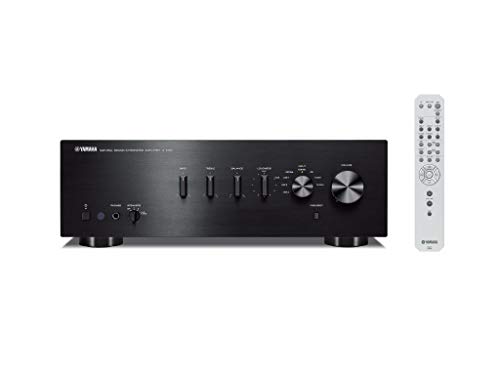
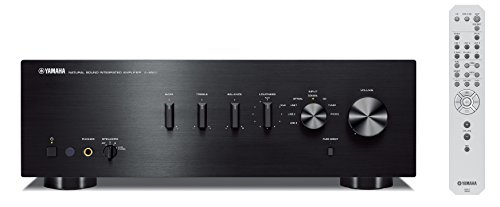
This is the stereo amplifier I'd point most people to first. It's sold and shipped by Amazon AU at $700, and the model is A-S301 with part number AS301B, which matches the title. It's the best-selling stereo amp here by Amazon AU's site-wide rank, at #11,264, which is a rank it shares with the A-S501 and A-S701 listings. Yamaha rates it at 60W per channel RMS and 95W maximum, and I like that both figures are given. That's plenty for most bookshelf and floorstanding speakers in a normal lounge room. It's a class AB design with a custom-made power transformer, 6,800uF block capacitors and aluminium-extruded heatsinks. The volume knob is a proper analogue control, which most people find nicer to use than buttons.
Yamaha's ToP-ART design keeps the signal path short and symmetrical from input to output, which is a sensible layout for low noise. There's a Pure Direct mode that bypasses the tone controls for the cleanest path, and a continuously variable loudness control that keeps bass and treble balanced at low volume. It has digital audio inputs for a TV or Blu-ray player, so it can replace a soundbar if you want proper speakers for the TV. The front panel and knobs are aluminium, and there's an auto standby feature that switches it off when it's idle, which is useful on a class AB amp. The listing doesn't mention a remote control, so check the box contents on arrival.
The listing doesn't mention a phono input or a minimum speaker impedance, so check the manual if you've got a turntable without its own preamp or 4-ohm speakers. There's no streaming built in, which I see as a plus, because you can add a streamer and replace it later without touching the amp. The listing shows a 24-month warranty. Give it space above for ventilation, because class AB amps run warm. Keep the speaker wire tidy at the terminals. If you want a solid, repairable stereo amp that'll last for years, this is the one I'd start with.
Honest caveats: The listing doesn't mention a phono input or a minimum speaker impedance. There's no built-in streaming, so you'll need a separate streamer for Spotify or similar. The site-wide rank is shared with the A-S501 and A-S701 listings. Class AB amps run warm and need ventilation, so don't box it into a closed cabinet.
Best for: Most people pairing a good set of passive speakers with a TV, turntable or streamer.
Power: 60W x 2 RMS, 95W x 2 max • Class: AB, custom power transformer • Capacitors: 6,800uF block capacitors • Inputs: Analogue plus digital for TV and Blu-ray • Features: Pure Direct, variable loudness, auto standby • Warranty: 24 months (listing) • Model: A-S301 (AS301B) • Seller: Amazon AU • Rank: #11,264 overall on Amazon AU, listing shared with A-S501 and A-S701
View on Amazon AU
Yamaha A-S501 Integrated Stereo Amplifier, 85W per Channel
ASIN B078JYBQQX • $999.99 • Ships from Amazon AU
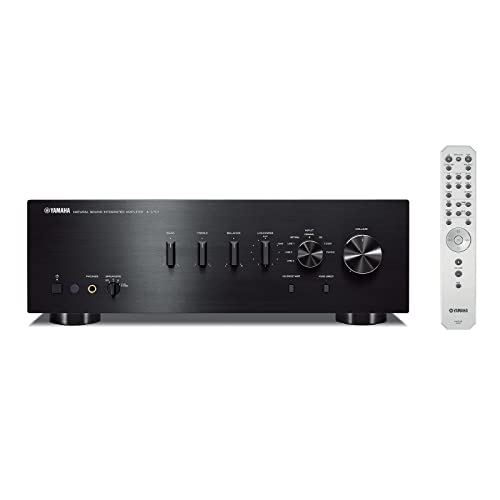
The A-S501 is the step up I'd take if your speakers are bigger or less efficient, or your room is large. It's $1,000 from Amazon AU, model A-S501 with part number AS501B, matching the title. Yamaha rates it at 85W per channel. It has the same ToP-ART layout as the A-S301, with an ART Base bottom chassis and a solid centre bar for rigidity and vibration damping. Inside there's a custom-made power transformer, custom-made block capacitors, two direct signal path speaker relays, a one-point grounding system and aluminium-extruded heatsinks. It shares its site-wide rank of #11,264 with the A-S301 and A-S701 listings. It's the middle of three Yamaha models here, with the A-S701 above it at $1,599.
The digital inputs are clearly labelled: optical for the TV and coaxial for a Blu-ray player, with the audio kept digital until it reaches the amp. Pure Direct mode sends the signal along the shortest route, skipping the buffer amp and the tone, loudness and balance controls. The loudness control uses electronic volume and lets you set how much bass and treble boost you want at low levels, separate from the main volume. The speaker relays are worth knowing about from a repair point of view, because they're the part that clicks when the amp switches on, and they're often the first thing to wear in an older amp. It's a heavy, full-size amp, so measure your shelf before you order.
The listing doesn't state the minimum speaker impedance, a phono input or the warranty period, so check the manual and the paperwork. At $1,000 it's a big jump from the A-S301 for 25W more per channel, and that extra power only matters if your speakers or room need it. Give it plenty of air around the top cover, because it runs warm. If one channel ever cuts out or crackles, the relays are a common and usually fixable cause. I'd buy it for larger floorstanders or a big open-plan room, and stick with the A-S301 for most bookshelf setups.
Honest caveats: The listing doesn't state a warranty period, phono input or minimum impedance. It's $300 more than the A-S301 for 25W more per channel, which only matters with demanding speakers or big rooms. There's no streaming built in. The site-wide rank is shared with the other A-S listings.
Best for: Larger floorstanding speakers or big open-plan rooms that need more headroom.
Power: 85W per channel (listing) • Class: AB, custom transformer and capacitors • Digital inputs: Optical (TV) and coaxial (Blu-ray) • Protection: Two direct signal path speaker relays • Features: Pure Direct, electronic-volume loudness • Model: A-S501 (AS501B) • Seller: Amazon AU • Rank: #11,264 overall on Amazon AU, listing shared with A-S301 and A-S701
View on Amazon AU
Yamaha R-N600A Network Stereo Receiver, 80W RMS
ASIN B0CKWF5K9V • $1,199.00 • Ships from Amazon AU
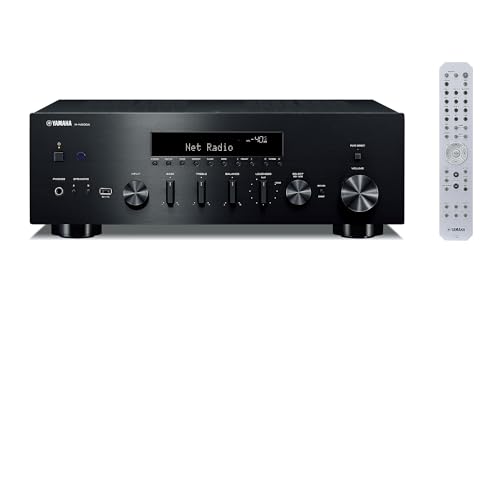
The R-N600A is the one to buy if you want streaming built into the amplifier. It's $1,199 from Amazon AU, model R-N600A with part number RN600AB, matching the title, and there's a silver version at the same price. Yamaha rates it at 80W RMS per channel. It uses Yamaha's ToP-ART design and an Art Base resin frame to reduce vibration, along with an ESS SABRE ES9010K2M DAC that handles 384kHz, 32-bit files. Yamaha lists Tidal and Spotify among the streaming services, and it also has a DAB+ tuner with 40 station presets, which is handy in Australia where DAB+ coverage is good in the cities. Yamaha says it has more than 60 years of history as an audio brand, which helps with parts support.
Yamaha's listing says it plays vinyl as well as streaming services, which suggests a phono input, but the exact cartridge support isn't stated, so check the manual if you've got a moving coil cartridge. The listing also notes that streaming services may change or be discontinued without notice, and that's the honest risk with any network amp. The amplifier will probably outlast the network module's software support by years. If that happens, you can still use it as a normal amp with a separate streamer plugged in, so it isn't a dead end. It comes with a two-year manufacturer warranty according to the listing. The Ethernet port is the better choice for high-resolution streaming.
It ranks #67,005 site-wide on Amazon AU, a rank shared with the silver listing, so it sells far less than the A-S301. Network amps run warm like any class AB design, so leave space above it. Keep its firmware updated through the app, because updates are how streaming support stays working. Use Ethernet if you can, because a wired connection is more stable than Wi-Fi for streaming. I'd buy it if you want one box for streaming, radio and a turntable, and you're comfortable that the streaming part may need a separate box one day.
Honest caveats: Streaming services may change or stop working over the amp's life, as Yamaha's own listing says. The listing doesn't state phono cartridge support or minimum speaker impedance. It sells far less than the A-S301, and the rank is shared with the silver version. Class AB heat means it needs ventilation.
Best for: One-box setups that want streaming, DAB+ radio and a turntable on the same amp.
Power: 80W RMS per channel • DAC: ESS SABRE ES9010K2M, 384kHz/32-bit • Streaming: Tidal, Spotify (services may change) • Radio: DAB/DAB+ with 40 presets • Vinyl: Listed as supported, check manual for cartridge type • Warranty: 2 year manufacturer (listing) • Model: R-N600A (RN600AB) • Seller: Amazon AU • Rank: #67,005 overall on Amazon AU, listing shared with silver
View on Amazon AU
Marantz Stereo 70s Slimline Network Stereo Receiver, 75W per Channel
ASIN B0CJYJ6Q5T • $1,547.00 • Ships from Amazon AU
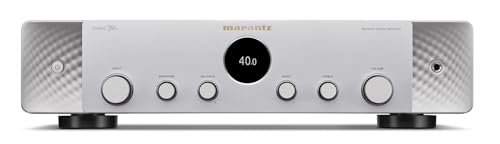
The Marantz Stereo 70s is the one for a stereo system that also runs the TV. It's $1,547 from Amazon AU, and the model code is STEREO70S/N1SG with a two-year warranty on the listing. Marantz rates it at 75W per channel. What sets it apart is the HDMI: six HDMI inputs and one HDMI output with eARC, so your consoles, set-top box and media player can plug straight into it, and the TV's eARC port sends sound back. In most setups that means the TV remote controls the volume and the amp turns on with the TV, which removes the most annoying part of using a stereo amp with a TV.
It's also a complete network receiver. HEOS is built in for streaming and multi-room playback across other HEOS speakers, and it has Wi-Fi, Bluetooth and AirPlay 2. There's a dedicated phono input for a turntable, which the listing names clearly. The slimline case is designed to fit modern TV cabinets, which is a real advantage over a full-height amp. The trade-off is that a slim case has less room for heatsinks and air, so ventilation matters even more. I'd give it a shelf with open space above and behind rather than a closed cabinet. The listing doesn't state an Ethernet port, so check the manual if you'd rather stream over a cable. Measure the depth of your cabinet too, because slim cases are often deep. It suits a TV unit where a full-size amp won't fit.
It ranks #25,309 site-wide on Amazon AU. The listing doesn't state whether it's class AB or class D, its minimum speaker impedance, or which phono cartridges it supports, so check the manual. HDMI boards are one of the more common failure points in receivers, especially after storms, so a surge protector on the power point is worth it. The same streaming caveat applies as with the Yamaha: HEOS support may outlast or underlast the hardware, and you can't know which. I'd buy it if the TV is your main source and you want stereo speakers rather than a soundbar.
Honest caveats: The listing doesn't state the amplifier class, minimum impedance or phono cartridge support. HDMI boards are a common storm failure in receivers. The slim case needs good airflow. HEOS streaming depends on ongoing software support. At $1,547 it's the most expensive pick here.
Best for: TV-first stereo systems that want HDMI eARC, consoles, streaming and a turntable through one slim box.
Power: 75W per channel (listing) • HDMI: 6 in, 1 out with eARC • Streaming: HEOS, Wi-Fi, Bluetooth, AirPlay 2 • Phono: Dedicated phono input • Case: Slimline • Warranty: 2 years (listing) • Model: STEREO70S/N1SG • Seller: Amazon AU • Rank: #25,309 overall on Amazon AU
View on Amazon AU
Fosi Audio MC351 2.1 Class D Integrated Amplifier with DAC
ASIN B0CYLV7DZX • $299.99 • Sold by Fosi Audio AU on Amazon AU
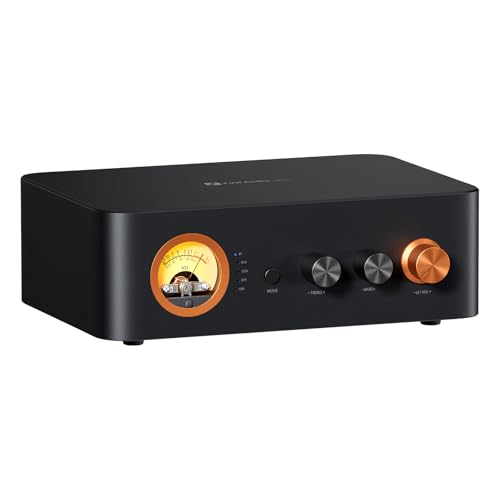
If you want a capable stereo amp without spending much, the Fosi Audio MC351 at $300 is where I'd start. It's sold by Fosi Audio AU, the brand's Australian storefront on Amazon, and the model is MC351, matching the title. It ranks #12,109 site-wide on Amazon AU, close behind the Yamaha A-S series. It's a class D amp using two Texas Instruments TPA3255 chips, with a 100-fin heatsink built into an all-aluminium CNC body. Fosi claims up to 165W per channel plus 350W for a subwoofer in 2.1 mode, which I'd read as peak figures, not continuous RMS. It has a 24-month warranty according to the listing. The body has no visible screws, which looks clean but can make it harder to open for repair.
The inputs are a big part of its appeal. It has a built-in DAC with Bluetooth, USB, optical and coaxial inputs, so it'll take a TV, a computer and a phone without any extra boxes. The subwoofer output lets you add a powered sub for a 2.1 setup. Bass and treble controls have a centre detent for a flat setting, and it switches to standby after two minutes without a signal, which cuts idle power use. The round VU meter on the front is mostly for looks, and the listing suggests it as a match for turntables, though it doesn't mention a phono input, so you'll need a turntable with its own preamp.
The listing doesn't state the power supply, the RMS power or the minimum speaker impedance, so check the box and the manual. Class D amps in this range often run from an external power brick, and if that brick fails it must be replaced with an exact match. Class D runs cool, so it suits a tight shelf better than a class AB amp, but give the heatsink fins some air. If the chip-based board fails out of warranty, replacing the amp may cost less than repairing it. For a first proper stereo setup or a second system in a study, it's a sensible choice.
Honest caveats: The power claims are peak figures, and the listing gives no RMS rating, power supply details or minimum impedance. There's no phono input. Chip-based class D boards often cost less to replace than repair once out of warranty. It's sold by Fosi's AU storefront rather than Amazon AU.
Best for: A first stereo or 2.1 setup on a tight shelf, fed from a TV, computer or phone.
Class: D, dual TPA3255 chips • Power: Up to 165W x 2 + 350W sub (listing, peak) • Inputs: Bluetooth, USB, optical, coaxial • Outputs: Speakers plus subwoofer out • Features: Bass/treble, VU meter, 2-minute auto standby • Warranty: 24 months (listing) • Model: MC351 • Seller: Fosi Audio AU • Rank: #12,109 overall on Amazon AU
View on Amazon AUSide-by-side comparison
What we see fail in the workshop: stereo amplifiers
Amplifiers that come in usually have one of a few faults, and most of them come from outside the amp: a storm, a stray strand of speaker wire or years of heat in a closed cabinet. Many of these faults are repairable, especially on class AB amps with discrete parts, so it's worth checking before you buy a new one.
Speaker relays and one channel dropping out
Most amps use a relay to connect the speakers a few seconds after switching on, which prevents a thump. Over years, the relay contacts oxidise and arc, and the result is one channel cutting out, crackling or only working when the volume is turned up. It's one of the most common faults in older amps, and it's usually a straightforward repair. The Yamaha A-S501 listing mentions its speaker relays, and most amps of this type have them even when the listing doesn't say. If your amp clicks on but one side stays silent, that's the first thing I'd look at.
Shorted speaker wire and blown outputs
A single stray strand of speaker wire touching the next terminal can short an output, and if the amp's protection doesn't catch it in time, the output stage burns out. The usual sign is an amp that goes into protection mode as soon as you turn it up, or one that blows its fuse. On class AB amps the output transistors can usually be replaced. On chip-based class D amps it's often the whole board. Tidy wire ends or banana plugs prevent most of these. If the amp has gone into protection, unplug the speakers before switching it on again.
Power supplies, capacitors and storm damage
Heat dries out the electrolytic capacitors in an amp's power supply over the years, and the result is hum, noise or an amp that won't power up. Storms and power surges damage power supplies and HDMI boards, especially on receivers with network and HDMI connections. External power bricks on class D amps fail too, and a mismatched replacement can do more damage. A surge protector and good ventilation prevent most of these, and capacitor replacement is a common repair. A burning smell or a bulging capacitor is the point to stop and get it looked at.
Decision tree: which one should you actually buy?
- Want a solid stereo amp for passive speakers and a TV or turntable? → The Yamaha A-S301 at $700, with 60W per channel RMS and digital inputs.
- Got big floorstanders or a large room? → The Yamaha A-S501 at $1,000, with 85W per channel and speaker relays.
- Want streaming and DAB+ radio in the same box? → The Yamaha R-N600A at $1,199, with Tidal, Spotify and a DAB+ tuner.
- Is the TV your main source? → The Marantz Stereo 70s at $1,547, with HDMI eARC, six HDMI inputs, HEOS and a phono input.
- Want a compact amp for a first setup or a study? → The Fosi Audio MC351 at $300, a class D amp with a DAC and subwoofer output.
- Amp dropping a channel, humming or going into protection? → Bring it into our Erina workshop and we'll check the relays, outputs and power supply before you replace it.
Frequently asked questions
Is a stereo amplifier better than an AV receiver for music?
For two-channel music, usually yes. A stereo amp puts all its budget into two channels, while an AV receiver spreads it across five or more channels and adds surround decoding. If you mainly listen to music on a pair of good speakers, a stereo amp like the Yamaha A-S301 usually sounds better for the money. If you want surround sound for movies, an AV receiver is the right choice. The Marantz Stereo 70s sits in between, with HDMI eARC but only two channels.
What's the difference between class AB and class D amplifiers?
Class AB amps run their output transistors partly on all the time, so they waste energy as heat and need big heatsinks and a heavy transformer. Class D amps switch their outputs fully on and off very quickly, so they run cooler and can be much smaller. Both can sound clean at normal levels. From a repair point of view, class AB amps with discrete parts are usually easier to fix, while chip-based class D amps are often replaced rather than repaired.
How many watts does a stereo amplifier need?
Most home speakers play at normal levels on a few watts, with short peaks much higher. More power mostly gives headroom so the amp doesn't clip on loud passages. Around 60W per channel RMS, like the Yamaha A-S301, suits most bookshelf and floorstanding speakers in a normal lounge room. Compare RMS figures rather than peak or maximum claims, and check your speakers' impedance, because 4-ohm speakers make an amp work harder than 8-ohm ones.
Do I need a phono stage for my turntable?
A turntable needs a phono stage, but it might already have one. Many entry-level turntables have a built-in preamp switch, so they plug into any normal line input. If yours doesn't, you need an amp with a phono input, like the Marantz Stereo 70s, or a separate phono preamp. Most built-in phono inputs suit moving magnet cartridges. Moving coil cartridges need more gain, so check the amp's manual before relying on its phono input.
Will a network amplifier's streaming keep working for years?
Not necessarily. Yamaha's own listing for the R-N600A says streaming services may change or be discontinued without notice. The amplifier side usually lasts far longer than the software support for the streaming module. If the streaming stops working, you can still use the amp with a separate streamer plugged into an input. Keeping the firmware updated through the maker's app helps, and a wired Ethernet connection is usually more reliable than Wi-Fi.
Where should I put a stereo amplifier?
Somewhere with air around it. Class AB amps vent heat through the top, so don't put anything on top of them or shut them in a closed cabinet. Leave a few centimetres above and behind. Heat over the years dries out the capacitors inside, which leads to hum and failure. Class D amps run cooler but still need some airflow around their heatsinks. Keep drinks off the top, and use a surge protector on the power point.
Related buying guides
Amp dropping a channel or humming?
Amplifiers that cut out on one side, hum or go into protection usually have worn relays, dried capacitors or a power supply fault, not a dead amp. Bring it into our Erina workshop and we'll check the relays, outputs and power supply, then tell you what's wrong and what it'll cost before you spend anything.
Visit our Erina workshop Book Online