Prices from Amazon AU, updated daily.
Disclosure: This article contains affiliate links to amazon.com.au. If you buy through one of these links iFix may earn a small commission at no extra cost to you. It doesn't change which products we recommend. We focus on what actually lasts based on 16 years of repair-shop experience.
Quick summary3 picks
- Entry PickGarmin inReach® Messenger Handheld… about$499.00
- Garmin inReach Mini 2 about$658.45
- Most PremiumGarmin inReach® Mini 3 about$798.85
Out of range is where these things earn their keep
Drive an hour west of the Central Coast and there are stretches of the Watagans and the Hunter where your phone shows no bars at all, and that's before you get anywhere properly remote. A phone is a great emergency tool right up until it can't see a tower, and then it's a camera with a torch. That's the gap a satellite messenger or a personal locator beacon fills. Both talk to satellites instead of towers, both can get a rescue started from a gully with no signal, and they go about it in very different ways.
I've split this guide into two halves. The first half covers how a 406 MHz PLB and a satellite messenger actually work, what AMSA (the Australian Maritime Safety Authority) asks of beacon owners, and the running costs, because the subscription question is where most people get caught. The second half is the picks. All three are Garmin satellite messengers between $426 and $759 at time of writing, and I'll explain further down why there isn't a PLB among them this week, even though I reckon most people heading bush should own one.
One thing to be clear on early: none of these devices replaces telling someone where you're going and when you'll be back. A beacon or messenger shortens the time between something going wrong and someone knowing about it. It doesn't stop the thing going wrong, and it doesn't help if it's flat, buried at the bottom of a pack, or switched off in the car.
What a PLB does and what AMSA asks of you
A personal locator beacon is a single-purpose radio. You flip the antenna out, press the button, and it sends a distress signal on 406 MHz to the Cospas-Sarsat satellite system, which passes it to the rescue coordination centre AMSA runs. Most current PLBs also send their GPS position with the alert, and they put out a weaker 121.5 MHz homing signal so the people searching can close in on you. There's no screen, no messaging and no app. It can't tell anyone whether you've lost the track or you're stuck behind a flooded creek, it just says someone needs help, here.
AMSA's beacon pages are short and plain, and these are the points that matter. Once you've bought a beacon you must register it with AMSA. Registration is free and done online, and since 4 November 2024 registrations no longer expire, so the old two-yearly renewal reminder is gone (you should still update it when your phone number or emergency contact changes). PLBs sold for Australia are built to AS/NZS 4280.2, and AMSA's figure for a PLB is a minimum of 24 hours of continuous transmission once it's set off.
AMSA also recommends a beacon with GPS, because those give the quickest and most accurate alerts, and it's blunt about where to buy: fishing, boat, aviation, bushwalking and camping stores in Australia. A beacon bought overseas is programmed to that country and can't be registered here unless the manufacturer reprograms it, and AMSA specifically says not to buy one from Canada or the USA because they don't meet the Australian Standard. That last point is the one that bites online shoppers, and it's why my pick list looks the way it does.
The other thing a PLB does well is sit in a drawer. There's no subscription and no charging, and the battery is a sealed pack with an expiry date printed on the label. When that date comes up, or after the beacon has been used in a real emergency, the battery has to be replaced, even if the self-test light still looks fine. Battery replacement on a PLB is usually a job for the manufacturer's service agent rather than a home job, so factor that in when the date gets close.
How a satellite messenger is different
A satellite messenger like Garmin's inReach range runs on a commercial satellite network (the Mini 3's listing names Iridium) rather than the rescue system, and it does a lot more than shout for help. You can send and receive text messages with no mobile coverage, share your location with family through a tracking page, get weather forecasts, and trigger an interactive SOS. Interactive is the key word. Instead of a one-way alert, the SOS goes to Garmin's coordination centre, which the listings describe as staffed 24/7, and they can text you back to ask what's happened before they pass it on to local rescue authorities.
That two-way conversation is the best argument for a messenger. Telling a rescuer that there are two of you, one who can't walk out, with plenty of water and a dry spot to wait, changes how they respond. A PLB can't send any of that. It also means you can text home to say you're running late and you're fine, which in my experience heads off more false alarms than anything else, because the person waiting at home doesn't ring the police at nightfall.
The trade-off is that a messenger depends on a few more things working. Every listing in this guide states that an active satellite subscription is required for messaging and SOS, and that some jurisdictions regulate or prohibit satellite communication devices. It's a rechargeable lithium device, so it needs charging before every trip. And the SOS goes through a private company first, rather than straight into the system AMSA monitors. None of that makes it a bad choice, it just makes it a different one.
Subscription or one-off: the running cost maths
This is where most buyers trip up. A PLB is a one-off purchase: you pay for the beacon, register it for free, and the next cost is a battery service years down the track. A satellite messenger is the box price plus a monthly or annual plan for as long as you want it to work. I'm not going to quote Garmin's plan prices here because they change and none of the listings state them, so check the current plans on Garmin's Australian site before you buy, and add a year of the plan you'd actually use to the box price.
That sum changes the comparison a fair bit. The inReach Messenger at $426 looks like the entry point in this guide, but over three years the subscription can easily cost more than the device. If you only head bush two or three times a year, check whether the plan you pick can be suspended between trips, and read the fine print on activation fees before you assume it's free to switch on and off.
There's also a cost on the phone side. All three picks lean on a smartphone app for the comfortable stuff, like typing longer messages and viewing maps, so you're running two batteries in the bush instead of one. The Mini 3's listing says it can top up a flat phone, which is handy, but it's the same lithium charge you'd want saved for an SOS. Carry a separate bank for the phone. My power bank picks cover the sizes that make sense for a weekend away, and a small folding panel from the portable solar guide earns its spot on longer trips.
Why there's no PLB in the picks this week
I went looking for a PLB on Amazon AU that I'd be happy to send you to, and I couldn't find one this week. The two genuine 406 MHz beacons that came up, an Ocean Signal rescueME PLB1 and a McMurdo FastFind 220, were both sold by a UK-based satellite phone retailer. One listing says it's pre-programmed for Australian registration, but buying a safety radio through an overseas seller means any warranty claim or programming problem goes back across the world, and I'm not comfortable with that for something you'll only use on the worst day of your life.
The rest of the search results were worse. Several listings called themselves personal locator beacons but turned out to be AIS man overboard units from unfamiliar brands. AIS units have a real job on boats (they show up on nearby vessels' plotters), but they don't transmit on 406 MHz and they don't reach the satellite system AMSA monitors, so they aren't a substitute for a PLB on land or water. If a listing doesn't say 406 MHz and AS/NZS 4280.2, I'd treat it as something else.
So my advice is to buy your PLB the way AMSA suggests, from an Australian bushwalking, camping, marine or fishing store, where you can confirm it's coded for Australia before you hand over any money. Then come back to the picks below if you also want two-way messaging. Plenty of people who head well off the grid carry both, and I don't think that's overkill. If I see a properly coded PLB from an Australian seller turn up on Amazon AU with real rank data behind it, I'll add it to this guide, but I'd rather leave the slot empty than fill it with a beacon I can't stand behind.
Batteries, water and charging: what actually wears out
Every device in this guide is a sealed electronics package, and the failure modes are the same ones we see in phones. The lithium cell in a messenger ages with heat and with being stored at full charge for months, so a unit left in a hot glovebox all summer will usually give you noticeably less than the quoted runtime by the following winter. Store it about half charged somewhere cool, and top it up the night before you leave rather than the week before.
Charging is the other weak point. A no-name USB brick or a frayed car charger can put noisy, badly regulated power into a small charging circuit, and that's the sort of damage that shows up as a device that suddenly won't charge at all. My write-up on what counterfeit chargers do applies here just as much as it does to phones. Use a decent charger and a cable you know is good.
Water is the third. The Mini 3 lists an IP67 rating, which covers rain and a short dunk, but that's tested in fresh water under controlled conditions, not after six months of salt spray and sunscreen working on the seals. If a messenger has been through a creek or a wave, dry it, don't charge it until it's dry inside, and read my notes on how water damage spreads on a circuit board. Corrosion on charging contacts is slow, and it usually shows up a few weeks after the swim.
Which one to carry where
For bushwalking and day hikes off the main tracks, a registered PLB is the baseline, and a messenger is a good addition if someone at home will worry when you're late. For 4WD trips and remote touring, a messenger earns its place because you'll use the texting every day, and the forecasts help with river crossings and picking a camp. If you're setting a vehicle up for remote travel anyway, my 4G and 5G backup gear covers the fringe-coverage end, and the messenger covers everywhere else.
Boats are different, and this is where people get caught out by the rules rather than the hardware. AMSA's beacon pages note that in most states EPIRBs are required for boats that travel more than 2 nautical miles from the coast, and that a PLB doesn't meet the carriage requirement where an EPIRB is specified. A satellite messenger doesn't either. Check your state's marine safety rules for your vessel and where you go, and treat a PLB or messenger as something you wear, on top of the boat's EPIRB.
If you're not sure whether an older messenger is still in good shape, bring it into the workshop in Erina and we'll check the charging port, battery and seals, and read the expiry label on your beacon with you, before your next trip.
The 3 picks, $426 to $759
Prices are Amazon AU at time of writing (3 October 2026) and move week to week. Ranks are Amazon AU category sales ranks, checked the same day.

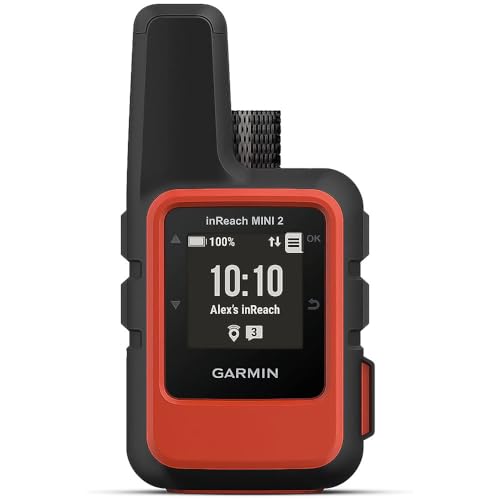
Garmin inReach Mini 2 Satellite Communicator, Orange (010-02602-00)
ASIN B09PSKG7C3 • $568.91 • Sold by RydaDotCom on Amazon AU
The inReach Mini 2 is #31 in Amazon AU's Sports GPS Units category at $569, sold by RydaDotCom, a marketplace seller rather than Amazon AU itself. It's the small orange one you see clipped to pack straps, and it's the model I'd put in front of most walkers. The listing describes a compact, lightweight satellite communicator with two-way messaging and interactive SOS anywhere on the globe, with an active satellite subscription required. Battery life is quoted at up to 14 days in 10-minute tracking mode, and in the box you get the unit, a USB cable, a carabiner and the documentation. There's also a digital compass that gives you a heading even when you're standing still, which a lot of phone compasses struggle with.
The feature I'd actually use most is TracBack routing, which navigates you back along the way you came. When a track splits in fading light and the phone is flat, that's the function that matters. Location sharing works through a MapShare page or as coordinates embedded in your messages, so the person at home can see where you were when you last checked in. It also pairs with compatible Garmin wearables and handhelds, which can send and receive messages and trigger an SOS through the Mini 2. If you already wear a compatible Garmin watch, that puts the SOS button on your wrist while the Mini 2 rides in the pack.
Trip planning and topographic mapping happen in Garmin's smartphone app and website, and you sync waypoints, courses and activities back to the device. The listing doesn't describe the screen, and in practice longer messages are much easier to type on the phone and send through the Mini 2. It's been around long enough that mounts and cases are easy to find. For most people who want messaging plus SOS without paying for the newest hardware, this is the one I'd buy, and the quoted battery life comfortably covers a long weekend with tracking on.
Honest caveats: Honest caveats: this is sold by a marketplace seller, not Amazon AU, so check the seller's return terms before you order. Messaging, tracking and SOS all need an active satellite subscription, which isn't included and isn't priced on the listing. The listing doesn't state a water rating, so don't assume it'll survive a swim. And it's not a 406 MHz PLB, so it can't be registered with AMSA.
Best for: Walkers and 4WD tourers who want two-way messaging, TracBack and SOS in the smallest package.
Messaging: Two-way, global (active subscription required) • SOS: Interactive SOS (active subscription required) • Battery: Up to 14 days, 10-minute tracking • Navigation: TracBack routing, digital compass • Pairing: Compatible Garmin wearables and handhelds • In the box: Unit, USB cable, carabiner, documentation • Seller: RydaDotCom (marketplace) • Rank: #31 in Sports GPS Units (Amazon AU)
View on Amazon AU
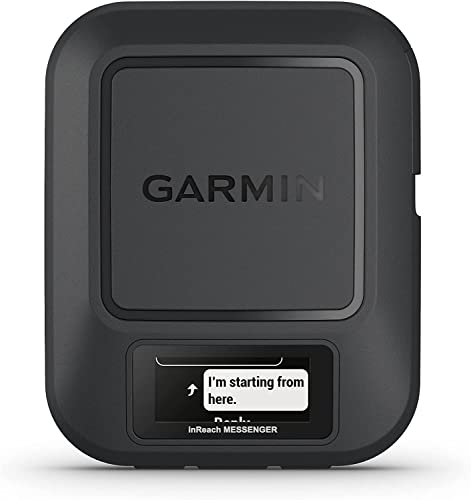
Garmin inReach Messenger Handheld Satellite Communicator
ASIN B0BFBZR4KW • $426.41 • Sold by RydaDotCom on Amazon AU
The inReach Messenger is #38 in Amazon AU's Sports GPS Units category at $426, also sold by RydaDotCom, the same marketplace seller as the Mini 2. It's the lowest box price in this guide, and it's built around texting rather than navigation. The listing describes a small, rugged, lightweight satellite communicator for two-way text messaging where there's no mobile coverage, with an active satellite subscription required. You message friends directly through the Garmin Messenger app on your phone, and group messaging lets you keep several people in the loop at once, which suits a family with someone working remote or a convoy spread across a few vehicles on a long trip.
The detail I like is the preset check-in messages. The listing says they don't count toward your allotted text messages, so a daily 'all good, camped at the planned spot' costs nothing extra on your plan. In my experience that's the message that stops the person at home from panicking at 9pm. You can also share your GPS location with contacts, and the SOS is interactive, going to the Garmin IERCC, which the listing describes as a 24/7 staffed monitoring and coordination centre. As with the others, the SOS needs an active subscription to work, so the plan can't lapse between trips if you want that cover sitting there ready when you need it.
What it doesn't do matters too. The listing doesn't mention TracBack, a compass or mapping, so treat it as a messaging and SOS device that relies on your phone and a separate navigation plan. It also doesn't state a battery life figure or a water rating, so check both on Garmin's own spec page before you count on it for multi-day trips. For someone who mostly wants to stay in touch from places the towers don't reach, it's the sensible place to start, and it's the one I'd hand to a teenager or partner heading away without me.
Honest caveats: Honest caveats: it's from a marketplace seller, not Amazon AU. No battery life, water rating or navigation features are stated on the listing, so don't buy it expecting a GPS unit. The lower box price matters less once you add the subscription, which is required for messaging, location sharing and SOS. It isn't a PLB and can't be registered with AMSA.
Best for: Anyone who mainly wants daily check-ins and texts from outside mobile coverage.
Messaging: Two-way text, group messaging via app • Check-ins: Preset messages, not counted against allowance • SOS: Interactive, to Garmin IERCC (subscription required) • Location: GPS location sharing • Battery: Not stated on the listing • Seller: RydaDotCom (marketplace) • Rank: #38 in Sports GPS Units (Amazon AU)
View on Amazon AU
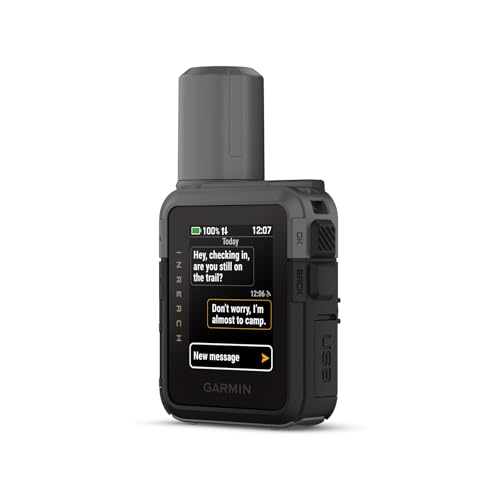
Garmin inReach Mini 3 Satellite Communicator with Colour Touchscreen
ASIN B0G4X5Q6Y1 • $758.91 • Ships from Amazon AU
The inReach Mini 3 is the newest of the three and the only one sold and shipped by Amazon AU, at $759. It isn't showing an Amazon AU category rank yet, so I've put it third rather than first, even though it's the newest. The listing describes a rugged, compact satellite communicator on the global Iridium network, with a high-resolution, scratch-resistant colour touchscreen, two-way texting, interactive SOS to Garmin Response and an IP67 water rating. Like the others, messaging and SOS need an active satellite subscription. It also keeps physical buttons for use with gloves on, which matters more than it sounds on a cold, wet morning when the touchscreen won't read your fingers.
Battery life is the headline figure: up to 350 hours with 10-minute inReach tracking, from an internal rechargeable lithium battery that can also give a flat phone an emergency top-up. That's only a little past the Mini 2's quoted 14 days (336 hours), so I wouldn't upgrade from a working Mini 2 for battery alone. LiveTrack location sharing lets family follow along with distance, time elapsed and elevation through the Garmin Messenger app, and you can request weather forecasts for where you're headed. The listing also says you don't need to aim it at the sky to get reception in dense or wooded country, which is where Central Coast hinterland walking mostly happens.
Navigation and trip planning work through Garmin's phone app, with courses you can follow out and back. The touchscreen is the real upgrade over the Mini 2, because typing a proper reply on the device itself, without the phone, is much easier. Being sold by Amazon AU also makes returns and warranty claims simpler, which counts for something at this price. Just remember the phone-charging feature drains the same battery you'd want for an SOS. If you want the newest hardware and no marketplace seller in the middle, this is the one.
Honest caveats: Honest caveats: no Amazon AU category rank was available at time of writing, so I can't tell you how it's selling here. The subscription isn't included or priced on the listing. A touchscreen is one more thing to crack, so keep it protected in the pack. It's a satellite messenger, not a 406 MHz PLB, and it can't be registered with AMSA.
Best for: Remote tourers who want the longest quoted battery life, a touchscreen and Amazon AU as the seller.
Network: Iridium (subscription required) • Screen: Colour touchscreen plus physical buttons • Battery: Up to 350 hours, 10-minute tracking • Water rating: IP67 • SOS: Interactive, to Garmin Response • Extras: Phone top-up charging, weather forecasts, LiveTrack • Seller: Amazon AU • Rank: Not stated on the listing (Amazon AU)
View on Amazon AUSide-by-side comparison
| Product | Price | Best for |
|---|---|---|
| Garmin inReach® Messenger Handheld… | ~$499.00 | |
| Garmin inReach Mini 2 | ~$658.45 | |
| Garmin inReach® Mini 3 | ~$798.85 |
What we see fail at the bench: satellite messengers and beacons
Satellite messengers come into the shop for the same reasons phones do, and beacons mostly fail by being forgotten. A messenger is a small sealed lithium device with a charging port, an antenna and a few seals, so it fails at those points. A PLB is simpler and tougher, but it has an expiry date and it's easy to leave in a cupboard for years past it. These are the three things I'd check before your next trip.
Charging contacts and ports
The most common fault on any small outdoor device is a charging port that's packed with grit or green with corrosion. Dust from a pack pocket gets pushed in by the plug every time it's charged, and moisture from a wet trip sits behind it. The symptom is a unit that charges only when the cable's held at an angle, or not at all. Look into the port with a torch before every trip. If there's lint, ease it out with a wooden toothpick, never metal, and if you can see green or white crust on the pins, stop charging it and get it looked at before the corrosion spreads into the board.
Batteries stored hot and full
Lithium cells age fastest when they're hot and full, and the glovebox of a 4WD in an Australian summer is about as hot and full as it gets. The cell doesn't usually fail outright, it just loses capacity, so a device quoted at two weeks of tracking gives you a long weekend. In a phone you notice that quickly. In a messenger that only comes out twice a year, you find out on the trip. Store it at about half charge inside the house, and run it through a full charge and a test message a few days before you leave, so there's time to sort out a problem.
Beacons past their expiry date
PLBs don't have a charging port to fail, which is a big part of their appeal, but the battery has an expiry date on the label and it doesn't get any younger in a drawer. AMSA says to replace the battery before that date, and after any real activation, even if the self-test light still works. It also says not to bin an old beacon, so take it to a battery recycler, marine agency or waste facility instead. And keep your AMSA registration details current, because an alert with a disconnected phone number on file slows the first calls down.
Decision tree: which one should you actually buy?
- Mostly day walks and overnight hikes, and you want something that just sits ready? → Buy an Australian-coded 406 MHz PLB from a local outdoors store and register it with AMSA. Add the inReach Mini 2 at $569 if you also want to text home.
- Remote 4WD touring with family waiting at home? → The inReach Mini 2 at $569 for TracBack and messaging, or the inReach Mini 3 at $759 if you want the touchscreen and Amazon AU as the seller.
- You mainly want check-ins and texts? → The inReach Messenger at $426, as long as you're happy relying on your phone for maps and navigation.
- You want the longest quoted battery life and the newest hardware? → The inReach Mini 3 at $759, quoted at up to 350 hours with 10-minute tracking.
- Heading offshore in a boat? → Check your state's EPIRB rules first. A PLB or any of these messengers is extra, worn on you, not a replacement for the boat's EPIRB.
- Your messenger won't charge, or it's been through water? → Don't keep plugging it in. Bring it to our Erina workshop and we'll check the port, battery and seals and tell you what it needs before you spend anything.
Frequently asked questions
Do I have to register a PLB in Australia?
Yes. AMSA says that once you've bought a beacon you must register it with them, and registration is free and done online through AMSA's beacon registration site. Since 4 November 2024, registrations no longer expire, so you don't need to renew every two years the way you used to. You should still update the record whenever your phone number or emergency contacts change, because that's the information rescuers use to work out who you are and who to call. A beacon with out-of-date contacts still sends its alert, it just slows down the first few phone calls.
Can I use a Garmin inReach instead of a PLB?
You can, but they aren't the same thing. An inReach uses a commercial satellite network and sends its SOS to Garmin's coordination centre, which then contacts local rescue services. It needs an active subscription and a charged battery. A 406 MHz PLB goes straight into the satellite system AMSA monitors, has no subscription and sits ready for years. If you regularly head well away from coverage, I'd carry a registered PLB as the baseline and add a messenger for the texting and the two-way SOS conversation.
What happens if I set off my PLB by accident?
Switch it off straight away and call AMSA on 1800 641 792. AMSA states there's no penalty for an accidental activation, so there's no reason to keep quiet about it. Calling quickly matters, because an alert that isn't cancelled can start a search, and the people doing that search could be needed somewhere else. Accidental activations usually happen when a beacon rattles around loose in a pack or a boat, so keep it in a pocket or pouch where the button and antenna can't be knocked.
Can I buy a PLB online from overseas?
I wouldn't. AMSA says a beacon bought overseas is programmed for that country and can't be registered in Australia unless the manufacturer reprograms it. It also specifically says not to buy beacons from Canada or the USA, because they don't meet the Australian Standard. Even where a listing claims Australian coding, an overseas seller means any warranty or programming problem goes back overseas. Buy from an Australian outdoors, marine or fishing store, check the beacon is built to AS/NZS 4280.2, and confirm it's coded for Australia before you pay.
Does an inReach work without a subscription?
Not for the things that matter. Every Garmin listing in this guide states that an active satellite subscription is required for messaging and SOS, and the Mini 2 and Messenger listings say the same for location sharing. Without a plan, don't count on it to send anything over satellite, including an SOS. That's why I'd always cost the subscription into the purchase. Check whether the plan you choose can be paused between trips, and what any activation fee is, before you assume you can switch it on only for holidays.
Do I need an EPIRB on my boat, or is a PLB enough?
Usually you need the EPIRB. AMSA's beacon information says that in most states EPIRBs are required for boats that travel more than 2 nautical miles from the coast, and that PLBs don't meet the carriage requirement where an EPIRB is specified. Marine and Safety Tasmania puts it plainly too: PLBs aren't recognised as the boat's principal EPIRB because they're built to a different standard. Check your own state's rules for your vessel. A PLB worn on your lifejacket is still worth having, because it stays with you if you go over the side.
Related buying guides
Messenger won't charge, or been for a swim?
Satellite messengers usually fail at the charging port, the battery or the seals, and the trouble tends to show up the night before a trip. If yours won't hold a charge, only charges at an angle, or has been through water, bring it into Erina before you head out. I'll tell you what's wrong and what it costs to fix before you spend anything, and if it isn't worth repairing, I'll say so.
Visit our Erina workshop Book Online