Prices from Amazon AU, updated daily. Swipe or use the arrows for more.
Disclosure: This article contains affiliate links to amazon.com.au. If you buy through one of these links iFix may earn a small commission at no extra cost to you. It doesn't change which products we recommend. We focus on what actually lasts based on 16 years of repair-shop experience.
Quick summary8 picks
- Entry PickTefal Easy Rice & Slow Cooker RK7321 about$99
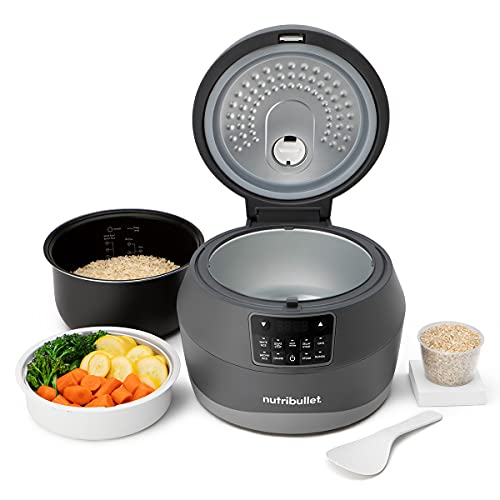
- NutriBullet Everygrain Rice Cooker about$119
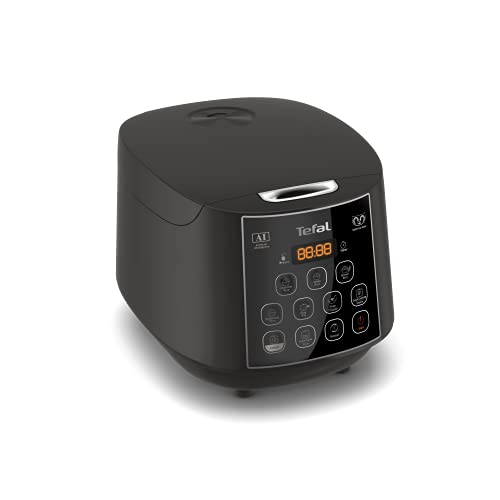
- Tefal Easy Rice & Slow Cooker Plus 11 in 1 about$120
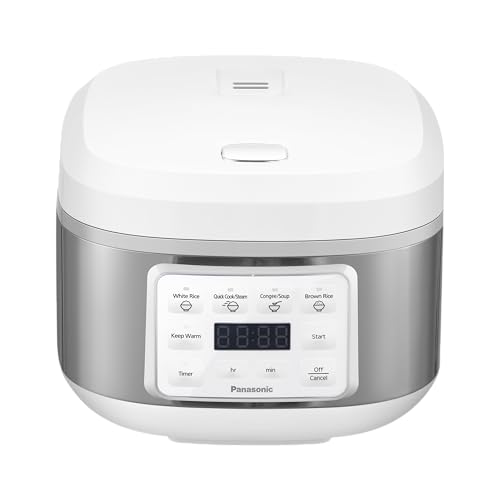
- Panasonic Rice Cooker 8 Cup about$134
- Panasonic Rice Cooker 10 Cup about$159
- Midea Induction Rice Cooker &10 Cups IH… about$159
- CUCKOO 3-Cup Electric Heating Smart Rice… about$180
- Most PremiumPanasonic 10 Cup 1.8L Premium Rice & Multi… about$198
What a rice cooker actually does
A rice cooker is a heater, a pot and a temperature sensor. You put in rice and water, the heater brings it to the boil, and while there's free water in the pot the temperature can't go much past 100°C. Once the rice has soaked up the water, the temperature at the base starts to climb, and the sensor uses that rise to decide the rice is done and switch to keep warm. Every rice cooker works on that idea, from a $30 supermarket model to a Japanese cooker costing ten times as much. What changes with price is how cleverly it reads the sensor and how evenly it heats the pot.
The five in this guide sit between $99 and $198 on Amazon AU at time of writing, from Panasonic, Tefal, Midea and CUCKOO. Four of them are sold by Amazon AU or the brand's own Australian storefront, and all of them list a model number that matches the title. That matters more in this category than people think, because a surprising number of rice cookers on Amazon AU are overseas units with 110V or 120V ratings that won't work safely here.
I've judged them on the parts that decide how good the rice is and how long the cooker lasts. That means the heating type, the control, the pot and its coating, the capacity, the keep-warm, and the warranty. I've left out the multicookers that do rice as one setting among many, because they're a different tool, and I've said why on the cards where a listing leaves something out.
Two things I'd check on any rice cooker before you buy, whatever the price. It should say Australian plug or show a 230 to 240V rating, and the inner pot should be sold as a spare part by the brand, because the coating on the pot is the part that wears out first.
Fuzzy logic against a plain thermostat
The simplest rice cookers use a thermostat under the pot, often a spring-loaded sensor that presses against the base. When the base gets hotter than boiling, the thermostat trips and the cooker drops to keep warm. That's all it does. It works well for white rice, it's very hard to break, and it has no idea what kind of rice is in the pot. Brown rice, mixed grains and porridge all need different heat curves, and a plain thermostat can't give them one.
Fuzzy logic means there's a small microcontroller reading the temperature sensor and adjusting the heat as it goes. It soaks the rice at a lower temperature first, boils it, then lets it rest before switching to keep warm, and it changes those steps for each menu. In practice, it makes brown rice and mixed grains much more consistent, and white rice a little more forgiving if your water measurement is slightly off. The Tefal, the Panasonic Premium and the CUCKOO in this guide all say fuzzy logic outright.
The trade-off is that a fuzzy logic cooker has a control board, a display and a few more connections inside, which means a few more things that can fail. In my experience they're still reliable if they're kept dry and the sensor is kept clean, but a basic thermostat cooker will usually outlast one in a damp kitchen. If you mostly cook white rice, a good basic cooker does the job, and fuzzy logic is worth paying for once you cook brown rice or grains often.
Induction heating and what it changes
Most rice cookers heat the pot with an element under the base. An induction cooker, often labelled IH, uses a coil that heats the metal pot directly, the same way an induction cooktop works. The heat comes from the pot itself rather than from a hot plate it sits on, so it's spread more evenly up the sides, and the cooker can change the temperature faster.
The Midea in this guide is the induction model, with what Midea calls 360° induction heating, dual temperature sensors and a heat-retaining lid. In a 10-cup pot, more even heating means less difference between the rice at the bottom and the rice at the top, and less of a crust on the base. The Panasonic Premium gets part of the way there with what Panasonic calls 3D heating, which adds heat from the side and lid to the base element.
Induction does bring its own failure points. The coil is driven by a power board with switching components that run hot, and those boards are a common failure in induction cooktops and cookers. That's not a reason to avoid one, but it's a reason to keep the vents clear and not run it pushed against a wall where the heat can't get out.
If you only cook a cup or two of white rice at a time, induction won't change much. If you regularly cook full pots, it's the feature that makes the most difference to how even the rice comes out.
Inner pots and coatings
The inner pot is the part that wears out first on almost every rice cooker. Most pots are aluminium with a non-stick coating, and the coating slowly wears with use, washing and scratches. Once it starts to lift, rice sticks, the base browns unevenly, and flakes can end up in the food. A worn pot doesn't mean the cooker is finished, but you'll need a replacement pot, and that's only easy if the brand sells them.
The pots in this guide vary a lot. The Tefal lists a 1.5mm thick aluminium pot with four layers including the non-stick coating, and a rounded spherical shape. The Panasonic Premium uses what it calls a Binchotan charcoal-coated pan. The Midea and the basic Panasonic list a non-stick pot without giving a thickness, and the CUCKOO lists a non-stick pot with a detachable inner lid.
The biggest thing you can do for any coated pot is use the plastic paddle that comes with it. Metal spoons scratch the coating, scouring pads strip it, and a dishwasher can dull it faster even when a listing says the pot is dishwasher safe. Hand washing with a soft sponge, and never washing the rice in the inner pot with your fingernails or a whisk, will usually double how long the coating lasts.
Before you buy, look up whether a replacement inner pot is sold for that exact model. Panasonic, Tefal and CUCKOO usually list pots by model number, and it's a lot less wasteful to replace a pot than a whole cooker.
Capacity and what a cup means
Rice cooker capacity is quoted in cups, but which cup is not always clear. Most cookers mean the small measuring cup that comes in the box, which is about 180ml, and they usually mean uncooked rice. A 10-cup cooker in that sense holds 1.8 litres of uncooked rice, which is how the Panasonic and Tefal listings put it. Cooked rice roughly doubles, so a 10-cup cooker can make a lot of rice.
The CUCKOO is the one that shows how confusing this gets. Its title says 3-cup, but its features talk about a 6-cup cooked capacity. They're the same thing measured two ways: three cups of uncooked rice make about six cups cooked. If you're comparing cookers, line up the uncooked figure, and use the cup that comes in the box when you measure, because a normal kitchen cup is bigger.
For a couple or a small household, a 3-cup or 5-cup cooker is plenty and heats faster. For a family, a 10-cup cooker gives you room for leftovers and meal prep. A cooker running near its maximum works fine, but a big cooker with a single cup of rice in it can cook less evenly, so don't buy much bigger than you need.
Weight and size matter if the cooker lives in a cupboard. Most 10-cup cookers in this guide weigh about 3 to 4kg and need some space above them for the lid to open fully. Steam comes out of the vent on top while it cooks, so don't run it under a low cupboard or a shelf, because the steam will warp the wood and drip back down over time.
Keep-warm, timers and running cost
Keep-warm is the feature most people use without thinking about it. The Panasonic cookers and the Midea list up to 24 hours of keep-warm, and the Tefal lists 12 hours. Rice held warm for a long time dries out and yellows at the base, so it's better for an hour or two than all day. The bigger issue is food safety, and the rule is simple: if cooked rice has been sitting at room temperature, don't put it back on keep-warm. Cool it quickly and refrigerate it instead.
The delay timer works the other way, letting you load the pot in the morning and have rice ready when you get home. The Panasonics and the Midea list a 24-hour delay timer. It's handy, but the rice sits soaking in water at room temperature until the cooker starts, so keep the delay short on hot days.
None of these listings state the wattage, which is a gap. A rice cooker draws its full power only while it's heating to the boil, and much less on keep-warm, but keep-warm left on all day still adds up. As an example, a cooker drawing 40W on keep-warm for 10 hours uses 0.4kWh, or about 13c at the Australian average tariff of roughly 33c/kWh. If you want the real figure for your cooker, an energy-monitoring smart plug will show you exactly what it draws.
If you mostly reheat rice rather than cook it, an inverter microwave does that faster and with less drying. A rice cooker is at its best cooking fresh rice from raw.
What I left out and why
I left out the multicookers that list rice as one of many programs, like the Instant Pot Duo, which is the best seller in its own category. They cook rice well enough, but they're a pressure cooker first, and a pressure or slow cooker is the better guide for those. I also left out the rice cookers listed with 110V or 120V ratings, because they're built for other countries and won't run safely on Australian power without a transformer.
I also left out one Midea listing whose title describes a standard rice cooker but whose features claim induction heating, because the model number points to a standard cooker and I couldn't confirm which one you'd receive. When a title and its features disagree, I'd assume the simpler spec until the seller confirms it. A few close contenders are in the extras below the picks.
If you're looking for one appliance to replace several, an air fryer or a pressure cooker will do more jobs. But if rice is something you cook several times a week, a dedicated rice cooker still does it better, with less attention, than anything else on the counter.
I also didn't include the high-end Japanese pressure and induction cookers from Zojirushi and Tiger, because none of them turned up from an Australian seller within this price band when I searched Amazon AU. If one turns up with an Australian plug and local support, it may be worth the extra, but I won't recommend one I can't confirm will work here.
The 5 picks, $99 to $198
Prices are Amazon AU at time of writing (4 November 2026) and move week to week. Ranks are Amazon AU category sales ranks, checked the same day.

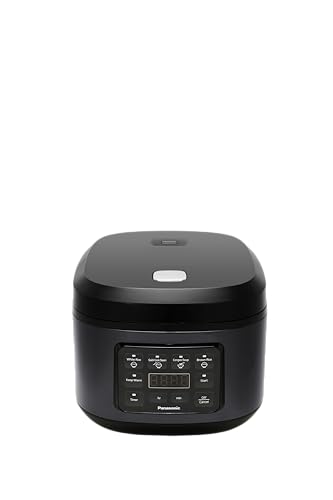
Panasonic 10 Cup Rice Cooker with LED Display and Delay Timer, Black (SR-DA182KST)
ASIN B0CYZ4DDP9 • $159.00 • Ships from Amazon AU
The Panasonic SR-DA182 is the rice cooker I'd point most households to first. It's $159 on Amazon AU at time of writing, sold by Amazon AU, and it's #3 in Amazon AU's Rice Cookers category, the best-ranked dedicated rice cooker I found. It cooks up to 10 cups of rice, with an LED display and touch controls on the lid. The listing says Australian plug and Australian manufacturer's warranty, and the manufacturer info lists a one-year warranty. The model number SR-DA182KST matches the title, and this listing is the black finish. There's an 8-cup version, the SR-DA152, listed separately for about $25 less if you cook for fewer people. Being sold by Amazon AU means returns are simple if anything's wrong on arrival.
There are four auto menus: white rice, quick cook or steam, congee or soup, and brown rice. That's fewer than the fancier cookers, but it covers what most people actually cook. It has a 24-hour delay timer and up to 24 hours of keep-warm, and it comes with a measuring cup, a rice scoop and a steam basket for vegetables or dumplings. The pot is non-stick, though the listing doesn't give its thickness or coating type. The listed weight is about 3kg, so it's easy to lift down from a cupboard and wipe clean. The touch controls on the lid are sealed, which helps keep steam and spills out of the electronics. The steam basket sits over the rice, so you can cook vegetables on top while the rice cooks underneath.
The listing doesn't say whether it uses fuzzy logic, so I'd treat it as a well-made conventional cooker with menu programs rather than a fully adaptive one. That's not a criticism, because a simple, well-built cooker is what most people want. Panasonic sells replacement inner pots by model number, which makes the pot easy to replace once the coating wears. The wattage isn't stated, so check the rating plate if you care about running cost. If you want white and brown rice done well from a brand with local support, this is the one.
Honest caveats: Honest caveats: the listing doesn't state fuzzy logic, the wattage or the pot's coating type. Four menus is fewer than the other picks offer. The 24-hour keep-warm is useful, but rice held that long dries out. The one-year warranty is shorter than some kitchen appliances carry.
Best for: Most households wanting reliable white and brown rice from a brand with local support.
Capacity: 10 cups • Menus: 4 (white, quick/steam, congee/soup, brown) • Delay timer: 24 hours • Keep warm: Up to 24 hours • Weight: About 3kg (listed 6.6 lb) • Warranty: 1 year, AU plug • Model: SR-DA182KST • Seller: Amazon AU • Rank: #3 in Rice Cookers (Amazon AU)
View on Amazon AU
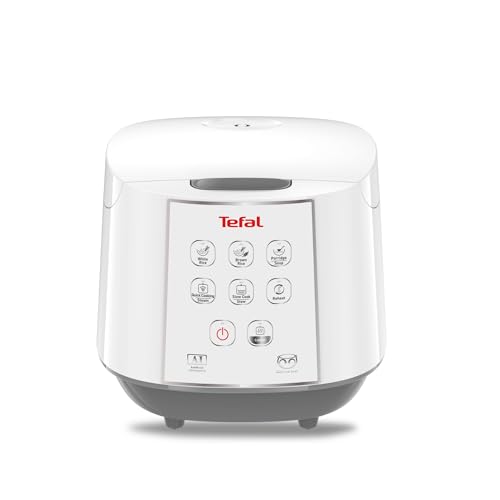
Tefal Easy Rice and Slow Cooker RK7321, 1.8L, Fuzzy Logic
ASIN B0FBFB6LCN • $99.00 • Ships from Amazon AU
The Tefal Easy Rice RK7321 is the lowest-priced pick here and still has fuzzy logic. It's $99 on Amazon AU at time of writing, sold by Amazon AU, and it's #4 in Amazon AU's Rice Cookers category. It holds 1.8 litres, which is the same 10-cup class as the Panasonic, and the listing says fuzzy logic outright, adjusting time and temperature as it cooks. The model number RK7321 matches the title. It's white on this listing, and the listed weight is about 3.7kg, the heaviest here because of its thicker pot. Tefal is sold widely in Australian stores, so spare pots and support are usually easy to find. Amazon AU selling it directly also makes returns simple.
It has eight programs: white rice, brown rice, porridge or soup, slow cooking or stew for up to eight hours, steam, quick cooking, reheat and automatic keep-warm for up to 12 hours. The pot is the standout, with a 1.5mm thick aluminium pot in four layers including the non-stick coating, and a rounded spherical shape that Tefal says helps heat move around the rice. The listing also mentions automatic pan detection with auto-off, so it won't heat without the pot in place, and anti-slip feet. Pan detection is a small safety feature, but it prevents the most common way a thermal fuse gets blown: switching the cooker on with no pot in it. The spherical pot also makes stirring and serving easier, because there are no sharp corners for rice to get stuck in.
The listing doesn't state the wattage, the delay timer length or a warranty period, so check those on the current listing before you buy. The slow cook program is a bonus rather than a reason to buy it, and if slow cooking is your main use, a dedicated slow cooker does it better. The listing says the accessories are dishwasher friendly, but I'd still hand wash the pot to protect the coating. For fuzzy logic and a thick pot under $100, it's the best value in the guide. It's also a good choice if you want one appliance that handles both rice and the odd stew.
Honest caveats: Honest caveats: the listing doesn't state the wattage, the delay timer or a warranty period. Keep-warm tops out at 12 hours rather than 24. The slow cook mode is useful but not a replacement for a proper slow cooker. Hand wash the pot, even though the listing says dishwasher friendly.
Best for: Fuzzy logic and a thick four-layer pot at the lowest price in the guide.
Capacity: 1.8L • Control: Fuzzy logic • Programs: 8 incl. slow cook (8h) • Pot: 1.5mm aluminium, 4 layers, spherical • Keep warm: Up to 12 hours • Safety: Pan detection with auto-off • Model: RK7321 • Seller: Amazon AU • Rank: #4 in Rice Cookers (Amazon AU)
View on Amazon AU
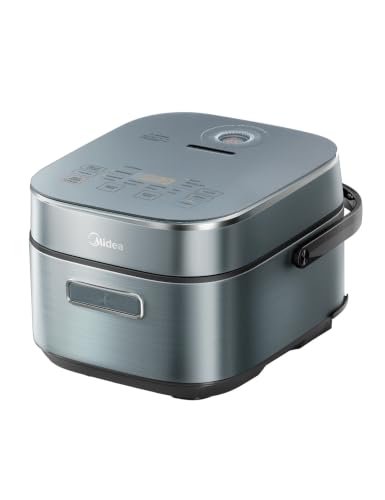
Midea 10 Cup Induction (IH) Rice Cooker, 10 Menus, Grey-Blue (MRI180T2BDG)
ASIN B0FZL2L3B5 • $159.00 • Sold by Midea Group AU on Amazon AU
The Midea MRI180T2BDG is the induction cooker in this guide, and at $159 it's the same price as the basic Panasonic. It's sold by Midea Group AU, the brand's own Australian storefront, and it's #6 in Amazon AU's Rice Cookers category. The listing describes 360° induction heating with dual temperature sensors and a heat-retaining lid. It's a 10-cup cooker, which the listing gives as 1.8 litres uncooked or 5 litres cooked. The model number MRI180T2BDG matches the induction model, and this listing is the grey-blue finish. Midea is a large appliance maker that sells air conditioners and fridges in Australia as well as small kitchen gear. It's unusual to find induction at this price from a brand with a local storefront.
It has ten programs: jasmine rice, mixed rice, claypot rice, soup, congee, reheat, steam, cake, white rice and quick rice. The claypot setting is worth noting, because induction's faster heat control is what makes a crisp base without burning possible. It has a 24-hour keep-warm and a 24-hour delay timer, and the listing says the non-stick pot and the removable lid are dishwasher safe. You get a measuring cup, a soup ladle, a steam tray and a serving spatula in the box. The listing doesn't give the weight. Dishwasher-safe parts are convenient, but I'd still hand wash the pot to keep the coating in good shape. The jasmine rice setting is a nice touch for a lot of Australian kitchens, because it's the rice most people buy.
The listing doesn't state the wattage, the pot thickness, the coating type or a warranty period, which is a few too many gaps on an induction cooker. Induction cookers run a power board that gets warm, so keep the vents clear and give it space from the wall. Midea selling through its own AU storefront helps if something goes wrong. Check whether a spare pot is sold for this model, as the listing doesn't say. For even heat in a full 10-cup pot at a mid-range price, it's the one to choose.
Honest caveats: Honest caveats: the listing doesn't state the wattage, pot thickness, coating type, weight or a warranty period. Induction power boards run warm, so keep the vents clear. A different Midea listing claims induction on a standard model, so make sure the model number is MRI180T2BDG.
Best for: Even heating through a full 10-cup pot, with a claypot setting, at a mid-range price.
Capacity: 10 cups (1.8L uncooked) • Heating: Induction (IH), dual sensors • Programs: 10 incl. claypot and jasmine • Delay timer: 24 hours • Keep warm: 24 hours • Cleaning: Pot and lid dishwasher safe (per listing) • Model: MRI180T2BDG • Seller: Midea Group AU • Rank: #6 in Rice Cookers (Amazon AU)
View on Amazon AU
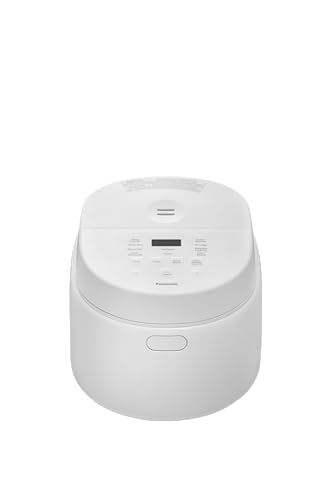
Panasonic 10 Cup Premium Rice and Multi Cooker, Fuzzy Logic, 3D Heating, White (SR-DL184WST)
ASIN B0DWR36XCN • $198.00 • Ships from Amazon AU
The Panasonic SR-DL184 is the step up from the basic Panasonic, with fuzzy logic and 3D heating. It's $198 on Amazon AU at time of writing, sold by Amazon AU, and it's #13 in Amazon AU's Rice Cookers category. It holds 1.8 litres, the same 10-cup class, and the listing says fuzzy logic with surround heating from the base, the sides and the lid. The pot is what Panasonic calls a Binchotan charcoal-coated inner pan. The model number SR-DL184WST matches the title, and this one is the white finish. It was released in early 2025, so it's one of the newer models here. Amazon AU selling it directly makes returns and warranty claims straightforward.
It has ten auto menus: white regular, quick or quinoa, brown rice, multigrain, sticky rice, porridge, cake or bread, steam, soup or slow cook, and waterless cooking. The multigrain and sticky rice settings are the ones that make fuzzy logic worth having, because they need a very different heat curve from white rice. The inner pot has printed water levels for different rice types, which helps with getting the ratio right. There's a 24-hour delay timer, and the controls are on top of the lid with an LED display. The waterless cooking menu is for vegetables and meat in their own juices, which is a bonus rather than the main reason to buy it. The Binchotan coating is designed to spread heat evenly and stop rice sticking, but it's still a coating, so use the paddle.
The listing says Australian plug and Australian manufacturer's warranty, and the manufacturer info lists one year. The listed weight is about 3kg. The listing doesn't state the wattage or the pot's thickness. At $39 more than the basic Panasonic, you're paying for fuzzy logic, 3D heating and six more menus, which is worth it if you cook brown rice, grains or sticky rice often. If you mostly cook plain white rice, the SR-DA182 does that just as well for less. Panasonic sells spare pots for its cookers by model number, so check that the SR-DL184 pot is listed before you commit.
Honest caveats: Honest caveats: the listing doesn't state the wattage or the pot thickness. The one-year warranty is the same as the basic Panasonic's. The bread and cake menus are a bonus, not a reason to buy it. If you mostly cook white rice, the extra programs won't change much.
Best for: Households cooking brown rice, grains and sticky rice who want fuzzy logic from Panasonic.
Capacity: 1.8L (10 cups) • Control: Fuzzy logic • Heating: 3D (base, side, lid) • Menus: 10 incl. multigrain and sticky rice • Pot: Binchotan charcoal-coated • Delay timer: 24 hours • Warranty: 1 year, AU plug • Model: SR-DL184WST • Rank: #13 in Rice Cookers (Amazon AU)
View on Amazon AU
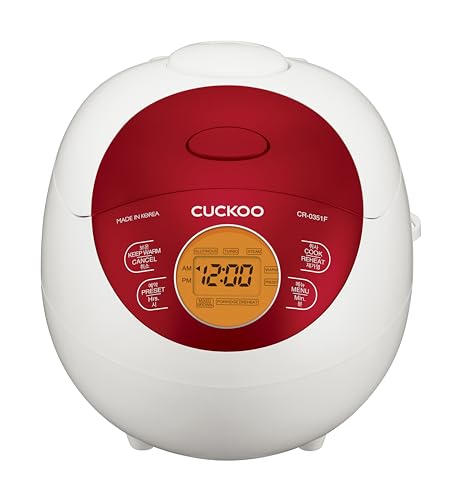
CUCKOO 3-Cup Smart Rice Cooker with Fuzzy Logic and Turbo Mode, Red (CR-0351F)
ASIN B084X42NBP • $179.99 • Sold by CUCKOO AUSTRALIA on Amazon AU
The CUCKOO CR-0351F is the pick for one or two people. It's $180 on Amazon AU at time of writing, sold by CUCKOO AUSTRALIA, the Korean brand's local storefront, and it's #15 in Amazon AU's Rice Cookers category. It's a 3-cup cooker measured uncooked, which the listing also gives as 6 cups cooked, so the two figures describe the same capacity. The listing says fuzzy logic and an LCD display with digital controls. The model number CR-0351F matches the title, and this listing is red. CUCKOO is a Korean brand that the listing says has over 45 years in the business, and having a local storefront helps with spare parts. A small cooker heats faster and keeps a single serve of rice from drying out the way it would in a big pot.
There are six menu options, including white rice, brown or GABA rice and porridge, plus a turbo mode that the listing says cooks white rice in under 25 minutes. That's useful for a weeknight when you've forgotten to start the rice. The non-stick inner pot comes with a detachable inner lid, which matters more than it sounds, because starch builds up under the lid and a removable one can actually be cleaned. There's also an excess water drainage tray to catch condensation, plus reheat and keep-warm functions. GABA rice is a soaked brown rice setting that needs a long, low soak, which is the sort of program fuzzy logic handles well. The compact size also means it fits in a small kitchen or a granny flat where counter space is tight.
It's the most expensive cooker per cup of capacity in this guide, and you're paying for the brand and the fuzzy logic in a small size. The listing doesn't state the wattage, the weight, the keep-warm length or a warranty period, and it doesn't mention an Australian plug in its features. CUCKOO selling through its own AU storefront makes it very likely to be an Australian unit, but check the plug and the rating on the current listing. For a small household that wants fuzzy logic and a lid that comes apart for cleaning, it's a well-made option.
Honest caveats: Honest caveats: the listing doesn't state the wattage, weight, keep-warm length or a warranty period, and doesn't mention an Australian plug. At 3 cups uncooked it's too small for a family. It costs more per cup of capacity than any other pick here.
Best for: One or two people wanting fuzzy logic, turbo mode and a removable inner lid.
Capacity: 3 cups uncooked (6 cooked) • Control: Fuzzy logic • Menus: 6 plus turbo • Turbo: White rice under 25 min (per listing) • Lid: Detachable inner lid • Extras: Water drainage tray • Model: CR-0351F • Seller: CUCKOO AUSTRALIA • Rank: #15 in Rice Cookers (Amazon AU)
View on Amazon AUSide-by-side comparison
What we see fail in the workshop: rice cookers
Rice cookers are simple machines, and most of what goes wrong with them is the same handful of faults. Rice burns or stays undercooked because the sensor under the pot is dirty or stuck, the cooker won't heat because a thermal fuse has blown, or the lid seal and steam vent are clogged with starch. On fuzzy logic and induction models, water getting into the control board is the other one.
Dirty or stuck temperature sensors
The sensor under the inner pot is usually a spring-loaded button that has to press firmly against the base of the pot. If rice or water gets onto the hot plate or around that sensor, it burns on, and the pot doesn't sit flat any more. The cooker then reads the temperature wrong, so rice burns on the base or switches to keep warm while it's still hard. Unplug it, let it cool and gently clean the plate and the sensor with a damp cloth, then check the sensor moves freely. Never put the pot in wet on the outside.
Blown thermal fuses
Every rice cooker has a thermal fuse that cuts the power if it gets far too hot. It's a one-time fuse, so once it's blown, the cooker is dead until it's replaced. It usually blows because the cooker was switched on with no pot, run dry, or used with a damaged sensor that let it overheat. The fuse itself is a small part, but it's there for a reason, so we always find out why it blew before replacing it. Never bypass a thermal fuse, because it's the last line of defence against a kitchen fire.
Clogged steam vents and worn lid seals
Starch from the rice condenses in the steam vent and under the lid every time you cook. If it's not cleaned out, it dries hard, partly blocks the vent and stops the lid seal from sitting properly. That leads to water spitting out of the vent, rice boiling over, or steam escaping around the lid so the rice dries out. Most cookers have a removable vent cap and inner lid, and cleaning both after every few uses prevents almost all of it. A torn or hardened lid seal is usually an inexpensive spare part from the brand.
Decision tree: which one should you actually buy?
- Mostly white and brown rice for a family? → The Panasonic SR-DA182 at $159, the best-ranked rice cooker, with an AU plug and warranty.
- You want fuzzy logic for under $100? → The Tefal Easy Rice RK7321 at $99, with fuzzy logic and a 1.5mm four-layer pot.
- You cook full 10-cup pots and want even heat? → The Midea MRI180T2BDG at $159, the induction model, with a claypot setting.
- You cook grains, sticky rice and brown rice often? → The Panasonic SR-DL184 at $198, with fuzzy logic, 3D heating and ten menus.
- It's just one or two of you? → The CUCKOO CR-0351F at $180, a 3-cup fuzzy logic cooker with turbo mode and a removable inner lid.
- Your rice cooker won't heat, burns rice or trips the power? → Clean the plate and sensor first. If it's still not right, bring it into our Erina workshop and we'll check the sensor, the thermal fuse and the wiring, and tell you whether it's worth fixing before you spend anything.
Frequently asked questions
Is a fuzzy logic rice cooker worth it?
If you mostly cook white rice, a good basic cooker does the job, and fuzzy logic only makes a small difference. If you cook brown rice, mixed grains, sticky rice or porridge often, fuzzy logic is worth it, because it adjusts the soak, boil and rest steps for each type instead of just switching off when the base gets hot. The Tefal RK7321 gives you fuzzy logic for $99, so the price difference is smaller than it used to be.
What's the difference between an induction and a normal rice cooker?
A normal rice cooker heats the pot with an element under the base. An induction cooker uses a coil that heats the metal pot directly, so the heat is spread more evenly up the sides and the cooker can change temperature faster. In a full pot, that means more even rice from top to bottom. The downside is a power board inside that runs warm and can fail if the vents are blocked. For small amounts of rice, induction makes little difference.
How long does a rice cooker inner pot last?
It depends on how it's treated more than on the brand. A coated pot used with the plastic paddle, washed by hand with a soft sponge and never scrubbed can last many years. Metal spoons, scouring pads and regular dishwasher cycles wear the coating much faster. Once the coating starts to lift or flake, replace the pot. Most major brands sell replacement pots by model number, so check that before you buy a cooker.
What does a 10 cup rice cooker mean?
It usually means 10 of the small measuring cups that come in the box, about 180ml each, of uncooked rice. That's about 1.8 litres, which is how the Panasonic and Tefal listings describe it. Cooked rice is roughly double that. Some listings quote cooked cups instead, like the CUCKOO's 3-cup uncooked or 6-cup cooked figure, so compare the uncooked number when you're choosing between cookers. Use the cup that comes in the box when you measure, because a normal kitchen cup is bigger.
Why does my rice cooker burn rice on the bottom?
The most common causes are too little water, a dirty hot plate or sensor, or a pot that isn't sitting flat. Burnt-on rice or water under the pot stops the sensor from reading the temperature properly. Unplug the cooker, let it cool, then clean the plate and the sensor and make sure the outside of the pot is dry before it goes in. If the pot coating is worn, rice will also stick and brown on the base more easily.
Can I use an overseas rice cooker in Australia?
Only if it's rated for 220 to 240V. Many rice cookers sold on Amazon are made for Japan, the US or other markets and are rated for 100V, 110V or 120V. Plugging one into an Australian socket with a plug adapter will usually burn out the element or the board straight away, and it's a fire risk. Look for an Australian plug, a 230 to 240V rating and ideally an RCM mark before you buy.
Related buying guides
Rice cooker dead, burning rice or tripping the power?
Most rice cooker faults are a dirty or stuck temperature sensor, a blown thermal fuse or water in the control board. Bring it into our Erina workshop and we'll check the sensor, the fuse and the wiring, find out why it failed, and tell you whether it's worth fixing before you spend anything.
Visit our Erina workshop Book Online