Prices from Amazon AU, updated daily. Swipe or use the arrows for more.
Disclosure: This article contains affiliate links to amazon.com.au. If you buy through one of these links iFix may earn a small commission at no extra cost to you. It doesn't change which products we recommend. We focus on what actually lasts based on 16 years of repair-shop experience.
Quick summary8 picks
- CheapestRussell Hobbs 7L Slow Cooker about$63.00
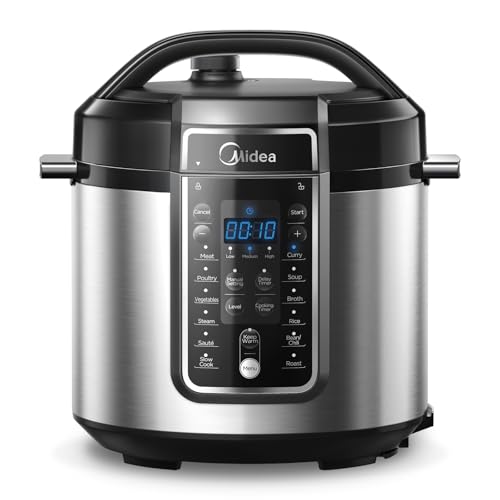
- Midea 6L Electric Pressure Cooker about$11912 presets.
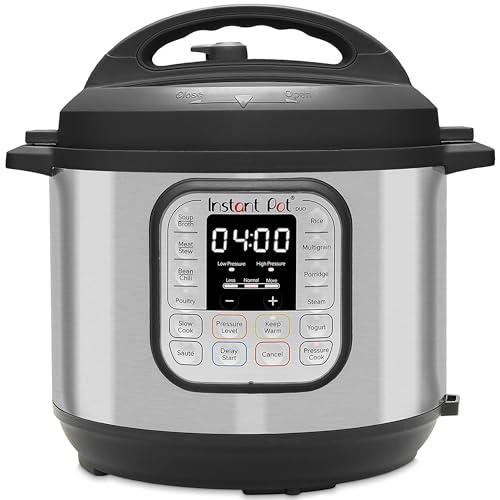
- Instant Pot Duo 7-in-1 Multicooker about$143.20
- P2580702 Tefal Secure Trendy Induction… about$139.95
- Instant Pot Duo 7-in-1 Multicooker about$175.00
- Instant Pot 9-in-1 Duo Plus 5.7L Electric… about$167.20
- Most PremiumInstant Pot 9-in-1 Duo Plus 8L Electric… about$199.20
- Ninja Foodi Everyday Possible Pro Cooker about$193.001400W.
Why these two old appliances are selling again
The trolley has done the persuading. By most tallies the grocery basket is running about 31 per cent above where it sat in 2019, and meat has moved with everything else. The cuts that still make sense, chuck, brisket, shanks, osso buco, all need the same treatment: hours of moist heat, or under an hour with pressure doing the work. That's the entire reason this category is moving on Amazon AU right now. Three of the five picks below sit at number one in their sales category, and kitchen gear doesn't usually cluster like that unless a lot of people have done the same arithmetic at the meat cabinet.
The other half of the story is batch cooking. A 7 or 8 litre pot turns one cook into eight or ten meals, and the freezer does the rest. I went through the same numbers in the air fryer guide: the appliance itself rarely saves you much, the habit it enables is where the money is. A $68 slow cooker that gets a tough cut and a bag of vegetables onto the table forty times a year earns its bench space many times over. One that gets used twice and goes to the garage earns nothing, so buy the one you'll actually use.
The five picks run from $68 to $240 and split three ways: a plain ceramic slow cooker, two electric pressure multicookers, a stovetop pressure cooker with no electronics at all, and one machine that's sold alongside pressure cookers but isn't one. All are sold as new, most shipped by Amazon AU directly, and every spec quoted below comes off the current listing rather than a press release.
Pressure cooker, slow cooker, multicooker: what the names actually mean
The naming in this category is genuinely slippery, so it's worth untangling before you spend anything. A slow cooker is a ceramic pot in a heated jacket with two or three power levels. A pressure cooker seals the pot so the water boils above 100 degrees, which is why a four hour braise finishes in forty minutes. A multicooker is nearly always an electric pressure cooker with a menu on the front: the Instant Pot Duo's 7-in-1 is pressure cooking plus six things any sealed heated pot can do anyway, like steaming, keeping warm and cooking rice.
The function count is marketing arithmetic, and it climbs a little every model year. What matters is which of those modes you'd use weekly, and in my experience that list is short: pressure cook, slow cook, saute and rice. The yoghurt, cake and sterilise programs on the dearer units are mostly the same heater running different timing curves, and they're not a reason to step up a price tier on their own. I'd also ignore app connectivity as a buying factor. A pot doesn't need firmware updates, the recipes are on the internet either way, and the models that lean hardest on their app tend to be the ones with the least to say about their hardware.
One trap deserves its own paragraph. The Ninja Foodi Possible Cooker Pro below is ranked in Amazon's Electric Pressure Cookers category, and its listing names ten functions: slow cook, sear, braise, steam, rice and so on. Read that list twice and you'll notice pressure cooking isn't on it. It's a very good electric slow cooker that can sear, not a pressure cooker, and I've included it because it keeps getting bought as one. If pressure is the point, buy the Instant Pot or the Tefal.
The sealing ring is the consumable
Every pressure cooker seals with a silicone ring, and that ring is a wear part the same way a printer cartridge is, just slower and far less cynical about it. Silicone hardens and takes a compression set with heating cycles, and once it does the cooker leaks steam at the rim and either won't come up to pressure or takes forever getting there. The ring also absorbs odours, so a curry ring will flavour your next batch of yoghurt. Most heavy users I know run two rings, one for savoury and one for everything else, and replace them roughly every 12 to 18 months.
Before you buy anything, look up the price and availability of the ring for that exact model. Instant Pot spares are easy to find in Australia, which is a real part of why I've put two of them on this list. For the generic multicookers that come and go on the marketplace, the ring often can't be bought at all once the seller moves on, and a $90 cooker with an unobtainable $12 part has a service life set by the part, not the appliance.
Stovetop cookers have the same gasket logic, and the Tefal below adds a wrinkle worth knowing: its stated safety design uses controlled gasket deformation as the last-resort overpressure relief. That's good engineering, and it also means a ring that's ever done that job is finished. Tefal's 10 year warranty on the pot doesn't cover the gasket, because gaskets are consumables everywhere.
What one actually costs to run
The arithmetic is friendlier than most benchtop appliances. Assume the AU average tariff of roughly 33c per kilowatt hour. The Ninja is the only pick that states its power draw, 1,400W, which flat out would be about 46c an hour. Nothing in this category runs flat out for long though: an electric pressure cooker heats hard for ten minutes or so, then sips power holding pressure, and a slow cooker's element cycles on and off around a few hundred watts. If you assume 300W averaged across an eight hour slow cook, that's 2.4kWh, or around 79c for a pot that feeds the house twice.
Compare that with running a full-size oven for the same braise and the cooker generally wins comfortably, mostly because you're heating two litres of pot instead of sixty litres of oven cavity. I'd still measure rather than trust my assumptions or anyone else's. A metering smart plug under $30 will log the true kWh of your actual recipes, and the difference between models matters much less than the difference between habits.
There's a safety note that belongs here rather than in fine print. These are 10 amp appliances that pull serious current on heat-up, so plug them straight into a wall socket, not into a powerboard already feeding a kettle and a toaster. A standard AU socket tops out at 2,400W and the margin evaporates fast. I covered the household version of this arithmetic in our power savings write-up if you want to go deeper.
Stovetop or electric
The Tefal is the odd one out on this list because it has no plug. A stovetop pressure cooker is a pot, a lid, a valve and a gasket, and that shortness of parts list is exactly its appeal from where I sit. There's no control board to corrode, no thermal fuse to blow, no lid microswitch to gum up. The failure modes are a tired gasket and a blocked valve, both of which you can see, clean and replace yourself at the kitchen sink.
What you give up is the set-and-forget behaviour. An electric multicooker regulates its own pressure and switches itself to keep warm, so you can load it and leave the house. A stovetop unit needs you nearby to bring it to pressure and adjust the burner, more like a saucepan than an appliance. On the other side of the ledger, the stovetop unit browns meat properly over a real burner, works through a blackout on a gas hob, and will plausibly outlive every electric cooker in this guide. The Tefal's pot carries a 10 year warranty and works on induction, gas, ceramic and electric, so it survives a stove change too.
My honest read: if you already cook and you own a decent hob, the stovetop cooker is the better tool, and it's the one your kids will still be using. If dinner needs to cook itself while nobody's home, buy electric and accept that you now own a computer that boils. Plenty of households sensibly end up with one of each, the electric doing the weekday work and the stovetop doing the weekend browning-heavy cooks where being at the stove is the point.
Litres versus servings: capacity honesty
Capacity numbers in this category need translating. A pressure cooker can only be filled to two thirds, and only half for anything that foams, rice and pulses included, because the steam needs headroom to do its job. So the 5.7L Instant Pot is really a 3.5 to 4 litre pot in practice, which matches its stated six servings, and the 8L Duo Plus is the one that genuinely handles a big batch cook or a whole chicken with stock. The listings' serving counts are more honest than the litre figures here, oddly enough.
Slow cookers don't have the fill constraint to the same degree, which is why the $68 Russell Hobbs at 7L is the lowest buy-in for genuinely large batches on this list. Its stated eight servings is fair. The catch runs the other way: a slow cooker wants to be at least half full to cook properly, so a huge pot is the wrong buy for a two person household. Match the pot to the household and the freezer, not to the biggest number on the shelf.
Bench space is the spec nobody checks until the box is open. The 8L Duo Plus is a tall unit and won't fit under many overhead cupboards, and steam venting under a cupboard is how laminate edges lift and carcass boards swell. Give any of the electric units clear air above the valve, or pull the machine forward to the bench edge when it vents. Weight matters too: a full 7 litre ceramic pot is a two-handed lift, and if the person doing most of the cooking has wrists that complain, the lighter stainless pots in the electrics are the kinder choice.
How to make it last
Most of what kills these machines is preventable, and none of it is exotic. Never run an electric pressure cooker without liquid in the pot: the burn protection usually steps in, but on the generic units it sometimes doesn't, and the result is a scorched plate or a blown thermal fuse. Wash the ring, the anti-block shield and the float valve after anything starchy, because dried starch is glue as far as a small valve is concerned. Dry the lid properly too, since the one place you can't easily see, the underside of the control panel, is exactly where steam likes to condense. Five minutes of lid care after a cook is the difference between a machine that lasts three years and one that lasts ten.
Wipe the outer housing rather than hosing it, keep the pot's outside dry before it goes back in (water trapped between pot and heating plate boils, spits and stains), and store the lid upside down on the pot instead of sealed, which lets the ring breathe and slows the odour problem. None of this takes five minutes a week, and it roughly doubles the working life of the appliance in my experience.
When one does die, it's usually the cord, the fuse or the board rather than the element, and those are diagnosable in minutes with a multimeter. We look at benchtop appliances alongside the phones and laptops at the workshop in Erina, and the fix is often a $15 part. Worth a phone call before the dead one goes in the bin and a new one goes in the trolley.
The 5 picks, $68 to $240
Prices are Amazon AU at time of writing (8 September 2026) and move week to week. Ranks are Amazon AU category sales ranks, checked the same day.

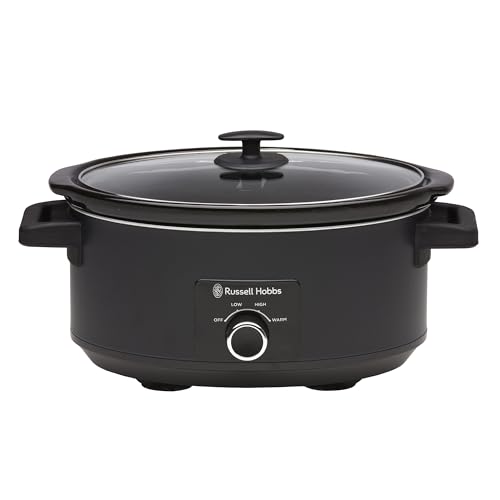
Russell Hobbs 7L Slow Cooker RHSC7
ASIN B07D8RNVP1 • $67.96 • Ships from Amazon AU
This is the simplest machine on the list and that's the recommendation, not a caveat. It's a 7 litre ceramic pot in a heated housing with three settings: low, high and keep warm. No board, no firmware, no pressure system, which means the list of things that can fail is a switch, an element and a cord. The ceramic pot and the tempered glass lid both go in the dishwasher, and the pot is presentable enough to carry straight to the table, which sounds trivial until you've washed a second serving dish every Sunday for a year. At $67.96 it's the lowest buy-in for batch cooking here by a wide margin.
The 7 litre capacity is the headline. The listing rates it at eight servings and I'd call that fair for a stew or curry, which makes it the right size for a family plus a freezer, or for cooking fortnightly instead of nightly. Cool-touch handles and a built-in lid holder are small touches that matter in practice, because the standard slow cooker juggle is a dripping hot lid and nowhere to put it, usually solved with a saucer that then needs washing too. It holds the number one spot in Amazon AU's Slow Cookers category at the time of writing, and in a category this old and settled, that mostly reflects years of repeat-purchase confidence in a known, boring, working design.
What it won't do is anything fast. There's no saute mode, so meat gets browned in a pan first or not at all, and a shin braise is an eight hour commitment rather than a forty minute one. There's no timer either, beyond switching to keep warm by hand, so it suits routines where someone loads it in the morning and someone's home by evening. If your cooking pattern is decide-at-4pm, this is the wrong machine and the Instant Pots below are the right ones. If your pattern is load-it-at-8am, this does the same job for about half the money and with far less to go wrong.
Honest caveats: Power draw isn't stated on the listing, so meter it if the running cost matters to you. Three heat settings means no browning and no timer beyond the keep-warm hold, and the ceramic pot is heavy when full and will crack if it goes from fridge to hot base.
Best for: Households that want big-batch cooking at the lowest buy-in and don't need speed or electronics.
Capacity: 7L removable ceramic pot • Stated servings: 8 • Heat settings: 3: low, high, keep warm • Cleaning: Pot and glass lid dishwasher-safe • Lid parking: Built-in lid holder • Power draw: Not stated on the listing • Price: $67.96 at time of writing • Rank: #1 in Slow Cookers (Amazon AU)
View on Amazon AU
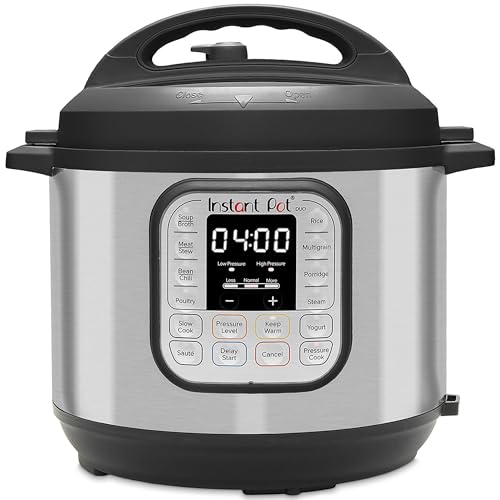
Instant Pot Duo 7-in-1 Multicooker, 5.7L
ASIN B0B7MNC2CP • $127.00 • Ships from Amazon AU
If someone asks me for one machine and no homework, this is it. The Duo is the electric pressure cooker the whole category copies: a 5.7L stainless inner pot, pressure and slow cook modes, saute for browning in the same pot, rice, steam and keep warm, with 13 one-touch programs driving it all. The listing claims up to 70 per cent faster than conventional methods, which tracks with pressure cooking generally: the shin braise that takes all day in the Russell Hobbs takes about 45 minutes here. At $127 it sits at number one in Amazon AU's Electric Pressure Cookers category, and it's held that kind of position for years for boring, sensible reasons.
The practical wins are the interlocks and the spares. The lid can't open under pressure and the machine won't pressurise unsealed, which is what makes a pressure cooker something you can run with kids in the house. Just as important from my side of the counter: Instant Pot has been in Australia long enough that sealing rings, float valves and even replacement inner pots are easy to buy from multiple sellers, so the consumable that quietly retires most generic cookers is a ten minute, ten dollar fix on this one. The saute mode is genuinely usable for browning rather than a token setting, so the whole cook happens in one pot and the washing up shrinks accordingly.
Capacity is the honest limitation. Two-thirds fill means about four usable litres, six servings as the listing states, and that's dinner plus some leftovers rather than a proper freezer run. The steam release also needs clear air above it, so it wants a spot in the workshop away from the overhead cupboards, or a pull-forward habit on venting day. For a couple or a small family it's the right size and the right machine, full stop. For deliberate bulk cooking, the extra $85 for the 8L Duo Plus below buys you roughly double the usable batch and is the better spend.
Honest caveats: Element wattage isn't stated on the AU listing, so I won't quote one. The slow cook mode runs hotter than a ceramic slow cooker on low, which surprises people converting old recipes. Yoghurt and app features are nice-to-haves, not reasons to buy.
Best for: The first pressure cooker for most households: proven design, real safety interlocks, and spares you can actually buy.
Capacity: 5.7L stainless steel inner pot • Stated servings: Up to 6 • Functions: 7-in-1, 13 one-touch programs • Claimed speed: Up to 70% faster (listing claim) • Browning: Saute mode in the same pot • Recipes: Instant Brands Connect app, iOS and Android • Price: $127.00 at time of writing • Rank: #1 in Electric Pressure Cookers (Amazon AU)
View on Amazon AU
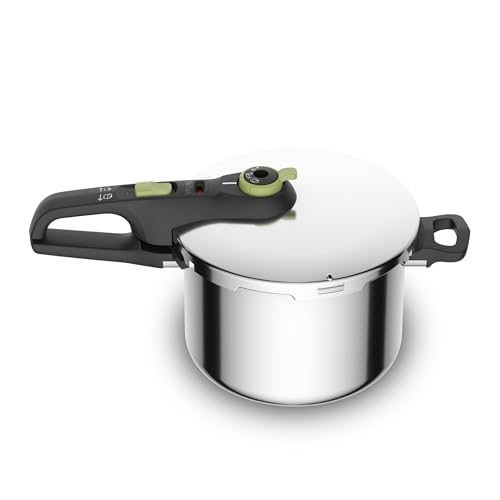
Tefal Secure Trendy Induction Stainless Steel Pressure Cooker 6L
ASIN B0BB2F4QD6 • $139.95 • Ships from Amazon AU
This is the pick for people who'd rather own a tool than an appliance, and it's the one I'd grab for my own kitchen. It's a 6L stainless stovetop pressure cooker: pot, lid, valve, gasket, and nothing that plugs in. The listing claims cooking up to twice as fast as a standard stewpot, driven by the same physics as the electrics, and it works on every hob type including induction, so it survives a kitchen renovation or a house move that the plug-in units don't care about either way. At $139.95 it holds number one in Amazon AU's Pressure Cookers category, the stovetop one, which says plenty of people still want pressure without a control board attached.
The safety engineering is the part worth reading closely. Tefal states a five point system: the cooker only pressurises once the lid is locked, the operating valve regulates pressure, a secondary safety valve takes over if the outlet clogs, controlled gasket deformation is the final relief, and the handle won't operate under pressure. That's a properly layered design with no single point of failure, and it's why modern stovetop cookers don't deserve the reputation the 1970s rattletop versions earned. Tefal backs the pot itself with a stated 10 year warranty, and the listing says the design is tested for 30 years of use, which is not a claim you'll find anywhere else on this page.
The trade-off is attention. You bring it to pressure yourself, adjust the burner yourself, and time it yourself, so it can't cook while you're at work, and there's no keep warm waiting for stragglers. There are two valve programmes, one for vegetables and one for meat, and everything except the lid goes in the dishwasher. What you get back is browning over a real burner in the same pot before the lid goes on, which beats every electric saute mode I've used, and a blackout doesn't stop dinner if you're on gas.
Honest caveats: No timer, no delay start, no keep warm: it's a pot, and it needs a cook in the room. The gasket is a consumable like every pressure cooker's, and the lid stays out of the dishwasher. Induction owners should check their smallest burner diameter suits a 6L base.
Best for: Cooks with a decent hob who want pressure speed with nothing electronic to fail, and a pot that outlasts the stove.
Capacity: 6L stainless steel • Type: Stovetop pressure cooker • Hob compatibility: Gas, electric, ceramic, induction • Safety: Stated 5-point safety system • Programmes: 2 valve settings: vegetables, meat • Warranty: 10 years on the pot (stated) • Cleaning: Dishwasher-safe except lid • Price: $139.95 at time of writing • Rank: #1 in Pressure Cookers (Amazon AU)
View on Amazon AU
Instant Pot Duo Plus 9-in-1 Electric Pressure Cooker, 8L
ASIN B0B7N56H68 • $211.65 • Ships from Amazon AU
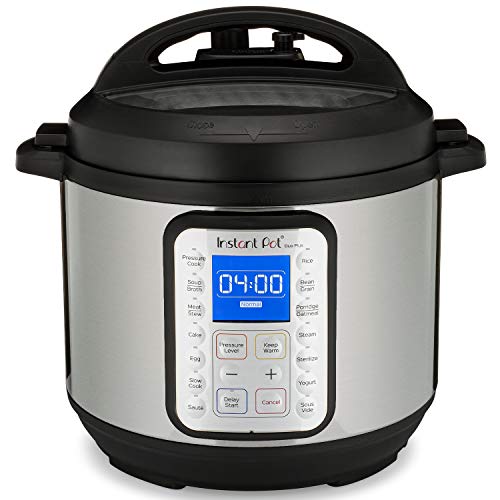
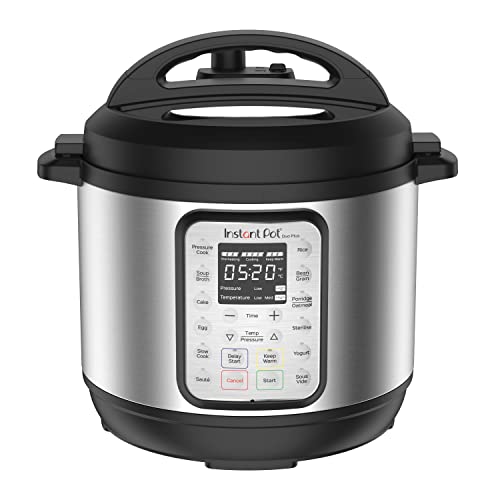
This is the Duo's bigger, better specified sibling and the machine I'd point serious batch cookers at. The 8L pot serves a stated eight portions, and once you apply the two-thirds fill rule it's the only electric here with genuinely large working capacity: a double batch of bolognese, a whole chicken with stock, a week of lunches in one cook. The 13 programs add sous vide and sterilise over the standard set, and the delay start stretches to 24 hours with a 10 hour keep warm after, so a morning load can be dinner at six without anyone home in between. At $211.65 it shares the number one rank in Electric Pressure Cookers with its smaller sibling.
The batch economics are the reason to pay the extra $85 over the 5.7L. Grocery maths favours big cuts and bulk buys, but only if you can actually process them, and this is the processing capacity: one brisket becomes ten meals in under two hours of mostly unattended time, and the per-meal cost drops to where the takeaway comparison stops being a comparison at all. Both the pot and the lid are dishwasher-safe on this model, which matters more at 8L than it sounds, because an 8L pot is a genuinely awkward thing to hand-wash in a standard sink, and the lid with its ring and valves is fiddlier still.
Physically it's a big unit, tall as well as wide, and it needs clear space above the valve when it vents, so measure the gap under your overhead cupboards before ordering rather than after. Heat-up takes longer than the 5.7L simply because there's more steel and more water to bring to temperature, so quick weeknight cooks are marginally less quick, and the sous vide and sterilise programs are pleasant extras rather than the reason to buy. Buy it for volume. Everything else about it is the standard Duo formula, which is a compliment.
Honest caveats: Wrong size for one or two people: half-empty pressure cooks work, but you're paying for and storing capacity you won't use. Wattage isn't stated on the AU listing. Check your bench height and overhead cupboard clearance before it arrives, not after.
Best for: Families and meal-preppers who cook in bulk and want the widest program set with real capacity behind it.
Capacity: 8L stainless steel inner pot • Stated servings: Up to 8 • Functions: 9-in-1, 13 programs incl. sous vide and sterilise • Delay start: Up to 24 hours • Keep warm: Up to 10 hours • Cleaning: Pot and lid dishwasher-safe • Price: $211.65 at time of writing • Rank: #1 in Electric Pressure Cookers (Amazon AU)
View on Amazon AU
Ninja Foodi Everyday Possible Cooker Pro, 6L Multi-Cooker
ASIN B0DJVJCCL6 • $240.31 • Ships from Amazon AU
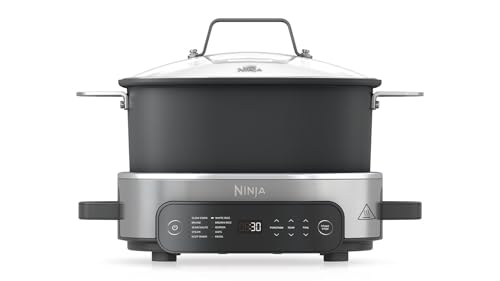
Read this one's listing carefully, because Amazon ranks it fourth in Electric Pressure Cookers and it is not a pressure cooker. Its ten functions are slow cook, sear, braise, steam, keep warm, two rice modes, oats, pasta and quinoa. No pressure mode appears anywhere on the listing, and I've had people describe theirs to me as a pressure cooker they can't get to pressurise. What it actually is: a 1,400W electric slow cooker that sears properly in its own pot, with a 6L capacity rated for a 3.2kg roast, and a removable casserole that's oven safe to 260 degrees. Judged as what it really is, though, it's a genuinely clever machine and a well built one.
The oven-safe casserole is the feature that earns the $240.31. The standard multicooker compromise is that everything comes out braised: soft, wet, no crust, no colour. Here you sear in the pot, slow cook in the pot, then lift the same pot into a hot oven to finish a roast's skin or crust a pasta bake, and serve out of it at the table. That's a workflow no Instant Pot vessel can follow, because theirs aren't rated for oven use. Ninja also states the 1,400W element figure plainly, which I appreciate: at a 33c/kWh tariff that's about 46c an hour flat out, and a lot less across a real slow cook where the element cycles.
It carries the usual Ninja fit and finish, and the sear function runs hot enough to be worth using, which is not something I can say for most machines at this price. The 6L capacity with a stated 3.2kg roast limit covers a family comfortably, and the listing's 450g pasta figure is about right for a full pasta bake. But if pressure cooking is any part of why you're shopping, this is simply the wrong machine, and that's less a knock on the cooker than on the shelf Amazon has filed it under.
Honest caveats: Not a pressure cooker, whatever the category rank implies: nothing cooks faster in it than in any slow cooker. The 6L pot serves fewer than the Duo Plus for more money, so you're paying for the sear and the oven-safe pot, and those only pay off if you'll use them.
Best for: Cooks who want slow cooking, proper searing and oven finishing in one vessel, and who don't need pressure.
Capacity: 6L, stated 3.2kg roast / 450g pasta • Functions: 10-in-1: slow cook, sear, braise, steam, rice and more • Pressure cooking: Not offered, despite the category • Power: 1,400W (stated) • Casserole: Removable, oven safe to 260°C • Model: MC1101ANZ, sea grey/stainless • Price: $240.31 at time of writing • Rank: #4 in Electric Pressure Cookers (Amazon AU)
View on Amazon AUSide-by-side comparison
| Product | Price | Best for |
|---|---|---|
| Russell Hobbs 7L Slow Cooker | ~$63.00 | |
| Midea 6L Electric Pressure Cooker | ~$119 | |
| Instant Pot Duo 7-in-1 Multicooker | ~$143.20 | |
| P2580702 Tefal Secure Trendy Induction… | ~$139.95 | |
| Instant Pot Duo 7-in-1 Multicooker | ~$175.00 | |
| Instant Pot 9-in-1 Duo Plus 5.7L Electric… | ~$167.20 | |
| Instant Pot 9-in-1 Duo Plus 8L Electric… | ~$199.20 | |
| Ninja Foodi Everyday Possible Pro Cooker | ~$193.00 |
What we see fail at the bench: multicookers
Benchtop cookers arrive at the shop with a short list of complaints: dead unit, won't pressurise, error code on the display. The causes are shorter still, and most trace back to steam, starch or a dry pot rather than to any exotic electronics failure. These machines live in the harshest environment in the house short of the bathroom, hot, wet and splattered, and the design has to fight that every cook. Here's what actually gives up, in rough order of frequency.
Gummed float valves and lid microswitches
The float valve is a small pin that rises to lock the lid once pressure builds, and dried starch from foamy cooks glues it in its bore. The machine then either refuses to start, because the lid switch never registers closed, or never pressurises, because the valve leaks. Nine times out of ten the fix is a toothpick, hot water and five minutes, not a repair bill. The anti-block shield under the lid collects the same residue and gets the same cleaning. If a cooker works some days and not others, this is where I'd look first, before assuming the board has failed.
Thermal fuses after a dry run
Run a pressure cooker with no liquid, or a slow cooker empty, and the plate temperature climbs until the one-shot thermal fuse in the base lets go. The unit then reads completely dead: no lights, no display, nothing, which convinces most owners the board has died. It usually hasn't. The fuse is a dollar part sitting in the heater circuit, and replacing it with the correct temperature rating brings the machine straight back. The generic units blow them more readily than the name brands, mostly because their burn detection is cruder and steps in later, or occasionally not at all.
Steam in the control board
Electric cookers vent steam upwards, and control panels sit above warm boards that breathe as they heat and cool. Park the machine under an overhead cupboard and the vented steam rolls along the underside, back down the housing and into the electronics, where it condenses on the coldest thing around. We see the result as corroded ribbon connectors, ghost button presses and displays with missing segments, the same electrolytic damage we treat in water damaged phones, just slower. Give the valve clear air above it and the board stays dry for years.
Decision tree: which one should you actually buy?
- Feeding a family and stocking a freezer on one big cook? → The Instant Pot Duo Plus 8L at $211.65. It's the only electric here with real bulk capacity after the two-thirds fill rule, and pot and lid both go in the dishwasher.
- First pressure cooker and you want the safe default? → The Instant Pot Duo 5.7L at $127. Proven interlocks, saute in the same pot, and sealing rings you can buy anywhere in Australia when the original wears out.
- Good hob, happy to stand near the stove, no interest in electronics? → The Tefal Secure Trendy 6L at $139.95. No board, no fuse, no firmware, a stated 10 year warranty on the pot, and it works on induction.
- Just want soups and braises to cook themselves for the least money? → The Russell Hobbs 7L slow cooker at $67.96. Three settings, a dishwasher-safe pot that goes to the table, and nothing complicated to break.
- Want to sear, slow cook and finish in the oven in one pot? → The Ninja Possible Cooker Pro at $240.31, bought with clear eyes: it doesn't pressure cook, and it's the better machine once you know that.
- Already own one that won't pressurise, shows an error or plays dead? → Don't bin it yet. It's usually a gummed valve, a tired sealing ring or a blown thermal fuse, and all of those are quick, inexpensive fixes. Bring it past our Erina workshop and we'll tell you in minutes whether it's worth fixing.
Frequently asked questions
Are electric pressure cookers actually safe?
The current generation is, provided the seals are maintained. Electric units won't pressurise until the lid is locked and won't open while pressure remains, and the stovetop Tefal states a five point system ending in a deliberate last-resort relief through the gasket. The incidents that made pressure cookers scary date from designs with one valve and no interlocks. The residual risks today are user-side: overfilling past two-thirds, cooking foamy things past half full, or forcing a lid open early. Respect those three rules and a modern cooker is no more dangerous than a saucepan of boiling water, arguably less, because the lid is locked on.
How often should I replace the sealing ring?
Roughly every 12 to 18 months with regular use, or sooner if the cooker takes noticeably longer to reach pressure, hisses steam at the rim, or the ring looks flattened, cracked or feels stiff rather than springy. Odour is the other trigger: silicone absorbs curry and stock smells permanently, so many owners run one ring for savoury cooking and a second for rice and desserts. Check the ring price and availability for your exact model before you buy the cooker itself, because a machine whose ring you can't buy has a service life set by that one part.
Is a multicooker the same thing as an Instant Pot?
Mostly, but check the spec list rather than the shelf label. Instant Pot is a brand of electric pressure multicooker, and most machines sold as multicookers are the same idea: a sealed heated pot with a menu of programs. The exception matters. Some multicookers, including the Ninja Possible Cooker Pro in this guide, have no pressure function at all, and Amazon still ranks them in the Electric Pressure Cookers category. If pressure cooking is the point, confirm the words pressure cook appear in the listed functions before you pay.
How much power does a slow cooker actually use?
Less than most people assume. Slow cooker elements are small and cycle on and off, so the averaged draw over a cook tends to sit in the low hundreds of watts. At the AU average tariff of about 33c per kilowatt hour, an assumed 300W average across eight hours is 2.4kWh, or roughly 79 cents for a meal that feeds the house twice. A full-size oven doing the same braise heats a sixty litre cavity for hours instead. If you want your model's real number rather than my assumption, a metering smart plug will log a whole cook for you.
Why won't my pressure cooker come up to pressure?
In order of likelihood: the sealing ring is worn, hardened or seated badly; the float valve or anti-block shield is gummed with dried starch; there isn't enough liquid in the pot; or the steam release is set to venting rather than sealed. All four are five minute checks. Pull the ring out, wash it, reseat it evenly, clean the valve pin so it moves freely, and confirm at least a cup of thin liquid in the pot. If it still leaks steam at the rim with a fresh ring, the lid or rim may be deformed, and that's the point where a bench diagnosis beats guessing.
Can I put the inner pot and lid in the dishwasher?
Depends on the model, and it's stated on each listing. The Russell Hobbs ceramic pot and glass lid are dishwasher-safe, the Instant Pot Duo Plus states both pot and lid are, and the Tefal is dishwasher-safe except for its lid, which houses the valves and gasket. As a general rule stainless pots are fine, and any lid containing a sealing ring is better washed by hand: dishwasher heat ages silicone faster and can warp the ring's seat. Whatever you wash, dry the pot's underside before it goes back on the heating plate, because trapped water spits and stains the plate.
Related buying guides
Cooker showing an error code or playing dead?
Before you replace it, find out what actually failed. Most dead multicookers are a blown thermal fuse or a corroded connector, and most that won't pressurise just need a ring or a cleaned valve. Bring it in to the Erina workshop and we'll put a meter on it, tell you what the fault is and what the fix costs, before you spend anything on a replacement.
Visit our Erina workshop Book Online