Prices from Amazon AU, updated daily. Swipe or use the arrows for more.
Disclosure: This article contains affiliate links to amazon.com.au. If you buy through one of these links iFix may earn a small commission at no extra cost to you. It doesn't change which products we recommend. We focus on what actually lasts based on 16 years of repair-shop experience.
Quick summary7 picks
- Entry Pick about$600
- WYBOT B1 Robotic Pool Cleaner for Inground… about$630
- about$670
- about$800
- about$850
- 2026 Beatbot Sora 10 about$999800mAh.
- Most Premium about$1,070
Cordless robot, suction cleaner or a pool service
A cordless robot pool cleaner is a sealed plastic hull with a lithium battery pack, a few small motors, a pump impeller and a filter basket, and it runs on its own for two or three hours before you lift it out and charge it. The ones that come into the shop with faults mostly have the same few problems: a battery that's lost capacity, a charging contact that's corroded, or water that's got past a shaft seal. None of that shows up in the listing photos, so it's worth knowing what to check before you buy.
The older options still have their place. A suction cleaner that plugs into your skimmer box is simple and has no battery to wear out, but it relies on your pool pump running and it mostly does the floor. A corded robot runs off a floating cable and a transformer on the deck, so there's no battery, but the cable tangles and you're still lifting it out. Cordless robots trade the cable for a battery that ages, which is why battery care gets so much attention in this guide.
I've stuck to cordless robots between $600 and $2,000 because that's where most of the listings on Amazon AU sit and where the trade-offs get interesting. If you've already got a robot vacuum inside the house, a pool robot will feel familiar: same app, same scheduling, same habit of getting stuck on the one awkward corner. The difference is that this one lives in chlorinated water and summer sun, and that's what decides how long it lasts.
Inground or above-ground: check the pool type
The first thing to check on any listing is the pool type it's built for, because the titles aren't consistent. The WYBOT C2 in this guide is listed for inground pools, while the 2026 WYBOT C1 and the C2 Vision both say inground and above-ground. Aiper and Beatbot list floor, wall and waterline cleaning without naming a pool type in the listing data, so I'd check the maker's own page if you've got an above-ground pool with soft liner walls.
Above-ground pools are tricky for wall-climbing robots for two reasons. The walls are often a flexible vinyl liner that gives under the robot's tracks, and the floor is usually flat with a sharp corner at the wall rather than a curved cove. A robot that climbs confidently on a tiled inground wall can lose grip or flip at that corner. A smaller, lighter robot generally copes better, which is one reason the C1 is the one I'd look at first for that kind of pool.
Surface matters for inground pools too. The C2's listing names concrete, tile, vinyl, fibreglass, pebble and gunite, which covers most Australian backyard pools. Pebble finishes wear brushes and tracks faster than smooth fibreglass, and a very smooth wall can be harder to climb once there's a film of algae on it. If your pool has a deep step at the shallow end, check the minimum depth the robot can work in, because a robot that strands itself on a ledge is one you'll be fishing out by hand.
Runtime, pool size and the eco-mode numbers
Runtime figures on these listings are usually quoted in the most economical mode. The WYBOT C2 lists up to 180 minutes in its eco mode, the Aiper Scuba S1 lists 270 minutes in eco but 180 minutes in its auto, floor, wall and scheduled modes, and the Beatbot Sora 10 lists 300 minutes. I'd plan around the shorter number for a full clean of floors and walls, because climbing walls and running the pump harder drains the battery much faster than a slow floor-only pass.
Pool size ratings work the same way. The C1 is rated for pools up to 150 square metres, the C2 for up to 200, the C2 Vision for about 2,150 square feet (roughly 200 square metres) and the Sora 10 for up to 300. A typical backyard pool is much smaller than any of those figures, so the size rating mostly tells you how much spare capacity the battery has. Spare capacity is worth having, because a three-year-old pack usually holds noticeably less charge than it did new.
Charging time matters if you want to run it more than once a day after a storm. The C1 lists about 3 hours and the C2 about 3.5 hours to recharge, and the others don't state a charging time in the listing data. Scheduling is the other half of runtime: the C2 has a 4-cycle timer, the C1 and C2 Vision schedule through the app, and the Aiper has a weekly cleaning plan. In my experience a short floor clean every other day keeps a pool tidier than one long session a week.
Walls, waterlines and the climbing claims
Every listing here claims wall and waterline cleaning, and most of them do climb, but how well depends on traction, weight and the pump. Tracks or caterpillar treads (the C1 and the Aiper both mention them) grip better on tile and pebble than wheels do, and the pump's suction holds the robot against the wall while it climbs. WYBOT says the 2026 C1 can handle 45° slopes, which suggests it's built for pools with steep transitions, though that figure comes from the maker rather than a test I've seen.
Waterline cleaning is where the brushes earn their keep, because that's where sunscreen, oils and leaves build up into a grey scum line. A robot scrubs along it by riding up the wall until its intake reaches the surface and then working sideways. It won't replace a brush and some tile cleaner every few weeks if the pool gets heavy use over summer, but it slows the build-up a lot. A robot that sucks air at the waterline for too long can also run its pump dry, which isn't good for the seals.
Shallow areas and tanning ledges are a newer selling point. Beatbot says the Sora 10 cleans down to 30cm of depth, Aiper says above 12 inches (about 30cm), and the C1 says shallow areas over 1.64 feet (about 50cm). If your pool has a sun shelf, those numbers matter more than the pool size rating does. Anything shallower than a robot's minimum is a spot you'll still be brushing yourself, so measure it before you pick a model rather than after the first clean.
Filters, baskets and what fine filtration catches
Every robot here has a basket or cartridge you empty after each run, and most now have two stages: a coarse filter for leaves and a fine one for sand and dust. The C2 lists a 180-micron primary filter and a 10-micron fine filter, the Aiper a 180-micron filter plus a replaceable 3-micron one, and the Beatbot an optional 3-micron filter with a 5L basket that Beatbot says holds about 650 leaves. The C2 Vision pairs a 180-micron basket with what WYBOT calls a HEPA-grade filter.
Finer filtration catches more dust and fine sand, but it clogs faster, and a clogged filter is the most common reason a robot stops climbing walls halfway through a clean. When the filter loads up, the pump can't pull enough water through to hold the robot against the wall, so it slides off and goes back to the floor. If yours starts doing that, rinse the fine filter before you blame the motors. For a pool under gum trees, I'd run the coarse filter through autumn and switch to the fine one in summer.
Rinse the filters with fresh water from the hose after every run and let them dry out of the sun. Chlorinated water left in a basket in a hot shed breaks down the mesh faster than you'd expect, and a torn filter lets grit into the impeller housing. Replacement filters and brushes are consumables, so before you buy, check the brand sells them in Australia. A pool robot with no spare filters available is like a vacuum with no bags: fine for a year and then a problem.
Batteries, charging and the seals that keep water out
The battery is the part that decides how long a cordless pool robot lasts. It's a lithium-ion pack sealed inside the hull, usually not designed for owners to swap, and like any lithium pack it ages faster when it's kept hot and fully charged. Charge it in the shade, not on hot pavers in the afternoon sun, and if you're putting it away for winter, leave it at about half charge and top it up every couple of months. A pack that's stored flat for six months often won't take a charge again.
Most cordless robots charge through magnetic or pin contacts on the outside of the hull, so the charging connection sits in pool water every time it's used. Those contacts corrode if the robot goes on charge while it's still wet, so dry them with a cloth first and give them a gentle clean every so often. The charger is a mains power supply that lives near a pool, so keep it under cover, plug it into an RCD-protected outlet, and read our guide on how failing chargers damage lithium batteries before buying a no-name replacement.
Seals are the other part that wears. Every motor shaft that passes through the hull has a seal, and the hull itself is closed with gaskets around the battery compartment. Once water gets past one of those it reaches the electronics, and corrosion takes over from there, the same way it does in a phone. Our page on what water does to a circuit board explains the process. The warning sign is a robot that starts behaving oddly after a run and then fails to charge, and it's always worth stopping at that point.
Chlorine, salt and getting it out of the pool
Take the robot out of the water whenever you shock-dose the pool or add acid. High chlorine levels and low pH are hard on the brushes, the plastic and the seals, and a robot left in during a shock treatment can age a lot in a single weekend. The same goes for leaving it sitting in the pool between runs. Most makers recommend taking it out after each cycle, and a robot that lives in the water full time will usually wear its seals out faster than one that's rinsed and stored dry.
Salt chlorinators are common in Australian pools, and salt is harder on metal parts than chlorine alone. Beatbot is the only maker in this guide that states a salt limit on the listing, saying the Sora 10 is designed for saltwater pools under 5,000 ppm and built with corrosion-resistant materials. If you run a salt pool, check your chlorinator's salt setting against that kind of figure, and for the other robots, look for the limit on the maker's own page. Rinsing the robot in fresh water after each salt-pool run is a good habit anyway.
Getting it out is the part nobody mentions until they're doing it. A robot full of water is heavy, and lifting one off the bottom with a hook strains both your back and the robot's handle. The C1 parks itself by the wall when its battery runs low, and the Sora 10 returns to the waterline and stays there for 10 minutes after a cycle, which makes retrieval much easier. That feature is worth more than a lot of the app extras if you're the one lifting it out every couple of days.
How I picked these five
I searched Amazon AU for cordless robot pool cleaners between $600 and $2,000, new condition only, and dropped corded robots, solar skimmers, overseas-named sellers and import listings. Then I sorted what was left by Amazon AU's category sales ranks. The WYBOT C2 is ranked #3 in Pool Cleaning Tools & Attachments and the C1 is #6, which makes them the two most Australian buyers are choosing right now, and both are sold by the WYBOT AU storefront.
The other three come from brand stores too: Aiper Intelligent for the Scuba S1, Beatbot Tech for the Sora 10 and WYBOT AU for the C2 Vision. None of the five is sold by Amazon AU directly, which is normal in this category, so keep your order confirmation and register the warranty with the maker. All five listings state a 2-year warranty, and Beatbot's listing also mentions local Australian support, which is worth a lot when a robot stops charging in the middle of January.
I've judged them on hardware and listing data: pool type, runtime, filtration, retrieval and what each listing says about materials. I haven't repeated the claims about water quality or how clean your pool will look, because those depend on your pump, your chemistry and your trees more than on the robot. If you're weighing this up against the robot mowers I've covered, the same rule applies: buy the one with parts and support you can get here. And if one stops charging, the Erina workshop can test the pack and seals.
The 5 picks, $670 to $1,070
Prices are Amazon AU at time of writing (19 October 2026) and move week to week. Ranks are Amazon AU category sales ranks, checked the same day.

WYBOT C2 Cordless Robotic Pool Cleaner for Inground Pools
ASIN B0H4YQNHHX • $849.99 • Sold by WYBOT AU on Amazon AU
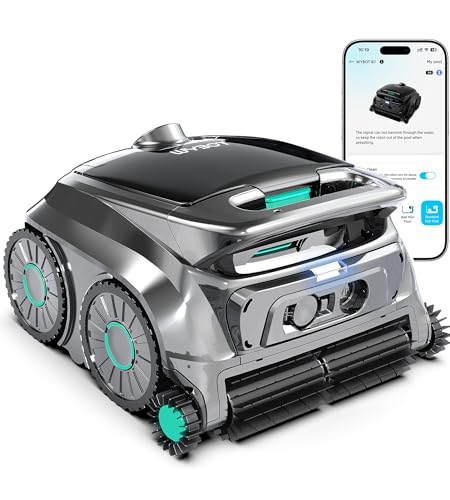
The WYBOT C2 is the best-selling robot in this guide, ranked #3 in Amazon AU's Pool Cleaning Tools & Attachments category and #288 across the whole of Amazon AU, and at $850 from the WYBOT AU store it's the one I'd start with for an inground pool. It cleans floors, walls and the waterline, uses a built-in gyroscope for navigation, and WYBOT rates it for pools up to 200 square metres, which is far bigger than most backyard pools. Three brushless motors drive it, which should mean fewer wearing parts inside the motors than older brushed designs and a longer working life overall. It's sold by the WYBOT AU storefront, which is where warranty claims go.
Filtration is two-stage, with a 180-micron primary filter for leaves and a 10-micron fine filter for sand and dust. You get 7 cleaning modes, including floor-only, wall-only and waterline-only, and the listing names concrete, tile, vinyl, fibreglass, pebble and gunite surfaces, so it suits almost any inground pool in Australia. WYBOT quotes up to 180 minutes of runtime in its eco mode and about 3.5 hours to recharge. A 4-cycle timer lets you schedule cleans through the week, and it takes firmware updates over the air. The listing states a 2-year product warranty, the same term as every other pick here. Write the model and serial number down somewhere for when you need filters.
The listing title says inground, so if you've got an above-ground pool I'd look at the C1 below instead. The 180-minute runtime is the eco figure, so expect less on a full floor-and-wall clean. Amazon lists the hull at about 47 x 43 x 31cm but doesn't give a weight, so check it before you commit to lifting it out every couple of days. There are two listings for the C2 at the same price, so pick the one sold by WYBOT AU. For a mid-sized inground pool, it's the robot I'd buy first, and it's the one most people are buying.
Honest caveats: Listed for inground pools only, and the 180-minute runtime is the eco-mode figure. No weight, charging method or salt-water rating on the listing. Sold by WYBOT AU rather than Amazon AU, so support and warranty claims go through the brand.
Best for: A mid-sized inground pool that needs floors, walls and the waterline done.
Type: Cordless robotic pool cleaner • Pool type: Inground • Coverage: Floor, walls, waterline; up to 200m² • Runtime: Up to 180 min (eco mode) • Charge time: About 3.5 hours • Filtration: 180μm + 10μm • Warranty: 2 years • Seller: WYBOT AU • Rank: #3 in Pool Cleaning Tools & Attachments (Amazon AU)
View on Amazon AU
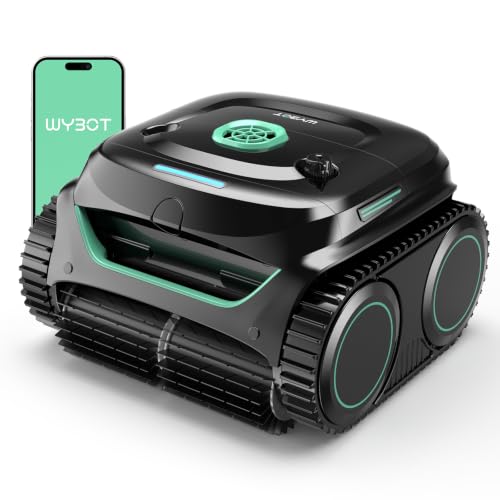
WYBOT C1 2026 Cordless Pool Cleaner, Above-Ground and Inground
ASIN B0H71V942W • $669.99 • Sold by WYBOT AU on Amazon AU
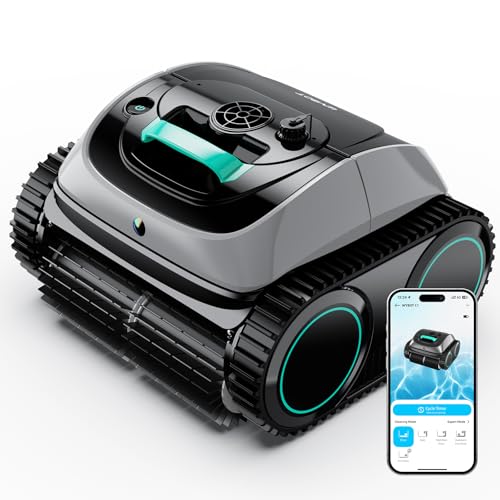
The 2026 WYBOT C1 is the smaller, lower-priced sibling of the C2, and at $670 from WYBOT AU it's ranked #6 in Amazon AU's Pool Cleaning Tools & Attachments category. The big difference is that this version is listed for both inground and above-ground pools, which makes it the one I'd look at first if your pool has a flat floor and liner walls. It cleans floors, walls, the waterline and stairs, and WYBOT says its three motors give it enough climbing strength to handle 45° slopes, drains and water inlets. It's rated for pools up to 150 square metres, still well over most backyard sizes. It's sold by WYBOT AU, the same storefront as the C2.
Navigation uses what WYBOT calls Smart Navigation 4.0, with an S-shaped path across the floor and an N-shaped path up the walls, and there are 5 cleaning modes: wall, floor, wall plus floor, full pool and an eco floor mode. It reaches shallow areas deeper than 1.64 feet (about 50cm), runs for up to 150 minutes and recharges in about 3 hours. When the battery gets low it parks itself by the pool wall, which makes it much easier to retrieve. Scheduling, mode changes and over-the-air firmware updates are all handled in the WYBOT app on your phone. That auto-parking is the feature I'd value most on a pool you clean often.
WYBOT lists a 2-year warranty, lifetime technical support and 30-day returns on this listing. The filtration is described as higher-precision without a micron figure, so if fine sand is your main problem, the C2's 10-micron filter or the Aiper's 3-micron one is the better bet. The 50cm shallow limit means a sun shelf may still need a brush. There are several C1 listings from WYBOT stores, including an older version for inground pools only, so check the title says 2026 and above-ground before you order. For an above-ground pool or a small inground one, it's the pick I'd make.
Honest caveats: No micron figure for the filter, and the shallow-area limit is about 50cm. Older C1 listings at the same price are inground only, so match the 2026 title. No weight on the listing. Sold by WYBOT AU, not Amazon AU.
Best for: Above-ground pools and small inground pools with steep transitions.
Type: Cordless robotic pool cleaner • Pool type: Inground and above-ground • Coverage: Floor, walls, waterline, stairs; up to 150m² • Runtime: Up to 150 min • Charge time: About 3 hours • Shallow limit: Over 1.64ft (about 50cm) • Retrieval: Parks at the wall on low battery • Seller: WYBOT AU • Rank: #6 in Pool Cleaning Tools & Attachments (Amazon AU)
View on Amazon AU
Aiper Scuba S1 Cordless Robotic Pool Cleaner, Dual Filtration
ASIN B0CZ8Z2Q4F • $799.99 • Sold by Aiper Intelligent, LLC on Amazon AU
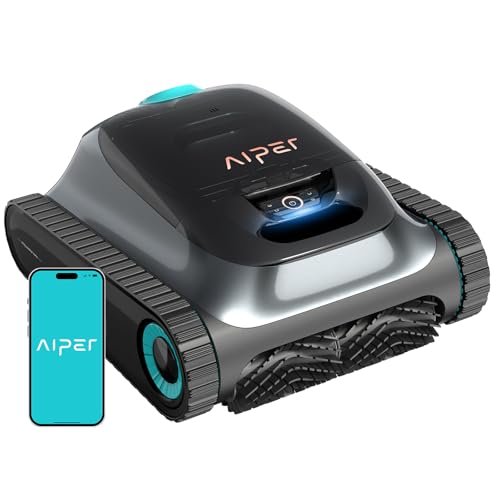
The Aiper Scuba S1 is $800 from the Aiper Intelligent store and ranked #19 in Amazon AU's Pool Cleaning Tools & Attachments category. Its headline is runtime: Aiper lists up to 270 minutes in eco mode for daily maintenance runs, and up to 180 minutes in its auto, floor, wall and scheduled modes. That split is the most honest runtime description of the five listings, and it's the 180-minute figure I'd plan around for a full clean. It cleans the floor, walls, waterline and shallow areas deeper than 12 inches (about 30cm), using caterpillar treads for grip on the climb. Amazon lists it at about 7.5kg. That's light enough to lift out without straining your back.
Navigation uses 11 sensors and what Aiper calls a WavePath cleaning pattern, which is designed to cover the pool with less overlap than a simple back-and-forth run. Filtration is two-stage, with a 180-micron standard filter and a replaceable 3-micron ultra-fine filter, the finest filter quoted here apart from the Beatbot's optional one. The app lets you choose modes, set a weekly cleaning plan and see a countdown to when the robot will finish its task, which is handy for knowing when to go and fish it out. It takes over-the-air firmware updates and carries a 2-year warranty. The listing title calls it the 2026 Upgrade, and a second S1 listing sits beside it at the same price.
The 3-micron filter catches fine dust well but it'll clog faster than a coarser one, so rinse it after every run and expect to replace it now and then as a consumable. The listing doesn't state a pool type, a charge time or a salt-water limit, so check those on Aiper's own page if they matter for your pool. At about 7.5kg empty it's one of the lighter robots here, which helps when you're lifting it out full of water. If you want the longest full-clean runs between charges and a fine filter for a sandy pool, this is the one I'd choose.
Honest caveats: The 270-minute figure is eco mode only; plan on 180 minutes for a full clean. No charge time, pool type or salt limit on the listing. The 3-micron filter clogs quickly and is a consumable. Sold by Aiper's brand store rather than Amazon AU.
Best for: Sandy or dusty pools where runtime and fine filtration matter most.
Type: Cordless robotic pool cleaner • Runtime: Up to 270 min eco, 180 min other modes • Coverage: Floor, walls, waterline, shallow areas over 30cm • Filtration: 180μm + replaceable 3μm • Sensors: 11 • Weight: About 7.5kg (Amazon listing) • Warranty: 2 years • Seller: Aiper Intelligent, LLC • Rank: #19 in Pool Cleaning Tools & Attachments (Amazon AU)
View on Amazon AU
Beatbot Sora 10 (P1) Robotic Pool Cleaner, 300-Min Runtime
ASIN B0HC28BXWM • $999.00 • Sold by Beatbot Tech on Amazon AU
The Beatbot Sora 10 (P1) is $999 from the Beatbot Tech store and ranked #42 in Amazon AU's Pool Cleaning Tools & Attachments category. It has the biggest numbers in this guide: a 7,800mAh battery that Beatbot rates for up to 300 minutes of cleaning, coverage for pools up to 300 square metres, and up to 6,800 gallons per hour of suction from what Beatbot calls its HydroBalance design. It cleans floors, walls and the waterline and reaches shallow areas down to 30cm, so tanning ledges and sun shelves are covered. Amazon lists it at about 8.5kg, a little heavier than the Aiper. Beatbot's listing is also the most complete of the five on pool depth.
Two features set it apart for Australian buyers. Beatbot says it's designed for saltwater pools with salt below 5,000 ppm and built from corrosion-resistant materials, the only salt figure on any of the five listings, and it mentions local Australian customer support alongside the 2-year warranty. It also has smart waterline parking: after each cycle it returns to the waterline and stays there for 10 minutes so you can lift it out without a hook. The 5L basket holds about 650 leaves by Beatbot's count, and there's an optional 3-micron filter for fine debris when you need it. Of the five, it's the one built most clearly with Australian salt pools in mind.
The app connects over Wi-Fi or Bluetooth and takes over-the-air updates, which is more connectivity than the others list. The 10-minute parking window is short, so you'll need to be there when the cycle ends or it'll sink back down to the floor. The listing doesn't state a charge time, and the 300-minute runtime is a best case, so expect less on a full wall-and-floor clean. Check your salt chlorinator's setting against Beatbot's 5,000 ppm figure before you buy. For a salt pool, or a bigger pool with a sun shelf, it's the robot I'd pick.
Honest caveats: Parks at the waterline for only 10 minutes after a cycle. No charge time on the listing, and 300 minutes is a best-case figure. The salt rating is under 5,000 ppm, so check your chlorinator setting first. Sold by Beatbot's brand store, not Amazon AU.
Best for: Salt pools and larger pools with tanning ledges or sun shelves.
Type: Cordless robotic pool cleaner • Battery: 7,800mAh • Runtime: Up to 300 min • Coverage: Up to 300m², shallow areas from 30cm • Suction: Up to 6,800 GPH • Basket: 5L, optional 3μm filter • Salt rating: Below 5,000 ppm NaCl • Seller: Beatbot Tech • Rank: #42 in Pool Cleaning Tools & Attachments (Amazon AU)
View on Amazon AU
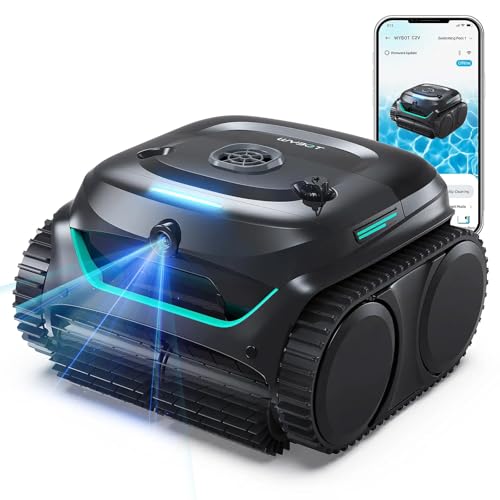
WYBOT C2 Vision Cordless Robotic Pool Cleaner with AI Camera
ASIN B0H9DKJZGX • $1,069.99 • Sold by WYBOT AU on Amazon AU
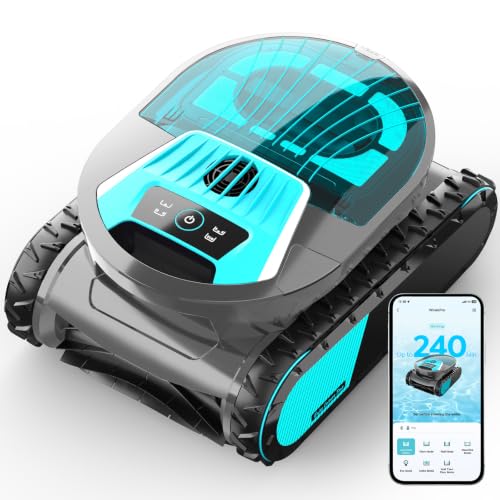
The WYBOT C2 Vision is the C2 with a camera, and at $1,070 from WYBOT AU it's the most expensive robot here, ranked #76 in Amazon AU's Pool Cleaning Tools & Attachments category. In its AI Vision mode the camera looks for concentrated patches of debris, and the robot extends its runtime and boosts suction to clean them. WYBOT also says it learns your pool's debris types and obstacle layout during the first month and builds a cleaning routine from that. I'd treat those as maker claims until there's more independent testing, but the hardware underneath is the same well-selling C2 platform. It's sold by WYBOT AU, so support goes through the same store as the C2 and C1.
It's listed for both above-ground and inground pools up to about 2,150 square feet, which is roughly 200 square metres, and it uses brushless motors. You get 8 cleaning modes and an Expert mode with 6 custom paths for floors and walls, all set through the WYBOT app, which also handles scheduled cleans. Filtration pairs a 180-micron basket with what WYBOT calls a HEPA-grade filter. The model number on the listing is WYAU26C2V1, which looks like an Australian-market model code, and WYBOT says every unit is water-tested before shipping, so a few drops inside the box are expected. That AU model code is a good sign for local support and spare parts.
A camera is one more component sealed inside a hull that lives underwater, and its lens window needs to stay clean to be any use, so wipe it when you rinse the filters. The listing doesn't state runtime, charge time or weight, which is a lot to leave out at this price, so check WYBOT's page before you order. The warranty is described as 2-year limited service coverage for product quality issues. If you want the newest WYBOT features and your debris piles up in the same corners, it's worth the extra over the C2. Otherwise, I'd buy the C2 and keep the difference.
Honest caveats: No runtime, charge time or weight on the listing. The AI learning and efficiency claims are WYBOT's and haven't been tested here. A camera adds another part to keep clean and sealed. The warranty is 2-year limited. Sold by WYBOT AU, not Amazon AU.
Best for: Pools where debris piles up in the same spots and you want the newest WYBOT.
Type: Cordless robotic pool cleaner with AI camera • Pool type: Inground and above-ground • Coverage: Up to about 200m² (2,150 sq ft) • Modes: 8, plus 6 custom paths • Filtration: 180μm basket + HEPA-grade filter • Model: WYAU26C2V1 • Warranty: 2-year limited • Seller: WYBOT AU • Rank: #76 in Pool Cleaning Tools & Attachments (Amazon AU)
View on Amazon AUSide-by-side comparison
| Product | Price | Best for |
|---|---|---|
| ~$600 | ||
| WYBOT B1 Robotic Pool Cleaner for Inground… | ~$630 | |
| ~$670 | ||
| ~$800 | ||
| ~$850 | ||
| 2026 Beatbot Sora 10 | ~$999 | |
| ~$1,070 |
What we see fail in the workshop: robot pool cleaners
Robot pool cleaners are sealed electronics that spend their working lives in chlorinated water and hot sun, and they fail in a few predictable ways. Most of the faults below start small and get worse each time the robot goes back in the water, so the earlier you catch them the better your chances. These are the three I'd want every owner to know about before the warranty runs out.
Batteries that won't hold a charge
A cordless robot that runs for 40 minutes when it used to run for two hours has a battery that's lost capacity, and heat is usually why. Packs left fully charged in a hot shed, charged on hot pavers in the sun or stored flat over winter age much faster than ones that are looked after. Sometimes it's the charger rather than the pack, and a failed power supply is quick to rule out with a meter. Because the pack is sealed inside the hull, swapping it means opening seals, so check the warranty first and get it diagnosed properly before anyone breaks a seal.
Water past the seals
When water gets past a shaft seal or a hull gasket, it reaches the motor drivers and the main board, and corrosion spreads from there just as it does in a phone that's been dropped in the pool. The signs are a robot that drives in circles, stops climbing, throws errors or won't charge after a run. Stop using it as soon as you notice, take it out, dry the outside and don't charge it. The longer a wet board stays powered, the more damage the current does, and a quick diagnosis can be the difference between a seal kit and a dead robot.
Corroded charging contacts and jammed impellers
The charging contacts on the outside of the hull are exposed to pool water on every run, and putting a robot on charge while they're wet is how they corrode. Green or white crust on the contacts means a poor connection, slow charging and eventually no charging at all. The other common fault is a jammed impeller: hair, gumnuts and leaf stems get wrapped around it and the pump motor works harder until it overheats. Clear the impeller housing when you rinse the filters, and dry the contacts before every charge.
Decision tree: which one should you actually buy?
- Mid-sized inground pool and want the safe choice? → The WYBOT C2 at $850, the best seller here, with a 10-micron fine filter and 7 cleaning modes.
- Above-ground pool or a small inground one? → The 2026 WYBOT C1 at $670, listed for both pool types, and it parks itself at the wall.
- Sandy pool, or want the longest full cleans? → The Aiper Scuba S1 at $800, with a 3-micron filter and 180 minutes in its full-clean modes.
- Salt pool or a big sun shelf? → The Beatbot Sora 10 at $999, rated for salt under 5,000 ppm and cleaning down to 30cm.
- Debris piles up in the same corners every time? → The WYBOT C2 Vision at $1,070, if you want its camera-guided cleaning mode.
- Robot won't charge, drives in circles or seems wet inside? → Stop using it, dry it and don't charge it, then bring it to our Erina workshop and we'll tell you what's failed before you spend anything.
Frequently asked questions
Is a cordless robot pool cleaner worth it over a suction cleaner?
For most pools, yes, if you'll look after the battery. A suction cleaner is simple and has no battery to wear out, but it needs your pool pump running, it mostly cleans the floor and it adds wear to the pump. A cordless robot has its own pump and filter, climbs walls, scrubs the waterline and runs on a schedule without touching your filtration system. The trade-off is a lithium battery that ages, charging contacts to keep dry and a heavier unit to lift out after each run.
How long does a robot pool cleaner battery last?
None of the five listings here gives a cycle life, so there's no honest number to quote. What decides it is heat and storage: packs kept fully charged in a hot shed or charged on hot pavers in the sun age much faster, and packs stored flat over winter can stop taking a charge altogether. Charge in the shade, store it at about half charge over winter and top it up every couple of months. If runtime drops sharply inside the 2-year warranty, claim it, because that's not normal wear.
Can I leave a robot pool cleaner in the pool all the time?
I wouldn't. Most makers recommend taking a cordless robot out after each cycle, rinsing it in fresh water and storing it out of the sun. Leaving it in the pool full time keeps the seals, brushes and plastic soaking in chlorinated or salty water, which wears them faster, and it needs to come out to charge anyway. Always take it out before you shock-dose the pool or add acid, because high chlorine and low pH are hardest on the seals.
Will a robot pool cleaner work in a salt water pool?
Most will, but only one listing here gives a figure. Beatbot says the Sora 10 is designed for saltwater pools with salt below 5,000 ppm and uses corrosion-resistant materials. The WYBOT and Aiper listings don't state a salt limit, so check the maker's own page before buying one for a salt pool. Whatever you buy, rinse it in fresh water after each run and dry the charging contacts before putting it on charge, because salt residue on those contacts is what corrodes them.
Do robot pool cleaners work in above-ground pools?
Some do, so check the listing. In this guide the 2026 WYBOT C1 and the WYBOT C2 Vision are listed for above-ground and inground pools, while the WYBOT C2 is listed for inground only. Above-ground pools often have soft vinyl liner walls and a sharp corner where the wall meets the floor, which is harder for a climbing robot to handle. A lighter, smaller robot usually copes better, and I'd check the minimum depth too, because many above-ground pools are shallow.
Can a robot pool cleaner be repaired if water gets inside?
Often, if it's caught early. Water past a shaft seal or hull gasket reaches the motor drivers and main board, and the damage comes mostly from current flowing through a wet board, so the most important step is to stop using it and not charge it. A robot that's dried and diagnosed quickly may only need seals and a clean, while one that's been charged and run for weeks with water inside usually has corroded boards and motors. Check the warranty status before anyone opens the hull.
Related buying guides
Pool robot stopped charging or acting strange? Get it checked early
Most pool robots that stop working have a tired battery, a corroded charging contact, a failed charger or water past a seal. Bring yours to our Erina workshop and we'll test the battery, charger and contacts and check for water inside, then tell you what it needs and what it'll cost before you spend anything on a new one.
Visit our Erina workshop Book Online