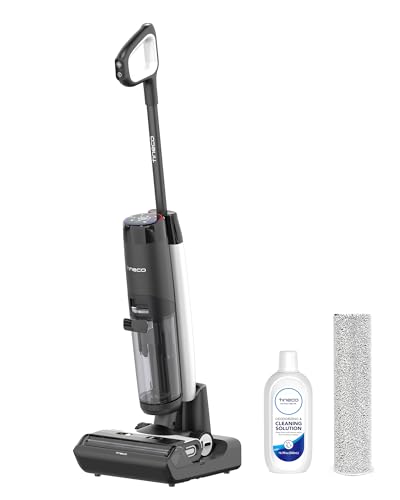
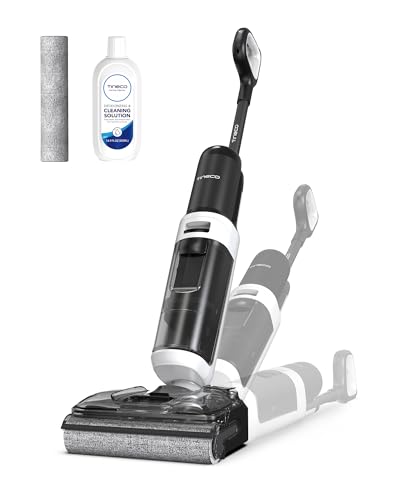
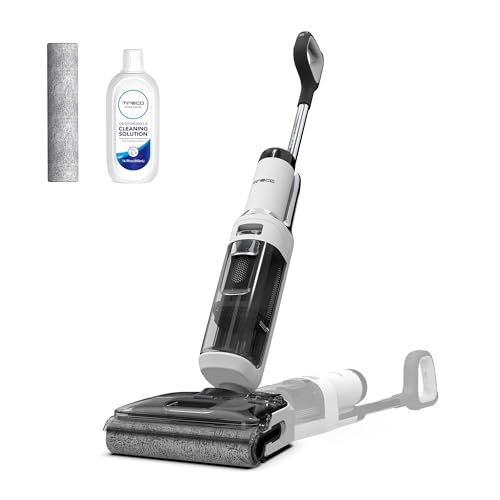
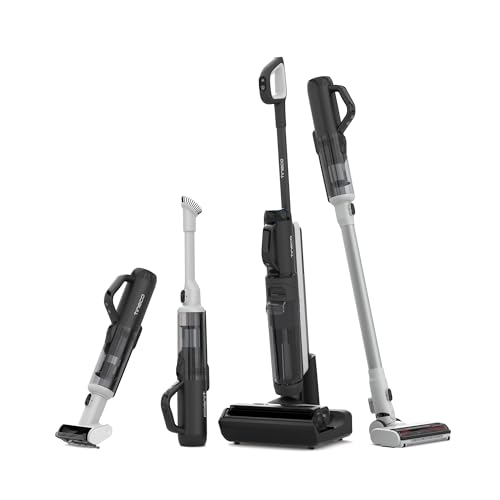
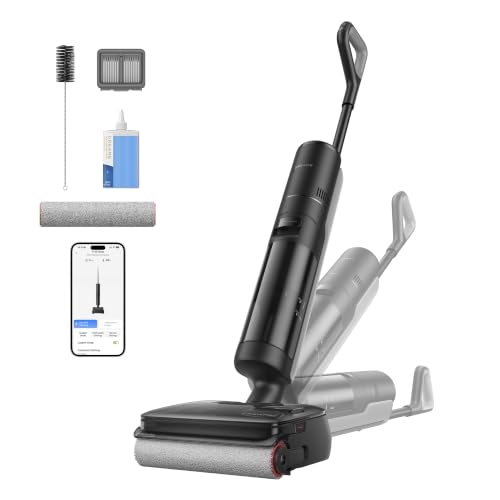
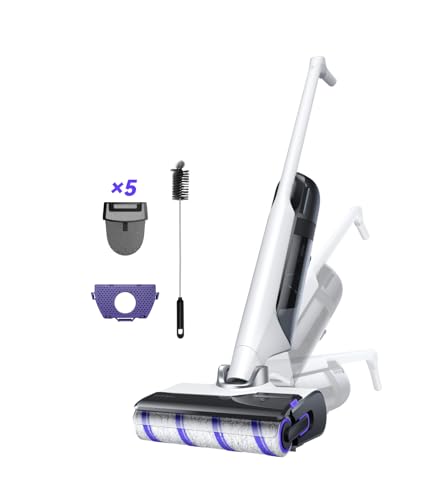
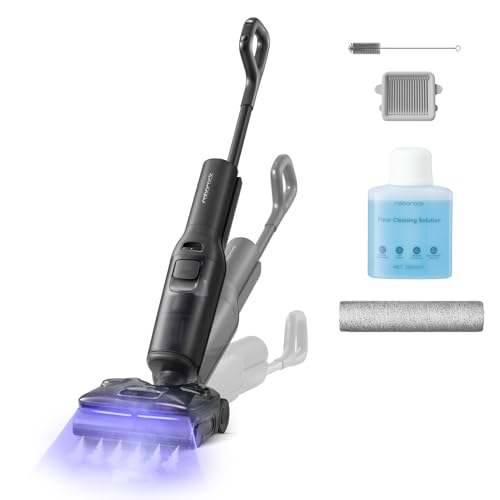
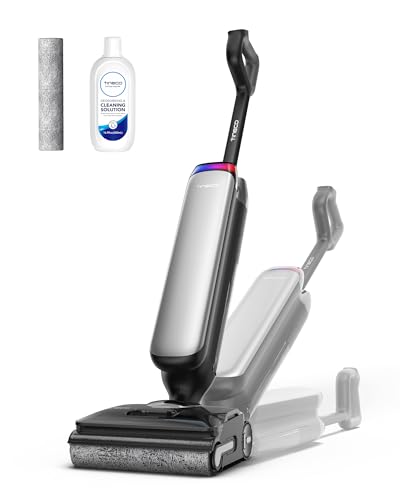
Prices from Amazon AU, updated daily. Swipe or use the arrows for more.
Disclosure: This article contains affiliate links to amazon.com.au. If you buy through one of these links iFix may earn a small commission at no extra cost to you. It doesn't change which products we recommend. We focus on what actually lasts based on 16 years of repair-shop experience.
Quick summary8 picks
- CheapestTineco Floor ONE S7 FlashDry Cordless Wet… about$379
- Tineco Floor ONE S6 Stretch Ultra Cordless… about$399
- Tineco Floor ONE Stretch S6 Wet Dry Vacuum… about$399
- Tineco Floor ONE Switch S6 Wet Dry Vacuum… about$419
- dreame H15 Heat Wet Dry Vacuum about$549
- NARWAL S30 Cordless Wet Dry Vacuum Cleaner about$549
- roborock F25 Steam Wet Dry Vacuum Cleaner about$599
- Most PremiumTineco Floor One S9 Artist Wet Dry Vacuum… about$849
Why a floor washer instead of a mop and a vacuum
A floor washer is a cordless stick that vacuums and mops at the same time. A roller spins against the floor, clean water is pumped onto it from one tank, and suction pulls the dirty water and crumbs back up into a second tank. That's the whole machine, and it's why these have replaced the bucket and the separate vacuum in a lot of homes with tiles, vinyl plank or sealed timber. You do one pass instead of two, and you're not pushing grey water around the kitchen with a string mop that's been sitting damp in the laundry since last week.
The catch is that you've swapped a mop head for a battery, a pump, a motor, two tanks, a charging dock and a handful of sensors, all of it living next to water. In my experience that's exactly where they come unstuck. The ones that come into the shop usually aren't dead from hard work. They've got a dirty tank sensor gummed up with sludge, a corroded charging contact on the base, or a pump that's been run dry so often it's stopped priming. None of that is rare, and most of it is preventable if you know where to look and spend two minutes after each clean.
So I've picked these on the things that decide whether one is still working in three years: how the self-clean cycle dries the roller, how easy the dirty tank is to rinse, what the battery and dock look like, and whether the brand has an Australian storefront you can get parts from. If your place is mostly carpet, you'll do better with a proper cordless stick vacuum, because a floor washer is a hard-floor tool first and a carpet tool not at all.
Hot water, steam and what the numbers mean
Every listing in this band leads with a temperature, and they're not all measuring the same thing. Some heat the water that goes onto the floor (the Dreame H15 Heat claims 90°C hot water cleaning), some only use heat in the self-clean cycle after you've finished (Tineco's Flashdry on the S6 uses 70°C water and 70°C drying), and the Roborock F25 Steam adds a steam generator that the listing says reaches up to 180°C. Read the bullet points carefully. A machine that only heats its self-clean water won't do anything extra for a sticky floor while you're actually cleaning it.
Heat does help with grease and dried-on spills, mostly because warm water softens residue faster than cold. In the kitchen that's a real difference. It also adds a heating element and its thermal cutout to the list of parts that can fail, and steam adds a small boiler, which means scale. If you're on hard water, the steam and hot-water paths are where mineral build-up will show first. Use the cleaning solution the brand specifies, or plain water, and don't tip homemade vinegar mixes in to fight the scale, because the seals and pumps generally aren't rated for it.
Suction figures are the other number on the box, and I'd treat them loosely. 28kPa, 25,000Pa and 20,000Pa are measured at the motor rather than at the floor, and each brand tests its own way. On a wet floor the scraper design and how well the roller seals against the surface matter more than a few thousand pascals either way. I'd rather see a flat scraper that pulls water off the roller cleanly than a bigger suction figure, and that's mostly what separates a floor that dries streak-free from one that's left with tide marks.
The dirty water tank is the part you live with
If there's one thing that decides whether you keep using a floor washer, it's the dirty tank. It fills with grey water, hair, food scraps and whatever came off the floor, and you have to empty and rinse it after every clean. Leave it sitting for two days in a warm laundry and it'll smell like a blocked drain. That isn't a fault, it's just what happens when organic gunk sits in water, but it's the reason a lot of these end up shoved in a cupboard after the first month.
There's also a sensor in there. Most machines use a pair of metal pins or a float to detect when the dirty tank is full, and when sludge dries across those pins the machine thinks the tank is full and stops. Tineco calls this out on the S6 listing itself: clean the detection pin each time you empty the tank or you'll get false alarms. That's a fault that comes in as 'it won't start', and nine times out of ten it's a rinse and a wipe with a soft brush, not a repair.
When you're comparing, look at how wide the tank opening is, whether the filter and the tank lid come apart without tools, and whether you can get a hand or a bottle brush inside. Tineco also asks you to clean the filter and HEPA element once a month on both of its machines here. Put a reminder in your phone. It's ten minutes a month and it's the thing that keeps suction where it was on day one, because a clogged filter makes the motor work harder for less.
Rollers, scrapers and hair
Every machine here has some kind of anti-tangle roller, and the names change brand to brand: ZeroTangle on the Tineco S6, TangleCut 2.0 on the Dreame, JawScrapers on the Roborock, DualBlock on the Tineco S9 Artist. The idea is the same in all of them. A comb or scraper sits against the roller and strips long hair off before it wraps, so the hair ends up in the dirty tank instead of wound around the brush. In a house with long hair or pets, it's the feature I'd care about most.
They work most of the time, not all of the time. Very long hair and carpet thread still find a way to wrap at the ends of the roller where the bearings sit, and that's where the damage happens. Hair packed into the end caps adds drag, the motor works harder, and the roller bearing wears out. Pull the roller out once a week and check the ends. It takes a minute and it's usually the difference between a roller that lasts years and one you're replacing in the first year.
The self-clean dock is the other half of this. You park the machine, press a button, and it flushes clean water through the roller and up the dirty path, then most of these dry the roller with heated air. Drying matters more than washing. A roller that sits damp in its dock overnight goes sour and grows a film, which is where the smell comes from. The S6 dries at 70°C, the S9 Artist at 85°C and the Roborock at 95°C per their listings, while the Dreame and Narwal list heated drying without giving a drying temperature.
Batteries, chargers and the dock
These run on lithium-ion packs, usually built into the body, and the runtime claims vary a lot: up to 80 minutes on the Roborock F25 Steam, up to 60 on the Dreame H15 Heat and 50 on the Tineco S9 Artist. The S6 and Narwal listings don't state a runtime at all. For an apartment or a three-bedroom house with tiled living areas, 30 to 40 minutes of real use is plenty. Runtime claims are usually measured on the lowest setting, so expect less on maximum suction or with the heat on.
What kills the packs is mostly heat and sitting flat. Leaving one docked on a hot sunroom floor all summer cooks the cells, and letting it sit dead in a cupboard for months can drop a cell below the voltage the charger will recover from. Store it at somewhere around half charge if it's going away for a while. Tineco says the S6 uses an upgraded pouch cell with a longer life than its older packs, which is the right direction, but nobody publishes cycle counts in this category, so you're trusting the brand on that one.
The dock does the charging through two metal contacts, and those contacts sit in the same tray that catches drips from the roller. Wet contacts plus voltage equals corrosion, and green fur on the charging pins is one of the most common faults we see on these. Wipe the contacts dry when you wipe the tray, keep the dock on a level floor so water doesn't pool, and only use the supplied adapter. Our page on what a bad charger does to a battery covers why a no-name replacement brick isn't worth the risk.
Floors these suit and floors they don't
Sealed hard floors are where these shine: porcelain and ceramic tiles, vinyl plank, laminate with a decent wear layer, sealed timber and polished concrete. They'll pick up dry crumbs, cat litter and spilt cereal in the same pass as the wet mess, which is the whole point of owning one. They'll also handle a tipped-over drink or a muddy paw trail without you reaching for a towel first, and they leave the floor damp rather than wet, so it's dry to walk on within a few minutes.
Be more careful with unsealed or oiled timber, older laminate with chipped edges, and natural stone you're not sure about. Water still finds its way into gaps, and swollen laminate edges are permanent. I wouldn't put steam anywhere near unsealed timber, and the Roborock listing itself only names hardwood, tile, laminate and marble as targets for its steam. If you're not sure your floor is sealed, drip a little water on it in a corner. If it beads up, you're fine. If it darkens and soaks in, keep mopping that floor by hand.
Rugs and carpet are where people get caught out. These are wet machines with a soft roller, and pushing one across a rug just wets the rug. Lift rugs before you start, or vacuum them separately. If your home is half carpet, a floor washer for the kitchen and bathrooms plus a robot vacuum for the bedrooms usually makes more sense than trying to make one machine do both jobs badly. That's the setup I'd suggest for most family homes with mixed floors.
Running costs and the consumables nobody prices
The box price is only part of it. Over a few years you'll buy replacement rollers, filters and, if you use it, the brand's cleaning solution. Rollers wear flat and lose their nap, filters clog with fine dust, and HEPA elements don't wash forever. None of the listings here state a roller or filter life, so look up the part numbers and current prices on each brand's Australian store before you commit. A machine whose rollers you can buy locally is worth more than one with a slightly better spec and no parts channel.
Electricity is close to nothing. The charging draw on these is small, and even the heated self-clean and drying cycles only run for a few minutes. None of the listings here state a charger wattage, so I won't put a dollar figure on it, but it's a rounding error next to rollers and solution. Water use is modest too: the Roborock's clean tank is listed at 1,000ml, and you'll usually get through a kitchen, hallway and bathroom on a single fill. Tip the dirty water down a laundry sink or toilet, not the garden.
Parts and service are why I've stuck to brands with an Australian storefront. Every pick here is sold by the brand's own AU store on Amazon (Tineco AU, Dreame Official AU, Roborock AU Direct and Narwal's AU store), which usually means the warranty claim goes to someone in Australia and the plug and charger are the right ones. That counts for more than people think when a pump fails in month eleven, and it's also where you'll find genuine rollers rather than knock-offs that don't seal against the scraper.
How I picked these five
I started with what Amazon AU actually sells in the $400 to $1,000 band, and kept only listings sold new by the brand's own Australian store. No marketplace resellers, no imports and nothing listed as renewed. That left a shortlist from Tineco, Dreame, Roborock and Narwal, and I picked five that cover the real choices: plain water against hot water against steam, a basic drying cycle against a hotter one, and short against long runtime.
The lead pick is the Tineco Floor ONE Switch S6 at $419, because it's the machine most people searching for a Tineco floor washer actually land on, it ranks #82 in Amazon AU's Vacuum Cleaners category, and its self-clean and drying cycle is a sensible spec at the bottom of the band. From there the Dreame H15 Heat and the Narwal S30 add heat at $549, the Roborock F25 Steam adds floor steam at $599, and the Tineco S9 Artist at $849 is the lay-flat, longer-runtime option for bigger homes.
If something goes wrong with yours later, the fault is usually smaller than it looks. A false 'tank full' error, a roller that won't spin or a dock that won't charge are mostly cleaning and contact problems, and water that's got past a seal is worth catching early (our guide to water damage in electronics explains why). Bring it to our Erina workshop and we'll tell you what's wrong before you spend anything on a replacement.
The 5 picks, $419 to $849
Prices are Amazon AU at time of writing (18 October 2026) and move week to week. Ranks are Amazon AU category sales ranks, checked the same day.

Tineco Floor ONE Switch S6 Wet Dry Vacuum and Floor Washer
ASIN B0CTKBSY9J • $419.00 • Sold by Tineco AU on Amazon AU
The Floor ONE Switch S6 is Tineco's entry machine in this band, and at $419 from Tineco AU it's the one I'd point most people to first. It vacuums and washes in one pass, and the listing calls it 5 in 1 because it comes with vacuum attachments as well, so it covers benches and upholstery as well as floors. The roller is Tineco's ZeroTangle design, which strips hair before it wraps, and the clean-water system keeps washing the roller while you work, with a scraper pulling dirty water off at what the listing gives as 450 times a minute. That stops you spreading grey water back across the floor, which is the main complaint people have about older floor washers.
The self-clean cycle is the part I like most at this price. Tineco's Flashdry flushes 70°C fresh water from the pipe down through the roller, then runs a sealed drying cycle at 70°C, spinning the roller both ways so it fluffs up and dries instead of sitting damp. Drying is what stops the sour smell that ends a lot of these machines' working lives in a cupboard. Tineco also says it's moved to an upgraded pouch cell with a longer battery life than its older packs, though the listing doesn't give a runtime in minutes or a cycle count. It's sold by Tineco's own Australian store, which matters when you need a roller or a filter in a couple of years and want the right part.
The listing is unusually upfront about upkeep, and I'd take its advice. Clean the detection pin in the dirty water tank every time you empty it, or you'll get false 'tank full' alarms, and clean the filter and HEPA element once a month. Those two jobs prevent the most common faults we see on these machines. It ranks #82 in Amazon AU's Vacuum Cleaners category at the time of writing, which for a floor washer at this price says a lot of people have already made the same call. If your floors are mostly tile and vinyl and you want one machine that just works, this is where I'd start.
Honest caveats: No runtime figure on the listing, and no heated water on the floor itself: the 70°C water is for the self-clean cycle only. Parts of the listing text repeat themselves, so check the current listing for the exact accessory set before you order. Filter and roller replacement prices aren't stated, so look them up on Tineco's AU store first.
Best for: Tiled and vinyl homes that want a dependable first floor washer with a proper drying cycle.
Type: Cordless wet dry vacuum and floor washer • Self-clean: 70°C water wash, 70°C sealed drying • Roller: ZeroTangle anti-tangle brush • Runtime: Not stated on the listing • Extras: Vacuum attachments (listed as 5 in 1) • Seller: Tineco AU • Rank: #82 in Vacuum Cleaners (Amazon AU)
View on Amazon AU
Dreame H15 Heat Wet Dry Vacuum, 90°C Hot Water, 28kPa
ASIN B0GZZ1D2GK • $549.00 • Sold by Dreame Official AU on Amazon AU
The H15 Heat is the pick if your floors see grease. Dreame heats the cleaning water to 90°C on its way to the floor, not just in the dock, and pairs it with 28kPa of suction, the highest figure on this list. Hot water softens cooking residue and dried-on spills much faster than cold, so on a kitchen floor around the stove it does a noticeably better job in one pass. The listing says the machine rinses the roller with hot water continuously and separates dirty water in real time, which is what you want so the roller isn't smearing yesterday's grime around. It also adjusts suction automatically depending on how dirty the floor is, which saves battery on the easy stretches.
Mechanically it's a well-thought-out machine. It reclines a full 180° to get under low furniture, and the brush is designed to clean right up to the front and side edges, which is where most floor washers leave a dirty strip along the skirting. Dreame lists up to 60 minutes of runtime, and the GlideWheel drive uses powered traction to make pushing and pulling feel lighter, which matters because these weigh more than a stick vacuum once the tanks are full. The self-clean runs at 95°C with hot drying afterwards, and TangleCut 2.0 is Dreame's anti-tangle roller, claimed to stay clear even with dense pet fur. There's an LED display, voice prompts and the Dreamehome app for suction, water flow, schedules and maintenance reminders.
The trade-off is complexity. A water heater in the head, a powered wheel drive, an app and voice prompts are all extra things that can go wrong, and the heater's thermal cutout is a classic failure part on any heated appliance. That's not a reason to avoid it, it's a reason to keep it clean and buy it from Dreame Official AU, which is who sells this listing. It ranks #31 in Amazon AU's Upright Vacuums category at the time of writing. If you never cook anything messier than toast, the extra heat probably isn't worth paying for, and the Tineco S6 will handle plain spills just as well.
Honest caveats: Hot water and powered wheels add parts, and heated elements eventually fail. The app isn't needed for everyday cleaning, but some settings and reminders live there. Runtime is quoted as up to 60 minutes, so expect less with heat and maximum suction on. Roller and filter prices aren't on the listing, so price them before you buy.
Best for: Kitchens and family homes where grease and dried spills are the daily mess.
Floor water: 90°C hot water cleaning • Suction: 28kPa • Runtime: Up to 60 minutes • Self-clean: 95°C wash with hot drying • Lay-flat: 180° • Extras: App, LED display, voice prompts, powered wheels • Seller: Dreame Official AU • Rank: #31 in Upright Vacuums (Amazon AU)
View on Amazon AU
Narwal S30 Cordless Wet Dry Vacuum and Floor Washer, 20,000Pa
ASIN B0G121LNF7 • $549.00 • Sold by Narwal AU Offical on Amazon AU
Narwal is better known here for its robot mops, and the S30 is its cordless stick floor washer. At $549 from Narwal's official AU store it sits in the same slot as the Dreame, with 20,000Pa of suction and an 80°C hot-water self-cleaning cycle followed by heated drying. On the floor it washes with water while it vacuums, and the listing pitches it at hard floors with pet hair. The anti-tangle roller is designed to stop hair and debris wrapping, and it lies flat to 180° to reach under beds and sofas. If you already own a Narwal robot and you've been happy with the brand's support, staying with it for the stick machine makes a lot of sense.
The listing is short, and I'll be straight about that: it gives you suction, the self-clean temperature, heated drying, lay-flat and anti-tangle, and not much else. There's no runtime figure, no tank sizes and no weight, and the floor-side water isn't described as heated, so I'd treat the 80°C as a dock feature rather than a cleaning feature. That's not a mark against how it cleans, which is the same basic method as every machine here, but it means you're buying with less information. Before you order, check Narwal's own Australian page for the runtime, the tank capacities and the price of replacement rollers and filters, and make sure you're happy with all three.
Where it earns its place is a hot-water self-clean and heated drying at the same price as the Dreame, from a brand with an Australian storefront. Drying the roller properly after each use is the single thing that keeps one of these from smelling, and the S30 does it. It ranks #393 in the Power Tools category on Amazon AU, which is where Amazon has filed it rather than with the other floor cleaners, so that rank isn't directly comparable with the others here. Treat it as the alternative to the Dreame if you'd rather have a simpler machine without the powered wheels and voice prompts.
Honest caveats: Thin listing: runtime, tank sizes, weight and charger details aren't stated. The 80°C figure is for self-cleaning, not the water going onto the floor. Amazon has filed it under Power Tools, so its rank isn't comparable with the vacuum-category ranks of the other picks. Check parts pricing on Narwal's AU store before you order.
Best for: People who want a hot-water self-clean and heated drying without app-driven extras.
Suction: 20,000Pa • Self-clean: 80°C hot water, heated drying • Lay-flat: 180° • Roller: Anti-tangle brush • Runtime: Not stated on the listing • Seller: Narwal AU official store • Rank: #393 in Power Tools (Amazon AU)
View on Amazon AU
Roborock F25 Steam Wet Dry Vacuum, 80-Minute Runtime
ASIN B0GWDFD664 • $599.00 • Sold by Roborock AU Direct on Amazon AU
The F25 Steam is the only machine here that adds steam on the floor. Roborock's listing says its VaporFlow system delivers steam up to 180°C to soften dried stains, grease and sticky spills on hardwood, tile, laminate and marble, alongside 25,000Pa of suction. If your problem is sticky rather than dusty, think dried juice under a high chair or a kitchen floor that never quite feels clean, steam gets further than hot water. The roller uses Roborock's JawScrapers anti-tangle design, and a blue light on the head shows up fine dust and hair you'd miss under normal lighting. The listing title also mentions edge-to-edge cleaning with a gap of under 1mm.
It's also the long-runtime pick in this price range. Roborock lists up to 80 minutes and coverage up to 660 square metres, with a 1,000ml clean water tank, so most homes will get through in one go without a refill. The 180° FlatReach 2.0 design lies flat to get under beds and sofas, and the head is listed at 4.9 inches high, about 12.5cm. Self-cleaning uses steam and 95°C water on the roller, then 95°C hot air dries it. The listing also claims an extended battery lifespan, though it doesn't say how that's measured. It's sold by Roborock AU Direct and ranks #29 in Amazon AU's Upright Vacuums category, the best rank of the five, at the time of writing.
Steam means a boiler, and boilers scale up. On hard water, or if you fill it from the tap for years without a thought, that's where performance drops off first. Use the water Roborock specifies, run the self-clean every time, and keep it away from unsealed timber, which the listing doesn't name as a suitable floor anyway. The listing text is a little inconsistent too: the title quotes 90°C self-cleaning while the bullets say 180°C steam self-washing and 95°C water, so check the current listing for exactly what this model does before you pay for it.
Honest caveats: Steam adds a boiler that will scale over time on hard water. Only use it on the floor types the listing names. Some temperature figures differ between the title and the bullet points. The F25 Ultra Steam is a separate, dearer listing, so make sure the one you order is the F25 Steam.
Best for: Sticky kitchens and larger homes that want floor steam and the longest runtime here.
Floor steam: Up to 180°C (VaporFlow) • Suction: 25,000Pa • Runtime: Up to 80 minutes • Clean tank: 1,000ml • Self-clean: Steam and 95°C wash, 95°C hot air drying • Height lying flat: 4.9 in (about 12.5cm) • Seller: Roborock AU Direct • Rank: #29 in Upright Vacuums (Amazon AU)
View on Amazon AU
Tineco Floor One S9 Artist Wet Dry Vacuum, 22kPa, 50-Minute Runtime
ASIN B0DPP6C5YP • $849.00 • Sold by Tineco AU on Amazon AU
The Floor One S9 Artist is Tineco's step up, and it's the pick for bigger homes with a lot of hard floor. It lists 22kPa of suction and 50 minutes of runtime, and it lies flat to 180° and compresses to 12.85cm high, so it reaches under beds and low sofas where dust and hair collect. The 360° SmoothDrive head is designed to steer more easily around furniture legs, and dual-edge cleaning gets closer to skirting boards on both sides. Tineco's DualBlock anti-tangle system uses two scrapers, a comb that catches hair and a straight one that wipes away dirty water and hair, which should mean fewer wraps than a single scraper.
The self-clean is Tineco's Flashdry again, flushing heated fresh water from the pipe to the roller, then drying with 85°C hot air, a step up from the S6's 70°C. The listing is clear that it doesn't have a steam function, so don't buy it expecting the Roborock's steam. It's sold by Tineco AU, ranks #184 in Amazon AU's Vacuum Cleaners category at the time of writing, and comes in a blue colour scheme Tineco says is inspired by the aurora. That last bit is styling and doesn't change how it cleans, but it's part of why the price sits above machines with similar specs. If you care what's standing in the corner of the kitchen, it's a nicer thing to look at than most.
Tineco's notes are worth following on this one. Before every self-clean cycle, empty the dirty water tank and make sure the clean water tank is more than 40% full, and clean the filter and HEPA element once a month. Running the self-clean with a low clean tank is how a pump ends up running dry, and a pump that's been run dry often enough stops priming. Do those two things and it should give you years of use. For a two-bedroom apartment, though, I'd put the difference in your pocket and buy the S6.
Honest caveats: No steam, and the listing doesn't say the floor-side water is heated. You're paying for the design and colour as much as for the spec. Runtime is quoted as 50 minutes, so expect less on maximum. Self-clean needs the clean tank above 40%, which is easy to forget on a busy night.
Best for: Larger homes with lots of tile or timber that want reach under furniture and a hotter drying cycle.
Suction: 22kPa • Runtime: 50 minutes • Lay-flat: 180°, 12.85cm high • Self-clean: Heated water wash, 85°C hot air drying • Roller: DualBlock anti-tangle, dual-edge cleaning • Steam: No (per listing) • Seller: Tineco AU • Rank: #184 in Vacuum Cleaners (Amazon AU)
View on Amazon AUSide-by-side comparison
What we see fail in the workshop: floor washers
Most floor washers that come in aren't worn out. They've stopped because of water in the wrong place or gunk on a sensor, and the fix is often small. These are the three faults I'd want every owner to know about, because each one is mostly preventable with a couple of minutes of care after each clean, and each one looks far worse than it is when the machine first throws an error.
False tank-full and no-start errors
The dirty tank uses metal pins or a float to tell the machine it's full. Dried sludge bridges the pins, the machine reads a full tank, and it refuses to run or stops a few seconds in. Owners assume the motor or board has died. Usually it hasn't. Empty the tank, rinse it with warm water, and wipe the pins with a soft brush until they're bright. If the error survives a proper clean, the next suspect is a cracked tank seal letting water track onto the sensor wiring, and that's worth looking at before it reaches the board.
Corroded charging contacts on the dock
The dock tray catches drips from the roller, and the charging contacts sit right in it. Water plus charging voltage grows green corrosion on the pins, contact gets patchy, and the machine either charges intermittently or not at all. Sometimes the battery gets blamed and replaced when the pins were the problem all along. Wipe the tray and contacts dry after each self-clean, keep the dock on a level floor, and if the pins are already green, clean them with isopropyl on a cotton bud before anyone tells you it needs a new pack.
Pumps that stop priming
The clean-water pump is a small diaphragm or gear pump, and it hates running dry. Self-cleaning with a nearly empty clean tank, or leaving the machine running after the tank empties, heats the pump and wears its seals until it stops pulling water at all. You'll notice the roller stays dry or the self-clean flush gets weak. Keep the clean tank topped up before every self-clean, as Tineco's S9 notes say, and don't run hot-water models on scale-heavy water without the brand's descaling routine. A pump that's already lost its prime can sometimes be coaxed back by filling the tank and running the flush a few times, but a worn diaphragm needs replacing.
Decision tree: which one should you actually buy?
- Mostly tiles and vinyl, and you want one machine that just works? → The Tineco Floor ONE Switch S6 at $419. Proper drying cycle, Australian store for parts, and the least to go wrong.
- Greasy kitchen floor around the stove? → The Dreame H15 Heat at $549 puts 90°C water on the floor, not just in the dock.
- Sticky spills, a big house and long cleans? → The Roborock F25 Steam at $599 adds floor steam and lists up to 80 minutes of runtime.
- Want a hot-water self-clean without apps and powered wheels? → The Narwal S30 at $549, with 80°C self-cleaning and heated drying.
- Lots of hard floor and low furniture to clean under? → The Tineco Floor One S9 Artist at $849 lies flat to 12.85cm and dries its roller at 85°C.
- Already own one and it throws errors or won't charge? → Check the tank pins and dock contacts first, then bring it to our Erina workshop and we'll tell you what it needs before you spend anything.
Frequently asked questions
Can a wet dry floor washer replace my vacuum?
On hard floors, mostly yes. These pick up dry crumbs, dust and hair in the same pass as the wet mess, so a home that's all tile, vinyl or sealed timber can usually get by with just a floor washer. On carpet and rugs, no. They're wet machines with a soft roller, and they'll just dampen the pile without pulling dirt out of it. If you've got carpeted bedrooms, keep a stick vacuum or a robot vacuum for those rooms and use the floor washer for the kitchen, hallways and bathrooms.
Is hot water or steam worth paying more for?
It depends on the mess. Heated floor water, like the Dreame H15 Heat's 90°C, softens grease and dried spills faster, which helps in a kitchen around the stove. Steam, like the Roborock F25 Steam's, goes further again on sticky residue. If your floors mostly see dust, footprints and the odd spilt drink, plain water does the job and you avoid a heater or boiler that can fail or scale up. Check whether a listed temperature is for the floor or only for the self-clean cycle, because they're often confused.
Why does my floor washer smell?
Almost always it's the dirty tank or a damp roller. Grey water with hair and food scraps goes off quickly if it's left in the tank, and a roller that sits wet in the dock overnight grows a film. Empty and rinse the dirty tank after every clean, run the self-clean cycle so the roller dries, and leave the tank lid off for a while if your model allows it. Clean the filter monthly too. Machines with a heated drying cycle, like all five here, are much better at avoiding the smell.
Can I use these on timber floors?
On sealed timber, yes, and most listings name hardwood as suitable. On unsealed, oiled or waxed timber, I'd keep them away, because water gets into the grain and joints and can lift or stain the boards. Steam is the bigger risk on any timber that isn't well sealed. Test a corner by dripping a little water on it: if it beads, the finish is sealed. If it darkens and soaks in, mop that floor by hand with a well-wrung mop instead.
What cleaning solution should I put in it?
Use the solution the brand specifies or plain water. Floor washers have small pumps, seals and sensors that aren't designed for vinegar mixes, bleach or general floor cleaners, and foaming products can push suds into the motor path and trip the sensors. Using the wrong chemical can also be grounds for a warranty claim to be knocked back. If you're on hard water, follow the brand's descaling advice for hot-water and steam models rather than improvising with acids that can attack rubber seals.
How long should a floor washer battery last?
None of the brands here publish cycle counts, so there's no hard number. In practice, lithium-ion packs in these usually stay useful for a few years if they're looked after. Heat is the main killer, so don't leave the dock in a hot sunroom or garage. Don't store it fully flat for months either, because a deeply discharged pack may not recover. If runtime drops suddenly rather than gradually, check the dock contacts before blaming the pack, because corroded pins cause patchy charging that looks like a dying battery.
Related buying guides
Floor washer throwing errors? Check before you replace it
Most floor washers that stop working have a dirty tank sensor, a corroded dock contact or a pump that's lost its prime, not a dead motor. Bring yours to our Erina workshop and we'll look at the tank, dock and battery, then tell you what it needs and what it'll cost before you spend anything on a new machine.
Visit our Erina workshop Book Online