Prices from Amazon AU, updated daily. Swipe or use the arrows for more.
Disclosure: This article contains affiliate links to amazon.com.au. If you buy through one of these links iFix may earn a small commission at no extra cost to you. It doesn't change which products we recommend. We focus on what actually lasts based on 16 years of repair-shop experience.
Quick summary5 picks
- Entry PickSinger 1408 Promise Mechanical Sewing Machine about$249
- Singer 4411 Heavy Duty Domestic Sewing Machine about$415
- Brother GS3700 Mechanical Sewing Machine about$449
- Brother A16 Computerised Sewing Machine about$6490W.
- Most PremiumSinger HD6605C Heavy Duty Digital Sewing… about$659
Mechanical or computerised: the first choice
Every sewing machine on this page does the same basic job: a needle carries the top thread down through the fabric, a hook under the plate catches it and wraps it around the bobbin thread, and the feed dogs pull the fabric along for the next stitch. Where they differ is how you control that. A mechanical machine sets the stitch with dials and levers that move cams and linkages inside. A computerised machine sets it with buttons and a circuit board that drives a stepper motor for the needle position.
For most people starting out, or sewing mostly hems, repairs and simple garments, a good mechanical machine is the better buy. There's less to go wrong, nothing to update, and when it does need work it's usually a clean, oil and timing adjustment rather than a board. The Singer 1408, Singer 4411 and Brother GS3700 picks are all mechanical, and they cover the range from first machine to heavier work.
Computerised machines earn their price when you sew a lot. They give you exact, repeatable settings, one-step buttonholes that size themselves, a screen that shows which foot to use, and needle up or down at the press of a button, which makes pivoting at corners much easier. The Brother A16 and Singer HD6605C are the computerised picks here. The trade is that the board and the stepper motors are parts a mechanical machine doesn't have.
What heavy duty actually means
Heavy duty is a marketing label, not a standard, so it's worth knowing what's behind it. On the Singer heavy duty range, it means two things the listings state: a stronger motor and a metal interior frame. The Singer 4411 listing says its motor is 60 percent stronger than a standard sewing machine motor, and both the 4411 and the HD6605C are built on a metal frame.
The frame matters more than the motor for how long a machine lasts. A metal frame holds the needle bar, the hook and the feed mechanism in line with each other, so the timing stays put when you push thick fabric through. Light machines with a lot of plastic in the frame flex under load, and over time that flex knocks the hook timing out. That's one of the most common reasons a machine starts skipping stitches or jamming.
What heavy duty doesn't mean is industrial. These are domestic machines that handle denim, canvas, several layers of cotton and light upholstery fabric, which covers what most households throw at them. They're not built for leather saddlery or all-day production sewing, and running them hard for hours on thick material wears the motor brushes and gears faster. If that's your plan, look at a semi-industrial machine instead.
Stitches: how many you'll actually use
Stitch counts on the box are the least useful number to compare. Most sewing uses a straight stitch, a zigzag, a stretch stitch for knits, a blind hem and a buttonhole. That's five or six, and every machine here has them. Everything past that is decorative stitches, which are fun but don't change what the machine can make.
The numbers also aren't counted the same way across brands. The Singer 1408 lists 63 stitch applications, which counts the ways its stitches can be used rather than 63 separate stitch patterns. The Brother GS3700 lists 37 utility and decorative stitches, and the Brother A16 lists 16. I'd read the A16's smaller number as a sign of a machine built around getting the core stitches right, not as a weakness.
What I'd look at instead is whether stitch length and width can be adjusted, because that's what lets you tune a stitch to the fabric. The GS3700 lists width, length and tension adjustment. Adjustable needle position, which the Singer 4411 lists, is handy for topstitching and putting in zips. Those small controls matter more day to day than another forty decorative patterns.
Buttonholes, threading and the features that save time
Buttonholes are where the machines differ most in daily use. A four-step buttonhole, like the one on the Singer 1408, has you turn the dial through four stages for each side and end. It works, but getting a row of matching buttonholes takes practice. A one-step buttonhole uses a special foot that holds the button and sews the whole hole to size in one go. The Brother GS3700 has one, the Brother A16 has three styles and the Singer HD6605C has six.
Threading is the other time saver. An automatic needle threader, which the GS3700 lists, pushes a tiny hook through the needle eye so you don't have to. A drop-in bobbin, also on the GS3700, sits flat under a clear cover where you can see how much thread is left, and it's easier to load than a front-loading bobbin case. Both matter more as your eyesight changes, and both reduce the threading mistakes that cause most jams.
Some features sound minor and turn out to be the ones people use most. A free arm lets you slide sleeves and trouser legs over the bed of the machine to hem them. A wide space to the right of the needle, which Singer calls the C space and lists on the 4411, makes quilting and big curtains easier to handle. The HD6805C, the step up from the HD6605C, lists a 163mm sewing area, if a big work area is the priority.
The motor, the pedal and the power side
Domestic sewing machines run a small universal motor with carbon brushes, driven through a belt to the main shaft. The foot pedal controls the speed, and in most machines it's the part I'd expect to fail first. Older pedals use a carbon or resistor stack that wears and burns, and the symptom is a machine that only runs flat out, or runs in jerks, or won't stop when you lift your foot.
A faulty pedal is worth taking seriously, because it carries mains voltage on a lot of machines. If the pedal cable is cracked, the plug is loose or the pedal gets hot, stop using it and have it looked at rather than taping it up. A replacement pedal from the machine's maker is the right fix. Generic pedals with the wrong rating are a common cause of motors that run too fast and wear out early.
Computerised machines add a power supply and a control board, and those are what a surge damages. If you sew on a computerised machine, plug it into a surge-protected powerboard and switch it off at the wall after a session. On running cost, none of these listings state the motor wattage. As an assumption, a 100W motor running for two hours uses 0.2 kWh, which at the AU average tariff of roughly 33c per kWh is about 7 cents. The power bill isn't the cost that matters here.
The motor itself usually lasts if it's kept clean. Lint is the enemy. It packs into the feed dogs and the hook area every session, and on older machines it gets drawn into the motor vents too. A machine that slows down, sounds laboured or smells warm after a short run is often clogged with lint rather than failing, and a clean usually fixes it.
Needles, thread and bobbins: the small parts behind most faults
Most of the machines that come in as faulty aren't faulty at all. The needle is bent, blunt or the wrong type, the thread is old and fluffy, or the bobbin is wound unevenly. A bent needle strikes the plate or the hook, and a hard enough strike knocks the timing out, which turns a small mistake into a real repair.
Change the needle every eight hours or so of sewing, or at the start of every big project, and match it to the fabric: a ballpoint or stretch needle for knits, a jeans needle for denim, a universal for woven cotton. Use decent thread, because the fluffy kind sheds lint into the machine and snaps under tension. Wind bobbins on the machine's own winder so the tension is even, and use the bobbin type the manual specifies. Bobbins that look the same can differ slightly in height, and the wrong one causes thread nests under the fabric.
If the stitches start looping, skipping or bunching, rethread the whole machine with the presser foot up before you touch the tension dial. Raising the foot opens the tension discs so the thread seats properly. Nine times out of ten, that and a fresh needle fix it. The tension dial is the last thing to adjust, not the first.
Servicing: what a machine needs each year
A home sewing machine wants a light clean after every project and a proper service every year or two if you use it regularly. The light clean is yours to do: take off the needle plate, brush the lint out of the feed dogs and bobbin area, and wipe the hook race. Every machine comes with a small brush and screwdriver for this, and the Singer HD6605C lists both in its accessory pack.
Oil only where the manual says, and only with sewing machine oil. Some modern machines are sealed and need no oil at all from the owner, while others want a drop on the hook race. Too much oil is as bad as too little, because it collects lint into a sticky paste. Never use household spray lubricants, which gum up as they dry.
A proper service is the job for someone with the tools: checking and resetting the hook timing, adjusting the feed dog height, checking the motor brushes and belt, and cleaning out the inside of the machine where lint builds up behind the covers. It's also when small wear gets caught before it causes a jam. A well-kept domestic machine with a metal frame can run for decades.
If a machine has been sitting unused for years, get it serviced before you start a big project rather than after it jams halfway through. Old oil turns to varnish on the shafts, the belt can crack, and a seized machine forced through its first seam can break a gear or strip the timing. We see plenty of these come out of storage, and most come good with a strip and clean at our Erina workshop, which costs far less than replacing a good older machine.
Before you buy: space, weight and warranty
Check where it'll live. The mechanical Singers and the Brother GS3700 weigh about 6.4 kg on their listings and the Brother A16 about 8 kg, so they're easy to lift out of a cupboard but not something you'll carry around daily. A machine that has to be set up every time gets used less, so if there's room for it to stay out on a table, that's worth more than an extra feature.
Warranty is worth reading on the listing. The Brother GS3700 states a 3 year return to base warranty, which means you send or take it to an authorised service point for a fault. The other listings don't state a warranty, so check the maker's Australian terms before you buy. Australian Consumer Law covers a major fault for a reasonable time regardless, and on a machine at these prices that's longer than one year.
Last, think about what you'll sew in a year's time, not just this week. A first machine for hemming school uniforms is a different buy from one for dressmaking or quilting. If you're steaming seams flat as you go, a garment steamer is a useful companion, and if you're selling what you make, a label printer handles the tags.
The 5 picks, $249 to $659
Prices are Amazon AU at time of writing (28 October 2026) and move week to week. Ranks are Amazon AU category sales ranks, checked the same day.

Singer 4411 Heavy Duty Mechanical Sewing Machine
ASIN B0781C3P37 • $415.00 • Ships from Amazon AU
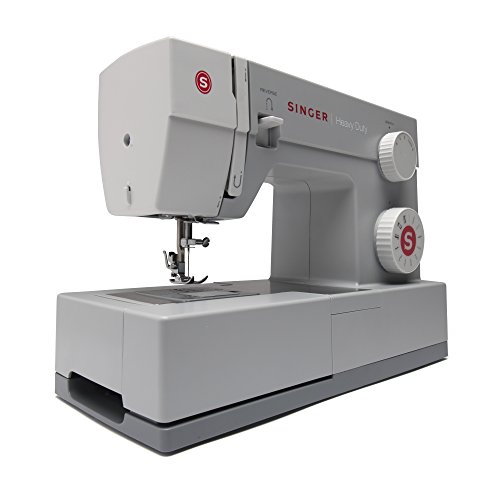
The Singer 4411 is the machine I'd point most people to, because it gets the part that decides lifespan right. It's sold by Amazon AU, and its listing states a metal interior frame and a motor 60 percent stronger than a standard sewing machine motor. That combination keeps the hook timing steady when you sew denim hems, canvas bags or several layers of cotton, which is where lighter machines start skipping stitches. It's a mechanical machine, so you set the stitch on a dial with no board or screen to go wrong. Amazon AU lists it under Sewing Machine Accessories, where it sat at #172 when I checked, which is an odd category for a whole machine but the rank it has.
The controls are simple and the useful ones are there. You can adjust the needle position, which makes topstitching and fitting zips much easier, and the presser feet clip off and on without a screwdriver. The listing calls out a generous C space, the room to the right of the needle, which helps when you're feeding a quilt or curtain through. It weighs about 6.4 kg according to the listing, so it stays put on the table when you're sewing quickly, and it's still easy enough to lift into a cupboard. The model code on the listing is S4411-HEAVY-DUTY. The listing gives a 2024 release date for this version, so it's a current listing rather than old stock.
The listing doesn't state the stitch count, the buttonhole type or a warranty, so check those against Singer's Australian product page before you buy. For a first serious machine, or one for heavier fabrics, it's the one I'd buy. Keep the lint out of the feed dogs and change the needle often, and the metal frame should keep it sewing for years. Use a jeans needle for denim and go slowly over thick seams, letting the machine pull the fabric rather than pushing it. If it struggles on a seam, turn the handwheel by hand for a stitch or two instead of flooring the pedal. Brush the bobbin area out after every project, and have the timing and the motor checked every year or two if you sew weekly.
Honest caveats: The listing gives no stitch count, buttonhole type or warranty. It's mechanical, so buttonholes and settings are set by hand. Heavy duty means domestic heavy duty: it isn't built for leather or long production runs. The sales rank sits in an accessories category, so it's not directly comparable.
Best for: Anyone who wants one solid mechanical machine that handles denim, canvas and quilting layers.
Type: Mechanical • Frame: Metal interior frame • Motor: 60% stronger than standard (listing) • Needle position: Adjustable • Work space: Generous C space for quilts • Weight: About 6.4 kg (listing) • Model: S4411-HEAVY-DUTY • Seller: Amazon AU • Rank: #172 in Sewing Machine Accessories (Amazon AU)
View on Amazon AU
Singer 1408 Promise Mechanical Sewing Machine
ASIN B00N3YAYDI • $249.00 • Ships from Amazon AU
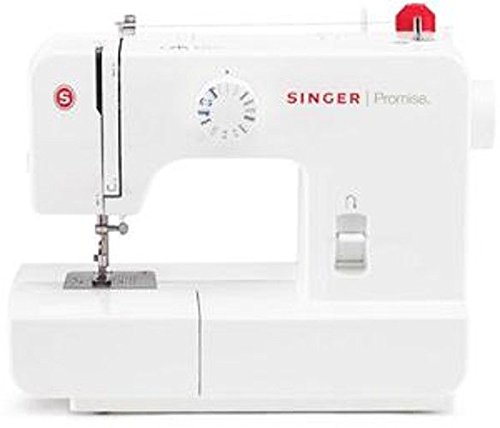
The Singer 1408 Promise is the entry pick and the best-selling machine on this page by Amazon AU's overall rank. It's sold by Amazon AU and sat at #384 in Sewing & Fabric when I checked. It's a simple mechanical machine for a first-time sewer, a teenager learning, or a household that mainly hems trousers and fixes school uniforms. You pick a stitch by turning one dial, and Singer presets the length and width for each stitch so you're not guessing at settings while you learn. The listing describes 63 stitch applications, which counts the uses of its stitches rather than 63 separate patterns. It's the one I'd buy as a first machine for a household that isn't sure how much it will sew.
Threading is laid out with printed guides on the machine, which matters more than it sounds, because bad threading causes most early frustration and most of the thread nests people blame on the machine. The buttonhole is a four-step type, so you turn the dial through four stages to sew each one. It works well enough once you've done a few, though matching a row of them takes practice. The colour is white with red trim, and the model code on the listing is S1408. It's light and compact, which suits a small table or a cupboard. Wind the bobbins on the machine's own winder so the tension is even, which avoids most of the tangles beginners blame on the machine.
What you give up at this price is mostly control and strength. There's no adjustable needle position listed, the presets limit fine tuning, and the listing doesn't mention a metal frame, so I'd keep it to light and medium fabrics and avoid pushing it through thick denim seams. The listing doesn't state a warranty either. As a machine to learn on and keep for repairs, it does the job, and it'll tell you whether sewing sticks before you spend more. Change the needle often and use decent thread, because a light machine is more sensitive to both. Keep the instruction manual, since Singer's threading path is easy to forget after a few months away.
Honest caveats: Four-step buttonholes take practice. Presets limit fine adjustment of length and width. No metal frame is listed, so keep it to light and medium fabrics. The listing doesn't state a warranty or weight. It's a learning machine, so expect to outgrow it if you start dressmaking seriously.
Best for: First-time sewers and households that mostly hem, mend and do simple projects.
Type: Mechanical • Stitches: 63 stitch applications (listing) • Stitch selection: Dial, preset length and width • Buttonhole: 4-step • Threading: Printed threading guides • Colour: White / red • Model: S1408 • Seller: Amazon AU • Rank: #384 in Sewing & Fabric (Amazon AU)
View on Amazon AU
Brother GS3700 Mechanical Sewing Machine
ASIN B077Y1GBJX • $449.00 • Ships from Amazon AU
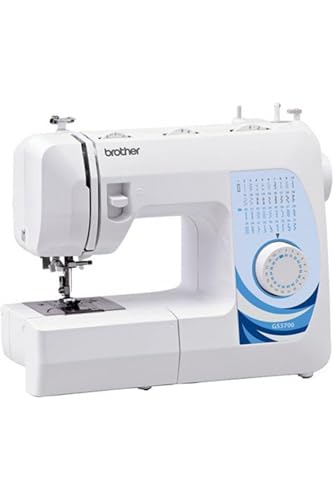
The Brother GS3700 is the mechanical machine with the most help built in. It's sold by Amazon AU and has the longest stated warranty on this page: 3 years return to base, which means a fault goes back to an authorised Brother service point. Its rank was #14,453 in Sewing & Fabric when I checked, so it sells far fewer units than the Singers, but the feature list explains why I'd still pick it for some people. It has an automatic needle threader, a drop-in bobbin and a one-step buttonhole, which are the three features that make sewing easier as eyesight and patience change. It's also the pick I'd suggest for someone returning to sewing after a long break.
The drop-in bobbin sits flat under a clear cover where you can see how much thread is left, and it's easier to load than a front-loading case. The needle threader pushes a tiny hook through the needle eye so you don't have to. The listing gives 37 utility and decorative stitches, adjustable stitch width, length and tension, and says it suits stretch fabrics. Brother pitches it at dressmaking and basic alterations, which is about right. It weighs about 6.4 kg on the listing, and the model code shown is 888X2860901. The one-step buttonhole uses a foot that holds the button, so each hole is sewn to the right size in one pass. That's a big time saver on a shirt or a cardigan with a long row of buttons.
The listing doesn't mention a metal frame or a stronger motor, so I'd keep it to dressmaking weights rather than heavy canvas and thick denim seams. The automatic threader is a small, delicate mechanism, so lower it gently and never force it, because a bent threader hook is a common, avoidable repair. If you want the easiest machine to live with and a real warranty, this is the one. Keep the box and the receipt, because return to base means you'll need to get it to the service point in one piece. Brush out the drop-in bobbin area after each project, since lint collects under the clear cover faster than people expect.
Honest caveats: Its sales rank is low. No metal frame or motor upgrade is listed, so it's not the pick for heavy fabrics. The needle threader is delicate and bends if forced. Return-to-base warranty means sending it away for a fault. The listing doesn't state the frame material.
Best for: Dressmakers and anyone who wants easy threading, a one-step buttonhole and a 3 year warranty.
Type: Mechanical • Stitches: 37 utility and decorative • Buttonhole: One-step • Threading: Automatic needle threader, drop-in bobbin • Adjustments: Stitch width, length and tension • Weight: About 6.4 kg (listing) • Warranty: 3 years return to base (listing) • Model: 888X2860901 • Rank: #14,453 in Sewing & Fabric (Amazon AU)
View on Amazon AU
Brother A16 Computerised Sewing Machine
ASIN B07VD4HY7H • $649.00 • Ships from Amazon AU
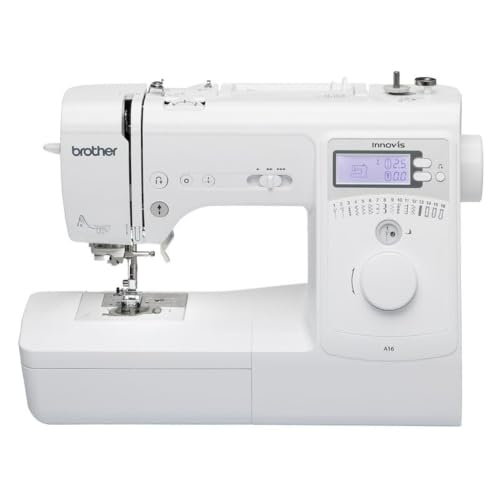
The Brother A16 is the computerised machine for someone who wants exact settings without paying for hundreds of decorative stitches. It's sold by Amazon AU and sat at #1,311 in Sewing & Fabric when I checked, the best rank of the two computerised picks. The listing gives 16 stitches, three one-step buttonhole styles and a jog dial for stitch selection, which is a simple way to scroll through the options. I'd read the short stitch list as a machine built around the stitches you'll actually use, with the computer doing the repeatable part: the same length and width every time you come back to a project. Brother is the other big name in domestic machines in Australia, alongside Singer.
Three one-step buttonhole styles is a real step up from the four-step Singer 1408, because each buttonhole is sewn to size in one pass. Computerised control also tends to make the machine easier to drive slowly, which helps on corners and curves. It's the heaviest pick here at about 8 kg on the listing, which keeps it planted on the table at speed. The listing gives the part number as A-16 and the model as 888M5060901, and it's white. The package is listed at 54 by 37 by 29 cm, so check the cupboard it'll live in. The jog dial is easier to use than a long row of stitch buttons when you're mid-project.
The listing is thin on detail: no warranty, no frame material and no screen size are stated, so check Brother Australia's product page for those before you order. Because it has a control board, plug it into a surge-protected powerboard and switch it off at the wall after a session. It's the computerised pick I'd buy for a home sewer who wants precision without complication. Change the needle at the start of each project and keep the bobbin area clean, because a computerised machine is just as sensitive to lint and blunt needles as a mechanical one. If the screen or the buttons ever stop responding, switch it off at the wall for a minute before you assume the board has failed.
Honest caveats: The listing doesn't state a warranty, frame material or screen detail. Only 16 stitches, if decorative work matters to you. It's the heaviest machine here. As a computerised machine, it has a control board that a power surge can damage.
Best for: Home sewers who want computerised precision and one-step buttonholes without a long stitch menu.
Type: Computerised • Stitches: 16 • Buttonholes: 3 one-step styles • Stitch selection: Jog dial • Weight: About 8 kg (listing) • Package size: 54 x 37 x 29 cm (listing) • Model: A-16 (888M5060901) • Seller: Amazon AU • Rank: #1,311 in Sewing & Fabric (Amazon AU)
View on Amazon AU
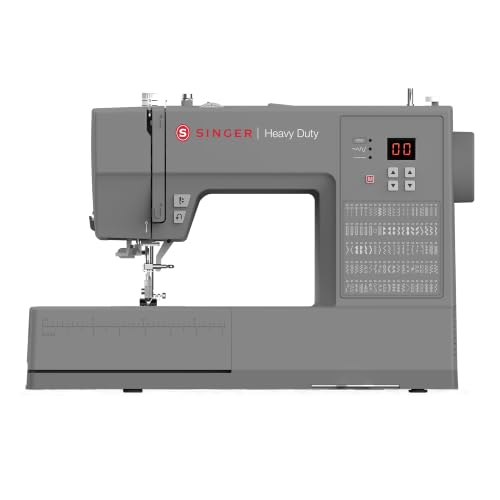
Singer HD6605C Heavy Duty Computerised Sewing Machine
ASIN B0C8HJZRYG • $659.00 • Ships from Amazon AU
The Singer HD6605C is the heavy duty frame of the 4411 with a computer on top. It's sold by Amazon AU, and the listing states a powerful motor for heavy fabrics and a heavy-duty metal frame, the same two things that make the 4411 the lead pick. On top of that you get an LCD screen showing the stitch, its settings and which presser foot to fit, and six one-step buttonhole styles. Its rank was #10,723 in Sewing & Fabric when I checked, so it sells in small numbers, but it's the machine I'd buy for someone who sews often and works with heavy fabrics. The listing calls it Computerised Heavy Duty, and that's a fair summary.
The accessory pack is the most complete here, and the listing spells it out: an all-purpose foot, a buttonhole foot, a blind hem foot, a zipper foot and a satin stitch foot, plus four transparent bobbins, spool holders, a screwdriver, a brush, a seam ripper, a soft cover and a pack of needles. That's enough to start most projects without a trip to the shop. Stitches cover basic, stretch and decorative, though the listing doesn't give a count. It weighs about 6.6 kg according to the listing, and the model code is SHD6605C. The screen showing which foot to fit is the feature people use most on a machine like this, because it saves looking it up in the manual for every new stitch.
The listing doesn't state a warranty, so check Singer Australia's terms before you buy. With a board and an LCD, it has more electronics than the mechanical picks, so a surge-protected powerboard is worth the few dollars. If you want a bigger work area, the HD6805C step up lists a 163mm sewing space and nine buttonhole styles. For heavy fabric with computerised convenience, the HD6605C is the pick. Go slowly over thick seams even with the stronger motor, and use a jeans needle on denim. Brush the lint out after each project, and have it serviced every year or two if you sew weekly, because heavy fabrics shed a lot of fibre into the hook area.
Honest caveats: Its sales rank is low. The listing gives no stitch count or warranty. The board and LCD add parts a mechanical machine doesn't have. Heavy duty is still domestic heavy duty, not industrial. Check Singer Australia's terms for the warranty before ordering, and confirm the accessory pack contents on the listing.
Best for: Frequent sewers working with denim and canvas who want an LCD, one-step buttonholes and a metal frame.
Type: Computerised • Frame: Heavy-duty metal frame • Display: LCD (stitch, settings, foot) • Buttonholes: 6 one-step styles • Feet included: All-purpose, buttonhole, blind hem, zipper, satin stitch • Weight: About 6.6 kg (listing) • Model: SHD6605C • Seller: Amazon AU • Rank: #10,723 in Sewing & Fabric (Amazon AU)
View on Amazon AUSide-by-side comparison
What we see fail in the workshop: sewing machines
Sewing machines are mostly mechanical, and the faults that come in follow a pattern. Very few are a dead motor. Most are a timing problem caused by a needle strike, a worn foot pedal, or a machine choked with lint and old oil. Here are the three we see most, and how to spot them early before a small fault turns into a bigger repair.
Timing knocked out by a needle strike
The needle and the hook under the plate have to meet at exactly the right moment for a stitch to form. A bent needle, a pin left in the seam or forcing thick fabric through can knock that timing out. The symptom is skipped stitches, thread breaking at the same point, or a machine that won't form a stitch at all even with fresh thread. A new needle won't fix it once the timing has slipped. Resetting the timing is a workshop job, and it's usually fixable on a machine with a metal frame.
Foot pedals that run flat out or won't stop
The foot pedal controls the motor speed, and on many machines it carries mains voltage. Older carbon-stack pedals wear and overheat, and the machine starts running at full speed, jerking, or not stopping when you lift your foot. A cracked cable or a pedal that gets warm is a safety issue, not an annoyance. Stop using it and have it replaced with the maker's own pedal. Generic pedals with the wrong rating can overdrive the motor and wear it out early. Keep the pedal cable out from under chair legs.
Lint, old oil and seized machines
Every stitch sheds a little fibre, and it packs into the feed dogs, the hook race and behind the covers. Mix that with household oil or too much sewing machine oil and it turns into a sticky paste that slows the machine down, then seizes it. Machines that have sat in a cupboard for years often come in like this. A strip, clean and proper oiling usually brings them back. Brushing the lint out after each project prevents most of it. Never use spray lubricant on a sewing machine. It dries sticky and makes the problem worse within weeks.
Decision tree: which one should you actually buy?
- One solid machine for denim, canvas and quilting? → The Singer 4411 Heavy Duty, around $415, mechanical with a metal frame and a motor the listing says is 60 percent stronger than standard.
- First machine, mostly hems and repairs? → The Singer 1408 Promise, around $249, a simple dial-driven machine and the best seller on this page by overall rank.
- Easiest threading and a long warranty? → The Brother GS3700, around $449, with an automatic needle threader, drop-in bobbin, one-step buttonhole and a 3 year return-to-base warranty.
- Want computerised precision without a long stitch list? → The Brother A16, around $649, with 16 stitches and three one-step buttonhole styles.
- Sew often, heavy fabrics, want a screen? → The Singer HD6605C, around $659, a computerised heavy-duty machine with a metal frame, LCD and six one-step buttonholes.
- Machine skipping stitches, jamming or the pedal acting up? → Bring it to our Erina workshop. We'll check the timing, the pedal and the motor and tell you what's wrong and whether it's worth fixing before you spend anything.
Frequently asked questions
Should I buy a mechanical or computerised sewing machine?
For beginners and for mostly hems, repairs and simple garments, a mechanical machine is usually the better buy: it's simpler, has no board to fail and is easy to service. A computerised machine is worth it if you sew often, because it gives exact repeatable settings, one-step buttonholes and needle up or down at a button press. The trade is a control board and stepper motors, which a mechanical machine doesn't have and which a power surge can damage.
What does heavy duty mean on a sewing machine?
It's a marketing label rather than a standard. On the Singer heavy duty machines in this guide, the listings state a stronger motor and a metal interior frame. The frame matters most, because it keeps the needle and hook in line under load so the timing doesn't slip. Heavy duty domestic machines handle denim, canvas and several layers of cotton, but they're not industrial machines and shouldn't be run for hours on leather or upholstery.
How many stitches do I need on a sewing machine?
Far fewer than the box suggests. Most sewing uses a straight stitch, zigzag, stretch stitch, blind hem and a buttonhole, which every machine here has. Extra stitches are decorative. Brands also count differently: some count stitch applications rather than separate stitches. Adjustable stitch length and width, adjustable needle position and a good buttonhole matter much more in daily use than a long stitch list. If you're unsure, a machine with around 15 to 40 stitches and a one-step buttonhole covers almost everything a home sewer makes.
Why does my sewing machine keep skipping stitches?
Start with the simple causes. Fit a new needle of the right type for the fabric, rethread the whole machine with the presser foot up so the thread seats in the tension discs, and check the bobbin is the right type and wound evenly. Clean the lint out of the bobbin area. If it still skips with a fresh needle and correct threading, the hook timing has probably been knocked out, usually by a needle strike, and that needs a workshop adjustment.
How often should a sewing machine be serviced?
Brush the lint out of the feed dogs and bobbin area after every project, and oil only where the manual says with proper sewing machine oil. A full service every one to two years is sensible for a machine used regularly. That covers timing, feed dog height, motor brushes and the belt, and cleaning inside the covers. A machine that's sat unused for years should be serviced before heavy use, because old oil and lint can seize it.
Is it worth repairing an old sewing machine?
Often, yes, especially a well-built older machine with a metal frame. Common faults like slipped timing, a worn foot pedal, a stretched belt or a machine seized with old oil and lint are usually fixable for much less than a new machine of the same quality. A cracked casting or a failed control board on a computerised model can tip the sums the other way. Get the fault diagnosed first, then compare the quote with a replacement.
Related buying guides
Sewing machine skipping, jamming or running away?
Most sewing machine faults are slipped hook timing after a needle strike, a worn foot pedal, or a machine choked with lint and old oil, and they're usually fixable. Bring it into our Erina workshop and we'll find the fault, tell you what it will cost and whether it's worth repairing before you spend anything on a new machine.
Visit our Erina workshop Book Online