Prices from Amazon AU, updated daily. Swipe or use the arrows for more.
Disclosure: This article contains affiliate links to amazon.com.au. If you buy through one of these links iFix may earn a small commission at no extra cost to you. It doesn't change which products we recommend. We focus on what actually lasts based on 16 years of repair-shop experience.
Quick summary8 picks
- Entry PickSony PS-LX310BT Turntable with Bluetooth about$269
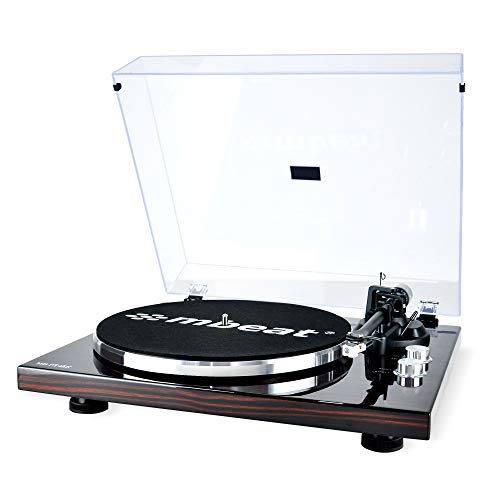
- mbeat MB-PT-18K Bluetooth Turntable with… about$277
- Denon DP-29FA Turntable | Fully-Automatic about$323
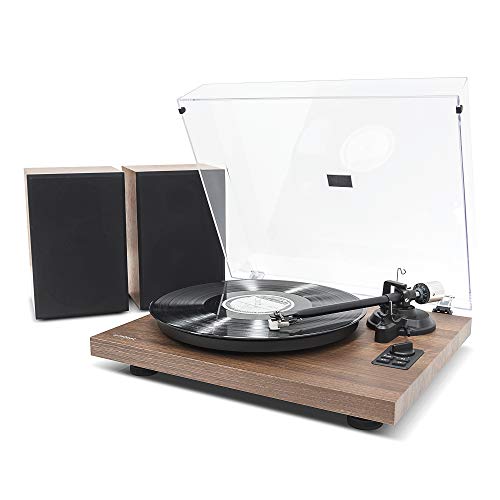
- MB-PT-28 Bluetooth Hi-Fi Vinyl Turntable… about$41636W.
- Audio-Technica AT-LP60XUSB Fully Automatic… about$419
- Yamaha TT-S303 Turntable with Switchable… about$533
- Pioneer DJ PLX-500 Direct Drive Turntable about$629
- Most PremiumTechnics Direct Drive Turntable System with… about$1,299
What a turntable actually has to do
A turntable has three jobs, and they're all mechanical or nearly so. It has to spin the platter at exactly 33 and a third or 45 revolutions a minute, it has to hold a tiny diamond in the groove with the right amount of weight on it, and it has to turn the wiggle of that diamond into an electrical signal. That last part is where most first-time buyers get caught out, because the signal coming off a cartridge is tiny and it isn't ready for a speaker yet.
The signal off a moving magnet cartridge is only a few thousandths of a volt, and it's recorded with the bass turned down and the treble turned up so the groove stays narrow. A phono preamp boosts it and puts the balance back, which is called RIAA equalisation. Without one, a record sounds thin, quiet and tinny. With two of them stacked, it sounds loud, boomy and distorted. Getting that one switch right fixes most of the "my new turntable sounds awful" problems I hear about.
I've stuck to separate turntables here, the kind you plug into an amplifier or a pair of powered speakers. I left out the suitcase players and the all-in-one systems with a CD, cassette and radio built in. They're fine as a toy, but the speakers sit in the same box as the stylus, so the music shakes the tonearm, and most of them use a light tonearm with a fixed cartridge you can't really upgrade. In my experience they're also the ones whose belts and motors give up first.
The queue I work from had this guide at $300 to $1,000, but the real supply from Australian sellers on Amazon AU runs a bit wider. The six picks go from $269 for the Sony to $1,299 for the Technics at time of writing. I kept the Sony because it's the best-ranked turntable of the six by a long way, and I kept the Technics because it's a proper direct drive deck with Bluetooth that a lot of people are looking at right now.
Built-in phono preamp or a separate one
This is the first thing to sort out, because it decides what you can plug the turntable into. Five of the six picks state a built-in phono preamp on the listing: the Sony, the Denon, the Audio-Technica, the Yamaha and the Technics. The Pioneer DJ PLX-500's listing doesn't mention one at all, so I'd treat it as needing a phono input or a separate preamp until you've checked the manual. That's the main reason it isn't the pick for a first setup.
Most of the built-in ones are switchable, and that switch matters. In LINE mode the turntable does the boosting itself, so you can plug it into any normal input on an amp, a soundbar's analog input or a pair of powered speakers. In PHONO mode it sends the raw signal out, for when your amp has its own phono stage. Plenty of stereo amps and some receivers still have one. If you're pairing it with an AV receiver with a phono input, set the turntable to PHONO and use that input.
Get it wrong and you'll know straight away. A turntable in LINE mode going into a PHONO input is boosted twice, so it's loud, muddy and distorts on the bass notes. A turntable in PHONO mode going into a normal input is boosted not at all, so it's very quiet and sounds thin, like a small transistor radio. If a customer tells me their new deck sounds wrong, nine times out of ten it's this switch, and the Denon's is hidden under the platter, so it's easy to miss.
A built-in preamp is a compromise, but at this price it's a sensible one. It shares a small power supply with the motor, so it's usually a little noisier than a good separate unit. The Audio-Technica's listing makes a point of putting its AC adapter outside the case to keep noise out of the signal, which is the right idea. If you upgrade later, a separate phono preamp is the easiest improvement you can make, and every one of the switchable decks lets you bypass its own stage to use it.
Belt drive or direct drive
A belt drive turntable puts the motor off to one side and spins the platter with a rubber belt. The belt soaks up a lot of the motor's vibration, which is why most hi-fi decks at this price use one. The Denon, the Audio-Technica and the Yamaha all state belt drive on their listings. The Sony's listing doesn't say which drive it uses, so I haven't called it either way here. Belt decks are usually lighter and quieter, and they're easy to fix when the belt goes.
And the belt does go, eventually. Rubber stretches and hardens with age, and heat speeds it up. A tired belt slips, so the platter runs slow and the music sounds flat and dragging, a bit like a tape that's been stretched. It usually takes years, not months. A free strobe or speed app on your phone sitting on the platter will tell you whether it's running at the right speed. A new belt is a common part and costs little, so don't write a deck off for it.
A direct drive turntable puts the motor right under the platter, with no belt at all. The Pioneer DJ PLX-500 and the Technics SL-40CBT are both direct drive. They get up to speed almost instantly and hold it firmly, which is why DJs use them, and there's no belt to replace. The Technics listing also says its coreless motor gets rid of cogging, the slight jerkiness some direct drive motors have at low speed. The trade-off is that if the motor or its controller board fails, it's a bigger job than a belt.
The stylus is the part that wears out
The stylus is a tiny diamond on the end of a thin cantilever, and it's the one part of a turntable that wears with every record. Most stylus makers suggest replacing one somewhere around a few hundred hours of play, depending on the shape of the tip and how clean your records are. A worn tip doesn't just sound worse, it starts to chew the groove walls, and that damage is permanent. So the question to ask before you buy isn't how good the cartridge is, it's how easily you can get a new stylus for it.
The Audio-Technica is the clearest of the six on this. Its listing names the replacement stylus, the ATN3600L, and says it's replaceable. The Technics ships with an Audio-Technica AT-VM95C cartridge with a conical stylus, which is a common cartridge with plenty of stylus options around. The Denon comes with a moving magnet cartridge pre-fitted, but its listing doesn't name the model, and the Yamaha's listing doesn't name its cartridge either, so look both up before you order.
The Sony is the odd one. Its listing describes an integrated shell, which means the cartridge is built into the headshell rather than bolted on. That's good for keeping it lined up, but the listing doesn't name a replacement stylus part, so check what Sony sells for it first. The Pioneer DJ PLX-500's listing doesn't say a cartridge is included at all, which is worth confirming before you plan to play records the day it arrives.
You'll hear a worn stylus before you see it. Sibilant S sounds start to spit, loud passages break up, and the last track on each side sounds rougher than the first, because the groove speed is slower near the label. Brush the stylus gently from back to front with a soft stylus brush every few records, never side to side, and don't touch it with your finger. A clean stylus on clean records lasts noticeably longer.
Bluetooth output: handy, with a catch
Two of the picks can send the record to a Bluetooth speaker or headphones with no cables. The Sony PS-LX310BT has Bluetooth in its name, and the Technics SL-40CBT lists Qualcomm aptX Adaptive and SBC as its supported codecs. That's a nice way to listen to a record on wireless headphones late at night, or to play it through a speaker in another room without running a lead across the floor.
The catch is that the turntable has to turn the analog signal into digital and compress it to send it. SBC is the basic codec every Bluetooth device supports, and it's fine for casual listening but noticeably duller than a cable. The Technics' aptX Adaptive only works if your speaker or headphones support it too, and if they don't, it quietly falls back to SBC. So check the receiving end before you pay for the codec.
For a proper hi-fi setup I'd still run a cable. Bluetooth is the convenience option, not the quality one, and a turntable feeding a stereo amplifier and passive speakers through a short RCA lead will sound better than the same deck over Bluetooth almost every time. Both Bluetooth picks have normal wired outputs as well, so you're not locked in either way.
USB recording and digitising your records
Two of the picks have a USB output for recording records onto a computer: the Audio-Technica AT-LP60XUSB and the Pioneer DJ PLX-500. The Audio-Technica's listing points you to Audacity, the free recording program for Mac and PC, and the Pioneer's says it records to a PC or Mac over USB. The Pioneer also works with rekordbox DVS and Pioneer's control vinyl, if you want to DJ with digital files using a real deck.
Recording a record takes as long as playing it, so digitising a collection is a weekend job, not an evening one. Clean the record first, because every click on the vinyl ends up in the file. Record each side as one long track and split it afterwards, and keep the input level low enough that the loudest part doesn't clip. I'd keep the original files untouched and do any click removal on a copy.
Setting it up so it doesn't skip or hum
Most of the problems people have with a new turntable come from where they put it. It needs a flat, solid surface, so check it with a spirit level or a level app on your phone, because a tilted platter pulls the stylus toward one side of the groove. Keep it off the same shelf as your speakers if you can. If you're setting up a pair of bookshelf speakers, put them on stands or a separate unit, so the bass isn't shaking the stylus and feeding back through the system.
Hum is the other common one. Keep the turntable's audio leads away from power cables and plug packs, connect the ground wire if there is one, and don't coil spare lead into a tight loop. If the plug pack ever fails, replace it with the maker's part or one with exactly the same voltage, polarity and current rating. I've seen a no-name replacement power supply cause a constant hum, and sometimes worse. A turntable draws very little power, so the supply's quality matters more than its size.
Heat and sun are hard on records and on belts. A Central Coast summer in a room with west-facing windows can warp a record left on the platter, and it'll harden a belt faster too. Keep the dust cover down when it's not playing, keep records upright in their sleeves, and keep the deck out of direct sun. Dust in the groove is what wears styli fastest, so a carbon fibre brush before each play is money well spent.
Finally, check the plug. The Technics listing says it comes with an Australian plug and an Australian manufacturer's warranty. The other five are sold by Amazon AU or an Australian storefront, and the Denon and Yamaha listings show two-year warranties, but the listings don't spell out the plug. They're Australian listings from Australian sellers, which is the main thing I check for, but it's worth a glance when the box arrives.
How I picked these six
Every pick is sold new by Amazon AU, except the Audio-Technica, which comes from LDD QualityToys AU, an Australian storefront. I left out anything shipped from overseas, anything sold as renewed or refurbished, accessory listings such as cartridges and platter mats, and the all-in-one players with built-in speakers. Where a listing left out something that matters, such as the speeds, the cartridge or the drive type, I've said so on the card rather than guessing.
Ranks are Amazon AU's own sales ranks, checked today. The Pioneer DJ PLX-500 has the best category rank of the six at #6 in DJ Turntables, but that rank is shared with its white listing and with the bigger PLX-1000, so read it as the family's rank rather than the model's. The Sony has the best overall rank of the six at #1,012 on Amazon AU. The others don't return a category rank, so I've quoted their overall ranks instead.
Prices are at time of writing and they move, especially heading into the November sales. I've written the picks so the advice holds even if the order changes, but check the price on the day. And if you've already got a turntable that's stopped spinning, runs slow or hums, bring it into our Erina workshop before you replace it, because most of those faults are a belt, a lead or a switch.
The 6 picks, $269 to $1,299
Prices are Amazon AU at time of writing (2026-11-09) and move week to week. Ranks are Amazon AU sales ranks, checked the same day; where Amazon AU returns no category rank, the overall rank is quoted.

Sony PS-LX310BT Turntable with Bluetooth
ASIN B07RFLC2BQ • $269.00 • Ships from Amazon AU
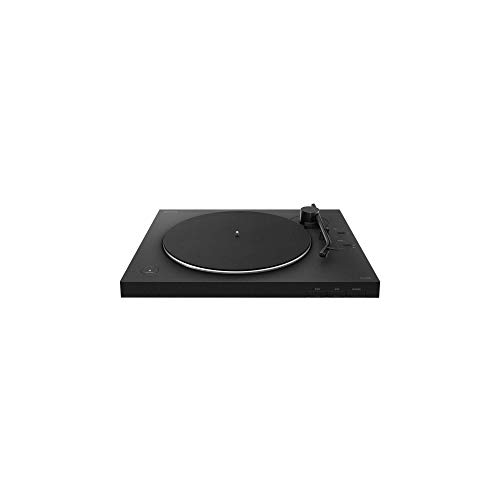
The Sony PS-LX310BT is the lowest-priced pick at $269 at time of writing, and it's sold by Amazon AU. It has the best overall rank of the six at #1,012 on Amazon AU, which tells you it's the turntable most Australians are actually buying in this range. The model code is PS-LX310BT and the listing is the black version. It's the one I'd hand to someone buying their first record player, because it does almost everything for you. You press one button and it starts, plays and returns the arm on its own. It plays 33 and 45 records, and it'll stream to a Bluetooth speaker or plug into a normal amplifier.
The listing says it supports both phono and line output, so you can run it into any normal input on an amp, a soundbar or powered speakers, or switch it to phono for an amp with its own phono stage. The cartridge sits in what Sony calls an integrated shell, which keeps it lined up and stops a beginner knocking it out of alignment. The listing says the auto start, stop and return is one step. Bluetooth means you can play a record through a wireless speaker in the kitchen or on headphones with no cable at all, which is the main reason people pick this one over the Denon. It's the setup I'd give someone who's never owned a turntable before.
The listing doesn't say whether it's belt or direct drive, and it doesn't name the cartridge or a replacement stylus part, so check what Sony sells for it before you buy. It doesn't list a Bluetooth codec either, so assume basic SBC. Keep it off the same shelf as your speakers, keep the dust cover down when you're not playing, and brush the stylus every few records. For a first deck that just works, it's the pick. If the arm ever stops returning at the end of a side, don't force it by hand, because the auto mechanism underneath is easy to bend. Get it looked at instead.
Honest caveats: Honest caveats: the listing doesn't state the drive type, the cartridge model or a replacement stylus part, so look those up before you order. The Bluetooth codec isn't stated either, so expect standard SBC quality, which is fine for casual listening but duller than a cable. There's no USB output for recording, and the arm can't take a different cartridge easily.
Best for: A first turntable for someone who wants one-button play and the option of a Bluetooth speaker.
Price: $269 (Amazon AU) • Model: PS-LX310BT • Operation: Fully automatic, one-step start, stop and return • Speeds: 33 1/3 and 45 rpm • Outputs: Phono or line, plus Bluetooth • Cartridge: Integrated shell, model not stated • Drive: Not stated on the listing • Rank: #1,012 overall on Amazon AU
View on Amazon AU
Denon DP-29FA Fully Automatic Turntable
ASIN B085HZYKKP • $323.10 • Ships from Amazon AU
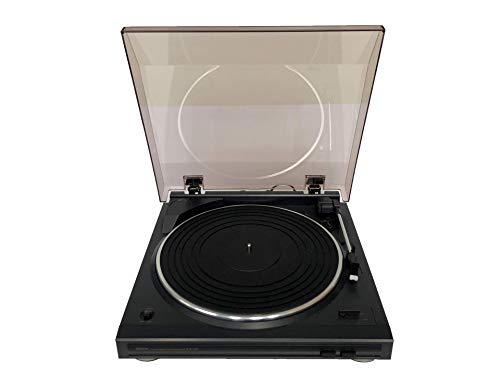
The Denon DP-29FA is $323.10 at time of writing, sold by Amazon AU, and it ranks #32,546 overall on Amazon AU. The model code is DP-29FA, in black, and the listing shows a 24 month warranty. It's a fully automatic belt drive deck, like the Sony, but built a little more seriously, with a die-cast aluminium platter and chassis. I'd pick it for someone who wants the easy one-button operation of the Sony but doesn't need Bluetooth, and would rather put the money into a heavier platter. It plays 33 and 45 records, and it comes with a 45 spacer in the box. It's a good match for a pair of powered speakers on a shelf.
The listing says you press START and the arm cues, plays, returns and stops on its own. It has a built-in phono preamp that you can switch off with a switch under the platter, so it'll plug into powered speakers or any normal amp input, or into a phono input with the preamp bypassed. It comes with a moving magnet cartridge already fitted, plus the dust cover. The listing gives its size as 360 by 357 by 97mm and its weight as about 2.8kg, so it fits on a normal shelf or a sideboard without trouble. Being fully automatic, it also lifts the arm at the end of a side, so a forgotten record doesn't wear the stylus in the run-out groove.
The preamp switch is under the platter, so you have to lift the platter off to change it, and it's easy to forget it's there. The listing doesn't name the cartridge, so look up the replacement stylus before you buy. There's no USB or Bluetooth. Keep the belt out of the sun and away from heat, and check the speed with a phone app once a year. For a simple, solid deck to feed an amp, it's a good choice. If the auto return ever sticks, don't force the arm by hand, because the mechanism underneath is easy to bend.
Honest caveats: Honest caveats: the phono preamp switch sits under the platter, so changing it means lifting the platter off. The cartridge model isn't named on the listing, so find out which replacement stylus it takes before you order. There's no Bluetooth and no USB recording, and its overall rank is well behind the Sony's, so fewer people have one to compare notes with.
Best for: A one-button deck with a heavier aluminium platter for someone who doesn't need Bluetooth.
Price: $323.10 (Amazon AU) • Model: DP-29FA • Operation: Fully automatic • Drive: Belt drive, die-cast aluminium platter • Phono preamp: Built in, switchable under the platter • Cartridge: MM cartridge pre-fitted • Size and weight: 360 x 357 x 97mm, about 2.8kg • Warranty: 24 months • Rank: #32,546 overall on Amazon AU
View on Amazon AU
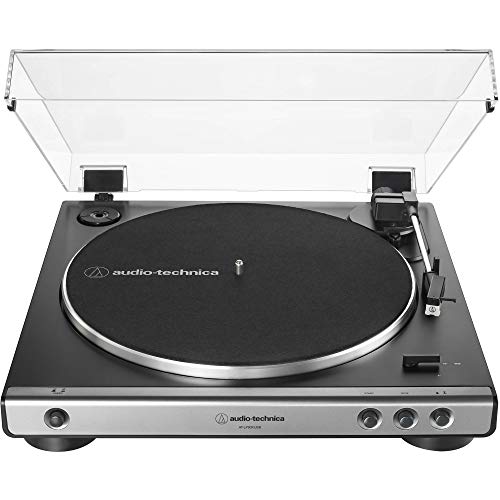
Audio-Technica AT-LP60XUSB Fully Automatic Belt-Drive USB Turntable, Gunmetal
ASIN B07NX6VTKF • $419.44 • Sold by LDD QualityToys AU on Amazon AU
The Audio-Technica AT-LP60XUSB is $419.44 at time of writing, sold by LDD QualityToys AU, an Australian storefront, rather than by Amazon AU itself. It ranks #15 in Amazon AU's DJ Turntables category and #22,902 overall. The part number is AT-LP60XUSBGM, the gunmetal version. It's a fully automatic belt drive deck with a USB output, and it's the pick for someone who wants to copy old records onto a computer as well as play them. It plays 33 and 45 records. I'd also pick it for anyone who cares most about getting a replacement stylus easily, because Audio-Technica names the part. Like the Sony and Denon, it starts, plays and returns the arm on its own.
The listing says the cartridge is Audio-Technica's integral Dual Magnet type, with a replaceable diamond stylus, part ATN3600L. It has a switchable phono preamp for phono or line output, so it plugs into powered speakers or a normal amp input, or into a phono input with the preamp off. The listing says the AC adapter does the AC to DC conversion outside the case, which keeps noise out of the signal. To record, you plug the USB lead into a Mac or PC and use the free Audacity program, which the listing points you to. The Audacity route is slow but simple, and it's the same software I'd suggest to anyone digitising records for the first time.
It's sold by a marketplace seller, so check the seller's returns and warranty terms on the listing before you order. The price is higher than the Sony and Denon, and you're mostly paying for the USB and the named stylus. Keep the plug pack it came with, and if it ever fails, replace it with one of exactly the same rating. Brush the stylus every few records. For digitising a box of old records, it's the easy pick. Clean each record before you record it, because every click on the vinyl ends up in the file.
Honest caveats: Honest caveats: it's sold by LDD QualityToys AU rather than Amazon AU, so read that seller's returns and warranty terms first. There's no Bluetooth. The cartridge is integral, so you can replace the stylus but not upgrade the cartridge easily. Recording to a computer happens in real time, so a big collection takes a long time to digitise.
Best for: Copying records onto a computer, with a stylus you can buy by part number.
Price: $419.44 (LDD QualityToys AU) • Model: AT-LP60XUSBGM • Operation: Fully automatic • Drive: Belt drive • Phono preamp: Built in, switchable phono or line • Cartridge: Integral Dual Magnet, ATN3600L stylus • Recording: USB to Mac or PC • Rank: #15 in DJ Turntables (Amazon AU)
View on Amazon AU
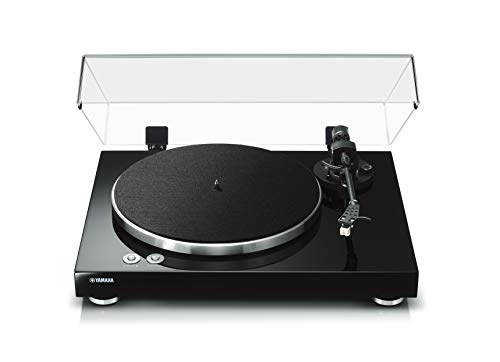
Yamaha TT-S303 Belt Drive Turntable with Switchable Phono/Line Output, Black
ASIN B07NLCMZHV • $532.68 • Ships from Amazon AU
The Yamaha TT-S303 is $532.68 at time of writing, sold by Amazon AU, and it ranks #14,458 overall on Amazon AU. The part number is TTS303B, the black version, and the listing shows a two-year warranty. It's a belt drive turntable with a straight tonearm, designed to sit in a stack of hi-fi gear and look like it belongs there. I'd pick it for someone building a proper stereo with an amplifier and passive speakers, who wants a deck that matches the rest of the system. It suits a sideboard setup where the turntable sits next to the amp rather than on its own. It's a deck for listening, not for DJing or recording.
The listing says it has a built-in phono EQ amplifier, so you can plug it into a line input on an amp without a phono stage, or straight into active speakers. If your amp does have a phono stage, you switch the Yamaha to phono output and use that instead. That makes it an easy deck to grow with, because it works with powered speakers today and a better amp later. The listing describes the straight tonearm and rigid body as built to play old and new records faithfully, which is the marketing way of saying it's a stiff, simple design. Most hi-fi buyers start with powered speakers and add an amp later, so that switch earns its place.
The listing doesn't say whether it's manual or automatic, and it doesn't name the cartridge or the speeds, so check all three before you buy. Most of the feature text is marketing rather than specs, which made it harder to compare. Keep the belt out of the sun, use a level on the shelf, and keep the dust cover down. For a stereo that looks the part, it's the pick. If it turns out to be manual, lift and lower the arm gently, and set the tracking weight following Yamaha's manual rather than guessing.
Honest caveats: Honest caveats: the listing is mostly marketing copy. It doesn't state the cartridge, the speeds, the operation (manual or automatic) or the platter material, so read Yamaha's own spec sheet before you order. There's no Bluetooth and no USB. It costs more than the Denon and Audio-Technica, and the listing doesn't show what that extra buys in hard numbers.
Best for: A hi-fi stack with an amplifier, where the turntable needs to match the rest of the gear.
Price: $532.68 (Amazon AU) • Model: TT-S303 (TTS303B) • Drive: Belt drive • Tonearm: Straight tonearm • Phono preamp: Built in, switchable phono or line • Cartridge: Not stated on the listing • Warranty: 2 years • Rank: #14,458 overall on Amazon AU
View on Amazon AU
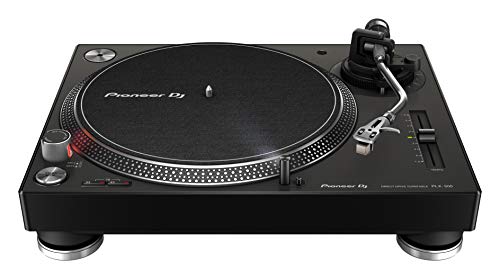
Pioneer DJ PLX-500 Direct Drive Turntable (Black)
ASIN B01LZV9P31 • $629.00 • Ships from Amazon AU
The Pioneer DJ PLX-500 is $629 at time of writing, sold by Amazon AU, and it has the best category rank of the six at #6 in DJ Turntables, and #4,510 overall. That rank is shared with the white listing and with the bigger PLX-1000, so read it as the family's rank. The part number is PLX-500-K, the black version, and the listing shows a one-year parts and labour warranty. It's a direct drive deck, so there's no belt, and it's the pick for someone who wants to mix, scratch and cue records by hand. It'll also play records at home perfectly well. It's the deck I'd point a beginner DJ at before the PLX-1000.
The listing says you can record to a PC or Mac over USB, and that the PLX-500 works with rekordbox DVS, a compatible DJ mixer and Pioneer's RB-VS1-K control vinyl, so you can DJ your digital files on a real deck. It says the sound is designed along the lines of the PLX-1000, Pioneer's professional deck. There's a sleeve stand inside the dust cover to show off the cover of whatever you're playing. Direct drive means it gets up to speed almost straight away, and with no belt, there's one less part to wear out over the years. That direct drive torque is also what lets you hold a record still and let it go without the speed sagging.
The listing doesn't mention a built-in phono preamp or say a cartridge is included, so check both before you order, and plan on a phono input or a separate preamp until you've confirmed it. The listing doesn't mention any auto start or return, and DJ decks are normally manual, so expect to lower the arm yourself. Set the tracking weight on the counterweight carefully, following the manual. For a deck you can DJ on, it's the pick. Keep the platter and stylus clean if you scratch on it, because grime on the stylus wears records faster. If you only want to listen at home and don't need USB or DJ software, the Denon or Yamaha will do it for less.
Honest caveats: Honest caveats: the listing doesn't state a built-in phono preamp or an included cartridge, so confirm both before you order; you may need an amp with a phono input or a separate preamp. The listing mentions no auto start or return, which suits DJing but not someone who wants one-button play. Its category rank is shared with the PLX-1000 and the white version.
Best for: Mixing, scratching and DJing with rekordbox, as well as playing records at home.
Price: $629 (Amazon AU) • Model: PLX-500-K • Drive: Direct drive • Recording: USB to PC or Mac • DJ software: rekordbox DVS with RB-VS1-K control vinyl • Phono preamp: Not stated on the listing • Warranty: 1 year parts and labour • Rank: #6 in DJ Turntables (Amazon AU), listing shared
View on Amazon AU
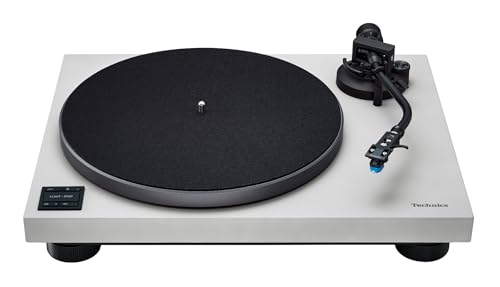
Technics SL-40CBT Direct Drive Turntable with Bluetooth, Grey (SL-40CBTB-H)
ASIN B0FRM5JZ63 • $1,299.00 • Ships from Amazon AU
The Technics SL-40CBT is the most expensive pick at $1,299 at time of writing, sold by Amazon AU, and it ranks #61,597 overall on Amazon AU. The part number is SL-40CBTB-H, the grey version. It's a direct drive deck with a built-in phono stage, Bluetooth, and an Audio-Technica AT-VM95C cartridge already fitted. The listing says it comes with an Australian plug and an Australian manufacturer's warranty, which is the clearest statement of the six. I'd pick it for someone who wants a deck to keep for a long time, with no belt to replace, that'll also play through a Bluetooth speaker when it suits. I'd expect it to be the longest-lived deck of the six, mostly because there's no belt.
The listing says the direct drive uses a coreless motor that gets rid of cogging, the slight jerkiness some direct drive motors have, and that it holds speed without maintenance. The tonearm is the traditional S shape, which Technics says tracks the groove precisely. The built-in phono equaliser and the matched AT-VM95C cartridge mean you can plug it straight into powered speakers. The cartridge has a conical stylus, and the VM95 is a common Audio-Technica design, so replacement styli are easy to find. Bluetooth supports Qualcomm aptX Adaptive and SBC. Being a standard bolt-on cartridge, it can be swapped later if you want to try a different one. The Bluetooth is a convenience on top, not the reason to buy it.
It costs more than twice the Pioneer, and its overall rank is the weakest of the six, so fewer people have one. aptX Adaptive only works if your speaker or headphones support it. The listing doesn't state the speeds, so check that it plays the records you own. Set it on a level, solid surface away from the speakers. For a long-term deck with Bluetooth, it's the pick. Brush the stylus every few records and keep the dust cover down, because a conical tip on dusty records wears faster than it needs to. If you don't need Bluetooth, the Pioneer gives you direct drive for less.
Honest caveats: Honest caveats: it's the most expensive pick by a long way and its overall rank is the lowest of the six. The listing doesn't state the speeds or the warranty length beyond a one-year manufacturer field, so check both. aptX Adaptive needs a compatible speaker or headphones, otherwise it falls back to SBC. If the motor or its board ever fails, it's a bigger repair than a belt.
Best for: A long-term direct drive deck with a good cartridge fitted and Bluetooth when you want it.
Price: $1,299 (Amazon AU) • Model: SL-40CBTB-H • Drive: Direct drive, coreless motor • Tonearm: S-shaped • Phono preamp: Built-in MM phono equaliser • Cartridge: Audio-Technica AT-VM95C, conical stylus • Bluetooth: aptX Adaptive and SBC • Plug: Australian plug, AU manufacturer's warranty • Rank: #61,597 overall on Amazon AU
View on Amazon AUSide-by-side comparison
What we see fail in the workshop: turntables
Turntables are mostly mechanical, so they fail in ways you can often hear and sometimes fix yourself. The faults we see usually come back to rubber getting old, a lead or a switch, or a small mechanism that's dried out. Here's what tends to go wrong and what to check before you decide the deck is finished. Most of these cost less to sort out than you'd think, and none of them need a new turntable.
Runs slow, or the pitch wobbles
On a belt drive deck this is nearly always the belt. Rubber stretches and hardens with age and heat, so it slips on the motor pulley and the platter runs slow, which makes the music sound flat. A wobble in pitch, especially on long notes, points the same way. Put a speed app on the platter to check it. A new belt of the right size is a common part, and fitting it takes a few minutes. On a direct drive deck, slow running is more often the speed adjustment drifting or the motor controller, which is a workshop job.
Hum, buzz or one channel dead
A steady hum that gets louder with the volume is usually a missing or loose ground wire, or the audio leads sitting next to a power cable. One channel going quiet or crackling is usually a lead, a dirty RCA plug or, less often, one of the four tiny wires on the back of the cartridge working loose. Swap the left and right leads at the amp: if the fault moves, it's the lead or the turntable, and if it stays, it's the amp. A failed plug pack can cause hum too.
Auto start or return stops working
Fully automatic decks use a small gear and cam under the platter to lift and move the arm. The grease on it dries out over the years, and the gear can slip or crack, so the arm stops moving, stops halfway or won't return at the end of the side. Don't force the arm by hand when this happens, because you can bend the mechanism or the cantilever. It's usually a clean, regrease and sometimes a new gear, and it's worth checking before you replace the deck. Most of the time the rest of the turntable is fine.
Decision tree: which one should you actually buy?
- Buying your first turntable and want it to just work? → The Sony PS-LX310BT at $269, fully automatic with phono or line output and Bluetooth.
- Want one-button play with a heavier platter and no Bluetooth? → The Denon DP-29FA at $323.10, with a die-cast aluminium platter and a switchable preamp.
- Want to copy your records onto a computer? → The Audio-Technica AT-LP60XUSB at $419.44, with USB recording and a named ATN3600L replacement stylus.
- Building a hi-fi stack with an amplifier? → The Yamaha TT-S303 at $532.68, belt drive with a switchable phono or line output.
- Want to DJ, scratch or use rekordbox? → The Pioneer DJ PLX-500 at $629, direct drive with USB, or the Technics SL-40CBT at $1,299 for a home deck with Bluetooth and a good cartridge fitted.
- Turntable running slow, humming or stuck? → It's usually a belt, a lead or the auto mechanism. Bring it into the Erina shop and we'll tell you what's wrong and whether it's worth fixing before you spend anything.
Frequently asked questions
Do I need a phono preamp for a turntable?
You need one somewhere, but it might already be built in. A phono preamp boosts the tiny signal from the cartridge and restores the bass and treble balance. Five of the six picks here state a built-in phono preamp, so they'll plug into powered speakers or any normal amp input in line mode. If your amp has a phono input, switch the turntable to phono mode and use that instead. The Pioneer DJ PLX-500's listing doesn't mention a built-in preamp, so check before you order.
Is belt drive or direct drive better?
Neither is better for home listening; they suit different people. Belt drive isolates the motor from the platter and is common on hi-fi decks, but the belt stretches over the years and needs replacing. Direct drive has the motor under the platter, gets up to speed straight away and has no belt to wear, which is why DJs use it. In this guide, the Denon, Audio-Technica and Yamaha are belt drive, and the Pioneer and Technics are direct drive.
How often should I replace a turntable stylus?
Most stylus makers suggest somewhere around a few hundred hours of play, depending on the tip shape and how clean your records are. You'll usually hear it first: S sounds start to spit, loud passages break up and the inner tracks sound rough. A worn stylus can damage records permanently, so don't push it. Before you buy a turntable, check that a replacement stylus is easy to get, like the Audio-Technica's ATN3600L.
Can I connect a turntable to Bluetooth speakers?
Yes, if the turntable has Bluetooth built in, like the Sony PS-LX310BT or the Technics SL-40CBT. The turntable converts the signal to digital and sends it to the speaker or headphones. It's convenient but not as good as a cable, especially on the basic SBC codec. The Technics also supports aptX Adaptive, which only works if your speaker or headphones support it too. Both still have wired outputs, so you can run a cable to an amp for proper listening and keep Bluetooth for the odd late night.
Why does my new turntable sound quiet or distorted?
It's almost always the phono and line switch. If the turntable is set to phono and plugged into a normal input, it sounds very quiet and thin. If it's set to line and plugged into a phono input, it's boosted twice, so it sounds loud, boomy and distorted. Check which input you're using and set the switch to match. On the Denon DP-29FA the switch is under the platter, so it's easy to miss.
Why is my turntable humming?
Usually a ground problem. If the turntable has a thin ground wire, connect it to the ground post on your amp. Keep the audio leads away from power cables and plug packs, and check the RCA plugs are pushed in fully. If you've replaced the plug pack, make sure it's the exact voltage, polarity and current rating, because a no-name supply can cause hum. If it still hums with everything checked, get the turntable and amp looked at.
Related buying guides
Turntable running slow or humming?
Most turntable faults we see come down to a tired belt, a loose ground or audio lead, a failed plug pack or an auto mechanism whose grease has dried out. Bring it into our Erina workshop and we'll check what's actually wrong and tell you whether it's worth fixing before you spend anything.
Visit our Erina workshop Book Online