Prices from Amazon AU, updated daily. Swipe or use the arrows for more.
Disclosure: This article contains affiliate links to amazon.com.au. If you buy through one of these links iFix may earn a small commission at no extra cost to you. It doesn't change which products we recommend. We focus on what actually lasts based on 16 years of repair-shop experience.
Quick summary8 picks
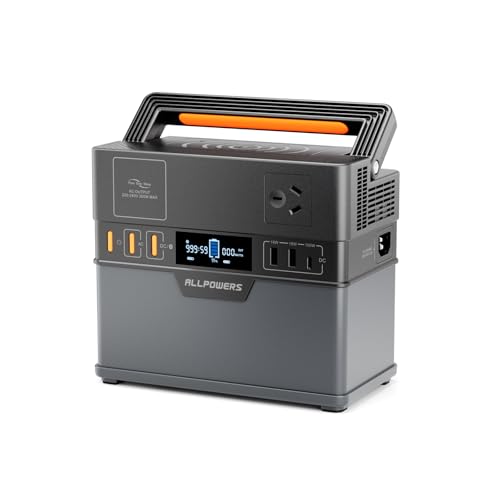
- Entry PickALLPOWERS Portable Power Station S300Plus… about$299288Wh, 300W, pure sine wave.
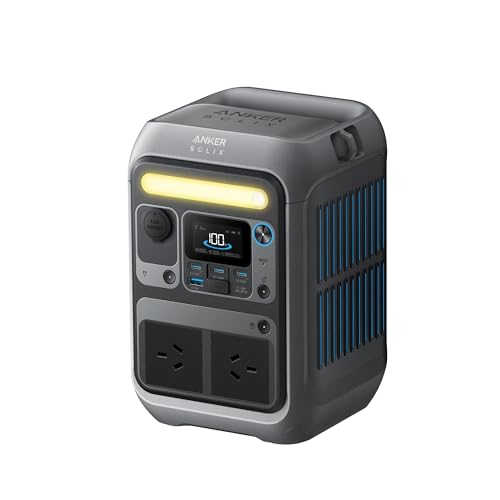
- Anker Portable Power Station SOLIX C300 about$499288Wh LiFePO4, 300W AC, 600W surge.
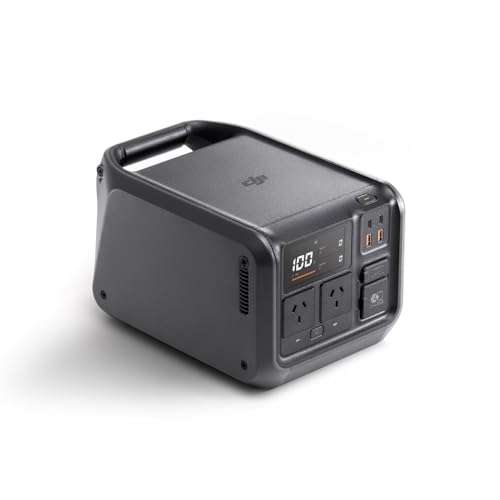
- DJI Power 500 Portable Power Station about$729512Wh LiFePO4, 1000W max output, 70 minute recharge.
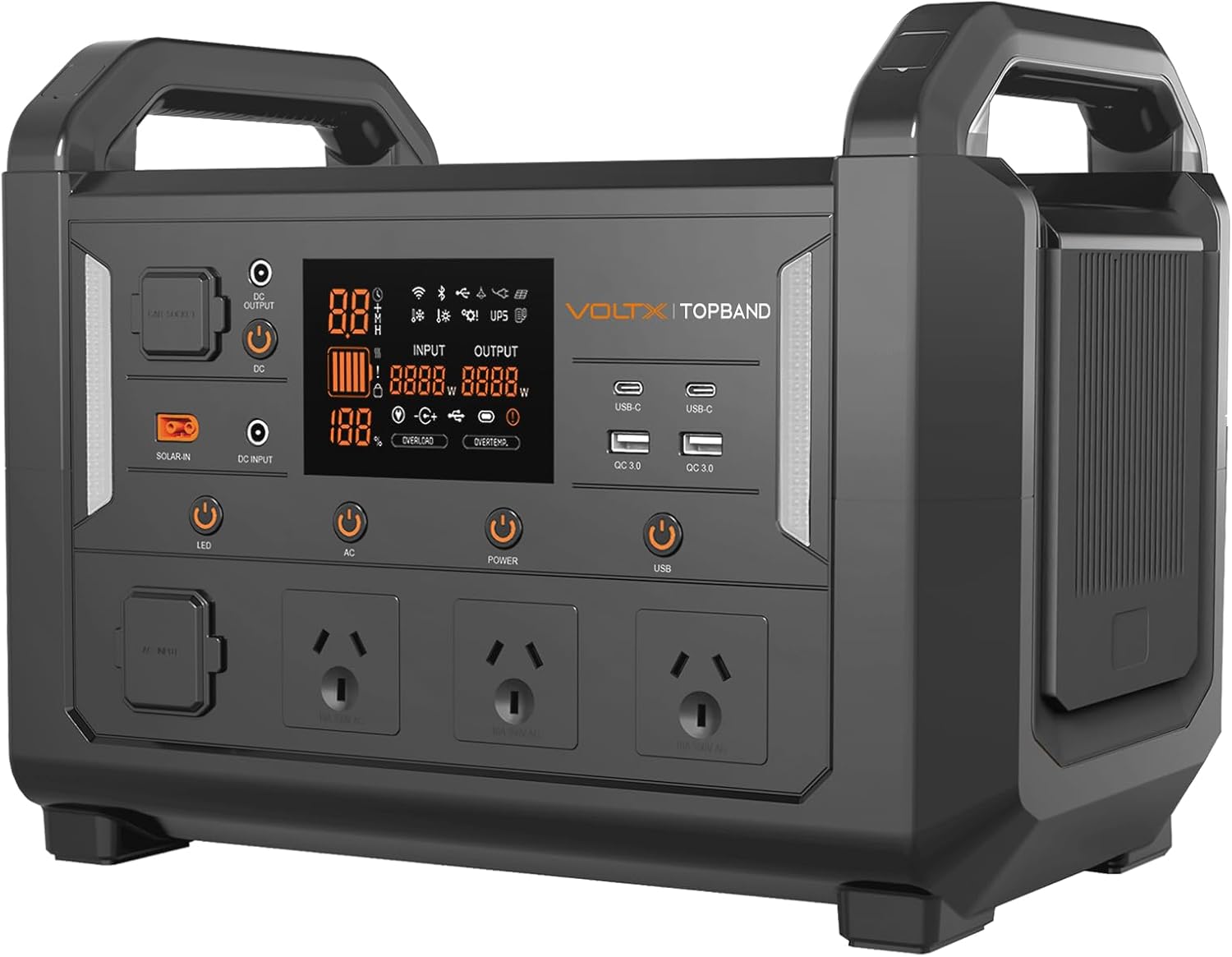
- VoltX Topband 1200W 1152Wh Portable Power… about$9991152Wh LiFePO4, 1200W.
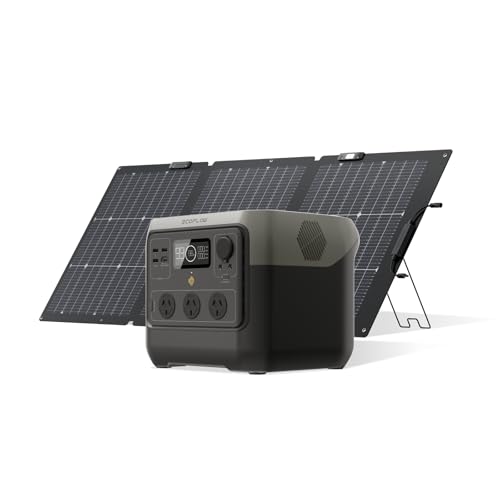
- EF ECOFLOW Solar Generator RIVER 2 Pro… about$1,159768Wh LiFePO4 with a 160W solar panel.
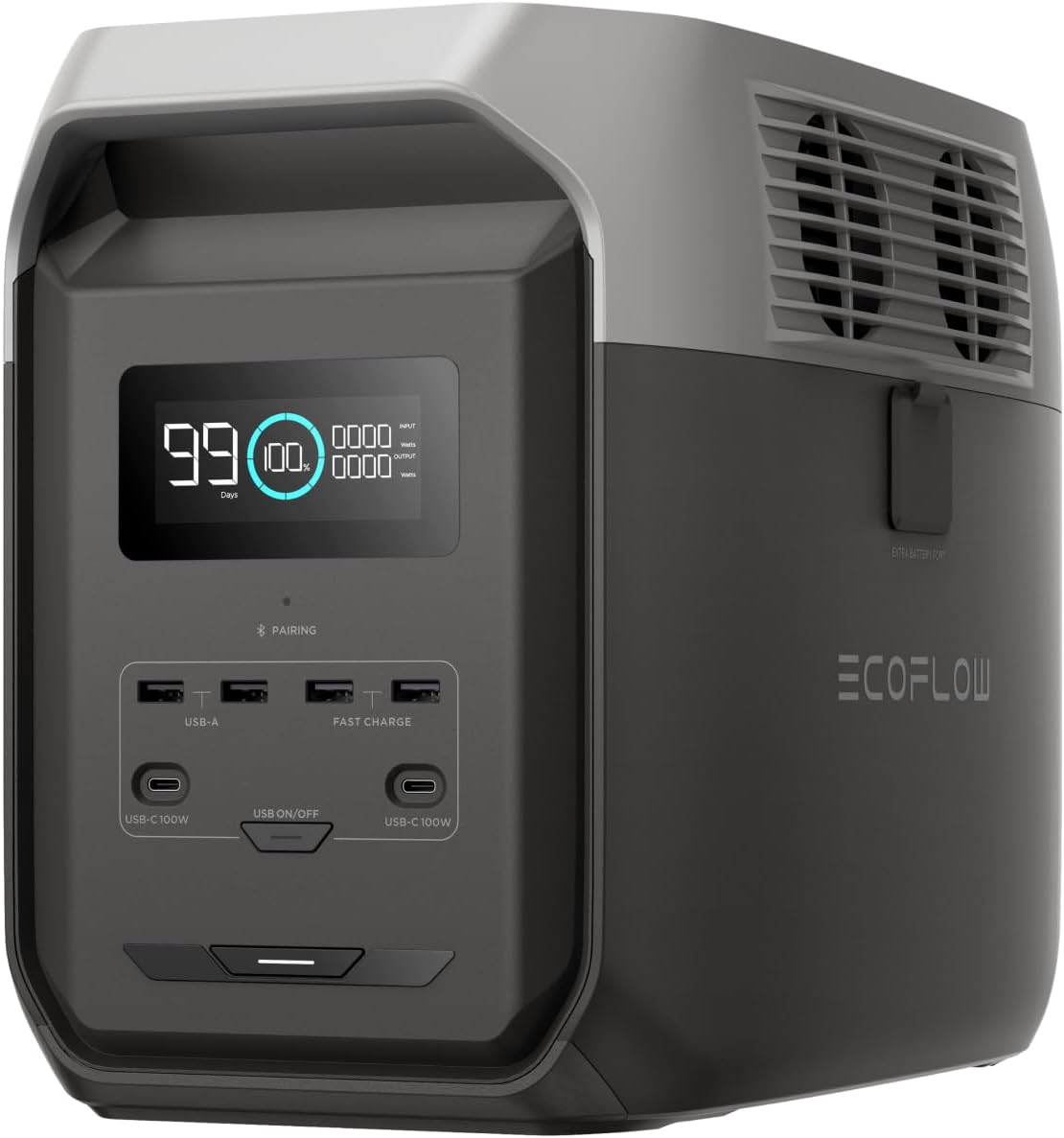
- EF ECOFLOW DELTA 3 about$1,8991500Wh, 4000W AC output.
- EF ECOFLOW DELTA 3 Plus + 220W Solar Panel about$2,2591024Wh with a 220W solar panel.
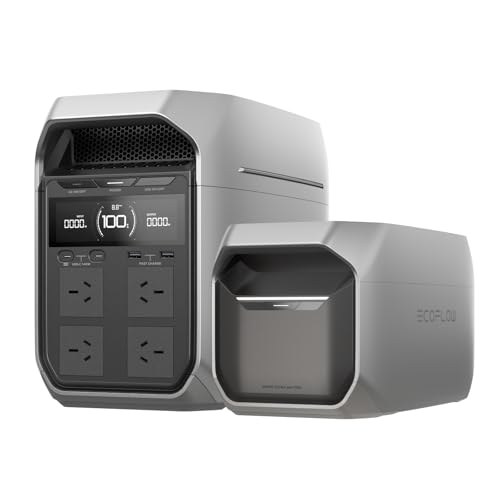
- Most PremiumEF ECOFLOW DELTA 3 Plus + Extra Battery about$2,9391024Wh with an extra battery.
Why portable power stations are the right home backup choice for most Australians
The traditional choice for home blackout backup, a petrol generator, has real problems we see at the bench. Generators are noisy, produce frequency-unstable AC that confuses most consumer UPSes and switchmode power supplies, require fuel storage (and fuel that goes stale), demand outdoor placement with ventilation, and are useless inside an apartment or terrace house. They're a 1990s solution that hasn't aged well.
Portable LiFePO4 power stations have replaced generators for most home use cases. They sit silently next to your desk, take ~2 hours to recharge from a wall outlet (or all day from a foldable solar panel), produce clean pure-sine AC indistinguishable from grid power, and require zero maintenance for ~10 years of service. The chemistry shift to LiFePO4 in the last 3-4 years is the key enabler. Older lithium-ion power stations from 2019-2022 degraded to 80% capacity in 500-800 cycles (2-3 years of typical use). LiFePO4 delivers 3,000-4,000 cycles to 80% capacity, or roughly 10 years for the same use pattern. The price-per-decade-of-service has dropped dramatically.
For Australian buyers specifically, three factors matter. First, our climate: LiFePO4 handles heat far better than NMC/NCA chemistries (the type used in EVs and laptops). Sitting in a hot garage in Erina or western Sydney is genuinely fine for LiFePO4; the same conditions would degrade NMC cells faster. Second, our grid: bushfire-driven outages on the Central Coast, storm-driven outages along the coastal strip, and planned shutdowns for line maintenance happen often enough to make backup worthwhile. Third, our solar: if you already have rooftop solar exporting at midday, a power station charges itself "for free" from your own household consumption during daylight hours.
Cost-of-living context: with real wage growth at 0.3% and discretionary spending under pressure, the $999-$2,259 bracket in this guide covers the practical home backup needs of most Australian households without venturing into the $4K+ whole-home territory that requires specialist installation.
The three picks, ranked from least expensive to most premium
Prices accurate at time of writing (October 2026). Amazon AU buybox shifts week to week. All three picks ship to Australian addresses including the Central Coast.

VoltX Topband 1200W 1152Wh Portable Power Station LiFePO4
★★★★★ 5.0 / 5 (2 reviews) • ASIN B0CTY9V76G • $999.00 • VoltX (Australian brand)
The Australian-brand value entry. 1152Wh LiFePO4 battery with 1200W continuous AC output, full recharge in 2 hours via AC power, multiple input options (AC, solar, car), built-in UPS function with sub-20ms switchover for home equipment protection, and a high-capacity lithium battery with over-temperature, over-current, short-circuit, and over-discharge protection. VoltX is a domestic AU brand. Warranty support is local, not through a Chinese RMA process.
What you get at $999: Genuine LiFePO4 chemistry (not older NMC), enough capacity to run a 150W fridge for 7-8 hours or a 60W home office (desktop + monitor + modem + router) for 15-18 hours, UPS-grade switchover for sensitive electronics, and an Australian brand with local support if something goes wrong. The "Important Safety Notice" in the listing flags this is designed for general consumer and backup use, not for medical life-support equipment, where you'd want a dedicated medical-grade UPS instead.
Honest caveats: 2 reviews on Amazon AU is a thin sample size. Both are 5-star, but the data point is small. The 1200W continuous rating is below the EcoFlow picks, so it's borderline for high-inrush loads like older fridges and air conditioners. If you need to run a 2-3 ton aircon or a high-startup-current pump, step up to one of the EcoFlow picks below.
Best for: Home offices, modem + router + lights through outages, camping and tradie sites, anyone wanting LiFePO4 chemistry from an Australian brand under $1,000. Pair with a portable solar panel for daytime recharging.
Capacity: 1152Wh LiFePO4 • AC output: 1200W continuous • Charge time: 2 hours (AC) • UPS function: Yes, <20ms switchover • Inputs: AC, solar (MC4), DC car • Brand: Australian • Cycle life: 3,000+ cycles to 80% capacity
View on Amazon AU
EcoFlow DELTA 3 (1500Wh / 128Ah) Portable Power Station
★★★★★ 5.0 / 5 (1 review) • ASIN B0DR8GCSD8 • $1,899.00 • Ships from EcoFlow-AU
The mid-tier sweet spot. 1500Wh LiFePO4 capacity (50% more than the VoltX) in the same physical footprint as the older DELTA 2, with EcoFlow's X-Stream fast-charge technology (80% in under 50 minutes from a standard wall outlet at 1500W AC input). 1800W AC continuous output, X-Boost up to 4000W for high-inrush loads, covers virtually every household appliance including fridges, kettles, hair dryers, and most aircons during startup surge.
The standout features for home backup use: 35dB ultra-quiet operation under 600W loads (whisper-quiet, blends with ambient room noise, you forget it's there), 15ms UPS switchover for sensitive equipment, EcoFlow app for live monitoring of capacity, runtime, and per-port consumption, and integration with EcoFlow's broader ecosystem if you later add solar panels or extra batteries. EcoFlow is the global market leader in portable power stations, and the DELTA 3 line is their best-reviewed product family on Amazon globally.
What you get at $1,899: Enough capacity to run a 150W fridge for 8-10 hours, or a home office through a full workday, or charge two laptops + monitor + LED lights for an entire evening. Fast recharging means you can also use it as a load-shifting tool: charge during off-peak overnight, use the stored energy during peak afternoon hours when grid tariffs are highest.
Best for: Households wanting a single power station that genuinely covers most blackout scenarios, anyone who values quiet operation (kids' bedrooms, home offices, hospital recovery rooms), tradies and remote workers needing portable workstation power.
Capacity: 1500Wh LiFePO4 • AC output: 1800W continuous, 4000W X-Boost peak • Charge time: ~50 min to 80% (AC), 4 ways inc. solar • UPS function: Yes, 15ms switchover • Noise level: 35dB under 600W • App: EcoFlow app monitoring • Cycle life: 4,000 cycles to 80% capacity (10-year service life)
View on Amazon AU
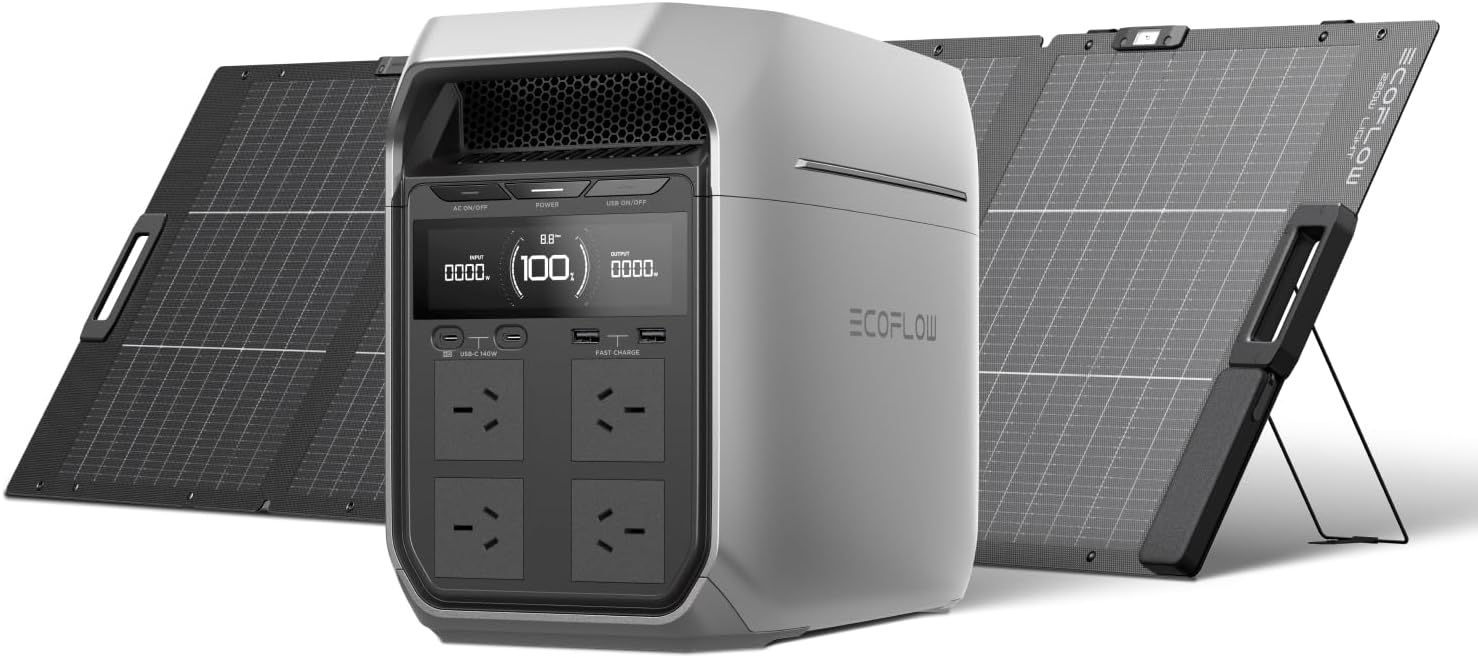
EcoFlow DELTA 3 Plus 1024Wh + 220W Bifacial Solar Panel Bundle
★★★★★ 5.0 / 5 (1 review) • ASIN B0F38D4QK6 • $2,259.00 • Ships from EcoFlow-AU
The smart-stack pick. This is a complete plug-and-play kit covering both the power station and a foldable solar panel for daytime recharging. Lower battery capacity (1024Wh vs the DELTA 3's 1500Wh) but the included 220W bifacial solar panel (front and back surfaces both generate power, ~15% more output than single-sided panels) makes this the right pick if solar charging matters to you. The math works out: the bundle saves you ~$400-$500 vs buying the DELTA 3 Plus base unit plus a standalone EcoFlow 220W panel separately.
Premium features over the DELTA 3 1500Wh: 10ms UPS switchover (5ms faster than the DELTA 3, qualifies as a true UPS for the most sensitive equipment), 1500W AC input means 80% charge in 40 minutes from wall, expandable to 5kWh with extra batteries from the same family if you want to grow the system later, and built specifically for "off-grid camping" and "home outage" as primary use cases. The DELTA 3 Plus is EcoFlow's purpose-built home backup product where the DELTA 3 1500Wh is more general-purpose.
Solar charging in practice: a 220W panel in good Australian sun (10am-3pm) generates ~150-180W actual output (panels rarely hit nameplate in real conditions). Over a 5-6 hour daylight window that's 750-1080Wh, enough to fully top up the 1024Wh DELTA 3 Plus from empty in one good sunny day, or maintain it indefinitely during multi-day outages where the unit is running a fridge during night and recharging during the day.
Honest caveats: 1024Wh is less raw capacity than the DELTA 3 1500Wh at $1,899. You're paying a $360 premium for the bundled solar panel + faster UPS switchover + expandability. If you're never going to use solar charging, the DELTA 3 1500Wh is the better value pick. If you live in an apartment where deploying a foldable solar panel isn't practical, the DELTA 3 1500Wh is the better pick.
Best for: Households planning multi-day outage scenarios (bushfire season, severe storms), off-grid weekenders and rural blocks, anyone wanting a complete kit that includes solar from day one rather than buying components separately.
Capacity: 1024Wh LiFePO4 • AC output: 1500W continuous (X-Boost to 1900W) • Solar panel included: 220W bifacial foldable • Charge time: 40 min to 80% (1500W AC) • UPS function: Yes, 10ms switchover (true UPS) • Expandable: Up to 5kWh with extra batteries • Cycle life: 4,000 cycles to 80% capacity (10-year service life)
View on Amazon AUSide-by-side comparison
| Product | Price | Best for |
|---|---|---|
| ALLPOWERS Portable Power Station S300Plus… | ~$299 | Phones, laptops and small gear on short outages |
| Anker Portable Power Station SOLIX C300 | ~$499 | Compact 288Wh backup for small loads |
| DJI Power 500 Portable Power Station | ~$729 | Mid-size 512Wh backup with 1000W output |
| VoltX Topband 1200W 1152Wh Portable Power… | ~$999 | Home office and router backup from an Australian brand |
| EF ECOFLOW Solar Generator RIVER 2 Pro… | ~$1,159 | 768Wh kit with a 160W solar panel included |
| EF ECOFLOW DELTA 3 | ~$1,899 | 1500Wh all-rounder for most home blackouts |
| EF ECOFLOW DELTA 3 Plus + 220W Solar Panel | ~$2,259 | Multi-day outages with a 220W solar panel included |
| EF ECOFLOW DELTA 3 Plus + Extra Battery | ~$2,939 | Longest runtime: 1024Wh plus an extra battery |
What we see fail at the bench: 16 years of battery and power electronics service
Portable power stations are a relatively young product category, but the underlying components, lithium battery packs, inverters, BMS circuits, USB-C PD ports, are all things we've serviced extensively in laptops, phones, and other portable equipment. Here's what genuinely fails over the lifecycle:
The deep-discharge BMS lockout is the #1 cause of "dead" portable power stations
Every lithium battery pack includes a Battery Management System (BMS) that protects the cells from over-discharge. The BMS will disconnect the pack from output if it detects voltage below a safety threshold (typically around 2.5V per cell). The most common cause of a "completely dead" power station we see at the bench: the owner stored it at 0% charge for months, the cells slowly self-discharged below the BMS lockout threshold, and now the BMS refuses to engage at all because it interprets the deeply-discharged pack as "permanently damaged." Some BMS designs allow a special slow-charge recovery mode (a $50 lithium charger and 24 hours of patience usually brings it back); others require BMS firmware reset which means a tech bench. Store any portable power station at 30-60% charge if you're not using it. Don't store at 100% (accelerates calendar aging) and never store at 0% (kills the BMS).
USB-C PD port wear is the most common physical failure mode
USB-C is the most-used port on every portable power station we see. It's how people charge phones, tablets, laptops, headphones, smart watches, and increasingly cameras. USB-C connectors are rated for around 10,000 insertion cycles, which sounds like a lot until you're plugging and unplugging multiple devices daily over a 5-7 year ownership period. The failure mode is the connector becoming intermittent. Flexing devices in the port causes the charge to cut out, then resume. The fix is a desoldering job to replace the USB-C port assembly. Budget around $80-$150 if it's out of warranty. Mitigation: use USB-C extension cables for any device you charge daily, so the wear happens on the cable, not the power station port.
Inverter cooling fan bearings fail at year 2-3 on high-output units
The 1500-1800W inverters in the EcoFlow DELTA 3 series include cooling fans that spin up when the AC load exceeds a few hundred watts. The fan bearings are the wear part. Around year 2-3 of regular use, we see the fans start making whirring or rattling noises (worn bearing). The unit still works fine but becomes audible from across the room instead of silent. Some EcoFlow models allow user fan replacement; others require the unit to be returned to EcoFlow service. The 35dB quiet-mode rating on the DELTA 3 only applies under 600W loads (when the fan barely runs). If you're loading the unit heavily for hours, expect to hear it.
Solar panel MC4 connectors corrode at coastal addresses
Our shop is in Erina, which is 2km from the beach. Saltwater air gets into everything. MC4 solar panel connectors are designed for outdoor use but rely on rubber gasket seals that degrade in coastal UV and salt exposure. Around year 3-4 we see MC4 connectors developing surface corrosion that increases contact resistance and reduces solar charging current by 20-40% from new. Annual inspection: disconnect the MC4 connectors, clean any green/white residue with electrical contact cleaner, apply dielectric grease, reconnect. For permanent outdoor installations near salt water, consider waterproof Anderson connectors (used in 4WD/RV applications) instead of MC4.
Compressor inrush surge: the "I tried to run my fridge" disappointment
Domestic fridges have an AC motor compressor that draws very high inrush current at startup, typically 5-8× the running wattage for a fraction of a second. A fridge running at 150W might briefly demand 1,200W on every startup cycle (which happens 6-12 times per day as the thermostat cycles). The 1200W VoltX is borderline for older fridges; the 1800W EcoFlow DELTA 3 (with 4000W X-Boost) handles them comfortably. Before assuming any portable power station will run your fridge, check the fridge's nameplate startup current or starting-watts rating. Modern inverter-compressor fridges (most premium fridges sold in the last 8 years) have far gentler startup curves. They're easy. Older direct-start compressors are the problem case.
LiFePO4 vs older lithium-ion is the key chemistry decision
Three years ago, most portable power stations used the same NMC/NCA lithium-ion chemistry as laptops, high energy density (lighter unit for same capacity) but only 500-800 cycles to 80% capacity. We saw those units start failing within 2-3 years of regular home backup use. LiFePO4 cells deliver 3,000-4,000 cycles to 80% in the same use pattern. The downside: LiFePO4 packs are physically larger and ~30% heavier than NMC for the same Wh rating. For home backup this doesn't matter (you're not carrying the thing around all day). For camping where weight matters more, the trade-off is more nuanced. All three picks in this guide are LiFePO4. This is non-negotiable at this price point in 2026.
The "10ms UPS" claim: what it actually means
"UPS function" with millisecond switchover times sounds technical but the practical question is: what loads will gracefully accept the switchover and what loads will glitch? The 10ms switchover on the DELTA 3 Plus is fast enough for desktop PCs (the PSU's input capacitors bridge the gap), home routers and modems, NAS units, most TVs and audio equipment, and lighting circuits. The DELTA 3's 15ms is also acceptable for all those loads. The VoltX's sub-20ms is right on the edge for the most sensitive equipment (some older desktop PSUs glitch at 18-20ms). For desktop PCs with modern 80+ rated PSUs, all three picks work fine as drop-in UPS replacements. For medical equipment or industrial control systems, you want a dedicated double-conversion online UPS, not a portable power station with UPS function.
Decision tree: which power station is right for you?
- Budget-conscious, want an Australian brand under $1,000? → VoltX 1200W LiFePO4 at $999. AU support, real LiFePO4 chemistry, sub-20ms UPS for home equipment protection.
- Want one unit that covers most home blackout scenarios with the most output? → EcoFlow DELTA 3 1500Wh at $1,899. 1800W continuous (4000W surge), 35dB whisper-quiet, EcoFlow ecosystem.
- Planning for multi-day outages, off-grid use, or want solar charging from day one? → EcoFlow DELTA 3 Plus + 220W solar bundle at $2,259. Complete kit, 10ms true UPS, expandable to 5kWh.
- Need to back up sensitive electronics for a few minutes during brownouts? → You don't need a power station. A dedicated UPS is the right answer. See our UPS buying guide for picks from $125 to $469.
- Need 3,000Wh+ for whole-home or off-grid use? → Talk to a specialist solar installer or contact EcoFlow Australia directly for the larger units with proper AU delivery and warranty.
- Living in an apartment or terrace house? → Any of these three picks. They all sit silently next to your desk, no fumes, no maintenance.
Frequently asked questions
How long does a LiFePO4 portable power station actually last?
LiFePO4 (lithium iron phosphate) batteries have a fundamentally different lifespan curve from the older Li-ion chemistries used in laptops and phones. All three picks in this guide are rated for 3,000-4,000 full discharge cycles to 80% capacity: that translates to roughly 10 years of useful service for typical home backup use. The older lithium-ion chemistries used in many less costly portable power stations from 2019-2022 degrade to 80% capacity in 500-800 cycles, or 2-3 years for the same use pattern. LiFePO4 is the right chemistry to insist on at this price point.
Can I run my fridge off one of these during a power outage?
Mostly yes for fridges, with caveats. The compressor inrush current when a fridge starts can be 5-8× the running wattage for a fraction of a second. A typical 200W fridge might briefly draw 1,000-1,500W on compressor startup. The EcoFlow DELTA 3 (1800W continuous) and DELTA 3 Plus (1500W continuous with X-Boost to 1900W) handle most domestic fridges fine. The VoltX 1200W is borderline for older fridges with high inrush. Check your fridge's startup wattage on the nameplate before assuming compatibility. Runtime: a 1500Wh unit running a 150W fridge averages 8-10 hours of fridge operation (fridges cycle on/off, they're not running constantly).
What's the difference between Li-ion and LiFePO4?
LiFePO4 (also written as LFP) is a specific lithium chemistry using iron phosphate as the cathode material. Compared to the standard NMC/NCA lithium chemistries used in phones, laptops, and most older portable power stations: LiFePO4 has 3-4× more cycle life, much better thermal stability (won't enter thermal runaway in the same conditions that ignite NMC cells), better performance in heat (relevant for Australian summers), and slightly lower energy density (so units are physically larger for the same Wh rating). For home backup and stationary use, LiFePO4 is objectively the better chemistry. All three picks in this guide use LiFePO4.
How does the UPS function in these units actually work?
All three picks include a "UPS" or "EPS" (Emergency Power Supply) function: when grid power drops, the unit's inverter takes over within milliseconds. The DELTA 3 Plus is the cleanest implementation at 10ms switchover, fast enough to qualify as a true UPS for most home equipment including desktop PCs. The DELTA 3 1500 switches at 15ms (still acceptable for most loads). The VoltX 1200W switches in under 20ms. For very sensitive electronics (medical equipment, some server hardware) a dedicated double-conversion UPS is still the right answer. See our separate UPS guide. For home offices, NAS units, modems and routers, all three of these power stations work as drop-in UPS replacements with the bonus of multi-hour runtime instead of minutes.
Can I charge these from rooftop solar?
Not directly from the inverter output of a grid-tied rooftop solar system. Those produce AC power and your home wiring expects to consume it normally. You can charge from rooftop solar indirectly by plugging the power station into a normal household outlet during daytime when your solar is exporting. To charge directly from solar panels, you need DC panels with MC4 connectors connecting to the power station's solar input port. The EcoFlow DELTA 3 Plus bundle in this guide includes a 220W foldable panel and the right cable. The DELTA 3 and VoltX accept third-party solar input via their respective solar input ports.
Why no flagship 4,000Wh+ pick in this guide?
We checked. The EcoFlow DELTA Pro 3 (4000Wh), the obvious flagship pick, doesn't reliably ship to Central Coast 2250 from Amazon AU at time of writing. We won't recommend products we can't verify actually arrive at typical Australian home addresses. If you need 3,000Wh+ for whole-home or off-grid use, talk to a specialist solar installer or contact EcoFlow Australia directly for the larger units with proper Australian warranty and delivery. The 1024-1500Wh range covered in this guide handles 99% of home backup scenarios.
Related buying guides
Need help sizing the right portable power station for your home?
Bring your equipment list into our Erina workshop. We can size the right Wh capacity for your actual load profile, not just nameplate watts.
Visit our Erina workshop Book Online