Prices from Amazon AU, updated daily. Swipe or use the arrows for more.
Disclosure: This article contains affiliate links to amazon.com.au. If you buy through one of these links iFix may earn a small commission at no extra cost to you. It doesn't change which products we recommend. We focus on what actually lasts based on 16 years of repair-shop experience.
Quick summary4 picks
- Entry PickBabelio White Noise Machine Mini Sound… about$39.99
- VEVOR Sound Dampening Blanket about$49.9996" screen.
- Dreamegg White Noise Machine about$54.99
- Most Premium52 Pack Acoustic Foam Panels about$65.991" screen.
The noise problem apartments actually have
More of the Central Coast lives behind a shared wall every year, and the units going up along the highway corridors aren't getting quieter. The complaints I hear are always the same three: the neighbour's TV through the party wall, footsteps and furniture drags from the flat above, and traffic through a bedroom window that faces the road. Before spending a dollar it's worth knowing those are three different physics problems. Airborne noise, voices and TVs, travels through the air and through any gap it can find. Impact noise, the footsteps, is structure-borne: it enters the concrete and timber directly and radiates out of your ceiling like the whole slab is a speaker cone. Traffic is airborne noise arriving through the weakest point in the wall, which is nearly always the window, not the wall itself. Get the diagnosis right first, because the product that fixes one of these three does close to nothing for the other two, and this category is full of money spent on the wrong one.
That split decides what's worth buying. Airborne noise responds to sealing gaps and adding mass, which is what most of this guide covers. Impact noise from above mostly can't be fixed from your side of the ceiling, because the treatment that works, resilient underlay under their floor, lives in someone else's flat. And no product on this page makes any noise disappear; the honest wins are taking the edge off, moving the noise below the level where it grabs your attention, and fixing the one or two paths where most of it gets in. Anyone promising more than that from a foam panel is selling you the picture on the box. The gear below is arranged in that order of honesty: sealing and mass for the paths you control, absorption for the room itself, and masking for the residue, so the guide reads the way the money should be spent.
What foam does, and what it doesn't
Acoustic foam is the most misunderstood product in this category, so let's get it straight before the picks. Foam absorbs reflections inside the room it's mounted in. It stops your own sound bouncing off hard walls, which kills echo, tames that hollow ring in an empty unit, and makes voices clearer at lower volume. What it does not do, at all, is stop sound travelling through a wall. A 2.5cm foam wedge has close to zero mass, and blocking transmission is a mass game. Stick fifty panels on the party wall and the neighbour's TV arrives exactly as loud as before; the room it arrives into just sounds a bit less like a stairwell. The test is simple: clap once in the middle of the room, and the ringing you hear afterwards is the part foam fixes.
So foam earns its place for the noise you make and hear inside your own four walls. A video-call corner that sounds like a bathroom, a gaming or streaming setup, a room where the TV bounces around so much you keep turning it up: that's foam territory, and it's the same reason every setup in our USB microphone picks benefits from a treated wall behind the desk. A quieter-sounding room also lets you run everything at lower volume, which is the politest thing you can do for the people on the other side of the wall. Buy foam for that, and buy the next two sections for the neighbours. Thickness buys you lower reach, so if a future room needs more, the move is thicker panels or proper broadband absorbers, not more of the same thin wedge.
Mass and sealing: the physics that does block sound
Two things reduce airborne sound getting through a barrier: mass, and the absence of gaps. The mass part is blunt: heavier barriers move less when sound pressure hits them, so they pass less of it through. That's why a brick party wall outperforms a plasterboard one and why doubling plasterboard is the standard renovation trick. In a rental you can't rebuild the wall, but you can add mass where it's missing: a packed bookshelf against the party wall is a few hundred kilos of irregular mass doing real work, a wardrobe does the same for free, and a dense blanket over a door adds more than its weight suggests because of where it hangs. None of this looks like hi-fi gear, which is the point: the unglamorous mass you already own outperforms most of what this category sells.
The gap part matters even more than people expect, because sound flanks. A wall that's 95 percent sealed doesn't perform 95 percent as well; the remaining gap leaks a wildly disproportionate share of the noise, the same way a keyhole lets a conversation through a solid door. The under-door gap is the classic offender, and the fix is the same hardware as heat sealing, which is why our draught sealing picks double as the first noise purchase I'd make in any apartment. Seal the door bottom and perimeter, then the window sashes, and you've usually done more for airborne noise than any foam order will.
The door is the hole in the wall
Apartment entry doors are usually decent fire-rated slabs, but internal doors are mostly hollow-core: two sheets of 3mm skin around cardboard honeycomb, which is to say nearly nothing. If the noise war is between your bedroom and the living room where someone else watches TV at midnight, that hollow door is the whole battle. Seal its perimeter and bottom first. Then add mass to it, and the renter-friendly way is hanging something dense over it: a grommeted sound blanket on a couple of removable hooks covers the door and, just as importantly, overlaps the frame so the edges are lapped rather than open. Check the door with a knuckle rap if you're not sure: a hollow-core door sounds like a drum, a solid one answers with a dull knock, and the drum is where the blanket earns its keep.
Expectations need setting honestly here. A hung blanket takes the edge off voices and TV, somewhere in the noticeable-but-not-magic range, and it does far more if it overlaps generously and hangs with a gap of air between blanket and door than if it's stretched tight like a drum skin. It will do very little for bass, which walks through anything light. The same blanket over a window beats curtains alone, partly on mass and partly because it seals to the wall around the frame, and the blackout that comes free with it is either a bonus or a problem depending on your mornings. For a rental, the whole setup comes down in two minutes and leaves two small hook marks to patch, or none if the hooks are the adhesive kind.
White noise: the last resort that earns its keep
Masking is the one approach here that changes you instead of the noise. A white noise machine raises the steady background level in the room, so the peaks that used to jump out of silence, a door slam, a car passing, the neighbour's laugh, now poke out of a smooth wash instead, and your ear stops flagging them as events. The noise is all still there. Which is why it's the last resort in this guide: it's what you deploy after sealing and mass have dealt with what they can, for the residue that gets through anyway. Used that way it's remarkably effective for the money, and the two machines below cost less than any other category on this page. It's also the only approach that works on noise you can't locate, the general murmur of a building full of people, which no amount of sealing pins down.
What separates a decent machine from a phone app on loop is the loop itself. Ears are pattern detectors, and a badly looped recording develops a seam you start listening for, which defeats the whole exercise. The better hardware generates or blends sound continuously, and the Babelio pick below advertises non-looping tracks outright. Beyond that you're buying speaker quality that doesn't hiss at volume, a timer, and power that suits the spot it'll live in. If the problem is a partner's alarm, an open-plan office or a flight, the personal version of the same idea is active cancellation, and our noise cancelling headphones guide covers that end properly. Either way, the machine is the finishing layer, not the foundation, and it works noticeably better in a room where the sealing has already been done.
The renter rules: strata, bond and the paths you skip
Everything in this guide fits without a drill, but the mounting details still decide whether you get your bond back. Foam panels are the trap: the spray adhesive and double-sided pads the packets suggest will take paint and sometimes plasterboard face-paper with them, and fifty-two small patches of pulled paint is an expensive wall. The renter's method is to mount the foam on something that isn't the wall: large sheets of cardboard, foam-core board or thin MDF, panels glued to the board, board leaned or hung from a single removable hook. It works identically, it moves house with you, and the wall never knows. Blankets hang from removable hooks rated for their weight, and heavy is the point, so use more hooks than looks necessary. If a hook does let go, a dropped blanket is a nuisance where a dropped mirror is a claim, which is another argument for this category's soft hardware.
It's also worth knowing which fights aren't yours to buy hardware for. Persistent impact noise from above and bass through the slab are body-corporate and neighbour conversations, not gear purchases, and NSW strata schemes have noise by-laws with an actual process behind them. Keep notes, be the polite one, and put the money you were about to spend on a miracle panel toward the picks that address your side of the wall. A fair chunk of this category's marketing is aimed at people who'd rather buy foam than have one awkward chat, and the foam always loses that comparison. The same goes for window glazing: secondary glazing and acoustic laminate are owner decisions with owner price tags, so a renter's window budget stops at seals, mass and masking.
How I picked these four
Same gates as every guide in this series. Every pick is sold new, sits inside the $30 to $400 band the queue set, and ships from Amazon AU or an Australian storefront seller, no import-version listings and no overseas export sellers. Ranks are Amazon AU category sales ranks pulled the same day, and the lead pick sits at number one in Acoustic Room Treatment, which for foam tells you how many people are fighting this exact fight. The four cover one job each: absorption for your room, mass for the door, a mains masking machine for the bedroom, and a rechargeable one for everywhere else. Nothing here overlaps, because in this category buying two of the same idea is the most common waste of money. Prices run $34 to $66, the bottom half of the band, because past that point this category stops selling physics and starts selling furniture.
What didn't make it: mass loaded vinyl, the sheet product that genuinely adds wall mass, because the AU listings in band stated no weight per square metre, and a mass product that won't tell you its mass isn't a product; acoustic door seal kits, because the draught guide already covers that hardware at half the price; and the app-controlled masking machines, because a speaker that needs a phone, an account and a firmware update to hiss is solving a problem nobody has. A white noise machine that stops charging or starts crackling is usually a port or cell fault, the kind of small fix the workshop in Erina sees weekly, so don't bin one for a $40 fault either. Prices below were right on the day; treat them as a snapshot.
The 4 picks, $34 to $66
Want one answer? If the noise is coming from next door or the street and you rent, so you can't touch the walls, it's the Dreamegg white noise machine: it runs off the mains, it was the number two seller in Amazon AU's Sound Therapy Products category when I checked, and it masks a neighbour's TV rather than pretending to block it. The Babelio mini is the palm-sized one for travel. If the problem is echo inside your own room, skip the machines and go to the acoustic foam, which soaks up reflections, not with what comes through the wall.
Prices are Amazon AU at time of writing (17 September 2026) and move week to week. Ranks are Amazon AU category sales ranks, checked the same day.

Dreamegg White Noise Machine with Night Light
ASIN B083PXHRR9 • $59.99 • Sold by Dreamegg AU on Amazon AU
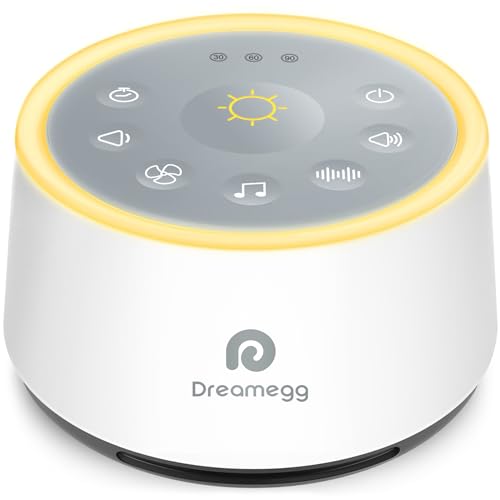
The mains-side masking pick, and the number two seller in Amazon AU's Sound Therapy Products category. It carries 24 sounds: seven white noise variants, seven fan sounds and ten natural recordings, rain, waves, a brook, crickets and the rest of the usual suspects. That spread matters more than it looks, because masking only works at a volume you'll actually tolerate for hours, and the sound you tolerate is personal. Some people settle behind broadband hiss, others find it grating and do better with the duller fan tones or rain. Twenty-four options means you find yours instead of fighting the one sound a basic unit ships with, and the speaker is listed as high quality with clear adjustable sound across the range.
The controls are the practical kind: a timer with 30, 60 and 90 minute stops, continuous running for all-night masking, adjustable volume, and a night light that throws a soft warm glow rather than a blue-white one, with the light and sound controlled separately. Dreamegg aims this squarely at the nursery market and the listing leans hard into baby framing, but the hardware neither knows nor cares: pointed at a bedroom window over a main road, or a bedside table against the party wall, it does exactly the same masking job for anyone. The listing pitches plug-in operation for continuous use, which is what you want in a machine that never moves.
Placement does more than most people expect: put it between you and the noise path, not behind your head, and run it at the lowest volume that smooths over the peaks. It's covering the residue that survived your sealing and mass work, not competing with the whole street, and a masker turned up to shouting volume becomes its own problem. The light is worth setting up properly too, since a warm glow you can leave on beats fumbling for a phone torch at 3am. At $60 through Dreamegg's Australian storefront it's the one to bolt into a permanent bedside spot.
Honest caveats: The listing is nursery-flavoured from name to photos, so buy it as hardware and ignore the framing. Detailed power and speaker specs aren't stated in the listing bullets, so check the current listing for plug details. And masking changes nothing about the noise itself; the neighbour's subwoofer still needs a conversation, not a machine.
Best for: The permanent bedside spot: masking traffic or party-wall residue all night from mains power, with the light handled by the same unit.
Sounds: 24: 7 white noise, 7 fan, 10 natural • Timer: 30 / 60 / 90 min or continuous • Night light: Warm, separately controlled • Volume: Adjustable • Power: Plug-in per listing • Sold by: Dreamegg AU (AU storefront) • Rank: #2 in Sound Therapy Products (Amazon AU)
View on Amazon AU
Babelio Mini White Noise Machine, 15 Non-Looping Sounds
ASIN B0BRB6S14Y • $33.99 • Sold by BABELIO AU on Amazon AU
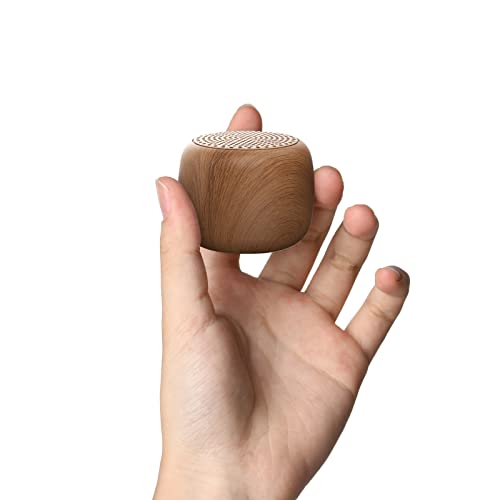
The listing calls this the smallest white noise machine on the market at 4.8 by 4.8 by 4 centimetres, and whether or not that's strictly true, it's a masking machine the size of a plum that runs off its own battery. The spec that earns its place here is non-looping sound: all fifteen tracks, covering white, pink and brown noise plus fan and nature sounds, play without a loop seam. That's the failure point of phone apps and budget machines, because your ear eventually finds the repeat and starts waiting for it, at which point the masker has become the noise. Fifteen options in a box this size is more than the category average, and it ranks 7th in Sound Therapy Products.
It charges over USB-C with the cable included, and controls are one-button simple: short press for on and off, long press to cycle the timer between 30 minutes, 60 minutes and unlimited running. That makes it the travel and share-house unit: hotel air conditioners, a noisy hallway outside a rented room, the desk at work, or trial-running the whole masking idea for $34 before committing a permanent bedside spot to the Dreamegg above. White, pink and brown noise in the same unit is also the practical way to learn which of the three you actually tolerate at volume, because they're noticeably different sounds despite the marketing treating them as one thing.
One habit from the bench: charge it, run it on battery, and top it up when it's flat, rather than leaving it permanently on the charger, because small lithium cells held at full charge around the clock are the swollen batteries we see two years later. The listing doesn't state battery capacity or runtime, so test it against your longest night before travelling on it, and pack the cable regardless. At $34 through an Australian storefront it's the least money this whole category asks, and the easiest unit to hand to a housemate once it's solved your problem.
Honest caveats: A speaker this size has no meaningful low end and gets hissy near maximum volume, so it masks best at close range. Battery capacity and runtime aren't stated on the listing. Like any rechargeable, it shouldn't live permanently on the charger, and the battery is the part that ages first.
Best for: Travel, share houses and trying masking for $34 before dedicating a permanent bedside spot to it.
Size: 4.8 x 4.8 x 4cm • Sounds: 15, non-looping • Noise types: White, pink, brown, fan, nature • Timer: 30 / 60 min or unlimited • Power: USB-C rechargeable, cable included • Battery: Capacity not stated on the listing • Sold by: BABELIO AU (AU storefront) • Rank: #7 in Sound Therapy Products (Amazon AU)
View on Amazon AU
Knightsacoustic 52-Pack Acoustic Foam Panels, 30 x 30 x 2.5cm
ASIN B0DCRLX626 • $65.99 • Sold by Knightsacoustic-AU on Amazon AU
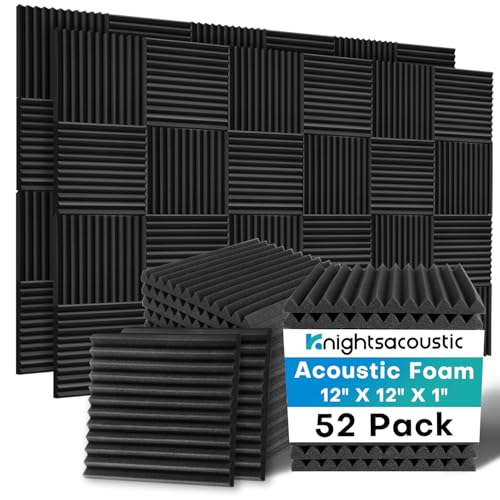
The number one seller in Amazon AU's Acoustic Room Treatment category, and the right way to buy foam: in bulk, because coverage is what makes absorption audible. Fifty-two panels at 30 by 30 centimetres is about 4.7 square metres of treatment, enough to properly cover the wall behind a desk plus first reflection points, where a single 12-pack ends up as scattered decoration. The foam is listed at 25kg per cubic metre density, polyurethane with a grooved wedge profile, 2.5cm thick, and the listing claims a high-temperature curing process for shape retention. Density is the spec that separates real acoustic foam from packaging foam, and 25kg/m3 is the credible end of this price bracket.
Be clear about the job it does, because the listing's soundproofing language oversells it: this treats the room you're in. Behind and beside a desk it takes the bathroom ring out of video calls; around a streaming or recording corner it dries up the slap echo that entry-level microphones amplify; on the wall facing a TV it lets you follow dialogue at lower volume, which your neighbours will appreciate more than any apology. Panels arrive vacuum-packed and the listing quotes three to five hours to recover their shape with ventilation; in my experience give compressed foam a day or two spread out before judging it, because the first hour out of the bag always looks like a refund case.
The listing also claims low odour and a fireproof rating, and I'd treat the second word as flame-retardant marketing rather than a licence to mount panels near heaters or behind hot amplifier vents. For renters, don't glue these to the paint: mount them on foam-core boards or thin MDF and hang the boards from removable hooks, which moves out with you and leaves the wall untouched. Coverage beats placement perfection, so start with the wall behind the desk and spread outward from there. At $66 through an Australian storefront it's the most complete room treatment you can order in one box at this price.
Honest caveats: Foam absorbs reflections in your room and does not stop noise coming through walls, whatever the listing implies. At 2.5cm thick it works on mid and high frequencies, not bass. Vacuum-packed panels need time to recover, and the fireproof claim is the maker's word, so keep them clear of heat sources anyway.
Best for: Killing echo in the room where you take calls, record or game, and letting the TV run quieter in a hard-surfaced unit.
Quantity: 52 panels • Panel size: 30 x 30 x 2.5cm • Coverage: About 4.7m2 total • Foam: 25kg/m3 polyurethane, listed • Profile: Grooved wedge, 12 grooves per panel • Claimed: Low odour, fireproof (maker's wording) • Sold by: Knightsacoustic-AU (AU storefront) • Rank: #1 in Acoustic Room Treatment (Amazon AU)
View on Amazon AU
VEVOR Sound Dampening Blanket with Grommets, 96 x 80 Inch
ASIN B0CH3Q64KF • $49.99 • Sold by VEVOR Store AU on Amazon AU
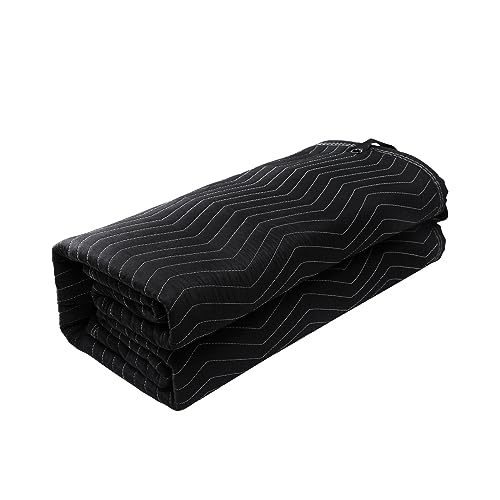
This is the mass-and-coverage tool of the list: a 96 by 80 inch blanket, roughly 244 by 203 centimetres, in dense polyester with metal grommets and loops along the edge for hanging. That's big enough to cover a standard door with generous overlap onto the frame, which is exactly how a door blanket should hang, or to blanket a window wall in a bedroom that faces the road. VEVOR sells it as a moving blanket, a sound absorption sheet and a light blocker in the same breath, and that's honest in its own way: it's a large amount of dense, tightly-stitched fabric, and every one of those jobs is just mass and coverage wearing different names.
Construction details from the listing: water-resistant polyester, tightly sealed edges, and double-lock Z-stitching instead of glue, which matters because glued blankets in this category arrive smelling like a tyre shop and this one is specifically built not to. It folds down for storage, so the arrangement where it hangs over the bedroom door at night and lives folded behind the wardrobe by day is realistic rather than theoretical. It ranks 11th in the same Acoustic Room Treatment category as the foam above, and at $50 through VEVOR's Australian storefront it's the least money in this guide that does anything at all about sound getting through a barrier rather than bouncing around inside the room.
Hang it on removable hooks rated well past its weight, use more hooks than looks necessary, and let it hang with a little air behind it and a loose drape rather than stretched flat like a drum skin. Overlap every edge of the opening, because a lapped edge is the difference between a barrier and a decoration. Treated that way it takes a real bite out of voices and TV through a hollow door, and the blackout over a window comes free, which is either a bonus or a problem depending on how you feel about mornings.
Honest caveats: One layer of blanket takes the edge off mid and high frequencies and does little for bass, which walks through light barriers. It only performs if it overlaps the opening with edges lapped to the wall, and at this size it's heavy, so two flimsy hooks won't hold it. Listed as water-resistant, not washable.
Best for: Adding removable mass over a hollow bedroom door or a road-facing window, in a rental, for $50.
Size: 96 x 80in (about 244 x 203cm) • Material: Polyester, water-resistant • Hanging: Metal grommets plus loops • Stitching: Double-lock Z-stitch, no glue • Storage: Folds flat • Also does: Blackout and moving-blanket duty • Sold by: VEVOR Store AU (AU storefront) • Rank: #11 in Acoustic Room Treatment (Amazon AU)
View on Amazon AUSide-by-side comparison
| Product | Price | Best for |
|---|---|---|
| Babelio White Noise Machine Mini Sound… | ~$39.99 | |
| VEVOR Sound Dampening Blanket | ~$49.99 | |
| Dreamegg White Noise Machine | ~$54.99 | |
| 52 Pack Acoustic Foam Panels | ~$65.99 |
What we see fail at the bench: the noise-control kit
Noise gear is simple hardware, which is why most of what goes wrong with it is the same three faults we see across every small appliance category. None of them should kill the device, and two of them are habits rather than defects. The third is the reason to think twice before sticking anything to a painted wall you don't own.
Charge ports on bedside machines
A sound machine lives on a bedside table, gets its cable yanked out sideways in the dark, and travels in a bag with the plug half-seated. The result is the same fault we see on earbuds cases and travel routers: a USB port working loose from its solder joints, then charging only when the cable is held at an angle. It's a small board-level fix caught early, and a dead unit once the pads tear. If charging goes intermittent, stop wiggling the cable and get it looked at, and route the bedside cable so the pull is along the plug, not across it.
Batteries that never leave the charger
Rechargeable minis get parked on their charger for months because it's convenient, and small lithium cells held at full charge and slightly warm age fastest of all. Two years later the case bulges, the runtime is twenty minutes, and the swollen cell is pressing on the speaker. Run these things on battery and charge them when they ask, the way you'd treat wireless earbuds. If a unit ever bulges, rattles or smells sweet, stop charging it and have the cell dealt with properly rather than binning it into general waste, where swollen lithium starts fires.
Foam in the wrong places
Twice a year someone foam-lines a media cabinet or the shelf behind a console for rattle and brings us the console that cooked inside it. Acoustic foam is thermal insulation wearing a different hat, and electronics that vent into it run hot until something quits, usually the part that was already marginal. Keep panels clear of amplifier vents, console exhausts and anything with a fan, and mount them on boards rather than gluing them to painted walls, both for your bond and because panel adhesive near heat lets go and drops the panel onto whatever's below.
Decision tree: which one should you actually buy?
- Neighbour's TV or voices through the party wall? → Mass and sealing first: a packed bookshelf or wardrobe on that wall, seals on your own doors, and the VEVOR blanket at $50 over the worst opening. Then the Dreamegg at $60 masks what's left.
- Video calls or recordings sound like a bathroom? → The Knightsacoustic 52-pack at $66, mounted on boards behind and beside the desk. That's an absorption problem, and it's the one thing foam genuinely fixes.
- Traffic through the bedroom window? → Seal the sashes first, hang the VEVOR blanket at $50 over the window at night, and run the Dreamegg at $60 for the residue. All three together cost less than one night away.
- Share house, travel, or not sure masking is for you? → The Babelio at $34. USB-C, pocket sized, non-looping tracks, and it answers the question for less than the price of getting it wrong bigger.
- Bass or footsteps coming through the slab? → Nothing on this page fixes structure-borne noise, and nothing renter-priced does. That's a polite conversation, then a strata process if it has to be. Spend the money on the room you control instead.
- Sound machine won't charge, crackles, or the battery has swollen? → That's a port or cell fault, and both are small fixes caught early. Bring it in to our Erina workshop and we'll tell you whether it's worth fixing before you spend anything.
Frequently asked questions
Do acoustic foam panels stop noise from the neighbours?
No. Foam absorbs sound reflections inside the room it's mounted in, which reduces echo and makes your own space sound better. Blocking sound that travels through a wall requires mass, and a 2.5cm foam panel has almost none. If the neighbour's TV is the problem, your money is better spent sealing gaps around your doors and windows, putting heavy furniture like a packed bookshelf against the shared wall, and masking the remainder. Foam still earns its place in an apartment, but for your side of the wall: calls, recording, gaming and taming a hard-surfaced room so the TV can run quieter.
Do sound blankets over a door actually work?
They help with voices and TV-type noise, provided they're hung right, and they do little for bass. The blanket needs to cover the whole opening and overlap onto the frame or wall so the edges are lapped rather than open, because sound flanks around any gap it finds. A loose drape with a little air behind it outperforms a blanket stretched flat against the door, and sealing the door's own gaps first multiplies the result. Expect the edge taken off, not silence. On a hollow-core internal door, which is nearly empty inside, the improvement is bigger than on a solid entry door.
What's the difference between white, pink and brown noise?
They're all broadband noise with the energy distributed differently across frequencies. White noise carries equal energy per frequency, which the ear hears as bright hiss. Pink noise tilts the energy toward lower frequencies, sounding fuller and softer, more like steady rain. Brown noise tilts further still and sounds like a dull rumble or distant surf. None is objectively better; the practical question is which one you can tolerate at masking volume for hours, and that's personal. A machine like the Babelio that carries all three lets you test against your actual noise problem instead of guessing at the checkout.
How do I hang acoustic panels without losing my bond?
Don't put anything adhesive on the paint. Mount the panels on a carrier instead: foam-core board, corflute or thin MDF cut to size, with the panels glued to that, then lean the board against the wall or hang it from one or two removable hooks. The acoustics don't care whether foam sits on plasterboard or on a board a few millimetres in front of it, and the whole treatment moves out with you. The spray adhesive and foam mounting tape sold alongside panels will lift paint and sometimes the plasterboard's paper face, and dozens of small patches of pulled paint is exactly the kind of thing final inspections price badly.
Why does bass go straight through walls when voices don't?
Two reasons. Low frequencies have long wavelengths and carry more energy into the structure, so they set the wall, floor and slab moving as a whole, and the structure re-radiates the sound on your side. And the mass law that governs barriers works against you down low: every barrier blocks less at lower frequencies, so the wall that comfortably stops speech barely notices a subwoofer. That's why the thump arrives with the mids and highs stripped away. Fixing it properly means decoupled construction or treatment at the source, neither of which is renter hardware, which is why the honest advice is a conversation rather than a purchase.
Should I run a white noise machine all night or on a timer?
Match it to the noise you're masking. If the problem runs all night, traffic on a main road or a neighbour's shift-work comings and goings, continuous mode is the point, and a mains-powered unit like the Dreamegg is built for exactly that. If the noise is concentrated in the first hour, the pub crowd leaving or the housemates' kitchen, a 60 or 90 minute timer covers the window and the machine shuts itself off. On battery units the timer also protects the cell, since running flat every single night is more cycling than a small battery needs. Set the volume at the lowest level that smooths the peaks.
Related buying guides
Sound gear gone quiet?
Machines that only charge with the cable held just so, speakers that crackle at volume, batteries that bulge after a year on the charger: most of it is a worn port or a tired cell, not a dead unit. Bring it in to the workshop in Erina and we'll tell you what's actually wrong and what it costs to fix before you spend anything on a replacement.
Visit our Erina workshop Book Online