Prices from Amazon AU, updated daily. Swipe or use the arrows for more.
Disclosure: This article contains affiliate links to amazon.com.au. If you buy through one of these links iFix may earn a small commission at no extra cost to you. It doesn't change which products we recommend. We focus on what actually lasts based on 16 years of repair-shop experience.
Quick summary8 picks
- Foam Insulation Tape self Adhesive about$12
- Entry PickTuradh 5M Door Seal Strip Silicone Weather… about$16.29
- 2m Shower Door Seal Strip H Type for 6 mm… about$17
- Door Seal Strip about$20.9939" screen.
- VISEMAN 36 Inch Twin Under-Door Draught… about$1936" screen.
- BKSAI Door Draft Stopper Door Seal Strip… about$23.99
- 90cm Weighted Under Door Draft Stopper… about$22.0936" screen.
- Most PremiumBell+Howell Alien Draft Seal Door & Window… about$32.951.4" screen.
The hole in the wall you're paying to heat
Run a tape measure under your front door tonight. A 3mm gap under an 820mm door works out to about 25 square centimetres of open hole, roughly a 5cm square cut straight through to the weather, and most of the older doors I see are running double that. Nobody would drill a hole that size through a door and leave it there all July, but that's effectively what the gap is, and it sits at floor level where the cold air wants to come in anyway. Your heater doesn't know about the gap. It just runs longer to hold the room at temperature, and at the AU average tariff of roughly 33c/kWh a 2,400W heater working flat out is costing you about 79c an hour while a fair slice of the warm air it made slides out under the door. Multiply by three or four doors and a rank of leaky windows and the hole adds up to something closer to a missing pane of glass.
The fix costs between $15 and $33, which is why draught sealing keeps showing up first in every energy audit ever written. There's no other heating upgrade in the house where the hardware pays for itself inside a few weeks of winter, because every kilowatt hour the heater doesn't have to replace is money that never leaves your account. I went through the bigger picture in our smart home power savings guide, and sealing sat ahead of every gadget in it. This guide covers the five sealing products worth buying on Amazon AU right now, and because a lot of the Central Coast rents, I've flagged which ones go on and come off without costing you a bond. None of it needs a tradesman either: every product in this guide fits with scissors, a tape measure and at most a wipe of methylated spirits, so the whole job happens in one afternoon.
Where the air actually gets in
Doors first, and the bottom gap is nearly always the worst offender, because hinges drop and floors get re-levelled while the door stays the same size. After that it's the door perimeter, the vertical gaps between door and jamb that open up as timber shrinks, and then window sashes, which leak along every edge that moves. Older timber sliding windows are usually worse than the doors, and the sash that rattles on a windy night is telling you exactly where. In my experience a 1970s three-bedroom place has more gap area around its windows than under all of its doors combined, which is why two of the five picks below are tapes rather than door stoppers. Wall vents, exhaust fans and chimneys leak too, but they exist for ventilation reasons, so leave them alone and work on the gaps that were never meant to be there.
Finding the leaks costs nothing. Wait for a cold, windy night, kill the lights, and run the back of your hand slowly around door edges and window frames; the back of the hand feels moving air far better than the palm does. An incense stick does the same job visually, the smoke kicks sideways at every leak. For under-door gaps, have someone shine a torch along the far side while you watch from a dark room. Mark what you find with painter's tape and fix the rooms you actually heat first, because sealing the spare room nobody sits in is effort spent where the heater isn't. The whole survey takes twenty minutes, and it's the difference between buying what the house needs and buying what the ad showed you.
Wedges, sliders, tapes and flaps: what each one does
Under-door hardware splits into three types. A weighted wedge sits against the door bottom on one side and relies on mass to stay put; the good ones anchor to the frame so they don't wander, and they'll swallow big gaps that nothing else covers. A twin slider is two foam tubes in a fabric sleeve, one each side of the door, so it seals both faces of the gap and travels with the door instead of needing to be kicked back into place. The insert style is a twin slider with no adhesive anywhere, which matters more than it sounds once a rental inspection is involved. All three come off in seconds and leave nothing behind except, in some cases, a small hook-and-loop pad.
Perimeter gaps want tape. Closed-cell foam tape presses into the jamb rebate and compresses when the door or sash closes onto it, which suits small, even gaps and costs the least per metre. Silicone flap tape works differently: a flexible transparent flap bridges the gap and flexes shut, so it copes with the uneven, wandering gaps that foam can't fill, and it survives sun and repeated compression a lot longer than foam does. Match the product to the gap rather than buying one of everything. Measure first, because a 6mm foam strip in a 12mm gap seals nothing and a fat strip in a tight jamb stops the door latching. If you're not sure which you've got, close the door slowly onto a strip of paper at several points around the frame: where the paper slides out freely with the door shut, that's where the gap is, and how hard it grips elsewhere tells you roughly how thick the seal needs to be.
The renter rules: nothing that costs you your bond
The order of preference for a rental is simple: things that touch nothing, then things that grip with hook-and-loop, then adhesives, and you only move down the list when the gap forces you to. The insert-style stopper and the twin slider touch nothing but the door itself, so there's nothing for an agent to object to at the final inspection. The weighted wedge adds one adhesive-backed hook-and-loop pad on the frame. Test that somewhere hidden first, because paint that's older than the lease can lift with any adhesive, and photograph the door before you start so there's no argument later about marks that were already there. Keep the receipts and the packaging until you move out, too, because pulling a $24 seal off the door and taking it to the next place is exactly what these are designed for.
Tapes are the riskier end. Foam tape's adhesive is usually the polite kind, but on chalky or flaking paint even polite adhesive takes flakes with it, and silicone flap tape grips harder still. On aluminium window frames and glass, either tape peels off clean nine times out of ten and any residue wipes away with methylated spirits. On painted timber I'd test a short offcut for a week before committing metres of it. If a gap really needs tape and the paint really won't survive it, that's a conversation with the agent rather than a gamble; a landlord paying the heating bill on a leaky place has usually heard worse requests. Blu-tack style putty under a strip's edge is the old renter's trick for extra grip without adhesive, and it wipes off with the same effort it went on.
Seal the room, then mind the air in it
A sealed room holds heat, and it holds everything else too. Winter moisture from cooking, showers and drying clothes used to leak out through the same gaps as your warm air, and once those gaps close, the moisture stays and finds the coldest surface in the room, which is the glass. Condensation streaming down windows every morning, mould spots on frames and curtains, and damp creeping into a wardrobe on an external wall are the usual signs. The fix isn't undoing your sealing work, it's managing moisture on purpose: lids on pots, the exhaust fan running during and after showers, and clothes dried with airflow rather than in a closed room. Our dehumidifier guide covers the mechanical option for the rooms that stay damp anyway.
The other thing that builds up in a sealed room is CO2. A closed bedroom with two people in it climbs surprisingly fast overnight, and a CO2 monitor will show you exactly when a room needs airing, which beats guessing in both directions. Air the place hard for ten minutes a day, fully open windows, then seal it back up; that swaps the air without cooling the walls and furniture, so the room recovers quickly. One hard rule: an unflued gas heater needs ventilation to burn properly, full stop. Don't draught-proof a room where one runs. That heater is the exception to everything else in this article.
The heater side of the equation
Sealing changes what heater the room needs, which is where the real money is. A leaky lounge that only felt warm with 2,400W of fan heater running flat out will often hold temperature on a 1,000W setting once the gaps are shut, and at roughly 33c/kWh that's the difference between about 79c and 33c for every hour it runs. Over a two-month winter of evening heating, the arithmetic gets big enough that the $33 spent on tape looks silly against it. If the heater itself is due for replacement, our fan heater picks were chosen on thermostats and tip-over cutouts rather than raw wattage, and a sealed room is exactly where a thermostat starts earning its keep, cycling off instead of running continuously. The same logic applies to reverse-cycle air conditioning in summer, since cool air leaks out through the same gaps warm air does, so the seals keep paying past September.
While you're down at floor level with a torch, look at what the heater is plugged into. A 2,400W heater pulls the full 10A an Australian wall socket is rated for, so it goes straight into the wall, never into a powerboard and never through an undersized extension lead coiled behind the couch. We see the results in the workshop every winter: melted powerboard sockets, browned plugs, cords stiff with heat. Check the plug with your hand after the first long run of the season; warm is normal, too hot to hold isn't, and a scorched or loose plug is worth a look at the workshop in Erina before it becomes a bigger problem than a draught ever was.
How I picked these five
Same gates as every guide in this series. Every pick is sold new, sits inside the $15 to $150 band the queue set for this category, and is stocked by Amazon AU directly or by an Australian storefront seller, because a $20 draught stopper posted from Shenzhen in August arrives after the winter it was meant to fix. Import-version listings and overseas export sellers got binned on sight. Ranks are real Amazon AU category sales ranks pulled the same day, not bestseller badges, and the lead pick sits at number 46 in Door Stops, which for a low-glamour category means a lot of people did this maths before you. The five picks land between $15 and $33, at the bottom of the band, because that's what honest draught proofing costs; nothing up near $150 earned a spot.
I also kept the list deliberately mixed: one weighted wedge for wrecked gaps, two twin sliders at different fits (one with zero adhesive for renters), one foam tape for even jamb gaps and one silicone flap tape for the uneven ones, because most houses need two of these, not five of the same thing. What didn't make it: unweighted door snakes, which drift out of position the third time the door opens, and the no-name brush strips whose listings state no dimensions at all, because you can't seal a gap you can't measure the product against. Prices below were right on the day and they'll drift, so treat them as a snapshot rather than a promise. And if your place has aluminium sliding doors, measure the track gap before ordering anything here, because sliders are their own problem and mostly want brush seals, which didn't clear the supply gate this round.
The 5 picks, $15 to $33
Prices are Amazon AU at time of writing (17 September 2026) and move week to week. Ranks are Amazon AU category sales ranks, checked the same day.

HNSMART 90cm Weighted Triangular Door Draught Stopper
ASIN B0GY2Q6N7N • $22.09 • Sold by HNSMART-Au on Amazon AU
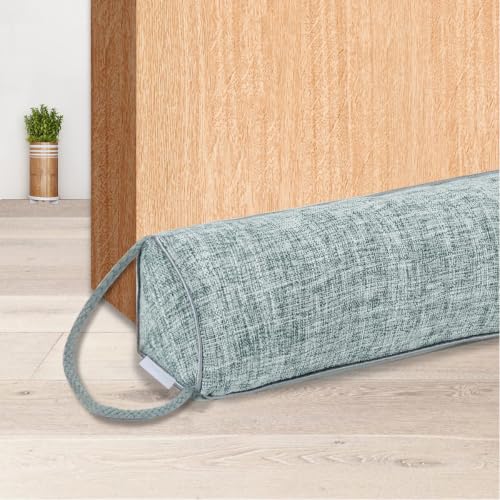
This is the pick for the gap that's beyond taping: an old door, a dropped hinge, a floor that was never level to begin with. It's a 90cm triangular wedge filled with polyester wadding and 2.2 pounds of glass beads, about a kilo of ballast, and that weight is the whole point. Light door snakes migrate every time the door moves and end up decorating the hallway instead of sealing it. This one sits flat in its 90-degree wedge shape, hugs the door bottom, and anchors to the frame with a hook-and-loop strip so the door can swing without dragging it out of position. It ranks 46th in Amazon AU's Door Stops category, which is solid traffic for something this unexciting.
The listing rates it for standard 36 inch doors with gap heights up to 3 inches, and that last number is what separates it from everything else here. No tape or slider deals with a 3 inch gap; this does, and it works lying under a leaky window sash too. The outer fabric is soft and wear-resistant, and per the listing it slides over carpet, tile, timber and vinyl without scratching anything, which matches how these hold up generally: the fabric outlives the winter, and the beads don't care either way. Fit it to the side of the door facing the room you're heating and it just sits there doing its one job.
For renters the only touchpoint is that hook-and-loop pad on the frame, so test the adhesive somewhere hidden before committing it to fifty-year-old paint, or skip the anchor entirely and let the weight do the work on a door that opens away from it. It also earns a second job the sliders can't do, lying flat along a leaky window sill or the bottom of a stacker door. At $26 through an Australian storefront seller it's the most seal per dollar here for genuinely bad gaps, and the one I'd put on the front door of most older Coast houses first.
Honest caveats: The hook-and-loop anchor is adhesive-backed, so bond-conscious renters should test it on hidden paint first or run it unanchored. It's 90cm, so measure unusually wide doors. It also seals one side only, and a door that opens toward it will need it re-seated unless the anchor strip is used.
Best for: The wrecked gap: old doors, dropped hinges and uneven floors where tape and sliders can't reach.
Length: 90cm • Fill: Polyester wadding + 2.2lb (about 1kg) glass beads • Shape: 90-degree triangular wedge • Anchor: Hook-and-loop strip to frame • Gap height: Up to 3in listed • Floors: Carpet, tile, timber, vinyl • Sold by: HNSMART-Au (AU storefront) • Rank: #46 in Door Stops (Amazon AU)
View on Amazon AU
VISEMAN 36 Inch Twin Under-Door Draught Stopper
ASIN B07PQHCRL2 • $19 • Ships from Amazon AU
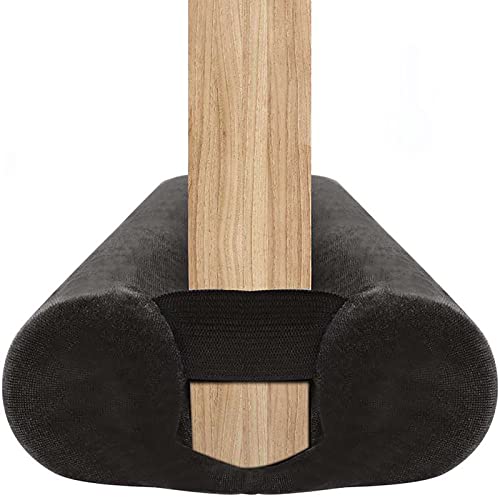
The twin slider solves the problem the wedge creates: it moves with the door. Two foam tubes sit in a plush fabric sleeve, one each side of the door bottom, so the gap is sealed from both faces and the whole thing travels as the door swings. Nothing to re-seat, nothing to kick back into place after the school run has been through the door eleven times. The foam tube cuts to length for doors from 35 to 36 inches, handles door thicknesses from 1 to 3 inches, and seals gaps up to 1.5 inches high per the listing. It's sold by Amazon AU directly and ranks 1,406th in Door Stops.
The sleeve is machine washable, which sounds like filler until you've seen what six months of hallway traffic does to a fabric tube at floor level. Unzip the foam, throw the sleeve in with the towels, done. The listing pitches it at front doors, garage entries, bedrooms and bathrooms, and the double-sided design is honestly at its best on internal doors, where it also cuts the noise and light bleeding under the door between rooms. On a front door it blocks the gap fine, though the fabric will wick water if the door bottom gets rained on, so keep it to covered entries. Fitting takes five minutes: measure the door, trim the foam tube square with scissors, slide it home and push the whole thing under the door.
The trade-off with any slider is drag. On floorboards, tile and short pile it glides; on thick carpet it fights the door, bunches, and eventually gets pulled out and left against the skirting, at which point it's sealing nothing. If your place is carpeted right to the door line, check the clearance first or go back to the wedge above. At $24 sold by Amazon AU it's the door-in-constant-use pick, and the one that disappears into the household quickest, because a seal nobody has to think about is the seal still doing its job in October.
Honest caveats: Listed gap coverage tops out at 1.5 inches, so genuinely wrecked doors need the wedge instead. Double-sided means it needs clearance both sides of the door, and thick carpet will fight it. Floor-level grime builds up on the sleeve either way, though it machine washes.
Best for: The internal or entry door that gets used constantly, where a stopper that travels with the door beats one you re-seat.
Length: 35 to 36in, foam cut to size • Design: Twin tube, double-sided • Door thickness: 1 to 3in • Max gap: 1.5in listed • Care: Machine washable sleeve • Material: Soft plush cloth sleeve, foam tubes • Sold by: Amazon AU • Rank: #1,406 in Door Stops (Amazon AU)
View on Amazon AU
BKSAI Under-Door Seal with Twin Foam Rollers, 29 to 35 Inch
ASIN B0BNBWV6PL • $23.99 • Sold by BKSAI-AU on Amazon AU
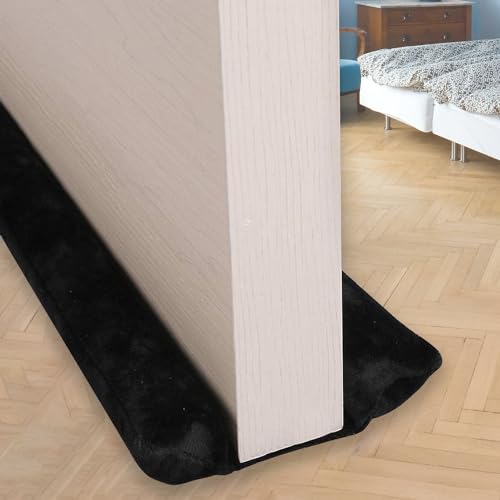
This is the renter's pick, and the reason is what it doesn't have: no adhesive, no screws, no hook-and-loop pad, nothing that touches the frame or leaves a mark. It's the same twin-roller idea as the VISEMAN, two foam rollers sealing both sides of the door bottom, but BKSAI's version has the filling completely sewn into the cover so the rollers can't creep out sideways, and you trim the foam to length without cutting the cover itself. Fitting is genuinely tool-free: cut the rollers, slide them into the sleeve, push the whole thing under the door. It covers doors from 29 to 35 inches and ranks 284th in Amazon AU's Home Décor Products category.
The listing claims protection against up to 30 percent heat loss, which is the maker's number and I'd file it with every other percentage printed on packaging. The physics doesn't need the marketing anyway: it blocks the gap from both sides, and a blocked gap stops the air. The listing also pitches it against dust, light, bugs and noise under the door, which all comes free with sealing the same hole, and it's machine washable like the VISEMAN. The pitch for showers and bathrooms makes sense too, as a water-stop across a bathroom door gap during a toddler's bath night is exactly the kind of second job these end up doing.
Between the two twin sliders the choice comes down to fit and paperwork. The VISEMAN runs a touch longer at a full 36 inches and is sold by Amazon AU directly; this one fits narrower doors from 29 inches, lands within a few cents of the same price, and involves zero adhesive anywhere in the box, which is the detail that decides it for anyone renting. It's also the tidier pick under a bedroom door, since the sewn-in rollers can't creep around inside the cover. If the lease makes you think twice about a velcro pad on painted trim, spend the $24 and stop thinking about it.
Honest caveats: Sized for 29 to 35 inch doors, so measure before ordering, and like any double-sided slider it needs clearance on both faces and dislikes thick carpet. The up-to-30-percent heat loss figure is the maker's own claim, not an independent test, and I'd treat it as packaging copy.
Best for: Renters and anyone who wants the door sealed with zero adhesive, zero tools and zero marks at the final inspection.
Fit: 29 to 35in doors, foam cut to size • Design: Twin foam rollers, sewn-in fill • Adhesive: None • Care: Machine washable • Claimed: Up to 30% heat-loss protection (maker's figure) • Colour: Black • Sold by: BKSAI-AU (AU storefront) • Rank: #284 in Home Décor Products (Amazon AU)
View on Amazon AU
Self-Adhesive Foam Insulation Tape, 12mm x 6mm x 10m
ASIN B081DRXDWL • $12 • Ships from Amazon AU
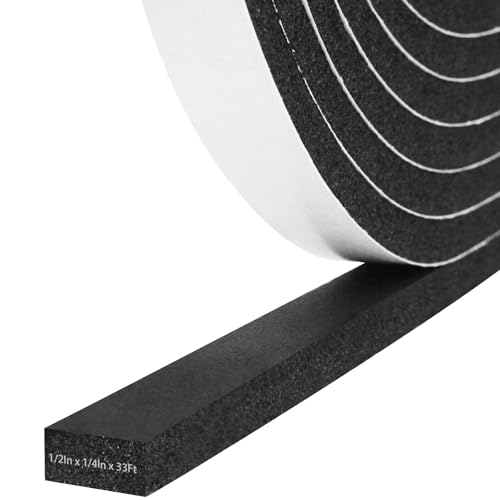
Door stoppers fix the bottom gap; this fixes the other three sides. It's closed-cell CR foam, neoprene family, in a half inch by quarter inch strip running 33 feet, call it 12mm wide, 6mm thick and about 10 metres long. That's enough for a full door perimeter plus a window or two. You press it into the jamb rebate where the door or sash lands, and the foam compresses to fill the gap every time the door closes. Closed-cell matters here: it doesn't soak up water like the low-grade open-cell weather strip that turns to crumbs after one summer, and the listing quotes a working range of minus 50 to 150, which I read as Celsius and as more range than any Australian doorway will ever ask of it.
It's self-adhesive on one side, cuts square with ordinary scissors, and bends around corners without fighting you, so a full door perimeter is a ten-minute job including the wipe-down. The listing pitches it well beyond doors and windows: electrical cabinets, car doors, speaker boxes, anywhere a compressible strip stops air, dust or rattle, and that versatility is why, at $15 sold by Amazon AU directly, it's the roll I'd keep in the drawer regardless of what the house needs today. It also ranks 404th in the enormous Heating & Cooling category, which for a plain roll of foam tape says plenty about just how many Australian doors and windows get taped up every single winter.
Two rules make the difference between a seal that lasts years and one peeling by August. Clean the surface first, methylated spirits and a dry rag, because foam tape applied over dusty paint is on a countdown from day one. Then check the door still latches after fitting, because 6mm of foam in a 3mm gap holds the door proud of the striker plate. If the latch won't catch, the gap wanted thinner tape, a different spot in the rebate, or the silicone flap option below, not a harder slam every time someone leaves the house.
Honest caveats: One-sided adhesive can lift flaking or chalky paint on removal, so renters should test a short offcut first. The 6mm thickness suits small, even gaps only, and the minus 50 to 150 working range is the maker's figure with units not stated on the listing.
Best for: Door perimeters and window sashes with small, even gaps, and the drawer of every house that owns a screwdriver.
Size: 1/2in x 1/4in x 33ft (about 12mm x 6mm x 10m) • Material: CR (neoprene) closed-cell foam • Adhesive: Self-adhesive, one side • Listed range: Minus 50 to 150 (maker's figure) • Cutting: Scissors, cut to fit • Uses: Door jambs, window sashes, cabinets, speakers • Sold by: Amazon AU • Rank: #404 in Heating & Cooling (Amazon AU)
View on Amazon AU
Bell+Howell Alien Draft Seal Silicone Tape, 3 Rolls, 15m Total
ASIN B08S3M2HKL • $32.95 • Sold by Global Shop Direct AU on Amazon AU
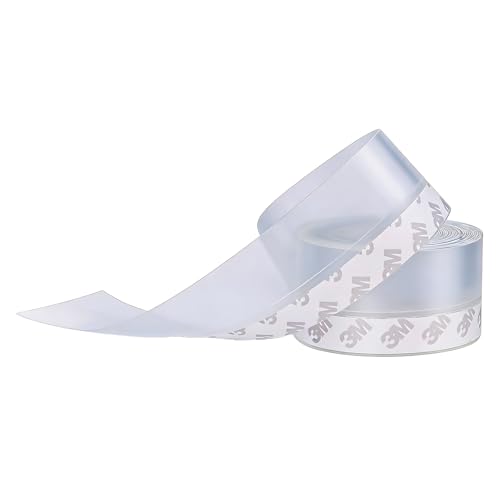
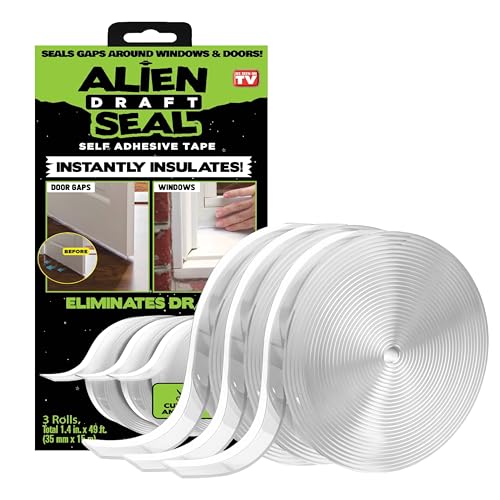
Foam tape needs an even gap to compress into. Real houses mostly don't have those, and this is the product for the rest of them. It's a transparent silicone flap tape: one edge sticks to the frame, and the flexible flap bridges whatever gap is actually there, flexing closed against the door or sash each time it shuts. Because the flap conforms rather than compresses, it copes with the wandering gaps that timber windows develop over decades, the exact gaps that swallow foam tape whole. The kit is three rolls of 1.4 inches by 16.34 feet, 49 feet combined, call it 15 metres, which is whole-house quantity rather than one-door quantity, and enough to do every window in a typical three-bedroom place with roll left over.
The silicone is the reason to pay $33 instead of $15. Per the listing it resists creasing and hardening, which is exactly where the PVC versions of this product die: they go stiff in the sun and crack along the fold line inside a year or two, and coastal UV only speeds that up. It sticks to painted and powder-coated timber, glass, metal, ceramic, fibreglass and plastic, it's listed as moisture-proof, and because it's transparent it more or less disappears once fitted, which matters when it's running down the side of a glass door in the middle of the lounge room. It ranks 252nd in Heating & Cooling and sells through Global Shop Direct, an Australian storefront seller.
The strong adhesion cuts both ways. For an owner it's the set-and-forget option, and the one I'd run around every leaky window in the place without much thought. For a renter it's the last resort after the no-adhesive picks above: test a hidden section first, and fit it knowing removal is a slow peel followed by residue cleanup. Fit it to a clean, dry frame on a mild day, press the adhesive edge down hard, and the flap will still be flexing shut when the foam tape fitted the same winter has been replaced twice.
Honest caveats: The high-strength adhesive is the riskiest here for bond-conscious renters, so test hidden paint first and expect residue cleanup on removal. Roll dimensions are quoted in imperial on the AU listing, and the Heating & Cooling rank is a broad-category number, so read it loosely.
Best for: Uneven, wandering gaps around timber windows and glass doors, fitted once by someone who owns the frames it sticks to.
Quantity: 3 rolls • Roll size: 1.4in x 16.34ft (49ft / about 15m total) • Material: Silicone, transparent • Adhesive: High-strength backing • Surfaces: Painted timber, glass, metal, ceramic, plastic • Moisture: Moisture-proof, listed • Sold by: Global Shop Direct AU (AU storefront) • Rank: #252 in Heating & Cooling (Amazon AU)
View on Amazon AUSide-by-side comparison
| Product | Price | Best for |
|---|---|---|
| Turadh 5M Door Seal Strip Silicone Weather… | ~$16.29 | |
| 2m Shower Door Seal Strip H Type for 6 mm… | ~$17 | |
| Foam Insulation Tape self Adhesive | ~$12 | |
| Door Seal Strip | ~$20.99 | |
| BKSAI Door Draft Stopper Door Seal Strip… | ~$23.99 | |
| 90cm Weighted Under Door Draft Stopper… | ~$22.09 | |
| Bell+Howell Alien Draft Seal Door & Window… | ~$32.95 | |
| VISEMAN 36 Inch Twin Under-Door Draught… | ~$22 | The twin slider, $24 |
What we see fail at the bench: winter heating season
Draught seals themselves never come across the bench, there's nothing in them to fail. What arrives every winter is the gear working around the gaps: heaters strangled by hallway dust, powerboards that were never rated for the load, and electronics quietly corroding in rooms that got sealed without the moisture being managed. All three are avoidable, and two of them are avoidable for free.
Fan heaters full of hallway dust
A draughty floor moves dust constantly, and a fan heater on that floor is a dust collector with a heating element in it. We open them up to find the intake matted, the fan bearings dry and screaming, and the thermal cutout tripping because airflow through the element has halved. The smell of hot dust on first switch-on each winter is the early warning. Vacuum the intake grille at the start of the season and again mid-winter, and if a heater starts cycling off before the room is warm, stop running it and get it checked rather than riding the cutout.
Powerboards behind heaters
Every winter brings in powerboards with one socket browned or melted, and it's nearly always the socket the heater was in. A 2,400W heater pulls 10 amps continuously, which is the entire rating of the board and its plug, held for hours at a time. Contact resistance turns that into heat right at the pins. Heaters go straight into the wall socket, always. If the wall sockets are all taken, that's the sign to move the heater, not the sign to add a double adaptor, and a warm plug face after an hour of running means stop using that socket.
Condensation in sealed rooms
A few times each winter we get a laptop or console that lives on a desk against a cold window in a freshly sealed, unventilated room, often one where clothes dry overnight. Moisture condenses inside the case the same way it does on the glass, and corrosion starts creeping across connectors weeks before anything visibly fails. Intermittent USB ports and flaky charging on a machine that's never seen rain is the classic sign. Move electronics off the coldest wall, manage the moisture, and if a machine is already misbehaving, corrosion cleanup caught early is a far smaller job than board repair caught late.
Decision tree: which one should you actually buy?
- Renting, and the lease makes you nervous about marks? → The BKSAI insert at $24: zero adhesive anywhere in the box. The VISEMAN twin slider at $24 is the same idea if your door runs 35 to 36 inches.
- Big ragged gap under an old door? → The HNSMART weighted wedge at $26. It's the only pick rated for gaps up to 3 inches, and the kilo of glass beads keeps it where you put it.
- Whistling window sashes? → Foam tape at $15 if the gaps are small and even. Bell+Howell silicone flap tape at $33 if they wander, which on older timber windows they usually do.
- The door everyone uses fifty times a day? → The VISEMAN twin slider at $24. It travels with the door, seals both sides, and the sleeve goes in the washing machine when it gets grubby.
- Whole flat sorted for under $80? → Foam tape for the jambs ($15), the BKSAI or VISEMAN under the bedroom door (about $24 either way), and the weighted wedge on the front door ($26). About $65 all up, done in an afternoon.
- Heater smelling hot, cycling off early, or tripping the safety switch? → Unplug it. That's a clogged intake, a failing element or worse, and running it on the cutout is how small faults become fires. Bring it in to our Erina workshop and we'll tell you whether it's worth fixing before you spend anything.
Frequently asked questions
Do draught stoppers actually make a difference to heating bills?
Yes, and you can do the arithmetic yourself rather than trusting packaging percentages. A heater in a leaky room runs longer and hotter to hold the same temperature, and at roughly 33c/kWh a 2,400W heater costs about 79c per hour flat out. If sealing lets the room hold temperature with the heater cycling at half its duty, the difference over a winter of evening heating runs well past a hundred dollars, against $15 to $33 of hardware. The one situation where they do little is a room with big unsealed windows and no curtains, because glass loses heat faster than the door gap does. Seal the gaps and cover the glass at night, and the two fixes compound.
Will seal tape damage the paint when I take it off?
On glass and aluminium frames, rarely: it usually peels clean and any residue wipes off with methylated spirits. On painted timber it depends entirely on the paint, not the tape. Sound, well-bonded paint typically survives; old, chalky or flaking paint can lift with any adhesive product, including the polite ones. Test a short offcut somewhere hidden for a week before running metres of it, peel it back slowly at a low angle when removing, and warm the tape gently with a hairdryer first if it's been on for years. For rentals, the no-adhesive picks exist precisely so you don't have to have this gamble.
What's the difference between a door snake and a proper draught stopper?
Position keeping. A classic door snake is an unanchored fabric tube that relies on you placing it against the gap, and it stops sealing the moment the door moves or someone's foot clips it. The picks in this guide all solve that differently: the weighted wedge uses about a kilo of ballast plus a hook-and-loop anchor, and the twin sliders wrap both sides of the door so they travel with it. A snake on a door nobody opens works fine, which is why grandma's one on the spare room door lasted decades. On a door in daily use, it's decoration.
Can I still open windows that have foam tape fitted?
Yes. The tape sits in the frame rebate where the sash lands, so the window opens and closes normally and the foam compresses each time it shuts. What actually kills tape on an opening window is friction: if you've taped a surface the sash slides across rather than closes onto, it will peel or shred within weeks. Put it where the window presses, not where it rubs. Expect to replace foam tape on a frequently opened window every couple of years as the foam takes a set and stops springing back, which is also the argument for the silicone flap type on your most-used windows.
Is it safe to draught-proof a room with a gas heater?
Only if the heater is flued, meaning it exhausts outside. An unflued gas heater burns the air in the room and needs a constant supply of fresh air to burn cleanly, and the ventilation you're trying to eliminate is exactly what it depends on. Don't seal a room where one runs, and never run an unflued gas heater in a bedroom overnight, sealed or not. If you're draught-proofing a home with gas heating, check which type you have first, and treat the room with the unflued unit as the one room the sealing project skips. Electric heating has no such constraint, which is one quiet argument for it in a well-sealed room.
Where do I start if the whole house feels draughty?
Find the leaks before buying anything. On a cold windy night, turn the lights off and run the back of your hand around door edges and window frames, or use an incense stick and watch where the smoke kicks sideways. Mark every leak with painter's tape, then rank them: the rooms you heat in the evening come first, unused rooms last. Nine times out of ten the list ends up being the front door bottom, the main bedroom window and one internal hallway door, which the picks in this guide cover for under $70 total. A whole afternoon and one online order deals with most houses.
Related guides
Winter gear playing up?
Heaters that cycle off early, powerboards with browned sockets, electric throws with dead controllers: winter fills the bench with gear that mostly just needed cleaning or a small part. Bring it in to the workshop in Erina and we'll tell you what's actually wrong, what it costs to fix and whether it's worth fixing, before you spend anything on a replacement.
Book Online