Prices from Amazon AU, updated daily. Swipe or use the arrows for more.
Disclosure: This article contains affiliate links to amazon.com.au. If you buy through one of these links iFix may earn a small commission at no extra cost to you. It doesn't change which products we recommend. We focus on what actually lasts based on 16 years of repair-shop experience.
Quick summary4 picks
- Entry PickPanasonic All-in-One Smart Hot & Cold… about$263
- BL83SD TEFAL Perfectmix Cook about$3061400W.
- Kogan SmarterHome™ ThermoBlend All-In-One… about$3845" screen.
- Most PremiumThermocook Pro M 3.0 | 2400W | 7” Screen… about$1,3087" screen, 2400W.
What a cooking food processor actually does
A cooking food processor is a blender jug with a heating element in its base, a motor that can turn very slowly or very fast, and usually a set of scales and a screen that walks you through recipes. You weigh ingredients straight into the bowl, it chops them, then it heats and stirs them at the same time. That's how it makes risotto, soup, custard or bread dough without a stove. Thermomix made the idea famous, and most of the others copy it.
Thermomix itself isn't sold on Amazon AU. It's sold through its own consultants, and at around three times the price of most alternatives, it's the reason people go looking for something else. The four in this guide sit between $263 and $1,308 on Amazon AU at time of writing. Two are full cooking food processors, the Thermocook Pro M 3.0 and the Kogan ThermoBlend. Two are heated blenders from Tefal and Panasonic, which do soups and sauces well but don't knead or weigh.
I've judged them on the parts that decide how well they cook and how long they last: the wattage against an Australian socket, the heating element and temperature range, the blade seal at the bottom of the bowl, the lid interlock, and how much each one leans on its app. These machines combine a motor, a heater, a sensor and a touchscreen in one box that gets washed every day, so there's more to go wrong than on a plain food processor.
If you only want to chop and slice, a standard food processor does that job for less and with fewer parts to fail. A cooking machine earns its place when you use the heating every week. If it mostly sits in a cupboard, the seals and the screen still age, and you've paid for parts you never used.
Wattage and the 10A socket
The Thermocook Pro M 3.0 lists a 2,400W motor. That's worth stopping on, because 2,400W is the most a standard 10A Australian wall socket can supply. It'll run fine on its own socket, but plug it into a powerboard with a kettle or a toaster and you can trip the board's overload or the circuit breaker. In my experience, a lot of powerboards that come in scorched were overloaded by kitchen appliances.
Run anything over about 2,000W from its own wall socket, not a powerboard or an extension lead. The Thermocook's 2,400W figure is probably the combined heater and motor rating, and it won't draw that the whole time, but you should plan for the peak. If your kitchen sockets are old or the plug gets warm, have an electrician look at the socket.
The heated blenders are lower. The Tefal lists 1,400W, and the Panasonic and Kogan listings don't state a wattage figure at all. Running cost is small for most recipes. As an example, a 2,400W machine at full power for 30 minutes uses 1.2kWh, which is about 40c at the Australian average tariff of roughly 33c/kWh. In practice it'll use less, because the heater cycles on and off once it's at temperature.
If you want to see exactly what yours draws, an energy-monitoring smart plug will show the real figure for each recipe.
Heating elements and temperature range
The heater in these machines is a flat element under the bowl, controlled by a temperature sensor that reads the bowl base. The Kogan ThermoBlend lists a range of 37 to 180°C, which covers everything from proving dough to browning onions. The Panasonic lists heating up to 100°C, which suits soups, porridge and plant milks. The Thermocook and Tefal listings don't state a temperature range, so check the manual if you need a particular figure.
The sensor is the part that matters most here. If it drifts or fails, the controller either underheats, so food never cooks properly, or overheats, which scorches the base of the bowl and can trip a thermal fuse. The Thermocook lists overload and overheat protection and a high-temperature warning, and the Panasonic lists a thermostat that stops it burning if it's switched on with an empty jug. Those are the protections I'd want on any heated machine.
Burnt-on food on the bowl base is the slow killer. A layer of carbonised sauce insulates the sensor from the food, so the machine reads the wrong temperature and the heater works harder. Thick sauces and anything with sugar are the worst for this. Soak and clean the base after every hot recipe, and never use a scourer that scratches it. A scratched base holds food more easily next time.
Don't plunge a hot bowl into cold water. The thermal shock can crack the seal around the heater, and that's how water gets into the base. Let it cool on the counter for ten minutes first, then wash it in warm water.
Blade seals and why bases get wet
Every one of these has a blade assembly that sits in the bottom of the bowl, with a shaft that passes through a seal to the motor underneath. That seal is the part I'd worry about most. Heat, hard ingredients and the dishwasher all wear it, and when it starts to leak, liquid drips down the shaft into the base, where the motor, the heater connections and the control board are.
The first sign is usually a sticky ring or a damp patch under the bowl, or the smell of burnt food from the base rather than the bowl. If you see that, stop using it and get the seal replaced before liquid reaches the board. Once it does, the fault turns from a small part into a board repair. If you want to know more, here's what liquid does to a circuit board.
The Tefal and Thermocook both list removable blades, which makes cleaning around the seal much easier. The Thermocook lists a stainless steel blade assembly, and its listing says the parts are dishwasher safe. Even so, I'd hand-wash the blade assembly, because the dishwasher's heat and detergent wear rubber seals faster than a quick wash in the sink.
Check the blade assembly every few months for play. A blade that wobbles side to side means the bearing or the seal is worn, and it'll start leaking soon. Replacement blade assemblies are usually sold by the brand, so check the price before you buy the machine.
Lids, interlocks and safety switches
A cooking food processor spins a blade in hot liquid, so the lid has to lock before it'll run. That lock is usually a small microswitch in the base or the handle, triggered by a tab on the lid. The Thermocook lists cooking lid safety protection, and the Panasonic says it shuts off if the lid is opened or the jug is lifted off the base while it's running.
Microswitches are a common failure. Steam and splashes get into them, and after a while the machine refuses to start, or stops mid-recipe, because it thinks the lid is open. Cleaning around the lid tabs and the switch slot often fixes it. If it doesn't, the switch is usually a small, standard part.
Never force a lid or tape a switch to make a machine run. The interlock is what stops boiling soup spraying out of an open jug, and a bypassed switch is how kitchen burns happen. If the lid tabs are cracked, replace the lid.
The Panasonic also lists two anti-spill stoppers and a keep-warm mode at about 55°C with slow stirring, which helps stop soup boiling over while you're doing something else.
Scales, screens and recipe apps
Built-in scales are one of the main reasons people buy a Thermomix-style machine, because you weigh everything straight into the bowl. The scale is a load cell under the base, and it's sensitive. Knocking the machine, leaning on it or lifting it by the bowl can knock the calibration out. If your scale starts reading wrong, check the manual for a recalibration step before you assume it's broken.
The Thermocook lists a 7-inch colour touchscreen with 12 pre-set programs, plus free access to more than 1,200 step-by-step recipes through its app-chef, with ongoing software updates and seasonal presets. The Kogan lists a 5-inch touchscreen with control of speed, time and temperature. The Tefal lists 10 automatic programmes, four cold and six hot, and the Panasonic lists 10 automatic menus.
Recipe apps are where lock-in creeps in. If the guided recipes need an online account and the company stops supporting the app, the machine still cooks, but you lose the part you paid extra for. Before you buy, check that you can set the temperature, speed and time by hand from the machine itself, without the app. All four of these list manual or DIY control as well as programs.
Touchscreens on kitchen machines get splashed and wiped with wet cloths every day. Wipe them with a barely damp cloth and dry them straight away, because water at the edge of the screen can creep under it.
Heated blenders versus full cooking machines
A heated blender, like the Tefal Perfectmix Cook or the Panasonic, is a high-speed blender jug with a heater underneath it, usually built into the jug base. It's very good at soups, sauces, plant milks and purees, because it can cook and blend smooth at the same time. What it doesn't do is knead dough slowly, stir a risotto gently for twenty minutes or weigh ingredients. For a lot of people, that's fine.
A full cooking food processor like the Thermocook or the Kogan adds slow speeds and reverse, so it can stir without chopping, and the Thermocook adds a butterfly whisk, a stirring paddle and steaming baskets. That's what lets it do dough, risotto and custard. It's also heavier, bigger and more expensive, and it has more parts that can fail.
Think about what you'd actually cook. If it's soups and smoothies most weeks, a heated blender does it for a fraction of the price. If you want one machine that replaces a stand mixer, a steamer and a saucepan, the full cooking machines make more sense. Our blenders guide covers high-speed blenders without heating.
If you mostly cook stews and one-pot meals, a multicooker may suit you better than either, because it's built for long, slow cooking rather than blending.
What I left out and why
I left out the Ninja Foodi Cold and Hot Blender, because its title says 10 programs while its features list 12, and its warranty field says no warranty. On a heated appliance, I want a listing that agrees with itself. I also left out the Kleva Mealio, because its listing doesn't state a wattage or a temperature, and the 10-inch Thermocook listings, whose titles say 10-inch screens while their features describe a 7-inch one.
I didn't include the Kenwood Cooking Chef or the Magimix Cook Expert, because the only Amazon AU listings I could find were accessories or overseas sellers, not the machines themselves. I also left out stand mixers and food processors without heating, plus anything listed as Japan domestic or built for 110 to 120V, because they won't run safely on Australian power without a transformer.
Thermomix itself is only sold through its own consultants. Supply is thin enough on Amazon AU that these four are the only machines from Australian sellers that passed every check, so there are no extras below them. If you do buy any of these, plug it into its own wall socket rather than one of the surge powerboards on your kitchen counter, and keep the receipt for the warranty.
The 4 picks, $263 to $1,308
Prices are Amazon AU at time of writing (4 November 2026) and move week to week. Ranks are Amazon AU category sales ranks, checked the same day.

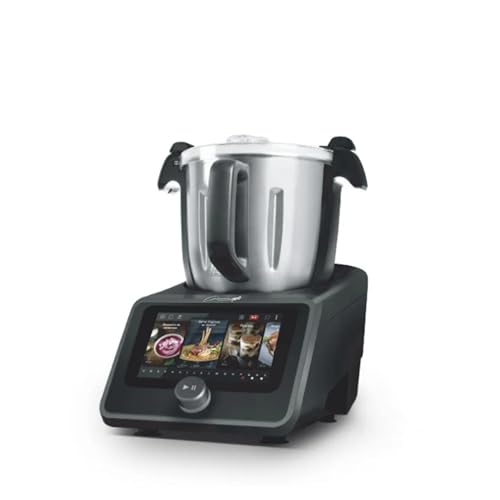
Optimum Thermocook Pro M 3.0, 2400W, 7-inch Screen, 3 Litre Bowl
ASIN B0FPWB4JR4 • $1,308.00 • Sold by Froothie Australia on Amazon AU
The Thermocook Pro M 3.0 is the closest thing to a Thermomix on Amazon AU. It's $1,308 on Amazon AU at time of writing, sold by Froothie Australia, the Australian company behind the Optimum brand, and it's #46 in Amazon AU's Electric Pressure Cookers category. It lists a 2,400W motor, a 7-inch colour touchscreen, 12 pre-set programs including boil, steam, knead and slow cook, plus DIY manual control and a 3 litre bowl. The model is TCPROM3.0. It's silver, and the warranty is listed as two years, sold through an Australian company. Froothie also sells it bundled with a sliding board for $1,398, and as a 10-inch screen version at a higher price.
The accessories are where it earns its price. The listing says it comes with three steaming baskets, a stainless steel blade assembly, a butterfly whisk, a stirring paddle, a spatula and a slicer and shredder plate. That lets it knead, whisk, steam and stir as well as chop and blend. It gives access to more than 1,200 guided recipes through its app-chef, with ongoing software updates and seasonal presets. The listing also names overload and overheat protection, a high-temperature warning and a lid safety lock, which are the three protections I'd want on a machine this powerful. It also has an auto-clean mode, and the parts are listed as dishwasher safe.
At 2,400W it needs its own wall socket, never a powerboard. The listing doesn't state the temperature range, the scale accuracy or the weight. Hand-wash the blade assembly to make the seal last. Wipe the screen dry after cooking. Keep the steam baskets and accessories together so nothing goes missing. Being sold by Froothie's AU company keeps the warranty local, which matters on a machine this complex. Check the scale against a known weight now and then, and recalibrate it if it drifts. For the most complete Thermomix alternative here, it's the one.
Honest caveats: Honest caveats: at 2,400W it must have its own wall socket. The listing doesn't state the temperature range, the scale accuracy or the weight. It's the most expensive pick by far. The guided recipes rely on its app. The rank is in a pressure cooker category.
Best for: Cooks who want one machine that weighs, chops, kneads, steams and cooks, closest to a Thermomix.
Power: 2,400W • Screen: 7-inch colour touchscreen • Bowl: 3 litres • Programs: 12 presets plus manual • Accessories: 3 steam baskets, whisk, paddle, slicer plate • Safety: Overload, overheat, lid lock • Warranty: 2 years (listed) • Seller: Froothie Australia • Rank: #46 in Electric Pressure Cookers (Amazon AU)
View on Amazon AU
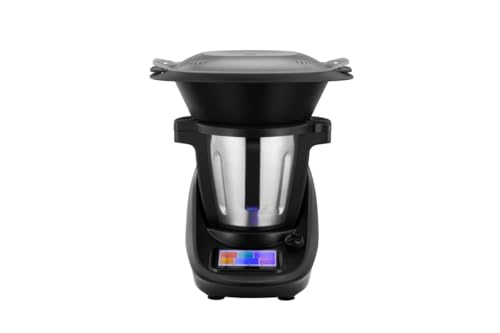
Kogan SmarterHome ThermoBlend All-In-One Food Processor and Cooker
ASIN B0F92PP2MH • $384.00 • Sold by KOGAN on Amazon AU
The Kogan ThermoBlend is the full cooking food processor for a lot less money. It's $384 on Amazon AU at time of writing, sold by KOGAN, the Australian online retailer that owns the brand, and it's #257 in Amazon AU's Food Processors category. It lists 11 functions including cook, steam, grind, whisk and knead, a temperature range of 37 to 180°C, a 5-inch touchscreen, 10 speeds from 60 to 7,000rpm and a 4.7 litre stainless steel jug. The model is KASMPRSCNXA. The listing gives a size of 440 by 272 by 305mm without the steamer and a weight of about 7.3kg. It's black, and the warranty is listed as one year.
The temperature range is the best stated here. At 37°C it can prove dough, and at 180°C it can brown onions and garlic properly, which a lot of heated blenders can't do because they top out at 100°C. The slowest speed of 60rpm is slow enough to stir a risotto without chopping the rice, and 7,000rpm is fast enough for smooth soups. The 4.7 litre jug is the biggest stated capacity here, and it's dishwasher safe. You can set speed, time and temperature by hand on the touchscreen, so it isn't tied to an app. Kogan has a large range of kitchen appliances in Australia, so support is local and parts are easier to chase.
The listing doesn't state the wattage, whether it has built-in scales, the lid lock or any overheat protection, so read the manual. The one-year warranty is the shortest here. Its rank is the lowest of the four. Hand-wash the blade assembly, and never plunge the hot jug into cold water. Plug it into its own wall socket. Clean the bowl base after every hot recipe so food doesn't scorch onto the sensor. Kogan selling it directly means a return goes straight back to the brand. For a full cooking machine at under a third of the Thermocook's price, it's the value pick.
Honest caveats: Honest caveats: the listing doesn't state the wattage, the scales, a lid lock or overheat protection. The warranty is one year, the shortest here. Its sales rank is the lowest of the four. It's sold by Kogan through the marketplace, so returns go through Kogan.
Best for: Cooks who want a full Thermomix-style machine with a wide temperature range on a tighter budget.
Functions: 11, incl. cook, steam, knead • Temperature: 37 to 180°C • Speeds: 10, 60 to 7,000rpm • Jug: 4.7L stainless steel • Screen: 5-inch touchscreen • Size: 440 x 272 x 305mm, about 7.3kg • Model: KASMPRSCNXA • Seller: KOGAN • Rank: #257 in Food Processors (Amazon AU)
View on Amazon AU
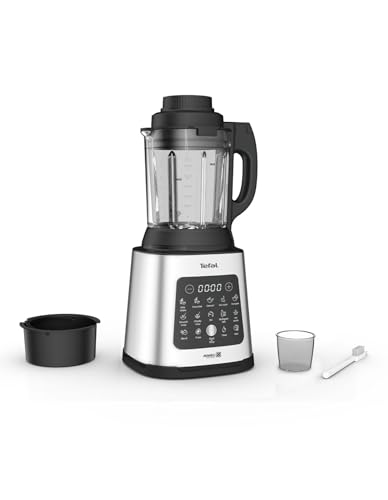
Tefal Perfectmix Cook BL83SD Heated Blender, 1400W, 10 Programmes, Glass Jar
ASIN B0FYB4RB1J • $306.24 • Ships from Amazon AU
The Tefal Perfectmix Cook is the heated blender I'd look at first. It's $306 on Amazon AU at time of writing, sold by Amazon AU, and it's #122 in Amazon AU's Jug Blenders category. It lists a 1,400W motor, Tefal's Powelix blades, 10 automatic programmes split into four cold and six hot, a glass jar and a touchscreen. The model is BL83SD, which matches the title. It's black, the listing gives a weight of about 5.8kg, and the size is 45.6 by 21.2 by 23.9cm. Tefal is a big brand with a long history of small appliances in Australia, which usually means parts and service are easier to find. Amazon AU sells it directly.
Two things set it apart from the other heated blender. First, it comes with a steam basket that turns the jar into a steamer, so it can steam vegetables or fish as well as make soup. Second, the blades are removable, which makes cleaning around the seal at the bottom of the jar much easier, and that seal is the part that usually fails. The listing also names a built-in air cooling system for the motor, which matters on a machine that heats and blends at the same time. The glass jar won't scratch or stain the way plastic does, and it holds up better to hot soups. It also lists a deep-clean function.
It doesn't knead, weigh or stir slowly, so it isn't a full Thermomix alternative. The listing doesn't state the jar capacity, the temperature range or the warranty. Hand-wash the blade assembly. Let the jar cool before you wash it, and check the seal for wear every few months. Amazon AU selling it makes returns simple. Don't run it empty, and keep the base dry. Store it with the lid off so the jar doesn't trap smells. Let hot soup cool a little before blending on high, because steam pressure can lift the lid. For soups, sauces and steaming in one jug, it's the best value here.
Honest caveats: Honest caveats: it doesn't knead, weigh or stir slowly like a full cooking machine. The listing doesn't state the jar capacity, the temperature range or the warranty. The glass jar is heavy. Some listing claims about cleaning are lab results I can't check.
Best for: People who mostly make soups, sauces and smoothies and want steaming as well.
Power: 1,400W • Programmes: 10 (4 cold, 6 hot) • Jar: Glass • Extras: Steam basket, removable blades • Cooling: Built-in motor air cooling • Size: 45.6 x 21.2 x 23.9cm, about 5.8kg • Model: BL83SD • Seller: Amazon AU • Rank: #122 in Jug Blenders (Amazon AU)
View on Amazon AU
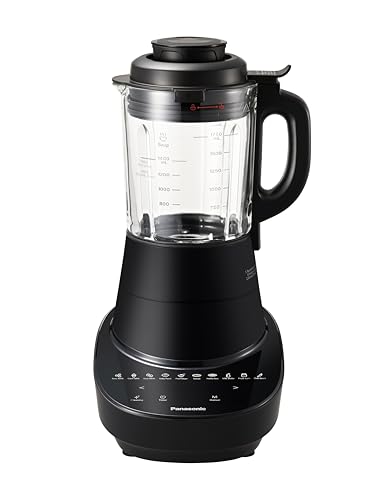
Panasonic All-in-One Smart Hot and Cold Blender, 10 Auto Menus (MX-HG6401KST)
ASIN B0F6XB9415 • $263.20 • Ships from Amazon AU
The Panasonic is the best-selling machine here and the lowest priced. It's $263 on Amazon AU at time of writing, sold by Amazon AU, and it's #11 in Amazon AU's Baby Food Blenders, Food Processors and Presses category. It lists 10 automatic menus for hot and cold recipes with heating up to 100°C, a manual mode with 12 speed steps, a keep-warm mode at about 55°C for up to six hours and a timer you can set from two to 12 hours. The model is MX-HG6401KST. It's black, the listing gives a weight of about 4.5kg, and the warranty is listed as two years from the manufacturer, longer than most heated blenders.
The safety list is the longest of any pick. It shuts off if the lid is opened while it's running, it powers off if the jug is lifted off the base, and its thermostat stops it burning if it's switched on with an empty jug. It also includes two anti-spill stoppers to stop hot liquid boiling over. That's exactly the set of protections I'd want on a heated blender, because the faults that bring these in are usually from running dry or spilling into the base. The blade is a three-layer, 8-fin stainless steel head, and Panasonic says the jug's grooves keep food moving so you don't need to strain it. The glass jug serves five to six people, and the cleaning programme uses hot water at about 70°C.
It only heats to 100°C, so it can't brown onions or knead dough. The listing doesn't state the wattage or the jug capacity in litres. Run the cleaning programme after every hot recipe, then rinse the blades by hand. Keep the base dry, and wipe the jug contacts underneath if it ever stops sensing the jug. Use the timer only with recipes Panasonic lists for it. Amazon AU selling it keeps returns simple, and Panasonic's two-year warranty covers the heater. For a heated blender with the most safety features at the lowest price here, it's the easy choice.
Honest caveats: Honest caveats: it only heats to about 100°C, so it won't brown or knead. The listing doesn't state the wattage or the jug capacity in litres. Its rank is in a baby food category, which makes it hard to compare. It doesn't weigh ingredients.
Best for: Households wanting soups, porridge and plant milks with timers and the most safety cut-outs.
Heating: Up to 100°C • Menus: 10 automatic, 12-step manual speed • Keep warm: About 55°C, up to 6 hours • Timer: 2 to 12 hours • Safety: Lid and jug cut-outs, dry-run thermostat • Warranty: 2 years, manufacturer (listed) • Model: MX-HG6401KST • Seller: Amazon AU • Rank: #11 in Baby Food Blenders, Food Processors & Presses (Amazon AU)
View on Amazon AUSide-by-side comparison
| Product | Price | Best for |
|---|---|---|
| Panasonic All-in-One Smart Hot & Cold… | ~$263 | |
| BL83SD TEFAL Perfectmix Cook | ~$306 | |
| Kogan SmarterHome™ ThermoBlend All-In-One… | ~$384 | |
| Thermocook Pro M 3.0 | 2400W | 7” Screen… | ~$1,308 |
What we see fail in the workshop: cooking food processors
Cooking food processors put a motor, a heater, a temperature sensor, scales and a touchscreen in one box that gets splashed and washed every day. The faults that bring them in follow from that. Leaking blade seals let liquid into the base, temperature sensors drift until food scorches, and lid microswitches stop the machine starting. Most of them start small and get expensive if you keep using the machine.
Leaking blade seals and wet bases
The seal where the blade shaft passes through the bottom of the bowl wears with heat, hard ingredients and dishwasher detergent. When it leaks, liquid runs down the shaft into the base and onto the motor, the heater connections and the control board. The first signs are a sticky ring under the bowl, a burnt smell from the base or the machine tripping the power. Stop using it as soon as you notice, unplug it and let it dry. A seal is a small part, but a board that's been sitting in soup is a much bigger repair.
Temperature sensors and scorched bowls
The heater is controlled by a sensor reading the base of the bowl. When burnt-on food builds up, or the sensor drifts with age, the machine reads the wrong temperature. It either undercooks, or it keeps heating and scorches the base until the thermal fuse trips and the heater stops working altogether. A machine that suddenly won't heat at all often has a blown thermal fuse, and the fuse blew for a reason. Cleaning the bowl base properly after every hot recipe prevents most of this, and a sensor or fuse is usually a reasonable repair.
Lid microswitches and dead screens
The lid lock is a microswitch that only lets the motor run once the lid is closed. Steam and splashes get into it, and the machine stops mid-recipe or won't start at all because it thinks the lid is open. Cleaning around the lid tabs often fixes it, and the switch itself is usually a standard part. Touchscreens fail in a similar way when water creeps in at the edges from wiping with a wet cloth. Wipe screens with a barely damp cloth and dry them straight away, and never force or tape a lid switch.
Decision tree: which one should you actually buy?
- Want the closest thing to a Thermomix? → The Thermocook Pro M 3.0 at $1,308, with 2,400W, a 7-inch screen and a full set of accessories.
- Want a full cooking machine for a lot less? → The Kogan ThermoBlend at $384, with a 37 to 180°C range and a 4.7 litre jug.
- Mostly making soups and sauces, and want steaming too? → The Tefal Perfectmix Cook at $306, a 1,400W heated blender with a steam basket.
- Want the most safety cut-outs and timers? → The Panasonic MX-HG6401KST at $263, with lid, jug and dry-run protection.
- Leaking base, won't heat or stops mid-recipe? → Unplug it and let it dry. Bring it into our Erina workshop and we'll check the seal, the sensor and the lid switch, and tell you whether it's worth fixing before you spend anything.
Frequently asked questions
What is the best Thermomix alternative in Australia?
On Amazon AU, the Thermocook Pro M 3.0 is the closest match, with a 2,400W motor, a 7-inch touchscreen, 12 programs, guided recipes and a full set of accessories including a whisk, paddle and steam baskets. It's sold by Froothie Australia with a two-year warranty. If you want a full cooking machine for much less, the Kogan ThermoBlend lists a 37 to 180°C range and a 4.7 litre jug. Thermomix itself is only sold through its own consultants, not on Amazon.
Is a heated blender the same as a cooking food processor?
Not quite. A heated blender, like the Tefal Perfectmix Cook or the Panasonic, heats and blends, so it's very good at soups, sauces and plant milks. A full cooking food processor adds slow speeds and reverse, so it can stir without chopping, knead dough and stir a risotto, and usually adds scales. The Thermocook and Kogan in this guide are full cooking machines. If you mostly make soup, a heated blender is the simpler choice.
Can I plug a 2,400W kitchen machine into a powerboard?
It's best not to. A standard Australian 10A socket supplies up to about 2,400W, so a 2,400W machine on a powerboard with a kettle or toaster can trip the board's overload or the circuit breaker, and an overloaded powerboard can overheat. Plug anything over about 2,000W straight into its own wall socket. If the plug or socket gets warm, stop using it and have an electrician check the socket. The Thermocook in this guide lists 2,400W, so it's the one to watch.
Why is my cooking food processor leaking from the bottom?
Usually the seal where the blade shaft goes through the bottom of the bowl has worn. Heat, hard ingredients and dishwasher detergent all wear it. Liquid then runs down into the base, where the motor, heater connections and control board are. Stop using it, unplug it and let it dry out, then replace the seal or the blade assembly. Hand-washing the blade assembly instead of using the dishwasher makes the seal last longer.
Do I need the app to use a Thermomix alternative?
Usually not, but check before you buy. The Thermocook gives guided recipes through its app-chef, which is part of what you pay for, but all four machines in this guide list manual control of speed, time or temperature as well as programs. If the company ever stops supporting the app, a machine with full manual control will still cook. Make sure you can set the temperature and speed from the machine itself.
How much power does a cooking food processor use?
Less than the wattage suggests, because the heater cycles on and off once it reaches temperature. As an example, a 2,400W machine running flat out for 30 minutes would use 1.2kWh, about 40c at roughly 33c/kWh. Most recipes use the heater at full power for only part of that time. An energy-monitoring smart plug will show you exactly what your machine draws for each recipe. Heated blenders at 1,000 to 1,400W use even less for a typical soup.
Related buying guides
Cooking machine leaking, not heating or won't start?
Most cooking food processor faults are worn blade seals letting liquid into the base, temperature sensors and thermal fuses after scorching, or lid microswitches full of steam. Bring it into our Erina workshop and we'll check the seal, the sensor and the board, and tell you whether it's worth fixing before you spend anything.
Visit our Erina workshop Book Online