Prices from Amazon AU, updated daily. Swipe or use the arrows for more.
Disclosure: This article contains affiliate links to amazon.com.au. If you buy through one of these links iFix may earn a small commission at no extra cost to you. It doesn't change which products we recommend. We focus on what actually lasts based on 16 years of repair-shop experience.
Quick summary8 picks
- Entry PickKitchenAid KFP0719 Food Processor Contour… about$199.99
- Kenwood MultiPro Express Food Processor… about$236.951000W.
- Ninja Detect Kitchen System Power Blender +… about$266
- Kenwood FDM73.480SS MultiPro One Touch Food… about$277.951000W.
- KitchenAid KFP1319 Food Processor Empire… about$369
- Breville BFP610BSS the Kitchen Wizz 9 Food… about$379
- Kenwood MultiPro XL Weigh+ Food Processor… about$397.951000W.
- Most PremiumBreville BFP638BSS Paradice 9 Food… about$444
Food processor, blender or stand mixer
A food processor does the dry and chunky jobs: slicing, grating, dicing, chopping and making pastry or a small batch of dough. A blender is built around liquid, with a tall jug and blades that pull food down into a vortex, which is why it's better at smoothies and soups and worse at grating a block of cheese. A stand mixer is for whisking, creaming and kneading bigger batches. There's overlap, and some of the machines here try to do two of those jobs, but it helps to know which one you'll actually use most before you buy.
If most of what you make is bread, a food processor is the wrong tool. Kneading is hard work for a small motor, and our bread maker guide or a proper mixer from our KitchenAid and Kenwood mixer picks will handle it with far less strain. Where a food processor earns its place is vegetable prep for a family, coleslaw and salads, pastry, pesto and dips, and grating in a minute what would take you ten by hand.
I've picked five machines here from Kenwood, KitchenAid, Ninja and Breville, all sold and shipped by Amazon AU, between about $200 and $444 at time of writing. Two are classic food processors with a bowl and a feed tube. Two are combination machines that add a blender jug. One is a premium processor with a dicing kit and a long motor warranty. I've judged them on bowl size, what the listing says about the motor, the discs and blades in the box, and the parts that wear out.
Bowl size: what 1.7 and 3 litres actually hold
Bowl capacity is the first number to check, and it's quoted in cups or litres depending on the brand. The KitchenAid here is a 7-cup bowl, which the listing gives as 1.7 litres. The Breville is a 9-cup bowl, roughly 2.1 litres. Both Kenwoods have a 3 litre bowl. Those numbers are the total volume of the bowl, and the amount you can actually process is less, because liquids leak past the central stem if you overfill and solids need space to move around the blade.
For one or two people, a 1.7 litre bowl is plenty for pesto, a batch of hummus or grating cheese for the week. For a family, a 3 litre bowl means you can slice a whole cabbage or grate enough carrot for a big salad without emptying it halfway through. Bigger isn't always better, though. A large bowl with a small amount of food in it chops unevenly, because the blade spins under the food instead of through it. If you mostly make small batches, a mini bowl insert matters more than total size.
Then think about where it lives. A food processor that comes out of the cupboard gets used. One that lives at the back of a high shelf usually doesn't. The KitchenAid stands about 39 centimetres tall according to its listing, and the Ninja about 44 centimetres, so measure the gap under your overhead cupboards before you buy. Storage cases, in-bowl storage and caddies for the discs make a bigger difference to how often you'll use it than an extra speed setting.
Motors, watts and what actually stalls
Wattage is the number on every box, and it tells you less than you'd think. Both Kenwoods list a 1000W motor. The KitchenAid, Ninja and Breville listings don't give a wattage at all. Watts are what the motor draws from the wall, not how much torque reaches the blade, and two machines with the same rating can feel very different when you push a block of cold butter through pastry. Gearing, blade design and how the motor is cooled matter as much as the headline number.
Most domestic food processors use a brushed universal motor, which is light, fast and inexpensive to make, and wears its carbon brushes slowly over the years. The Breville is the exception here. Its listing describes a brushless induction motor with direct drive and high torque, and Breville backs it with a 30 year motor warranty. Induction motors run slower and heavier, but they have no brushes to wear out, and that's a large part of why the warranty can be that long. In my experience it's the better design for heavy use.
Every one of these machines should have a thermal cutout that stops the motor before it overheats. When a processor stops mid-job and won't restart for twenty minutes, that's usually the cutout doing its job rather than a fault. It's most common when kneading stiff dough or processing a big batch of something dense. Let it cool with the lid off, then cut the batch in half. Pushing a hot motor straight back to work is how windings and brushes get cooked.
Running cost is small. A 1000W motor flat out at the Australian average tariff of roughly 33c per kWh costs about 33 cents an hour, and you'll rarely run one for more than a few minutes at a time. That makes the purchase price and the life of the motor far more important than the power bill. A machine that lasts ten years is worth more than one that saves a few dollars on the box and needs replacing after three.
The lid interlock is the part that fails
Every food processor has a safety interlock that stops the motor unless the bowl and lid are locked in place. Usually it's a plastic tab on the lid or bowl that pushes a rod down through the handle to a microswitch in the base. It's a simple design and it's there for a good reason, because a spinning blade with the lid off is how people lose fingertips. It's also the single most common reason a food processor that looks perfectly fine just won't start.
The tab is thin plastic, and it takes a beating every time the lid is twisted on and off. Drop the lid, put it through a hot dishwasher cycle a few hundred times, or force it on at an angle, and the tab cracks or wears short. Then it doesn't push the switch far enough and the machine stays dead. The fix is nearly always a new lid or bowl rather than anything electrical, which is why it's worth checking that spare lids and bowls are sold in Australia for the model you choose.
Never bypass the interlock. I see the occasional machine where someone has jammed a toothpick or a bit of plastic into the switch to make it run with a cracked lid, and that's really dangerous with a blade that can spin up to speed with your hand in the bowl. If the interlock is the problem, replace the lid or bowl. If you've replaced them and it still won't start, the microswitch or the wiring in the base may have failed, and that's a repair job.
Discs, blades and dicing kits
What comes in the box decides what the machine can actually do. Every pick here has an S-shaped chopping blade, and most have a reversible slicing and shredding disc. The KitchenAid's disc is 4mm. The Kenwood FDM73 has a 4mm reversible grating disc as well. The Breville goes further, with an adjustable slicer that has 15 thickness settings, a reversible coarse and fine shredder and a 12mm dicing kit. Kenwood's Express Dice attachment on the FDP65 does a similar job to the Breville's dicer, slicing and dicing straight onto a plate.
Dicing kits are the feature that sells the more expensive machines, and they're useful if you prep a lot of onions, potatoes or salad vegetables. They're also the fiddliest part to clean, because the grid traps food, and the blade behind it is very sharp. Use the cleaning tool that comes with it, never your fingers. Slicing discs blunt slowly over a few years, especially if they go through the dishwasher with other cutlery rattling against them, so check that replacements are easy to buy.
The feed tube matters more than people expect. The Breville has a 120mm wide chute that takes a whole potato or a block of cheese without cutting it down first, and the Kenwood FDP65 has what the listing calls a duo feed tube. A narrow tube means more prep before the processor even starts, which takes away some of the point of owning one. If you're choosing between two machines with similar bowls, the wider chute is usually the one you'll be happier with day to day.
Dough: what these machines can knead
Most of these listings mention kneading, and most of them include a dough blade or kneading tool. None of them state a maximum flour weight or dough batch size, though, and that's the number you need. A food processor kneads fast and hard, which is great for a small pizza dough or pastry, but it generates heat quickly and puts a lot of load on the motor and the drive coupling. That's a different job from a stand mixer slowly working a big batch of bread dough.
My advice is to keep dough batches small, use the dough blade rather than the S-blade, and stop as soon as the dough comes together into a ball. If the motor note drops sharply or the base starts to smell hot, stop and let it cool. Most stalled processors that come in after a dough session have tripped their thermal cutout or worn the plastic drive coupling between the motor and the bowl, rather than burning out the motor itself, and both of those are avoidable.
The Kenwood FDM73 has a Knead Dough preset, which takes some of the guesswork out of timing, and the Breville's induction motor is the one I'd trust most with regular dough. The Ninja is a blender first, and while its listing says the processor bowl can mix dough, I'd keep that to small batches. If you bake bread every week, put the money into a mixer and keep the processor for vegetables, pastry and dips, where it's at its best.
Cleaning, storage and dishwasher wear
The Kenwood FDP65 listing says everything is dishwasher safe, the Breville says its bowl and lid are, and the others are less specific. Dishwasher safe doesn't mean the dishwasher is good for them, though. Clear plastic bowls go cloudy and brittle over years of hot cycles and strong detergent, and the thin interlock tabs on lids are the first thing to crack. Washing the bowl and lid by hand in warm water takes a couple of minutes and adds years to them, while the discs can go in the top rack.
Storage is the other half of keeping a processor in use. The Kenwood FDP65 comes with a storage bag for its attachments. The KitchenAid has in-bowl storage and a smaller footprint. The Breville has a storage caddy that houses the dicing kit, blades and discs inside the bowl. Loose sharp discs rattling around in a drawer get chipped, and they're a risk to whoever reaches in next. A dedicated place for the blades makes the machine safer and makes it last longer too.
Keep an eye on the power cord as well. Cords on kitchen appliances get pinched behind the base, wrapped too tightly for storage and splashed with water, and a damaged cord is a real shock risk. Check that the plug and cord carry an RCM mark, plug the machine straight into a wall socket rather than a crowded powerboard, and replace any cord with cracked insulation. Our page on power use around the home covers how little these appliances cost to run.
Warranty and spare parts in Australia
Warranty terms vary more than the prices do. The Kenwood FDP65 listing gives a 5 year warranty. The Breville gives 2 years on the product and 30 years on the motor. The KitchenAid, Ninja and Kenwood FDM73 listings don't state their warranty terms, so check the manufacturer's Australian website before you buy. Australian Consumer Law also gives you rights beyond the written warranty for faults that a product shouldn't have at its age and price, whatever the box says.
Spare parts are where the big brands earn their keep. Kenwood, KitchenAid and Breville all sell replacement bowls, lids and blades in Australia for their main models, and that's what turns a cracked lid from a reason to buy a new machine into a small fix. Before you choose, search for a replacement lid for the exact model number. The model codes on these listings, such as FDP65.890SI, FDM73480SS, 5KFP0719ACU, TB401ANZ and BFP638BSS2IAN1, are what you'll need to quote.
If a processor stops working outside the interlock and the cutout, it's usually the drive coupling, the motor brushes, the speed switch or a failed control board. Some of those are worth fixing on a good machine and some aren't, depending on parts and the machine's age. Bring it to our Erina workshop and we'll test it and tell you whether it's worth repairing before you spend anything. As an alternative to buying new, a replacement bowl or lid is usually the first thing to try.
The 5 picks, $200 to $444
Prices are Amazon AU at time of writing (29 October 2026) and move week to week. Ranks are Amazon AU category sales ranks, checked the same day.

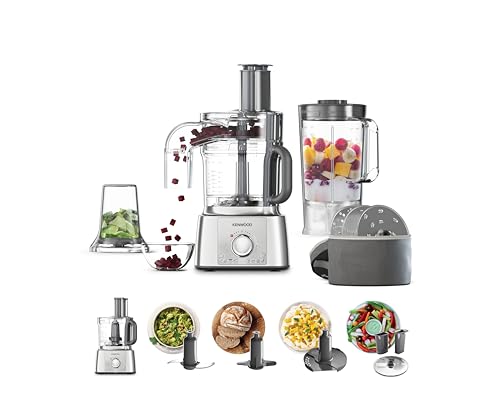
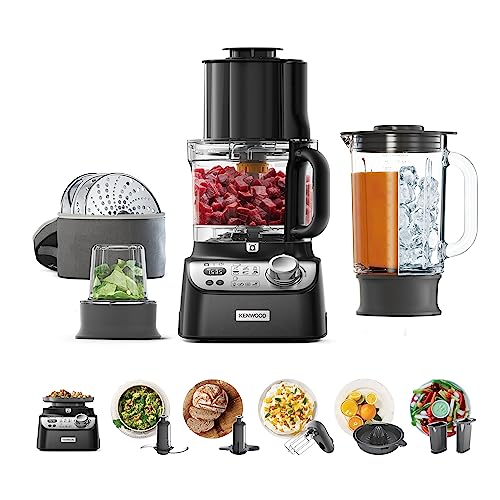
Kenwood MultiPro Express FDP65.890SI Food Processor, 1000W, 3L
ASIN B08WCQ76L8 • $236.95 • Ships from Amazon AU
The Kenwood MultiPro Express FDP65.890SI is the best-ranked food processor I found on Amazon AU, sitting at #10 in Food Processors, and it's sold and shipped by Amazon AU at $236.95 at time of writing. That rank is shared with the white FDP65.740WH version of the same machine, which comes with a blender bowl instead. It has a 1000W motor with two speeds and a pulse function, set with a dial the listing calls SpeedSelect. The bowl is 3 litres, which is a proper family size for slicing a cabbage or grating a pile of carrot in one go. The listing says it can chop, grate, slice, dice, blend, knead, puree and whisk. For most kitchens that want one capable processor, this is where I'd start.
What sets it apart from a basic processor is the Express Serve and Express Dice attachments. Express Serve slices and grates straight onto a plate or into a pan, so the main bowl stays clean, and Express Dice cuts vegetables into cubes the same way. The listing mentions micro-serrated blades and a duo feed tube for different sizes of food. Kenwood says everything is dishwasher safe, and it comes with a SmartStore storage bag to keep the attachments together. The part number is FDP65.890SI, and the manufacturer data on the listing gives a 5 year warranty, which is the longest whole-product cover in this guide. That's a strong signal from Kenwood about how long it expects the machine to last.
The caveats are mostly things the listing doesn't say. There's no maximum dough weight, no blender jug size and no detail on the motor type, so treat kneading as an occasional job for small batches. The dicing attachment traps food in its grid and needs the cleaning tool, not your fingers. I'd wash the bowl and lid by hand to protect the interlock tabs, even though they're rated dishwasher safe. Check that a spare lid is available in Australia before you buy, since that's the part that usually fails first. The listing dimensions look like packaging measurements, so measure your cupboard space separately. For the money, it's the most complete machine here.
Honest caveats: The listing doesn't give a maximum dough weight, the motor type or the size of any blender jug. The dicing grid is fiddly to clean. Interlock tabs on any processor lid wear with hot dishwasher cycles, so hand washing is kinder. The rank is shared with the FDP65.740WH, which comes with a blender bowl.
Best for: Families who want one 3 litre processor with dicing and plate-slicing attachments and a long warranty.
Motor: 1000W, 2 speeds plus pulse • Bowl: 3 litres • Attachments: Express Serve, Express Dice, micro-serrated blades • Feed tube: Duo feed tube • Cleaning: All parts dishwasher safe (per listing) • Warranty: 5 years (per listing) • Model: FDP65.890SI • Rank: #10 in Food Processors (Amazon AU, listing shared with FDP65.740WH)
View on Amazon AU
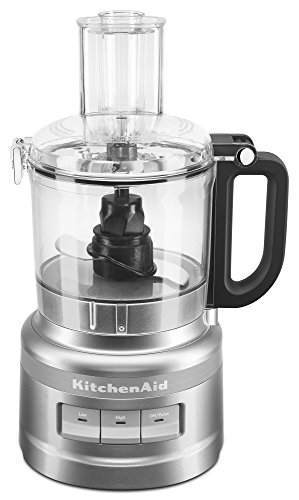
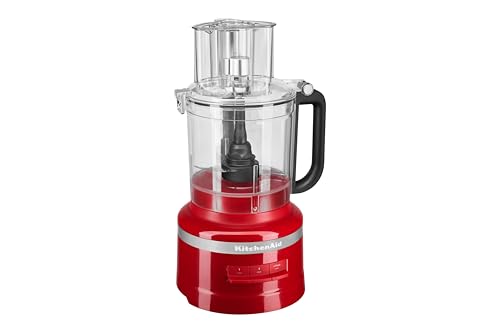
KitchenAid KFP0719 Food Processor, 7 Cup (1.7L), Contour Silver
ASIN B0DJ265JDH • $199.99 • Ships from Amazon AU
The KitchenAid KFP0719 is the compact pick, at $199.99 at time of writing, sold and shipped by Amazon AU. It ranks #22 in Food Processors, and the listing gives a release date of November 2024, so it's a current model rather than old stock. The bowl is 7 cups, which KitchenAid gives as 1.7 litres, and that's the right size for one or two people making pesto, dips, pastry or grated cheese for the week. It has three speed options, high, low and pulse, worked by easy-press paddles with illuminated LED controls. The part number on the listing is 5KFP0719ACU. If you want a small, well-made processor rather than a kitchen system, this is the one I'd look at.
The design is built around ease of use. KitchenAid says the lid and base are twist-free, which means fewer of the twisting, locking movements that wear out interlock tabs on other machines. It comes with a multi-purpose blade and a reversible 4mm slicing and shredding disc, and the listing says it can chop, shred, puree, slice and knead. The finishes are smooth with rounded transitions, which makes it easier to clean than processors with lots of ridges. Accessories store inside the bowl, and the listing says it has a reduced footprint. It stands about 39 centimetres tall and weighs about 3.1 kilograms according to the listing data, so it should fit under most overhead cupboards.
The limits come with the size. At 1.7 litres it's too small for a family batch of coleslaw, and you'll be emptying it often if you prep for four or more. It has one slicing and shredding disc at a single 4mm thickness, with no dicing kit and no adjustable slicer. The listing doesn't state a motor wattage or warranty term, so check KitchenAid's Australian site for both. I'd still hand wash the lid, even with the twist-free design. If you outgrow it, the Kenwood is the step up. For small households, though, it's an easy machine to live with and keep out on the counter.
Honest caveats: The 1.7 litre bowl is small for families. It comes with one 4mm reversible disc and no dicing kit or adjustable slicer. Motor wattage and warranty term aren't stated on the listing. Kneading is fine for small pastry batches but it isn't a bread machine.
Best for: One or two people who want a compact, easy-to-clean processor for dips, pastry and grating.
Bowl: 7 cups (1.7 litres) • Speeds: High, low and pulse • Controls: Paddles with illuminated LED • Included: Multi-purpose blade, reversible 4mm slice/shred disc • Height: About 39 cm (listing data) • Weight: About 3.1 kg (listing data) • Part number: 5KFP0719ACU • Rank: #22 in Food Processors (Amazon AU)
View on Amazon AU
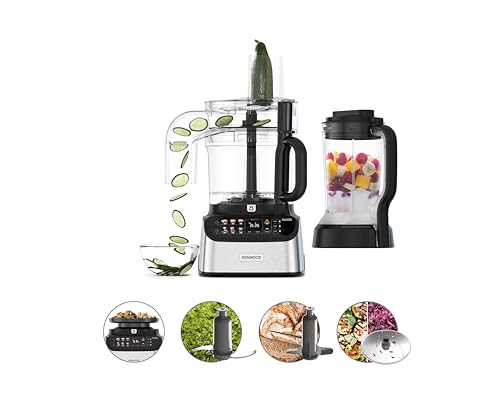
Kenwood MultiPro One Touch FDM73.480SS Food Processor and Blender
ASIN B0DBVN6XLM • $277.95 • Ships from Amazon AU
The Kenwood MultiPro One Touch FDM73.480SS is the processor-and-blender pick, at $277.95 at time of writing, sold and shipped by Amazon AU. It ranks #17 in Food Processors. Like the FDP65 it has a 1000W motor and a 3 litre bowl, but it adds a 1.5 litre plastic blender jug and an EasyWeigh digital scale built into the base. The scale lets you weigh straight into the bowl as you add ingredients, or use it on its own with the included weighing tray. The listing gives six one-touch presets: Mix, Puree, Knead Dough, Ice Crush, Blend and Clean. If you want one base that handles both processing and blending without guessing speeds, this is the one to look at.
The presets are what make it different. Instead of choosing a speed and a time, you pick the job and the machine runs a set programme, which is handy for things like dough, where people tend to over-knead. The listing says it uses EverSharp blades that last longer, and the box includes the 3 litre bowl, the blender jug, an Express Serve attachment for slicing and grating straight onto a plate, a kneading blade, a weighing plate, a 4mm reversible grating disc, a micro-serrated blade and a spatula. It weighs about 4.9 kilograms and stands around 43 centimetres tall according to the listing data. The model code is FDM73480SS. It's a lot of kit for one box, so plan where the jug and discs will live.
There are a few trade-offs. The blender jug is plastic, which is lighter than glass but scratches and goes cloudy over time, and a plastic jug isn't the best choice for blending hot soup. There's no dicing kit, unlike the FDP65. The listing doesn't state a warranty term, so check Kenwood's Australian site. A built-in scale adds electronics to the base, and like any digital control panel, it's one more thing that can fail if liquid gets into it, so wipe spills promptly. Keep dough batches modest even with the preset. For a household that bakes and blends, it's the most convenient base here.
Honest caveats: The blender jug is plastic and not ideal for hot liquids. There's no dicing attachment. Warranty terms aren't stated on the listing. The scale and presets add electronics to the base, so keep liquid away from the control panel. No maximum dough weight is given.
Best for: Cooks who want a processor and blender on one base, with a built-in scale and one-touch presets.
Motor: 1000W • Bowl: 3 litres plus 1.5 litre plastic blender • Presets: Mix, Puree, Knead Dough, Ice Crush, Blend, Clean • Scale: EasyWeigh digital scale with weighing tray • Included: Express Serve, kneading blade, 4mm reversible disc, micro-serrated blade • Weight: About 4.9 kg (listing data) • Model: FDM73480SS • Rank: #17 in Food Processors (Amazon AU)
View on Amazon AU
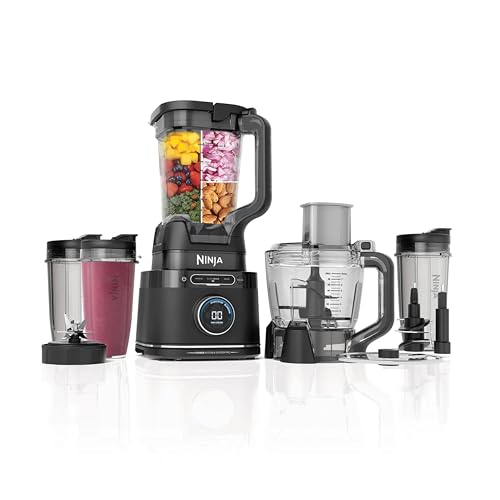
Ninja Detect Kitchen System Power Blender + Processor Pro TB401ANZ
ASIN B0D22DXB1Y • $266 • Ships from Amazon AU
The Ninja Detect Kitchen System TB401ANZ is the best-selling machine in this guide, at #1 in Jug Blenders and #171 across all of Amazon AU, and it's sold and shipped by Amazon AU at $266 at time of writing. It's a blender first, with a 2.1 litre jug, and a food processor bowl that sits on the same base. The listing says it can blend, chop, slice and shred, and it has 10 variable settings for controlling speed and texture. The model code ends in ANZ, which is the Australian and New Zealand version. If smoothies and frozen drinks are as important to you as vegetable prep, this is the combination machine that most people are buying.
Ninja's headline feature is what it calls BlendSense, which the listing says detects the ingredients and adjusts the speed and time automatically. There's also a Liquid Detect alert that tells you when the jug needs more liquid, which is the kind of thing that saves a motor from straining against a dry, packed jug. The processor bowl is there for salsa, chopping and mixing dough, according to the listing. It's a heavy machine, at about 6.4 kilograms and around 44 centimetres tall in the listing data, so it needs a permanent spot on the counter rather than a trip in and out of a cupboard each time. The jug is the part that does most of the work, so treat the processor bowl as a bonus.
The trade-offs are on the processor side. The listing doesn't give the processor bowl's size, a wattage or a warranty term, and it doesn't describe the slicing and shredding discs in any detail, so check the box contents on Ninja's Australian site before you buy. Blender-based systems are usually better at chopping and pureeing than at neat slicing and grating, so if coleslaw and grated cheese are your main jobs, a dedicated processor will do them better. The automatic programmes rely on sensors and electronics in the base, so keep it dry. Keep dough batches small. For smoothie households, it's the right pick.
Honest caveats: The listing doesn't state the processor bowl size, wattage, disc details or warranty term. It's a blender first, so slicing and grating are less refined than on a dedicated processor. It's heavy and tall for cupboard storage. The sensor-driven programmes add electronics to the base.
Best for: Households that want a strong blender for smoothies and frozen drinks with a processor bowl for chopping on the side.
Jug: 2.1 litres • Functions: Blend, chop, slice, shred (per listing) • Settings: 10 variable settings plus BlendSense auto programmes • Sensor: Liquid Detect alert • Weight: About 6.4 kg (listing data) • Height: About 44 cm (listing data) • Model: TB401ANZ • Rank: #1 in Jug Blenders (Amazon AU)
View on Amazon AU
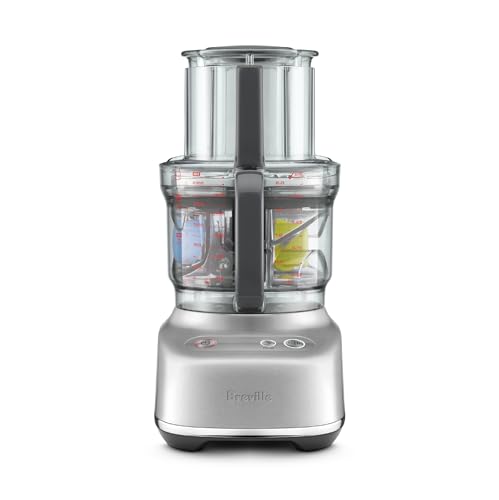
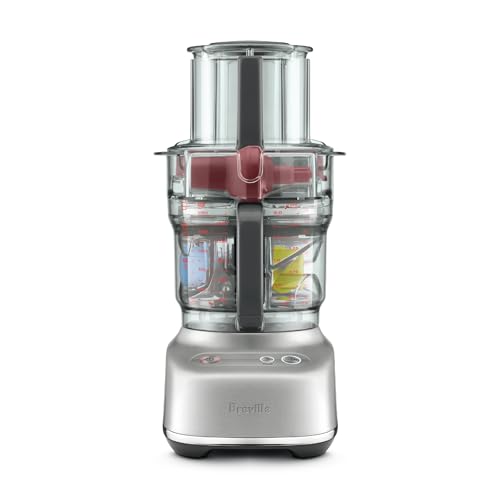
Breville Paradice 9 BFP638BSS Food Processor and Dicer, 9 Cup
ASIN B0CTZJ72ZT • $444 • Ships from Amazon AU
The Breville Paradice 9 BFP638BSS is the premium pick, at $444 at time of writing, sold and shipped by Amazon AU. It ranks #24 in Food Processors, and the same machine is listed in Sea Salt and Black Truffle colours at a higher price, so the brushed stainless version is the one I'd buy. The bowl is 9 cups, about 2.1 litres, which is a mid-size bowl that suits most households. The reason it costs more is the motor: the listing describes a brushless induction motor with direct drive and high torque, and Breville backs it with a 30 year motor warranty on top of the 2 year product warranty. If you want a processor that'll still be running in a decade, this is the one I'd choose.
The kit is the other half of the price. It comes with a 12mm Paradice dicing kit, a large half grid and blade system that the listing says gives more even cubes in a single push when used with the wide chute. That chute is 120mm and takes a whole potato or a block of cheese without trimming. There's an adjustable slicer with 15 thickness settings, a reversible coarse and fine shredder, a dough blade and an S-blade. Everything lives in an integrated storage caddy inside the bowl, and the accessories are colour coded so you can find the right one quickly. Breville says the BPA-free bowl and lid are tough and dishwasher safe.
The listing doesn't state a wattage, which matters less here because an induction motor's torque is the real story. It doesn't give a maximum dough weight either, so keep kneading to sensible batches even with the stronger motor. At 9 cups the bowl is smaller than the Kenwoods' 3 litres, which is worth knowing if you're feeding a big family. The dicing kit is sharp and traps food, so clean it with the supplied tools. The 30 year warranty covers the motor, not the bowl, lid or interlock, so spare lids still matter. For heavy, regular use, it's the best-built processor here.
Honest caveats: Wattage and maximum dough weight aren't stated. The 9-cup bowl is smaller than the Kenwoods' 3 litres. The 30 year warranty covers the motor only; the bowl, lid and interlock are on the 2 year product warranty. Other colours of the same machine cost more.
Best for: Regular cooks who want a brushless induction motor with a very long motor warranty, plus a proper dicing kit.
Motor: Brushless induction, direct drive • Bowl: 9 cups (about 2.1 litres) • Feed chute: 120mm 2-in-1 wide chute • Included: 12mm dicing kit, 15-setting slicer, reversible shredder, dough blade, S-blade • Storage: Integrated caddy inside the bowl • Warranty: 2 years product, 30 years motor (per listing) • Model: BFP638BSS2IAN1 • Rank: #24 in Food Processors (Amazon AU)
View on Amazon AUSide-by-side comparison
What we see fail in the workshop: food processors
Food processors are simple machines, and when they come into the shop it's usually one of three faults. Most of them aren't the motor at all, and most can be avoided with a bit of care in how the machine is used, washed and stored. Here's what usually goes wrong, why it happens and what you can do about it.
Cracked lid tabs and dead interlocks
The most common complaint is a processor that won't start even though the bowl and lid look fine. Nine times out of ten the thin plastic tab that pushes the interlock rod has cracked or worn short, often from hot dishwasher cycles or from forcing the lid on at an angle. The motor and switch are perfectly healthy, the switch just isn't being pressed. The fix is a new lid or bowl for that exact model. Hand wash lids, line them up before twisting, and never jam anything into the interlock to get around it.
Worn drive couplings after heavy dough
Between the motor shaft and the blade there's a drive coupling, and on many machines it's plastic so that it fails before the motor does. Heavy dough, frozen food or a big batch of something dense puts a lot of torque through it, and over time the teeth round off. The first sign is a grinding noise and a blade that slips under load while the motor still spins. Replacing the coupling is usually a modest repair on the bigger brands. Keep dough batches small and cut hard food into pieces first.
Liquid in the base and the controls
Overfilling the bowl lets liquid leak down past the central stem, and over time it finds its way into the base, onto the switch and the control board. Machines with touch controls, presets and built-in scales are the most exposed because they carry more electronics. The usual symptom is a machine that starts on its own, won't respond to buttons or trips the safety switch. Respect the bowl's liquid fill line, wipe the base dry after use and never put the base anywhere near the sink. If liquid has got into the base, unplug it and let it dry out fully before testing it again.
Decision tree: which one should you actually buy?
- Want one family-size processor that does almost everything? → The Kenwood MultiPro Express FDP65.890SI at $236.95 has a 3 litre bowl, dicing and plate-slicing attachments and a 5 year warranty.
- Cooking for one or two and short on space? → The KitchenAid KFP0719 at $199.99 has a 1.7 litre bowl, twist-free lid and in-bowl storage.
- Want a processor and blender on one base with a scale? → The Kenwood MultiPro One Touch FDM73 at $277.95 adds a 1.5 litre blender, a built-in scale and six presets.
- Smoothies matter as much as vegetable prep? → The Ninja Detect Kitchen System TB401ANZ at $266 is the #1 jug blender on Amazon AU, with a processor bowl on the same base.
- Want the motor that lasts longest and a proper dicer? → The Breville Paradice 9 at $444 has a brushless induction motor with a 30 year motor warranty and a 12mm dicing kit.
- Processor won't start or grinds under load? → Check the lid tab first, then bring it to the iFix workshop in Erina and we'll tell you whether it's the interlock, the coupling or the motor before you spend anything.
Frequently asked questions
Why won't my food processor start when everything is locked in place?
The most common cause is the safety interlock. A plastic tab on the lid or bowl pushes a rod down to a switch in the base, and if that tab has cracked or worn short, the switch never closes and the motor won't run. Check the tab for cracks or a chipped tip, and try a different bowl or lid if you have one. If a new lid fixes it, that was the fault. If the machine still won't start with new parts, the switch or wiring in the base may have failed, which needs a repair. Never bypass the interlock to make it run.
How big a food processor do I need?
For one or two people, a 7-cup or 1.7 litre bowl like the KitchenAid KFP0719 handles pesto, dips, pastry and grating for the week. For a family of four or more, a 3 litre bowl like the Kenwoods means you can slice a whole cabbage or grate enough carrot for a big salad without emptying it halfway. The Breville's 9-cup bowl, about 2.1 litres, sits in between. Remember that the usable capacity is less than the total, especially for liquids, which leak past the central stem if you overfill the bowl.
Can a food processor knead bread dough?
Yes, in small batches. Most food processors come with a dough blade and can bring a pizza dough or a small loaf together in a minute or two. They knead fast and hard, though, which heats the dough and puts a lot of load on the motor and drive coupling. None of these listings state a maximum dough weight, so keep batches modest and stop as soon as the dough forms a ball. If you bake bread every week, a stand mixer or a bread maker is the better tool, and the processor can stay on vegetables and pastry.
Is a brushless induction motor worth paying more for?
For heavy, regular use, I think it is. Most food processors use brushed universal motors, which are light and fast but wear their carbon brushes over the years. A brushless induction motor like the one in the Breville Paradice 9 has no brushes to wear, runs with high torque and handles tough jobs with less strain. That's a big part of why Breville can offer a 30 year motor warranty. For occasional use, a good universal motor will last a long time, and the lid and interlock are more likely to fail first anyway.
Are food processor parts dishwasher safe?
Most bowls, lids, blades and discs are rated dishwasher safe, and the Kenwood FDP65 listing says everything is. Being rated safe doesn't mean the dishwasher is kind to them, though. Hot cycles and strong detergents make clear plastic bowls cloudy and brittle over time, and the thin interlock tab on the lid is usually the first thing to crack. Washing the bowl and lid by hand takes a couple of minutes and adds years to them. Discs and blades can go in the top rack, away from cutlery that will chip their edges.
What should I check before buying a food processor?
Check the bowl size against how many people you cook for, and measure the height under your overhead cupboards. Look at what's in the box, especially slicing and shredding discs, a dough blade and any dicing kit. Read the warranty terms, because they vary from 2 years to 5 years for the whole product, and the Breville adds 30 years on its motor. Finally, search for a replacement lid and bowl for the exact model number, because those are the parts that wear out first and the ones you'll most likely need to buy later.
Related buying guides
Food processor dead, slipping or tripping?
Most food processor faults are a cracked lid tab, a worn drive coupling or liquid in the base, and many of them are a part rather than a new machine. Bring it into our Erina workshop and we'll test the interlock, the drive and the motor, then tell you what it needs and what it'll cost before we start any work.
Visit our Erina workshop Book Online