Prices from Amazon AU, updated daily. Swipe or use the arrows for more.
Disclosure: This article contains affiliate links to amazon.com.au. If you buy through one of these links iFix may earn a small commission at no extra cost to you. It doesn't change which products we recommend. We focus on what actually lasts based on 16 years of repair-shop experience.
Quick summary6 picks
- Entry PickNutriBullet Select 1200 about$179
- Ninja Detect Duo Power Blender Pro & Single… about$198.98
- KitchenAid Glass Jar KSB2070 Blender Matte… about$233.951200W.
- Ninja Detect Kitchen System Power Blender +… about$266
- Ninja Stealth IQ Kitchen System Blender +… about$325800W.
- Most PremiumVitamix E310 Explorian High Performance… about$533.95
Jug blender, personal blender or kitchen system
A jug blender is a motor base with a tall jug on top and a blade assembly in the bottom of the jug. It's built for liquid: smoothies, frozen drinks, sauces, soups and batters. A personal blender uses a small cup that screws onto the blades and flips over onto the base, which is fine for one drink but not much else. A kitchen system is a jug blender that also comes with a food processor bowl and cups, so one motor does three jobs.
This guide sticks to jug blenders, because that's what most people mean when they search for a high-speed blender. Some of the picks come with single-serve cups as well, which is handy, but every one of them has a full-size jug. If you only ever make one smoothie before work, a personal blender will do it, and it takes up far less room. If you're feeding a family or making sauces in batches, you want a proper jug.
Kitchen systems sound like good value, and sometimes they are. The catch is that the extra bowls take up cupboard space, and a food processor attachment on a blender base is rarely as good as a proper processor. If you already own a food processor, skip the system. If you don't, the Ninja Stealth IQ in this list is a sensible way to get both, and our food processor guide covers the dedicated machines if you'd rather keep them separate.
What the watts and horsepower numbers mean
Blender boxes love big numbers. You'll see 1200W, 1700W peak or 2.0 horsepower, and they're not always measuring the same thing. A continuous rating is what the motor can sustain, a peak figure is a short burst on startup or under load, and horsepower on a Vitamix is the maker's own measure of motor output. Comparing a peak figure on one box to a continuous one on another doesn't tell you much.
What matters more is how the motor copes under a thick load for a minute or two, because that's when lightweight motors get hot and the thermal cutout trips. A heavier base with good cooling and a well-matched blade usually does better than a light base with a bigger number printed on it. Two of the Ninja models here don't state a wattage on the listing at all, which is a bit annoying, but their sales ranks suggest they're doing the job for a lot of people.
For most households, anything in the 1000 to 1200W range with a decent jug handles frozen fruit and ice without a problem. The extra power on the high-end models shows up in nut butters, very thick frozen desserts and grinding grains, which put a sustained load on the motor. If those are the jobs you care about, it's worth paying for a motor that's built for them, and that's where the Vitamix earns its price.
Jugs: glass, plastic and the seal underneath
Plastic jugs are light, hard to break and suit high-speed blending, which is why Vitamix and Ninja use them. Over time they can scratch and go cloudy, especially if you blend a lot of ice or dry ingredients, but that's cosmetic and doesn't affect how they work. The Vitamix E310's 1.4 litre container is listed as BPA-free, and Vitamix sells spare containers in Australia if one does get badly scratched.
Glass jugs, like the 1.85 litre jar on the KitchenAid KSB2070, don't scratch, don't hold smells and handle hot food well. They're heavier, though, and a glass jug can crack if you pour boiling liquid into a cold jar or drop it into the sink. KitchenAid says its jar is hot and cold resistant, and it uses a drop-down fitting with no twisting, which is easier on the base than screwing a jug on and off.
The part that matters most for long life is underneath: the blade assembly, its bearing and the seal that stops liquid getting past it. When that seal wears, liquid can leak down into the base, and that's when blenders come in with corroded motor connections. If you see liquid under the jug or a sticky ring on the base, stop and check the seal before it becomes an electrical fault. Our page on how water damages electronics explains why that matters.
Ice, frozen fruit and nut butter: where motors struggle
Ice crushing is the job most people test a blender on, and it's actually one of the easier ones for a good motor, as long as there's some liquid in the jug. Dry ice cubes on their own just bounce around the blades and put a lot of strain on the drive. Add a splash of water or juice first and the ice gets pulled down into the blades. The KitchenAid lists an asymmetric blade designed to pull ice to the centre, and an ice crush preset.
Frozen fruit and thick smoothie bowls are harder, because the mixture forms an air pocket around the blades and stops moving. A tamper helps, or a blender that pulses and pauses automatically. The Ninja models here sense the load and adjust speed and timing themselves, which Ninja calls BlendSense on the Detect Duo. That stops a lot of the stalling that makes people run a blender far longer than it needs to.
Nut butter is the real test. It's thick, it heats up and it takes several minutes, which is a sustained load most blenders aren't built for. If you plan to make it often, look for a long warranty and a motor designed for it, like the Vitamix with its five year full warranty. On other models, work in short bursts and let the motor rest. A burning smell during a thick blend is the motor telling you to stop, and listening to it saves the windings.
Blending hot soup safely
Hot liquid in a sealed jug is the one blender job that catches people out. Steam builds pressure under the lid, and when the blades start, the lid can blow off and spray hot soup across the kitchen. The safe way is to let the soup cool a little first, fill the jug no more than halfway, and use a lid with a vent. Hold the lid down with a folded tea towel and start on the lowest speed.
Two picks here are designed with hot blending in mind. The KitchenAid has a suction lid with a heat release vent, and its glass jar is rated for hot food. The NutriBullet Select 1200 has a vented pitcher that its listing says can handle hot contents for soups and drinks. Vitamix says the E310 handles hot soups too. The Ninja listings in this guide don't claim hot blending, so I'd stick to cold and room-temperature recipes in those.
I've left heated soup-maker blenders out of this guide. They have a heating element built into the jug base as well as a motor, which is another part to fail and a different buying decision. They also tend to be harder to clean. If soup is what you're after, a standard blender with a vented lid and a pot on the stove does the same job with less to go wrong.
Noise, and why some blenders are louder
High-speed blenders are loud. Most of the noise comes from the motor and its cooling fan, plus the blades hitting ice or frozen fruit. In an open-plan house or an apartment, an early morning smoothie can wake everyone up. The Ninja Stealth IQ is the pick for this, with a noise-dampening design that Ninja says makes it up to 40 percent quieter, though the listing doesn't say what it's being compared to.
A couple of practical things help with any blender. Put it on a folded tea towel or a silicone mat to stop the vibration going into the counter. Don't run it flat out from the start, ramp up from a low speed. Cut frozen fruit into smaller pieces before it goes in. And keep the base vents clear, because a motor that can't cool runs its fan harder and gets louder, as well as hotter.
If your blender suddenly gets much louder than it used to, or starts to grind or rattle, that's worth paying attention to. It usually means the blade bearing is wearing or the drive coupling is damaged. Catching that early means you might only need a new blade assembly, rather than a coupling that's stripped and taken the motor's drive socket with it.
Cleaning, and what not to put in the dishwasher
Most high-speed blenders clean themselves well enough. Half fill the jug with warm water, add a drop of dish soap and run it for 30 to 60 seconds. The Vitamix lists self-cleaning in 60 seconds this way, and the KitchenAid has a dedicated clean preset. Rinse, let it dry upside down, and you're done for daily use. Do it straight after blending, before anything has a chance to set on the blades.
Check the manual before putting jugs, lids and blades in the dishwasher. Some are dishwasher safe and some aren't, and heat can warp seals and lids or loosen the blade assembly over time. Never put the motor base in water or under a tap. Wipe it with a damp cloth, and make sure it's unplugged first. Water getting into the base is one of the most common reasons we see blenders with burnt-out boards.
Let jugs and lids dry fully before you store them with the lid on. A sealed damp jug grows a smell quickly, especially around the seal and the lid gasket. If a jug or lid starts to hold a smell, a soak in warm water with a bit of bicarb soda usually sorts it out. Keep spare seals in mind too, as they're usually inexpensive and easy to find for the big brands.
Warranty, parts and what I left out
Warranty varies a lot between blenders, and it's a good signal of how long a maker expects the motor to last. Vitamix lists a five year full warranty on the E310. NutriBullet lists one year on the Select 1200. The Ninja and KitchenAid listings in this guide don't state a warranty period, so check the maker's Australian page before you buy. All five picks are new and sold by Amazon AU.
Parts availability matters more on a blender than people think, because the jug, the blade assembly and the seals are all wear parts. The big brands sell replacement jugs and blades in Australia, which means a worn blade doesn't have to mean a new blender. No-name blenders often don't, so when the jug cracks or the coupling strips, the whole thing goes in the bin. That's a big part of why I've stuck to the major brands.
I've left out hand blenders and stick blenders, which are a different tool. I've also skipped heated soup makers, portable USB blenders and renewed units. One Ninja Foodi hot and cold blender ranked well, but its listing showed no warranty and a model code I couldn't confirm as the Australian version, so I left it out rather than recommend something I couldn't check.
If you're kitting out a kitchen, the microwave guide follows the same logic of picking on the parts that fail. And if a blender stops working, smells like it's burning or leaks into the base, bring it to our Erina workshop before you buy a new one, because it's often a coupling or a seal rather than the motor.
The 5 picks, $179 to $534
Prices are Amazon AU at time of writing (29 October 2026) and move week to week. Ranks are Amazon AU category sales ranks, checked the same day.

Ninja Detect Duo Power Blender Pro and Single Serve
ASIN B0GF6SN4R2 • $198.98 • Ships from Amazon AU
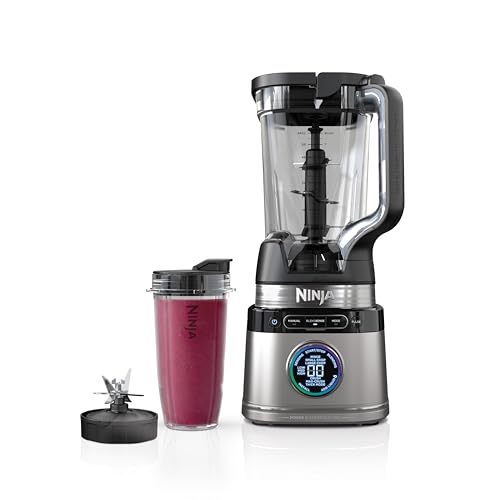
The Ninja Detect Duo Power Blender Pro is the #1 jug blender on Amazon AU at time of writing, and it's sold and shipped by Amazon AU at $198.98. It's a full-size jug blender that also comes with a single-serve cup, so it covers the family smoothie and the one-person drink before work. The model number on the listing is TB302SLANZ, and the ANZ ending is the local version. Its standout feature is what Ninja calls BlendSense, which adjusts the blending speed and timing automatically to suit what's in the jug. That's the feature that stops most of the stalling and the air pockets with frozen fruit. It's the blender I'd point most people to first.
The listing says it handles blending, emulsifying, ice crushing, mixing and pureeing, with nut butters, pestos and smoothies named as examples. There's also a Smart Liquid Detect feature that warns you when more liquid is needed, though the listing says this works with the single-serve cup only. That's useful, because running a thick mix with too little liquid is one of the things that strains a blender motor. The automatic programs mean you mostly press one button and leave it, rather than holding pulse and guessing. For a household that makes smoothies, frozen drinks and sauces, it covers everything without the extra bowls of a kitchen system. It's also the least fuss of the picks to use.
The listing doesn't state the wattage, jug capacity or warranty, which is a gap for a blender at this rank. Check those on Ninja's Australian page before you order. The listing doesn't claim hot blending either, so stick to cold and room-temperature recipes. Rinse the jug straight after use so nothing sets on the blades. Watch the base for any sign of liquid under the jug, which means a seal needs looking at. For most kitchens, it's the best place to start. Let the jug and lid dry fully before storing them together, or the seal starts to hold a smell.
Honest caveats: The listing doesn't state the wattage, jug capacity or warranty. The liquid detect warning only works with the single-serve cup, not the jug. It isn't listed for hot blending. The colour is listed as multicolour, so check the photos. Replacement jugs and cups should be priced before you rely on them.
Best for: Most households who want one blender for smoothies, frozen drinks and single-serve cups.
Type: Jug blender plus single-serve cup • Auto programs: BlendSense automatic speed and time • Liquid warning: Smart Liquid Detect (single-serve cup only) • Hot blending: Not stated on the listing • Power: Not stated on the listing • Model: TB302SLANZ • Warranty: Not stated on the listing • Seller: Amazon AU • Rank: #1 in Jug Blenders (Amazon AU)
View on Amazon AU
Vitamix E310 Explorian High Performance Blender, Black, 1.4L
ASIN B07NZ891CQ • $533.95 • Ships from Amazon AU
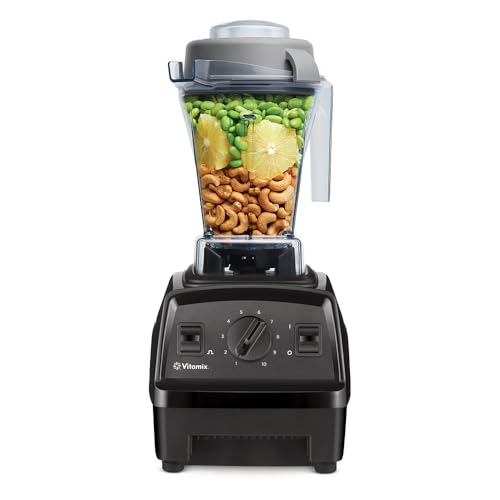
The Vitamix E310 Explorian is the premium pick, sold by Amazon AU at $533.95 at time of writing and ranked #27 in Jug Blenders. It's the only pick here with a five year full warranty on the listing, and that's the main reason it costs more than double the Ninja. Vitamix rates the motor at 2.0 horsepower, with 10 speeds plus pulse for texture control. The blades are laser-cut stainless steel and the container is 1.4 litres and BPA-free. The model number on the listing is WS179195CC. It's a simple machine with a dial and two switches, no touchscreen and no automatic programs. It's sold and shipped by Amazon AU, so warranty claims go through the normal local channels.
That simplicity is a big part of why I like it. There's no sensor or program board to fail, just a speed dial, a pulse switch and a motor built for long, heavy loads. It's the pick for nut butters, very thick frozen desserts and grinding, the jobs that cook lesser motors. Vitamix says it handles hot soups as well. Cleaning is a drop of dish soap and warm water for 60 seconds. Vitamix also claims its blenders last up to ten times longer than an average blender, which is the maker's claim rather than something I can test, but the five year warranty does back up its confidence. Vitamix jugs and blade parts are easy to find in Australia.
Check your cupboard height before ordering. The listing's dimensions put it at about 48cm tall with the container on, so it may not fit under low overhead cabinets. It's loud at full speed, like most high-power blenders. There are no presets, so you'll be turning the dial yourself. Run nut butters in bursts and let the motor rest between them. If you blend every day and want it to last, it's the one I'd buy. The manual speed dial takes a few goes to learn, but most people settle on two or three settings within a week. Rinse the container straight after use rather than leaving it to soak, which is kinder to the blade seal.
Honest caveats: At $533.95 it's the dearest pick by a long way. It's about 48cm tall on the listing figures, so check under your overhead cupboards. There are no automatic programs or presets, only manual speed control. The 1.4 litre container is smaller than the KitchenAid's 1.85 litre jar. It's loud at high speed.
Best for: People who blend every day, make nut butters or thick frozen mixes, and want a long warranty.
Motor: 2.0 HP (listing) • Speeds: 10 plus pulse • Container: 1.4 litres, BPA-free • Blades: Laser-cut stainless steel • Cleaning: Self-clean, 60 seconds with dish soap • Height (listing): About 48cm • Model: WS179195CC • Warranty: 5 year full warranty (listing) • Rank: #27 in Jug Blenders (Amazon AU)
View on Amazon AU
KitchenAid KSB2070 Glass Jar Blender, Matte Black, 1.85L
ASIN B0H62N3JG8 • $233.95 • Ships from Amazon AU
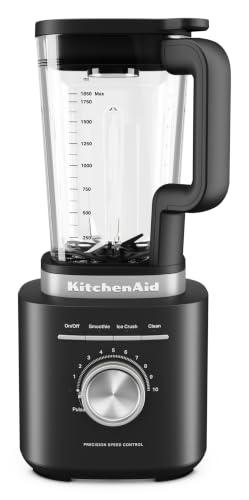
The KitchenAid KSB2070 is the glass jug pick, sold by Amazon AU at $233.95 at time of writing and ranked #9 in Jug Blenders. It has a 1.85 litre glass jar, the largest jug in this list, and a precision speed control knob with 10 speeds plus pulse. There are three presets: smoothie, ice crush and clean. KitchenAid lists 1200W of power with 1700W peak. The jar drops straight down onto the base with no twisting, which KitchenAid says gives stability at high speed. It's also easier on the coupling than screwing a jug on every day. The model number is KSB2070. It's sold and shipped by Amazon AU.
The glass jar is the reason to pick it. It doesn't scratch or go cloudy like plastic, it doesn't hold smells, and KitchenAid says it's hot and cold resistant. The suction lid has a heat release vent for splatter prevention, which makes it the best choice here for blending soups and hot sauces. The asymmetrical blade blends at four angles and is designed to pull ice into the centre. That suits frozen drinks and crushed ice for a crowd. For people who make soups and sauces as often as smoothies, it's the pick I'd suggest. Matte black is one of several colours on Amazon AU at time of writing. The knob is easier to read at a glance than a row of small buttons.
Glass is heavier, and the listing puts the whole blender at about 4.5kg, so lifting the jar off a full base takes a bit more care. Don't pour boiling liquid into a cold glass jar, because a sudden temperature change can crack it. The listing doesn't state a warranty, so check KitchenAid's Australian page. Let hot soup cool a little and fill only halfway. For a glass jug and hot blending, it's the one. Use the clean preset with warm water and a drop of soap after each use. A soft brush around the blade base stops residue building up under the glass. Keep the jar on the base or upright on a towel, never on its side where it can roll.
Honest caveats: The glass jar is heavier than plastic, and the listing puts the whole unit at about 4.5kg. Glass can crack with a sudden temperature change or a drop. The listing doesn't state the warranty. The 1700W figure is a peak, not continuous. There's no single-serve cup.
Best for: People who blend soups and sauces as well as smoothies and want a glass jug that won't scratch.
Jar: 1.85 litre glass, hot and cold resistant • Power: 1200W, 1700W peak (listing) • Speeds: 10 plus pulse • Presets: Smoothie, ice crush, clean • Lid: Suction lid with heat release vent • Weight (listing): About 4.5kg • Model: KSB2070 • Seller: Amazon AU • Rank: #9 in Jug Blenders (Amazon AU)
View on Amazon AU
Ninja Stealth IQ Kitchen System Blender and Processor Pro, Black
ASIN B0FQ5D3M2V • $325 • Ships from Amazon AU
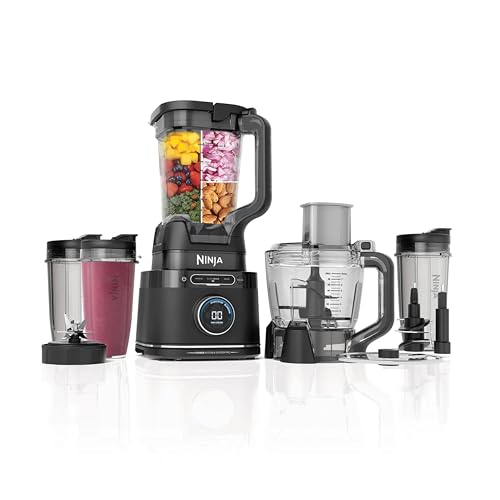
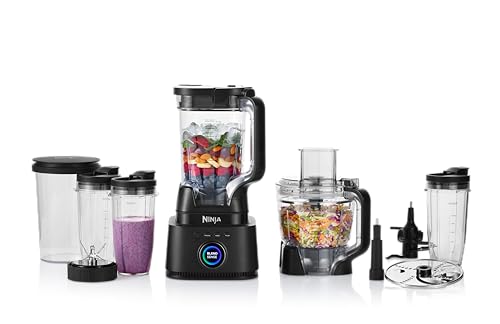
The Ninja Stealth IQ Kitchen System is the quiet pick, sold by Amazon AU at $325 at time of writing and ranked #23 in Jug Blenders. Ninja says its noise-dampening design makes it up to 40 percent quieter, which is the main reason to choose it over the Detect Duo. It's also a kitchen system, so it comes with a blender pitcher, a food processor bowl and blending cups on one base. The model number on the listing is QX401ANZ, the Australian and New Zealand version. Like the Detect Duo, it senses what's in the jug and adjusts speed and timing automatically. That makes it easy to use without guessing at speeds.
The listing names three modes: blend, chop and crush. The processor bowl handles chopping and simple food prep, and the cups do single-serve drinks, so one motor covers three jobs. For an open-plan home or an apartment where an early morning smoothie wakes the whole house, the quieter running is the feature that'll matter most day to day. The automatic sensing means less stalling on frozen fruit, which also means the motor runs for less time. If you don't already own a food processor, this saves buying one. It's a good fit for a small kitchen that wants one base for most jobs. The cups are handy for a drink on the way out the door.
The listing doesn't state the wattage, jug capacity or warranty, so check those on Ninja's Australian page. It also doesn't say what the 40 percent quieter claim is measured against. It isn't listed for hot blending, so keep it to cold recipes. The extra bowls and cups need cupboard space. For a quieter blender that also chops, it's the one I'd pick. Put the base on a silicone mat or a folded tea towel to cut the vibration noise going into the counter. Rinse the pitcher and processor bowl straight after use, before anything dries onto the blades. Store the blades safely, because the processor blade is very sharp. Check the coupling on the base every few months for worn teeth.
Honest caveats: The listing doesn't state the wattage, jug capacity or warranty. The 40 percent quieter claim doesn't say what it's compared to. It isn't listed for hot blending. The processor bowl is handy but not a full food processor replacement for heavy jobs. The extra bowls and cups need storage space.
Best for: Open-plan homes and apartments that want a quieter blender with a food processor bowl on the same base.
Type: Kitchen system: pitcher, processor bowl, cups • Modes: Blend, chop, crush • Noise: Up to 40% quieter (Ninja claim) • Auto programs: Senses ingredients, adjusts speed and time • Power: Not stated on the listing • Model: QX401ANZ • Warranty: Not stated on the listing • Seller: Amazon AU • Rank: #23 in Jug Blenders (Amazon AU)
View on Amazon AU
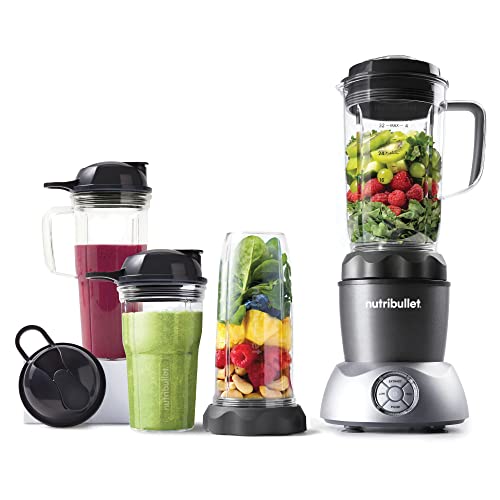
NutriBullet Select 1200 High Speed Blender with Vented Pitcher
ASIN B0CDGLB4DG • $179 • Ships from Amazon AU
The NutriBullet Select 1200 is the entry pick, sold by Amazon AU at $179 at time of writing and ranked #17 in Jug Blenders. It's a simple high-speed blender with a 1200W motor, two speed settings, a pulse function and an extract program. The vented pitcher is the feature that sets it apart at this price, because the listing says it can handle hot contents for soups and hot drinks. That's something neither Ninja pick claims. The listing gives a one year warranty, and the model number is NB07200-1210DG, the dark grey version. It's the least expensive pick here and the simplest to use. It's sold and shipped by Amazon AU.
Two speeds and a pulse are enough for most smoothies, frozen drinks and soups. You don't get automatic sensing or a long list of presets, but there's very little to go wrong and very little to learn. NutriBullet's blades and cups are widely sold in Australia, so a worn blade or a cracked cup isn't the end of the blender. For a couple or a small household that wants a proper pitcher blender for smoothies and the occasional soup, and doesn't want to pay for features they won't use, it covers the basics well. It's also a good first blender for someone moving out of home. The controls are simple enough that anyone in the house can use it.
The listing is thin, with only three feature lines, so it doesn't state the pitcher capacity or the dimensions. Check those on NutriBullet's Australian page. With only two speeds, you have less control over texture than on the 10-speed models. Vent the pitcher properly with hot soup and fill only halfway. Let the motor rest between thick blends. For simple blending on a smaller spend, it's the one. Rinse the pitcher straight after each use and let it dry upside down. Check the blade seal every few months for wear or a sticky ring on the base. Spare blades and cups are easy to find if one wears out.
Honest caveats: The listing is thin and doesn't state the pitcher capacity or dimensions. There are only two speeds plus pulse, so texture control is limited. The warranty is one year. There's no automatic sensing to stop stalls on thick frozen mixes. Hot blending needs the vent open and a half-full pitcher.
Best for: Couples and small households who want a simple pitcher blender that can also take hot soup.
Motor: 1200W • Speeds: 2 plus pulse • Programs: Extract program • Pitcher: Vented, hot contents (listing) • Capacity: Not stated on the listing • Model: NB07200-1210DG • Warranty: 1 year (listing) • Seller: Amazon AU • Rank: #17 in Jug Blenders (Amazon AU)
View on Amazon AUSide-by-side comparison
| Product | Price | Best for |
|---|---|---|
| NutriBullet Select 1200 | ~$179 | |
| Ninja Detect Duo Power Blender Pro & Single… | ~$198.98 | |
| KitchenAid Glass Jar KSB2070 Blender Matte… | ~$233.95 | |
| Ninja Detect Kitchen System Power Blender +… | ~$266 | |
| Ninja Stealth IQ Kitchen System Blender +… | ~$325 | |
| Vitamix E310 Explorian High Performance… | ~$533.95 |
What we see fail in the workshop: blenders
Blenders are simple machines that work very hard, and when they come into the shop it's usually one of three faults. Most of them aren't a dead motor, and most can be avoided with a bit of care in how the blender is loaded, cleaned and stored. Here's what usually goes wrong, why it happens and what you can do about it.
Stripped drive couplings
The drive coupling is the toothed part that connects the motor in the base to the blade assembly in the jug. On many blenders one side is rubber or plastic, so it's the part that gives way first when something jams. Running a blender with a thick, stalled mix, putting the jug on while the motor's still spinning, or blending dry ice cubes are the usual causes. The symptom is a motor that spins and makes noise but the blades don't turn, or a grinding sound. A worn coupling is often a low-cost part. Leave it too long and it can damage the drive socket on the motor, which is a much bigger job.
Leaking seals and liquid in the base
The blade assembly has a bearing and a seal that stop liquid getting down past the blades. When that seal wears, liquid drips into the base, and the motor and its control board don't like it. The first sign is often a sticky ring under the jug or liquid on the counter. If it's caught early, a new blade assembly or seal usually fixes it. If it's left, the liquid corrodes the motor connections or the switch board, and we see blenders that work some days and not others. Dishwasher heat also wears seals faster, so check what the manual says.
Overheated motors and thermal cutouts
Most blenders have a thermal cutout that switches the motor off when it gets too hot, and many people think the blender has died when it's just cooling down. Let it rest for 30 minutes and it usually comes back. Repeated overheating is a different story, though, because it wears the brushes and bakes the windings on universal motors. A burning smell, sparks visible through the vents or a motor that slows under load are signs of a motor problem. Run thick mixes in short bursts, add enough liquid, and keep the base vents clear to avoid it.
Decision tree: which one should you actually buy?
- Want one blender for most jobs without overthinking it? → The Ninja Detect Duo Power Blender Pro at $198.98 is the #1 jug blender on Amazon AU, with automatic blending and a single-serve cup.
- Blend every day, make nut butters and want a long warranty? → The Vitamix E310 Explorian at $533.95 has a 2.0 HP motor and a five year full warranty.
- Make soups and want a glass jug? → The KitchenAid KSB2070 at $233.95 has a 1.85 litre glass jar and a vented suction lid.
- Live in an apartment or open-plan home and want it quieter? → The Ninja Stealth IQ Kitchen System at $325 is designed to run up to 40 percent quieter and adds a food processor bowl.
- Want a simple blender that can take hot soup on a smaller spend? → The NutriBullet Select 1200 at $179 has a vented pitcher rated for hot contents and a one year warranty.
- Blender spinning but not blending, leaking or smelling hot? → Bring it to our Erina workshop. We'll check the coupling, the seal and the motor and tell you whether it's a part or a new blender, before you spend anything.
Frequently asked questions
Why does my blender motor run but the blades don't turn?
The most common cause is a stripped drive coupling. That's the toothed part that connects the motor in the base to the blades in the jug, and on many blenders one side is rubber or plastic so it gives way first when something jams. Look at the coupling on top of the base and under the jug for worn or rounded teeth. A replacement coupling or blade assembly is often a small part. Fixing it early stops the damage spreading to the motor's drive socket, which is a bigger repair.
Is a glass or plastic blender jug better?
Each has a trade-off. Plastic jugs are lighter, hard to break and suit high-speed blending, which is why Vitamix and Ninja use them, but they can scratch and go cloudy over time. Glass jugs don't scratch or hold smells and handle hot food well, but they're heavier and can crack with a sudden temperature change or a drop. If you blend a lot of soups and sauces, glass like the KitchenAid KSB2070 is a good choice. For heavy daily smoothie and ice work, plastic is fine.
Can I blend hot soup in a blender?
Only in a blender designed for it, and only with care. Steam builds pressure under the lid and can blow it off when the blades start. Let the soup cool a little, fill the jug no more than halfway, use a vented lid and hold it down with a folded tea towel. Start on the lowest speed and build up. In this guide, the KitchenAid, the Vitamix and the NutriBullet are listed for hot blending. The two Ninja listings don't claim it, so keep those to cold recipes.
Why did my blender stop in the middle of blending?
Most likely the thermal cutout switched it off because the motor got too hot. That's common with thick mixes, nut butters or not enough liquid. Unplug it, let it rest for around 30 minutes, and it usually comes back. Next time, add more liquid, run thick mixes in short bursts and let the motor rest between them. If it cuts out often even with light loads, or you notice a burning smell, the motor may be wearing and it's worth having it checked.
How much should I spend on a blender?
For most households, a well-ranked blender from a major brand around $180 to $330 does smoothies, frozen drinks and sauces without trouble. Spending more mostly buys a stronger motor and a longer warranty, which matters if you blend every day or make nut butters and thick frozen mixes. The Vitamix E310 at around $534 is the example in this guide, with its five year full warranty. Whatever you spend, stick to a brand that sells replacement jugs, blades and seals in Australia.
Can I put my blender jug in the dishwasher?
It depends on the model, so check the manual. Some jugs, lids and blade assemblies are dishwasher safe and some aren't, and dishwasher heat can warp lids and wear seals faster. For daily cleaning, half fill the jug with warm water and a drop of dish soap and run it for 30 to 60 seconds, then rinse and dry upside down. Never put the motor base in water. Wipe it with a damp cloth while it's unplugged.
Related buying guides
Blender spinning, leaking or cutting out?
Most blender faults are a stripped drive coupling, a worn seal letting liquid into the base or a motor that's been run too hot, and many of them are a part rather than a new machine. Bring it into our Erina workshop and we'll check the coupling, the seal and the motor and tell you what's worth fixing, before you spend anything.
Visit our Erina workshop Book Online