Prices from Amazon AU, updated daily. Swipe or use the arrows for more.
Disclosure: This article contains affiliate links to amazon.com.au. If you buy through one of these links iFix may earn a small commission at no extra cost to you. It doesn't change which products we recommend. We focus on what actually lasts based on 16 years of repair-shop experience.
Quick summary6 picks
- Entry Pickecozy Ice Maker Machine Countertop about$150
- Devanti Ice Maker Machine 23KG Square Cubes… about$250
- Maxkon Nugget Ice Maker Countertop Portable… about$290
- Kenmore Crunchy Chewable Nugget Ice Maker |… about$300
- Panthera 15kg Chewable Nugget Ice Machine… about$300
- Most PremiumDevanti Ice Maker 5cm Large Ice Cube… about$330
What a countertop ice maker actually does
A countertop ice maker is a small refrigeration unit with a water tank, a little pump and a cold metal evaporator, and it turns tap water into ice in about six to fifteen minutes per batch. It isn't a freezer, though, and that catches a lot of people out. The ice drops into an open basket above the tank, and as it slowly melts the water drains back down and gets frozen again. You get a steady supply of fresh ice for a hot weekend or a party, but you can't fill it on Friday and expect a full basket on Sunday.
In my experience people buy one for one of three reasons. The freezer trays can't keep up in January, the fridge has no built-in ice maker, or they want a particular kind of ice, like soft chewable nugget ice or big slow-melting cubes for a whisky. All of those are fair reasons. Where I'd push back is the idea that one of these replaces a couple of bags of servo ice for a big party, because even the 23kg-a-day machine in this guide makes about a kilo an hour on a good day.
The five picks here run from about $150 to $330, and the extra money mostly buys a different type of ice and more output rather than a tougher machine. Every one of them uses a compressor, a small condenser fan and a water pump or auger, so they share the same weak points, and I'll go through those further down. What usually decides whether one lasts five years or two is where it sits and how often it gets cleaned, which is handy because neither costs you anything.
Bullet, square, nugget or large clear cubes
Bullet ice is the most common type under $200. A row of chilled metal prongs dips into a small tray of water, a hollow bullet of ice freezes around each prong, then a short burst of warm refrigerant loosens them and they drop into the basket. It's quick, with the ecozy turning out nine bullets every six minutes or so, and the hollow shape cools a drink fast. The catch is that hollow ice melts faster too, so it's better for a glass on the table than for keeping an esky cold all afternoon.
Square-cube machines run water over a chilled grid and build solid cubes up in layers, which is why the cubes come out clearer and denser than bullets. The Devanti 23kg makes 32 cubes per cycle, which is a lot more ice per batch than a bullet machine, but the unit's bigger and heavier for it. Solid cubes last longer in a drink and they stack better in a freezer bag if you're making ice ahead of a party, so this is the type I'd pick for a household that entertains often.
Nugget ice is made differently again. A motor-driven auger scrapes thin flakes of ice off the inside of a chilled cylinder and pushes them through a small die, which packs the flakes into soft pellets you can chew. People who like it really like it, but there are extra moving parts in there: the auger, its motor and a small gearbox. That's most of the reason nugget machines cost more than bullet machines, and it's why they tend to get louder as they age.
Large clear cubes are the specialist end. The Devanti 5cm machine freezes slowly with water moving over the cubes, so air bubbles and minerals get pushed out and you end up with solid, clear blocks that melt slowly in a short drink. It makes up to 150 cubes a day by its own listing, which is plenty for a home bar and nowhere near enough to fill an esky. I'd only buy this type if you know you want big cubes, because for everyday drinks a square or bullet machine does more for less.
How much ice you'll actually get
The daily figures on these listings, 12kg, 15kg, 18kg and 23kg per 24 hours, are best-case numbers. They assume the machine runs flat out for a full day in a cool room with cold water in the tank, and that's not how most of us use them. Room temperature matters more than anything else, because the condenser has to dump heat into the air around it and it's working against a 30-degree kitchen in summer. In my experience you'll usually see noticeably less than the box figure on a hot afternoon.
For rough planning, I'd assume a glass of ice uses somewhere around 100 to 150 grams, which is my own working figure rather than anything on a listing. On that basis a 12kg machine making half a kilo an hour fills three to five glasses an hour once it's warmed up, and the 23kg Devanti roughly doubles that. That's plenty for a family or a small barbecue. For twenty people on a hot day you'll want to run it the day before and bag the ice into the freezer as you go.
Basket size matters more than people think, because the machine stops when the basket is full. The Kenmore holds about 1kg of nugget ice at a time and the Devanti 23kg has a 3.6 litre basket, while the smaller machines hold less than either. If you're making ice ahead, empty the basket into a freezer bag every hour or so and the machine keeps going. The ecozy comes with ice bags in the box for exactly that.
Where to put it: heat, airflow and the wall socket
An ice maker is a little fridge with the cold part on the inside and the hot part blowing out a vent, usually at the back or sides. If you push it hard against a wall or box it into a cupboard, the hot air has nowhere to go, the condenser runs hotter, output drops and the compressor runs for longer. Leave the gap the manual asks for on every side with a vent. The Kenmore's front-loading design lets it live under overhead cabinets, but it still needs its vents clear.
Outdoors is where these struggle the most. A covered patio in the shade is usually fine, but a sunny deck in February or a closed-up garage can push the room so hot that the machine barely keeps up with its own melt. Direct sun on the clear lid also warms the basket and melts the ice faster. If you want ice for a backyard party, it's usually better to run it inside in the coolest room and carry the ice out in an esky.
Electrically, these are plug-in appliances with a compressor that pulls a surge on start-up, so plug them straight into a wall socket rather than a powerboard shared with a kettle or a second fridge. The listings in this guide don't state wattage, so check the rating plate on the back for the figure and the RCM mark. As a worked example, if the plate says 150W and it runs eight hours, that's 1.2kWh, or about 40c at roughly 33c/kWh. Our smart plug power-saving guide covers measuring it properly.
Water, scale and why cleaning matters
Every litre you freeze leaves its minerals behind in the tank, because ice is mostly pure water and the dissolved bits stay in what's left. Over weeks that water gets more concentrated, and in hard-water areas a white crust builds up on the evaporator prongs, the pump inlet and the little windows the ice-full sensor looks through. Scale on the prongs slows the freeze and gives you smaller, cloudier ice. Scale on the sensor windows is worse, because it can stop the machine entirely, and I'll come back to that below.
Most of these machines have a self-clean button, and it's worth knowing what it does. On the ecozy, Maxkon and Devanti models it mostly circulates water through the system for 15 to 30 minutes, which rinses things out but doesn't dissolve scale on its own. For that you need a descaler the manual approves or a weak white vinegar mix if the manual allows it, followed by a couple of plain-water rinse cycles. If you're not using it for a few days, drain the tank, leave the lid open and let it dry, or you'll get a slimy film and a smell.
Starting with better water helps a lot. If you've already got an under-sink filter, fill the tank from that tap, and if you're thinking about one, our under-sink water filter picks explain which types actually take minerals out. Never put anything but plain water in the tank. Juice, cordial or soft drink will gum up the pump and leave sugar on every surface the water touches, and it's not something the self-clean cycle can fix.
Noise, and what the listings claim
The quietest claims here are the ecozy at under 35dB and the Maxkon at 43dB, both straight from the listings. I'd treat those as best-case numbers, because they usually describe the compressor hum and leave out the clatter of ice dropping into the basket every few minutes. In an open-plan kitchen that clatter is the part people notice. Nugget machines add a low grinding sound from the auger as well, which doesn't bother most people but does surprise a few.
Noise also changes as a machine ages. The small condenser fan runs on simple sleeve bearings in most of these, and as the bearing dries out it starts to whine or rattle, usually in the second or third summer. A sudden new rattle is more often a fan blade touching a loose wire or a bit of packaging than a dying compressor. If ice is jamming against the basket or the lid, you'll hear a repeated knocking during the harvest cycle, which usually means the machine isn't sitting level.
Level matters more than people expect, because the water tray under the prongs or the flow over a cube grid relies on gravity. Sit it on a flat surface, check it with a phone level app if you're unsure, and put a thin rubber mat underneath to stop vibration travelling into a hollow cabinet. That one step takes most of the buzz out of a noisy one.
Moving it to the caravan, the boat or a party
Drain the tank and the basket completely before you move one, and give it a wipe inside. Water left sloshing around in transit gets into places it shouldn't, including the control board under the lid on some designs, and our water damage explainer covers why that kind of slow leak causes faults weeks later. Most of these have a drain plug at the bottom for this, which is one of the features I'd check before buying any ice maker.
Keep it upright when you carry it. Most ice maker manuals ask you to let the unit stand upright for some hours after moving before switching it on, so the compressor oil can settle back where it belongs. The exact time varies, so follow your own manual rather than a number I give you. Running a compressor straight after it's been on its side is one of the easier ways to shorten its life, and it doesn't show up as a fault until much later.
All five picks here are 240V appliances. If you want to run one in a caravan or on a boat away from mains power, you'll need an inverter or a power station sized for the compressor's start-up surge, not just its running draw, and the rating plate is the place to start. Our backup power station guide talks about sizing for surge loads like this one.
How I picked these five
I started from the ice makers selling on Amazon AU in the Speciality Appliances category, kept only new stock, and kept sellers that are Amazon AU, ship from Amazon's own warehouse here, or are Australian sellers with domestic delivery times. I dropped imports and any listing whose delivery window to Erina ran out past ten days, which usually means stock coming from overseas. I also dropped the commercial 45 to 60kg machines, because they're built for cafes and they need more space and more water than a home kitchen usually has.
Two popular listings were dropped because their own data didn't add up. One ice maker listed a 3.2 litre tank in its title and a 1.2 litre size in its details, and a clear-ice ball maker carried a part number belonging to a different machine. When a listing contradicts itself I can't tell you which version turns up at your door, so I'd rather leave it out than guess. A no-name nugget machine shipping from overseas was also cut on delivery time.
The ranks quoted on each card are Amazon AU sales ranks in Speciality Appliances, checked on the same day as the prices. The ecozy leads at #24, which is why it's first despite being the lowest priced. None of the listings state power draw, and only the Kenmore and the Devanti 23kg state a warranty period on the listing itself, two years and one year respectively. Australian Consumer Law still applies on top of whatever the listing says.
If one of these stops making ice after the warranty's run out, the cause is usually something small like a pump, a fan or a dirty sensor rather than the sealed refrigeration system. Those are the faults worth getting looked at before you replace the whole machine, and you can bring it into our Erina workshop for a look. A leak in the sealed system is a different story, and I'll explain why further down.
The 5 picks, $150 to $330
Prices are Amazon AU at time of writing (31 October 2026) and move week to week. Ranks are Amazon AU category sales ranks, checked the same day.

ecozy Countertop Ice Maker IM-BS260C, 12kg/24h, Bullet Ice
ASIN B0B498C643 • $149.99 • Sold by Ecozy Store on Amazon AU
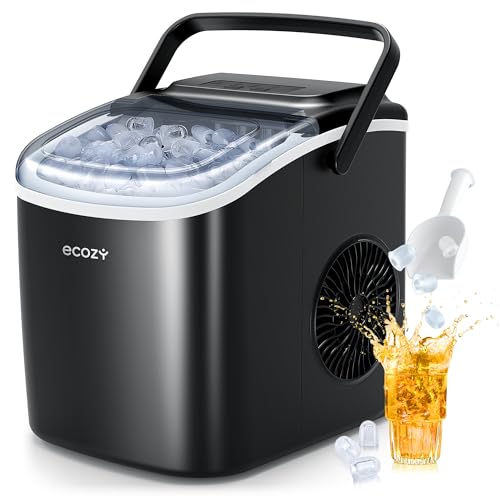
This is the ice maker I'd point most people to first, because it's the best-selling one in its category on Amazon AU at #24 and it's also the lowest priced pick here at $149.99. It makes bullet ice with a hollow core, nine pieces every six minutes or so, and it's rated at up to 12kg a day. That's plenty for a family through summer and enough for a small barbecue if you start it early. It's shipped from Amazon's own warehouse here, sold by the ecozy store, so returns go through Amazon's normal process. The listing gives two ice sizes, small and large, which you choose on the panel. For most drinks the small size cools faster, while the large size lasts a little longer in a glass.
The features list is short but sensible. Infrared sensors stop production when the basket's full, a low-water warning tells you when to top up, and the clear lid lets you see the ice level without opening it. The listing claims it runs under 35dB, which I'd treat as the compressor hum alone, not the sound of ice dropping into the basket. The self-clean cycle runs for 30 minutes when you hold the power button for five seconds, and it circulates water rather than descaling. In the box you get the ice maker, a basket, a scoop and some ice bags for moving extra ice into the freezer. It's small and light enough to carry by its handle, which suits a caravan or a holiday house.
The model and part number on the listing are both IM-BS260C, which matters because it lets you match the manual and any spare parts later. The listing doesn't state wattage, tank size or an AU warranty period, so check the rating plate and the warranty card when it arrives. Bullet ice is hollow, so it melts faster than solid cubes and isn't the best choice for keeping an esky cold. Keep the vents clear and it'll make ice much faster on a hot day. Descale it every few weeks in a hard-water area, because scale on the prongs is what slows these down. If you just want fresh ice for drinks without spending much, this is where I'd start.
Honest caveats: The listing doesn't state wattage, tank capacity or a warranty period, so check the rating plate and paperwork when it arrives. The 35dB claim leaves out the clatter of ice dropping. Hollow bullet ice melts faster than solid cubes. The self-clean cycle rinses but doesn't descale. It's an ecozy store listing fulfilled by Amazon AU, not sold by Amazon itself.
Best for: Families who want fresh drinks ice through summer from a small, light machine at the lowest price here.
Ice type: Bullet, hollow core, 2 sizes • Output: Up to 12kg per 24h (listing) • Batch: 9 pieces in about 6 minutes • Noise: Under 35dB (listing claim) • Cleaning: 30-minute self-clean cycle • In the box: Basket, scoop, ice bags • Model: IM-BS260C • Seller: Ecozy Store, fulfilled by Amazon AU • Rank: #24 in Speciality Appliances (Amazon AU)
View on Amazon AU
Devanti Ice Maker 23kg, Square Cubes, 32 per Cycle
ASIN B0HK3Z38YC • $249.95 • Sold by Artiss Furnishings on Amazon AU
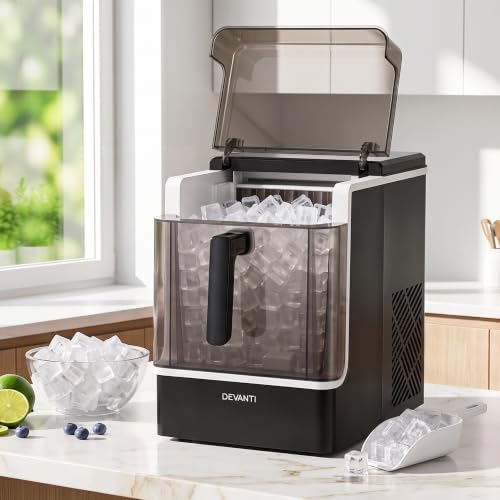
If you entertain a lot, this is the one I'd look at, because it's rated at up to 23kg of square cubes a day, nearly double the ecozy. It makes 32 cubes per cycle, which is a big step up from a bullet machine's nine, and the cubes are solid, so they last longer in a drink and stack better in a freezer bag. Devanti is an Australian appliance brand, and this listing is sold by Artiss Furnishings with delivery from within Australia. At $249.95 it sits in the middle of this guide on price. It ranks #69 in Speciality Appliances on Amazon AU, which is lower than the ecozy but still solid for a newer listing. You choose between two cube sizes on the LED panel.
The features I'd rate most are practical ones. There's a 24-hour timer, so you can set it to start making ice in the morning before a lunch, and it has alarms for both an empty water tank and a full basket. The basket holds 3.6 litres, which is noticeably bigger than most machines at this price, and the water tank holds 2 litres. It uses R290 refrigerant, a common hydrocarbon gas in newer small fridges, and it drops into a sleep mode after ten minutes of inactivity to cut power use. There's an automatic self-clean program and a drain for emptying it, which makes moving it much less messy. The clear viewing lid lets you check progress without opening it.
The listing's model number is IM-ZB-E-23WL03-BK and it states a one-year warranty, which is shorter than the Kenmore's two years. It doesn't state wattage or noise, so check the rating plate before you plan to run it on anything other than a wall socket. The weight figure on the listing looks like a boxed shipping weight rather than the machine itself, so don't read too much into it. Being a bigger unit, it needs more counter space and more room around its vents than the ecozy. Clean the grid and the sensor windows regularly, because a machine this productive moves a lot of water and builds scale faster. For a household that regularly feeds a crowd, it's the best value here.
Honest caveats: Warranty is one year on the listing, shorter than the Kenmore. No wattage or noise figure is given. It's a bigger machine that needs more counter space and vent clearance. The listed weight looks like a shipping weight. It's sold by an Australian marketplace seller, not by Amazon AU, so check their returns terms before ordering.
Best for: Households that entertain often and want solid square cubes in volume, with a timer to have ice ready on time.
Ice type: Square cubes, 2 sizes • Output: Up to 23kg per 24h (listing) • Batch: 32 cubes per cycle • Water tank: 2L • Ice basket: 3.6L • Timer: 24 hours, sleep after 10 min idle • Refrigerant: R290 • Warranty: 1 year (listing) • Rank: #69 in Speciality Appliances (Amazon AU)
View on Amazon AU
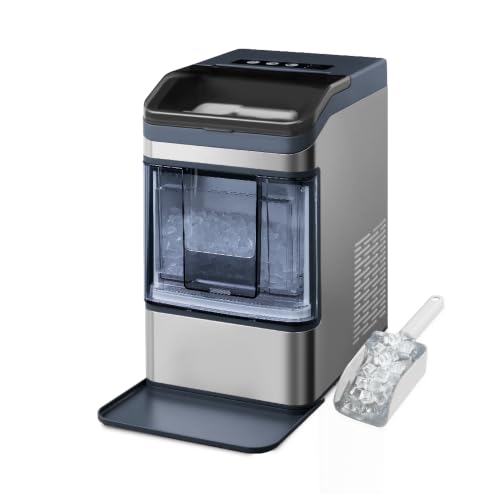
Kenmore Nugget Ice Maker KKIMNF-40SS-AU, 18kg/24h, Front-Load
ASIN B0FFTL2LSV • $299.72 • Ships from Amazon AU
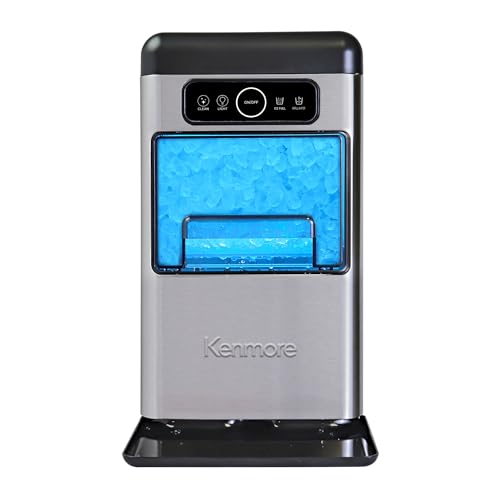
This is the pick for people who want soft, chewable nugget ice, and it's the only one in this guide sold directly by Amazon AU. It's rated at up to 18kg of nugget ice a day, the first batch arrives in six to ten minutes according to the listing, and the bin holds about 1kg at a time. The part number ends in AU, KKIMNF-40SS-AU, which is the code I like to see on an appliance because it points to a unit made for our power and plugs. The listing states a two-year warranty, the longest here. It's made by Koolatron under the Kenmore brand. At $299.72 it's the second most expensive pick, and it ranks #236 in Speciality Appliances.
The design is the main reason I picked it over other nugget machines. Most countertop ice makers load from the top through a lid, so you need clear space above them, but this one has a front drawer for both water and ice. That means it can sit under overhead kitchen cabinets, which suits a lot of Australian kitchens with low cupboards. It has simple touch controls with LED lights for ice ready and tank empty, a one-touch self-clean, a bottom drain and a dishwasher-safe scoop. The outside is stainless steel, which wipes clean easily and doesn't yellow in the sun the way white plastic housings do. It's taller and narrower than the other machines here.
Nugget machines have more moving parts than bullet machines, because an auger and its motor do the work of packing the ice. That makes them a bit louder as they age, and the listing doesn't state a noise figure. Wattage and tank size aren't given either, so check the rating plate and the manual when it arrives. The front design still needs its vents kept clear, so don't push it flush into a corner under the cabinets. Descale it on the schedule in the manual, because scale on the cylinder walls makes the auger work harder. If chewable ice is what you're after and you want the backing of an Amazon AU sale, this is the one.
Honest caveats: Nugget ice relies on an auger and motor, which adds a wear part bullet machines don't have. The listing gives no noise, wattage or tank size. It holds only about 1kg of ice at a time, so it fills up quickly during a party. It's the second dearest pick here, and nugget ice melts faster than solid square cubes.
Best for: Fans of soft chewable nugget ice who want an Amazon AU sale, a two-year warranty and a machine that fits under cabinets.
Ice type: Nugget (chewable pellets) • Output: Up to 18kg per 24h (listing) • First ice: 6 to 10 minutes • Bin capacity: About 1kg • Loading: Front drawer, fits under cabinets • Finish: Stainless steel • Model: KKIMNF-40SS-AU • Warranty: 2 years (listing) • Rank: #236 in Speciality Appliances (Amazon AU)
View on Amazon AU
Maxkon Nugget Ice Maker 15kg/24h, Countertop, Silver
ASIN B0DJSSRY19 • $289.99 • Sold by AUSWAY on Amazon AU
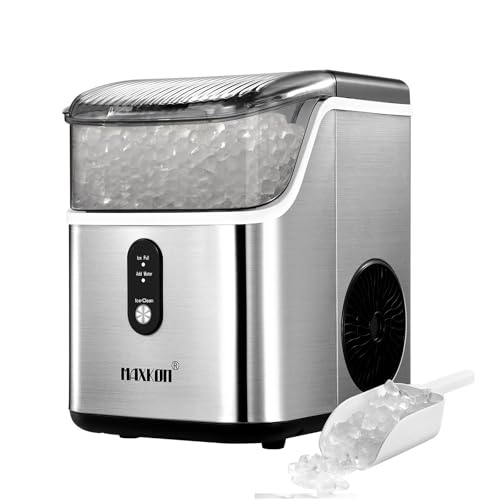
The Maxkon is the smaller, simpler way into nugget ice. It's rated at 15kg a day from a 1.1 litre water tank, with the first batch arriving in ten to fifteen minutes, which is slower to start than the Kenmore but a fair rate once it's running. Maxkon is an Australian brand and the listing is sold by AUSWAY with delivery from within Australia, the quickest delivery window of the marketplace sellers I checked. At $289.99 it's a little less than the Kenmore, and it ranks #230 in Speciality Appliances, almost level with it. The listing gives the dimensions as 28.7 by 22 by 32.2cm, so it's a compact unit for a crowded counter.
It's a top-loading design, so you'll need some clear space above it to open the lid and fill the tank. The listing claims 43dB, which is louder on paper than the ecozy's figure, and that fits with what I'd expect from an auger-driven machine. LED indicators show water level, ice production and the self-clean status, and the self-clean starts with a five-second press of the power button. There's a handle for carrying it and a scoop in the box. The clear casing lets you see how much ice is there before you open it. The small tank means you'll be refilling more often than with the Devanti, especially if you're running it all day.
The part number on the listing is HZB-15N-S, and no warranty period, wattage or plug details are given, so check the rating plate and ask the seller about warranty terms before you buy if that matters to you. As with any nugget machine, the auger and its motor are the extra wear parts, and they don't like scale, so descale it regularly. The small 1.1 litre tank does have one upside: less water sits in it between uses, so it's easier to drain and dry. Don't run it in a hot, closed-up room, because a compact case has less space for heat to escape. It's a sensible pick if you want nugget ice on a smaller counter.
Honest caveats: The 1.1 litre tank needs frequent refills on a busy day. No warranty period, wattage or plug details are given on the listing. The 43dB claim is louder than the ecozy, and auger machines tend to get noisier with age. It's top-loading, so it needs space above. It's sold by an Australian marketplace seller, not Amazon AU.
Best for: People who want nugget ice from a compact machine on a crowded counter and don't need an Amazon AU sale.
Ice type: Nugget (chewable pellets) • Output: Up to 15kg per 24h (listing) • First ice: 10 to 15 minutes • Water tank: 1.1L • Noise: 43dB (listing claim) • Size: 28.7 x 22 x 32.2cm • Model: HZB-15N-S • Seller: AUSWAY (Australian seller) • Rank: #230 in Speciality Appliances (Amazon AU)
View on Amazon AU
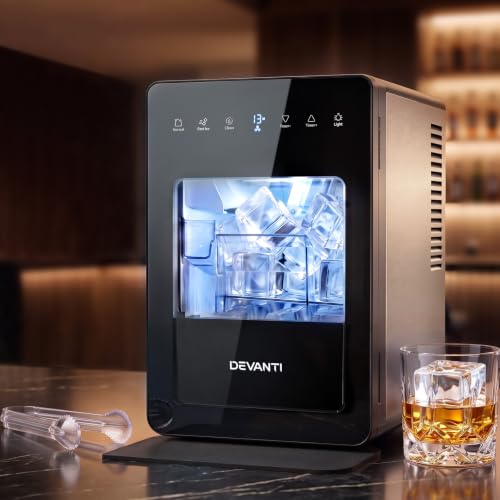
Devanti Ice Maker 5cm Large Clear Cubes, 2L Tank
ASIN B0HKHDM8QL • $329.95 • Sold by Artiss Furnishings on Amazon AU
This one's for the home bar rather than the esky. It makes solid 5cm square cubes that come out clear in its normal mode, the kind that melt slowly in a short drink, and the listing rates it at up to 150 cubes a day. That's a different measure to the kilos per day on the other listings, and it's far less ice by weight, so don't buy it to keep up with a barbecue. At $329.95 it's the most expensive pick here, and it ranks #433 in Speciality Appliances, the lowest of the five, which suits a specialist machine. Like the other Devanti, it's sold by Artiss Furnishings from within Australia. Devanti is an Australian appliance brand.
There are two modes on the touch panel: a normal mode for the clearest cubes and a fast mode for quicker batches when you care less about clarity. Clear ice comes from freezing slowly while water moves over the cube, which pushes air and minerals out instead of trapping them, and that's why the normal mode takes longer. It has a 2 litre water tank, alarms for low water and a full basket, a 24-hour timer, an LED light and a viewing window. The basket holds 1.1kg. A 15-minute self-clean program and a bottom drain plug make it easy to empty before you move it or put it away for winter.
The listing's model number is IM-ZB-10F-BK, and it uses R290 refrigerant like the bigger Devanti. No warranty period, wattage or noise figure is stated, so check the rating plate and the seller's terms before you order. Big clear cubes take a lot longer to freeze than bullets, so you'll want to start it hours before guests arrive and use the timer. Minerals left behind by a slow clear freeze concentrate in the tank faster, so change the water often and descale it on schedule. Keep it level, because clear-ice machines rely on even water flow over the cubes. If big slow-melting cubes are what you're after, nothing else here does them.
Honest caveats: It makes far less ice by weight than the other picks, so it's not for parties or eskies. No warranty period, wattage or noise figure is listed. Clear cubes in normal mode are slow to freeze, so plan ahead with the timer. It's the dearest pick here and the lowest ranked. It's sold by an Australian marketplace seller, not Amazon AU.
Best for: Home bars and spirits drinkers who want big, clear, slow-melting cubes and don't need large volumes of ice.
Ice type: 5cm square cubes, clear in normal mode • Output: Up to 150 cubes per day (listing) • Modes: Normal (clear) and fast • Water tank: 2L • Ice basket: 1.1kg • Timer: 24 hours • Refrigerant: R290 • Model: IM-ZB-10F-BK • Rank: #433 in Speciality Appliances (Amazon AU)
View on Amazon AUSide-by-side comparison
What we see fail in the workshop: countertop ice makers
Ice makers that stop working usually haven't failed in the expensive part. Most of the faults are a pump, a fan or a sensor that's been fooled by scale, and those are worth checking before anyone talks about a new machine. The sealed refrigeration system is the exception, and it's the one fault that usually means replacement rather than repair.
The water pump and its inlet
Bullet and square-cube machines lift water from the tank into the freezing tray or over the grid with a tiny pump. When scale or a bit of grit blocks the inlet screen, the tray never fills and the machine runs its cycle making nothing, or it makes thin, hollow shells instead of proper ice. Sometimes the pump itself seizes after the machine's been put away wet for months. The inlet is usually easy to clean, and the pump is generally a common, low-cost part, so it's a fault worth getting looked at before you give up on the machine.
Fans, condensers and heat
The condenser fan is the part that runs every minute the compressor does, and in a warm kitchen it's working hard. Dust and kitchen grease on the condenser fins make it run hotter, and the simple sleeve bearing in the fan dries out and starts to whine. When the fan slows or stops, the compressor overheats and trips out on its thermal protection, which looks like the machine randomly stopping mid-cycle. A blast of compressed air on the fins with the power off and a fan replacement usually sorts it.
The ice-full sensor that gets fooled, and the sealed system
Most of these use an infrared beam across the basket to tell when it's full. When scale or a film of grime builds up on the sensor windows, the beam is blocked and the machine thinks the basket's full when it's empty, so it simply won't make ice. A careful clean of the two little windows often fixes it. The sealed system is different. These run on R290, a flammable hydrocarbon refrigerant, and a leak there needs a licensed refrigeration technician, which usually costs more than a new countertop machine.
Decision tree: which one should you actually buy?
- You just want fresh ice for drinks through summer without spending much? → The ecozy 12kg bullet ice maker at about $150 is the best seller in its category on Amazon AU and the lowest priced pick here.
- You entertain often and need volume? → The Devanti 23kg at about $250 makes 32 solid square cubes per cycle and has a 24-hour timer and a 3.6 litre basket.
- You love chewable nugget ice and want an Amazon AU sale? → The Kenmore KKIMNF-40SS-AU at about $300 is sold by Amazon AU, carries a two-year warranty on the listing and fits under cabinets.
- You want nugget ice on a small counter? → The Maxkon 15kg at about $290 is compact at 28.7 by 22 by 32.2cm, though its 1.1 litre tank needs frequent refills.
- You want big clear cubes for a home bar? → The Devanti 5cm large cube machine at about $330 makes up to 150 clear cubes a day in its normal mode.
- Your ice maker has stopped making ice or keeps cutting out? → Clean the sensor windows and the pump inlet first, then bring it into our Erina workshop and we'll tell you whether it's a pump, fan or sensor before you spend anything.
Frequently asked questions
Does a countertop ice maker keep the ice frozen?
No. A countertop ice maker isn't a freezer. The ice sits in an open basket above the water tank and slowly melts, and the meltwater drains back into the tank to be frozen again. That's why these machines keep making fresh ice for as long as they're on, but you can't leave one full for days and expect the ice to still be there. If you need ice stored for later, empty the basket into a freezer bag every hour or so and put it in your freezer. The ecozy comes with ice bags in the box for exactly that.
What's the difference between bullet, square and nugget ice?
Bullet ice freezes around chilled metal prongs and has a hollow core, so it's fast to make and cools a drink quickly but melts faster. Square-cube machines build solid cubes in layers over a chilled grid, so the cubes are denser, clearer and last longer in a drink or a freezer bag. Nugget ice is flaked ice packed into soft chewable pellets by a motor-driven auger. Nugget machines usually cost more and have more moving parts. Large clear cube machines freeze slowly for whisky-style cubes and make far less ice by weight.
How much ice does a 12kg per day ice maker really make?
The daily figure is a best case, measured with the machine running for a full day in a cool room with cold water. In a hot Australian kitchen in summer you'll usually get noticeably less, because the condenser struggles to shed heat into warm air. As a rough working figure, a 12kg machine makes around half a kilo an hour, which fills a few glasses an hour once it's warmed up. For a party, run it the day before and bag the ice into the freezer as you go, rather than relying on it on the day.
How often should I clean an ice maker?
Drain and wipe it out whenever you're not going to use it for a few days, and leave the lid open so it dries, or you'll get a slimy film and a smell. Run the self-clean cycle every week or two in regular use. The self-clean on most of these machines only circulates water, so in a hard-water area you'll also need a descaler the manual approves every few weeks, followed by a couple of plain-water rinse cycles. Never put anything but plain water in the tank, because sugar gums up the pump.
Can I run an ice maker off a power station or in a caravan?
These are 240V appliances with a compressor, so you'll need an inverter or a power station that can handle the start-up surge as well as the running draw. The listings here don't state wattage, so read the rating plate first and size the power station from that. After moving an ice maker, let it stand upright for the time the manual asks before switching it on, so the compressor oil settles. Always drain it fully before transport. For long trips off-grid, a 12V car fridge with a freezer side often does more than an ice maker on battery power.
Is it worth repairing an ice maker that stops making ice?
Often, yes, because most faults aren't in the expensive part. A blocked pump inlet, a failing condenser fan or scale on the infrared ice-full sensor can all stop a machine making ice, and they're usually quick, low-cost fixes. Try cleaning the sensor windows and the pump inlet yourself first. The exception is a leak in the sealed refrigeration system. These machines use R290, a flammable refrigerant, so that work needs a licensed refrigeration technician and usually costs more than a new countertop ice maker.
Related buying guides
Ice maker stopped making ice?
Most of the ice makers that stop working have a blocked pump, a tired condenser fan or a sensor fooled by scale, not a dead compressor. Bring yours into our Erina workshop and we'll check those first and tell you what's wrong and whether it's worth fixing before you spend anything on parts or a new machine.
Visit our Erina workshop Book Online