Prices from Amazon AU, updated daily. Swipe or use the arrows for more.
Disclosure: This article contains affiliate links to amazon.com.au. If you buy through one of these links iFix may earn a small commission at no extra cost to you. It doesn't change which products we recommend. We focus on what actually lasts based on 16 years of repair-shop experience.
Quick summary6 picks
- Entry PickWaterdrop 10UA-UF 0.01 Micron Ultra Under… about$96
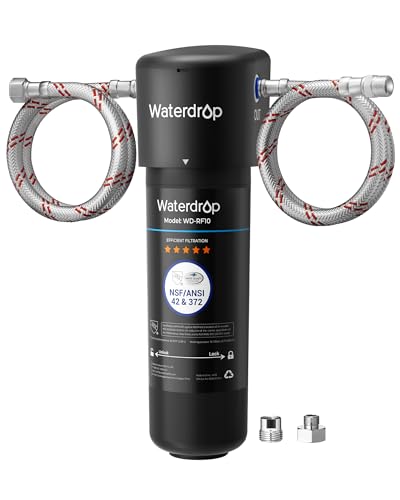
- Waterdrop 10UA Under Sink Water Filter System about$100
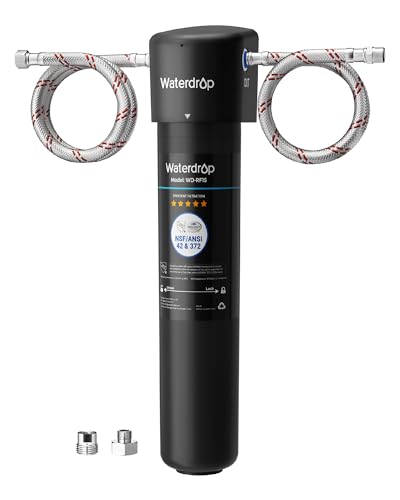
- Waterdrop 15UA Water Filter about$110
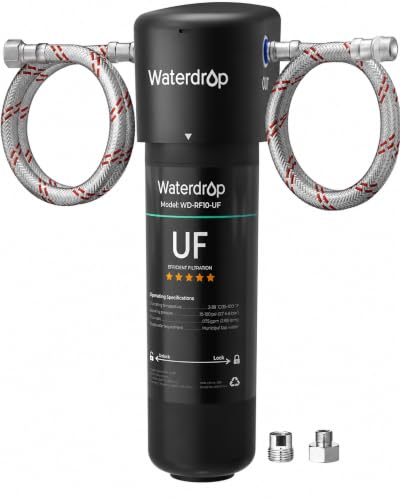
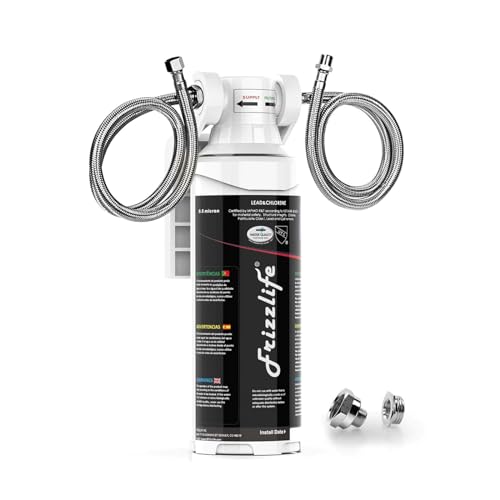
- Frizzlife Under Sink Water Filter… about$1208" screen.
- Waterdrop TSA 8 Layer Under Sink Water… about$1718" screen.
- Most PremiumGeekpure 5 Stage Under Sink Reverse Osmosis… about$235
What an under-sink filter actually does
An under-sink filter sits in the cupboard below the kitchen sink and cleans the cold water on its way to the tap, so you get filtered water at close to full flow instead of waiting for a jug to drip through. Most of the ones worth buying are carbon block cartridges in a housing, plumbed into the cold line with push-fit hoses. A few are reverse osmosis systems with a storage tank and a separate drinking tap. Both types are a real step up from a jug if you drink a lot of water or cook with it, but they're also a plumbing job, and that changes what you should check before you order one.
I've kept this guide to plumbed systems only. If you rent, or you just want better-tasting water in the fridge without touching a pipe, our water filter jug guide covers BRITA and Waterdrop jugs that need nothing more than a sink to fill them. Jugs are fine for one or two people. They get tedious for a family, because someone always leaves the jug empty and the next person drinks straight from the tap anyway, which defeats the point of owning one in the first place.
The other thing to know up front is that most of these filters don't change the minerals in your water. A carbon block takes out chlorine taste and smell, sediment and, on the certified ones, a short list of specific contaminants. It won't soften hard water or stop scale building up in your kettle. Only reverse osmosis does that, and it comes with trade-offs of its own: waste water, a tank, more fittings and slower flow. Choosing between those two types is most of the decision, so it gets its own section below.
Carbon block or reverse osmosis
Carbon block filters are the simple option. Water runs through compressed activated carbon, usually with a sediment layer in front of it, and comes out the other side tasting less of chlorine. Both Waterdrops and the Frizzlife here work this way. They connect straight into the cold line under the sink, so your existing kitchen tap delivers the filtered water and you don't need a second tap or a hole drilled through the benchtop. Flow stays reasonably close to normal, which matters more than people expect when you're filling a big pot for pasta.
Reverse osmosis pushes water through a membrane so fine that dissolved minerals, salts and most other things stay behind. The Geekpure system here filters down to 0.0001 micron according to its listing. That's the only practical way to bring total dissolved solids down at home. The catch is that the membrane is slow, so RO systems fill a pressurised storage tank over time and feed their own drinking tap. They also flush the rejected water down the drain, which means a drain connection as well as a water connection, and more parts in the cupboard.
Older-style RO systems without a booster pump commonly send around three to four litres to the drain for every litre you keep. Geekpure doesn't state its ratio on the listing, so I'd assume it sits somewhere in that range until you've measured it yourself with a bucket and a timer. On town water that's a cost you'll see on the bill, and in a home on tank water it's a real loss. If all you want is better-tasting water with less chlorine, a carbon block does that job with a fraction of the parts and none of the waste.
Where RO earns its place is hard water and anything that boils. Scale is dissolved minerals coming out of the water as it heats, and carbon does nothing about it. If you're descaling the kettle every month or your coffee machine keeps clogging, RO is the type that actually fixes the cause. A lot of town water in Sydney and coastal NSW is generally on the soft side, so I reckon plenty of people buy an RO system they don't need. Check your water supplier's published hardness figures for your suburb before you decide.
What the certification claims on these listings mean
Water filter listings are full of numbers and standards, and they're worth reading slowly because the wording matters. NSF/ANSI 42 covers what's called aesthetic reduction, which mostly means chlorine, taste and odour. NSF/ANSI 53 covers reduction of specific contaminants such as lead. NSF/ANSI 372 is about the materials in the product being lead-free. A filter can carry one of these and not the others, and a good listing tells you which claim belongs to which standard instead of stacking them all in the title.
There's also a difference between certified and tested. The Waterdrop 15UA listing says it's certified by IAPMO against NSF/ANSI 42 and 372, and separately that it was tested by a third-party laboratory against NSF/ANSI 53 for lead. Those are two different levels of evidence. Certification usually means an accredited body checks the product and keeps checking it over time. A lab test means somebody ran the test at least once. Both are better than nothing, but they aren't the same thing, and I'd want you to know which one you're paying for.
Then there's the marketing copy around the standards. The listings for all four filters here mention things like heavy metals, PFAS or long lists of chemicals, often without saying which standard backs each claim. I've only repeated the claims a listing ties to a named standard or test, and I've left the rest out. If one particular contaminant is the reason you're buying, look for that exact contaminant in the testing body's own certification listing for the model, not just in the product title on Amazon.
Plumbing rules: WaterMark and who installs it
Every one of these listings says installation is a quick DIY job, and mechanically that's mostly true. Push-fit fittings and colour-coded tubing aren't hard to work with. The rules are a different matter. In NSW, and in most other states, connecting anything to the drinking water supply counts as plumbing work that should be done by a licensed plumber, and products connected to the mains are meant to carry WaterMark certification under the Plumbing Code of Australia. Easy fittings don't change that.
None of the four listings in this guide mention WaterMark. That doesn't necessarily mean the product doesn't have it, because Amazon listings are usually written for the US market first, but it's something to ask the seller or your plumber about before you book the job. A plumber will usually tell you straight away whether they're happy to fit a particular brand. Some have favourite systems and will quote a fitted price, and that's worth comparing against buying online and paying for the install separately.
Budget for the install when you compare prices. A carbon block system that connects to the existing cold line is usually a short job, while an RO system with a separate tap, a drain saddle and a tank takes longer and costs more to fit. If your insurer ever has to look at a water damage claim from under the sink, a licensed install with a compliance certificate is the paperwork you'll be glad you have. It's a small part of the total cost over the life of the filter.
Running cost: the cartridge is the real price
An under-sink filter works a bit like a printer: the box price gets you started, and the cartridges are where the money goes over a few years. The Waterdrop 15UA is the clearest about this. Its listing says replacement filters cost less than $59.99 each and that one lasts up to 24 months or 16,000 gallons on town water, which is roughly 60,000 litres. Spread over two years, that's a small cost per litre next to bottled water, and you can work it out before you've bought anything.
The others are less specific. The Waterdrop TSA uses three filters with lifespans of 6 months, 8 to 12 months and 12 to 18 months, which means you'll be buying something roughly every six months, but the listing doesn't state the replacement prices. Frizzlife says its cartridge lasts up to two years and that you replace only the inner cartridge, not the whole housing. Geekpure puts its pre-filters at about a year and the RO membrane at two to three years, and says standard-size filters from other brands fit.
That last point matters more than it sounds. A system that takes standard-size cartridges can be kept going from almost any plumbing supplier for years. A proprietary twist-lock cartridge ties you to one brand, and if that brand stops selling in Australia you're left with a housing nobody makes parts for. Before you order any of these, search for the replacement cartridge on Amazon AU, check it's in stock and sold locally, and add two years of cartridges to the price in your head.
Water pressure, flow and fittings
Water pressure is the spec most people skip. Geekpure states a working range of 40 to 100 psi, which is roughly 275 to 690 kPa, and RO membranes generally make water more slowly at the low end of their range. Most Australian homes on town water sit somewhere around 300 to 500 kPa, and plenty of newer houses have a pressure limiting valve near the meter. If your pressure is on the low side, an RO system will fill its tank slowly and the drinking tap will feel weak.
Flow rate is what you notice day to day with a carbon system. Frizzlife lists a full flow of more than 2.0 gallons per minute at 40 psi, about 7.5 litres a minute, which is close to an unfiltered kitchen tap. The Waterdrop 15UA lists 0.75 gallons per minute at 60 psi, about 2.8 litres a minute, which is fine for a glass or the kettle but slower for filling a stockpot. The TSA listing doesn't state a flow rate at all, so I can't compare it honestly.
Then check the fittings. These listings quote 3/8 inch and 1/2 inch connections, and Frizzlife's copy even mentions European sinks while including 3/8 to 1/2 inch adapters. Australian kitchen taps commonly run on flexible hoses with 1/2 inch fittings at the isolation valve, so adapters are normal, but every adapter is one more joint that can weep. Take a photo of the space under your sink and the valve itself before you order, and show it to whoever's doing the install.
Where leaks start, and how to catch one early
A water filter adds joints to the plumbing under your sink, and joints are where leaks happen. Push-fit fittings are dependable when the tube is cut square and pushed all the way in, but a tube that's cut at an angle, kinked or only half seated can hold for weeks and then start dripping. The drip usually lands on the cupboard floor, where nobody looks, and the first sign is often a swollen particleboard base or a musty smell when you open the door.
This is where I'd spend a little more on day one. A battery leak sensor on the cupboard floor will beep or send a phone alert the moment water reaches it. Our guide to water leak detectors covers WiFi and hub-based sensors, and one of them is the most useful thing you can buy alongside any of these filters. Put it in the lowest corner of the cupboard, not just under the filter housing, because water runs to the low point first.
Under-sink leaks matter for electronics too. Dishwashers, under-bench water heaters and powerpoints often share that space, and water on a dishwasher's control board or into a powerpoint is the kind of damage we see after the fact, when it costs far more than the filter ever did. Our page on how water damage spreads through electronics explains why corrosion keeps going long after the leak is fixed. If water has reached a powerpoint, turn that circuit off at the switchboard and get an electrician to check it.
Scale, coffee machines and kettles
If you're thinking about a filter mainly to protect a coffee machine, the filter type matters. Scale forms from dissolved calcium and magnesium as water heats, and it's what blocks the small passages in an espresso machine, from the thermoblock to the solenoid valve. Carbon filters improve taste but leave those minerals in the water. A reverse osmosis system takes most of them out, which helps the machine, but water with almost no minerals can taste flat in coffee, so it's worth trying before you commit.
We get coffee machines in that have stopped pumping or only dribble a shot, and scale is very often part of the story. Descaling on schedule is still the simplest protection, whatever water you use. If you've just bought one of the machines in our espresso machines under $500 guide, read its manual on water hardness, because a lot of machines have a hardness setting that changes how often they ask to be descaled. Setting it properly is free and it's one of the easiest wins.
Kettles are simpler. A carbon filter won't stop the white crust forming in the bottom, but it will take away the chlorine smell some people notice in tea. If you're on soft town water, a kettle scaling slowly over months is normal and a carbon block is all you need. If something with a heating element has stopped working, bring it to our repair counter in Erina and we'll tell you whether it's scale, a failed part or not worth fixing before you spend anything on it.
The 4 picks, $110 to $235
Prices are Amazon AU at time of writing (29 October 2026) and move week to week. Ranks are Amazon AU category sales ranks in Kitchen & Bath Fixtures, checked the same day.

Waterdrop TSA 8-Stage Under Sink Water Filter System
ASIN B08P58F9SG • $170.99 • Sold by WaterdropDirect AU on Amazon AU
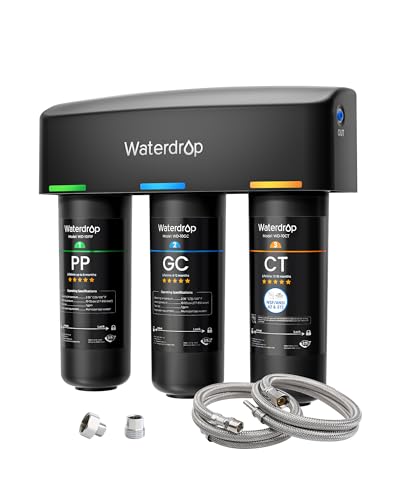
The Waterdrop TSA is the best-ranked plumbed filter I found on Amazon AU, sitting at #146 in Kitchen & Bath Fixtures, and it's sold by WaterdropDirect AU and shipped from Amazon's warehouse at $170.99 at time of writing. It's a carbon-based system with three cartridges that the listing describes as eight stages of filtration. It connects straight into the cold water line under the sink, so your existing kitchen tap delivers the filtered water and you don't need a second tap. The listing says it works with 3/8 inch and 1/2 inch cold water tubes. According to the title, the filter element carries NSF/ANSI 42 certification for chlorine, taste and odour. For most households that just want better-tasting water at the kitchen tap, this is the one I'd start with.
What I like about the TSA is the attention paid to the housing rather than just the filters. The listing says it passed a 400 psi burst test, 100,000 pulse tests at 150 psi and static tests at 300 psi, which is the kind of testing that matters under a sink, because a cracked housing empties the mains into your cupboard. The cartridges twist and lock in, and Waterdrop says a change takes about three seconds. The carbon block is made from coconut shell. The housing is compact, so it should fit beside a dishwasher hose or a waste pipe in a typical cupboard. It's sold through Waterdrop's own Australian storefront, which makes a warranty claim a lot simpler than with a bare twin-housing kit from an unknown seller.
The running cost is the part to plan for. The three cartridges last 6 months, 8 to 12 months and 12 to 18 months according to the listing, so you'll be replacing something about twice a year. The listing doesn't give a flow rate or replacement cartridge prices, so check both on Amazon AU before you buy. It also says clearly that it won't reduce total dissolved solids, which means it won't help with scale. If you go away for a while, Waterdrop suggests bagging the cartridges and keeping them in the fridge. Put a leak sensor on the cupboard floor under it on day one. For taste and chlorine at the kitchen tap, it's my pick.
Honest caveats: No flow rate is stated on the listing, and replacement cartridge prices aren't listed either. It won't reduce total dissolved solids, so it does nothing for scale. Several of the listing's contaminant claims aren't tied to a named standard; the chlorine, taste and odour claim is. WaterMark certification isn't mentioned, so ask before your plumber fits it.
Best for: Households that want better-tasting filtered water from their existing kitchen tap, with a well-tested housing.
Type: Carbon based, 3 cartridges (8 stages listed) • Connection: Direct to cold line, 3/8 in and 1/2 in tubes • Certification: NSF/ANSI 42 element (per listing title) • Pressure testing: 400 psi burst, 100,000 pulse tests at 150 psi • Cartridge life: 6, 8 to 12 and 12 to 18 months • Seller: WaterdropDirect AU, fulfilled by Amazon AU • Part number: WD-TSA • Rank: #146 in Kitchen & Bath Fixtures (Amazon AU)
View on Amazon AU
Waterdrop 15UA Under Sink Water Filter System
ASIN B083NR5DVY • $110.37 • Sold by WaterdropDirect AU on Amazon AU
The Waterdrop 15UA is the lowest-priced system here at $110.37 at time of writing, and it's the one with the most useful running-cost figures on its listing. It ranks #278 in Kitchen & Bath Fixtures on Amazon AU and is sold by WaterdropDirect AU through Amazon's warehouse. It's a single-cartridge carbon system that connects directly to the cold water line, so like the TSA it feeds your existing kitchen tap. The listing says the system should only ever be connected to cold water, which is worth repeating to whoever installs it. One cartridge and one housing means fewer joints than the multi-stage systems, which makes it the simplest install in this guide. For a small household that mainly wants the chlorine taste gone, it covers the job without much fuss.
The certification wording is the clearest of the four, too. Waterdrop says the filter is certified by IAPMO against NSF/ANSI 42 for chlorine, taste and odour, and against NSF/ANSI 372 for lead-free materials. It also says the filter was tested by a third-party laboratory against NSF/ANSI 53 for lead reduction, which is a lab test rather than a certification, and I'd rather a listing said that plainly than blurred the two. The tested full flow rate is 0.75 gallons per minute at 60 psi, roughly 2.8 litres a minute. That's fine for drinking water and the kettle, though it's slower than an unfiltered tap when you're filling a big pot. The part number is WD-15UA if you're matching it to a plumber's quote.
Running cost is where the 15UA stands out. The listing says one cartridge lasts up to 24 months or 16,000 gallons on town water, about 60,000 litres, and that replacements cost less than $59.99 each. Two people drinking a couple of litres a day each won't get near the litre figure inside two years, so the time limit is the one that applies. That makes it easy to work out the cost over five years before you've bought it. The twist-and-lock change is tool-free. It won't touch hardness or scale, like any carbon filter. Search for the replacement cartridge on Amazon AU first and check it's in stock locally. For a small household, it's the sensible starting point.
Honest caveats: Flow is slower than an unfiltered tap. The lead reduction claim is a third-party lab test against NSF/ANSI 53, not a certification. It doesn't reduce hardness or scale. WaterMark isn't mentioned on the listing, so check with your plumber. The replacement price is the listing's own figure and can change.
Best for: Small households that want the simplest plumbed carbon filter and a running cost they can work out in advance.
Type: Carbon, single cartridge • Connection: Direct to cold line • Flow: 0.75 gal/min at 60 psi (about 2.8 L/min) • Cartridge life: Up to 24 months or 16,000 gallons • Replacement: Under $59.99 per cartridge (listing figure) • Certification: IAPMO to NSF/ANSI 42 and 372; lab tested to NSF/ANSI 53 (lead) • Seller: WaterdropDirect AU, fulfilled by Amazon AU • Rank: #278 in Kitchen & Bath Fixtures (Amazon AU)
View on Amazon AU
Frizzlife MK99 Under Sink Water Filter System
ASIN B07MFYQBTX • $119.99 • Sold by Fizzlife Solution on Amazon AU
The Frizzlife MK99 is the high-flow option, at $119.99 at time of writing. It's sold by Frizzlife's own storefront, listed as Fizzlife Solution, and shipped from Amazon AU's warehouse. It ranks #910 in Kitchen & Bath Fixtures, which is well behind both Waterdrops, so it isn't the one most people are buying. The title says it's certified to NSF/ANSI 53 and 42, and it filters down to 0.5 micron through a two-stage compound cartridge. It connects directly to the cold line and feeds your existing tap, so there's no second tap to fit. The part number is MK99, with no regional suffix. If filling pots and the sink quickly matters to you more than anything else, this is the one to look at.
Frizzlife lists a full flow of more than 2.0 gallons per minute at 40 psi, about 7.5 litres a minute, which is close to what an unfiltered kitchen tap delivers. That's nearly three times the 15UA's rated flow, and it's measured at a lower pressure. The filter cap has a built-in shut-off valve, so the listing says you don't need to turn off the water to change the cartridge. You only replace the inner cartridge rather than the whole plastic housing, which means less going in the bin each time. The listing quotes a cartridge life of up to two years. It comes with 3/8 inch direct-connect hoses and 3/8 to 1/2 inch conversion fittings, so most Australian valves should be covered with what's in the box.
The odd note on this listing is that its fittings copy talks about European kitchen sinks, which tells you the text wasn't written for Australia. The adapters should suit a typical Australian setup, but each adapter is another joint, so get the installer to check every one. The listing doesn't state a replacement cartridge price, so look that up before you buy. Like any carbon filter, it leaves the minerals in, so it won't help with scale. The lower sales rank also means fewer buyers have put it through its paces in Australian homes. Fit a leak sensor beneath it, as with any of these. For flow, though, nothing else here comes close.
Honest caveats: The fittings copy mentions European sinks, so confirm the adapters suit your valve. The replacement cartridge price isn't stated. It ranks well behind the Waterdrops on Amazon AU. Some contaminant claims in the listing aren't tied to a named standard. WaterMark isn't mentioned, so ask before installation.
Best for: Kitchens where filling pots at close to normal tap flow matters most.
Type: Two-stage compound carbon cartridge, 0.5 micron • Flow: Over 2.0 gal/min at 40 psi (about 7.5 L/min) • Certification: NSF/ANSI 53 and 42 (per listing title) • Cartridge life: Up to 2 years • Fittings: 3/8 in hoses plus 3/8 to 1/2 in adapters • Seller: Fizzlife Solution, fulfilled by Amazon AU • Part number: MK99 • Rank: #910 in Kitchen & Bath Fixtures (Amazon AU)
View on Amazon AU
Geekpure 5-Stage Under Sink Reverse Osmosis System, 75 GPD
ASIN B0787ML9YC • $234.99 • Sold by Geekpure Water Filter Group on Amazon AU
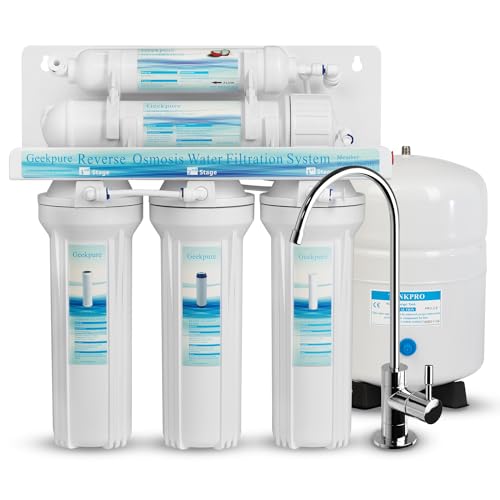
The Geekpure five-stage system is the only reverse osmosis pick here, at $234.99 at time of writing. It ranks #183 in Kitchen & Bath Fixtures on Amazon AU, ahead of the 15UA, and it's sold by Geekpure Water Filter Group and shipped from Amazon AU's warehouse. The listing says it filters down to 0.0001 micron, makes up to 75 gallons a day at 60 psi, about 280 litres, and stores water in a 2.8 gallon tank, roughly 10.6 litres. It's the only design in this guide that takes dissolved minerals out of the water. If you're on hard water and fighting scale in the kettle and the coffee machine, this is the type that actually fixes it. On soft town water, it's more system than most people need.
It's a bigger install than the carbon systems. RO needs a feed from the cold line, a drain connection for the rejected water, a tank and its own drinking tap, so it takes up most of a small sink cupboard. Geekpure says the tubing is colour coded with quick-connect fittings and that installation takes a couple of hours, plus time to flush the filters. The listing gives a feed pressure range of 40 to 100 psi and a maximum feed TDS of 1,000 ppm. It also warns not to drink the first two tanks of water the system makes. Pipe sizes are listed as 1/4 inch and 3/8 inch, and the feed water temperature range is 5 to 45 °C, so it has to go on the cold line.
The thing I like most about this one is that Geekpure says its filters are standard size and that other brands fit. That's a real advantage over proprietary cartridges, because a plumbing supplier can keep it running for years. The listing puts pre-filter life at about a year, and the membrane, tank and valves at two to three years. It also quotes a five-year service life for the whole system. It doesn't state the waste water ratio, so assume a few litres down the drain for every litre you keep until you've measured it. Very low-mineral water can taste flat, so try it before you run it into the coffee machine. For hard water, it's the pick.
Honest caveats: The waste water ratio isn't stated. It needs a drain connection, a separate tap and a tank, so the install costs more and takes more cupboard space. The feature text doesn't list exactly what's in the box, so check the listing images for the tap and drain fittings. Low-pressure homes will see a slow tank fill. WaterMark isn't mentioned.
Best for: Homes on hard water where scale in kettles and coffee machines is the real problem.
Type: 5-stage reverse osmosis, 0.0001 micron • Output: 75 gal/day at 60 psi (about 280 L) • Tank: 2.8 gal (about 10.6 L) • Feed pressure: 40 to 100 psi • Filter life: About 1 year; membrane 2 to 3 years • Connections: 1/4 in and 3/8 in; standard-size filters • Seller: Geekpure Water Filter Group, fulfilled by Amazon AU • Rank: #183 in Kitchen & Bath Fixtures (Amazon AU)
View on Amazon AUSide-by-side comparison
What we see fail in the workshop: under-sink water filters
We don't repair water filters, but we see what happens around them: wet cupboards, corroded appliances and scaled-up coffee machines that come in after the fact. Most of it traces back to three things that are easy to avoid with a bit of care at install time and a reminder on the calendar. Here's what usually goes wrong and what to do about it.
Push-fit joints that weep slowly
A push-fit fitting seals with an O-ring and grips with a ring of teeth, and it only works properly when the tube is cut square and pushed fully home. A tube cut at an angle or only partly seated can hold pressure for weeks and then start weeping, usually after a pressure spike when someone turns the tap off fast. The water runs down to the cupboard floor, which nobody looks at, and particleboard swells long before anyone notices. Mark each tube with a pen at the insertion depth before it goes in, check every joint with a dry tissue a day later, and put a leak sensor on the floor.
Water reaching appliances and powerpoints
Dishwashers, under-sink water heaters and powerpoints often share the cupboard with the filter. A slow leak that reaches a dishwasher base can corrode the wiring to its control board, and water in a powerpoint can trip the safety switch or sit there corroding the contacts. The damage we see is often weeks old by the time it comes in, and the corrosion keeps spreading after the water dries. If anything under your sink has been wet, turn that circuit off at the switchboard and have an electrician check the powerpoint before it goes back into use.
Scale in coffee machines and kettles
Scale is one of the most common reasons a coffee machine comes in slow, noisy or dribbling a shot, and a carbon filter doesn't stop it. People sometimes fit one expecting it to protect the machine and then stop descaling, which makes the problem worse. Carbon takes out taste and chlorine and leaves the calcium and magnesium in. Only reverse osmosis takes those out in a meaningful way, and even then it's worth sticking to the machine maker's descaling schedule. Whatever filter you choose, set a calendar reminder for the cartridge change and the descale on the same day.
Decision tree: which one should you actually buy?
- Want better-tasting water from your normal kitchen tap? → The Waterdrop TSA at $170.99 connects to the cold line, has a well-tested housing and carries NSF/ANSI 42 certification for chlorine, taste and odour.
- Want the simplest install and a running cost you can plan? → The Waterdrop 15UA at $110.37 uses one cartridge that lasts up to 24 months, with replacements listed at under $59.99.
- Fill big pots and want close to normal tap flow? → The Frizzlife MK99 at $119.99 lists more than 2.0 gallons a minute at 40 psi and a cartridge that lasts up to two years.
- On hard water and descaling the kettle all the time? → The Geekpure five-stage reverse osmosis system at $234.99 takes dissolved minerals out, but it needs a drain, a tank and its own tap.
- Renting, or don't want to touch the plumbing? → Skip the plumbed systems and look at our filter jug picks instead, from around the price of a cartridge.
- Appliance stopped working after a leak or scale build-up? → Bring it to our Erina workshop and we'll tell you whether it's scale, water damage or a failed part before you spend anything.
Frequently asked questions
Do I need a plumber to install an under-sink water filter?
In NSW and most other states, connecting anything to the drinking water supply counts as plumbing work, and it should be done by a licensed plumber. Products connected to the mains are also meant to carry WaterMark certification. The listings for these filters describe installation as an easy DIY job, and the fittings are simple, but the rules don't change because the job is easy. Ask your plumber whether they're happy to fit the brand you've chosen, and get a compliance certificate for the work. It's worth having if you ever need to make an insurance claim for water damage.
Will an under-sink carbon filter stop scale in my kettle?
No. Carbon block filters reduce chlorine, taste, odour and, on certified models, specific contaminants, but they leave dissolved minerals like calcium and magnesium in the water. Those minerals are what form scale when water is heated. The Waterdrop TSA listing says this plainly: it won't reduce total dissolved solids. If scale is the problem you're trying to fix, reverse osmosis is the type that tackles it, such as the Geekpure five-stage system. Check your water supplier's hardness figures first, because a lot of town water in coastal NSW is fairly soft and doesn't need it.
How often do under-sink water filter cartridges need changing?
It depends on the system and how much water you use. The Waterdrop 15UA listing says up to 24 months or 16,000 gallons. The Waterdrop TSA uses three cartridges with lives of 6 months, 8 to 12 months and 12 to 18 months. Frizzlife quotes up to two years for its cartridge, and Geekpure about a year for its pre-filters and two to three years for the RO membrane. Write the install date on each housing with a marker and set a calendar reminder, because a filter left in long past its date stops doing its job and slows the flow as it clogs.
What is the difference between NSF/ANSI 42 and NSF/ANSI 53?
NSF/ANSI 42 covers aesthetic effects, mainly chlorine, taste and odour. NSF/ANSI 53 covers reduction of specific contaminants, such as lead. A filter can be certified to one and not the other, and each certification applies to particular contaminants, not everything listed in the product title. The Frizzlife title says it's certified to both. The Waterdrop 15UA is certified to 42 and 372, and lab tested to 53 for lead. If a particular contaminant is why you're buying, check it appears in the certification itself, not just in the marketing copy on the listing.
Does a reverse osmosis filter waste water?
Yes. A reverse osmosis membrane rejects part of the water it treats, and that rejected water carries the dissolved minerals down the drain. Older-style systems without a booster pump commonly send around three to four litres to the drain for every litre of drinking water they make. The Geekpure listing doesn't state its ratio, so measure it once it's installed. On town water that shows up on your water bill, and on tank water it's water you can't get back. If you only want better-tasting water, a carbon block system does that without any waste at all.
Can I fit an under-sink filter in a rental?
Usually only with the landlord's written permission, because it's a change to the plumbing, and the work should still be done by a licensed plumber. Some landlords are happy with it as long as it's removed and the original fittings put back when you leave, so keep every part that comes off. If permission is unlikely, a filter jug that needs no plumbing is the easier option. Our filter jug guide covers the BRITA and Waterdrop jugs worth looking at, and none of them need anything more than a sink to fill and a spot in the fridge.
Related buying guides
Appliance stopped after a leak or scale?
When water gets loose under the sink, the dishwasher, a powerpoint or a nearby appliance is often what pays for it, and scale does the same thing slowly inside coffee machines and kettles. Bring the appliance into our Erina workshop and we'll check for corrosion, scale and failed parts, then tell you what it needs and what it'll cost before we start.
Visit our Erina workshop Book Online