Prices from Amazon AU, updated daily. Swipe or use the arrows for more.
Disclosure: This article contains affiliate links to amazon.com.au. If you buy through one of these links iFix may earn a small commission at no extra cost to you. It doesn't change which products we recommend. We focus on what actually lasts based on 16 years of repair-shop experience.
Quick summary7 picks
- Entry PickMERACH Exercise Bike Stationary Bike… about$6008" screen.
- Lifespan Fitness SM-420 Spin Bike with… about$615
- JOROTO MR280PRO Water Rowing Machine for… about$650
- Lifespan Fitness RC-300 Recumbent Bike about$749
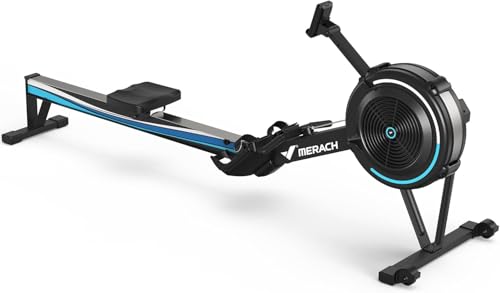
- MERACH Rowing Machines for Home Use about$9007W.
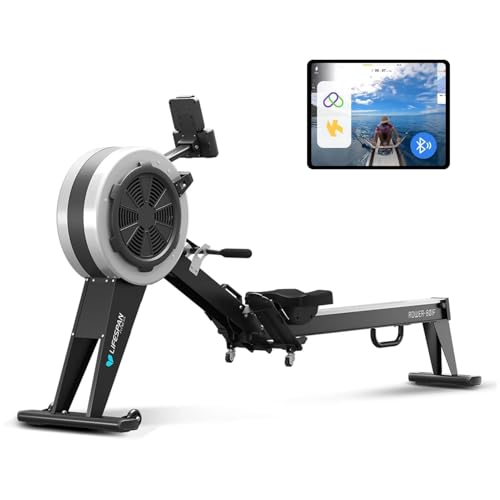
- Lifespan Fitness ROWER-801F Air and… about$904
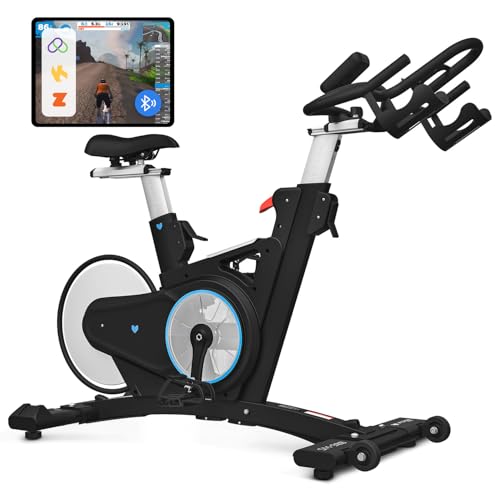
- Most PremiumLifespan Fitness SM900 Commercial Magnetic… about$1,543
Bike or rower: what you're actually buying
Most of the exercise bikes and rowing machines that come into the shop aren't broken in any way a motor would be. They're a flywheel, a resistance system, a seat on a rail and a small console running off batteries or a plug pack, and when one stops working it's usually the console, a worn bearing or a seat roller that's gone flat on one side. That's good news if you're buying, because the things worth paying for are mostly easy to check on a listing before you order.
The bike or rower choice is mostly about space and what you'll actually use. A bike sits in about the footprint of a dining chair and a half, you can ride it while watching something, and there's very little to set up each time. A rower is a long, low machine, often well over two metres in use, and it asks more of your technique. Both will do the job if they get used three times a week rather than once a month. If floor space is the real problem, a walking pad that slides under a desk is the other option I'd look at.
I've put three bikes and two rowers in this guide because the same buying mistakes apply to both. People pay for a big screen they stop using, sign up to an app they forget to cancel, and buy the lightest frame that'll fit through the door. I'd rather you spent the money on the flywheel, the frame and a seller you can actually reach when a console dies, and that's roughly how I've ranked the five picks further down.
Magnetic, air and water resistance
Magnetic resistance is what you'll find on nearly every home bike now, including all three bikes here. Magnets sit beside a metal flywheel and, as you turn the knob or press the button, they move closer and create eddy-current drag without ever touching it. Nothing rubs, so there's no felt pad to wear out, and it's close to silent. The catch is that the feel is much the same at every speed, which some riders find a bit flat compared with a road bike on a hill.
Air resistance uses a fan, so the harder you pull or pedal the more air it moves and the harder it gets. That's why air rowers feel natural to anyone who's rowed before, and why the MERACH R50 in this guide uses a fan with a 10-level damper. The downside is noise. A fan rower at full effort is loud enough to hear through a wall, so I wouldn't put one in a unit with a neighbour on the other side of the lounge room, or anywhere near a sleeping baby.
Water rowers put a paddle inside a sealed tank, and resistance depends on how much water you put in. The JOROTO MR280PRO has six level markings on its tank, so you change the feel by adding or draining water rather than turning a dial. It's quieter than air, more of a whoosh than a roar, but the tank is one more thing to look after. Keep the water clean with whatever tablets the maker specifies and check the seals each season, because a slow leak onto timber floors does real damage.
Flywheels, belts and why the drive matters
Flywheel weight gets quoted on almost every bike listing, and it does matter, though not quite the way the marketing suggests. A heavier flywheel carries more momentum, so the pedal stroke feels smoother and there's less of that dead spot at the top. The MERACH magnetic bike lists a 10kg flywheel, which is a sensible figure for a home bike at $600. Lifespan doesn't give a flywheel weight for the SM900 or the RC-300, so I've left that out rather than guess at it.
The drive between the pedals and the flywheel is what I'd look at next. Nearly everything at this price uses a belt now, which is quiet and needs no oil, rather than a chain that needs lubricating and stretches over time. A belt can still glaze or crack after a few years, especially if the bike lives in a hot garage, but it's a common part and usually easy to swap. Listen for a squeak that rises with your cadence, because that's usually the belt or a bottom bracket bearing asking for attention.
On a rower the equivalent parts are the pull strap or chain and the recoil spring that winds the handle back. Straps fray where they run over the pulley, and a recoil spring that's lost its tension leaves the handle hanging halfway down the rail. Both are replaceable on a decent machine, so before you buy I'd check that the brand sells spares in Australia or at least publishes a part number. A rower with no spare strap available tends to have a fixed lifespan, however well the rest of it is built.
The console, the app and subscription lock-in
The console is the part that fails most, and it's also where makers try hardest to sell you something. A basic LCD showing time, distance and resistance level rarely goes wrong beyond flat batteries or a corroded battery contact from sweat. Big built-in touchscreens are another story: they're a small tablet bolted to a machine that shakes every time you use it, and when one dies out of warranty the replacement part can cost a large slice of what the whole bike did.
That's why I've leaned towards machines that use your own phone or tablet as the screen. The JOROTO and both MERACH machines talk to apps over Bluetooth and give you a holder for a device, so the screen you're watching is one you can replace or upgrade on its own terms. If you'd rather keep a dedicated screen on the machine, a tablet from our mid-range tablet guide does the job and in my experience outlives most built-in consoles.
Subscriptions are the running cost people forget to price. JOROTO includes a 30-day Kinomap code with the MR280PRO, which is fine, but after that it's Kinomap's own monthly fee if you want the scenery and classes. MERACH pushes its own app. Before you buy any connected machine, check whether its basic display still works without an account, because a bike that only shows resistance through an app is a bike that stops being useful the day that app changes its terms or disappears.
Space, floors and the weight of the thing
Work out where it's going before you weigh up anything else. Going by Amazon's listed item weights, the MERACH magnetic bike is about 35kg, the Lifespan RC-300 recumbent about 54kg and the SM900 spin bike about 82kg, which makes the last one a two-person carry that won't be moved around much. The rowers are lighter, around 24kg for the JOROTO and 33kg for the MERACH, but they're long: Amazon lists the JOROTO at about 1.8m and the MERACH R50 at about 2.4m.
Both rowers stand up on end for storage, which is how most people end up living with them. The JOROTO folds to roughly 54 x 44.5 x 91cm, and its listing says the tank is sealed, so you don't need to drain it when it's upright. The MERACH R50 splits into two sections and stands about 138cm high when folded. Leave a clear space behind the seat rail as well, because you need room to slide all the way back without hitting a wall, a cabinet or a curious cat.
Put a rubber equipment mat under anything here. It keeps sweat off the floor, stops a bike walking across tiles and takes some of the vibration out of a timber floor upstairs. For rowers it also stops grit getting picked up by the seat rollers, which is one of the faults I see most on machines that live in garages. A level floor matters more than people think too, because a frame that rocks puts uneven load through its welds and bolts on every single stroke.
Power: batteries, adapters and auto resistance
Manual magnetic bikes often run their console off AA batteries, and some generate a little power from the flywheel. Bikes with motorised resistance, like the Lifespan RC-300 with its automatic resistance and 12 preset programs, need a small motor to move the magnets, which usually means a mains plug pack. Lifespan's listing doesn't state the power arrangement, so check the manual or ask the seller before you plan where it'll sit, because you'll want a wall socket nearby rather than a long extension lead across the floor.
If a machine does need mains power, plug it into a wall socket or a decent surge-protected board rather than a tired double adaptor. The adaptors that come with fitness gear are small switch-mode supplies, and they fail the same way phone chargers do. Our page on what poor power supplies do to electronics covers how that happens, and a surge-protected powerboard is worth having under any console that runs off the mains.
Running cost is small either way. A console and resistance motor draw a few watts while you ride, so even an hour a day costs cents a week at the roughly 33c/kWh Australian average tariff. The real running costs are console batteries, a subscription if you take one, and the odd strap, belt or seat roller. Keep a spare set of batteries in a drawer and take the old ones out if the bike won't be used for a month, and you'll mostly avoid the corroded-contact fault.
Keeping it running: bearings, seat rails and sweat
Sweat is the enemy of everything on these machines. It's salty, it drips straight onto the frame and the console, and it works its way into the crank bearings and the seat post clamp. Wiping the frame down after each session sounds fussy, but it's the one habit that keeps bolts from seizing and paint from bubbling. On the RC-300 and the MERACH bike, keep an eye on the screws under the console, because that's where corrosion usually starts on the bikes I open up.
Rower seat rails need to stay clean and dry. The JOROTO uses PU rollers on its oak rail and the MERACH runs on a steel track, and both pick up dust that turns into a gritty paste once sweat gets into it. Wipe the rail with a dry cloth after use and check the rollers for flat spots every few months. A seat that starts to clunk or stick usually needs new rollers or bearings rather than a new rower, and that's a part you can often fit yourself with the tools from the box.
Tighten things on a schedule. Pedals, crank bolts, seat clamps and handlebar bolts all work loose with use, and a loose crank damages the taper it sits on if it's left too long. Every month or so, go over the bolts with the tools that came with the machine. If a console stops reading its sensors, check the cable connector at the base of the console stem first, because it's often just pulled loose or corroded rather than a fault on the board itself.
How I picked these five
I searched Amazon AU for exercise bikes and rowing machines between $500 and $2,000, new condition only, and dropped anything sold by an overseas-named seller or listed as an import. Then I sorted what was left by Amazon AU's category sales ranks. The MERACH magnetic bike is ranked #1 in Bike Resistance Trainers and the Lifespan RC-300 is #1 in Adult Recumbent Bikes, which tells you they're the ones people are actually buying right now, not just the ones with the loudest listings.
Two of the five are sold and shipped by Amazon AU itself, both Lifespan, which matters for returns on something that weighs 50kg or more. The other three come from brand storefronts, MERACH Fitness and the SPORT & FITNESS store that sells JOROTO. Brand-store listings are fine, but I'd keep the order confirmation and check warranty terms before ordering, because the MERACH rower states a 1-year manufacturer warranty and the other four listings don't state one at all.
Everything below is judged on hardware and listing data only. These listings are full of claims about what the machine will do for your body, and I've left all of that out, because a repair shop has nothing useful to add there. What I can tell you is which resistance system suits your house, which console is easy to live with and which parts you'll be replacing first. If a machine you already own has a fault, the workshop in Erina can usually tell you what it needs.
The 5 picks, $600 to $1,543
Prices are Amazon AU at time of writing (19 October 2026) and move week to week. Ranks are Amazon AU category sales ranks, checked the same day.

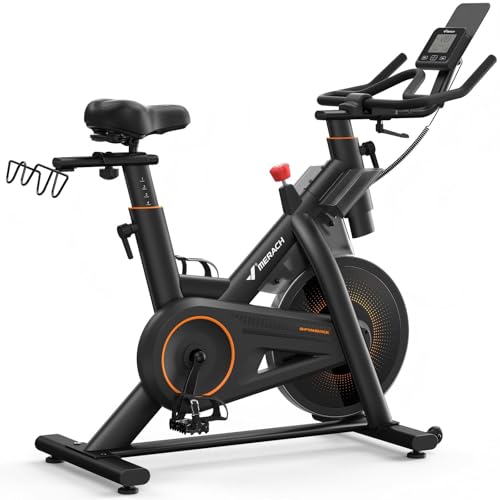
MERACH Magnetic Exercise Bike, 16 Levels, 10kg Flywheel
ASIN B0GDXSZ8PG • $599.99 • Sold by Merach Fitness on Amazon AU
The MERACH magnetic exercise bike is the best-selling bike in this guide, ranked #1 in Amazon AU's Bike Resistance Trainers category, and at $600 from the MERACH Fitness store it's the one I'd start with for most homes. It uses 16 levels of magnetic resistance against a listed 10kg flywheel, which is a sensible weight for a home bike and should give a smooth stroke without the dead spot you get on lighter flywheels. The drive is a belt, so there's no chain to oil and very little noise, and MERACH pitches it at apartments and shared houses for exactly that reason. Amazon lists it at about 35kg, light enough for one person to tip onto its wheels and move to another room.
Fit is generous for a bike at this price. The listing gives a rider height range of 4'8" to 6'4", which is about 142cm to 193cm, with four-way seat and handlebar adjustment and a padded seat. There's an LCD display on the bars, a water bottle holder and a pair of stands for dumbbells. MERACH's app handles classes and tracking, and the listing says the bike syncs with other platforms without naming them, so I'd check which ones before you buy if you already pay for an app. The part number on the listing is S26, which is worth writing down somewhere for spares and support later on, because MERACH sells this frame under several listing titles.
A few things are missing from the listing data. There's no maximum rider weight figure, only a claim of high weight capacity, and no warranty term, so check both on MERACH's own page before ordering. The console's power source isn't stated either. MERACH sells several versions of this bike under very similar names, including one with a large built-in screen at $690, so make sure the listing you order from shows the 10kg flywheel and 16 levels described here. For most people who want a quiet bike they'll actually ride, it's the one I'd buy first.
Honest caveats: No max rider weight, warranty term or console power source stated on the listing, and the claim that it syncs with popular platforms isn't backed by a list of names. MERACH sells near-identical versions under similar titles, so match the flywheel and resistance figures before you order. Sold by a brand store, not Amazon AU.
Best for: A quiet, belt-driven magnetic bike for an apartment or spare room.
Type: Upright magnetic exercise bike • Resistance: 16 levels, magnetic • Flywheel: 10kg • Drive: Belt • Rider height: 142 to 193cm (4'8" to 6'4") • Weight: About 35kg (Amazon listing) • Model: S26 • Seller: Merach Fitness • Rank: #1 in Bike Resistance Trainers (Amazon AU)
View on Amazon AU
Lifespan Fitness RC-300 Recumbent Bike
ASIN B079N1YYDZ • $749.00 • Ships from Amazon AU
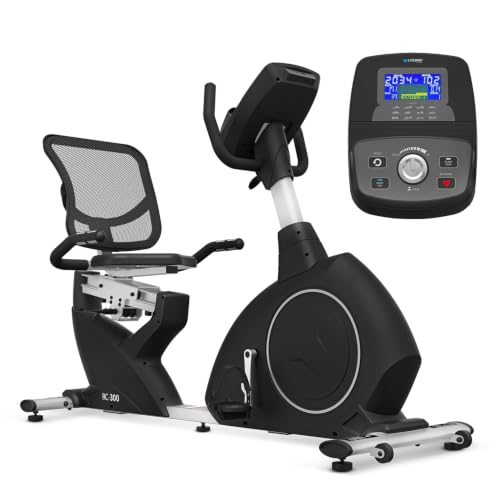
The Lifespan Fitness RC-300 is a recumbent bike, which means you sit back in a proper seat with a backrest and pedal out in front of you rather than perching over the pedals. It's ranked #1 in Amazon AU's Adult Recumbent Bikes category and sells for $749, sold and shipped by Amazon AU itself, which makes returns much simpler on something this heavy. Resistance comes from a heavy-duty magnetic flywheel, so nothing rubs and the ride stays quiet. Lifespan is an Australian brand with a long local presence, and in my experience that counts for more on a fitness machine than most of the specs printed on the box, mostly because parts and support are easier to find here.
The big difference from the MERACH is that the RC-300 has automatic, variable resistance. You pick from 12 preset programs on the console and it moves the magnets for you, or you set the level yourself and leave it. The LCD console tracks the session and has hand-grip sensors on the handlebars that feed it, and the seat adjusts to suit different riders. Amazon lists it at about 54kg and roughly 170cm long, 66.5cm wide and 110cm high, so it takes up more floor than an upright bike, and it isn't one you'll want to move around every day. Plan a permanent spot for it near a wall socket, ideally on a mat, and set the seat position once for whoever rides it most.
Automatic resistance needs a small motor and usually a mains plug pack, and the listing doesn't state the power arrangement or the warranty term, so check Lifespan's product page before you plan where it goes. The flywheel weight and maximum rider weight aren't listed either. The recumbent seat is easier to get on and off than an upright saddle, which is a big part of why these sell so well to people who find a spin bike awkward. If you want the simplest bike to live with and a seller that's easy to reach when something goes wrong, it's my pick here.
Honest caveats: Flywheel weight, max rider weight, power supply and warranty term aren't stated on the listing. Motorised resistance adds a small motor and a plug pack that can both fail. At about 54kg and 170cm long it needs a fixed spot within reach of a wall socket.
Best for: A comfortable, easy-to-mount bike with programs, sold by Amazon AU.
Type: Recumbent magnetic bike • Resistance: Automatic, magnetic flywheel • Programs: 12 preset • Console: LCD with hand-grip sensors • Size: About 170 x 66.5 x 110cm • Weight: About 54kg (Amazon listing) • Model: RC300 • Seller: Amazon AU • Rank: #1 in Adult Recumbent Bikes (Amazon AU)
View on Amazon AU
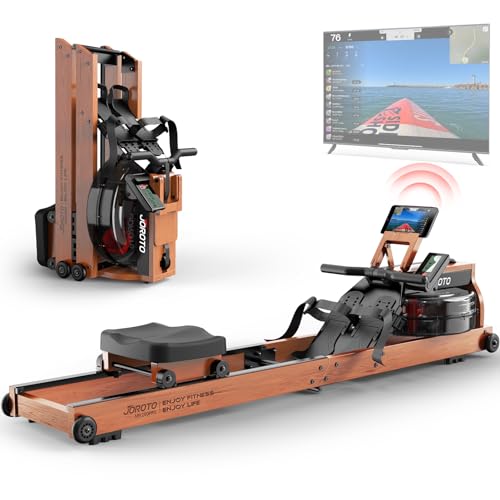
JOROTO MR280PRO Water Rowing Machine, Solid Oak, Foldable
ASIN B0CJM3NQK7 • $649.99 • Sold by SPORT & FITNESS on Amazon AU
The JOROTO MR280PRO is a water rower with a solid oak frame, and at $650 it's the best-ranked rower I found, sitting at #5 in Amazon AU's Rowing Machines category. The frame is FSC-certified oak and the listing rates it for users up to 150kg, with a rail that suits a maximum leg length of 99cm. Resistance comes from a paddle in a sealed tank, and you change how heavy it feels by filling to one of six level markings, so there's no dial and nothing electrical involved in the resistance itself. The seat runs on PU rollers along the oak rail, which keeps the glide quiet and smooth, and the rollers are the part I'd expect to replace first.
It's sold through the SPORT & FITNESS storefront, not Amazon AU. The monitor connects over Bluetooth to the Kinomap app, and JOROTO includes a 30-day Kinomap code, after which you'd be paying Kinomap's own fee if you want to keep using it. There's a tablet holder for a phone or iPad, and the footplate support has been changed from timber to steel on this version, which is a sensible fix. It folds upright to about 54 x 44.5 x 91cm, and the listing says its patented seal means you don't need to drain it before standing it up. It arrives about 90% assembled, so you fit the seat and go.
Water rowers need a little care that air and magnetic machines don't. Keep the water clean with the purification tablets the maker recommends, keep the tank out of direct sun so it doesn't grow algae, and check the tank seal and plug every few months, because a slow leak on a timber floor is the expensive failure here. The oak also wants a wipe after use so sweat doesn't mark it. The listing doesn't state a warranty term, so check that before you order. For a quiet rower that looks like furniture when it's standing in a corner, it's the one I'd buy.
Honest caveats: No warranty term on the listing, and Kinomap becomes a paid subscription after the 30-day code. The tank needs clean water and regular seal checks, and a leak can damage floors. Sold by a brand storefront rather than Amazon AU, and about 1.8m long in use.
Best for: A quiet rower that stores upright in a lounge room or bedroom.
Type: Water rowing machine • Frame: FSC-certified solid oak • Resistance: Water tank, 6 level markings • Max user: 150kg • Max leg length: 99cm • Folded: About 54 x 44.5 x 91cm • App: Bluetooth, Kinomap (30-day code) • Seller: SPORT & FITNESS • Rank: #5 in Rowing Machines (Amazon AU)
View on Amazon AU
MERACH R50 Air Resistance Rowing Machine, Foldable
ASIN B0G2CT5HRB • $899.99 • Sold by Merach Fitness on Amazon AU
The MERACH R50 is an air rower, so resistance comes from a fan that pushes back harder the harder you pull. It's $900 from the MERACH Fitness store and ranked #17 in Amazon AU's Rowing Machines category. The listing gives 10 levels of air resistance via a damper, with up to 110lbs (about 50kg) of peak resistance, which is plenty for most home rowers. It's built on a steel frame with an extended track aimed at taller users and a maximum user weight of 158kg, the higher of the two rowers here. Amazon lists it at about 33kg and roughly 2.4m long, so measure the room before you order one.
The footplates adjust so you can set your leg position properly, which matters more on a rower than most people expect, and the performance monitor connects to the MERACH app over Bluetooth. There's a holder for your phone or tablet as well. It arrives about 90% pre-assembled, and for storage it splits into two sections and stands upright at roughly 83 x 73 x 138cm. MERACH lists a 1-year manufacturer warranty, the only warranty term stated across all five listings, which I'd count as a small point in its favour. In the box you get the rower, the monitor, the manual and the assembly tools, which is all you need to put it together.
The fan is the trade-off. Air rowers are loud at full effort, more of a roar than the JOROTO's whoosh, so think about who's on the other side of the wall before you buy one for early-morning sessions. The fan housing also pulls in dust and pet hair, so give the intake a vacuum every few months and keep the strap clean where it runs over the pulley. The listing doesn't say whether the monitor runs on batteries or a plug pack, so check that if the rower is going somewhere without a socket. If you've rowed before and want that familiar feel, it's the rower I'd choose.
Honest caveats: Loud at high effort, which makes it a poor fit for shared walls. At about 2.4m long it needs a lot of floor while in use. The monitor's power source isn't stated. Warranty is 1 year, and support goes through the brand store rather than Amazon AU.
Best for: A familiar-feeling rower for a garage or a room with no shared wall.
Type: Air rowing machine • Resistance: 10 levels, air damper • Peak resistance: Up to 110lbs (about 50kg) • Max user: 158kg • Folded: About 83 x 73 x 138cm • Weight: About 33kg (Amazon listing) • Warranty: 1 year (manufacturer) • Seller: Merach Fitness • Rank: #17 in Rowing Machines (Amazon AU)
View on Amazon AU
Lifespan Fitness SM900 Commercial Magnetic Spin Bike
ASIN B0CS2K71TL • $1,543.33 • Ships from Amazon AU
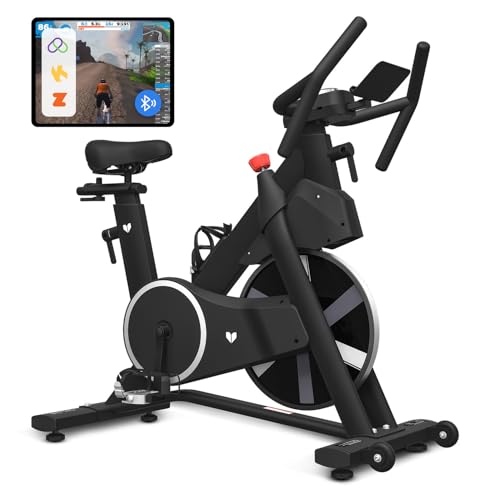
The Lifespan Fitness SM900 is a commercial-style magnetic spin bike, and at $1,543 sold and shipped by Amazon AU it's the most expensive pick here by a long way. You get 24 levels of magnetic resistance, a wider range than the MERACH's 16, and a design Lifespan describes as suited to studio use. Amazon lists the bike at about 82kg, and that weight is a big part of what you're paying for: a heavy frame doesn't flex or rock when you stand up on the pedals, which is the thing that wears a lighter spin bike out first. Amazon AU ranks it #34 in its Elliptical Training Machines category, an odd home for a spin bike.
Adjustment is where it feels like a gym bike. The SpeedLock seat adjustment and fore-and-aft adjustability let you set saddle height and reach accurately, which matters for anyone riding seriously or sharing the bike between people of different heights. There's a multifunctional LCD display on the bars. Lifespan doesn't list Bluetooth or an app on this listing, which I'd count as a plus if you'd rather use your own phone with a cadence sensor, and a minus if you want classes built in. Being sold by Amazon AU makes it far easier to return an 82kg box if something arrives damaged. If you'd like a screen, a tablet on a bar mount does the job without adding another console to fail.
The listing is thin, though. There's no flywheel weight, maximum rider weight, drive type or warranty term, so check Lifespan's own product page for all four before you spend this much. At 82kg it's a two-person job to unbox and move, and once it's in place it's staying there, so set it up on a mat in the room you'll actually use it in. If you ride most days, stand up on the pedals a lot or share the bike around a household, the heavier frame earns its price over the MERACH. If you ride twice a week, I'd put the difference elsewhere and buy the MERACH.
Honest caveats: Flywheel weight, max rider weight, drive type and warranty aren't on the listing, and no app or Bluetooth is listed. At about 82kg it needs two people to move and a permanent spot. It costs more than double the MERACH, which only pays off with heavy, regular use.
Best for: Daily riders and households sharing one bike who need a frame that won't flex.
Type: Commercial-style magnetic spin bike • Resistance: 24 levels, magnetic • Adjustment: SpeedLock seat, fore and aft • Console: Multifunctional LCD • Weight: About 82kg (Amazon listing) • Model: SM900 • Seller: Amazon AU • Rank: #34 in Elliptical Training Machines (Amazon AU)
View on Amazon AUSide-by-side comparison
What we see fail in the workshop: exercise bikes and rowers
Exercise bikes and rowers are simple machines with a bit of electronics bolted on, and most of what goes wrong is wear, sweat and power rather than anything dramatic. These are the three faults I'd want every owner to know about. Each one gives you some warning before it stops the machine, and each one costs a lot less to sort out early than it does after it's been ignored for a season.
Consoles that go blank or lose the sensor
The most common complaint is a console that won't turn on, flickers or stops showing speed and distance. Nine times out of ten it's power or a connection rather than the board. Battery contacts corrode from sweat dripping onto the console, plug packs fail the same way no-name phone chargers do, and the sensor cable that runs up the console stem gets pulled loose when the bars are adjusted. I'd check the batteries first, then the plug pack with a multimeter, then the connector at the base of the stem. A console with a board cracked in a fall, or with water inside it, is a bigger job, and that's when it's worth getting it looked at before you order a replacement.
Bearings, belts and the noise that tells you
A new squeak or knock that changes with your cadence is usually a bearing or the belt. Bottom bracket and flywheel bearings dry out and start to grind, belts glaze and slip under load, and loose crank bolts make a click on every stroke that eventually ruins the crank taper. On rowers the equivalent is a seat roller with a flat spot or a fan bearing that's started to rumble. Most of these are common parts and usually easy to source. Catching them when they first start making noise saves the shaft and housing they sit in, which are the parts that cost real money to replace.
Leaking tanks and stuck resistance motors
Water rowers fail at the tank: a perished plug seal, a tank cracked by being dropped while it was full, or a seam that weeps slowly onto the floor. Check under the tank after every refill for the first few weeks. Motorised resistance bikes like the RC-300 have a small motor that moves the magnets, and when it fails the bike sticks on one level or throws an error on the console. Often it's the motor's cable or the plug pack, and sometimes it's the motor itself. Both are fixable, and both are worth diagnosing properly before you decide the whole bike is finished.
Decision tree: which one should you actually buy?
- Want one quiet bike for a unit or spare room? → The MERACH magnetic exercise bike at $600, with a belt drive, 16 levels and a 10kg flywheel.
- Find upright saddles awkward to get on and off? → The Lifespan RC-300 recumbent at $749, sold by Amazon AU, with automatic resistance and 12 programs.
- Want a quiet rower that stores upright in the lounge? → The JOROTO MR280PRO water rower at $650, with a solid oak frame and a sealed tank.
- Rowed before and want the familiar fan feel? → The MERACH R50 air rower at $900, as long as the noise won't bother anyone through a wall.
- Riding most days or sharing one bike around the house? → The Lifespan SM900 spin bike at $1,543, for its 82kg frame and 24 resistance levels.
- Console dead, squeaking or stuck on one level? → Check the batteries, plug pack and stem connector, then bring it to our Erina workshop and we'll tell you whether it's worth fixing before you spend anything.
Frequently asked questions
Is an exercise bike or a rowing machine better for a small home?
For most small homes a bike is easier, because it sits in a footprint about the size of a chair and stays set up. A rower needs a long clear strip of floor while you're using it, about 1.8m for the JOROTO MR280PRO and about 2.4m for the MERACH R50 going by Amazon's listed lengths, plus room behind the seat. The trade-off is that both rowers here stand upright for storage, so if you can clear the space for half an hour and stand it in a corner afterwards, a rower can take up less room day to day than a bike.
What's the difference between magnetic, air and water resistance?
Magnetic resistance moves magnets near a metal flywheel to create drag without any contact, so it's quiet, has no pads to wear and feels much the same at any speed. Air resistance uses a fan, so it gets harder the faster you go and feels natural to people who've rowed before, but it's loud. Water resistance uses a paddle in a tank, and you change the feel by adding or removing water. It's quieter than air and has a pleasant whoosh, but the tank needs clean water and the seals need checking every few months.
How heavy should the flywheel be on an exercise bike?
Heavier is smoother up to a point, because the extra momentum carries the pedals through the top of the stroke. The MERACH in this guide lists a 10kg flywheel, which is a sensible figure for a home magnetic bike at its price. Past a certain weight, the stiffness of the frame and the quality of the bearings matter more than a few extra kilos on the flywheel. Lifespan doesn't list flywheel weights for the RC-300 or the SM900, so look them up on Lifespan's own site if you want to compare the bikes like for like.
Do I need a subscription to use these bikes and rowers?
No, not for basic use, but check before you buy. The JOROTO MR280PRO includes a 30-day Kinomap code, and after that Kinomap charges its own monthly fee if you want the scenery and classes. The MERACH machines work with MERACH's own app. The Lifespan bikes in this guide have their own LCD consoles and don't list any app at all. The question I'd ask of any connected machine is whether its built-in display still shows resistance, time and distance without an account, because that's what keeps it useful if you stop paying.
How do I look after a water rowing machine?
Use clean tap water and the purification tablets the maker recommends, usually every few months, so algae and cloudiness don't build up. Keep it out of direct sunlight, which speeds up algae growth and can fade the tank. Check the fill plug and its seal each time you top it up, and look under the tank for drips for the first few weeks. Wipe sweat off the timber rail and frame after each use and keep the seat rollers clean. Don't move it while it's full unless it's designed to tip onto its wheels.
Can an exercise bike console that won't turn on be fixed?
Usually, yes. Most dead consoles are a power fault rather than a failed board: corroded battery contacts from sweat, a flat set of batteries, a failed plug pack, or the sensor cable at the base of the console stem pulled loose or corroded. Those are quick to test with a multimeter and usually quick to fix. A board that's been cracked in a fall or had sweat or water get inside takes more work, and sometimes the maker's replacement console is the sensible answer. It's worth having it diagnosed before you buy a whole new machine.
Related buying guides
Bike or rower console dead? Get it checked before you replace it
Most exercise bikes and rowers that stop working have a console power fault, a loose sensor cable, a worn bearing or a failed resistance motor, not a frame that's finished. Bring yours to our Erina workshop and we'll test the console, wiring and power supply, then tell you what it needs and what it'll cost before you spend anything on a new machine.
Visit our Erina workshop Book Online