Prices from Amazon AU, updated daily. Swipe or use the arrows for more.
Disclosure: This article contains affiliate links to amazon.com.au. If you buy through one of these links iFix may earn a small commission at no extra cost to you. It doesn't change which products we recommend. We focus on what actually lasts based on 16 years of repair-shop experience.
Quick summary8 picks
- Entry PickGoldair 5 Blade 40cm Pedestal Fan White about$39
- Goldair 40cm Pedestal Fan with Remote about$65
- Philips Smart Pedestal Fan 3000 about$169.00
- Philips Pedestal Fan 2000 Series about$122
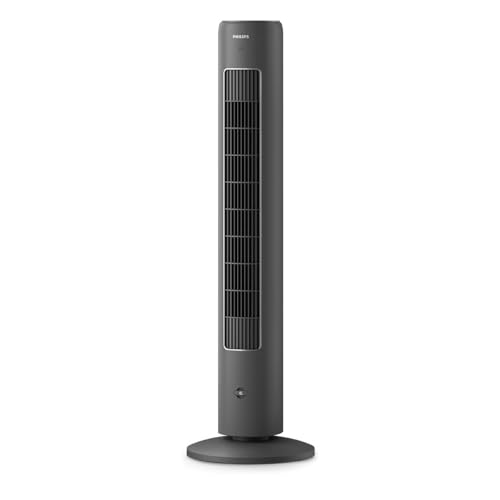
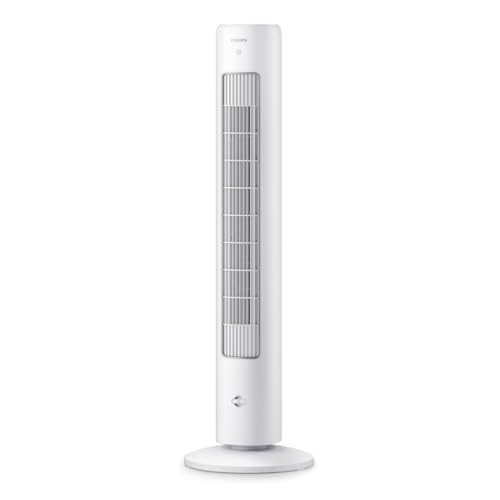
- Philips Tower Fan 5000 Series about$129.00
- Philips Tower Fan 5000 Series about$167.36
- Vornado 683 Medium Pedestal Air Circulator… about$259.00
- Most PremiumShark TurboBlade Ultra Powerful Bladeless… about$397.00
Why the fan is back on the shopping list
Run a 2,000W portable air conditioner flat out and, at the average AU tariff of roughly 33c/kWh, it costs about 66c an hour. A pedestal fan drawing around 50W costs under 2c an hour on the same assumption. That ratio, thirty to one or so, is why fans are selling again after a decade of being treated as the poor cousin. A fan won't drop the room's temperature a single degree, and anyone who tells you otherwise is selling something, but moving air across skin changes how a room feels by a margin that surprises people who've only ever reached for the aircon remote.
The catch is that the fan aisle is full of numbers that don't mean much. Airflow gets quoted in three different units or not at all, noise figures are measured at the lowest speed the firmware allows, and oscillation is treated as a tick-box when it's actually the first mechanism to fail. The five picks here, from a $59 Goldair to a $284 Shark, were chosen from the current Amazon AU best-seller lists, and the sections below sort the specs that matter from the ones that pad the listing.
Fans also earn their spot next to the compressor gear rather than instead of it. If the plan for this summer involves serious cooling, our portable air conditioners guide covers that side, and a fan is what lets the aircon work less once the room is close to comfortable. The pairing is where the running-cost story gets interesting, and there's a section on it below.
Pedestal, tower or circulator: the shapes do different jobs
A pedestal fan is the honest one of the family. A big open blade on an adjustable pole moves a lot of air for very few watts, the height and tilt adjustment means the airflow lands where the people are, and the open grille design is the easiest of the three to clean and to fix. The Goldair and both Philips pedestal picks here follow that template. The cost is floor presence: a 40cm blade on a pole is furniture, and in a small bedroom it can feel like a third person standing in the corner.
A tower fan trades raw airflow for footprint and spread. The Philips 5000 Series here stands 105cm tall on a base not much bigger than a dinner plate, and its long vertical outlet pushes a wide, even sheet of air rather than a concentrated cone. Towers suit rooms where the fan has to live beside a desk or a bed without dominating it. The mechanical trade is that the impeller and motor sit inside a sealed column, so when a tower gets noisy or stops oscillating it's a harder machine to open up than a pedestal.
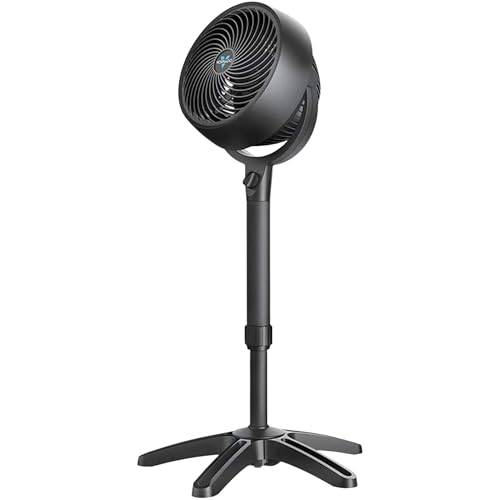
The Vornado 683 is the odd one out, and deliberately so. Vornado calls it an air circulator, and the distinction is real: instead of a breeze aimed at a person, it throws a beam of air across the room so the whole volume keeps turning over, with the listing quoting coverage up to about 23 square metres. You don't sit in front of a circulator, you park it in a corner and let the room's air stop being layered and stale. It's the right tool for spreading cool air from one aircon into the next room, and the wrong tool if what you want is wind on your face.
Airflow numbers that mean something
There's no single unit for fan output on Amazon AU, which suits the weaker products fine. Philips states its tower moves up to 2,230 cubic metres an hour, Vornado quotes up to roughly 389 cfm for the 683, which converts to about 660 cubic metres an hour, and the Goldair listing states no airflow figure at all. Those three tell you the state of the category: the brands with good numbers publish them, the brands with adequate numbers publish something adjacent, and the rest publish the remote control and the timer instead.
Distance claims are the adjacent something. Shark says the TurboBlade accelerates air over 20 metres, and Philips claims the Smart Pedestal 3000's airflow can be felt up to 30 metres away. Both are more or less throw measurements, how far a detectable stream travels in a still room, and they reward tight, fast jets rather than broad comfortable ones. A fan with a long throw figure isn't lying to you, but it's answering a different question from the one you're asking, which is usually whether the far side of the lounge will feel it on speed two.
My working rule when a listing states nothing: judge by blade size, category rank and brand, in that order, and assume a 40cm pedestal at full speed moves roughly what the mid-tier published figures suggest, somewhere in the low thousands of cubic metres an hour. A category best seller with years of reviews behind it, like the Goldair at #1 in Pedestal Fans, has been vouched for by a lot of hot summers. That's weaker evidence than a stated m3/h figure, but it's far from nothing.
Noise at the speed you'll actually use
Every quiet-fan claim on a listing is measured at the lowest speed, because that's where the flattering number lives. Philips is the interesting case here because it publishes both ends: the Smart Pedestal 3000 claims sound levels as low as 19 dB(A) with its SilentWings blade design, and the tower states a 39 to 46 dB range from minimum to maximum. That second style of disclosure is the one to reward. A single small number tells you about a speed you'll use for sleeping; the range tells you what the fan sounds like doing its actual job.
The way to buy quiet isn't to chase the smallest dB claim, it's to buy airflow headroom. A big fan loafing on speed one moves as much air as a small fan flogging itself on speed three, and does it with less blade noise and less motor whine. This is where the Shark's ten speeds earn their keep: fine steps between quiet and powerful mean there's usually a setting that's exactly loud enough and no louder, where a three-speed fan forces you to choose between too little air and too much noise.
Noise also changes over a fan's life, and the change is diagnostic. A new rattle at low speed is usually the grille or a blade balance problem, a hum that's grown louder over a couple of summers is typically bearings running dry, and a clicking that tracks the oscillation sweep is the gearbox announcing its retirement. None of those mean the fan is finished, and the bench section further down covers which ones are worth fixing.
Running cost, and the aircon partnership
The arithmetic deserves to be done in full once. Take a pedestal fan drawing around 50W, run it eight hours overnight, and that's 0.4 kWh, which at the stated assumption of 33c/kWh costs about 13 cents a night. Run it every night of a three-month summer and the season costs around twelve dollars. A 2,000W portable aircon doing the same shift is about $5.30 a night and roughly $480 a season, flat out. Real compressors cycle, so the real bill lands somewhere below that, but the two numbers aren't in the same league and no amount of cycling makes them neighbours.
The smarter play than either-or is sequencing. Cool the room with the compressor, then let a fan hold the comfort while the aircon idles or switches off, and let a circulator push the cooled air into the rooms the aircon can't reach. If you want to see what your own gear actually draws rather than what the box claims, a metering plug from our smart plugs guide will settle it in an afternoon, and the wider tactics live in our home power savings rundown.
One honest limit: on a humid Central Coast night, air movement alone stops being enough sooner than the running-cost maths would like. Moving damp air across skin does less than moving dry air, which is why the muggy nights are the ones people cave and hit the compressor. If the house runs damp generally, the gear in our dehumidifiers guide attacks that side of the problem, and a dry room makes every fan on this page feel a size bigger than it is.
Placement: the free upgrade
Where the fan stands changes more than which fan you bought, and it costs nothing. The biggest win on the Central Coast is the evening changeover: once the outside air drops below the inside air, a fan parked at an open window and a second window open at the far side of the house turns the whole place into a slow duct. Blowing in or blowing out both work, and the argument about which is better matters less than just doing it. An hour of that moves more heat out of a house than the same hour of stirring the hot air that's already trapped inside it.
In the bedroom, resist the urge to park the fan a metre from your face on full. A jet that close is pleasant for ten minutes and annoying by 2am, which is when people wake up, turn the fan off and lose the benefit entirely. Better setups: oscillation sweeping across the bed rather than parked on it, the fan a few metres back so the stream spreads and softens before it arrives, or a circulator like the Vornado aimed high so the room's air turns over without a direct stream on anyone. The quiet speeds plus distance beat the loud speeds plus proximity every night of summer.
Across a whole house, two modest fans nearly always beat one big one. A fan in the hallway shifting air between zones, and another in the room you're actually in, covers more of the house than a single flagship straining from one corner, and at around 2c an hour each the second unit's running cost is loose change. It also builds redundancy into the hot week: one fan down in a two-fan house is an inconvenience rather than a sweaty emergency, and the repair can wait for the cool change instead of competing with it.
What to check before you buy, and what wears out
Pick a fan up before you trust it, or failing that, read the listing for weight and base design. A pedestal fan lives or dies by its base: too light and every bump of the couch sends it over, and a toppled fan running face-down into carpet is how motors cook. Check the cord entry for a moulded strain relief rather than a bare hole in the plastic, look for the RCM compliance mark that everything sold properly in Australia carries, and be suspicious of any fan whose grille flexes like a takeaway container lid.
Then think about year three rather than day one. Fans are simple machines and most of what fails is mechanical and fixable, provided the thing was built to open. Screws mean serviceable; glued or welded seams mean the first real fault is the last. The Vornado listing makes a point of its tool-free detachable grille, which is partly about cleaning and partly why circulators of that style have a reputation for long lives: dust is the slow killer of fan motors, and a machine you can strip in two minutes is a machine that actually gets cleaned.
On the electrical side, fans are light loads and a standard 10A socket barely notices one, but the habits still matter. Don't run a fan through a no-name unswitched timer that clunks the motor on and off at full speed all night, don't daisy-chain it off the same overloaded powerboard as the heater bank in winter and the aircon in summer, and retire any fan whose cord has gone stiff or whose plug runs warm. A warm plug on a 50W appliance is telling you about a bad connection, not a big load, and bad connections are the ones that start fires.
The 5 picks, $59 to $284
Prices are Amazon AU at time of writing (30 September 2026) and move week to week. Ranks are Amazon AU category sales ranks, checked the same day.

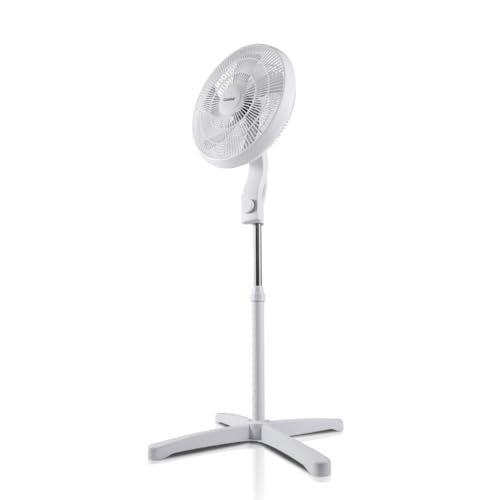
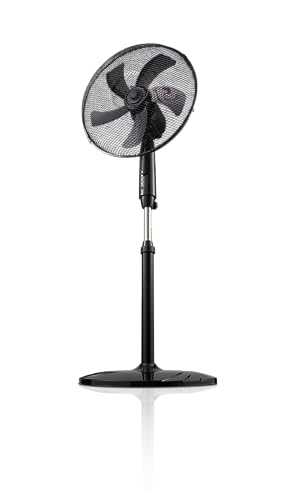
Goldair 40cm Pedestal Fan with Remote
ASIN B0BFDQS4FX • $59.00 • Ships from Amazon AU
The category's best seller, sitting at #1 in Pedestal Fans, and the answer to the most common version of this purchase: a proper 40cm pedestal fan, from a brand every Australian has owned something from, at $59. The format is the full classic kit rather than a stripped one. Three speeds and three wind modes cover steady airflow and the choppier natural-style settings, oscillation sweeps the room, and both the height and the head tilt adjust, so the air lands on the bed or the couch rather than the wall above it. A remote handles all of it from wherever you're sitting, which matters more on a hot night than it sounds in a showroom.
The feature I'd actually buy it for is the 7.5 hour auto-off timer. Overnight is where fans earn their keep, and a timer that lets the fan carry you through the hot first half of the night then bow out is the difference between a 13-cent night and running until morning for no benefit. There's an integrated carry handle too, which sounds trivial until you're the person moving one fan between the lounge and the bedroom every evening for a summer. Goldair hasn't published an airflow figure or a noise figure for this model, which is normal at the price, and the rank suggests plenty of buyers have decided the omission isn't a dealbreaker.
What you give up against the dearer picks is refinement and disclosure. No published dB number means you find out about speed-three noise when it's already in the bedroom, and three speeds means coarser steps between quiet and windy than the Shark's ten. Neither gap changes what this is: the most fan per dollar in the guide, from a brand whose spare parts and service presence in Australia are established. For a first fan, a spare-room fan or a rental, this is where I'd start, and at $59 adding a second unit for the spare room later is an easy call.
Honest caveats: The listing states no airflow figure and no noise figure, so speed-three volume is a discover-it-at-home property. Three speeds means coarse steps between settings compared with the multi-speed picks here. Build at this price is light, so give it a stable spot where it won't be clipped by passing traffic.
Best for: The first fan in the house: full pedestal format, remote and timer at the lowest price here.
Blade: 40cm • Speeds: 3, plus 3 wind modes • Oscillation: Yes, with adjustable height and tilt • Remote: Included • Timer: 7.5 hour auto-off • Extras: Integrated carry handle • Rank: #1 in Pedestal Fans (Amazon AU)
View on Amazon AU
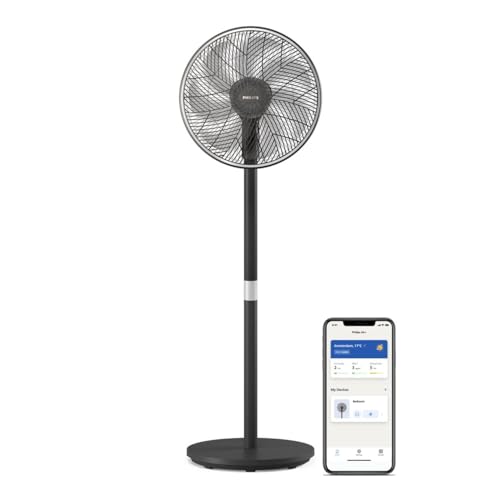
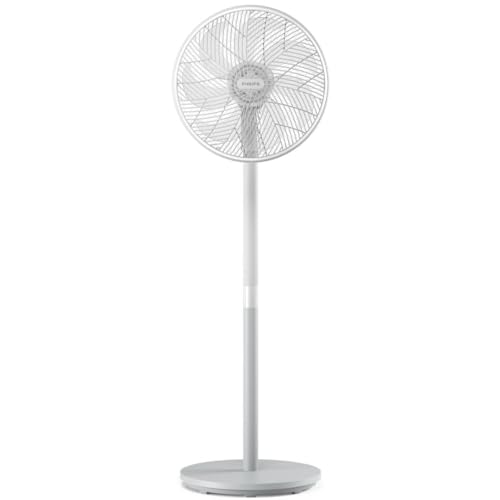
Philips Smart Pedestal Fan 3000 SilentWings
ASIN B0D9P5TFPD • $94.05 • Ships from Amazon AU
This is the bedroom pick, and the claim that puts it there is a stated sound level as low as 19 dB(A) from the SilentWings blade design, which Philips quotes as around 30 percent quieter operation than its own baseline. Listings throw quiet claims around freely, but a manufacturer publishing an actual figure that low is rarer than it should be, and it's backed by the sensible supporting cast: three speeds plus a natural breeze setting, a sleep mode, and a timer. It sits at #3 in Pedestal Fans at $94, and the gap between it and the Goldair is mostly this, an engineered quiet mode with a number attached rather than a hopeful adjective.
The smart half is Philips' Air+ app, which adds scheduling and remote control from the phone, and everything is still drivable from the fan itself for anyone in the house who has no interest in pairing anything. Philips also claims airflow that can be felt up to 30 metres away, which as discussed earlier is a throw figure rather than a volume figure, but it signals the fan isn't trading all its power for silence. The design converts between full pedestal height and a shorter table-top format, so it can spend summer beside the bed and shoulder season on a desk, and it rotates automatically to spread the air rather than drilling one spot.
The trade against the Goldair is thirty-five dollars for the quiet engineering, the app and the 2-in-1 format, and I think the bedroom case clears that bar easily. The trade against the tower below is shape: this is still a round-head pedestal with a real floor presence. The listing doesn't publish a m3/h volume figure or wattage, so the running-cost maths stays estimated, and app features always carry the standard caution that servers and apps age faster than motors do. If the app ever disappears, what's left is still a very quiet three-speed pedestal fan, which is most of what the money bought in the first place.
Honest caveats: The 19 dB(A) figure is the minimum setting, not the sound of speed three. No airflow volume or wattage is stated on the listing, and the 30-metre claim is a throw distance, not a coverage promise. App control depends on Philips' Air+ app staying maintained, so make sure every function also works from the hardware.
Best for: Light sleepers who want an engineered quiet mode with a published number, plus app scheduling.
Noise: As low as 19 dB(A), SilentWings design • Control: Air+ app or on-device • Speeds: 3, plus natural breeze and sleep modes • Timer: Yes, app and device • Format: 2-in-1 pedestal or table-top height • Oscillation: Automatic rotation • Claimed reach: Airflow felt up to 30m • Rank: #3 in Pedestal Fans (Amazon AU)
View on Amazon AU
Philips Tower Fan 5000 Series, 105cm
ASIN B0CQ3YH1PL • $113.05 • Ships from Amazon AU
The #1 tower fan on Amazon AU, and the pick for anyone who wants real published numbers in a category that mostly avoids them. Philips states up to 2,230 cubic metres an hour of airflow from the 105cm column, and a noise range of 39 dB minimum to 46 dB maximum, which is the honest both-ends disclosure this guide keeps asking for. The tall outlet pushes a wide sheet of air rather than a cone, the unit self-rotates to sweep the room, and three speeds plus three modes cover the gap between background circulation and actually windy. At $113 it's priced barely above entry-level towers whose listings state nothing at all.
The physical format is the reason to pick a tower in the first place: 105cm of height on a small round base, slim enough to stand between a bed and a wardrobe or beside a desk without owning the room. A remote covers the couch scenarios. The oddball extra is an aromatherapy slot that takes essential oils and scents the airflow, which I'd call a gimmick except it's removable and ignorable, and it does nothing to the fan's day job if you never touch it. Philips quotes its usual testing regime behind the build, and the brand's parts and support presence in Australia is long established, which matters when a remote or a base part needs replacing in year four rather than year one.
The trades are the tower format's own. Everything lives inside a sealed column, so cleaning the impeller means disassembly rather than wiping a grille, and when a tower eventually develops a bearing note or an oscillation click it's a workshop job rather than a Saturday one. Maximum airflow also trails a big open-blade pedestal at the same power, which is the physics of squeezing air through a narrow outlet. As the everyday fan for a bedroom, office or apartment lounge, those trades are usually worth making, and a yearly vacuum of the intake grilles delays the day anyone has to think about the sealed column at all.
Honest caveats: Sealed column construction makes internal cleaning and repairs harder than an open-grille pedestal, and dust will eventually find the impeller. The 2,230 m3/h figure is the maximum setting, which lives at the 46 dB end of the stated noise range, so the quiet speeds move meaningfully less air.
Best for: Small-footprint rooms where the fan lives beside furniture, and buyers who want stated airflow and noise figures.
Airflow: Up to 2,230 m3/h stated • Noise: 39 to 46 dB stated range • Height: 105cm, slim column • Speeds: 3, plus 3 modes • Oscillation: Self-rotating • Remote: Included • Extra: Optional aromatherapy slot • Rank: #1 in Tower Fans (Amazon AU)
View on Amazon AU
Vornado 683 Medium Pedestal Air Circulator
ASIN B08L45FSJ2 • $157.25 • Ships from Amazon AU
The Vornado 683 is the pick for changing a whole room rather than fanning one person, and it's a genuinely different machine from everything else here. Vornado's Vortex Action design throws a tight beam of air across the room so the entire air mass keeps circulating, with the listing quoting coverage up to about 23 square metres and up to roughly 389 cfm of output. In practice that means no dead corners, no cool zone in front of the fan and warm soup everywhere else, and it's the machine I'd park in the hallway to drag the aircon's work into the bedrooms. It holds #6 in Pedestal Fans at $157 despite doing a job most buyers haven't heard of.
The format is a compact pedestal with front-mounted three-speed controls, height adjustment from 81.5cm to 96cm, and a head that tilts up, down or straight ahead, because a circulator is usually aimed at a wall or the ceiling to set up the room-wide loop rather than at a person. Vornado pitches it as quiet enough for bedrooms and home offices, and the deep-pitch blade design does its work at lower speeds than a conventional fan chasing the same result. Assembly is tool-free and the grille detaches without tools, which matters because a circulator that runs day and night eats dust, and this one strips for cleaning in a couple of minutes.
Know what you're not buying: a breeze machine. Sit directly in front of a circulator and it's less pleasant than a $59 pedestal doing its simple job, because the output is a focused jet rather than a wide wash. Buy it to run rooms, pair it with cooling gear, or keep air moving through a house with the windows open at each end. Used that way it's the most effective machine in this guide, and the one most likely to still be running in ten years, going by how these are built.
Honest caveats: It's a circulator, not a personal fan, and aimed at a person the focused jet is less comfortable than a conventional pedestal. Three speeds only, no remote and no timer are stated on the listing, so the conveniences the other picks carry are absent. The ~23 square metre figure is Vornado's own rating.
Best for: Mixing a whole room's air, spreading aircon into adjoining rooms, and cross-ventilating with open windows.
Type: Air circulator, Vortex Action • Coverage: Up to ~23 m2 stated • Airflow: Up to ~389 cfm stated • Speeds: 3, front-mounted controls • Height: Adjustable 81.5 to 96cm • Head: Tilts up, down or straight • Maintenance: Tool-free assembly, detachable grille • Rank: #6 in Pedestal Fans (Amazon AU)
View on Amazon AU
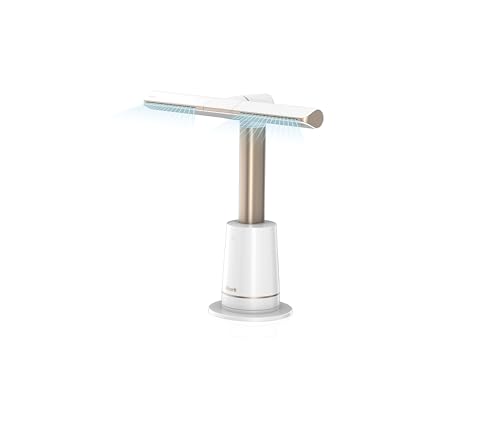
Shark TurboBlade Bladeless Tower Fan TF202SWHANZ
ASIN B0FQN6P1PC • $284.05 • Ships from Amazon AU
The dearest pick at $284, and the one that treats airflow as something you shape rather than just switch on. The TurboBlade's party trick is a pivoting bladeless head that swings from a vertical tower throwing a focused column, to a horizontal Air Blanket mode spreading a wide flat layer of air across a bed or a couch, with vents that twist independently and oscillation up to 180 degrees. Add ten speeds against the usual three and Shark's claim of accelerating air over 20 metres, and you get a fan that can be configured for almost any room geometry, which is exactly what the ordinary picks above can't do. It's also the only machine here that can lay a flat sheet of air across a whole bed.
The ten-speed ladder matters more than the headline power. Fine steps mean there's a setting that's precisely loud enough for the situation and no louder, and Shark leans into that with dedicated sleep and relaxation modes plus Natural Breeze and Breeze Boost patterns. Bladeless construction means no grille-and-blade assembly to catch dust; Shark quotes a wipe-clean design with what it calls DustDefense to keep particles out of the works, and keeping dust out is half the story of why fans die young. It holds #6 in Tower Fans within weeks of the model code suggesting a recent ANZ release, which for a premium-priced fan is quick movement, and suggests the format has found its buyers early.
The case against is straightforward price physics: $284 buys nearly five Goldairs, and air doesn't know what it was moved by. You're paying for the adjustability, the fine speed control and the low-maintenance build, not for five times the airflow. The listing publishes no dB figures or m3/h volume, leaning on mode names instead, which is a gap at this price. If the fan is going to be the main comfort appliance in the room you live in most, the flexibility earns the money; as a spare-room fan it's the wrong spend.
Honest caveats: No m3/h airflow volume, wattage or dB figures are published on the listing, so the quiet and power claims can't be compared numerically with the Philips picks. The pivoting head and twisting vents are more mechanism than a simple fan carries, and more mechanism is always more to go wrong down the track.
Best for: The main living space or bedroom, where the pivoting head and ten speeds get used daily.
Design: Bladeless, pivoting head • Modes: Vertical tower or horizontal Air Blanket • Oscillation: Up to 180 degrees, twisting vents • Speeds: 10, with sleep and relaxation modes • Patterns: Natural Breeze, Breeze Boost • Claimed reach: Air accelerated over 20m • Cleaning: Wipe-clean, DustDefense • Model: TF202SWHANZ • Rank: #6 in Tower Fans (Amazon AU)
View on Amazon AUSide-by-side comparison
| Product | Price | Best for |
|---|---|---|
| Goldair 5 Blade 40cm Pedestal Fan White | ~$39 | |
| Goldair 40cm Pedestal Fan with Remote | ~$65 | |
| Philips Smart Pedestal Fan 3000 | ~$169.00 | |
| Philips Pedestal Fan 2000 Series | ~$122 | |
| Philips Tower Fan 5000 Series | ~$129.00 | |
| Philips Tower Fan 5000 Series | ~$167.36 | |
| Vornado 683 Medium Pedestal Air Circulator… | ~$259.00 | |
| Shark TurboBlade Ultra Powerful Bladeless… | ~$397.00 |
What we see fail at the bench: fans
Fans are among the simplest machines that come across the bench, and that's exactly why the failures are so predictable. A motor, a gearbox, a switch or board, and a capacitor or two: almost every dead fan is one of four faults, three of them are fixable at sensible money, and all of them give warning before they let go. The warnings are audible, which makes fans one of the few appliances that tell you their diagnosis if you listen.
Stripped oscillation gears
The oscillation drive is usually a small synchronous motor turning nylon gears, and nylon is the sacrificial material by design. The early sign is a soft clicking that tracks the sweep, then the sweep starts hesitating at the ends of travel, then the fan stops turning its head entirely while blowing perfectly well straight ahead. People force the head by hand at that point, which finishes off whatever teeth were left. Caught at the clicking stage it's often just a worn gear or a loose linkage, and on pedestal fans with screwed housings that's a modest job rather than a write-off.
Dry bearings and the hum that grows
Sleeve bearings on fan motors run for years on a small reserve of lubricant, and when it dries the symptoms arrive in order: a hum that's louder than last summer, a fan that's slow to spin up from standstill, then a motor that buzzes without turning and gets hot doing it. Dust accelerates all of it, which is why the cleanable designs age better. A dried bearing caught before the windings have been cooking is recoverable; a motor that's been buzzing stalled behind a couch for a week usually isn't, because the heat takes the winding insulation with it.
Remotes, receivers and soft-touch boards
On anything with a remote and electronic controls, the failure moves from mechanical to electronic. Dead remotes are usually just batteries or a cracked solder joint from being dropped, but the receiver boards and capacitive touch panels on towers fail in stranger ways: fans that change speed on their own, buttons that need three presses, displays that ghost. Most of it traces to failing electrolytic capacitors in the standby supply, which cost cents as parts. Whether the repair makes sense depends almost entirely on how the housing was assembled, screws or welds, which is worth checking before you buy.
Decision tree: which one should you actually buy?
- First fan, spare room, or a rental? → The Goldair at $59. Full pedestal format with remote, timer and oscillation, and the #1 rank in its category says the value maths has been checked by a lot of buyers already.
- Light sleeper, fan runs all night by the bed? → The Philips Smart Pedestal 3000 at $94. A stated 19 dB(A) minimum is the only engineered-quiet claim with a number on it here, and the sleep mode and app timer suit the overnight shift.
- No floor space to give up? → The Philips Tower 5000 at $113. A 105cm column on a dinner-plate base, with honest stated numbers: up to 2,230 m3/h and a 39 to 46 dB range.
- Want the whole room turned over, or aircon pushed into the next room? → The Vornado 683 at $157. It's a circulator, so aim it across the room, not at yourself, and let it run the air mass for the whole space.
- One flagship fan for the main room? → The Shark TurboBlade at $284. Ten speeds, a pivoting head and 180-degree oscillation make it the most configurable machine here, priced accordingly.
- A fan that's stopped oscillating, hums without spinning, or ignores its remote? → Bring it to our Erina workshop. Gearboxes, bearings and control boards are all diagnosable in the workshop, and we'll tell you straight whether the fix beats replacing it before you spend anything.
Frequently asked questions
Are tower fans better than pedestal fans?
Different, not better. A pedestal fan's big open blade moves more air per watt and per dollar, adjusts in height and tilt, and is far easier to clean and repair. A tower fan wins on footprint and spread: a slim column beside a desk or bed pushes a wide, even sheet of air without owning the floor. The sealed column is the tower's weakness, since dust that gets in is hard to get out. If the room has space, a pedestal is usually the more practical machine; if it doesn't, a tower with stated airflow and noise figures, like the Philips here, is the safer buy.
How much does it cost to run a fan all night in Australia?
Around 13 cents, give or take. A typical pedestal fan draws somewhere near 50W, so eight hours is 0.4 kWh, and at the average tariff of roughly 33c/kWh that's about 13 cents a night, or somewhere near twelve dollars across a three-month summer of nightly use. Bigger fans at full speed draw more, small ones at low speed draw less, but the order of magnitude holds. A 2,000W portable air conditioner on the same assumptions is about $5.30 a night flat out, which is why the fan-first habit pays for the fan in its first heatwave.
What do the airflow numbers on fan listings actually mean?
Volume figures, quoted in cubic metres per hour or cfm, are the useful ones: they state how much air the fan moves at maximum, and 1 cfm is about 1.7 m3/h if you need to compare across units. Distance claims, like air felt 20 or 30 metres away, are throw measurements that reward a tight fast jet rather than broad comfort, so treat them as marketing-adjacent. Plenty of listings publish nothing at all, and there the category sales rank and brand history are the only evidence on offer. When a brand does publish both an airflow volume and a noise range, that disclosure itself is a good sign.
Why has my fan stopped oscillating?
Almost always the oscillation gearbox. The sweep is driven by a small motor through nylon gears, and worn teeth announce themselves as clicking, then hesitation at the ends of travel, then a head that won't turn at all even though the fan blows fine. Forcing the head by hand strips whatever teeth remain, so don't. On pedestal fans with screwed housings a worn gear or loose linkage is a modest bench repair, and catching it at the clicking stage keeps it that way. On sealed towers the same fault costs more labour to reach, which changes the repair-or-replace maths.
Is it safe to leave a fan running overnight or unattended?
A healthy fan on a healthy cord is a light load, around the draw of a laptop charger, and running one overnight is normal use. The risks are all condition-related rather than inherent: a stiff or cracked cord, a plug that comes out warm, a motor that hums without spinning, or a fan buried in curtains or bedding where its own airflow is blocked. A warm plug on a 50W appliance signals a bad connection, not a big load, and it's the thing to act on. Use the built-in timer where there is one, keep the intake clear of dust and fabric, and retire cords that have gone hard.
Do fans actually cool a room down?
No, and it's the most useful fact in the category. A fan adds a small amount of heat to the room, since the motor's watts end up as warmth, and what it changes is how the air feels on skin by keeping it moving. That's why fanning an empty room achieves nothing and why a fan plus open windows at opposite ends of the house works so well at night: the fan is moving cooler outside air through, not manufacturing cold. It's also why humid nights blunt the effect, since moving damp air does less than moving dry air. For actually lowering the temperature, that's compressor territory.
Related buying guides
When the fan hums, clicks or stops turning its head
Most dead fans are one of four faults, and three of them are worth fixing at the right price. A hum that's grown louder, a click that tracks the oscillation sweep, or a remote that's stopped responding are all diagnosable in minutes in the workshop. Bring it in to the workshop at Erina and we'll tell you which fault you've got, what the fix costs, and honestly whether the money is better spent on this guide instead.
Visit our Erina workshop Book Online