Prices from Amazon AU, updated daily. Swipe or use the arrows for more.
Disclosure: This article contains affiliate links to amazon.com.au. If you buy through one of these links iFix may earn a small commission at no extra cost to you. It doesn't change which products we recommend. We focus on what actually lasts based on 16 years of repair-shop experience.
Quick summary5 picks
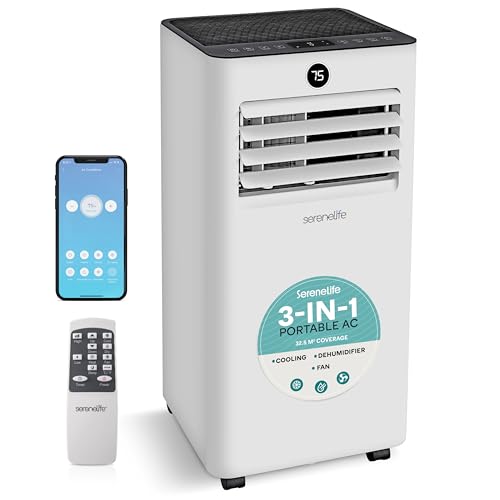
- Entry Pick9000 BTU about$389.99
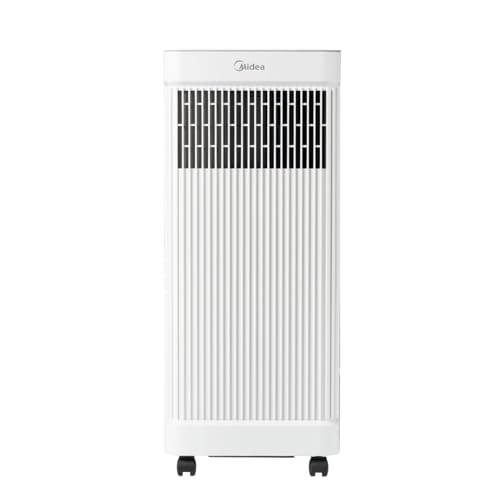
- Midea 2.0 KW 3-in-1 Portable Air… about$479.95
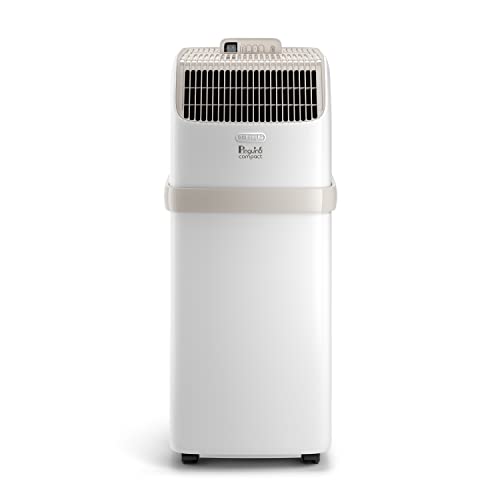
- De'Longhi Pinguino Compact ES72 CLASSIC about$623
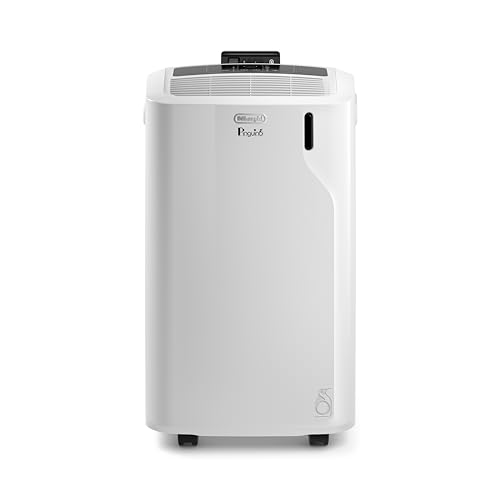
- De'Longhi Pinguino PACEM82K about$649
- Most PremiumDe'Longhi Pinguino Care4Me PAC EL110ERFWIFI about$1,099.00
Why the portable is the renter's air conditioner
A split system is the better machine and everyone knows it, including me. It's also a hole drilled through a wall you don't own, an outdoor unit on a bracket, and an electrician's invoice, which is why the portable air conditioner refuses to die as a category. With vacancy rates where they are, asking a landlord for a split install is a conversation most tenants have learned not to start, and the portable is the only real cooling that rolls in on castors, vents through a window kit that leaves no mark, and moves out with you when the lease ends. That's the honest case for one, and it's a strong case as far as it goes.
The catch is that portables are the most oversold appliance I see. The marketing quotes cooling power that the physics of a single hose quietly gives back, room sizes get stretched, and the running cost surprises people who've been used to fans. So this guide does the boring maths first: what the hose design actually does, what the kilowatt numbers mean in an Australian room, and what one costs to run at current tariffs. The picks come after, and there are only three of them, because the supply gates I run through Amazon AU's data left exactly three units worth recommending at Australian retail. If you're building out a rental setup more broadly, our renter-friendly smart home guide covers the rest of the no-drill kit.
Single hose or dual hose: the physics nobody prints on the box
A portable air conditioner is a heat pump in a box: it grabs heat from room air and throws it out the window through a hose of hot exhaust. A single-hose unit has a problem hiding in that sentence. The air it blasts outside came from inside the room, sometimes hundreds of cubic metres of it an hour, and a room isn't a sealed can. Every litre pushed out pulls a litre of outside air in through door gaps, floorboards and window seals, and on a 35 degree day that replacement air is exactly the hot air you're paying to fight. The unit cools, the house leaks heat back in faster, and the net result is less cooling than the compressor is actually producing.
A dual-hose unit fixes this by breathing outside air for its condenser through a second hose, leaving room pressure alone. Almost nothing sold at Australian retail does it, and none of the listings in this guide state a second intake hose, so treat all three as single-hose in behaviour and buy accordingly: pick a size up from the marketing number, seal the room like it's winter, and keep the hose run short, straight and ideally insulated, because a three metre hose of 50-plus degree exhaust is a radiator running through the middle of the room you're cooling. Foil hose wrap costs a few dollars and pays for itself the first afternoon.
Kilowatts, BTU and cubic metres: reading the numbers honestly
Portables are sold on two numbers, and De'Longhi at least quotes them cleanly. Cooling capacity comes in BTU per hour or kilowatts: the compact pick is 8,300 BTU/h or 2.1kW, the mid unit 9,400 BTU/h or 2.4kW, the big one 11,000 BTU/h or 2.9kW. Room size comes in cubic metres, which I like better than the square metre habit, because ceiling height is real. Divide by a standard 2.4 metre ceiling and the stated coverage lands around 25, 33 and 46 square metres respectively. Those are fair numbers for a sealed, shaded room, which is another way of saying they're the best case rather than the promise, measured the way a lab measures and not the way a February afternoon behaves.
My sizing rule for single-hose portables is blunt: take the maker's room figure and knock a third off it for an Australian summer, more if the room faces west, has a glass slider or sits under an uninsulated roof. That makes the compact a genuine bedroom or small office unit, the mid pick right for a standard living room, and the big one the only pick for open-plan spaces, with the caveat that a truly open plan defeats any portable because you can't seal what has no doors. Cooling a doorway-connected kitchen and lounge is a job for the 2.9kW unit and a closed hallway door, not for optimism.
What one costs to run, with the assumption stated
The kilowatt number on the box is cooling delivered, not electricity drawn, and the listings for all three picks state the first without the second, so here's the honest way to estimate. Portables in this class typically pull somewhere near half their rated cooling in input power. Check the compliance plate for the real figure, but call it roughly 1,000W for the smaller two and up around 1,200W for the 2.9kW unit. At the AU average tariff of roughly 33c/kWh, that's about 33c to 40c per hour of compressor runtime. An eight hour stretch on a heatwave afternoon is somewhere between $2.60 and $3.20, and a summer of daily use is a real line on the bill.
Two things pull that number down. First, compressors cycle: once the room reaches temperature, a well-sized unit idles at fan power, which is a rounding error, so the sealed and shaded room from the last section is also the room that costs less to run, hour after hour, all summer. Second, dehumidified air feels cooler at the same temperature, so the dry mode on humid coastal days sometimes does the job at a fraction of the draw. If you want the actual figure rather than my estimate, put the unit on a metering plug from our energy-metering smart plug guide for a week; measured watts end more arguments than any spec sheet ever has. Mind the plug rating though: check the unit's plate draw against the smart plug's continuous rating, not its headline maximum.
Window kits and Australian windows
Every portable ships with a window kit designed by someone picturing one window style, and Australia has all of them. Sliding windows and sliders are the easy case: the supplied panel drops into the track, the sash closes against it, done in ten minutes. Double-hung sashes usually work the same way turned vertical. Casement and awning windows are the hard case, because there's no track to fill, and the workable answers are a zip-up fabric seal kit made for casements, a sheet of twinwall polycarbonate cut to the opening, or picking a different room. Measure the opening and look at the kit's stated panel range before you buy the machine, not after, because the return post on a 30 kilogram appliance is nobody's idea of a good weekend.
Two details separate a good install from a bad one. Seal the gaps: the panel joints and the sash gap want foam tape, because every leak is hot air walking straight back in, and a five dollar roll of tape is the best performance upgrade a portable can get. And think about security, because a window propped on a plastic panel is not a locked window. On the ground floor I'd fit a sash limiter or a track lock so the window can't be slid further open from outside, especially if the unit runs while nobody's home. None of this is hard, but it's the difference between the advertised machine and the disappointing one.
Condensate, dry mode and the humid coast problem
Cooling coastal air wrings water out of it, and that water has to go somewhere. All three picks run a dehumidifying mode alongside cooling, and the big unit lists a serious 35 litres a day of moisture removal. In cooling mode these Pinguinos throw most condensate out the exhaust as vapour, but push them hard on a sticky February day and the internal tank still fills, at which point the unit stops and flashes at you, usually around 2am, because appliances save their complaints for the least convenient hour they can find. If yours lives in a humid room, plan the drain: a continuous drain hose to a bucket or floor waste beats bailing a tank, and the manual shows the port. Tip the unit around with water aboard and you'll trip the float switch, so drain before moving it.
The dehumidify-only mode is quietly the most useful button on the panel for the Central Coast. Damp winter rooms grow mould on curtains and window reveals and corrode the electronics living in them, and a portable in dry mode is a capable dehumidifier already sitting in the corner. It won't match a dedicated unit litre for litre or watt for watt, and if damp is your main problem year-round, our dehumidifier guide is the better tool for the job. But as a two-season appliance, cooling in January and drying in July, the portable earns floor space a fan never will.
Noise: the spec that decides which room it can live in
A portable puts the compressor in the room with you, which is the trade a split system exists to avoid, so the decibel figure matters more here than on any other appliance in the house. De'Longhi actually publishes usable numbers: the compact ES72 lists 47 to 52 dB(A) of sound pressure depending on fan speed, and the big Care4Me unit lists 64dB with a silent mode claimed to run up to 50 percent quieter. For scale, 47dB is a quiet office hum, mid 50s is a conversation, and 64dB flat out is a machine you'll raise your voice near. The mid-pick PACEM82K markets itself on silence and a two-speed condensation fan but doesn't put a number on the listing, which I'll hold against it slightly.
In a bedroom, run the maths on cycling rather than the peak number: a slightly oversized unit that cools the room then drops to low fan is quieter across a night than an undersized one grinding at full speed until dawn. Thick carpet or a rubber mat under the castors kills the structure-borne hum through a timber floor, and a straight hose rattles less than a kinked one. If you're also tracking why a closed-up summer bedroom feels stuffy by morning, a CO2 reading from our air quality monitor guide will show you exactly what sealed windows do to a room overnight, and why the door should stay cracked open.
Powerboards, sockets and how I picked these three
Electrical housekeeping first, because portables draw real current. Plug the unit straight into the wall: a standard Australian socket is good for 10 amps, about 2,400 watts, and a compressor's start-up surge on top of an already loaded powerboard is exactly how powerboards end up heat-browned and brittle, the kind we get shown after the damage is done. No powerboards, no daisy chains, and if you must span a distance, one heavy-duty 10A extension lead, fully unrolled, as short as the job allows. A coiled lead under load is a slow toaster. All three picks carry the compliance marks you'd expect from a brand selling through Amazon AU directly, and every one of them uses R290 refrigerant, which matters at end of life: it's a flammable gas, so a dead unit gets degassed by a professional, not put in a skip.
The picking gates were the same as every guide in this series: sold new, Amazon AU or an Australian storefront as the seller, price inside the $400 to $1,200 band, ranks pulled from Amazon AU the same day. What survived was three De'Longhi Pinguinos, and I'm comfortable with that single-brand result rather than padding the list with grey-import filler that fails a warranty claim the first summer. The lead pick sits at number 12 in Mobile Air Conditioners, so the market broadly agrees. Prices move week to week; treat the figures below as the day's snapshot, and check the current listing before you order.
The 3 picks, $570 to $1,099
Prices are Amazon AU at time of writing (16 September 2026) and move week to week. Ranks are Amazon AU category sales ranks, checked the same day.

De'Longhi Pinguino Compact ES72 Classic, 2.1kW
ASIN B0D78YP4XX • $569.99 • Ships from Amazon AU
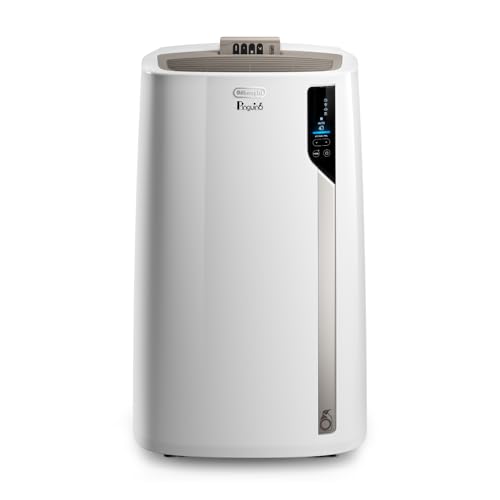
The compact of the range, and the one I'd point at bedrooms, home offices and any room where the machine has to share your evening. De'Longhi lists 8,300 BTU/h of cooling, 2.1kW, rated for rooms up to 60 cubic metres, which is roughly 25 square metres under a standard ceiling before you apply the single-hose discount from earlier. The number that actually sells it is the noise figure: a stated 47 to 52 dB(A) sound pressure across its three speeds, and on the lowest speed that's the quietest stated figure in this list by a comfortable margin. It runs the same R290 refrigerant and Class A energy rating as its bigger siblings, with a 24 hour timer, remote control, and dehumidify and fan-only modes.
De'Longhi pitches this generation as a smaller-footprint Pinguino, quoting a claimed 40 percent cut in carbon footprint against earlier models, and the practical read on that is a physically smaller box that's easier to live with and to store come April. Swivel castors and handles make the room-to-room shuffle a one-person job, which matters more than it sounds, because a portable that's a pain to move ends up cooling the wrong room all summer. Cooling, dehumidifying and ventilation-only modes cover the three jobs you'd actually ask of it, and the timer means it can pull the bedroom down to temperature before you walk in rather than roaring away while you try to read.
Its rank needs the honest footnote: it sits at 561 in the broad Heating, Cooling and Air Quality category rather than carrying a Mobile Air Conditioners subcategory rank on the day I pulled data, so read less into that number than the others. At $570 it's the least outlay in the list, and for a sealed bedroom or office up to that discounted 17-ish square metres, it's the right amount of machine rather than the most machine. Sealed means sealed, though: door closed, gaps taped, hose wrapped, or the smallest unit in the range ends up wearing blame that belongs to the room.
Honest caveats: The 60 cubic metre rating is a sealed-room best case, so treat it as a bedroom unit, not a living room unit. Input power draw isn't stated on the listing, so check the plate before pairing it with any metered plug or extension lead. No app control on this model.
Best for: Bedrooms and home offices where the stated 47dB low-speed figure matters more than raw capacity.
Cooling: 8,300 BTU/h (2.1kW) • Rated coverage: Rooms to 60m3 (listed) • Noise: 47 to 52 dB(A) stated • Refrigerant: R290 • Energy class: A (listed) • Modes: Cool, dehumidify, fan, 24h timer • Sold by: Amazon AU • Rank: #561 in Heating, Cooling & Air Quality (Amazon AU)
View on Amazon AU
De'Longhi Pinguino PACEM82K Silent, 2.4kW
ASIN B0D78YKQTD • $639.00 • Ships from Amazon AU
The volume seller, sitting at number 12 in Amazon AU's Mobile Air Conditioners category on the day I checked, and the sensible middle of the range. De'Longhi lists 9,400 BTU/h, 2.4kW, for rooms up to 80 cubic metres, call it a genuine 20 to 25 square metres of Australian living room once the marketing haircut is applied. It carries the same fundamentals as the compact: R290 refrigerant, Class A energy rating, 24 hour timer, remote, two fan speeds, and the full set of modes including ventilation-only for shoulder season and a dedicated dehumidifier-only function for the damp months. At $639 it's only $69 over the compact for a meaningful step up in capacity.
De'Longhi sells this one hard on quietness, with a two-speed condensation fan and a Silent badge on the box, but unlike the ES72 the listing doesn't put a decibel figure against the claim, and I price marketing claims without numbers at zero. Realistically, a 2.4kW single-hose portable working a warm room will be audible, and the honest play is the one from the noise section: buy enough capacity that the compressor gets the room down and cycles off, because a resting machine is the only silent machine. For a living room used through the evening, this size hits that mark where the compact would sit at full throttle for hours.
The touch panel plus included remote covers control without forcing an app on you, and there's no Wi-Fi on this model at all, which some people will count as a feature. If the choice is between this and the compact, pick on the room, not the price gap: bedrooms take the ES72 for its stated noise floor, anything from 15 to 25 real square metres of living space takes this, and past that you're into the big unit's territory. Whichever way you land, the window kit and sealing advice earlier in the guide moves the result more than the $69 between these two models ever will.
Honest caveats: No decibel figure is stated on the listing despite the silence marketing, and input power draw isn't stated either, so check the compliance plate. Two fan speeds rather than three. No app or voice control, which is either a gap or a blessing depending on the household.
Best for: The standard Australian living room, bought with enough capacity to cycle off instead of grinding all evening.
Cooling: 9,400 BTU/h (2.4kW) • Rated coverage: Rooms to 80m3 (listed) • Refrigerant: R290 • Energy class: A (listed) • Fan: 2 speeds, two-speed condensation fan • Modes: Cool, dehumidify, fan, 24h timer • Control: Touch panel plus remote • Sold by: Amazon AU • Rank: #12 in Mobile Air Conditioners (Amazon AU)
View on Amazon AU
De'Longhi Pinguino Care4Me PAC EL110ERF, 2.9kW Wi-Fi
ASIN B0FPCQQYQJ • $1,099.00 • Ships from Amazon AU
The big one: 11,000 BTU/h, 2.9kW, rated for 110 cubic metres, which after the single-hose discount is the only unit here I'd aim at a proper open-plan kitchen and lounge, provided you can close the space off from the rest of the house. It's also the only pick with connectivity: Wi-Fi app control plus Alexa and Google voice support, and De'Longhi's EcoRealFeel mode, which asks how the room feels through the app and adjusts its target rather than chasing a raw thermostat number. On a machine this size that's less of a gimmick than it sounds, because the difference between 24 and 26 degrees of setpoint is real money at 2.9kW of cooling.
The listed dehumidification is the standout secondary spec: up to 35 litres per 24 hours, which is more water than most dedicated dehumidifiers pull, and exactly what a muggy coastal February asks for. De'Longhi states 64dB for this unit along with a silent technology claim of up to 50 percent quieter, which I read as: expect real noise at full output, use the quiet mode and the app scheduling to keep full output for the hours nobody's talking over it. Three fan speeds, handles and castors for moving what is a properly heavy class of appliance, and no assembly beyond the window kit. It arrived at number 65 in Mobile Air Conditioners on the day I pulled ranks.
At $1,099 the honest question is whether a second-hand split plus install quote beats it, and in an owned home it often does. In a rental it's not a contest, because this is the most cooling you can plug into a wall socket and take with you when you leave. Buy it for the space it's rated for, not as a whole-house hope, and let the app's scheduling do the pre-cooling before the afternoon peak tariff windows. On a time-of-use plan, an hour of pre-cooling at the shoulder rate beats three hours of catch-up at the peak rate, and this is the only pick that can run that play unattended.
Honest caveats: It's the heaviest and loudest pick, with a stated 64dB at full output, so it's a living-space machine, not a bedroom one. Input draw isn't stated on the listing, and at 2.9kW of cooling it wants a wall socket to itself, no powerboards. App features need 2.4GHz Wi-Fi and a working De'Longhi account.
Best for: Open-plan living areas in rentals, where it's the most cooling that plugs into a standard socket.
Cooling: 11,000 BTU/h (2.9kW) • Rated coverage: Rooms to 110m3 (listed) • Noise: 64dB stated, silent mode claimed up to 50% quieter • Dehumidify: Up to 35L per 24h (listed) • Refrigerant: R290 • Fan: 3 speeds • Control: Wi-Fi app, Alexa and Google, EcoRealFeel • Sold by: Amazon AU • Rank: #65 in Mobile Air Conditioners (Amazon AU)
View on Amazon AUSide-by-side comparison
| Product | Price | Best for |
|---|---|---|
| 9000 BTU | ~$389.99 | |
| Midea 2.0 KW 3-in-1 Portable Air… | ~$479.95 | |
| De'Longhi Pinguino Compact ES72 CLASSIC | ~$623 | |
| De'Longhi Pinguino PACEM82K | ~$649 | |
| De'Longhi Pinguino Care4Me PAC EL110ERFWIFI | ~$1,099.00 |
What we see fail at the bench: portable air conditioners
Portables come our way after their second or third summer, and the pattern is consistent: the refrigeration side mostly survives, and the failures cluster around airflow, water and the electrical path into the machine. Almost all of it traces back to how the unit was run rather than how it was built, which is good news, because habits are free to fix and compressors aren't.
Choked filters and iced coils
The intake filter on a portable eats a summer of pet hair and dust, and a choked filter starves the evaporator until it ices over. The symptoms read like a refrigerant fault, weak cooling and a unit that runs constantly, so people assume the gas has leaked and start pricing replacements. Nine times out of ten the fix is washing a filter and letting the coil thaw fully before restarting. Rinse the filter monthly through summer, let it dry before it goes back in, and vacuum the rear intake grilles while you're there.
Powerboards, leads and cooked plugs
Compressor appliances punish thin wiring. We see browned plugs, soft powerboard sockets and extension leads with the spring gone out of the contacts, all from a machine that surges on every compressor start being fed through hardware rated for a lamp. The damage is progressive: a warm connection oxidises, resistance climbs, and it runs hotter each week until something lets go. Wall socket only, and if a lead is truly unavoidable, one heavy-duty 10A lead, fully unrolled, kept short, and check the plug for warmth by hand after the first hot afternoon of real load.
Float switches and tipped units
Move a portable with water in the tank and the float switch turns a five minute relocation into a no-cool mystery: the unit powers up, the compressor refuses to start, and an error light blinks with nobody home to explain it. Water sloshed where it shouldn't be also corrodes tank-level sensors into permanently reporting full. Drain before every move, keep the unit level in service, and if a tipped machine starts refusing to cool, give the tank and its float switch a proper look before assuming the compressor has died, because it almost certainly hasn't.
Decision tree: which one should you actually buy?
- Bedroom or home office, machine runs while you're in the room? → The Pinguino Compact ES72 at $570. The stated 47 to 52 dB(A) range is the quietest published figure here, and 2.1kW suits a sealed bedroom.
- Standard living room, cooling through the evening? → The PACEM82K at $639. The 2.4kW rating covers a real 20 to 25 square metres sealed, enough to reach temperature and cycle off rather than grind.
- Open-plan kitchen and lounge, or the biggest space a rental will throw at it? → The Care4Me at $1,099. It's 2.9kW, the only app-controlled pick, and its 35L per day dehumidification earns its keep on the coast.
- Damp problem for most of the year, heat only a few weeks of it? → Buy a dedicated dehumidifier first and a fan for the hot fortnight. Dry mode on any of these works, but a purpose-built unit does it for less power draw and less noise.
- Casement or awning windows and nowhere for a panel kit? → Solve the window before the machine: a zip-up casement seal kit or a cut polycarbonate sheet, measured up before you order anything. No venting path, no air conditioner, whatever the badge says.
- Portable that runs but won't cool, ices up, or trips the powerpoint? → That's usually a filter, a float switch or a cooked plug rather than lost refrigerant, and it's worth a proper diagnosis before you spend replacement money. Bring it in to our Erina workshop and we'll tell you what's actually wrong first.
Frequently asked questions
Do portable air conditioners actually work?
Yes, with expectations set correctly. A single-hose portable genuinely cools, but it gives back part of its rated output by pulling warm outside air in through every gap in the room, so it will never match a split system watt for watt. It works best in a sealed, shaded room sized below the marketing figure, with the hose kept short and straight. For a renter who can't drill a wall, it's the only serious option that leaves with you at the end of the lease, and that's the job it should be bought for.
What size portable air conditioner do I need?
Start from the maker's cubic metre rating and take a third off for an Australian summer, more for west-facing rooms, big glass or an uninsulated roof. That lands the 2.1kW class in bedrooms and offices, 2.4kW in standard living rooms, and 2.9kW in larger or semi-open spaces you can still close a door on. Undersizing is the expensive mistake: a too-small unit runs flat out all afternoon without reaching temperature, while a correctly sized one gets there and cycles down. If a room can't be sealed at all, no portable size fixes it.
Can I run a portable air conditioner on an extension lead or powerboard?
Not on a powerboard, ever. These machines draw serious current and surge on every compressor start, and a loaded powerboard responds by cooking its contacts over the course of a summer. A standard Australian wall socket is rated for 10 amps, and the unit should have one to itself. If distance forces a lead, use a single heavy-duty 10A extension lead, fully unrolled, as short as possible, and feel the plug after the first hard afternoon. A warm plug means resistance, and resistance only ever gets worse.
Do portable air conditioners need to be drained?
In cooling mode these units dispose of most condensate out the exhaust hose as vapour, so on dry days the tank barely fills. Humid coastal weather changes that, and in dehumidify mode the water arrives fast, up to 35 litres a day on the largest pick here. When the tank fills, the unit stops and shows an alarm. If it lives in a damp room, set up the continuous drain port with a hose to a bucket or floor waste, and always drain the tank before moving the unit, because sloshing water across the float switch is a classic self-inflicted fault.
Why is my portable air conditioner blowing warm air?
Work through the list before assuming lost refrigerant. A blocked intake filter is the most common cause: the coil starves, ices over, and output collapses while the compressor runs constantly. A kinked or crushed exhaust hose is next, then a hose so long it's radiating heat back into the room, then a full tank putting the unit into a protection mode. A genuinely leaked refrigerant circuit does happen, but in the workshop it's the least common cause we find. Clean the filter, straighten the hose, drain the tank, and if it still blows warm, get it diagnosed.
Can I use a portable air conditioner in a rental without permission?
Generally yes, and that's most of the appeal. A portable plugs into a normal socket and vents through a window kit that clamps or drops into the track without a single screw into the frame, so there's nothing a bond inspection can object to. The only conversations worth having are about strata rules on window appearance, which occasionally exist, and about ground-floor security, since a window resting on a vent panel isn't locked. A sash limiter or track lock solves that without touching the landlord's hardware.
Related guides
Portable running but not cooling?
Iced coils, tripped float switches and cooked plugs all read like a dead compressor, and mostly they aren't. Before you spend serious replacement money on a unit that stopped pulling its weight, bring it in to the workshop in Erina and we'll diagnose what's actually wrong and tell you straight whether it's worth fixing.
Book Online