Prices from Amazon AU, updated daily. Swipe or use the arrows for more.
Disclosure: This article contains affiliate links to amazon.com.au. If you buy through one of these links iFix may earn a small commission at no extra cost to you. It doesn't change which products we recommend. We focus on what actually lasts based on 16 years of repair-shop experience.
Quick summary8 picks
- Entry PickPhogrtty Room Divider Curtain Rod No Drilling about$41.64
- Costway 184 CM Single Panel Room Divider about$59.95
- Giantex 3-Panel Folding Room Divider about$61.87
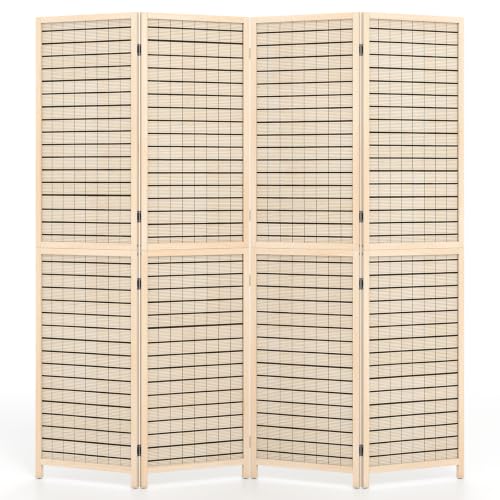
- Phogrtty 4-Panel Folding Room Divider |… about$75.99
- Giantex 4 Panel Woven Bamboo Room Divider about$101.95
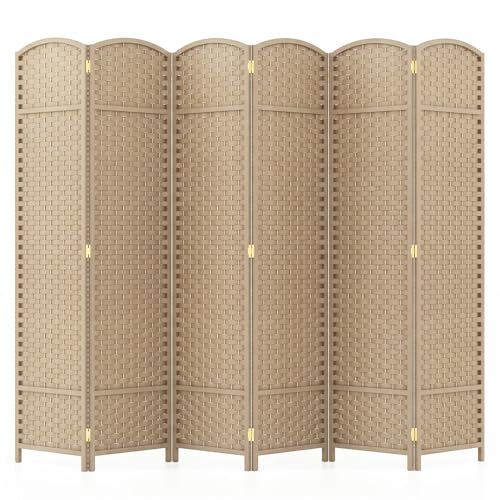
- Giantex 6-Panel Folding Room Divider about$129.95
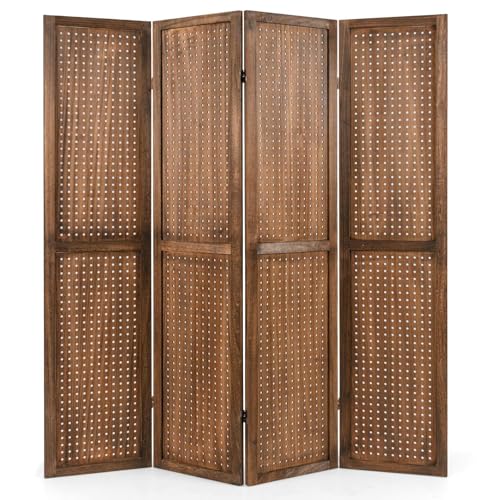
- Costway 4-Panel Room Divider about$139.95
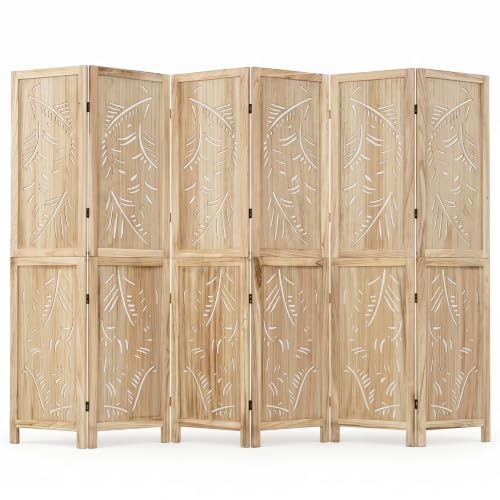
- Most PremiumGiantex 4/6-Panel Wooden Room Divider… about$159.95
Why a repair shop is writing about room dividers
A lot of the computers and monitors that come into the shop live in a corner of a bedroom or a living room, and more and more of those corners have a screen around them so the desk isn't in every photo of the house. A room divider is mostly a mechanical thing: hinges, a frame, feet or wheels, and a panel. The ways it fails are mechanical too, and most of them are predictable from the listing if you know what to look for.
This guide covers three kinds of divider you can buy from Australian sellers on Amazon AU. Folding screens are hinged panels that stand on their own in a zigzag. Rolling panels sit on wheels with brakes, so they move out of the way after work. Tension rod dividers press between the floor and the ceiling and carry a curtain you supply yourself. I've left out bookcase dividers, which are furniture more than screens, and acoustic panels, which are a different job that our apartment noise control picks cover.
The six picks run from $41.64 to $139.95 at time of writing. Two are sold by Phogrtty-AU, two by Giantex AU and two by COSTWAY-AU, and all three sellers passed my retail check. I read every listing for height, width, frame material, hinge type, feet or wheels, and what's actually in the box. Where a listing leaves something out, like the weight or the panel width, I say so on its card rather than guessing.
One listing I dropped before writing a word: a Giantex wooden screen whose title says four panels while its size field and the end of its own title say six. When a listing can't agree with itself on how many panels you're getting, I don't trust the rest of it.
Folding screen, rolling panel or tension rod
A folding screen is the classic. It needs no tools, folds flat against a wall when you don't need it, and looks like furniture rather than an office partition. Its weakness is that it only stands up because of its own zigzag. Pull it straight and it falls over, so a folding screen always covers less width than its flat measurement suggests. The Phogrtty listing says this plainly: its standing width is narrower than its flat width once it's angled.
Rolling panels trade looks for stability and movement. They stand on a frame with feet and wheels, so they don't rely on a zigzag to stay up, and you can push the whole thing aside to open the room back up. The two rolling picks use polyester fabric on a metal frame, which is lighter and more opaque than woven panels, and both list wheels with brakes. They look more like an office than a lounge room, and that's the honest trade.
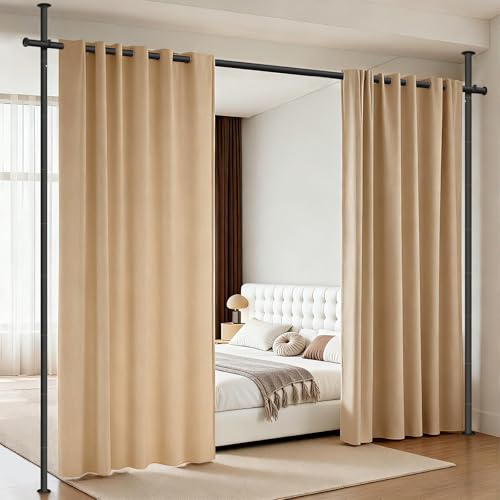
A tension rod divider is the tallest option by a long way, because it goes floor to ceiling. The Phogrtty rod adjusts from 121 to 304cm high. It hides a desk completely, takes a blackout curtain if you want one, and leaves no holes. It does need a flat, level, solid ceiling, the curtain is extra, and it isn't something you fold away in ten seconds.
I'd choose on how often the divider moves. A screen that comes out every evening wants wheels or a light folding frame. One that stays put for a year can be a tension rod, and one that's mostly there to look good can be a heavier timber screen.
Stability, tipping and where screens fall
Folding screens fall over. It's the most common complaint about them, and it's physics more than quality: a tall, narrow panel with a small footprint tips easily when someone brushes past it, a door swings into it, or a cat climbs it. A 180cm screen standing on panels 2 or 3cm thick has very little base, and the zigzag angle is the whole of its stability. The sharper the zigzag, the steadier it stands, and the less width it covers.
Give a folding screen at least a 45 degree angle at each hinge and stand it on a hard, flat floor. Thick carpet and rugs make it rock. Keep it out of door swings and walkways, because a screen that's knocked once a day will eventually go over, and the hinges take the hit when it does. Anti-slip foot pads, which the Giantex bamboo screen lists, help on smooth floors.
Rolling panels are steadier because they stand on a frame, but they need their brakes on. A rolling divider with its brakes off on a timber floor will drift when someone leans on it, and on a slight slope it'll roll. Lock every wheel once it's in place. On carpet, wheels sink and roll less freely, which makes them harder to move but steadier once parked.
If there are small children or a dog in the house, keep a folding screen against a wall rather than freestanding in the middle of a room, or choose a tension rod, which can't tip. None of these listings states a tip test or a weight, so treat any freestanding screen as something that can fall.
Hinges: one way, double action and buckles
Hinges decide what shapes a screen can make and how long it lasts. A one-way hinge folds the panels in one direction, which suits a simple zigzag and keeps the screen flat and tidy in storage. The Phogrtty folding screen's listing says its panels fold in one direction. Double action hinges swing both ways, so the screen can curve around a corner, wrap a chair or form a U. The Costway pegboard screen lists double action hinges that turn 360 degrees.
The catch with double action hinges is that every extra direction is another way to flex. On a light screen they're fine. On a heavy timber screen, a hinge that's opened and closed every day can work its screws loose in the soft wood, especially paulownia, which is light and easy to dent. Check the hinge screws every few months and nip them up gently with a screwdriver, without forcing them, or they'll strip the hole.
Rolling panels join with buckles or plastic connectors rather than hinges. The Giantex 3-panel lists connect buckles between panels that let it form L, W and C shapes, and other rolling dividers use plastic connectors. Plastic connectors are the first part to crack on any divider that moves around a lot, because they take the load every time a panel is pushed. They're usually a small, separate part, so if one cracks, ask the seller for a replacement before you glue it.
Before you buy, read whether the listing names the hinge type at all. A screen whose listing only says flexible hinges tells you less than one that says double action or one direction.
Privacy for your eyes, not your ears
A room divider is visual privacy. None of the six picks lists any sound rating, and none of them will stop a video call from being heard in the next room. Woven rattan, bamboo and timber panels let sound straight through their gaps, and thin polyester fabric on a frame does very little to it either. Sound travels around a screen too, over the top and through the gaps at the sides and the floor.
A heavy curtain on a floor to ceiling tension rod does a bit more, because it closes the gap above the divider and the curtain fabric absorbs some sound. It won't make a quiet room, but it softens echo and voices more than a folding screen can. If you work from home and noise is the real problem, look at a good headset or noise cancelling headphones instead of a thicker screen, and our noise cancelling headphone picks cover that properly.
Light is the other half of visual privacy. Woven panels filter light, so the Phogrtty and Giantex bamboo screens let a soft glow through, and you'll see shapes moving behind them. The polyester rolling panels are more opaque, and some fabric dividers are sold as non see-through. If you want to hide a desk completely, including a glowing monitor at night, choose a solid fabric panel or a blackout curtain on a rod.
Webcam backgrounds are where this matters most. A screen behind your chair hides the bed or the washing, but a woven panel with a window behind it puts a bright, flickering pattern straight into the camera, which it'll try to expose for. A plain opaque panel gives the camera a calmer background.
Heaters, powerboards and cables behind a screen
This is the part that brings a room divider into an electronics shop. A screen around a home office usually hides a tangle of cables, a powerboard and often a heater in winter. Polyester fabric, rattan paper, bamboo and dry timber are all combustible, and a fan heater blowing into the back of a fabric screen is a real fire risk. Keep any heater at least a metre clear of every panel, follow the clearance on the heater's own label if it's bigger, and never drape anything over one.
Powerboards don't like being hidden either. A powerboard tucked under the bottom edge of a fabric panel, or pressed against the back of a timber screen, can't shed heat, and a loose plug in it can get hot without anyone seeing it. Keep powerboards on the floor in the open, off carpet where you can, and don't chain one board into another. A standard Australian wall socket is good for 10A, about 2,400W, and a desk with a heater on the same board can reach that faster than people expect. Our guide to cutting standby power at home covers smart plugs that can switch a whole desk off at night.
Run cables along the wall, not under a rolling divider's wheels. A wheel parked on a power cord crushes it a little more every time someone leans on the panel, and a crushed cord is exactly the kind of hidden damage that ends up melting a plug. Cable clips or a short floor cover keep them out of the way.
Lamps behind a screen need the same care. A hot halogen or incandescent lamp leaning against rattan or fabric can scorch it. LED lamps run much cooler, but keep any lamp from touching the panel.
Tension rods, ceilings and what to keep clear
A tension rod divider holds itself up by pressing against the ceiling, so the ceiling has to be able to take it. Plasterboard ceilings are fine for this if you press against a solid area, ideally under a ceiling joist, and turn the tension up only until the pole stops moving. Overdoing it can crack plaster or push a dent into the sheet, which shows as a ring once the rod comes down. The Phogrtty rod listing says it isn't for angled or vaulted ceilings, and asks you to clean the contact areas so they're flat.
Keep the rod's top pad clear of downlights, smoke alarms, ceiling fans and air conditioning vents. A pad pressed against a downlight's trim can crack the fitting, and anything that leans on a smoke alarm can stop it working properly. Smoke alarms are your safety system, so leave a clear gap around them and test the alarm after you've set the rod up if it's anywhere near.
Load is the other limit. The Phogrtty listing states its rod can hold up to 33 pounds, about 15kg, of curtain. A heavy lined blackout curtain for a 177cm opening can weigh a few kilograms, so you're well inside that, but don't hang shelves, hooks or bags off the rod as well.
Check the rod every few weeks for the first month. Tension rods can settle as the pads compress, and a rod that's crept loose is the one that falls when the curtain is yanked shut. Our thermal blinds guide covers heavier curtains if you also want to keep heat in.
Care, storage and checking it on arrival
Unpack it the day it arrives and check it before you assemble anything. On a folding screen, open and close every hinge, look for split timber at the screw holes, and check the panels sit flat when folded. On a rolling panel, count the wheels, check every brake clicks on and off, and look for cracked connectors. On a tension rod, check every extension piece is there and the pads aren't split. Return it while you still can if anything's missing.
Keep woven and timber screens out of direct sun if you can. Rattan paper and bamboo fade and go brittle in sun through a window, and timber frames can dry and crack. Wipe polyester panels with a damp cloth. Don't soak woven panels, because water warps rattan paper and can leave a water mark in bamboo, and dust them with a dry brush or a vacuum's brush tool instead.
Store a folding screen flat against a wall or under a bed rather than leaning at an angle, so the hinges and frame don't twist. A rolling divider stores best folded with its brakes on, so it doesn't roll off on its own. Keep the tension rod's spare pieces together in a bag so the next setup doesn't come up short.
If a screen falls and lands on a laptop or a monitor, check the screen and the charge port before you assume it's fine. A small crack in a monitor or a bent charge port often shows up later. If anything stops working after a knock, bring it into our Erina workshop and we'll check it.
The 6 picks, $41.64 to $139.95
Prices are Amazon AU at time of writing (2026-11-18) and move week to week. Ranks are Amazon AU sales ranks in the Panel Screens category, checked the same day.

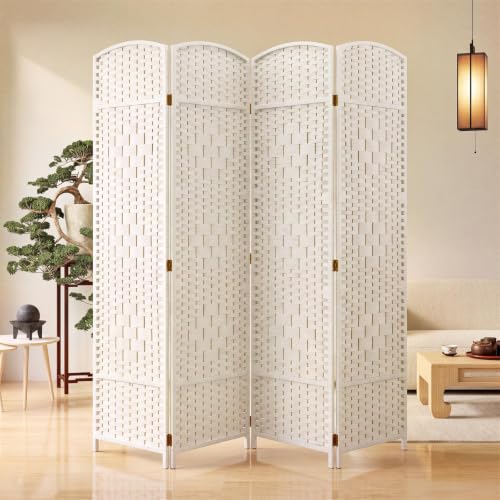
Phogrtty 4-Panel Folding Room Divider, 170cm, Woven Rattan Paper
ASIN B0H8P16P4P • $75.99 • Sold by Phogrtty-AU on Amazon AU
The Phogrtty 4-panel screen is the one I'd buy for most rooms, because its listing gives the measurements that matter and the hinge behaviour that decides how it stands. It's listed at $75.99, sold by Phogrtty-AU, and ranks #5 in Amazon AU's Panel Screens category. Its model is ZDPF-4-white. It's a classic folding screen: four panels, each 170cm tall and 40cm wide, made from solid wood framing with hand-woven rattan paper panels. Phogrtty-AU passed my retail check. Four panels at 40cm each give about 160cm of flat width, so expect a little over a metre of real cover once it's angled enough to stand properly.
The listing says there's no assembly: you unfold it and stand it in a zigzag. It's honest about the catch, saying the standing width is narrower than its flat width once it's angled, which is the right way to think about any folding screen. The panels fold in one direction, so it makes a simple zigzag or a gentle curve rather than wrapping a corner. The woven panels filter light rather than block it, so a room behind it stays bright, and it folds flat for storage in a cupboard or a corner. The listing also pitches it as a photo backdrop or a way to soften light by a window, which suits woven panels. Solid wood framing is the right call on a screen this light, because it holds hinge screws better than a hollow frame.
Stand it at a good angle on a hard floor, out of a door swing. Dust the woven panels with a dry brush and keep them out of strong sun, because rattan paper fades and goes brittle in sunlight. Keep any heater well clear of it. Fold it in the direction its hinges allow, never against them, because forcing a one-way hinge bends it. Check the hinge screws every few months and tighten them gently. In a home office, keep the powerboard and cables out from under its bottom edge, and stand it far enough behind your chair that you won't knock it each time you get up. Return it early if a panel arrives split or a hinge is loose.
Honest caveats: The listing states no weight and no foot pads, and the panels fold one way only. Woven rattan paper lets light and shapes through, so it won't fully hide a glowing monitor at night. It isn't stated as water resistant, so keep it away from wet areas.
Best for: A light, good-looking folding screen with stated panel sizes and no assembly.
Price: $75.99 (Phogrtty-AU) • Type: Folding screen, 4 panels • Panel size: 170cm tall, 40cm wide each • Frame: Solid wood • Panels: Hand-woven rattan paper • Hinges: Fold one direction • Assembly: None (listing) • Model: ZDPF-4-white • Rank: #5 in Panel Screens (Amazon AU)
View on Amazon AU
Giantex 4 Panel Woven Bamboo Room Divider, 180cm, Pine Frame
ASIN B0HNJ9TP8G • $101.95 • Sold by Giantex AU on Amazon AU
The Giantex bamboo screen is the pick for a taller folding screen that stands steadier on a smooth floor. It's listed at $101.95, sold by Giantex AU, and ranks #22 in Amazon AU's Panel Screens category. Its part number is KW25894-Multiple. It stands 180cm tall, 10cm taller than the Phogrtty, which covers a seated person and most of a standing one, and its four panels are tightly woven bamboo in a thick pine frame. Giantex AU passed my retail check. Pine and bamboo make a heavier screen than woven paper, though the listing gives no weight, and a little extra mass low down is what keeps a folding screen upright when it's brushed. For a seated home office, the extra 10cm hides the top of a monitor as well as the chair.
The listing says the bamboo is carbonised at high temperature to strengthen it, and it lists flexible hinges that let the panels fold to fit a layout. The detail I like is the feet: it lists anti-slip, anti-scratch foot pads, which stop it skating across timber or tiles when it's brushed, and protect the floor. It folds completely flat for storage under a bed or behind a door. Like woven paper, bamboo still lets light through its weave. The listing pitches it for bedrooms, home offices, living and dining areas and as a dressing screen, which suits a tall screen meant to break a direct line of sight.
Check the foot pads are all fitted the day it arrives, and refit any that come loose. Dust it with a dry brush, and don't wet the bamboo, which can mark. Keep it out of direct sun through a window, and well clear of any heater. Fold and unfold it gently, because the listing doesn't say which way its hinges swing, and forcing one the wrong way bends it. Check the hinge screws in the pine every few months and tighten them gently. Stand it with a decent zigzag even with the foot pads, since pads stop sliding but not tipping. Keep cords and powerboards out from under its bottom edge.
Honest caveats: The listing states no panel width or weight, and it describes its hinges only as flexible, without saying whether they fold one way or both. Woven bamboo still lets light and some shapes through. It's the second highest priced of the six picks.
Best for: A taller folding screen with foot pads that hold it on timber and tile floors.
Price: $101.95 (Giantex AU) • Type: Folding screen, 4 panels • Height: 180cm • Frame: Solid pine • Panels: Carbonised woven bamboo • Feet: Anti-slip, anti-scratch pads • Storage: Folds flat • Part number: KW25894-Multiple • Rank: #22 in Panel Screens (Amazon AU)
View on Amazon AU
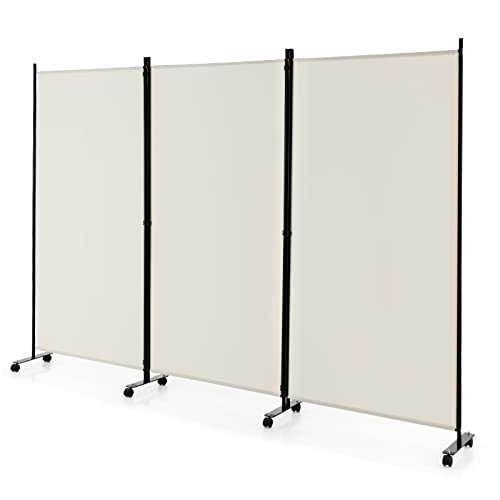
Giantex 3-Panel Rolling Room Divider, 180cm, Lockable Wheels
ASIN B0C84CXTHD • $61.87 • Sold by Giantex AU on Amazon AU
The Giantex 3-panel rolling divider is the pick for a home office that gets packed away every evening, because it rolls and its listing gives a full width. It's listed at $61.87, sold by Giantex AU, and ranks #27 in Amazon AU's Panel Screens category. Its part number is GIANT10723HWVJ. It measures 262cm long and 180cm tall when the panels are straight out, which is the widest stated coverage of the six picks, enough to screen a full desk and chair. Giantex AU passed my retail check. A divider that can run straight suits a desk better than a zigzag screen, because it covers the full length of the desk and chair without eating floor space in a triangle.
The panels are polyester fabric on a powder-coated metal frame, more opaque than woven screens and lighter than timber. The listing describes 360 degree wheels with brakes, and connect buckles between the panels that let it form an L, W or C shape or fold up for storage. A rolling panel doesn't rely on a zigzag to stand, so it can run straight along the edge of a desk, which a folding screen can't do. The listing pitches it for living rooms, bedrooms, offices and even a backyard, and says it can sit by a window to block strong sun, which polyester fabric does better than woven panels. The powder coating also protects the frame from the scuffs that come with moving a divider every day.
Lock every brake once it's parked, especially on timber. Keep cables out from under the wheels, and wipe the fabric with a damp cloth when it marks. Don't let it lean against a heater or a powerboard. Push it from the frame near the middle rather than dragging an end panel, because the buckles take the load. Check every brake works the day it arrives, and keep the wheels clear of hair and fluff, which jams casters on most rolling furniture. On carpet it'll push harder but sit steadier. Leave at least a metre between it and any fan heater.
Honest caveats: The listing doesn't state how many wheels it has or its weight. The panel buckles are the part that takes the load when it's pushed around, so treat them gently. Polyester fabric on a metal frame looks more like an office partition than furniture.
Best for: A wide, rolling home office screen that stands straight and parks with brakes.
Price: $61.87 (Giantex AU) • Type: Rolling divider, 3 panels • Size: 262cm long, 180cm tall • Frame: Powder-coated metal • Panels: Polyester fabric • Wheels: 360 degree, with brakes • Joins: Connect buckles, L/W/C shapes • Part number: GIANT10723HWVJ • Rank: #27 in Panel Screens (Amazon AU)
View on Amazon AU
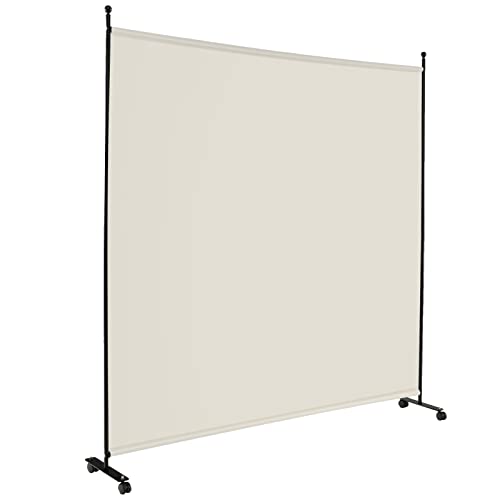
Costway 184cm Single Panel Rolling Room Divider, Lockable Wheels
ASIN B0GVMNKF6P • $59.95 • Sold by COSTWAY-AU on Amazon AU
The Costway single panel divider is the value pick and the lowest-priced freestanding divider of the six, for screening one side of a desk or hiding a corner. It's listed at $59.95, sold by COSTWAY-AU, and ranks #32 in Amazon AU's Panel Screens category. Its part number is CCWKB10722VJ. It's one wide panel, 184cm long and 184cm tall on a 30cm deep base, which makes it the tallest of the freestanding picks by a few centimetres. COSTWAY-AU passed my retail check. A single 184cm panel covers the length of most home office desks, so it works as a back wall behind a chair or a side wall between a desk and the TV.
The panel is polyester fabric on heavy-duty metal tubes, and it stands on four universal wheels that swivel 360 degrees and lock. A single panel on a frame is the steadiest freestanding shape of the six, because its base runs the full width rather than relying on hinges and angles. The listing says it needs simple assembly with instructions in the box, and that the surface wipes clean with a soft cloth. The listing suggests home, office, hotel, school and hospital use, which tells you it's built as a plain partition rather than a decorative screen. Polyester fabric on metal blocks a direct view far better than woven panels, which is what you want behind a webcam.
Lock all four wheels once it's in place and keep cords out from under them. Check the frame joints are tight after assembly, and again after the first few moves. Keep heaters and lamps well clear of the fabric. If you need more cover later, a second panel beside it makes an L. Push it by the frame rather than the fabric, and keep the wheels clear of hair and fluff. Wipe the fabric with a damp cloth rather than soaking it, and let it dry before parking it against a wall. Return it early if any wheel arrives without a working brake.
Honest caveats: It's one flat panel, so it can't bend around a corner, and the listing doesn't state its weight. It needs assembly, unlike the folding screens. Fabric on metal tubes looks like an office screen rather than furniture. Check every brake on arrival.
Best for: A steady, low-cost single screen on lockable wheels for one side of a desk.
Price: $59.95 (COSTWAY-AU) • Type: Rolling divider, single panel • Size: 184 x 30 x 184cm (L x W x H) • Frame: Metal tubes • Panel: Polyester fabric • Wheels: 4, swivel, lockable • Assembly: Simple, instructions included • Part number: CCWKB10722VJ • Rank: #32 in Panel Screens (Amazon AU)
View on Amazon AU
Costway 4-Panel Pegboard Room Divider, 170cm, 360 Degree Hinges
ASIN B0FY6DDRD8 • $139.95 • Sold by COSTWAY-AU on Amazon AU
The Costway pegboard screen is the premium pick, for a divider that does a second job as storage. It's listed at $139.95, sold by COSTWAY-AU, the highest-priced of the six, and ranks #45 in Amazon AU's Panel Screens category. Its part number is CCW12006VJ. It's a 170cm, four panel screen in solid paulownia wood with peg holes across the panels, so you can hang bags, a headset, cables or frames off it with standard hooks. COSTWAY-AU passed my retail check. Paulownia is a light timber, which keeps a 170cm, four panel screen easy to move, though the listing doesn't give its weight.
The listing describes double action hinges that turn 360 degrees, which means it can wrap around a corner or a chair as well as stand in a zigzag. It says the boards are thickened against warping and needs no installation, so you unpack it and stand it up. A pegboard screen behind a desk is a tidy place to hang a headset and a charging cable, which keeps them off the desk and out of the way of a spilled drink. The listing also pitches it as a pegboard display stand for commercial use, which suits a small shop counter as well as a home office corner, and it's the one of the six picks that adds storage.
Keep what you hang light and spread out, because a heavy bag on one end can tip a folding screen. Check the hinge screws every few months, since paulownia is soft and screws can loosen. Don't hang a powerboard on it. Use proper pegboard hooks rather than nails or screws, which split thin boards. Stand it with a decent zigzag so a hung bag doesn't pull it over, and put heavier things on the panels nearest the wall and the floor. Keep it out of direct sun, which dries timber out, and well clear of any heater. Check every panel for splits the day it arrives.
Honest caveats: The listing doesn't say whether hooks are included or how much each panel can hold, and it states no weight. Peg holes let light through. Weight hung on one end makes a folding screen easier to tip, so load it evenly.
Best for: A divider that doubles as pegboard storage behind a desk, with 360 degree hinges.
Price: $139.95 (COSTWAY-AU) • Type: Folding pegboard screen, 4 panels • Height: 170cm • Frame: Solid paulownia wood • Hinges: Double action, 360 degrees • Storage: Peg holes, most hooks fit • Hooks included: Not stated on the listing • Part number: CCW12006VJ • Rank: #45 in Panel Screens (Amazon AU)
View on Amazon AU
Phogrtty Tension Rod Room Divider, 121 to 304cm High, No Drilling
ASIN B0FLN98DDM • $41.64 • Sold by Phogrtty-AU on Amazon AU
The Phogrtty tension rod is the pick for hiding a desk or a sleeping area completely, from floor to ceiling, in a rental where you can't drill. It's listed at $41.64, sold by Phogrtty-AU, the lowest-priced of the six, and ranks #1 in Amazon AU's Panel Screens category. Its model is clg2s1h-black. It's two upright poles and a cross rod in stainless steel, adjustable from 121 to 304cm high and 71 to 177cm wide, and it carries a curtain you supply yourself. Phogrtty-AU passed my retail check. A 304cm maximum covers nearly every house ceiling, and 177cm wide is enough to close off a desk nook or the end of a bedroom.
The listing says it installs without tools or drilling and leaves no holes, and that it suits floors and ceilings like timber and marble. It states a load of up to 33 pounds, about 15kg, which is plenty for a heavy blackout curtain. It's upfront about two limits: curtains aren't included, and it isn't for angled or vaulted ceilings. It also asks you to clean the contact areas so they're flat. The features quote feet and pounds, but the title gives the sizes in centimetres. Being steel poles with a curtain rather than a panel, it can't tip over the way a freestanding screen can, which matters in a house with small kids or a dog. It also lets you choose the curtain, a light sheer or a full blackout, to suit how much you want to hide.
Press the top pad against solid ceiling, clear of downlights and smoke alarms, and only tighten it until the pole stops moving. Recheck the tension after a week or two, as the pads settle. Keep curtain fabric clear of heaters. Set it up on a clean, dry floor and ceiling, check the poles are vertical, and keep the spare pieces in a bag. Pull the curtain from its edge rather than yanking the middle, which loads the cross rod. Don't hang hooks, bags or shelves off it, and check it after any bump, since a knocked pole can lose tension and slip.
Honest caveats: Curtains aren't included, so allow for one. It isn't for angled or vaulted ceilings, and over-tightening can mark or crack plaster. The listing quotes its load in pounds, and its sound blocking depends entirely on the curtain you hang. Check its tension weekly at first.
Best for: Floor to ceiling cover in a rental, with no drilling and a curtain of your choice.
Price: $41.64 (Phogrtty-AU) • Type: Tension rod divider • Height: 121 to 304cm • Width: 71 to 177cm • Material: Stainless steel • Load: Up to 33 lb, about 15kg (listing) • Curtain: Not included • Model: clg2s1h-black • Rank: #1 in Panel Screens (Amazon AU)
View on Amazon AUSide-by-side comparison
| Product | Price | Best for |
|---|---|---|
| Phogrtty Room Divider Curtain Rod No Drilling | ~$41.64 | |
| Costway 184 CM Single Panel Room Divider | ~$59.95 | |
| Giantex 3-Panel Folding Room Divider | ~$61.87 | |
| Phogrtty 4-Panel Folding Room Divider |… | ~$75.99 | |
| Giantex 4 Panel Woven Bamboo Room Divider | ~$101.95 | |
| Giantex 6-Panel Folding Room Divider | ~$129.95 | |
| Costway 4-Panel Room Divider | ~$139.95 | |
| Giantex 4/6-Panel Wooden Room Divider… | ~$159.95 |
What fails first on room dividers
Room dividers don't come in for repair, but the electronics that sit behind them do, and the dividers themselves fail in a handful of predictable places: the joins, the wheels and the ceiling contact on a tension rod. Most of it traces back to a screen that gets moved or knocked every day.
Hinge screws pulling out of soft timber
On timber screens, especially light paulownia and pine, hinge screws work loose as the screen is opened and closed and as it falls over. Once a screw hole is chewed out, the hinge sags and the panel rubs. Tighten hinge screws gently every few months rather than waiting for a wobble. If a hole has stripped, a wooden toothpick and a little wood glue in the hole gives the screw something to bite again once it dries.
Cracked plastic connectors and buckles
Rolling and fabric dividers join their panels with plastic buckles or connectors, and those take the load every time someone pushes the screen from one end. They crack first, usually at a corner. Move a rolling divider by its frame near the middle rather than dragging it by an end panel, and ask the seller for a spare connector before you try glue, because a glued plastic part rarely holds under that kind of load.
Tension rods creeping loose
A tension rod holds by friction at the pads, and the pads compress over the first few weeks, so a rod that felt solid on day one can slip by week three. When it slips, it usually comes down as someone tugs the curtain. Recheck the tension weekly for the first month, keep the pads clean, and set the rod on a solid section of ceiling, clear of downlights and smoke alarms.
Decision tree: which one should you actually buy?
- Want a good-looking screen that just unfolds? → The Phogrtty 4-panel rattan screen gives stated 170 by 40cm panels and needs no assembly.
- Need it taller and steady on timber or tile? → The Giantex bamboo screen stands 180cm and lists anti-slip foot pads.
- Packing a home office away every evening? → The Giantex 3-panel rolling divider covers 262cm on wheels with brakes.
- Just one side of a desk to screen? → The Costway single panel rolling divider is one steady 184cm panel on four locking wheels.
- Want storage on the divider too? → The Costway pegboard screen takes hooks and has 360 degree hinges, but load it evenly.
- Did a falling screen knock a laptop or phone? → Check the screen and the charge port before assuming it's fine, and bring it into our Erina workshop if anything's changed.
Frequently asked questions
Do room dividers block sound?
Not really. None of the six picks lists a sound rating, and woven, timber and thin fabric screens let sound straight through their gaps, around their edges and over the top. A heavy curtain on a floor to ceiling tension rod does a little more, because it closes the gap above and the fabric absorbs some echo, but it won't make a quiet room. If noise is the real problem on video calls, a good headset or noise cancelling headphones will do more than any screen.
Will a tension rod room divider damage my ceiling?
It shouldn't if it's set up carefully. Press the top pad against a flat, solid part of the ceiling, ideally under a joist, and tighten it only until the pole stops moving. Over-tightening can crack plaster or press a ring into the sheet. Keep the pad clear of downlights, smoke alarms, fans and vents. The Phogrtty rod's listing says it isn't for angled or vaulted ceilings and asks you to clean the contact area first.
Can I put a heater near a room divider?
Keep it well away. Polyester fabric, rattan paper, bamboo and dry timber are all combustible, and a fan heater blowing into the back of a screen is a real fire risk. Keep every heater at least a metre from any panel, or further if the heater's own label says so, and never cover one. Don't hide a powerboard under or behind a screen either, because it can't shed heat and a hot plug goes unnoticed. Keep cords out from under rolling divider wheels.
How do I stop a folding screen falling over?
Give each hinge a decent angle, at least 45 degrees, and stand it on a hard, flat floor rather than thick carpet or a rug. Keep it out of door swings and walkways, and put it against a wall if you have small children or pets. A screen with foot pads, like the Giantex bamboo, grips smooth floors better. A folding screen's stability comes from its zigzag, so pulling it straighter for more width always makes it easier to tip.
Is a room divider good for a webcam background?
It can be, if it's opaque. A plain fabric panel behind your chair gives the camera a calm, even background and hides the room. A woven screen with a bright window behind it lets light flicker through its pattern, and the camera will struggle with the brightness. Keep the light in front of you rather than behind the screen, and keep the screen a little distance behind your chair so it isn't sharply in focus.
Are rolling dividers better on carpet or timber?
They move easier on timber and tile, and sit steadier on carpet. On a hard floor, lock every brake once it's in place, because a divider with its brakes off will drift when someone leans on it or roll on a slight slope. On carpet the wheels sink a little, which makes it harder to push but steadier once parked. On either floor, keep power cords out from under the wheels, since a wheel parked on a cord slowly crushes it.
Related buying guides
Screen fell on your laptop or phone?
A knock from a falling screen can crack a display or bend a charge port in a way that only shows up days later. If something isn't right after a fall, bring it into our Erina workshop and we'll check it and tell you what it needs before you spend anything.
Visit our Erina workshop Book Online