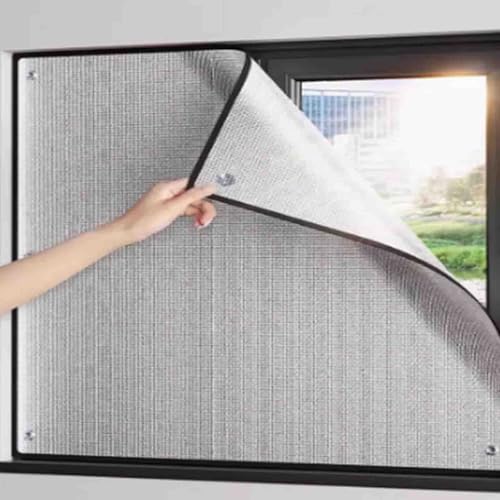
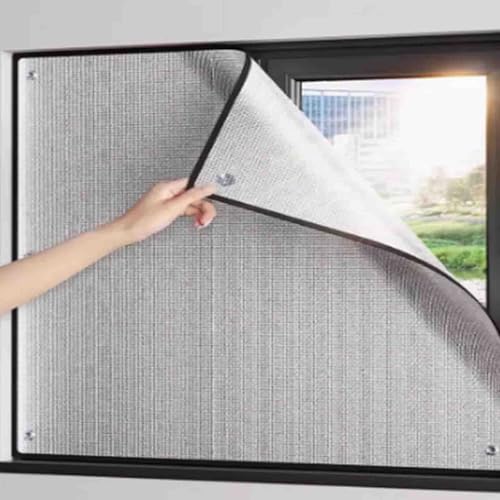
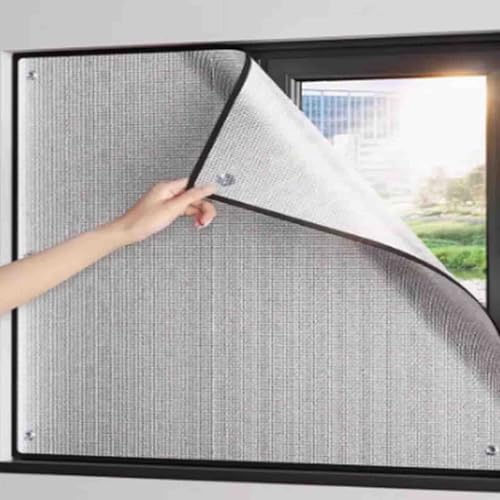
Prices from Amazon AU, updated daily. Swipe or use the arrows for more.
Disclosure: This article contains affiliate links to amazon.com.au. If you buy through one of these links iFix may earn a small commission at no extra cost to you. It doesn't change which products we recommend. We focus on what actually lasts based on 16 years of repair-shop experience.
Quick summary8 picks
- CheapestThermal Insulation Reflective Film about$20.11
- Frost King V75H Window Insulation Shrink… about$22.04
- Thermal Insulation Reflective Film about$23.55
- Thermal Insulation Reflective Film about$25.22
- Duck MAX Strength Window Insulation Kit about$30.1662" screen.
- Amazon Basics Portable Window Blackout… about$42.90
- LazBlinds 100% Blackout Roller Shades about$48.46
- Most PremiumSunoff Blackout Roller Shades Blinds… about$64.0123" screen, 22W.
Glass is the hole in the wall you can see through
Put your hand flat on an internal wall on a cold night, then put it on the window glass. That difference is the whole subject of this guide. Most Australian houses, and nearly every rental I've been inside on the Coast, run single glazing, and a single pane of glass passes heat somewhere around ten times faster than an insulated wall of the same area. The wall got insulation batts and a vapour barrier; the window got three millimetres of glass. A typical bedroom might be one tenth window by area and still lose a third or more of its heat through it, which is why the room with the big beautiful window is reliably the room nobody can keep warm in July.
It runs both ways, and summer is arguably worse. The same pane that bleeds heat out in winter lets radiant heat pour in through January, and a west-facing window in the afternoon behaves like a low-set radiator you can't switch off. Proper double glazing fixes both ends of the year and costs hundreds of dollars per window, needs the landlord's signature, and leaves with the house when you do. This guide is about the other path: films and blinds between $22 and $60 that put a removable insulating layer over the glass you're stuck with, fitted in an afternoon, gone without a mark when the lease ends. None of it matches real double glazing, but the gap between bare glass and covered glass is the biggest single step on the whole ladder. Between those two ends of the year, the same $60 of hardware just keeps earning.
Film, blinds or curtains: what each layer actually does
Still air is the insulator; everything here is just a way of trapping a layer of it against the glass. Shrink film tapes to the frame and heat-shrinks taut, sealing a pocket of air against the pane, which is the same working principle as double glazing at about one fiftieth of the price. It's transparent, so the light and the view stay, and it's sacrificial: fitted in autumn, peeled in spring. A blockout blind fitted close to the glass does a different job with the same physics: the fabric itself resists heat flow a little, but the real work is the dead air column it traps between fabric and pane, which is why a blind hovering ten centimetres proud of the frame in free air does far less than the same blind sealed near the glass.
The top shelf of this category is the honeycomb or cellular blind, which folds its fabric into air-trapping cells and insulates noticeably better than a flat roller. They're also two to four times the money, and none cleared my supply gates in this price band, so they're not in the picks below; if you own your place and the window matters, they're worth pricing separately. Curtains still count too: a heavy curtain with a pelmet over the top is old technology because it works, and everything in this guide stacks with it. Film against the glass, blind or curtain over that, and a single-glazed window starts behaving like it belongs to a much newer house.
The renter rules: nothing a bond inspection can find
Every pick in this guide fits without a drill, which isn't an accident, because drilling a rental window frame is a conversation nobody enjoys at the final inspection. The gradient runs the same way as it did in our draught guide: things that touch nothing beat things that stick, and things that stick beat things that screw. The suction-cup blackout below touches only the glass and leaves nothing at all. Shrink film tapes to the frame with removable tape. The two roller blinds mount on adhesive hook-and-loop strips, which is the strongest commitment on this page, and the one to test before trusting fifty-year-old paint with it.
The test costs nothing: stick a short offcut of the adhesive somewhere hidden, leave it a week, and peel it slowly. Sound paint shrugs it off; chalky or flaking paint tells you now, on a hidden patch, rather than later on the frame everyone can see. Photograph the windows before you fit anything, keep the packaging, and warm old adhesive with a hair dryer before peeling it at a low angle when you leave. Do those four things and every product here comes off clean enough that the question never comes up. On aluminium frames, which most Coast rentals have, adhesive residue wipes off with methylated spirits nine times out of ten anyway.
Winter mode: shrink film and the condensation bonus
Shrink film is the closest thing this category has to a trick that actually works as advertised. Double-sided tape goes around the frame, the film goes on loose and wrinkled, and a hair dryer pulls it drum-tight and nearly invisible. The sealed air pocket between film and glass stops the convection loop that normally strips heat off the pane, and the room-side surface of the window runs warmer from the day it's fitted. You can feel the difference with the back of a hand, which is more than can be said for most products in the energy aisle. Fitting takes maybe twenty minutes per window, and the second window goes faster than the first.
The side effect is the one I care about professionally: a warmer inner surface collects far less condensation. Single glazing in winter is a dew collector, and the water that streams down it every morning ends up in sills, curtains and the electronics that live near windows; the corrosion jobs that come into our Erina workshop off desks pushed against cold glass are their own small genre. Film won't dry out a chronically damp house, and if the whole room runs wet the dehumidifier guide is the right tool, but on the glass itself the difference before and after film is obvious within a week. Less water on the pane also means less mould on frames and curtains come September.
Summer mode: stop the heat before it crosses the glass
Winter is about holding heat in; summer is about radiant load coming the other way, and the honest answer is that anything outside the glass beats anything inside it. External shading, an awning, even shadecloth stops the heat before it enters. Renters mostly can't touch the outside, so the inside layers below are the practical fallback, and they still earn their keep: a blockout blind dropped before you leave for work means the western bedroom is merely warm at 6pm instead of oven-like, because the blind intercepts the radiation at the window instead of letting it soak into the bed, the wardrobe and the plasterboard, which then re-radiate it at you all night. The blind can't beat an awning, but it beats bare glass by a distance.
Colour and position matter. A pale or white-backed blind reflects a useful share of radiation back out through the glass, while a dark blind absorbs it and runs hot, so it protects the room's contents but still warms the air near the window; both of the rollers below are coated blockout types, and both do their best summer work dropped early, not after the room has already cooked. The UV part isn't cosmetic either: afternoon sun through west glass fades furniture and quietly cooks whatever electronics live on the sill. If the room is past prevention, the portable air conditioner picks cover the mechanical retreat, but every degree the blind blocks is a degree the compressor doesn't pay for.
The running-cost arithmetic
Here's the shape of the money. At the AU average tariff of roughly 33c/kWh, a 2,400W heater running flat out costs about 79c an hour, and a heater fighting a wall of bare single glazing runs a lot closer to flat out than one working behind covered glass. If film and a decent blind let the same room hold temperature with the heater cycling at, say, half duty instead of three quarters, that's around 20c an hour saved every hour the heater runs, stated assumptions and all. Across a winter of evening heating the saving passes the cost of everything in this guide combined, which is the same arithmetic that made our draught sealing picks the first job on the list.
Do the jobs in the right order, because they compound. Seal the moving gaps first, since a taped window with a howling gap under the door is a bucket with the bottom missing. Then film the glass, then hang the blind or curtain over it. I ran the whole-house version of this ordering in the smart home power savings guide, and windows sat second only to draughts on the list of things that pay back inside one winter. The same layers work unchanged in summer for a room on reverse-cycle cooling, because the compressor pays for every watt the glass lets through, in either direction, all year.
Fitting it properly, and getting it off again
Every failure I've seen with this gear traces back to surface prep or impatience. Adhesive tape and hook-and-loop strips want a clean, dry, non-dusty surface: wipe the frame with methylated spirits, let it dry fully, and fit on a mild day, because adhesives bond poorly onto cold damp aluminium and then get blamed for it. Press tape down hard for the full length, wait the cure time the instructions give before hanging any weight on it, and only then trim film or mount fabric. With shrink film, leave the loose fit baggy before shrinking; the hair dryer takes out slack you left, but nothing recovers a film cut too tight at the start.
Removal is a spring ritual with film: peel the film, then warm the tape with the hair dryer and pull it back slowly at a low angle, and it comes away clean from sound paint and aluminium. Blind adhesive follows the same rule, warmed and peeled, never yanked cold. Store the blinds flat over summer if you're rotating seasonally, order a fresh film kit each autumn, and write the fitting date on a corner of the tape with a marker, because the difference between one winter's adhesive and three winters' adhesive is the difference between a clean peel and an afternoon with a scraper. Ten careful minutes at each end of the season keeps the whole system genuinely mark-free.
How I picked these five
Same gates as the rest of the series. Every pick is sold new, sits inside the $20 to $250 band the queue set, and ships from Amazon AU directly, which this category made easy: all five picks are Amazon AU stock, so returns and arrival dates behave. Import listings and export sellers were binned on sight as always. Ranks are real Amazon AU category sales ranks pulled the same day, and the lead blind sits at number 16 in Roller Window Shades, with the portable blackout sitting at number 1 in its own category, so this is settled-demand gear rather than experiments. The five land between $22 and $60, at the bottom of the band, because honest window insulation at the removable end just doesn't cost more than that.
The mix is deliberate: two shrink film kits at different coverage (one whole-house, one single-room), two no-drill blockout rollers at different widths and mechanisms, and one zero-commitment suction blackout, because most houses need a winter layer and a summer layer and they're not the same product. What didn't make it: the honeycomb cellular blinds, priced above what this band allows this round, the mirror-finish adhesive films that darken rooms all year for a summer-only benefit, and the no-name film kits whose listings state no dimensions, because you can't cover a window with a mystery quantity of film. Prices were right on the day and will drift, so treat them as a snapshot.
The 5 picks, $22 to $60
Prices are Amazon AU at time of writing (18 September 2026) and move week to week. Ranks are Amazon AU category sales ranks, checked the same day.

Duck MAX Strength Window Insulation Kit, 5 Windows
ASIN B0BMQW2HHV • $35.34 • Ships from Amazon AU
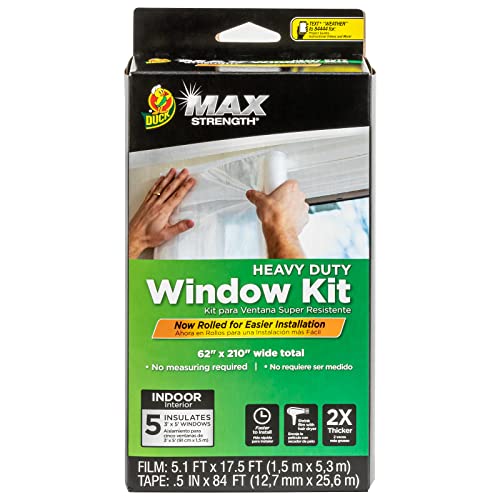
This is the winter workhorse of the list. One roll of clear shrink film at 62 by 210 inches plus a half-inch by 84 foot roll of tape, enough for up to five standard windows around the three by five foot mark, which covers the heated end of most houses in one box. The MAX label is Duck's heavier grade, and the listing calls it puncture-resistant and twice as thick as standard window kits, which matters because the thin kits are exactly the ones that split at the tape line in week three. Fitting needs scissors and a hair dryer and nothing else: tape the perimeter, hang the film loose, shrink it taut, trim the spare.
The roll format is the quiet advantage. Pre-cut sheet kits force you to map their sheet sizes onto your windows; a roll means no measuring up front, you cut what each window turns out to need, and the odd-shaped pane by the front door stops being a problem. Once shrunk, the film pulls crystal clear, and per the listing it goes onto painted or finished wood, aluminium and vinyl frames, fitted indoors on clean dry surfaces. At the end of the season it removes easily, tape and all, which matches how these kits behave on sound paint when they're peeled warm rather than ripped cold on a winter morning. Sound paint, a warm peel, and no drama.
At $35 at time of writing it works out at about $7 a window, which is the best insulation-per-dollar figure anywhere in this guide, draughts aside. It ranks 124th in Amazon AU's Window Films category and it's Amazon AU stock, so an autumn order arrives before the cold does. Fit the rooms you heat and skip the ones you don't, and the roll stretches further again. The one discipline it asks for is patience with the hair dryer, working corner to corner until the wrinkles vanish, because a half-shrunk film flaps, fogs and looks like a bin liner, while a properly shrunk one disappears from three metres away.
Honest caveats: It's seasonal, single-use film: it comes off in spring and a fresh kit goes on next autumn, so treat the $35 as a per-winter cost. Dimensions are quoted in imperial on the AU listing. The tape is the usual paint caveat, so test a hidden spot first on old or chalky frames, and a hair dryer is required, not optional.
Best for: The whole heated end of a single-glazed house, filmed in one afternoon for the price of a takeaway dinner.
Coverage: Up to 5 windows (3 x 5 ft) • Film roll: 62 x 210 in, cut to size • Tape: 0.5 in x 84 ft roll included • Grade: Twice standard thickness (listing) • Finish: Crystal clear once shrunk • Tools: Scissors and hair dryer • Sold by: Amazon AU • Rank: #124 in Window Films (Amazon AU)
View on Amazon AU
Frost King V75H Indoor Window Insulation Shrink Kit, 62 x 210 in
ASIN B0000TPRDQ • $22.41 • Ships from Amazon AU
Same job as the Duck kit above, and more glass covered for less money. The V75H is 62 by 210 inches of clear polyolefin, about 1.6 by 5.3 metres, which the listing counts as 90.42 square feet, call it 8.4 square metres. That is roughly 40 percent more film than the sheet it replaces, and it arrives as a roll rather than pre-cut panels, so you cut each window to what it actually measures instead of fitting your house to somebody else's sheet sizes. It ranks 46th in Amazon AU's Window Treatment Sets, which for a product whose design has not changed in decades says it gets reordered rather than discovered.
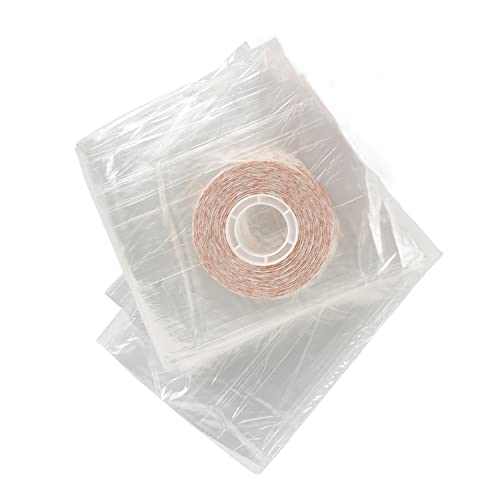
Fitting is the ritual the Duck kit asks for and nothing more: tape the frame, hang the film loose, work a hair dryer corner to corner until the wrinkles pull out, then trim the spare. A roll of double-sided tape sits in the pack shot alongside the folded film, so the box has what the job needs. Polyolefin is the usual material for these kits and the listing gives the colour as clear, which is the whole point. Shrunk properly the film vanishes from three metres away. Rushed, it flaps and fogs, and you will see it every time you walk past.
For one freezing bedroom this is still the right place to start, because a roll commits you to nothing. Cut the window that keeps you awake, roll the rest back up, and it waits in the cupboard until next autumn. At $22 it's the least you can spend on this page and still be doing real work on the glass, which leaves the $35 Duck kit as the pick for anyone who wants its heavier grade across the whole heated end of the house. The whole roll weighs 340 grams, so the leftover costs nothing to store. Do the coldest room, live with it a fortnight, and let the result decide the rest.
Honest caveats: It's seasonal single-use film like the Duck kit, so treat the $22 as a per-winter cost. Dimensions are quoted in imperial on the AU listing. The Duck listing claims twice standard thickness and this one quotes no film gauge at all, so don't assume the two are the same grade. A hair dryer is required, not optional, and the tape carries the usual warning on old or chalky paint.
Best for: The most glass covered per dollar on this page: one cold room now, the rest of the roll kept for next winter.
Sheet size: 62 x 210 in (about 1.6 x 5.3 m) • Coverage: 90.42 sq ft (about 8.4 sq m) listed • Material: Polyolefin • Finish: Clear • Fixing: Double-sided tape, shown in pack • Fitting: Indoor, hair dryer shrink • Weight: 340 g • Model: V75H • Sold by: Amazon AU • Rank: #46 in Window Treatment Sets (Amazon AU)
View on Amazon AU
LazBlinds 100% Blackout No-Drill Roller Shade, 36 x 72 in
ASIN B0BJDKKCYN • $50.07 • Ships from Amazon AU
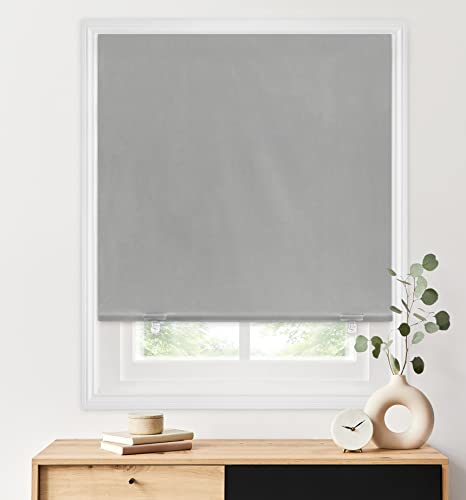
This is the lead pick and the most renter-shaped blind I could find with real sales behind it: it ranks 16th in Amazon AU's Roller Window Shades category, and everything about it is built around not drilling. The mounting is industrial-grade adhesive hook-and-loop that the listing rates for lime-washed walls, tiles, glass, wood, plastics and metal, so it goes inside the frame, on the frame or straight onto the glass surround, no brackets, no screws. The fabric is polyester with a coated blackout backing, rated 100% blockout with UV protection, and the listing sells it as thermally insulated, which in practice means the dead air it traps against the glass does the insulating.
Two honest mechanical details. First, width is trimmed at home: you cut the tube and fabric down to your exact window, which turns one stocked size into a custom fit but rewards measuring twice. Second, there's no spring: the shade raises and lowers with included clips, so adjusting it is a two-hand operation rather than a flick. That clip system is also why it's completely cordless, with nothing dangling for kids or cats, and why there's nothing spring-loaded to wear out. At 36 by 72 inches this size covers most bedroom windows, and this size ships with two clips, two tubes and a connector per the listing. Measure twice before you make that cut.
At $50 at time of writing, this is the pick for the renter who wants the window genuinely dark and measurably warmer without touching a drill. The hook-and-loop is the strongest adhesive commitment in this guide, so run the hidden-patch test on painted timber first. On aluminium and tile it's about as close to consequence-free as mounted hardware gets. Fitted close to the glass it traps a proper dead-air column, so the thermal claim turns real in practice, and the darkness is total in a way ordinary curtain gaps never quite manage on their own.
Honest caveats: The adhesive hook-and-loop holds hard, which cuts both ways: test old paint before trusting it, and peel it warm and slow at the end of the lease. Raising and lowering by clips is slower than a spring roller, and a trimmed-to-width blind is only ever as straight as your cut.
Best for: The rented bedroom that needs dark and warm without a single screw hole.
Size: 36 x 72 in, trim-to-width • Fabric: Polyester, blackout coated backing • Blockout: 100% with UV protection (listing) • Mounting: Adhesive hook-and-loop, no drill • Operation: Cordless, clip raise/lower • In the box: 2 clips, 2 tubes, 1 connector (this size) • Sold by: Amazon AU • Rank: #16 in Roller Window Shades (Amazon AU)
View on Amazon AU
Sunoff Blackout Cordless Roller Shade, 23 x 72 in
ASIN B0BWJTRVR1 • $59.76 • Ships from Amazon AU
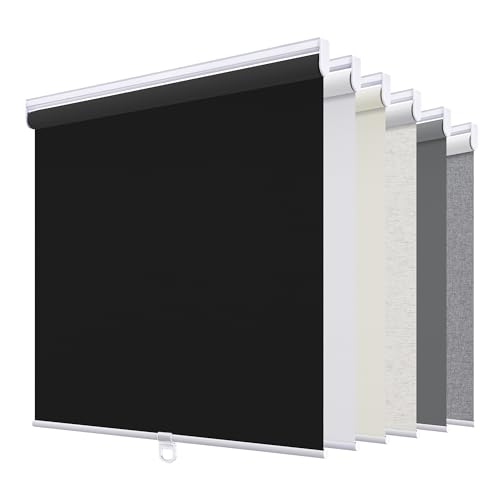
The other blind mechanism, for people who tried the clip system in their head and sighed. This one is a proper cordless spring roller: pull it down to where you want it, and it stays; a small tug sends it back up. Daily-use windows want that action, because a blind that's annoying to raise ends up living permanently down and costing you every ray of winter sun you'd otherwise collect for free. The fabric is 100% polyester with a full blackout coating, the listing rates it 100% blockout with UV protection, and the cordless spring design leaves nothing hanging for children or pets, which is the direction all window furnishing regulation has been heading anyway.
The size stocked here is 23 inches wide by 72 long, which suits the narrow windows the other picks don't: hallways, bathrooms, the strip of glass beside a front door, or a pair of them side by side on a wider frame. Sunoff's listing is unusually straight about its measurements, stating that the fabric runs one inch narrower than the quoted blind width because of the mechanism at each end, so a 23 inch blind gives you 22 inches of actual coverage. Measure off the fabric number, not the headline number, and decide whether inside-mount light gaps at each edge matter for the room in question before ordering. That kind of honesty is rarer than it should be.
At $60 at time of writing it's the dearest pick in the guide, ranks 35th in Roller Window Shades, and ships as Amazon AU stock. Between the two blinds the split is simple: LazBlinds for the bedroom you customise once and want maximum dark, this for the window you'll raise and lower every single day. It's also the only pick here with a mechanism that wears, so treat the spring kindly: a controlled pull beats a flick, and it'll still be rolling straight when the lease ends. If the window runs wider than about 55 centimetres, buy two or go back to the LazBlinds.
Honest caveats: Fabric runs a stated one inch narrower than the blind width, so edge light gaps are built in on inside mounts. The size here is narrow at 23 inches, so wide windows need multiples. Spring mechanisms are the moving part in this guide; treat the smooth-action tug as a thing to be gentle with.
Best for: Narrow, daily-use windows where a real spring action beats fiddling with clips twice a day.
Size: 23 x 72 in (blind) • Fabric width: 22 in (1 in narrower, stated) • Material: 100% polyester, blackout coating • Blockout: 100% (listing) • Operation: Cordless spring, pull down • Safety: No cords, child and pet safe (listing) • Sold by: Amazon AU • Rank: #35 in Roller Window Shades (Amazon AU)
View on Amazon AU
Amazon Basics Portable Blackout Curtain, 1.98 x 1.30 m
ASIN B071YVLK63 • $42.90 • Ships from Amazon AU
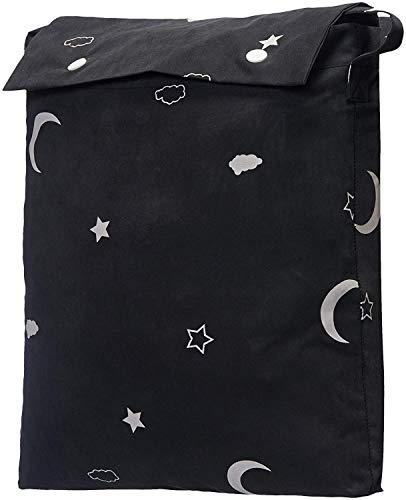
The only pick here that commits to absolutely nothing: a 1.98 by 1.30 metre blackout curtain that attaches with suction cups straight onto the glass, no tape, no adhesive, no residue, nothing an inspection could ever find. Amazon pitches it at travel and kids' rooms, and it ranks number 1 in Amazon AU's Kids' Curtain Panels category, but the mechanism doesn't care what the room is for. The listing rates it for blocking sunlight and UV, cutting outside noise a little, full privacy, and creating an insulating barrier against heat and cold, which is the same trapped-air job every other pick in this guide does, held on by vacuum instead of glue.
The clever detail is the hook-and-loop edging on the curtain itself: fold and stick the edges to resize the panel to smaller windows, so one curtain adapts to whatever glass it meets. That, plus fitting in a bag, is why this is the pick for the serially mobile: share-house movers, shift workers who follow the day-sleep around the house, anyone in short-term places where even removable tape feels like too much paperwork. Suction cups want what suction cups always want, clean glass and dry cups pressed on firmly, and the listing is upfront that it can't be hung from a curtain rod; the glass is the only mounting it has.
At $43 at time of writing it's the least permanent and most portable dark-and-insulate option on this page, and the one I'd throw in a car for a stint of night shift in a bright rental. It's Amazon AU stock, so if the cups and your glass disagree, returning it is straightforward. Between houses it beats every other pick here for sheer indifference to what the windows look like, because vacuum doesn't care about frame material, paint age or landlord policy, and the whole thing stores in a drawer through the months you don't need it.
Honest caveats: Suction cups lose grip over time on textured or dirty glass and want re-pressing now and then, so treat it as a nightly tool rather than a fixed furnishing. It can't mount to a rod at all, it blocks the view and the light completely while it's up, and one panel covers one window at a time.
Best for: Shift workers, share-house movers and anyone who needs a dark, warmer window tonight with zero trace tomorrow.
Size: 1.98 x 1.30 m • Mounting: Suction cups, on glass only • Adjustment: Fold-and-stick edges resize panel • Rated for: Light, UV, privacy, insulating barrier (listing) • Rod mounting: Not supported (listing) • Portability: Packs down for travel • Sold by: Amazon AU • Rank: #1 in Kids' Curtain Panels (Amazon AU)
View on Amazon AUSide-by-side comparison
| Product | Price | Best for |
|---|---|---|
| Thermal Insulation Reflective Film | ~$20.11 | |
| Frost King V75H Window Insulation Shrink… | ~$22.04 | |
| Thermal Insulation Reflective Film | ~$23.55 | |
| Thermal Insulation Reflective Film | ~$25.22 | |
| Duck MAX Strength Window Insulation Kit | ~$30.16 | |
| Amazon Basics Portable Window Blackout… | ~$42.90 | |
| LazBlinds 100% Blackout Roller Shades | ~$48.46 | |
| Sunoff Blackout Roller Shades Blinds… | ~$64.01 |
What we see fail at the bench: the gear that lives near glass
Films and blinds don't break in ways a bench can help with, but the window line itself sends us steady work, because glass is where the house is coldest in July, hottest in January and wettest every winter morning. The gear that lives on sills and window-side desks cops all three. The three patterns below arrive every year on schedule, and every one of them is prevented by the sort of hardware this guide covers.
The desk pushed against cold glass
Laptops and consoles parked against a single-glazed window spend winter in a nightly condensation cycle: warm damp room air, cold case, moisture filming onto boards and connectors while everything sleeps. The first symptoms are always the same, a USB port that works on wiggle, a charge cable that needs holding, and when we open the machine there's the telltale corrosion creep around the ports facing the window. Film on the glass warms that whole microclimate, but the free fix is layout: pull the desk back, and don't let a machine live below the line where the morning water runs.
The heater losing to a bare window
Every winter brings in fan heaters run flat out for weeks in rooms where the heat was pouring straight out through uncovered glass. Flat out means the element and fan never rest, dust bakes onto everything, thermal cutouts start cycling, and the plug and powerboard run hot for hours a night, which is where the browned sockets come from. A 2,400W heater belongs in a wall socket, never a powerboard, and behind covered glass it cycles instead of sprinting. Half the melted powerboards we're shown were really window problems wearing an electrical disguise.
Sun-cooked electronics on the sill
West glass in summer is an oven set to low, and the sill is its rack. Routers, smart speakers, chargers and the occasional phone left in the afternoon beam come in with swollen batteries, warped cases and Wi-Fi that drops every evening at heat soak. Lithium cells hate heat above all else, and a battery that spends summers at sill temperatures ages years in months. A dropped blockout blind protects the room's contents as much as the room, and the lowest-cost fix in this whole bench section is moving the router one metre out of the beam.
Decision tree: which one should you actually buy?
- Renting, cold, and want the biggest fix for the least money? → The Duck MAX kit at $35 films the whole heated end of the house. Add the LazBlinds no-drill blockout at $50 on the coldest bedroom and stop there.
- One freezing bedroom and not ready to commit the whole house? → The Frost King roll at $22. Cut the one window, roll the rest back up, and judge the physics yourself before the house gets the same treatment.
- West-facing room that's unbearable on summer afternoons? → A blockout roller dropped before you leave in the morning: LazBlinds at $50 for wide windows, the Sunoff spring roller at $60 for narrow ones. Outside shading beats both if you're allowed to fit it.
- Day sleeper, or moving too often to fit anything? → The Amazon Basics suction blackout at $43. Dark and insulated tonight, in a bag tomorrow, no trace either way.
- Windows that get opened and closed every day? → Skip film on those panes, it seals them for the season. Put the Sunoff spring roller at $60 there instead, and film the windows that stay shut all winter.
- Gear near a window already playing up: flaky ports, dropping Wi-Fi, a battery that's swollen? → Stop charging anything swollen and unplug it. Bring it to the workshop in Erina and we'll tell you whether it's corrosion, heat damage or coincidence before you spend anything on replacements.
Frequently asked questions
Does window insulation film actually make a difference?
Yes, and it's one of the few products in the energy aisle where you can verify the claim yourself in a week. The film seals a pocket of still air against the pane, which stops the convection loop that strips heat off single glazing, and the inner surface runs noticeably warmer from the first cold night. Put the back of your hand near the glass before and after fitting and the difference is obvious, and the morning condensation on that pane drops away almost entirely. It won't match real double glazing, and it does nothing for a howling gap under the door, but per dollar it's the strongest fix a single-glazed window can get.
Will the tape or adhesive wreck the paint when it comes off?
On aluminium frames and glass, almost never: warm the adhesive with a hair dryer, peel slowly at a low angle, and wipe any residue with methylated spirits. Painted timber is the risk case, and the tape is only ever as strong as the paint under it. Sound paint survives a warm, slow peel; old, chalky or flaking paint can lift with any adhesive product at all. Test a short offcut somewhere hidden for a week before fitting metres of the stuff, photograph the frames before you start, and take film off at the end of winter rather than leaving tape to cure on for years. The suction-cup pick exists precisely so renters can skip this question entirely.
Can I still open a window that has film on it?
No, and that's the main planning decision with film. The sheet seals the pane and frame as one unit for the season, so a filmed window stays shut until you peel it in spring. The answer is to choose windows deliberately: film the panes that stay closed all winter anyway, which in most houses is most of them, and leave one opener per room bare for airing. Ten minutes of hard airing a day through that one window swaps the moisture out without undoing the insulation on the rest. If every window in a room genuinely needs to open daily, that room wants blinds rather than film.
Does film help in summer too, or is it winter-only?
The trapped air layer resists heat flow in both directions, so film helps a little in summer, but it's the wrong tool for the main summer problem, which is radiant heat pouring through the glass. Radiation sails straight through clear film by design, that's why the view survives. Summer wants interception: a blockout blind dropped before the sun reaches the window, pale side out if you have the choice, or better still shading outside the glass where the rules allow it. The practical pattern for most houses is film through winter, peeled in spring, with the blinds doing year-round duty and earning their keep hardest in January.
Why is there condensation between the film and the glass?
A little fog inside the film pocket early on usually means moisture was sealed in on fitting day, either from a damp frame or a cold humid afternoon, and it typically clears as the trapped air dries out over the first week or two. Persistent heavy fogging inside the pocket points at an air leak in the tape line, letting fresh damp air cycle in, and re-pressing the tape or patching the gap fixes it. It's worth saying the film still moved the problem in the right direction: that moisture would otherwise have been streaming down the room-side glass into the sill. Fit film on a dry mild day to a fully dry frame and the pocket usually stays clear all season.
Are honeycomb cellular blinds worth the extra over these?
On pure insulation, yes: the folded cells trap air in layers and outperform any flat roller or film sheet, which is why they're the standard recommendation for owners doing a window properly. The catch is price, typically several times the cost of anything in this guide per window, and they mostly want proper bracket mounting, which puts them on the wrong side of the drill line for renters. My honest ordering is: renters and one-winter fixes start with film and a no-drill blockout, owners with a long-term cold room price honeycombs for the windows that matter most, and the difference funds a lot of film in the meantime. None cleared this guide's price band this round, so they're a category to price separately rather than a pick.
Related buying guides
Window-side gear gone strange?
Corroded ports on the laptop that lives against the glass, a router that drops out every hot afternoon, a battery swelling on a sunny sill: the window line generates its own family of faults. Bring the device in to the workshop in Erina and we'll tell you whether it's moisture, heat or age, what the fix costs, and whether the fix beats replacement, before you spend a dollar either way.
Call (02) 4311 6146 Book Online