Prices from Amazon AU, updated daily. Swipe or use the arrows for more.
Disclosure: This article contains affiliate links to amazon.com.au. If you buy through one of these links iFix may earn a small commission at no extra cost to you. It doesn't change which products we recommend. We focus on what actually lasts based on 16 years of repair-shop experience.
Quick summary6 picks
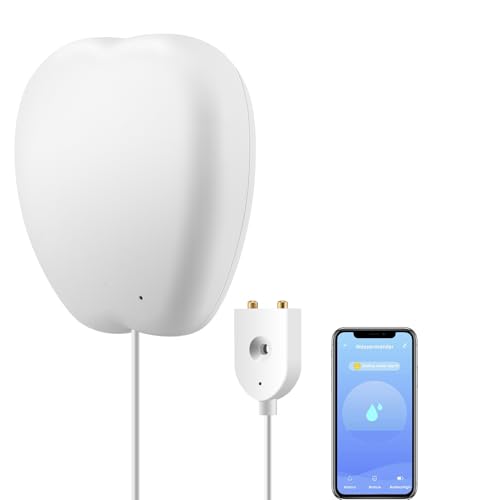
- CheapestMengshen WiFi Water Leak Detector Smart… about$22.99
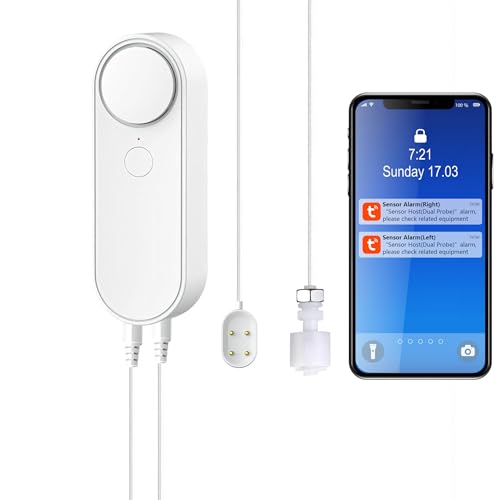
- Mengshen WiFi Water Leak & Water Level… about$34.99
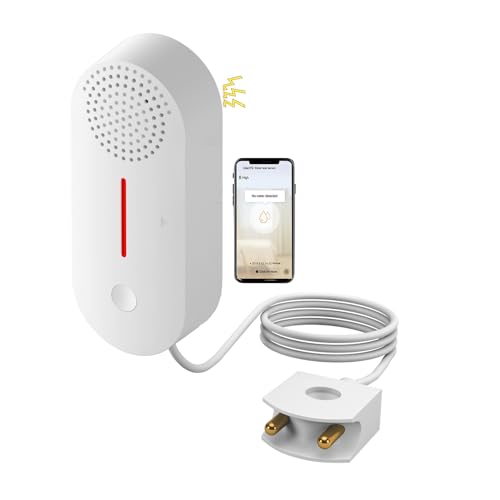
- UanTii Smart Water Leak Sensor with Sound… about$36.00
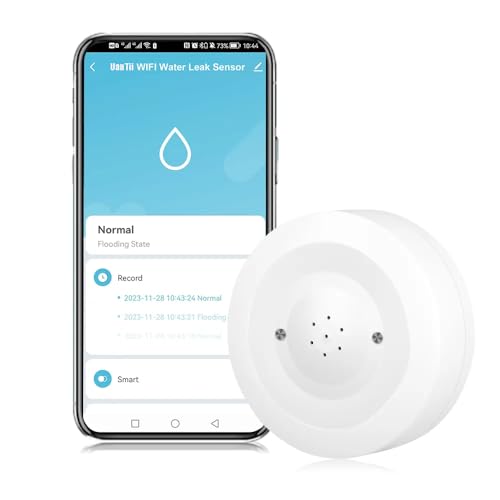
- UanTii Smart Water Leak Alarm Sensor Tuya… about$36
- Tapo TP-Link Water Leak Sensor about$35.00
- Most PremiumEve Water Guard about$106.76
Water is the slowest disaster your house gets
The braided hose behind your washing machine has a rubber core that's been under mains pressure since the day it was fitted. When it lets go, and the old ones do let go, it doesn't announce itself. It fails at 10am on a Tuesday while the house is empty, and it runs at full pressure until someone comes home. I've had customers carry in a laundry basket of soaked electronics: a NAS that lived on the floor, a powerboard, a laptop that was charging on the tiles. The water was only the start of their problem, and the machines were the least of it once the flooring quotes arrived.
A leak sensor is a $35 to $107 answer to that. It's a puck or a probe that sits at the wet spot, screams at 90 to 100 decibels the moment water bridges its contacts, and pushes an alert to your phone. Caught in the first minute, a burst hose is a towel and a tap you turn off. Caught at hour six, it's carpet, skirting boards, plaster, a week of drying fans and an argument with an assessor. The gap between those two outcomes is the entire value of this product category, and it's why I fit them in my own place.
I've picked four sensors between $35 and $107, all in stock on Amazon AU from local sellers at the time of writing. One needs a hub, one belongs in an Apple Home house, and two are standalone WiFi units that talk to the usual Tuya app. None of them need a plumber, none of them need a landlord's permission, and the dearest one costs less than most insurance excesses I've heard quoted lately.
The claim you stop is worth more than the excess
Premiums have been climbing for years and most people I talk to have responded the only way they can, by pushing the excess up to keep the number sane. That trade works right up until something goes wrong. Now the first several hundred dollars of any water event is yours, and that's before the quiet cost nobody prints: a paid water claim follows you to renewal, and some insurers get noticeably less friendly about cover once you've made one. Water damage sits near the top of home insurance claim categories year after year, and the insurers know their own numbers, which is why the questions about flexible hoses and hot water system age keep appearing on renewal forms.
So the honest maths on a leak sensor isn't sensor versus excess. It's sensor versus the whole chain: excess, premium loading, the week of industrial drying fans, and the things insurance never really gives back, like the data on a drowned drive. I've written before about backup boxes for the house, and the uncomfortable truth is that a lot of them live on the floor of a cupboard, which is exactly where water goes first. A $41 puck next to a $700 NAS is not a hard decision.
There's a second honest point. Don't buy one of these expecting a premium discount, because in my experience Australian insurers mostly don't offer one for DIY sensors. The payoff isn't a smaller premium, it's the claim you never lodge and the afternoon you spend with a mop instead of a loss adjuster. If a discount ever shows up, treat it as a bonus.
WiFi, Zigbee, Thread or a bare siren
The most basic leak alarms are siren-only: a battery, two contacts and a screamer. They're fine if someone is always home to hear them, and useless for the Tuesday-at-10am failure, which is the one that matters. Everything in this guide connects to something, because an alarm nobody hears is a wet floor with a soundtrack.
Standalone WiFi units like the UanTii and Mengshen join your 2.4GHz network directly and push alerts through the Smart Life app. No hub, lowest cost of entry, and the same app that runs half the metering smart plugs I've recommended, so plenty of houses already have it installed. The trade-off is that a WiFi radio is a hungry thing for a battery device to carry, and every sensor is another client on your network that you'll forget exists.
Hub systems like Tapo's run the sensors on a low-power link and let one hub do the WiFi for the lot, which is the tidier architecture once you want three or four sensors. The hub sits in the middle of the house where the signal's good, the sensors sip their batteries at the edges, and your router only ever sees one new device instead of six. Zigbee gear plays the same game if you already run a hub or Home Assistant, though the AU retail picks in that camp were thin on the ground this month. Thread, which is what the Eve uses, is the newest of the low-power options: local, meshed, and in Eve's case there's no cloud account at all, which I find easy to like. Pick the radio that matches the house you already run, not the one on the shiniest box.
Where leaks actually start
Nobody's house floods from the middle of the lounge room. Water starts at fittings, and the shortlist is boringly consistent. Washing machine hoses, first and always, because the rubber perishes from the inside while the braid still looks new. Flexible hoses under sinks and vanities, same failure, same silence. The dishwasher, usually at the door seal or the drain connection. The hot water system, which weeps politely from the relief valve for months before it decides to do something dramatic. And the fridge, if it has an ice maker or water dispenser, because that little plastic line runs under it where you'll never look.
That list is your placement plan. One sensor per genuine risk point beats one expensive sensor in a hallway. Laundry first, then the hot water cupboard, then under the kitchen sink, then behind the fridge if yours plumbs in. Renters should note that every one of those spots takes a battery puck you sit on the floor, no drilling, no plumber, nothing a landlord could object to, and the sensors leave with you at the end of the lease. That matters because renters carry the worst version of this risk: the hoses are whatever age the landlord left them, you can't replace them yourself, and it's your bond and your contents policy in the firing line when one lets go.
Aircon condensate drains deserve a mention too. A blocked drain on a wall split drips down the wall cavity slowly enough that you usually find out via a paint bubble. A cable-style sensor run along the wall under the unit picks that up early, and it's a spot where the drip is genuinely invisible until it's expensive.
Pucks, probes and cables: how the sensing works
There's no magic in the detection. Two metal contacts sit a couple of millimetres apart, water bridges them, a tiny current flows and the alarm fires. That's the whole trick, which is why the good news is that even the $35 units detect water just as well as the dear ones. What you're paying more for is the radio, the app, the build quality and the ecosystem, not the sensing. It's the same story as multimeters: the $20 one measures volts fine, and the money in the $300 one went into everything around the measurement.
Form factor matters more than brand. A puck detects the puddle that reaches it, so it has to sit at the lowest point of the risk zone, and floors aren't as flat as they look. Put it where the water will pool, not where it's convenient, and pour a cup of water near it once to check you guessed the fall of the floor correctly. Units like the Tapo add contacts on top as well as underneath, so they'll also catch a drip from above or a full immersion, which suits drip trays.
The Eve takes the other approach: a two metre sensing cable, where a splash anywhere along the length trips it. That's the right shape for a long risk zone, along the back wall behind a washer and tub, around the base of a hot water tank, or across the full width of a cupboard. Eve says the cable can be extended to 150 metres, which is more warehouse than house, but the principle stands. Cable covers area, pucks cover points.
What water does to the electronics it reaches
My interest here isn't theoretical, because the aftermath lands on my bench. Water and a powered circuit board start electrolysis immediately: copper tracks dissolve, connector pins grow green crust, and the corrosion keeps eating long after everything looks dry. A phone that got splashed and kept working often comes back a month later dead, and by then the damage is a spreading stain across the board instead of a spot we could have cleaned. I've written up what water actually does inside a device if you want the full mechanism.
If a leak beats your sensor to something electronic, the order of operations matters. Power it off, unplug it, and above all don't put it on charge to see if it still works, because pushing current through a wet board is how a recoverable device becomes a dead one. Skip the rice. Get it to our Erina workshop quickly and the odds of a proper ultrasonic clean saving the board are decent. Wait a fortnight and they aren't.
This is also the argument for getting devices off the floor as a habit. Powerboards zip-tied up off the slab, the NAS on a shelf instead of the cupboard floor, the console out of the entertainment unit's bottom shelf if there's a fish tank or a wall split above it. A sensor buys you minutes, and getting gear off the floor buys you the minutes after that. The two together mean a burst hose costs you a wet towel and ten minutes of swearing instead of a data recovery job, and I know which of those I'd rather sell you.
Batteries, false alarms and the boring maintenance
Every sensor in this guide is battery powered, and a leak sensor with a flat battery is silence in exactly the spot you chose because it worried you. The UanTii claims up to six months of standby and the Mengshen runs on two AAAs it ships with; both will nag the app when the battery gets low, but apps get reinstalled and notification permissions get revoked, so I don't treat the nag as a guarantee. Put a repeating reminder in your calendar and touch a damp cloth to each sensor once a quarter. Ten seconds per sensor, and it tests the whole chain from contacts to phone.
False alarms are usually condensation or humidity rather than electronics playing up. A sensor on the floor of a bathroom cupboard or next to an uninsulated cold water pipe will eventually get condensation bridging the contacts on a humid February day. If a spot keeps crying wolf, the moisture is real even if the leak isn't, and the fix is airflow or a dehumidifier doing its rounds rather than deleting the sensor from the app.
Last, the network. The WiFi units live and die by your 2.4GHz band. Rename the SSID, swap the router, or let the signal in the laundry sit at one bar, and the sensor drops off quietly, months before you need it. After any router change, walk the house and re-test every sensor with the damp cloth. It's dull, and it's the difference between owning leak protection and owning plastic.
The 4 picks, $35 to $107
Prices are Amazon AU at time of writing (19 September 2026) and move week to week. Ranks are Amazon AU category sales ranks, checked the same day.

Tapo T300 Water Leak Sensor (hub required)
ASIN B0CCV45TGH • $41.34 • Ships from Amazon AU
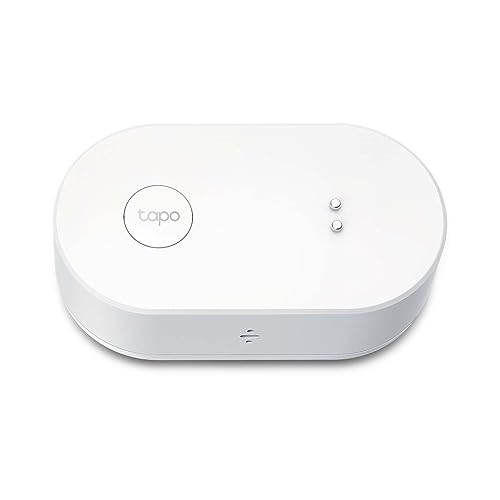
The T300 is the sensor I'd standardise a house on, and the sales rank says plenty of people already have: it sits at #2 in Amazon AU's Home Security Kits category at $41.34, sold by Amazon AU. It's a hub-based unit, so the sensor itself runs a low-power link back to a Tapo hub, and the hub does the WiFi, the app alerts and the loud part. One hub carries a whole family of Tapo sensors, which is exactly the shape you want once the laundry, the hot water cupboard and the kitchen sink each get their own puck, and it's why the per-sensor price matters more than the first-sensor price.
The listing covers the bits that count. Detection is dual induction, with contact points on the bottom and the top of the puck, so it catches the puddle it's sitting in and the drip landing on it, and TP-Link rates it for complete immersion rather than just a splash. The siren is quoted at up to 90dB and it's adjustable, with the hub's own alarm and the phone notification firing at the same time. Waterproofing is quoted as IP66 in the spec text, and the housing is small enough to sit flat under a kickboard or inside a drip tray without being wedged. That immersion rating matters more than it sounds, because the sensor at the centre of a real flood spends its life underwater while it's doing its most important work.
In practice this is the pick for anyone building the multi-sensor setup from the placement plan above. Buy the hub once, then add $41 pucks until the risk list is covered, and the marginal cost of protecting one more spot stays low enough that you'll actually do it. The Tapo app is also one of the more polished of the big-brand smart home apps, and alert reliability through the hub has a better reputation than bare WiFi sensors parked at the edge of a router's range, because the hub sits wherever your signal is strongest rather than on the laundry floor.
Honest caveats: The hub is required and isn't included at this price, so cost your first sensor honestly as puck plus hub. The listing shows IP67 in the title and IP66 in the spec text, so treat IP66 as the safe assumption. Warranty is one year, which is short next to the ten-year life some rivals quote.
Best for: Anyone covering three or more leak points who wants one hub, one app and $41 sensors from there.
Type: Leak and immersion sensor, hub based • Connection: Requires Tapo hub (not included) • Siren: Up to 90dB, adjustable, plus app alerts • Detection: Dual induction, contacts top and bottom • Waterproofing: IP66 per the listing spec text • Warranty: 1 year • Price: $41.34 at time of writing • Rank: #2 in Home Security Kits (Amazon AU)
View on Amazon AU
Eve Water Guard (Apple Home, Thread)
ASIN B09S6P74FX • $106.76 • Ships from Amazon AU
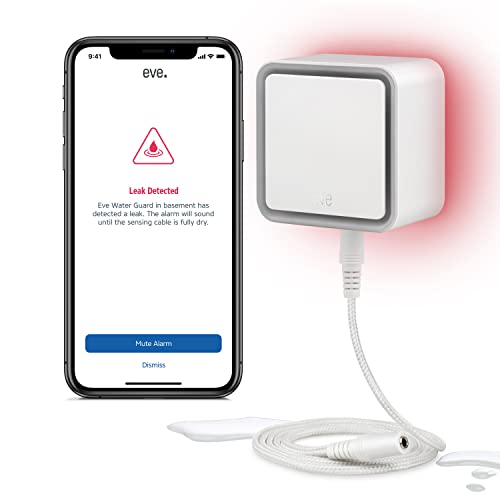
The Eve Water Guard is the odd one out in this list and the best engineered thing in it. Instead of a puck, you get a two metre sensing cable, and water touching any point along that length trips a 100dB siren, a red flashing warning light and a notification to your iPhone. That cable shape is the right answer for long risk zones: the wall behind a washing machine and tub, the perimeter of a hot water tank, the full width of the cupboard under a kitchen sink. Eve says the cable can be extended up to 150 metres, which tells you the design brief was serious, and it holds the #35 spot in Home Security Kits at $106.76 from Amazon AU.
The connectivity story is what sells it to a particular kind of household. It's an Apple Home device running Thread and Bluetooth, it joins your Thread network automatically, and it acts as a router node that strengthens the mesh for every other Thread device in the house. Eve's standing policy applies here too: no Eve cloud, no account, no registration, with everything running locally. For anyone who's been burnt by a smart home brand retiring a server and lobotomising their gadgets, that architecture is the feature. It also means the alert path doesn't depend on some company's cloud staying in business, which for a device you might rely on a decade from now is worth actual money, and it's a stance Eve has held across their whole range rather than a marketing line for this one product.
The catch is in the first line of the listing: it requires an iPhone or iPad on a current version of iOS. This isn't a sensor for an Android household, and there's no Tuya-style fallback app to rescue you if the family's phones are mixed. If you're already deep in Apple Home, though, this is the most polished leak detection you can buy at this money, the cable format genuinely covers spots a puck can't, and the Thread router function quietly improves every other Thread device in the house as a side effect.
Honest caveats: Apple only, per the listing, so Android households should look at the Tapo instead. Extending past the included two metre cable means buying extension cable, and the listing doesn't price or include it. The power arrangement isn't stated on the listing, so check the current page for what's in the box before ordering.
Best for: Apple Home households who want cable coverage along a wall or around a tank, run locally with no cloud account.
Type: Cable leak sensor, 2m sensing length • Connection: Thread and Bluetooth, Apple Home • Requires: iPhone or iPad, current iOS, per listing • Siren: 100dB plus red flashing warning light • Extendable: Up to 150m with extra cable • Cloud: None: no account, local operation • Price: $106.76 at time of writing • Rank: #35 in Home Security Kits (Amazon AU)
View on Amazon AU
UanTii Smart Water Leak Sensor (Tuya WiFi)
ASIN B0CP9T8Y9F • $36.00 • Sold by UanTii Smart Home AU on Amazon AU
The UanTii is the no-hub option done properly, and at $36 from an AU storefront seller it's the pick if you want one sensor watching one spot without buying into anybody's ecosystem. It connects straight to your 2.4GHz WiFi and lands in the Smart Life app, the same Tuya platform that runs a huge share of the generic smart home gear in this country, so odds are decent it slots straight into an app you already have on your phone. Rank backs it up as more than a lucky listing: #82 in Home Security Kits the day I checked, which for a bare-name brand in a category Tapo dominates is a real result.
It does two jobs, which is unusual at the price. Mode one is the standard leak alarm: water hits the probe, a 100dB siren fires and the phone gets a push. Mode two watches for a low water level instead, and screams when the water drops away from the probe, which suits a tank you want kept full rather than a floor you want kept dry. The app control is more granular than I expected from Tuya-tier gear: alarm duration, volume and a delayed alarm are all settable remotely, you can arm and disarm it on a schedule, and volume runs all the way down if a spot only needs the phone alert.
The battery story is claimed at up to six months of standby, with a low battery push through the app when it's getting tired. Treat that claim the way you'd treat any standby figure from a small brand, as a ceiling rather than a promise, and put it on the quarterly damp-cloth test schedule with everything else in the house. The listing doesn't say what battery it takes, which is annoying, so check the current page or the unit itself before you're standing in the supermarket aisle guessing. At $36, buying two and covering the laundry and the hot water cupboard in one order is the obvious move, and you're still under the price of one Eve.
Honest caveats: It's a bare-name brand sold by its own AU storefront, so warranty support is the seller, not a local office. The battery type isn't stated on the listing, and the listing English is rough in places. Six months standby is a claim, not a measurement, so test it on a schedule like everything else here.
Best for: Single-spot coverage on plain WiFi with no hub, or the second and third sensors in a Smart Life house.
Type: Leak sensor with low water level mode • Connection: 2.4GHz WiFi, no hub • App: Smart Life / Tuya • Siren: 100dB, volume and duration set in app • Modes: Leak alarm, low level alarm, scheduled arming • Standby: Up to 6 months, claimed • Price: $36.00 at time of writing • Rank: #82 in Home Security Kits (Amazon AU)
View on Amazon AU
Mengshen WiFi Water Leak & Water Level Detector
ASIN B0CZDV8J1C • $34.99 • Sold by Mengshen AU on Amazon AU
The Mengshen rounds out the list as the utility pick: $34.99 from its own AU storefront, and the only unit here with two separate probes on leads, one for leaks and one for water level, working at the same time. That separation is more useful than it sounds. The body of the unit mounts up high and dry, out of splash range, while the leak probe drops to the floor behind the machine and the level probe hangs in a tank or tub. For a laundry with a habit of overflowing, or a rainwater tank you want watched at both ends, one $35 box covers a pairing that would otherwise take two sensors.
The connectivity is the familiar recipe: 2.4GHz WiFi straight to the router, alerts through Smart Life or Tuya Smart, and a 100dB local siren with volume settable between high, mid, low and mute from the app. It runs on two AAA batteries that ship in the box, and the low battery behaviour is properly belt-and-braces: the unit itself beeps every minute when the cells get low, alongside the push notification, so a dying sensor tells the house as well as the app. That double warning sounds minor until you remember that a silent flat battery is the main way these things fail in practice, and a beep in the laundry gets investigated even by people who ignore every notification their phone makes.
The honest reading of its sales rank, #7587 in the broad Safety & Security category, is that this is a small seller next to the Tapo and the UanTii, and you should go in with your eyes open about that. I'm comfortable recommending it anyway, because the hardware format is genuinely useful, the failure mode of the category is benign, and the detection itself is the same two-contacts-and-a-current trick every other unit here uses, so there's not much for a small brand to get wrong. At $35 with batteries included, it's the lowest-priced way in this list to cover an awkward two-point spot properly.
Honest caveats: Small seller with a deep sales rank, so buy it for the dual-probe format rather than the brand. Support is the storefront, documentation will be thin, and like all Tuya WiFi gear it's 2.4GHz only, so give it a usable signal where it's mounted rather than hoping the laundry corner reaches.
Best for: Covering a leak point and a water level in one spot for $35, with the body mounted clear of the wet zone.
Type: Dual probe: leak plus water level • Connection: 2.4GHz WiFi, no hub • App: Smart Life / Tuya Smart • Siren: 100dB, four volume settings including mute • Batteries: 2x AAA, included • Low battery: Beeps every minute plus app alert • Price: $34.99 at time of writing • Rank: #7587 in Safety & Security (Amazon AU)
View on Amazon AUSide-by-side comparison
| Product | Price | Best for |
|---|---|---|
| Mengshen WiFi Water Leak Detector Smart… | ~$22.99 | |
| Mengshen WiFi Water Leak & Water Level… | ~$34.99 | |
| UanTii Smart Water Leak Sensor with Sound… | ~$36.00 | |
| UanTii Smart Water Leak Alarm Sensor Tuya… | ~$36 | |
| Tapo TP-Link Water Leak Sensor | ~$35.00 | |
| Eve Water Guard | ~$106.76 |
What we see fail at the bench: water leak sensors
The sensors themselves are simple enough that outright failure is rare, which is exactly why the failures that do happen are sneaky: the unit looks fine, sits where you left it, and has quietly stopped being able to do its one job. These are the three ways I see leak protection die in real houses, and every one of them is preventable with the quarterly damp-cloth test I keep banging on about.
Corroded probe contacts
The contacts live millimetres off the floor in the dampest spots in the house, and they're dissimilar metal sitting in occasional moisture, which is a recipe for corrosion. A crusty green contact reads as dry even when it's underwater, and the sensor never fires. If a unit has already survived one flood or a few false alarms, pull it up and look at the pads. Light crust cleans off with isopropyl alcohol and a fibreglass pen or a soft brush; deep pitting means the $36 unit gets replaced, because you're trusting it with thousands of dollars of floor.
Batteries that die politely, then leak
Half the sensors in the field are running the AAA cells they shipped with, years on. When alkaline cells run right down they like to leak, and the electrolyte creeps up the terminals and eats the spring contacts, so the sensor dies twice: once from a flat battery and again from corrosion. The app's low battery push helps until the app loses notification permission in some phone update, which is why I don't trust it as the only line. Swap cells on a schedule, once a year is plenty, and use decent name-brand alkalines rather than the mystery cells from the junk drawer.
WiFi orphans after a router change
The quietest failure of the lot. A new router, a renamed SSID, or a mesh upgrade that shuffles the 2.4GHz band, and every standalone WiFi sensor in the house drops off the network without a sound. The siren still works, but the phone alerts, the entire reason you bought the thing, are gone. Hub and Thread systems mostly ride this out because only the hub cares about your WiFi details. After any network change, walk the house with a damp cloth and confirm every sensor still reaches your phone before you call the job done.
Decision tree: which one should you actually buy?
- Covering three or more spots and want it tidy? → Tapo T300 at $41.34 each on one hub. Buy the hub once, add pucks until the laundry, hot water cupboard and kitchen sink are all covered.
- Apple Home house, and the risk zone is a wall rather than a spot? → Eve Water Guard at $106.76. The two metre sensing cable runs the length of the risk zone, and it all works locally with no cloud account.
- One sensor, one spot, no hub, no fuss? → UanTii at $36. Straight onto your 2.4GHz WiFi, alerts through Smart Life, and the low water level mode is a bonus if a tank needs watching.
- Need to watch a leak point and a water level at the same time? → Mengshen at $34.99. Two probes on leads from one body, batteries included, and the body mounts up out of the splash zone.
- Renting and worried about the landlord's ancient washing machine taps? → Any of the battery pucks. Nothing here drills, glues or touches plumbing, and the sensors move out when you do. Start with the UanTii behind the washer.
- Leak already happened and something electronic got wet? → Power it off, don't charge it, skip the rice, and get it to the workshop in Erina fast. Early ultrasonic cleaning is what saves wet boards, and waiting is what kills them.
Frequently asked questions
Do water leak sensors work without WiFi?
The siren does, the phone alert doesn't. Every unit in this guide has a local alarm between 90 and 100 decibels that fires the moment water bridges the contacts, network or no network. But the entire point of a smart sensor is hearing about the leak while you're at work, and that part needs the radio link working: straight WiFi for the UanTii and Mengshen, a hub for the Tapo, Thread for the Eve. If your internet drops often, the hub-based options degrade more gracefully, and a plain dumb siren unit is still better than nothing for a house where someone's usually home.
Where should I put a water leak sensor first?
The laundry, behind or beside the washing machine, because flexible supply hoses are the most common sudden failure in a house and they fail while you're out. Second is the hot water system, which usually warns you with a slow weep before anything dramatic. Third is under the kitchen sink, where flexi hoses and dishwasher connections live. After that, behind a fridge with an ice maker and under any wall-split aircon. Put the sensor at the lowest point where water would pool, not the most convenient spot, and pour a cup of water nearby once to check you've read the fall of the floor correctly.
Will a leak sensor get me a discount on home insurance?
Mostly no, and I wouldn't buy one on that basis. Some overseas insurers run sensor programs, but in my experience Australian policies rarely offer anything for DIY leak sensors, and the ones that do change terms often enough that I won't quote them here. The real financial case is avoidance: you skip the excess, you skip the premium loading that follows a paid claim, and you skip the weeks of drying and repairs that insurance pays for but you still have to live through. Check your own policy's fine print, and treat any discount you find as a bonus rather than the reason to buy.
How long do the batteries actually last?
Shorter than the box says, usually. Standby claims assume a strong network signal and few alarm events; a WiFi sensor at one bar of signal reconnects constantly and chews through cells much faster. The UanTii claims up to six months and the Mengshen ships with two AAAs; the hub and Thread units tend to do better because their radios are designed for battery devices. All of them push a low battery alert to the app, but I've watched those alerts die silently when a phone update revokes notification permissions. Change cells yearly on a calendar reminder and the question stops mattering.
Can I put a sensor in the drip tray under my hot water system?
Yes, and it's one of the best spots in the house for one. The tray catches the slow relief-valve weep and tank seepage that precede most hot water failures, so a sensor there gives you the earliest possible warning, sometimes months before the tank lets go properly. Use a puck with top and bottom contacts, like the Tapo, so it catches both the pooling water and drips from above. These sensors are low-voltage battery devices, so there's no electrical issue having one sit in an occasionally damp tray, but keep the actual tank connections to a licensed plumber.
My phone got wet before the sensor caught it. Is it dead?
Not necessarily, but the clock is running. Power it off now, don't charge it, and don't run it to see if it still works, because current through a wet board accelerates the corrosion that does the real damage. Rice does nothing useful. What saves wet devices is proper disassembly and an ultrasonic clean of the board, done early, before corrosion spreads across the tracks. Devices that reach us within a day or two have decent odds; the ones that arrive a month later, after working fine and then dying, are usually fighting corrosion that's already eaten something important. Speed matters more than anything else you do.
Related buying guides
Something already got wet? Don't charge it
Every week we see devices that survived the water and were killed by the charger. If a leak has reached a phone, laptop or drive, power it off and bring it in to Erina. We'll open it, assess the corrosion honestly and tell you what's worth saving before you spend anything, and if the data matters more than the device, we'll say so and start there.
Call (02) 4311 6146 Book Online