Prices from Amazon AU, updated daily. Swipe or use the arrows for more.
Disclosure: This article contains affiliate links to amazon.com.au. If you buy through one of these links iFix may earn a small commission at no extra cost to you. It doesn't change which products we recommend. We focus on what actually lasts based on 16 years of repair-shop experience.
Quick summary8 picks
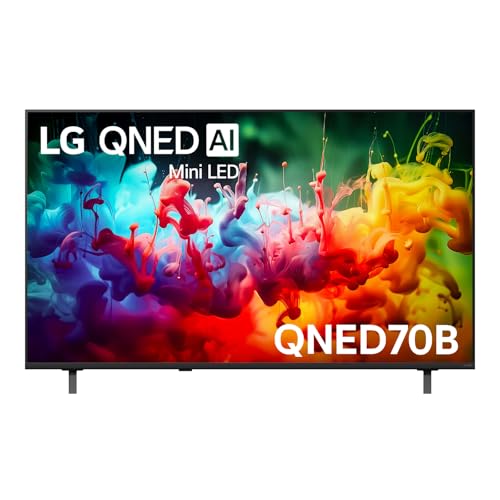
- CheapestLG 55" QNED70B AI MINI LED 4K SMART TV 2026 about$79355" screen.
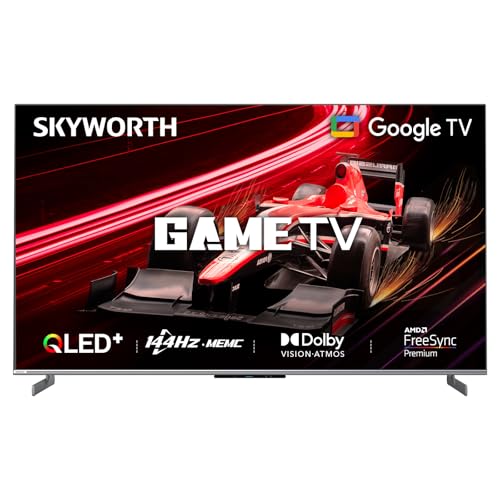
- SKYWORTH 55" Q7700G MagicSound Google TV about$799144Hz refresh, 55" screen, QLED.
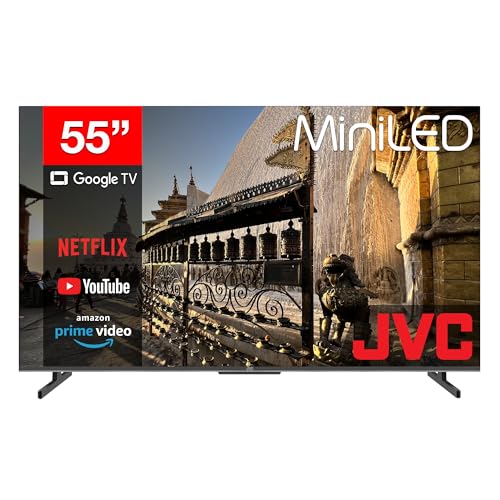
- JVC 55" 4K Mini LED 144Hz Google TV -… about$855144Hz refresh, 55" screen.
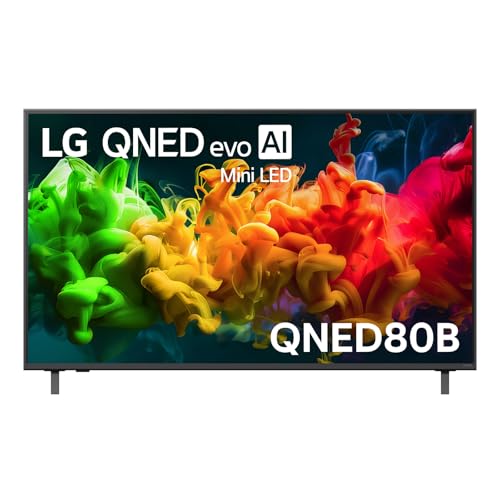
- LG 55" QNED80B EVO AI MINI LED 4K SMART TV… about$97955" screen.
- Philips 55-Inch 4K LED Android Smart TV |… about$1,011
- Sony 55" X90L BRAVIA XR Full Array LED 4K… about$1,04755" screen.
- LG 55" QNED Evo AI QNED86 Mini LED 4K SMART… about$1,199120Hz refresh, 55" screen, MINILED.
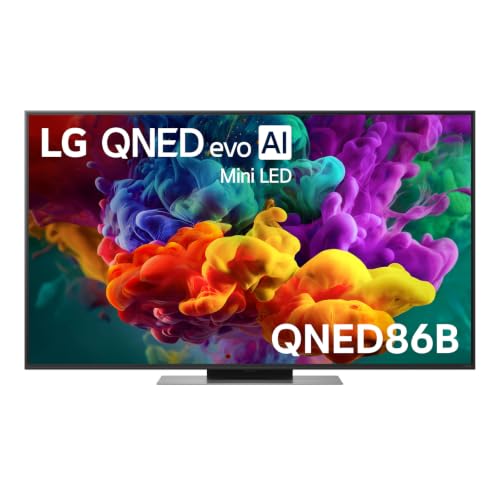
- Most PremiumLG QNED86B Evo AI Mini LED 4K Smart 2026… about$1,375144Hz refresh.
Why 55 inches still suits most lounges
Most Australian lounges have the couch somewhere between two and three metres from the wall the TV goes on, and at that distance a 55-inch 4K screen is about the size where the picture fills your view without you turning your head to follow the action. Go bigger and you'll love it for films, but plenty of people find a 65 or 75 a bit much for the nightly news in a smaller room. Go smaller and you lose most of the reason to pay for 4K in the first place, because you can't see the extra detail from the couch.
There's a practical side too. A 55 fits on most existing TV units and entertainment cabinets, it goes on a standard wall bracket without needing a stud finder and two extra people, and it's the size most second rooms and bedrooms can take when the big TV eventually gets replaced. That second life matters. Plenty of the TVs that come into the shop are on their second room, and a 55 is the size that most often gets handed down rather than thrown out.
If your couch is closer to three and a half metres away or the room is open plan, have a look at the 65-inch guide instead, because that's where the bigger size starts to make sense. For everyone else, 55 inches is the sweet spot, and it's also where the most sensible money sits on the current Amazon AU listings.
Mini LED, full-array LED and where OLED went
Every TV in this guide is an LED-backlit LCD. The screen itself doesn't make light. Behind it sits a backlight made of LEDs, and the way those LEDs are arranged decides most of the picture quality. Mini LED uses thousands of very small LEDs grouped into dimming zones, so the TV can turn down the light behind dark parts of the picture and push it up behind bright parts. Full-array LED, like the Sony here, uses fewer, larger LEDs behind the whole screen with local dimming. Both beat the edge-lit designs on entry-level TVs, where the LEDs sit along the bottom or the sides and the light is spread across the screen by a diffuser.
You might be wondering why there's no OLED. On the day I checked, there was no 55-inch OLED from Amazon AU inside this price band, and I don't pick from grey imports or overseas sellers on a TV, because warranty and return shipping on a 55-inch screen is a nightmare. OLED does give you perfect blacks, but for a bright Australian lounge room with the blinds open in the afternoon, a good Mini LED is brighter and doesn't carry the burn-in concerns that come with leaving a news ticker or a game HUD on screen for hours every day.
The trade-off with Mini LED is blooming, a faint halo around bright objects on a dark background, like subtitles on a night scene. More dimming zones and better processing reduce it. It's worth seeing in a store if you watch a lot of dark films, but most people stop noticing it within a week.
Panel type is the other variable worth a quick look. many of LG's QNED sets have used IPS-type panels, which hold colour better when you're sitting off to the side but show greyer blacks in a dark room, while many Sony sets use VA-type panels with deeper blacks and narrower viewing angles. If the couch sits square in front of the TV, VA usually looks better. If people watch from a kitchen bench or an L-shaped lounge, IPS holds up better. The listings here don't state the panel type, so check the full spec sheet if it matters for your room.
What fails in a TV, and how to buy around it
The most common TV fault I see by a long way is the backlight. LED strips run warm for thousands of hours, and eventually one LED fails. On many designs the LEDs are wired in series, so one failure takes out a whole strip and you get a dark band, a dim half or a TV that has sound but no picture. Manufacturers often run the LEDs hard to hit brightness numbers, which shortens their life, and some TVs come in with failed strips just outside warranty.
You can't see backlight quality on a spec sheet, but you can look after it. Turn the backlight or brightness setting down from the shop-floor vivid mode to something sensible for your room, which also cuts power use, and don't block the vents on the back. A TV jammed into a tight cabinet runs hotter, and heat is what ages LEDs and the power supply. Leave a hand's width of air around the back if it's on a unit.
The second common fault is the power supply board, often after a storm or a power spike. That's where a decent powerboard earns its keep. Plugging the TV, console and soundbar into one of the surge-protected powerboards I'd trust costs a fraction of a power board replacement, and it also protects the HDMI ports, which can be damaged when connected devices sit on different power circuits during a surge. Unplug the whole lot during a big storm if you're home.
The third is physical damage: a toddler's toy, a Wii remote in the old days, or a TV that tipped off a unit. Wall-mount it or use the anti-tip strap that comes in the box. It takes ten minutes and it's the easiest repair you'll ever avoid.
HDMI ports, gaming and what HDMI 2.1 means
If you've got a PS5, an Xbox Series X or a gaming PC, the HDMI ports matter more than anything else on the spec sheet. HDMI 2.1 features like 4K at 120Hz, VRR (variable refresh rate) and ALLM (auto low latency mode) are what make console games look smooth and feel responsive. The Sony X90L lists all three, and it has PS5-specific features like Auto HDR Tone Mapping. The LG QNED86 lists a native 120Hz panel with VRR up to 144Hz. The JVC lists a 144Hz Mini LED panel and four HDMI inputs.
What the listings don't always tell you is how many of the HDMI ports support the full 2.1 features. On many TVs it's only two of the four, and one of those is often the eARC port you need for a soundbar. If you've got a console and a soundbar, check the full spec sheet so you're not stuck choosing between them, or plan to run the console through a soundbar that passes through 4K at 120Hz.
HDMI ports are also a common repair, both on TVs and consoles. Cables get yanked when someone trips over them, plugs get forced in at an angle, and ports get damaged by surges. I've written up how we repair console HDMI ports, and the same care applies to the TV end. Use a cable with a bit of slack, route it so it can't be tripped on, and don't plug or unplug HDMI cables while everything's powered up if you can avoid it.
Smart platforms and how long updates last
A TV is a computer now, and like any computer its usefulness depends on software updates. Streaming apps change their requirements every few years, and a TV that stops getting updates eventually loses an app or two. That's the point where a perfectly good screen starts to feel old. It's one of the more frustrating things I hear from customers, because the panel and backlight are fine and the TV is effectively retired by its software.
The listings here are unusually specific. The LG QNED86 listing mentions up to five years of software updates through webOS Re:New, and the LG QNED80B listing states security updates until 31 December 2030. The Sony and JVC run Google TV, and the Philips runs Android TV, which both get updates through Google and the manufacturer, but the listings don't commit to a timeline. I'd treat a stated date as worth something when you're comparing two TVs that are otherwise close.
If a TV's own apps do get left behind, a streaming stick plugged into a spare HDMI port fixes it for a fraction of the price of a new set. A good streaming device also tends to be faster than the TV's built-in software, and some people prefer to run everything through one from day one so the TV is just a screen.
Plan for sound from the start
Thin TVs have very little room for speakers, and the speakers they do have usually fire down or backwards. Every TV in this guide lists Dolby Atmos support or sound processing of some kind, and the Sony has positioned tweeters to lift the sound up to the screen, but none of them will fill a lounge room the way a dedicated soundbar does. Dialogue is usually the first complaint, especially in action films where the music and effects drown out the talking.
My advice is to set aside part of the budget for a soundbar from the start rather than treating it as an extra later. Connect it through the TV's eARC or ARC port so one remote controls the volume, and turn on the TV's dialogue or voice setting while you wait. If you're shopping for one, I've picked a set of soundbars under $1,000 that pair well with TVs in this price range.
One small thing that saves a lot of frustration: turn on HDMI-CEC in the TV's settings (each brand calls it something different, like SIMPLINK on LG or BRAVIA Sync on Sony) so the soundbar powers on and off with the TV. Most of the soundbar complaints we hear are really settings problems rather than faults, and that's the setting that solves the most of them.
Picture settings worth changing on day one
Every TV leaves the factory set up to look good under the bright lights of a showroom, which usually means a vivid or dynamic mode with the backlight flat out, colours pushed and motion smoothing turned on. At home, that looks harsh, films look like daytime soap operas and the backlight works harder than it needs to for its whole life. Changing three or four settings on the first night makes a bigger difference to the picture than the gap between most of these TVs.
Switch the picture mode to FILMMAKER Mode, Cinema or Standard. Turn the backlight or brightness down until whites look bright but not glaring in your room at night, and set up a brighter daytime mode if the room gets a lot of sun. Turn off motion smoothing for films and dramas, though you might like a low setting for sport. Leave sharpness near its default or lower, because high sharpness adds halos around edges rather than detail. Then leave it alone for a week before you judge it, because your eyes need time to adjust from the store look.
Setting it up so it lasts
Check the weight and VESA mount pattern on the spec sheet before you buy a wall bracket, and fix the bracket into studs or masonry, never plasterboard alone. Leave space behind the TV for the cables and for air. A TV mounted flat against the wall with a power brick and three HDMI cables crushed behind it runs hotter and puts strain on the ports, which is a slow way to break something that was fine.
On running cost, a 55-inch LED TV typically uses somewhere around 100 to 150W in normal viewing. At the AU average tariff of roughly 33c/kWh, a TV drawing 150W for five hours a night costs about 25c a night, so it isn't a big bill, but turning the brightness down from the store mode helps the backlight last as well as the power bill. Turn off quick-start or instant-on modes if you don't use them, because they keep parts of the TV awake around the clock.
If the picture does go dark, half the screen dims or the TV clicks without starting, don't assume it's dead. Backlight and power board faults are often repairable, and bringing it into our Erina workshop for a look costs a lot less than replacing a TV that only needed one part.
The 5 picks, $855 to $1,199
Prices are Amazon AU at time of writing (11 October 2026) and move week to week. Ranks are Amazon AU category sales ranks, checked the same day.

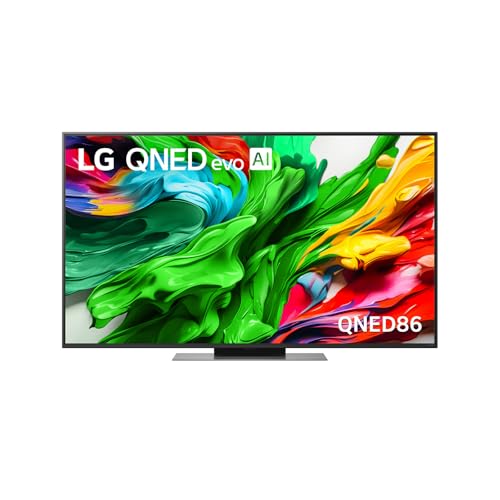
LG 55" QNED86 QNED Evo Mini LED 4K Smart TV (2025)
ASIN B0GQ4MK183 • $1,199.00 • Ships from Amazon AU
The LG QNED86 leads because it's the best-selling 55-inch TV in this price band, sitting at #7 in Amazon AU's whole TVs category when I checked, and it's $1,199 sold by Amazon AU. It's a Mini LED TV with LG's Precision Dimming, which the listing describes as many dimming zones that are controlled individually, so dark scenes get deeper blacks and bright scenes get more punch than an ordinary LED TV can manage. LG's Dynamic QNED Color is listed at 100% colour volume, and the alpha 8 AI Processor Gen2 handles upscaling of standard-definition and HD content, which is most of what free-to-air and older streaming shows still are.
For gaming it's a strong pick. The listing gives it a native 120Hz panel and VRR up to 144Hz, with LG's Game Optimizer menu to keep the gaming settings in one place, and GeForce NOW and Xbox Cloud Gaming built in. That last part means you can stream some games without a console at all, though you'll want a solid wired internet connection for it. For films, FILMMAKER Mode switches off the motion smoothing and colour boosting that make movies look like soap operas, and HDR10 Pro covers HDR content from the streaming services. If you play competitive games, turn on the game mode, because it cuts input lag noticeably compared to the film modes.
The detail that tipped it for me is software. The listing mentions up to five years of webOS updates through webOS Re:New, which is longer than most TVs in this price range commit to in writing, and it's what keeps the apps working for the life of the screen. It's also sold and shipped by Amazon AU, so a warranty claim goes through an Australian seller rather than an overseas marketplace. For most lounges that want one TV that does films, sport, streaming and gaming well, it's the one I'd buy, and the one I'd expect to still be getting app updates when most entry-level sets have been left behind.
Honest caveats: The listing doesn't state the number of dimming zones, the HDMI 2.1 port count or Dolby Vision support, so check LG's spec sheet if those matter to you. It's the 2025 model, and LG's 2026 QNED86B also sits on Amazon AU at a higher price. Mini LED can show slight blooming around bright objects on dark backgrounds.
Best for: Most lounges: a bright Mini LED picture, 120Hz gaming and the longest stated update support in the guide.
Panel: Mini LED with Precision Dimming • Resolution: 4K UHD • Refresh rate: Native 120Hz, VRR up to 144Hz • Processor: alpha 8 AI Processor Gen2 • HDR: HDR10 Pro, FILMMAKER Mode • Software: webOS, up to 5 years of updates via webOS Re:New • Seller: Amazon AU • Price: $1,199 at time of writing • Rank: #7 in TVs (Amazon AU)
View on Amazon AU
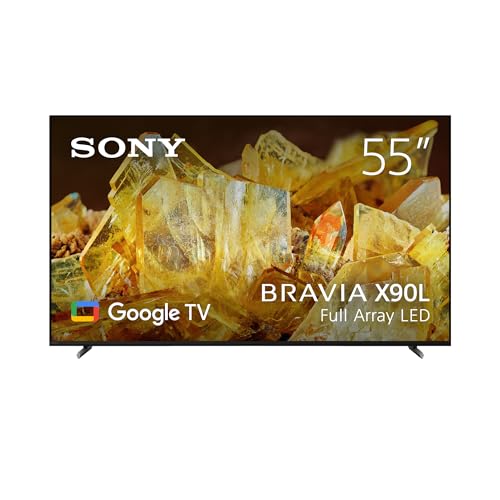
Sony 55" X90L BRAVIA XR Full Array LED 4K HDR Google TV
ASIN B0BYPLR5JQ • $1,047.00 • Ships from Amazon AU
The Sony X90L is the pick for PlayStation owners and people who care most about film. It's $1,047 from Amazon AU and was #22 in TVs when I checked. It uses a full-array LED backlight with local dimming rather than Mini LED, and Sony's Cognitive Processor XR, which the listing says handles contrast, colour and brightness. Sony's picture processing has a long track record for natural colour and motion, and in my experience it's one of the better TVs at making ordinary streaming and free-to-air content look clean, not just showing off with 4K demo reels. The listing adds XR Triluminos Pro for colour and support for Dolby Vision, IMAX Enhanced and Netflix Adaptive Calibrated Mode.
For gaming, the listing lists HDMI 2.1 features including 4K at 120Hz, VRR and ALLM, and PS5-specific features: Auto HDR Tone Mapping, which sets HDR correctly on the console automatically, and Auto Genre Picture Mode, which switches to a low-latency mode for games and back to a film mode for streaming. Those are small things on paper, but they save a lot of fiddling with settings. Google TV covers the streaming apps, and the listing confirms Apple AirPlay support. Sony also includes BRAVIA CORE credits on the listing, with five movie credits and a 12-month subscription to its classics library, which streams at a higher bitrate than most services and makes a good test of what the TV can do.
Sound is better than most TVs here, with Acoustic Multi-Audio tweeters and Dolby Atmos support. It's still not a replacement for a soundbar, but dialogue is clearer than on most thin TVs. The X90L has been around longer than the other picks, which cuts both ways. It's a known quantity with a strong reputation, but it'll stop getting updates sooner than a 2026 model. If you've got a PS5 and watch a lot of films, I think that trade is worth making, especially paired with a streaming stick down the track.
Honest caveats: The X90L is an older model than the LG and JVC picks, so check you're comfortable with a few years less software support. Full-array LED has fewer dimming zones than good Mini LED, so it's not quite as bright. The listing doesn't state the number of HDMI 2.1 ports.
Best for: PS5 owners and film watchers who want Sony's picture processing, Dolby Vision and HDMI 2.1 gaming features.
Panel: Full Array LED with local dimming • Resolution: 4K UHD • Processor: Cognitive Processor XR • HDR: Dolby Vision, IMAX Enhanced, Netflix Adaptive Calibrated Mode • Gaming: HDMI 2.1: 4K/120, VRR, ALLM; PS5 Auto HDR Tone Mapping • Software: Google TV, Apple AirPlay • Seller: Amazon AU • Price: $1,047 at time of writing • Rank: #22 in TVs (Amazon AU)
View on Amazon AU
LG 55" QNED80B QNED Evo Mini LED 4K Smart TV (2026)
ASIN B0GN35FC69 • $979.00 • Ships from Amazon AU
The QNED80B is LG's 2026 Mini LED below the QNED86, and at $979 from Amazon AU it's the one to look at if you want a current-year LG for less money. It was #37 in TVs when I checked. The listing gives it LG's alpha 7 AI Processor Gen9 and Dynamic QNED Colour Pro, which LG says replaces quantum dots and reaches 100% colour volume to DCI-P3, independently tested to the Intertek specification according to the listing. In plain terms, it's a step down in processing from the QNED86 but with the newer colour system and the 2026 software, which matters more over the life of a TV than most people expect.
The software is the standout. The listing gives webOS with Google Gemini, Microsoft Copilot, Google Cast and Apple AirPlay, and it states security updates until 31 December 2030. That's the clearest update commitment in this guide, and it's the kind of thing I'd want in writing before buying a TV I planned to keep for six or seven years. Google Cast and AirPlay together mean anyone in the house can throw a video from their phone to the screen, whatever phone they carry, which saves a lot of passing the remote around the lounge room. The webOS interface is also one of the quicker smart TV systems to use day to day.
FILMMAKER Mode and HDR10 Pro are there for films. For a bedroom, a second lounge or anyone who mostly streams and watches free-to-air, I think it's the smartest value in the guide. It costs $220 less than the QNED86, and for that you give up the stronger processor and the listed 120Hz and VRR gaming features. If you don't game on a console, you won't miss them. Put the difference toward a soundbar and you'll end up with a better setup overall than the QNED86 on its own, which is how I'd spend the money in a second lounge.
Honest caveats: The listing doesn't state the refresh rate, dimming zone count or HDMI 2.1 support, so if you game on a PS5 or Xbox, check LG's spec sheet before choosing it over the QNED86 or Sony. The AI assistants need an internet connection and accounts to work, and some features may need a subscription.
Best for: Streaming and free-to-air viewers who want a 2026 Mini LED with security updates promised to the end of 2030.
Panel: Mini LED • Resolution: 4K UHD • Processor: alpha 7 AI Processor Gen9 • Colour: Dynamic QNED Colour Pro, 100% colour volume (DCI-P3) • HDR: HDR10 Pro, FILMMAKER Mode • Software: webOS, Google Cast, AirPlay; security updates to 31 Dec 2030 • Seller: Amazon AU • Price: $979 at time of writing • Rank: #37 in TVs (Amazon AU)
View on Amazon AU
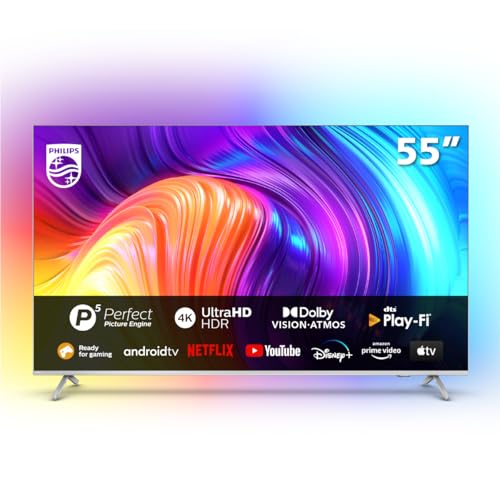
Philips 55" 4K LED Android Smart TV, 3-Sided Ambilight (55PUT8507/75)
ASIN B0CGHPS3YZ • $1,011.46 • Ships from Amazon AU
The Philips is here for one reason you won't get on any other brand: Ambilight. LEDs on three sides of the back of the TV throw light onto the wall that matches what's on screen which makes the picture feel bigger and softens the contrast between a bright screen and a dark room. People who've lived with it tend to miss it when they switch brands. It's $1,011 from Amazon AU. Amazon AU didn't publish a sales rank for this listing when I checked, so I can't tell you how it sells against the others, but it's sold and shipped by Amazon AU, which counts for a lot on a TV.
The rest of the listing is solid. It supports the major HDR formats including HDR10+ and Dolby Vision, plus Dolby Atmos sound, with Philips' P5 picture engine doing the processing. It runs Android TV with Google Assistant voice control, works with Alexa, and has DTS Play-Fi for wireless speakers, so you can add Play-Fi speakers around the room later rather than running speaker cables around the room. It's a standard LED panel, not Mini LED, so it won't match the LGs for contrast or peak brightness in a sunny room. Ambilight also works as a sensible bias light behind the TV at night, so the room doesn't go pitch black between bright scenes.
Now the catch. The listing states plainly that this TV does not have Freeview. Check how you watch free-to-air before you buy it. If you watch free-to-air through an antenna, it may not suit you. If you mostly stream through Netflix, Stan, Disney+ and the catch-up apps, it matters much less, and plenty of households now watch the channels through apps like ABC iview and SBS On Demand anyway. Ambilight is a feature people either love or don't care about, so if you've never seen it, look at a Philips in a store before buying one online.
Honest caveats: The listing says it does not have Freeview, so if you rely on free-to-air channels, check the TV's tuner and app support carefully, or plan on watching through apps or a set-top box. It's a standard LED panel without Mini LED dimming. Amazon AU doesn't publish a rank for it.
Best for: Movie nights in a dim room, where Ambilight makes the screen feel bigger, for people who stream more than they watch free-to-air.
Panel: 4K LED • Lighting: 3-sided Ambilight • HDR: HDR10+, Dolby Vision • Sound: Dolby Atmos, DTS Play-Fi • Processor: P5 Perfect Picture Engine • Software: Android TV, Google Assistant, works with Alexa • Free-to-air: Listing states no Freeview • Price: $1,011 at time of writing • Rank: Not published by Amazon AU (checked 11 October 2026)
View on Amazon AU
JVC 55" 4K Mini LED 144Hz Google TV (AV-A557155A)
ASIN B0DSPS64XX • $854.54 • Ships from Amazon AU
The JVC is the way into Mini LED at 55 inches for the least money in this guide. It's $855 from Amazon AU and was #79 in TVs when I checked. The listing gives it a Mini LED panel at 4K UHD with a 144Hz refresh rate, which is a high number at this price and good news for anyone with a PC or a console that can push high frame rates. It runs Google TV 3.0 with Google Cast built in and a voice remote with Google Assistant and shortcut buttons for the streaming apps, so the day-to-day experience is close to the Sony's despite the gap in price.
The connection list is the most complete in this guide. The listing states four HDMI inputs (one with ARC), three USB inputs, an AV input, an antenna input, optical audio out, a headphone out and an RJ45 network port. The wired network port matters more than people think: a 4K stream over a cable is far more stable than over Wi-Fi when the TV sits at the far end of the house from the router, and it takes one variable out of buffering complaints. The headphone out is handy for late-night viewing or for anyone who likes the volume louder than the rest of the house. Few TVs at any price list that many connections.
The listing is short on picture detail, and JVC's processing isn't in the same league as Sony or LG. For a games room, a bedroom or a first TV, it's a lot of screen for the money. In my experience JVC TVs sold here don't usually come with the same long software update commitments the LG listings give, so plan on a streaming stick when the apps eventually slow down. But the Mini LED panel and the 144Hz rate are real advantages at $855, and for a room where the TV isn't the main screen, that's a sensible place to spend less.
Honest caveats: The listing doesn't state dimming zones, HDR formats, peak brightness or whether the HDMI ports support 2.1 features, and only one HDMI port is listed with ARC, not eARC. Check the full spec sheet before relying on 144Hz from a console. Image processing is a step below the LG and Sony picks.
Best for: A games room, bedroom or first 55-inch TV where Mini LED and 144Hz matter more than premium processing.
Panel: Mini LED • Resolution: 4K UHD (3840 x 2160) • Refresh rate: 144Hz • Software: Google TV 3.0, Google Cast, Google Assistant voice remote • Inputs: 4x HDMI (one ARC), 3x USB, AV, antenna, RJ45 • Outputs: Optical audio, headphone • Seller: Amazon AU • Price: $855 at time of writing • Rank: #79 in TVs (Amazon AU)
View on Amazon AUSide-by-side comparison
What we see fail in the workshop: TVs
TVs don't usually die all at once. They fail in a handful of predictable ways, and most of them give some warning first. These are the three faults that bring the most TVs into the shop, what usually causes them, and what you can do to make each one less likely on any of the TVs in this guide. Some are worth fixing.
Backlight strips that go dark
The classic symptom is sound but no picture, or a picture you can only see with a torch shone at the screen. Sometimes it's a dark band or one half of the screen dimmer than the other. That's a failed LED in the backlight, and because the LEDs are often wired in series, one dead LED can take out a whole strip. It's usually repairable by replacing the strips, which means taking the panel apart carefully. Running the TV at a sensible brightness and keeping the vents clear are the two best ways to make the backlight last.
Power boards after storms
A TV that clicks but won't start, or that's completely dead after a storm, often has a damaged power supply board. Surges come in through the mains or sometimes through the antenna cable and other connected devices. Power boards are usually a replaceable module, so this often costs far less to fix than a new TV, but it's far better avoided. A surge-protected powerboard for the TV and everything connected to it, plus unplugging during a big storm if you're home, prevents most of these. A burning smell or crackling means unplug it immediately and leave it unplugged.
Damaged HDMI ports
HDMI ports wear and break more than most people expect. A cable gets yanked when someone trips over it, a plug goes in at an angle, or a surge travels between devices on different power points. The symptom is usually a flickering picture, no signal on one input, or a picture that drops out when you touch the cable. Some can be repaired at board level, and on others the main board is replaced. Leave a bit of slack in your HDMI cables, run them where they won't get caught, and plug everything into the same powerboard.
Decision tree: which one should you actually buy?
- Want the best all-round 55-inch TV in this band? → The LG QNED86 at $1,199, with Mini LED, 120Hz gaming and up to five years of updates.
- Got a PS5 or care most about film? → The Sony X90L at $1,047, with HDMI 2.1, Dolby Vision and Sony's processing.
- Want a 2026 TV with updates promised to 2030 for under $1,000? → The LG QNED80B at $979.
- Watch films in a dim room and stream rather than watch free-to-air? → The Philips Ambilight at $1,011, but check the Freeview caveat first.
- Want Mini LED and 144Hz for a games room or bedroom for the least outlay? → The JVC Mini LED at $855.
- Current TV has sound but no picture, or died after a storm? → Bring it to our Erina workshop: backlight and power board faults are often fixable.
Frequently asked questions
How far should I sit from a 55-inch TV?
As a rough guide, somewhere between about two and three metres suits a 55-inch 4K TV in most lounges. Closer than that and you'll start to see more of the picture's detail, which is the point of 4K, but some people find it tiring for long sessions. Much further away and a 65-inch starts to make more sense. The best test is to measure from where your head will be on the couch to the wall, then mark the TV's width on the wall with tape and sit there for a few minutes before you buy.
Is Mini LED better than OLED?
They're good at different things. OLED gives you perfect blacks and very wide viewing angles because each pixel makes its own light. Mini LED is usually brighter, which helps a lot in a sunny Australian lounge room, and it doesn't carry the same burn-in risk from static images like news tickers and game menus. Mini LED can show a little blooming around bright objects on dark backgrounds. On the day I checked, there was no 55-inch OLED from Amazon AU inside this guide's price band, so every pick here is Mini LED or full-array LED.
Do I need HDMI 2.1 on my TV?
Only if you game on a PS5, an Xbox Series X or a gaming PC and want 4K at 120 frames per second, variable refresh rate and the lowest input lag. For streaming, free-to-air and Blu-ray, HDMI 2.1 makes no difference. If you do game, check how many of the TV's HDMI ports support 2.1, because it's often only two, and one of those may be the eARC port the soundbar needs. The Sony X90L in this guide lists 4K at 120Hz, VRR and ALLM on its listing.
How long should a TV last?
A good LED TV usually lasts seven to ten years of normal use, sometimes longer, and the backlight is the part that most often fails first. Software support often runs out before the hardware does, which is why the stated update periods on the LG listings are worth paying attention to. You can extend a TV's life by running the backlight at a sensible brightness rather than the vivid store mode, keeping the vents clear, using a surge-protected powerboard and adding a streaming stick if the built-in apps stop being updated.
Is it worth repairing a TV with no picture?
Often, yes. Sound but no picture usually means a backlight fault, and replacing the LED strips costs much less than a new TV of the same size and quality. A TV that's completely dead after a storm often has a damaged power supply board, which is usually a replaceable module. It's worth getting a quote before you replace a TV that's only a few years old. Cracked screens are the exception: a broken LCD panel usually costs close to the price of a new TV, so that's generally the point to replace it.
Do I need a soundbar with a new TV?
For most people, yes. Modern TVs are so thin that there's very little room for speakers, and dialogue is usually the first thing to suffer, especially in action films. The Sony X90L in this guide has better built-in sound than most, but a soundbar connected through the TV's eARC or ARC port will still sound clearer and fuller, and you can control the volume with the TV's remote. If you're on a budget, turn on the TV's dialogue enhancement setting until you can add one.
Related buying guides
Sound but no picture, or dead after a storm?
Most TVs that come in with a dark screen have a failed backlight strip, and most that won't start after a storm have a damaged power board. Both are often repairable for much less than a new TV. Bring it into Erina and I'll tell you what's failed and whether it's worth fixing before you spend anything on a replacement.
Visit our Erina workshop Book Online