Prices from Amazon AU, updated daily. Swipe or use the arrows for more.
Disclosure: This article contains affiliate links to amazon.com.au. If you buy through one of these links iFix may earn a small commission at no extra cost to you. It doesn't change which products we recommend. We focus on what actually lasts based on 16 years of repair-shop experience.
Quick summary5 picks
- CheapestBlueAnt XT100 TV Soundbar about$159
- Denon DHT-S218 Soundbar with Wireless… about$313.52
- Sony HT-A3000 3.1ch Dolby Atmos Soundbar about$594.00250W.
- Bose Smart Soundbar - Dolby Atmos about$795.00
- Most PremiumJBL Bar 500MK2 5.1 Channel Dolby Atmos… about$582.00
Why a $2,000 TV ships with $40 of sound
Every year TVs get thinner, and every year their sound gets worse, because physics doesn't negotiate. Moving air takes driver area and cabinet volume, and a panel 20mm thick has neither, so the speakers end up as small ovals crammed into the bottom edge, firing downwards at the cabinet or backwards at the wall. What reaches your ears is reflected, thin and mumbly, with the frequencies that carry speech intelligibility scattered on the way, which is why the first thing so many people do with a brand new TV is turn on subtitles. The screen got the whole engineering budget; the sound got what was left. If you've just bought one of the sets in our 65-inch TV guide, the panel will outrun its own speakers by an embarrassing margin, and the soundbar is the other half of the purchase.
The good news is that this is the one home-cinema upgrade where modest money buys an unmissable difference, and you don't need an installer, a receiver or a weekend of cable running to collect it. The five picks here run $159 to $849 on Amazon AU, all sold by Amazon AU or, for the BlueAnt, by BlueAnt's own Australian store, rather than by grey importers, and even the smallest of them moves more air than any television made this decade. The job of this guide is matching the right shape of soundbar, one-box, 2.1, 3.1 or full 5.1, to your room and the TV you already own, because in my experience the most common soundbar mistake isn't buying a bad one. It's buying a shape that doesn't fit the space it has to fill: a big subwoofer thumping through a bedroom wall, or a polite one-box bar swallowed whole by an open-plan barn.
ARC, eARC and the one cable that decides everything
Modern soundbars connect through the TV's HDMI socket marked ARC or eARC, which stands for audio return channel: the TV sends its sound back down the same cable to the bar, whatever the source, built-in streaming apps, a console, a set-top box, the lot. One cable, and the TV remote's volume buttons control the bar through HDMI-CEC, so nobody in the house has to learn anything new, which is the test any lounge-room gear has to pass. When it works it's invisible, and it's the reason the optical-cable era is quietly ending. The thing to check before you buy anything, and I mean before, is which flavour your TV has, because it's printed right there next to the socket on the back panel, and it decides part of what you should pay for.
The difference between the two matters at the top end of the formats. Plain ARC has limited bandwidth, so it carries the compressed surround formats that streaming services use happily enough, but not the lossless, full-fat versions of Dolby soundtracks that discs and premium streams offer. eARC is the newer, wider pipe that carries everything without compromise. For the bars in this list the practical rule is simple: the Sony lists eARC or optical connections, the BlueAnt lists ARC or optical, the Denon lists ARC, and every one of them will sound dramatically better than your TV either way, so don't let the acronym paralyse the decision. If your TV is more than six or seven years old and has neither socket, the optical output still works fine on the bars that carry one; you just give up the single-remote convenience and the newest formats, which on a TV of that age were never on the table anyway.
Channel counts, real and imagined
The number before the decimal is how many separate speaker positions the bar drives, the number after it is the subwoofer, and the useful step up in this band is the third channel: a dedicated centre. Films mix nearly all dialogue to the centre channel, so a 3.1 bar like the Sony here locks voices to the middle of the screen and stops them getting buried under the score and the effects. That's the single most audible difference between a $350 bar and a $600 one, more audible than any processing badge, and if your household's main complaint is not hearing what people say, the centre channel is the spec to pay for, ahead of everything else on the box. The 5.1 JBL adds real side presence on top of that, which action films and live sport use constantly.
Atmos needs more honesty than the boxes give it. Real height effects come from up-firing drivers bouncing sound off the ceiling, and they need a flat ceiling at a sensible height to bounce off, which plenty of Australian lounge rooms with raked ceilings or exposed beams don't provide anyway. Most bars under $1,000, including several here, create height virtually instead: processing tricks played through front-facing drivers. Virtual height gives you a wider, taller-sounding front stage, not rain falling from the ceiling, and it's still worth having, it's just not the cinema trick the logo on the carton implies. If you want physical up-firing drivers and the full overhead effect, that's mostly the next band up, and our Dolby Atmos soundbar guide covers those bigger setups properly.
Subwoofers: where the bass actually comes from
Bass is cabinet volume and driver area, the same physics that ruined the TV's sound in the first place, so where a soundbar puts its low end tells you most of what it can do before you've heard a note. The BlueAnt here is a slim single bar with no subwoofer listed, which keeps the lounge to one tidy box and suits music and dialogue-heavy TV, with the physical limit that a slim bar can only move so much air no matter what the processing promises. The Denon and JBL take the other route and ship a separate wireless subwoofer, a real cabinet with a real driver in it, the JBL's a 10-inch, and that's what cinema-style weight in a bigger room actually requires. There's no processing substitute for displacement; there's only the box.
Wireless in this context means the audio link between bar and sub. The subwoofer still plugs into the wall for power, so plan a powerpoint on its side of the room before the furniture argument starts. Placement is forgiving but not irrelevant, because low frequencies interact with the room's boundaries: near a wall reinforces the low end usefully, jammed hard into a corner can turn tight bass into a one-note boom, and sealed away inside a closed cabinet is the one position that reliably ruins both the sound and, eventually, the amplifier that's trying to breathe in there. Give the box some air and try it in two or three different spots over the first week; bass is the one part of the system where moving the cabinet a metre changes more than any settings menu ever will.
Smart features, apps and what outlives what
Every bar here does Bluetooth for casual music from a phone, and the Bose goes much further: AirPlay 2, Spotify Connect, Chromecast built-in and Alexa living in the bar itself, which effectively makes it the lounge's music system with the TV switched off, and for some households that's half the value of the purchase. The JBL puts its setup and tone controls in an app, and that app also delivers firmware updates and a proper equaliser, so the bar keeps improving after you've bought it. All of this is useful, and none of it should be the reason you pick a bar, because the lifespans don't match. Speakers and amplifiers routinely last a decade or more; apps, voice assistants and streaming protocols get retired on someone else's schedule, and usually without asking you first.
So my rule for this band is simple enough: buy the acoustics, treat the smart layer as a bonus, and prefer bars whose core functions, HDMI input, volume, source switching, all work from a plain remote or the TV's own controls without needing the app to be alive and signed in. Every pick here passes that test, which is part of why they're the picks. It's the same logic I apply to smart home gear generally: the device should degrade to a working dumb device, not to a brick with a logo. For late-night viewing, by the way, no night mode ever invented beats a decent pair of headphones, and our noise cancelling headphone picks solve that problem for the whole house rather than half solving it at the TV end.
Power, storms and the shelf it lives on
A soundbar is mains-powered electronics chained by HDMI to the most exposed device in the house, the TV, and that chain is exactly how storm surges travel. We're on the Central Coast, we get proper summer storms, and a surge that arrives through the antenna or power side of the TV will happily continue down the HDMI cable into whatever's connected. A protected powerboard for the whole TV corner is inexpensive insurance against a four-figure re-buy, and our surge powerboard guide explains why the joule rating printed on the box is a consumable that wears down with every hit, not a permanent shield you buy once. Unplugging the lot at the wall ahead of a serious storm remains the only protection that never wears out, and it costs exactly nothing.
Two quieter points. Standby draw on modern bars is small but real, and a bar plus subwoofer sitting in standby all year is a few dollars of electricity doing nothing; if the household is chasing phantom loads, the numbers game is covered in our smart home power savings guide. And placement: bars and subs vent their amplifier heat through slots in the casing, so a bar wedged under the TV hard against the cabinet back, or a sub sealed inside a cupboard with the doors shut, runs hot for every hour of its working life. Heat is the quiet killer of amplifier boards, drying capacitors years ahead of schedule. Give the electronics some air and they'll comfortably outlast the TV they're plugged into.
What I skipped and why
Above this band sit the big multi-speaker systems, the 9-channel LG bars and the premium Bose units at $1,000 to $1,800, and they're deliberately not here because they answer a different question: they're for the household building a proper Atmos lounge with rears and up-firers from day one, and if that's you, start with the dedicated guide linked earlier rather than stretching this budget sideways. Below the band I skipped the $100 to $200 stick bars almost entirely, and that one's worth explaining, because they're what the sales floor pushes hardest. Many of them carry drivers barely larger than a good TV's own, in a cabinet barely deeper, and the result measures and sounds like a modest improvement on free. A bar that's only slightly better than the TV it's attached to is the most expensive kind of slightly, because it also spends the money you'd have put toward a real one.
I also passed over anything sold through overseas storefronts or grey importers, even where the sticker looked tempting. An imported bar can arrive with the wrong plug, no local warranty support, and firmware for another region's apps, and when the wireless subwoofer of one of those stops pairing, the brand's Australian support arm has no record it exists. Every pick here is sold by Amazon AU or the brand's own Australian store, not by a grey importer. And if a soundbar you already own has gone quiet on one side or lost its sub, it's worth a bench look before you rebuy: our Erina workshop sees plenty of amplifier and pairing faults that cost far less than a new bar to put right.
The 5 picks, $159 to $849
Prices are Amazon AU at time of writing (23 September 2026) and move week to week. Ranks are Amazon AU category sales ranks, checked the same day.

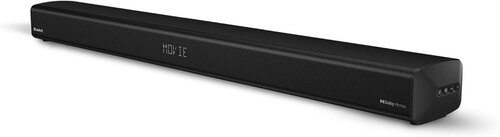
BlueAnt XT100 TV Soundbar with Dolby Atmos
ASIN B0BN292ZGF • $159.00 • Ships from BlueAnt AU
The pick for a bedroom, a unit or a small lounge where the job is simply to stop the TV sounding like it's talking through a tin, and the budget is tight. At $159 it is the least expensive bar on this page and it sits 25th in Amazon AU's soundbar category, so plenty of buyers have already made this call. It is a slim single bar that tucks in under the TV, and BlueAnt sells it direct through its own Australian store.
Connection is simple: HDMI ARC with the cable included, or optical if your TV is older (the optical cable is listed as an extra), plus an AUX input and Bluetooth for music from a phone. The remote switches between Movies, Game, Voice and Music modes and adjusts the bass, and Voice is the one to try first when dialogue gets buried under the soundtrack.
It carries a Dolby Atmos badge. The listing doesn't say how the height effect is produced, and for a slim single bar at this price I would expect a wider, taller front stage rather than sound moving overhead. That is still a real step up from a TV's own speakers, and it is what most small rooms need.
Honest caveats: The listing doesn't state channel count or amplifier wattage, no subwoofer is listed, and the HDMI input is ARC rather than eARC. Big rooms and action-film nights will want one of the sub-equipped picks instead.
Best for: Small to medium rooms where one tidy box, clear dialogue and a single cable matter more than cinema-scale bass.
Type: Single slim bar, no subwoofer listed • Atmos: Dolby Atmos listed • Inputs: HDMI ARC, optical, AUX, Bluetooth • Control: Remote with bass and Movies, Game, Voice and Music modes • Price: $159 at time of writing • Rank: #25 in Soundbar Speakers (Amazon AU)
View on Amazon AU
Denon DHT-S218 Soundbar with Wireless Subwoofer
ASIN B0FKB8G3XR • $350.36 • Ships from Amazon AU
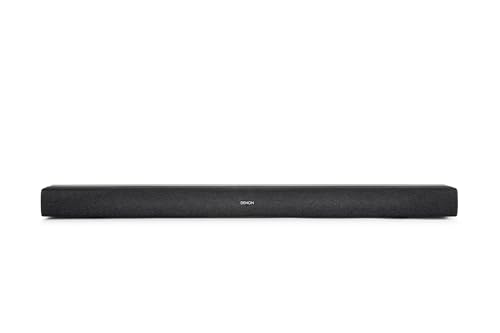
The least money on this page that buys you a real, separate subwoofer, and that changes what movie nights feel like in a way no processing mode can fake. The DHT-S218 is a 2.1 system: a low-profile bar handling the front stage and a wireless subwoofer cabinet handling the weight, and the difference between this and any all-in-one bar shows up the first time something explodes on screen, or the first time a film score drops below where small drivers can follow. At $350 and ranked 26th in the category, it's the configuration I'd point most film-watching households at first, because the jump from TV speakers to bar-plus-sub is the single biggest step anywhere in this guide, and everything past it is refinement.
Denon is an audio company first and a gadget company a distant second, and the listing leans on exactly that: tuning by Denon's own engineers for balanced sound with clear dialogue rather than the smiley-face boom-and-sizzle tune that demos well in a shop and grates at home by week two. Connections cover HDMI ARC for the one-cable setup, Bluetooth for streaming music from a phone, and a USB port that plays files straight from a stick, which still matters to more households than you'd guess. The bar's low-rise shape is deliberate too: it sits in front of the TV without covering the bottom edge of the screen or blocking the remote sensor, which sounds trivial until you've lived with a bar that does both.
There's no Atmos badge on this listing, and at this price I'd call that a feature rather than a gap: the money went into drivers and a subwoofer cabinet instead of licensing and marketing, which is the right way around when the budget is finite. For the spare room that's slowly becoming a movie room, a first proper setup in a unit, or anyone who just wants films to sound like films again without studying a spec sheet to get there, this is the honest starting point, and plenty of people will never need the next step.
Honest caveats: The listing states HDMI ARC rather than eARC, so the newest lossless formats aren't the point here, and no Atmos processing is listed. The wireless subwoofer still needs its own powerpoint, and 2.1 means dialogue comes from the stereo pair rather than a dedicated centre channel.
Best for: Movie-first households that want real bass on the smallest sensible spend and don't care about badges.
Channels: 2.1 • Subwoofer: Wireless, included • Inputs: HDMI ARC, Bluetooth, USB playback • Tuning: Denon engineering (listing) • Profile: Low-rise, sits in front of TV • Price: $350 at time of writing • Rank: #26 in Soundbar Speakers (Amazon AU)
View on Amazon AU
Sony HT-A3000 3.1ch Dolby Atmos Soundbar
ASIN B0C3LNQBWM • $594.00 • Ships from Amazon AU
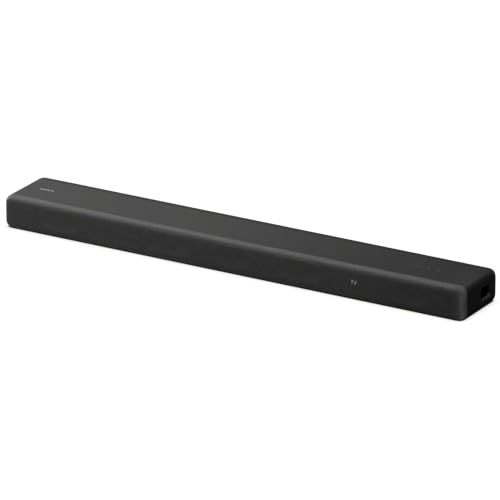
The middle pick and the one I'd argue punches hardest for its spot on this page, because it's the first bar here with a dedicated centre channel. The HT-A3000 is a true 3.1 with 250W of total power, and that third channel is the practical magic rather than the marketing kind: film dialogue is mixed to the centre, so voices anchor to the screen and stay intelligible under the music and effects instead of fighting them. If the household's running complaint is turning it up for the talking and back down for everything else, this is the specific piece of hardware that ends it. It decodes both Dolby Atmos and DTS:X, and at $594 it holds 27th in the category against bars at half its price.
Connectivity is the most current on this page's lower half: HDMI eARC for the full-bandwidth lossless formats, plus optical for older TVs, USB, and Bluetooth 5.0 for music, so it suits whatever television you own now and whatever replaces it. Sony's 360 Spatial Sound Mapping is on the listing too, with a catch worth knowing before you get excited: the room-mapping surround trick switches on when you add Sony's optional wireless rear speakers, sold separately. Rather than a flaw, that makes the A3000 a genuine starter for a staged build, the bar now and the rears later when the budget recovers, instead of a dead end you'd have to replace outright to upgrade, which is what most bars in this band quietly are.
Buy it for the main lounge, where dialogue clarity is the nightly priority, where the TV is decent enough to deserve a proper partner, and where there's at least a fair chance the system grows a set of rears one Boxing Day when they're going for the right money. It's the balanced choice on this page by some margin, the pick whose headline spec fixes the complaint most households actually have rather than the one the marketing department invents, and it's the bar I'd carry home myself at this level without much deliberation at all.
Honest caveats: The listing doesn't include a separate subwoofer, so cinema-scale low end means budgeting for Sony's optional sub down the track, and the optional rears are extra spend too. Atmos height is processed rather than up-firing at this level. Check current pricing on the add-ons before planning the staged build.
Best for: The main lounge, where locked-to-screen dialogue and an upgrade path matter more than bundled everything.
Channels: 3.1 with centre channel • Power: 250W total (listing) • Formats: Dolby Atmos, DTS:X • Inputs: HDMI eARC, optical, USB, Bluetooth 5.0 • Expansion: Optional wireless rears, 360 Spatial Sound Mapping • Price: $594 at time of writing • Rank: #27 in Soundbar Speakers (Amazon AU)
View on Amazon AU
Bose Smart Soundbar with Dolby Atmos and Alexa
ASIN B0DBZQ8YBD • $795.95 • Ships from Amazon AU
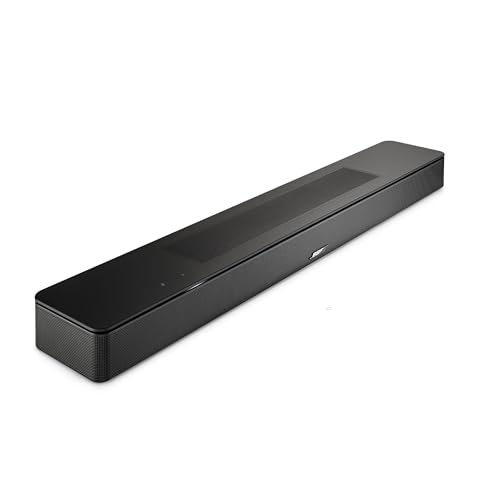
The pick that earns its money outside movie hours as much as during them. Bose packs five transducers into a compact frame and layers on the full streaming stack: AirPlay 2, Spotify Connect, Chromecast built-in, Bluetooth and Alexa living in the bar itself. In practice that makes it the lounge's music system all day and the TV's voice at night, and if one speaker budget has to cover both of those jobs, that's the maths that justifies $796 for a bar this size. It handles Dolby Atmos, and Bose's TrueSpace processing upmixes plain stereo and 5.1 material to use the whole driver array, which matters more than the Atmos badge does, because most of what anyone actually watches isn't mixed in Atmos at all.
The feature I'd rank most useful day to day is the listed AI Dialogue Mode, which balances voices against the rest of the mix dynamically as the content changes, rather than just shelving up the treble the way older dialogue buttons did and calling it a night. The odd feature out is clever in a way that solves a real household problem: per the listing, the bar pairs with Bose's Ultra Open earbuds as a personal listening channel, so one person gets full volume in their ears while the room, and everyone asleep down the hall, stays quiet. Households with shift workers or light-sleeping kids will understand immediately why that made the spec sheet.
Be clear about the shape before buying, though: this is a compact one-box bar with five drivers and no subwoofer in the carton, so its bass is honest for its size rather than cinematic, and the laws of cabinet volume apply to Bose the same as everyone else. It's built for the tidy lounge where music streaming, smart-home control and looks rank ahead of chest-thump on the priority list, and for that room, used that way for most of its hours, it's the strongest fit on this page by a comfortable distance.
Honest caveats: No subwoofer included, and a compact cabinet can only move so much air, so action-film bass sits well behind the sub-equipped picks here. The smart features want the app, your Wi-Fi and an Amazon account to shine, and the listing doesn't state a channel count, wattage or the bar's exact dimensions.
Best for: Music-heavy households and tidy lounges where the bar doubles as the streaming speaker and talks to the smart home.
Drivers: Five transducers (listing) • Atmos: Dolby Atmos + TrueSpace upmixing • Dialogue: AI Dialogue Mode • Voice: Alexa built in • Streaming: AirPlay 2, Spotify Connect, Chromecast, Bluetooth • Extras: Pairs with Bose Ultra Open earbuds for personal listening • Price: $796 at time of writing • Rank: #32 in Soundbar Speakers (Amazon AU)
View on Amazon AU
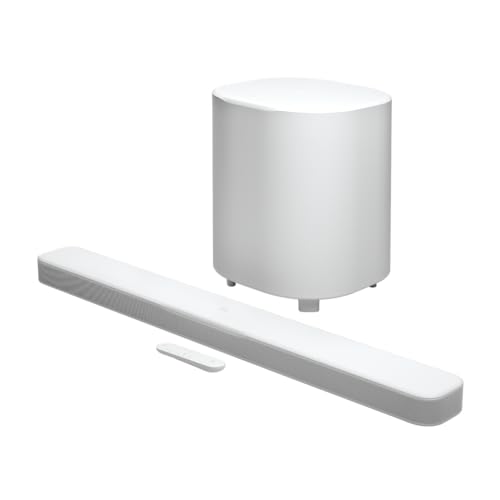
JBL Bar 500MK2 5.1 Soundbar with 10" Wireless Subwoofer
ASIN B0GSQT763C • $849.00 • Ships from Amazon AU
The most system for the money on this page, and the pick for the big open-plan room that the others would politely disappear into. The Bar 500MK2 is a proper 5.1: a full front stage from the bar plus a 10-inch wireless subwoofer, and ten inches is a driver size you normally meet in dedicated home-theatre subs, not in soundbar bundles at this money. That cone area moves the kind of air that a combined lounge-dining-kitchen space swallows whole, and it's the difference between bass you hear and bass you feel through the couch at sensible volumes. At $849 it's the newest listing on this page and it already sits 49th in the category, which for a fresh listing is quick movement.
JBL's MultiBeam processing steers sound to widen the stage well past the bar's physical edges, and combined with the Dolby Atmos processing the result is a front presentation that fills a wide wall without rear speakers or ceiling bounces to install. PureVoice, JBL's dialogue processor, holds speech intelligible during the loud stretches, which matters even more in a 5.1 system than a small one, because there's simply more sound competing with the voices. The JBL One app covers setup, a proper equaliser and firmware updates, so the bar you buy keeps getting refined rather than freezing at the factory tune the day it ships, and the core controls still work from the remote without it.
It comes in white, which either solves a styling problem in your lounge or creates a brand new one, and that's a conversation between you and the lounge suite rather than a fault I can score it on. Buy it for the biggest room in the house, the action-film crowd and live sport at proper volume, give the subwoofer the floor space it's owed, and let it stretch; nothing else on this page fills that brief at this money, and the systems that fill it more completely start well into four figures.
Honest caveats: The listing doesn't mention up-firing drivers, so treat the Atmos as processed height rather than true overhead effects. The 10-inch subwoofer needs floor space and its own powerpoint, and in a small room it's more subwoofer than the space can use. White is the listed colour, so check it suits the room.
Best for: Large or open-plan rooms and action-heavy viewing, where 5.1 channels and a 10-inch sub earn their keep nightly.
Channels: 5.1 • Subwoofer: 10-inch, wireless • Atmos: Dolby Atmos with MultiBeam • Dialogue: PureVoice processing • Control: JBL One app: EQ, firmware updates • Colour: White • Price: $849 at time of writing • Rank: #49 in Soundbar Speakers (Amazon AU)
View on Amazon AUSide-by-side comparison
| Product | Price | Best for |
|---|---|---|
| BlueAnt XT100 TV Soundbar | ~$159 | |
| Denon DHT-S218 Soundbar with Wireless… | ~$313.52 | |
| Sony HT-A3000 3.1ch Dolby Atmos Soundbar | ~$594.00 | |
| Bose Smart Soundbar - Dolby Atmos | ~$795.00 | |
| JBL Bar 500MK2 5.1 Channel Dolby Atmos… | ~$582.00 |
What we see fail at the bench: soundbars
Soundbars are simple machines living in hostile spots: sealed cabinets, dusty shelves, and an HDMI chain to the most surge-exposed device in the house. When they die, they mostly die the same three ways, and two of the three are preventable with nothing more than placement and a decent powerboard. Here's what actually turns up in the workshop, and what each failure teaches about keeping yours alive longer.
Wireless subwoofer amplifiers that quit
The subwoofer is the half of the system that runs hottest, a plate amplifier bolted to the back of a sealed box, and it's the most common casualty. Sometimes it's the pairing link dropping, which a power-cycle-and-repair ritual fixes, but the terminal version is the amplifier board itself: a sub that's dead silent with the light off, or hums without output. Heat accelerates both, which is why a sub sealed inside a TV cabinet fails years early. Before declaring one dead, hold the pairing button through a full restart; if it truly won't wake, the amp board is usually repairable for a lot less than a new system.
HDMI boards after summer storms
After a decent storm we see the pattern: TV fine or dead, and the soundbar's HDMI input silently gone, no handshake, no sound, everything else working. The surge rides in through the antenna or mains side of the TV and exits down the HDMI cable, and the bar's interface board takes the hit. The bar still powers up, Bluetooth still works, so people blame settings for weeks. Protection is layered and none of it is exotic: a surge-rated powerboard for the whole TV corner, and pulling plugs when the warnings are serious. The HDMI board is replaceable; the habit is cheaper.
Heat, dust and the sealed cabinet
Amplifier electronics age on temperature, and lounge furniture is designed to hide equipment, not cool it. A bar crammed into a shelf with 10mm of clearance, or a sub boxed behind cupboard doors, spends its life at a temperature that dries out capacitors and cooks voice-coil glue years ahead of schedule. The symptoms creep: distortion at volumes that used to be clean, a bar that cuts out on hot evenings and works again after cooling. If your gear lives behind doors, open them when it's playing, and vacuum the vent slots when you do the shelves. Boring advice, measurable years.
Decision tree: which one should you actually buy?
- Bedroom, unit or small lounge, and you want one box and one cable? → The BlueAnt XT100 at $159. A slim single bar with HDMI ARC or optical, and a Voice mode for buried dialogue.
- Movie nights matter and the budget stops near $350? → The Denon DHT-S218. The wireless subwoofer gives you the single biggest jump from TV sound, for $350.
- Main lounge, and nobody can hear the dialogue? → The Sony HT-A3000 at $594. The dedicated centre channel is the actual cure, and the optional rears give it a future.
- Want one speaker that does music all day and the TV at night? → The Bose Smart Soundbar at $796. AirPlay 2, Chromecast, Spotify Connect and Alexa make it the room's system, not just the TV's.
- Big open-plan room and action films at volume? → The JBL Bar 500MK2 at $849. Five channels and a 10-inch sub are what that space actually needs.
- Your current bar has lost its sub, an input, or one side? → Don't rebuy yet. Bring it in to the workshop in Erina; amp boards, HDMI inputs and pairing faults are usually fixable for far less than a replacement.
Frequently asked questions
Do I need eARC on my TV or is ARC enough?
For everything in this guide, plain ARC is enough to get excellent sound. ARC carries the compressed surround formats that streaming services use, and every pick here works with it over one HDMI cable. eARC is the wider pipe that adds the lossless, full-bitrate formats found on Blu-rays and some premium streams, so it matters most on the Sony, which is the bar here best equipped to use it. The practical advice: check the label beside your TV's HDMI sockets, plug the bar into the one marked ARC or eARC, and don't let the acronym decide the purchase. Room size and channel count matter far more.
Is virtual Dolby Atmos actually worth anything?
It's worth something, as long as you know what you're buying. Virtual Atmos uses processing to create a taller, wider front stage from front-facing drivers, and done well it makes films feel bigger and less boxed into the screen. What it doesn't do is put sound overhead; that takes physical up-firing drivers bouncing off the ceiling, which mostly live in the band above $1,000. So treat virtual Atmos as a nice widening effect, not the cinema trick, and never pay a premium for the badge alone. A real centre channel or a real subwoofer improves more movies than virtual height does.
Why does my soundbar keep losing the subwoofer?
Wireless subwoofers drop out for two main reasons, and only one of them is a fault. The common one is interference or a lost pairing: the sub and bar talk over a radio link, and a router, baby monitor or a pile of Wi-Fi gear near the sub can disrupt it. Power both units off at the wall, wait thirty seconds, power on and re-run the pairing procedure, and move the sub away from other transmitters. The fault version is the sub's amplifier board failing, usually from years of heat, and the giveaway is a sub that won't power up or pair at all. That's a repairable board, not automatically a new system.
Can I add rear speakers later instead of buying everything now?
On the right bar, yes, and it's a sensible way to stage the spend. The Sony HT-A3000 is the clearest example here: it works as a 3.1 bar on its own, and adding Sony's optional wireless rears later switches on the 360 Spatial Sound Mapping the listing describes. The Bose takes a different route, pairing with Bose's Ultra Open earbuds for personal surround. The catch across every brand is that expansion is proprietary: Sony rears for Sony bars, Bose modules for Bose. So if a staged build is the plan, pick the bar from the ecosystem you're happy to stay in, and price the add-ons before you commit.
Will a soundbar work with my older TV that has no ARC socket?
Usually, yes. Bars that carry an optical input, the BlueAnt and Sony both list one, connect to the optical output that almost every TV of the last fifteen years includes, and the sound quality for normal viewing is close enough that most people would never pick the difference. What you give up is convenience and the newest formats: optical can't carry lossless Atmos, and the TV remote won't control the bar's volume through CEC, so you'll juggle two remotes or teach one to mimic the other. If your TV is that old, though, it may be worth putting the money toward the panel first.
Is a soundbar worth repairing when it fails?
Often, and more often than people assume, because soundbar faults cluster in a few replaceable spots. A dead wireless subwoofer is usually its plate amplifier, a bar that's lost its HDMI input after a storm is usually the interface board, and both cost well under half of a like-for-like replacement to put right in most cases. The economics tip toward replacement when the bar was a $150 unit to begin with, or when a main amplifier failure meets a discontinued model with no parts. A quick bench diagnosis settles it before you spend, and it's the difference between a repair bill and a landfill run.
Related buying guides
Soundbar gone quiet? Diagnose it before you rebuy
A sub that won't pair, an HDMI input that died in a storm, distortion that crept in over summer: these are board-level faults with board-level fixes, not reasons to bin the system. Bring it in to Erina and we'll tell you what failed, what it costs to fix, and whether repair or replacement is the smarter spend, before you commit to either.
Visit our Erina workshop Book Online