Prices from Amazon AU, updated daily. Swipe or use the arrows for more.
Disclosure: This article contains affiliate links to amazon.com.au. If you buy through one of these links iFix may earn a small commission at no extra cost to you. It doesn't change which products we recommend. We focus on what actually lasts based on 16 years of repair-shop experience.
Quick summary5 picks
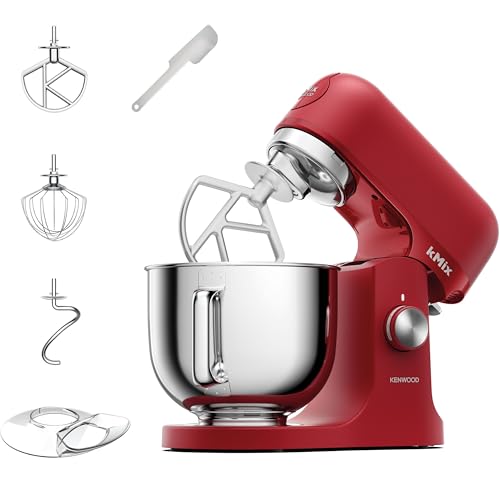
- CheapestKenwood kMix Bold Red KMX751AWH about$4301000W.
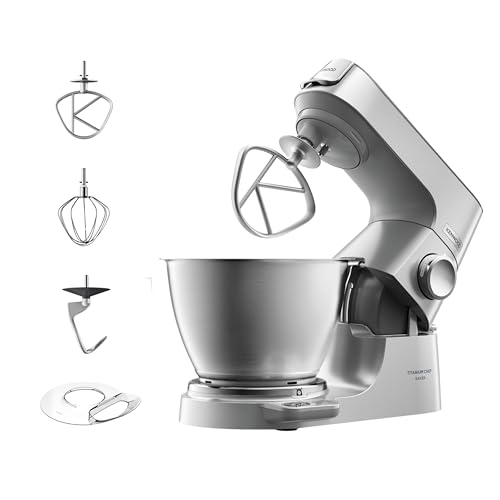
- Kenwood Titanium Chef Baker Stand Mixer about$4691200W.
- KitchenAid Artisan KSM195 Stand Mixer… about$597300W.
- KitchenAid Artisan KSM60 Stand Mixer Empire… about$801
- Most PremiumKitchenAid Artisan KSM70 Stand Mixer… about$999375W.
Why wattage is the wrong number to compare
The Kenwood in this guide says 1200W on the box and the KitchenAid Artisan says 300W, and I've had people assume the Kenwood must be four times stronger. It isn't, and the reason matters more than anything else in this guide. The figure on the box is input power, meaning what the motor draws from the wall. What actually kneads your dough is torque at the beater, and that comes from how the motor is geared down, how it's controlled and how much of the input is lost as heat along the way.
A small motor driving a well-designed gearbox can push a stiff bread dough all day. A big motor driving a sloppy gear train mostly turns electricity into a warm head and a smell you'll recognise if you've ever overloaded one. KitchenAid quietly admits this on its own listings, where the bowl-lift KSM60 claims twice the power in the bowl of the older KSM150 without quoting a wattage at all. So when you're comparing, look at bowl size, bowl design, the speed range at the slow end and what the maker says the machine can knead, and treat the watts as a rough guide to how much it'll heat up rather than how hard it'll work.
Where watts do tell you something is heat. A motor drawing more power under a long knead has more heat to get rid of, and a mixer that runs hot is mostly one being pushed past what its gearing likes. The listing's dough rating in kilograms is a better guide than any wattage, because the maker has tested the machine against it. If a listing doesn't give one, as the Kenwood's doesn't, I'd be a bit more careful with big batches until you know how it handles them.
Tilt-head or bowl-lift
This is the real choice in the KitchenAid range, and it's mostly a question of what you bake. A tilt-head mixer hinges at the back so the whole motor head lifts up and out of the way. That makes it easy to add ingredients, swap a beater or scrape the bowl, and it fits under most kitchen cupboards when it's down. The trade-off is that the hinge and the locking pin take the load when a heavy dough fights back, and on a long knead you'll sometimes see the head rock slightly.
A bowl-lift mixer keeps the head fixed and raises the bowl up to the beater with a lever, locking it at three points. That's a stiffer frame, and it's why the bigger KSM60 and KSM70 use it. If you bake bread every week or double batches for a crowd, I reckon bowl-lift is worth the extra money and counter height. If you mostly do cakes, biscuits, meringues and the odd pizza base, a tilt-head does the job well and is easier to live with. It's worth measuring the gap under your overhead cupboards before you order a bowl-lift, because it's a taller machine and it won't slide under some kitchens.
Weight is the other difference people don't expect. Both designs are heavy because the die-cast body is what stops them walking across the counter, but the bowl-lift models are taller and harder to lift in and out of a cupboard. If your mixer will live in a pantry and come out once a fortnight, a tilt-head is a lot friendlier on your back. If it'll sit on the counter permanently, the extra height matters less than the cupboard clearance above it.
The gearbox is where the money goes
Inside nearly every planetary mixer is a small electric motor spinning very fast, a worm drive that steps that speed right down, and a planetary head that spins the beater while orbiting it around the bowl. KitchenAid quotes 59 touchpoints per rotation on the Artisan, which is a marketing way of describing that orbit. All of that runs in grease inside a sealed die-cast head, and the quality of that gear train is most of what you're paying for in a good machine.
Most tilt-head KitchenAids use a deliberately softer gear in the drive, often called the worm follower, that's designed to strip before the motor burns out. When someone overloads one with a double batch of stiff dough, that gear is usually what's gone, and it's a common, inexpensive part to replace. I'd much rather see a mixer fail that way than cook its motor windings. Kenwood's listing for the Titanium Chef Baker doesn't say what its gears are made of, so I can't tell you how it fails under the same abuse, only that its body is metal and the motor is digitally controlled.
Gear noise is a useful early warning. A healthy planetary mixer has an even hum that changes pitch smoothly as the load comes on. A knock once per rotation, a grinding sound on the lower speeds or a beater that slows while the motor keeps spinning usually means a gear is wearing or the grease has dried out. Catching that early is the difference between a gear and grease job and a worm drive that's been chewed up as well, so it's worth stopping and getting it looked at.
Bowl size, and what it means in real batches
Bowl capacity numbers are brimful volumes, and you won't fill any mixer to the top. KitchenAid's own figures are more useful: the 4.7L tilt-head Artisan is rated for about 2kg of bread dough or nine dozen biscuits, while the bowl-lift models claim 3.6kg of bread dough and thirteen dozen biscuits from 5.6L and 6.6L bowls. For most households a 4.7L or 5L bowl is plenty, and a bigger bowl actually works worse for small jobs because two egg whites won't reach the whisk properly.
That's why the second, smaller bowl that comes with the KSM195 and the Kenwood is more useful than it looks. A 2.8L bowl lets the whisk reach a small quantity of cream or egg whites, and the beater doesn't spend half its time spinning in air. If you're a once-a-week cake baker, I'd buy for the smaller jobs rather than the biggest batch you'll make twice a year. You can always split a big dough into two runs, but you can't make a 6.6L bowl whip one egg white.
Bowl material matters a little too. All four picks use stainless steel, which is what I'd want, because it won't crack if it's dropped and doesn't stain from turmeric or berries. Glass and ceramic bowls look nice on the counter but they're heavier and they do break. The other thing to check is whether the bowl and tools are dishwasher safe. The Kenwood listing says its tools are, and most KitchenAid stainless bowls are too, though the beater coatings on some older KitchenAid tools aren't.
Speed control at the slow end
Everyone looks at the top speed, but most of the useful work happens slowly. The first few seconds of adding flour, folding in fruit and starting a dough are where a mixer either makes a mess or doesn't. The bowl-lift KSM60 and KSM70 add a half speed for exactly that reason, and in my experience that's the setting people end up using more than they expect. A good slow speed should hold its pace under load rather than bogging down the moment the dough gets stiff.
That's where electronic control helps. Kenwood describes the Titanium Chef Baker's 1200W motor as digitally controlled and adapting its power to the load, which in practice means a control board watching the motor and feeding it more when it slows. That's a good feature when it works, though it does put a circuit board inside a machine that lives near steam, flour and the odd splash of water. The older-style KitchenAid tilt-heads use a simpler mechanical speed control, which wears but is easy to service. Neither approach is wrong, but they fail differently, and I cover that further down.
The practical test I'd suggest is simple. When the mixer arrives, put a stiff dough through it on the lowest speed and listen. A good machine holds a steady pace and the motor note barely changes. A weaker one slows noticeably, the pitch drops and the head gets warm quickly. Either way, the manual's recommended dough speed is there for a reason, and kneading bread on a high speed is the single most common way people damage a mixer in my experience.
Attachments, scales and the extras that earn their place
KitchenAid's attachment hub is the strongest argument for the brand. The KSM195 listing says it takes over 15 optional attachments and the KSM70 says over 10, from pasta rollers to mincers, and because KitchenAid has kept that hub the same for decades, attachments you buy now will most likely fit a mixer you buy in ten years. That said, I'd buy the mixer for mixing and treat the attachments as a later option. Plenty of people buy a pasta roller and use it twice, and the mincer in particular asks a lot of the gearbox.
The Kenwood's built-in scales are a different kind of extra. Weighing straight into the bowl saves a step and a dish, and if you bake by weight it's genuinely handy. The catch is that it's one more electronic part sitting under a bowl that gets washed, dropped and occasionally overflowed. If you already own decent kitchen scales, the KitchenAid's simpler build and long attachment range may suit you better. If you'd like to use one machine for everything, the Kenwood is the tidier setup, and it pairs nicely with a bread maker for hands-off loaves if you want the kneading done overnight.
Power, sockets and where it lives on your counter
A stand mixer is an easy appliance on your wiring. Even the Kenwood at 1200W sits well under the 2,400W a standard 10A Australian socket can supply, and the KitchenAids draw a fraction of that. The bigger risk is the kitchen powerboard that already has a kettle, a toaster and a coffee machine on the same strip. Run the kettle and a mixer on full knead together on one basic board and you can get closer to the limit than you'd think. If you're going to use a board, a properly rated surge powerboard with an overload cut-out is worth having, and a wall socket on its own is better still.
Running cost is small. At the Australian average tariff of roughly 33c per kWh, a 300W KitchenAid kneading for ten minutes uses about 0.05kWh, close to 2c, and the Kenwood at its full 1200W for ten minutes would use about 0.2kWh, or roughly 7c, though it rarely sits at full draw. Check for the RCM compliance mark on the plate underneath and an AU plug on arrival, because grey-import mixers turn up on marketplaces and some are 110V machines that need a transformer to run safely here.
Where it sits matters for the machine as well. Keep it a little away from the kettle and the sink, so steam and splashes don't reach the vents on the motor head or the base. Flour dust gets into everything, so a quick brush around the vents every few weeks keeps the motor breathing and stops the build-up that slowly cooks a control board. A mixer that lives in a dry, open spot with clear vents will usually run quietly for a very long time.
Before you buy: what to check on arrival
These are heavy machines, and freight damage is the first thing I'd rule out. Run the mixer empty on every speed for a minute when it arrives and listen for a click or grinding sound once per rotation, which usually means a damaged gear or a bent beater shaft. Look under the head for any grease weeping out of the seams. A little is normal on an old machine, but a new one shouldn't leak, and if it does it's a warranty conversation rather than a fix.
Check the beater-to-bowl clearance too. A beater that scrapes the bottom of the bowl will wear both, and one that sits too high leaves a layer of unmixed flour. Most KitchenAids have a small adjustment screw for this, and the manual explains how to set it with a coin. Keep the box for a couple of weeks if you've got the space, because sending a 10kg mixer back without one is painful. For a sense of how little a kitchen appliance adds to your power bill compared with heating and cooling, our notes on household power use are worth a read. And if a mixer dies out of warranty, our Erina workshop can usually tell you whether it's a gear, a board or the motor before you decide what to do.
The 4 picks, $469 to $999
Prices are Amazon AU at time of writing (16 October 2026) and move week to week. Ranks are Amazon AU category sales ranks, checked the same day.

KitchenAid Artisan KSM195 Tilt-Head Stand Mixer, 4.7L, Almond Cream
ASIN B0BRQS39ZG • $597.00 • Ships from Amazon AU
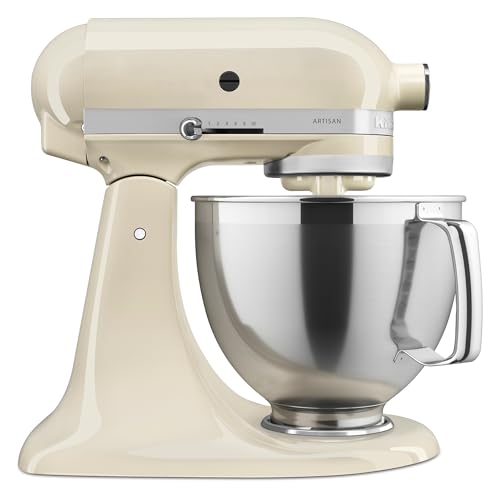
This is the mixer most people picture when they think of a stand mixer, and at the time of writing it's the third best-selling stand mixer on Amazon AU. The KSM195 is the current Artisan tilt-head with a 300W motor, ten speeds and the planetary action KitchenAid describes as 59 touchpoints per rotation. The body is die-cast metal, which is why it weighs what it does and why it sits still on the counter when the dough gets stiff. The listing rates it for about 2kg of bread dough or nine dozen biscuits in one batch. That's more than enough for most households, and I'd only push past it with a bowl-lift model. It's sold and shipped by Amazon AU, which makes returns and warranty claims simpler.
What sets this bundle apart from a plain Artisan is the second bowl. The listing describes a dual-bowl set of 4.8L and 2.8L, and the smaller bowl is the one I'd reach for when whipping cream or a couple of egg whites, because the whisk reaches the bottom properly. The tilt-head lifts clear for scraping and adding ingredients, and it's low enough to slide under most overhead cupboards. The attachment hub at the front takes over 15 optional attachments according to the listing, sold separately, and the hub design hasn't changed in decades. KitchenAid backs it with a 5-year manufacturer warranty, which is longer than most kitchen appliances get and a good sign about how the maker rates the gearbox.
From a repair point of view the tilt-head Artisan is a known quantity. When one comes in after an overload, it's usually the softer drive gear that's stripped, which is designed to give before the motor does, and that's a common part. The grease inside the head can eventually separate and weep out around the seams on older units, and regreasing is a routine job rather than the end of the machine. I'd still keep it to the rated batch sizes and use speed 2 for dough as KitchenAid recommends. Treat it that way and it should outlast most of the other appliances on your counter.
Honest caveats: The tilt-head hinge takes the load on heavy doughs, so very stiff bread dough in big batches can make the head rock. The Almond Cream listing copy mentions an Empire Red finish, which is a copy error, so check the colour in the photos. The listing's 4.7L title and 4.8L bowl description don't quite match, so treat capacity as roughly 4.7 to 4.8L.
Best for: Most households baking cakes, biscuits and the odd loaf who want a mixer that's easy to service for years.
Type: Tilt-head planetary mixer • Motor: 300W • Speeds: 10 • Bowls: 4.8L and 2.8L (per listing) • Dough rating: About 2kg bread dough per batch • Warranty: 5 years (manufacturer) • Seller: Amazon AU • Rank: #3 in Stand Mixers (Amazon AU)
View on Amazon AU
Kenwood Titanium Chef Baker Stand Mixer, 1200W, Built-In Scales, 5L (KVC65.001SI)
ASIN B0GN9MVF9M • $469.00 • Ships from Amazon AU
The Kenwood Titanium Chef Baker is the one to look at if you want the most machine for the least outlay, and it sits at number 11 in Amazon AU's stand mixer chart. It has a 1200W motor that Kenwood describes as digitally controlled, adjusting its power for whatever you're mixing, from cream to bread dough. The body is metal, which gives it the weight it needs to stay put. It comes with a 5L stainless steel bowl, a K-beater, a dough tool and a whisk, and the listing says all of those are dishwasher safe. The model number on the listing is KVC65.001SI, which is worth noting if you're comparing it with older Chef models. It's sold by Amazon AU.
The standout feature is the scale built into the base. You can weigh flour, sugar and butter straight into the bowl as you go, which saves a set of scales and a few dishes, and if you bake by weight it makes recipes quicker. The listing also mentions two bowl sizes for small or large batches, though it only spells out the 5L bowl in the inclusions, so check what's in the box before you count on a second bowl. Planetary action is listed for edge-to-edge mixing. The Kenwood Chef family has been around a long time and has a strong following among people who bake bread, and the attachment outlet on top takes Kenwood's own range of accessories, sold separately.
The thing I'd weigh up is electronics. A digitally controlled motor and a built-in scale both mean circuit boards inside a machine that lives with flour dust, steam and the odd spill. That's fine for years if it's kept dry, but it's a different failure path from the older mechanical mixers, and boards are usually the more expensive repair. Wipe the base rather than splashing it, keep it away from the sink and don't let flour build up around the vents. The listing doesn't state a warranty length or gear material, so check Kenwood's terms when it arrives.
Honest caveats: The listing doesn't state gear material, warranty length or a dough capacity in kilograms, so it's harder to compare directly with the KitchenAids. The 1200W figure is input power, not mixing strength. The second bowl is mentioned in the description but not listed in the inclusions, so check the box contents.
Best for: Bakers who weigh everything and want scales, a 5L bowl and a full tool set in one machine for under $500.
Type: Planetary mixer, fixed head • Motor: 1200W, digitally controlled • Bowl: 5L stainless steel • Scales: Built in • Tools: K-beater, dough tool, whisk • Model: KVC65.001SI • Seller: Amazon AU • Rank: #11 in Stand Mixers (Amazon AU)
View on Amazon AU
KitchenAid Artisan KSM60 Bowl-Lift Stand Mixer, 5.6L, Empire Red
ASIN B0D7M16DKS • $800.67 • Ships from Amazon AU
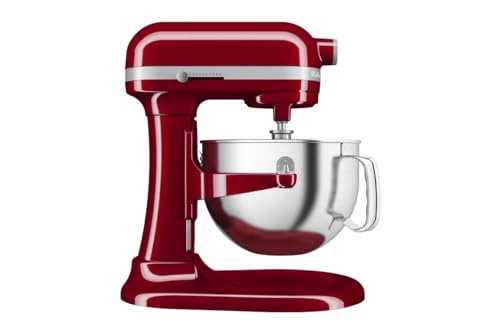
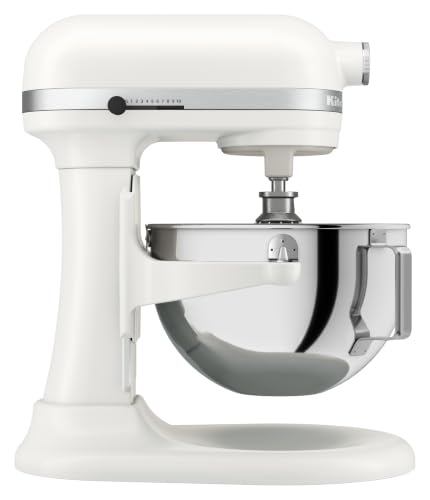
The KSM60 is where KitchenAid moves to the bowl-lift design, and it's the model I'd point weekly bread bakers towards. Instead of a hinged head, the head stays fixed and a lever raises the 5.6L stainless steel bowl up to the beater, where it locks at three points. That frame is noticeably stiffer under a heavy knead, so the machine doesn't rock and the beater stays at a steady distance from the bowl. KitchenAid's listing claims twice the power in the bowl of the older KSM150 tilt-head, measured as peak horsepower above speed 2. It doesn't quote a wattage, which is honest in its own way. It's sold by Amazon AU and ranks number 26 in the stand mixer category.
The other change is speed control. The KSM60 has 11 speeds, adding a half speed below the usual first setting, and that's the one for folding in berries or egg whites without knocking the air out. The listing rates it for over 3.6kg of bread dough, 13 dozen biscuits or 3.1kg of mashed potato in one batch, all of which is a big step up from the tilt-head. The bowl is stainless steel and the lift lever is simple to use once you've done it a few times. Like the rest of the Artisan range it uses the same front attachment hub, so any KitchenAid attachments you already own will fit.
I like bowl-lift machines in the workshop because the frame takes the strain off the hinge, and that's one less part to wear. The catch is height and weight. It's a taller machine than the tilt-head, so measure under your cupboards first, and adding ingredients means working around the fixed head rather than lifting it out of the way. If you mostly bake cakes, it's more machine than you need. If you're making two loaves at a time every weekend, it's the one I'd buy. It's a machine you buy once and keep, so it's worth getting the bowl size right the first time.
Honest caveats: The listing doesn't state a wattage, a warranty length or whether a second bowl is included, so compare it with the KSM70 carefully. It's taller than a tilt-head and may not fit under low cupboards. Adding ingredients is a bit fiddlier with a fixed head, so a pouring shield, sold separately, is handy.
Best for: Weekly bread bakers and big-batch cooks who want a stiffer frame than a tilt-head without going to the largest bowl.
Type: Bowl-lift planetary mixer • Motor: Not stated on the listing • Speeds: 11, incl. half speed • Bowl: 5.6L stainless steel • Dough rating: Over 3.6kg bread dough per batch • Bowl lock: 3-point • Seller: Amazon AU • Rank: #26 in Stand Mixers (Amazon AU)
View on Amazon AU
KitchenAid Artisan KSM70 Bowl-Lift Stand Mixer, 6.6L, 375W, Porcelain
ASIN B09R4NCZ6R • $999.00 • Ships from Amazon AU
The KSM70 is the largest Artisan bowl-lift, with a 6.6L stainless steel bowl, a 375W motor and the same 11-speed range as the KSM60, including the gentle half speed. It's built for people who cook in quantity: big families, regular entertainers or anyone making bread, pizza dough and biscuits in large runs. The bowl locks at three points like the KSM60, and the head stays fixed so the frame stays rigid under a long knead. It's sold by Amazon AU, and at the time of writing it sits at number 30 in the stand mixer category. That's a lower rank than the smaller models, which makes sense given the price and the size of the machine.
KitchenAid backs the KSM70 with a 5-year limited warranty according to the listing, and says over 10 attachments are available for the front hub. One oddity is worth knowing about. The KSM70 listing claims 1.5 times the power in the bowl of the KSM150, while the KSM60 listing claims twice, yet the KSM70 is the bigger machine. The dough ratings quoted on both listings are also identical at 3.6kg. I'd read that as copy written at different times rather than the smaller mixer being stronger, but it does mean the extra money here buys bowl volume more than proven extra kneading ability, and that's worth knowing before you choose. Check the KitchenAid spec sheet before buying if raw kneading power is the reason you're choosing it.
For most home kitchens I think the KSM70 is more than you need, and a 6.6L bowl handles small jobs worse than a 4.7L or 5.6L one. Where it makes sense is when you regularly hit the limit of a smaller bowl and you're splitting batches. From a servicing point of view it's the same family as the KSM60, so parts and grease work are similar. Give it a solid, level spot near a wall socket rather than a crowded powerboard, and it should be a long-term machine. Keep the vents clear and use the half speed for starting doughs, and it'll be easy on its gears.
Honest caveats: It's the tallest and heaviest of the four, so check cupboard clearance and where it'll live. The listings' power claims for the KSM60 and KSM70 don't line up, and both quote the same dough capacity. A large bowl struggles with very small quantities like a single egg white.
Best for: Large households and keen bakers who regularly fill a smaller bowl and want the biggest Artisan with a 5-year warranty.
Type: Bowl-lift planetary mixer • Motor: 375W • Speeds: 11, incl. half speed • Bowl: 6.6L stainless steel • Dough rating: Over 3.6kg bread dough per batch • Warranty: 5 years limited • Seller: Amazon AU • Rank: #30 in Stand Mixers (Amazon AU)
View on Amazon AUSide-by-side comparison
What we see fail in the workshop: stand mixers
Stand mixers are some of the longest-lived appliances in a kitchen, and when one does come in it's usually for one of three faults. Two of them are mechanical and caused by load, and one is electronic and caused by where the mixer lives. All three are easier to avoid than to fix, so here's what to watch for. None of them need special tools.
Stripped drive gears after an overload
The most common mixer fault is a stripped gear in the drive, and it almost always follows a big batch of stiff dough on a high speed. On tilt-head KitchenAids the softer worm follower gear is designed to fail first, so the motor survives and the repair is a gear and fresh grease. You'll hear it as a motor that runs while the beater barely turns, or a grinding noise once per rotation. Keep dough to the rated batch size, knead on the speed the manual recommends and stop if the motor starts to labour or smell hot. If it does strip, stop using it straight away, because running it on a broken gear can chew up the worm drive as well.
Grease separating and leaking from the head
Over years, the grease inside the gearbox can separate into oil and a thicker paste. The oil finds its way out around the seams and sometimes drips from the beater shaft into the bowl, which is the moment most people notice. It usually happens on machines that sit unused for long periods or get stored somewhere hot. It's not dangerous, but you don't want it in your baking. The fix is to open the head, clean out the old grease and repack it with a food-safe grease, and on most mixers that's routine work. Using it regularly, even briefly, helps keep the grease mixed.
Control boards and flour dust
Mixers with electronic speed control, digital motor control or built-in scales have circuit boards inside, and boards don't like moisture or dust. Flour is fine and finds its way into vents, and a mixer that lives beside the sink or under a steaming kettle collects condensation as well. The symptom is a mixer that cuts out, ignores the speed dial or shows an error. Keep the vents clear with a dry brush, wipe the body rather than wetting it, and keep it away from steam. If a board does fail, it's often repairable at component level rather than needing a whole new board.
Decision tree: which one should you actually buy?
- Mostly cakes, biscuits and the odd loaf? → The KitchenAid Artisan KSM195 at $597 is the one, with a second small bowl for cream and egg whites and a 5-year warranty.
- Want built-in scales and the lowest outlay? → The Kenwood Titanium Chef Baker at $469 weighs straight into its 5L bowl and comes with a full set of tools.
- Making bread every week? → The bowl-lift KitchenAid KSM60 at $801 has a stiffer frame, a half speed and a 3.6kg dough rating.
- Cooking for a crowd and splitting batches? → The KitchenAid KSM70 at $999 gives you the 6.6L bowl and a 375W motor with a 5-year limited warranty.
- Low cupboards over your counter? → Stick with a tilt-head like the KSM195, which tucks under cupboards that a bowl-lift won't clear.
- Mixer grinding, leaking grease or cutting out? → Bring it to our Erina workshop and we'll check the gears, grease and control board and tell you what it needs before you spend anything.
Frequently asked questions
Is a more powerful stand mixer always better?
Not really. The wattage on the box is input power, meaning what the motor draws from the wall, not the force at the beater. A 300W KitchenAid can knead bread dough because it's geared down heavily, while a higher-wattage machine might lose more of that power as heat. Compare bowl design, the slow speeds, the maker's dough rating and the gearbox build instead. Wattage is more useful as a guide to how much electricity it uses than how well it mixes, and even then a mixer rarely runs at full draw for long.
Should I get a tilt-head or a bowl-lift mixer?
It depends on what you bake. A tilt-head is easier to use day to day, because the head lifts out of the way for adding ingredients and scraping, and it fits under most cupboards. A bowl-lift has a stiffer frame with the bowl locked at three points, which suits heavy bread dough and big batches. If you bake bread every week, a bowl-lift is worth it. For cakes, biscuits and occasional bread, a tilt-head does the job and is easier to store and live with.
How long should a good stand mixer last?
A well-built stand mixer that's used within its rated batch sizes can last decades, and it's common to see twenty-year-old machines still running. The parts that wear are the drive gears and the grease in the gearbox, and on most quality mixers both can be replaced. Electronics like speed control boards and built-in scales can fail sooner if the mixer lives near steam or water. Keep it dry, avoid overloading it and run it regularly, and it should outlast most other appliances in your kitchen.
Why is my mixer leaking oil into the bowl?
That's usually the gearbox grease separating into oil and a thicker paste, and the oil working its way out around the beater shaft or the seams of the head. It's most common on mixers that have sat unused for a long time or been stored somewhere hot. It's not a safety problem, but you don't want it in your food, so stop using it for baking until it's fixed. The usual repair is to clean out the old grease and repack the gearbox with fresh food-safe grease, which is routine on most models.
Will KitchenAid attachments fit every Artisan model?
In most cases, yes. KitchenAid has kept the same front attachment hub on its household stand mixers for decades, and the KSM195, KSM60 and KSM70 listings all mention the hub and optional attachments sold separately. That means pasta rollers, mincers and other hub attachments you already own should fit a new Artisan. Bowls and beaters are a different story, because tilt-head and bowl-lift models use different bowls and beater lengths, so check the model number before buying spare bowls or beaters.
Is it safe to buy a stand mixer from an overseas seller?
I'd be careful. Some marketplace mixers are grey imports built for 110V countries, and running one on Australian 230V power without the right transformer can damage it or create a safety risk. Even 230V imports may not carry an Australian warranty. All four picks in this guide are sold by Amazon AU. On arrival, check for an Australian plug, the RCM compliance mark on the rating plate and 230 to 240V on the label before you plug it in.
Related buying guides
Mixer grinding, leaking or cutting out?
Most stand mixers that come into the shop have a stripped drive gear, separated gearbox grease or a tired control board, and all three are often fixable for far less than a new machine. Bring it into our Erina workshop and we'll find the fault and tell you what it needs and what it'll cost before you spend anything.
Visit our Erina workshop Book Online