Prices from Amazon AU, updated daily. Swipe or use the arrows for more.
Disclosure: This article contains affiliate links to amazon.com.au. If you buy through one of these links iFix may earn a small commission at no extra cost to you. It doesn't change which products we recommend. We focus on what actually lasts based on 16 years of repair-shop experience.
Quick summary6 picks
- Genpower 6kW Peak 5kW Open Frame Inverter Generator about$7495000W.
- maXpeedingrods 2350W Portable Inverter… about$6492350W.
- Entry PickGenpower 1.2kW Peak 1.0kW Inverter Generator about$3491000W.
- GENTRAX 2.2KW Max 2.0KW Inverter Generator… about$879Pure sinewave.
- GENTRAX 3500W Inverter Generator Remote… about$1,199Pure sinewave, 3500W.
- Most PremiumHyundai Power 2000W Portable Petrol… about$1,280.992000W.
Black Friday price watch
Prices checked 18 Nov 2026, 4:39amEach pick's Amazon AU price today, next to the lowest price iFix has tracked for that listing. We check every morning, so you can tell a genuine low from a normal price with a sale badge on it.
| Pick | Today | Lowest tracked | Verdict | |
|---|---|---|---|---|
| Genpower 6kW Peak 5kW Open Frame Inverter Generator | $749 | – | Building history | Check price |
| maXpeedingrods 2350W Portable | $649 | $649 | Steady price | Check price |
| Genpower 1.2kW Peak 1.0kW Inverter Generator | $349 | $349 | Steady price | Check price |
| GENTRAX 2.2KW Max 2.0KW Inverter | $879 | $879 | Steady price | Check price |
| GENTRAX 3500W Inverter Generator | $1,199 | $1,199 | Steady price | Check price |
| Hyundai Power 2000W Portable | $1,280.99 | $1,280.99 | Steady price | Check price |
Lowest tracked means the lowest Amazon AU price iFix has recorded for that listing since 29 October 2026, not an all-time low. A verdict appears once a listing has 14 days of history and a live Buy Box offer. Prices change through the day; Amazon's checkout price is the one that counts. See every tracked price drop.
Why an inverter generator, not a basic open-frame one
A conventional generator spins its alternator at a fixed speed and sends that power straight to the sockets. An inverter generator does it differently: the alternator makes raw AC, the electronics convert it to DC and then build a fresh 240V sine wave from it. That extra step is why inverter generators are quieter, lighter on fuel at low loads and far kinder to anything with a power supply in it. They can throttle the engine down when you're only charging phones, instead of running flat out all day.
Clean power matters more than people think. Laptop chargers, TVs, modems, fridges with inverter compressors and most modern appliances have switch-mode power supplies, and they don't love a rough or unstable waveform. Every pick here is an inverter design, and the listings describe the output as pure sine wave or clean, stable power for sensitive electronics. That's the main reason I'd steer anyone with electronics to plug in towards an inverter model rather than a bare open-frame generator from a hardware bin.
This guide covers the 1kW to 5kW class, which is what most people want for camping, caravans and keeping the essentials going in a blackout. Six picks from Genpower, maXpeedingrods, Gentrax and Hyundai, between $349 and $1,281 at time of writing. If you'd rather have no fuel and no noise at all, our home backup power station guide covers battery units, and they suit a lot of people better than a petrol engine.
Sizing: running watts, peak watts and motor starts
Every generator listing quotes two numbers. Peak watts is what it can deliver for a few seconds, and running or continuous watts is what it can keep up for hours. The running figure is the one to size on. The Genpower 6kW here is 5,000W running with 6,000W peak, the smaller Gentrax is 2,000W running, the Hyundai is listed as 2000W, the maXpeedingrods is 1,800W running with a 2,350W peak and the little Genpower is 1,000W running with a 1,200W peak. Plan to use no more than about 80 percent of the running figure for long stretches, and the engine will last longer.
Then add up what you actually want to run. A phone, laptop, LED lights, a modem and a TV together come to a few hundred watts. A fridge usually runs around 100 to 300W but can pull several times that for a second or two when its compressor starts, which is where the peak rating earns its keep. A kettle or a toaster can draw 2,000 to 2,400W on its own, which is right at the limit of a 2kW generator. A small caravan air conditioner is a big ask for any of these.
In a blackout, the realistic plan for a 2kW unit is the fridge, the freezer, lights, the modem and charging, run one at a time where you can. Boiling water, a microwave or a heater will push you up to the 3kW class. If you're not sure what something draws, a plug-in energy monitor will tell you, and it's worth checking your fridge's start-up surge before you buy, because a generator that trips on overload every time the compressor kicks in is no use to anyone.
Connecting to the house: what's legal and what isn't
This is the part that gets people hurt. A portable generator should only power appliances plugged directly into its own sockets, through properly rated extension leads. Connecting a generator to your home's wiring needs a changeover switch and an inlet installed by a licensed electrician, so the house is isolated from the grid. Without that, power can feed back out along the street wiring, where line workers fixing the outage may assume it's dead. It's illegal, and it's very dangerous.
Never use a lead with a plug on both ends to backfeed a powerpoint. Apart from the backfeed risk, the exposed pins on the other plug are live the moment the generator runs, and that's a shock waiting to happen. If you want the generator to run the house properly, get a quote from an electrician for a generator inlet and changeover switch. It costs money, but it lets you run circuits safely, and it keeps the setup compliant with Australian wiring rules.
RCD protection is the other thing to check. The Genpower 6kW lists an RCD safety switch, but none of the other five listings in this guide mention one, so I'd plug a portable RCD into those generators before anything else, especially outdoors or in wet weather. Use outdoor-rated extension leads, fully unwound, and keep the connections off wet ground. Our surge powerboard guide covers the boards worth using at the end of the lead.
Carbon monoxide: where a generator can and can't run
Every petrol generator makes carbon monoxide, and you can't see it or smell it. That makes placement the most important safety decision you'll make with one. Run it outdoors only, well away from doors, windows and vents, and never in a garage, shed, carport, under a caravan awning, inside a tent or on an enclosed verandah, even with the door open. Fumes can build up quickly in spaces that feel well ventilated, and a battery carbon monoxide alarm inside the caravan or house is worth fitting.
In a blackout, the temptation is to put the generator somewhere sheltered from the rain. That's exactly where it shouldn't go. Put it on a firm, dry surface in the open, under a purpose-made generator cover if you have one, and run the extension lead inside. In a camping ground, set it up downwind of your tent and your neighbours, and remember that the exhaust gets very hot, so keep it clear of grass, tarps and anything that can burn.
Refuelling is the other risk. Let the engine stop and cool for a few minutes before you top up the tank, because petrol on a hot exhaust can catch fire. Store fuel in an approved jerry can, away from the generator and anything that sparks. None of this is complicated, but most generator accidents come down to one of these rules being skipped when someone's tired, wet and trying to get the lights back on in a hurry.
Fuel and storage: why generators won't start
The most common reason a generator won't start isn't the electronics. It's stale fuel. Petrol goes off over a few months, especially E10, and as it breaks down it leaves gummy deposits in the carburettor's tiny jets. A generator that sat in the shed since the last blackout with fuel in the tank and carby is the classic case. It cranks, it coughs, and it won't run. The fix is usually a carburettor clean, which is fiddly but common.
The way to avoid it is simple. Use fresh fuel, add a fuel stabiliser if the generator will sit for more than a month or two, and either drain the tank and run the carburettor dry before long storage, or start the generator and run it under some load every month or so. Four-stroke engines, like the ones in the maXpeedingrods and Hyundai listings, run on unleaded petrol with no oil mixing. Check each manual for the right fuel and whether it accepts E10.
Oil is the other half. Four-stroke engines need the oil checked before every use and changed on the schedule in the manual, usually with an early first change after running in. Most of these have a low-oil shutdown, which stops the engine before it seizes, but that's a safety net, not a maintenance plan. Keep a spare spark plug and air filter with the generator, and you'll be able to sort most starting problems at a campsite without a workshop.
Noise and campground rules
Noise figures on generator listings need reading carefully. The maXpeedingrods lists 58dB in eco mode at 23 feet, about 7 metres, with no load. The Gentrax models list 58dB, and the 3.5kW says it's measured at 7 metres. The Genpower 6kW listing doesn't state a noise figure. Those numbers aren't directly comparable, and a generator under real load will be louder than its eco-mode figure. As a rough guide, every 10dB sounds about twice as loud to most people.
Many campgrounds and caravan parks restrict generator use, with set hours, quiet zones or outright bans, and national parks are often stricter again. Check the rules before you book, rather than finding out from a ranger or an annoyed neighbour. A quiet inverter generator in eco mode, set up as far from other sites as the lead allows, with the exhaust pointing away from people, is the best way to stay welcome. A solar panel and a battery are the quieter option if you only need a little power.
If camping is the main use, pair the generator with a battery setup and run it for a couple of hours to top the battery up, rather than all day. Our portable solar panel guide covers folding panels that can cover most of that charging on sunny days. The generator then becomes the backup for cloudy weather and heavy loads, which is what it's best at, and you'll burn far less fuel.
Running cost and runtime
Runtime figures on these listings are usually quoted at 50 percent load, which is a fair, middling number. The Genpower 6kW says up to 9 hours on its 15 litre tank at 50 percent load, which works out to roughly 1.7 litres an hour. At around $2 a litre for unleaded, that's about $3.30 an hour to run at half load. The Gentrax models say up to 7 hours at 50 percent load, and the small Genpower says up to 5 hours. Your actual fuel use depends on load, so treat those as estimates.
For a blackout, that maths matters. A 24-hour outage could easily use 15 to 20 litres of fuel if the generator runs continuously, which is a lot of petrol to store safely. Running the fridge for an hour, switching off for a couple of hours and repeating keeps food cold with a fraction of the fuel. Fridges and freezers hold temperature well when they stay shut, so a duty cycle like that is usually enough to protect what's in them.
Then there's the cost of keeping it ready. Oil changes, a spark plug, an air filter and fuel stabiliser add a small yearly cost, and a carburettor clean is the occasional bigger one. A battery power station costs more up front and nothing to keep ready, while a generator costs less up front and needs looking after. Neither is right for everyone, and plenty of households end up with both, the battery for quiet nights and the generator for long outages.
What to check before you buy
Start with the sockets. The Genpower 6kW lists three 15A Australian sockets, the small Genpower lists one covered 15A socket and the Gentrax 3.5kW lists dual 240V 15A outlets. A standard 10A plug fits a 15A socket, but a 15A plug won't fit a normal 10A powerpoint, so 15A outlets give you more flexibility. Check that the generator's sockets and leads carry Australian approval marks, and that the listing is clearly for the Australian version.
Then look at warranty and support. Both Genpower listings give a 3-year warranty for non-commercial use with a 3-month money-back guarantee, the maXpeedingrods listing gives 2 years, and the Gentrax listings give 1 year. The Hyundai listing doesn't state one. A generator is a machine with an engine, and parts like carburettors, recoil starters and spark plugs wear, so a local brand with spare parts is worth more than a few dollars off the price. Look up the service network before you buy, not when it won't start.
Finally, think about weight. The small Genpower is listed at 12 kg and the maXpeedingrods at 15 kg. The Genpower 6kW lists no weight, but it and the Gentrax 3.5kW both have wheels, for a reason. If you have electronics that were on during a power spike or a rough generator, and they now won't charge or turn on, bring them to our Erina workshop and we'll test them before you spend anything. Our page on why bad chargers kill devices explains the damage.
The 6 picks, $349 to $1,281
Prices are Amazon AU at time of writing (4 November 2026) and move week to week. Ranks are Amazon AU category sales ranks, checked the same day.

Genpower 6kW Peak 5kW Open Frame Inverter Generator
ASIN B0DTXGC8XL • $749 • Sold by EdisonsDirect on Amazon AU
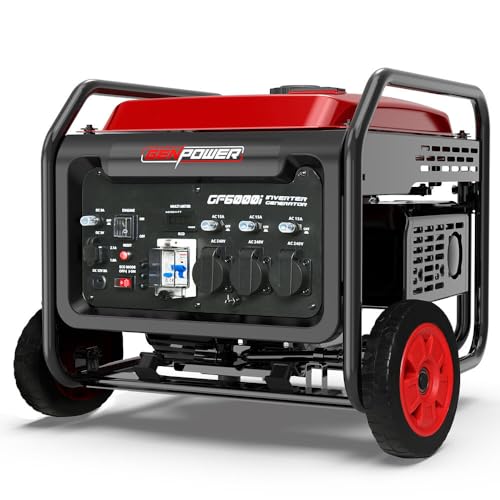
The Genpower 6kW is the high-output pick, sitting at #7 in Outdoor Generators on Amazon AU, and it's sold by EdisonsDirect at $749 at time of writing. It's rated at 5,000W continuous with a 6,000W peak, the most running power in this guide. The listing describes its inverter output as clean, stable power for sensitive electronics. It has three 15A Australian sockets, a 12V DC outlet and two USB ports. The frame is open rather than enclosed, and the listing doesn't state a noise figure. For households that want to run a kettle, a microwave and the fridge through a long blackout, this is the one I'd start with.
The 5kW running rating is what sets it apart. That's enough to run a fridge, lights, a modem, a TV and a kettle together with room to spare. The listing lists overload, low oil and over-temperature protection, and an Eco Mode that optimises fuel efficiency. It quotes up to 9 hours on its 15 litre tank at 50 percent load, so a long outage needs fewer refuels. It has a fold-out handle and 8 inch flat-free wheels, which matters for a unit this size. The listing doesn't give a weight.
Genpower backs it with a 3-year warranty for non-commercial use and a 3-month money-back guarantee, the strongest cover in this guide. The 6kW listing includes an RCD safety switch. It doesn't give a noise figure, and it doesn't say whether it can run in parallel. Check the manual for E10 compatibility before you fill it. For raw running power, it's my pick.
Honest caveats: The listing gives no noise figure or weight, so check both before you buy if you'll lift it into a ute or run it near neighbours. Parallel operation isn't mentioned. Runtime is a 50 percent load figure.
Best for: Households that want 5kW of clean running power for long blackouts and big loads, with a 3-year warranty.
Output: 5,000W continuous, 6,000W peak • Sockets: 3 x 15A AU, 1 x 12V DC, 2 x USB • Fuel tank: 15 litres • Runtime: Up to 9 hours at 50% load • Safety: RCD switch, overload, low oil, over-temperature • Wheels: 8 inch flat-free • Warranty: 3 years non-commercial, 3-month money-back • Rank: #7 in Outdoor Generators (Amazon AU)
View on Amazon AU
maXpeedingrods MXR2350 2350W Portable Inverter Generator
ASIN B0F1MV46LQ • $649 • Sold by maXpeedingRODS-AU on Amazon AU
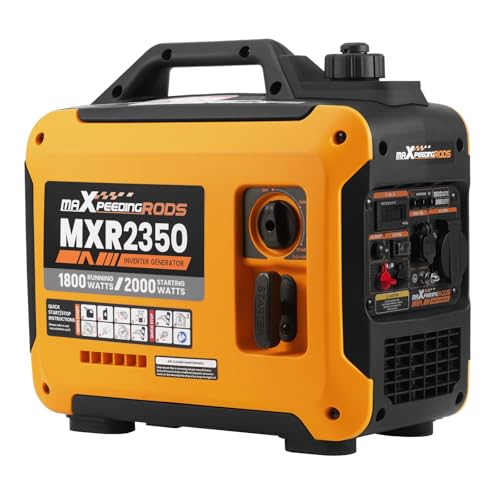
The maXpeedingrods MXR2350 is the lightweight pick, at $649 at time of writing, sold by maXpeedingRODS-AU. It ranks #59 in Outdoor Generators on Amazon AU, so it's not one of the big sellers, but apart from the 1kW Genpower it's the easiest generator here to carry. The listing gives 2,350W peak and 1,800W running from a four-stroke OHV engine, and a weight of 15 kg with a carry handle. It's described as sine wave output for sensitive devices like phones, laptops and cameras. The listing says two of them can be run in parallel to double the output. For campers who need to lift a generator in and out of a car or a ute tray regularly, this is the one to look at.
The parallel option is the clever part. Two 1,800W units linked with a parallel kit give you roughly double the running power for heavy loads, and you can take just one when you only need a little power. That's more flexible than one big generator, though you'll need to buy the parallel kit separately, as the listing doesn't say it's included. Noise is quoted at 58dB in eco mode at 23 feet, about 7 metres, with no load, which ties for the quietest figure in this guide, though it'll be louder under load. The eco mode adjusts engine speed to the load. The model is MXR2350, and the listing gives a 2-year manufacturer warranty.
The trade-off is running power. At 1,800W continuous it can't run a 2,400W kettle and will be working hard with a fridge plus anything else, so it's more of a camping and charging generator than a blackout machine for a whole kitchen. The listing doesn't state the fuel tank size, runtime, outlet types or whether there's an RCD, so check the photos and the manual before you buy. Add a portable RCD anyway. The seller is an Australian storefront that ships direct with a domestic delivery window. Keep fuel fresh, because a small carburettor gums up fastest. For a light, quiet camping generator, it's a good fit.
Honest caveats: At 1,800W running it's too small for kettles, heaters and microwaves. Fuel tank size, runtime, outlet types and RCD protection aren't stated. The parallel kit isn't listed as included. The 58dB figure is at no load in eco mode. Its sales rank is well behind the Genpower, so fewer Australian buyers have reported on it.
Best for: Campers who want a light 1.8kW generator, with the option to add a second unit in parallel later.
Output: 1,800W running, 2,350W peak • Engine: Four-stroke OHV • Weight: 15 kg • Noise: 58dB eco mode at 7 m, no load • Parallel: Yes, two units (kit not listed) • Warranty: 2 years manufacturer • Model: MXR2350 • Rank: #59 in Outdoor Generators (Amazon AU)
View on Amazon AU
Genpower 1.2kW Peak 1.0kW Enclosed Inverter Generator
ASIN B0DTXY7VP3 • $349 • Sold by Amazon AU
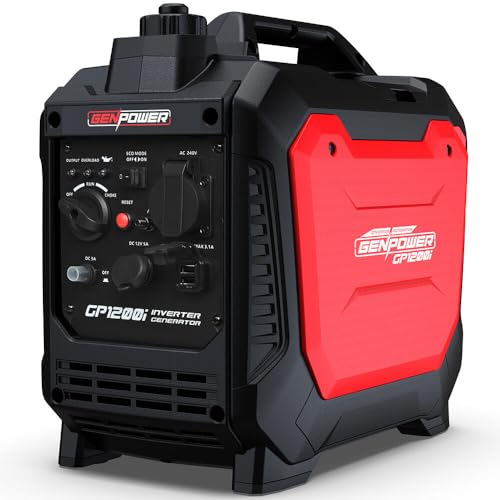
The Genpower 1.0kW is the entry pick, at $349 at time of writing, sold by Amazon AU. It ranks #19 in Outdoor Generators on Amazon AU and it is the lowest-priced and lightest generator in this guide. The listing gives 1,000W continuous and 1,200W peak, with inverter technology that Genpower says delivers clean, stable power for sensitive electronics. It has an enclosed frame, a covered 15A 240V Australian socket, a 12V DC outlet for things like a portable fridge, and two 5V 3.1A fast-charging USB ports. For campers and caravanners who only need lights, chargers and a laptop kept going, this is the one to look at.
The 1kW running rating is the limit, so think of it as a charging and lighting generator. Phones, a laptop, LED lights and a modem fit comfortably. A kettle, toaster, microwave or heater does not, and a fridge compressor's start-up surge is worth checking against the 1,200W peak before you rely on it. Genpower says eco mode maximises fuel efficiency with up to 5 hours of runtime at 50 percent load, and the listing lists overload, low oil and over-temperature protection, plus a brushless copper alternator and forced air cooling. At 12 kg, according to the listing, it is the lightest generator here.
Genpower quotes 64dB at half load, which sits a little above the 58dB figures on the maXpeedingrods and Gentrax, though the distance isn't stated and the measuring basis differs from the others, so don't read it as a direct comparison. The warranty matches the Genpower 6kW at 3 years for non-commercial use, with a 3-month money-back guarantee. The listing doesn't state a tank size, an RCD or a parallel option, so plug a portable RCD in before anything else, keep the fuel fresh and run it monthly between trips. For a small, low-priced camping generator with a long warranty, it's a sensible pick.
Honest caveats: At 1,000W running it can't run a kettle, microwave, heater or most appliances with a motor. There is only one covered 15A socket. Tank size, RCD protection and parallel operation aren't stated. The 64dB figure is at half load with no distance given. It is the smallest generator in this guide, so size your loads carefully.
Best for: Campers and caravanners who want a light, low-priced 1kW generator for lights, chargers and a laptop.
Output: 1,000W continuous, 1,200W peak • Sockets: 1 x 15A 240V (covered), 1 x 12V DC, 2 x 5V 3.1A USB • Runtime: Up to 5 hours at 50% load (eco mode) • Noise: 64dB at half load • Weight: 12 kg • Warranty: 3 years non-commercial, 3-month money-back • Rank: #19 in Outdoor Generators (Amazon AU)
View on Amazon AU
GENTRAX 2.2kW Max 2.0kW Pure Sine Inverter Generator, Electric Start
ASIN B0BWRKRTJ6 • $879 • Sold by HomeWork&Play on Amazon AU
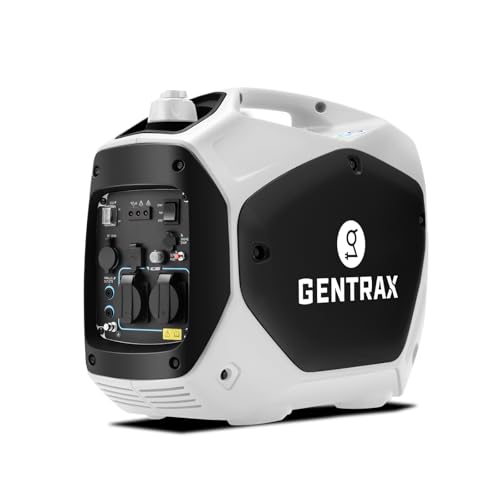
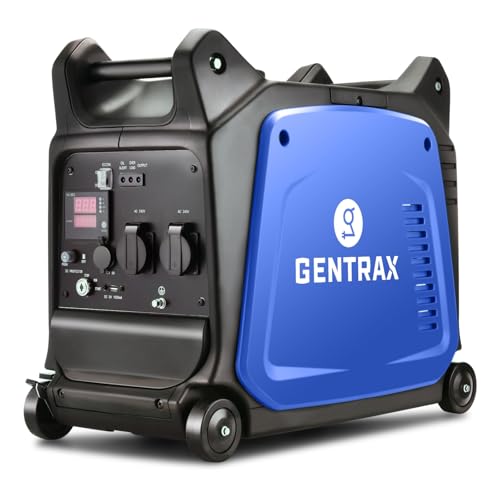
The GENTRAX 2.2kW is the electric-start pick, at $879 at time of writing, sold by HomeWork&Play and shipped direct with a domestic delivery window. It ranks #62 in Outdoor Generators on Amazon AU. The listing gives a 2kW rated output with a 2.2kW maximum, pure sine wave, from a 114cc engine. It has two 240V AC outlets and USB ports rated at 1A and 2A. You can start it with a button or the pull cord, which matters more than it sounds when you're tired, it's cold and the recoil cord is fighting you. If you want a quiet 2kW generator that starts with a button, this is the one to look at.
Gentrax lists 58dB operation, the same as the maXpeedingrods' eco-mode figure, which makes it one of the quieter options here for a campsite or a suburban backyard during a blackout. The listing says it'll run up to 7 hours at 50 percent load, the longest runtime quoted in this guide, and it has an economy mode for light loads. It carries EURO 5 emissions certification and automatic overload protection, according to the listing. The listing data gives a weight of about 22 kg, which is heavier than the maXpeedingrods, mostly because of the electric start's battery and starter motor. Electric start also means one less pull cord to wear out.
The weak spot is the warranty. The listing gives 1 year, the shortest in this guide, and an electric start adds a battery that needs charging between uses, so check how it's kept topped up before you buy. The listing doesn't state the tank size, a noise measuring distance or whether the outlets are RCD protected, so add a portable RCD. The 2kW rating has the same limits as the other 2kW units: one big appliance at a time. Keep the starter battery charged and the fuel fresh between uses. The seller ships from Australia. For an easy-starting, quiet 2kW unit, it's a solid choice.
Honest caveats: Only a 1-year warranty is listed. The electric start battery needs charging between uses. Tank size, noise distance and RCD protection aren't stated. It's heavier than the maXpeedingrods, which lists 1,800W running. The 2.2kW maximum figure is a peak, so size your loads on the 2.0kW rating.
Best for: Buyers who want a quiet 2kW pure sine generator with push-button start.
Output: 2.0kW rated, 2.2kW max, pure sine • Engine: 114cc • Sockets: 2 x 240V AC, USB 1A and 2A • Start: Electric and pull • Runtime: Up to 7 hours at 50% load • Noise: 58dB (distance not stated) • Warranty: 1 year (per listing) • Rank: #62 in Outdoor Generators (Amazon AU)
View on Amazon AU
GENTRAX 3.5kW Pure Sine Inverter Generator, Remote Start
ASIN B077PDT1TY • $1,199 • Sold by HomeWork&Play on Amazon AU
The GENTRAX 3.5kW is the premium pick, at $1,199 at time of writing, sold by HomeWork&Play and shipped direct with a domestic delivery window. It shares the #62 Outdoor Generators rank with the 2.2kW model on Amazon AU, so that figure belongs to the listing family rather than this model alone. The listing gives 3.2kW rated output with a 3.5kW maximum, pure sine wave, from dual 240V 15A outlets and a 5V USB port. It starts three ways: pull, electric and remote. It has built-in wheels and handles. If you want the most running power in this guide and a generator you can start from inside during a storm, this is the one I'd choose.
The 3.2kW rating is what you need for a kettle, a microwave or a small heater during a blackout without juggling every appliance. Remote start is a real convenience when the generator sits outside in the rain and you're inside with the fridge warming up. The listing says it runs up to 7 hours at 50 percent load and has an economy mode. Gentrax quotes 58dB from 7 metres away, the clearest noise figure on any of these listings because it gives a distance. It carries EURO 5 emissions certification and automatic overload protection, according to the listing. The wheels matter, because a 3.5kW generator is heavy to lift. It's the one here I'd leave set up for a long outage.
Like the smaller Gentrax, the warranty is the weak spot at 1 year, which is short for an engine at this price. The listing doesn't state the weight, tank size or RCD protection, and the part number on the listing is a long code rather than a clear model number, so confirm the exact model with the seller before you order. Add a portable RCD. The remote and electric start need a charged battery, so keep it topped up. Keep fuel fresh and run it monthly. Compared with the Genpower, you're paying about twice as much for remote start and a little more power. For convenience in long blackouts, it's worth it.
Honest caveats: Only a 1-year warranty is listed. Weight, tank size and RCD protection aren't stated, and the listing has no clear model number. The rank is shared with the 2.2kW model. Remote and electric start rely on a battery that needs charging.
Best for: Households that want the most running power here and remote start for long blackouts.
Output: 3.2kW rated, 3.5kW max, pure sine • Sockets: 2 x 240V 15A, 1 x 5V USB • Start: Pull, electric and remote • Runtime: Up to 7 hours at 50% load • Noise: 58dB at 7 m • Mobility: Built-in wheels and handles • Warranty: 1 year (per listing) • Rank: #62 in Outdoor Generators (Amazon AU, listing shared with the 2.2kW)
View on Amazon AU
Hyundai Power 2000W Portable Petrol Inverter Generator
ASIN B0C4B9D1TJ • $1,280.99 • Sold by Amazon AU
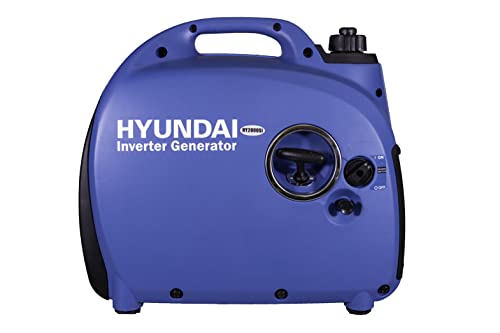
The Hyundai Power 2000W is the most premium pick, at $1,281 at time of writing, sold by Amazon AU. It ranks #232 in Power Inverters on Amazon AU, which makes it the least proven seller here, and it costs about 70 percent more than the Genpower 6kW, which has far more running power. The listing describes a four-stroke, easy-start recoil Hyundai petrol engine, says it suits camping or a caravan or motorhome, and says it can power multiple devices at the same time. It also says the generator is easy to store in a car boot or a caravan cupboard.
The listing is short, and that is the main problem. It doesn't say whether the 2000W figure is running or peak output, and it gives no noise figure, weight, tank size, runtime, socket list, RCD protection or warranty term. I'd treat 2000W as a peak figure until Hyundai or the seller confirms otherwise, and size your loads with plenty of room. Start is by recoil pull only, with no electric start listed, so it is a camping and caravan generator rather than something to leave ready for a long blackout.
Against the rest of this guide, you are paying about $400 more than the Gentrax 2.2kW, which lists electric start, pure sine output and 58dB, and about $630 more than the maXpeedingrods, which lists 1,800W running and 15 kg. What the Hyundai gives you is the Hyundai name and Amazon AU as the seller. Add a portable RCD, keep the fuel fresh and run it monthly between trips like any petrol generator. Check the model and specs on the box or with Hyundai before you rely on it for anything heavy.
Honest caveats: The most expensive 2kW-class pick here, with the thinnest listing. Running versus peak output isn't stated. Noise, weight, tank size, runtime, sockets, RCD and warranty aren't stated. Recoil start only. Its sales rank is the weakest in this guide.
Best for: Buyers who specifically want a Hyundai 2kW for camping or a caravan and will confirm the full specs before relying on it.
Output: 2000W (running or peak not stated) • Engine: Four-stroke petrol, recoil start • Use: Camping, caravan and motorhome (per listing) • Noise, weight, tank, runtime, sockets: Not stated • Warranty: Not stated • Rank: #232 in Power Inverters (Amazon AU)
View on Amazon AUSide-by-side comparison
| Product | Price | Best for |
|---|---|---|
| Genpower 6kW Peak 5kW Open Frame Inverter Generator | ~$749 | 3kW running power for blackouts and camping |
| maXpeedingrods 2350W Portable Inverter… | ~$649 | Light camping, parallel option |
| Genpower 1.2kW Peak 1.0kW Inverter Generator | ~$349 | Lights, chargers and a laptop |
| GENTRAX 2.2KW Max 2.0KW Inverter Generator… | ~$879 | Quiet 2kW with push-button start |
| GENTRAX 3500W Inverter Generator Remote… | ~$1,199 | Most power, remote start |
| Hyundai Power 2000W Portable Petrol… | ~$1,280.99 | Buyers who want the Hyundai badge |
What we see fail in the workshop: generators and what they power
We don't overhaul engines, but generators and the gear plugged into them come up a lot after storms and camping trips. The faults are nearly always the same three, and most of them are avoidable with some care in storage and a bit of thought about what gets plugged in. Here's what usually goes wrong and what to do about it.
Gummed carburettors from stale fuel
A generator that ran fine at the last blackout and now cranks without starting has usually been stored with fuel in it. Petrol breaks down over a few months, E10 especially, and leaves gummy deposits in the carburettor's tiny jets and float bowl. The engine can't get the right mix and won't fire, or it surges and stalls. A carburettor clean usually fixes it. Use fuel stabiliser, run the carburettor dry before long storage or run the generator under load monthly, and keep a fresh jerry can for the next outage.
Power supplies hurt by rough power
Laptop chargers, TV power boards and modem power packs don't like rough, unstable power, and an open-frame generator under a changing load can produce exactly that. The damage we see is usually a charger that's gone dead or a device that won't power on after a night on a generator. Inverter generators like the ones here are much kinder, but overloading any generator can still cause voltage sags and surges. Keep the load under the running rating, plug sensitive gear in after the generator is warmed up and steady, and use a surge powerboard.
Damaged leads and wet connections
Extension leads run across wet grass, under tents and through door gaps get crushed, cut and soaked, and that's a real shock risk on a generator with no RCD. We see scorched plugs and melted sockets where a light-duty lead was asked to carry a heavy load for hours. Use outdoor-rated, heavy-duty leads sized for the load, unwind them fully so they don't heat up, keep connections off the ground and covered, and plug a portable RCD into the generator first. Replace any lead with cracked or taped insulation. A tidy, dry lead run costs nothing and prevents most of these faults.
Decision tree: which one should you actually buy?
- Want the most running power for blackouts and camping? → The Genpower 6kW at $749 gives 5kW running, three 15A sockets, an RCD and a 3-year warranty.
- Need a light unit with more power than the 1kW Genpower? → The maXpeedingrods MXR2350 at $649 weighs 15 kg and can run in parallel with a second unit.
- Only need lights, chargers and a laptop at camp? → The Genpower 1.0kW at $349 is the lowest-priced and lightest pick here at 12 kg, with a 3-year warranty.
- Want push-button start on a quiet 2kW unit? → The GENTRAX 2.2kW at $879 has electric start, pure sine output and a 58dB rating.
- Want remote start and wheels for long outages? → The GENTRAX 3.5kW at $1,199 gives 3.2kW rated output with remote start and wheels.
- Want a Hyundai-badged 2kW for the car boot or caravan cupboard? → The Hyundai Power 2000W at $1,281 is the most expensive pick here and its listing is thin, so confirm the specs first.
- Laptop or charger dead after running on a generator? → Bring it to the iFix workshop in Erina and we'll test the device and the charger before you spend anything.
Frequently asked questions
What size inverter generator do I need?
Add up the running watts of everything you want to power at once, then choose a generator whose running or continuous rating is comfortably above that. For camping with a fridge, lights and chargers, 2kW is usually plenty. For a blackout where you want to boil a kettle or run a microwave as well as the fridge, look at the 3kW class and up, like the Genpower 5kW. Remember that fridges and air conditioners draw several times their running power for a second or two when the compressor starts, so leave headroom for that.
Can I plug a generator into my house wiring?
Only through a changeover switch and generator inlet installed by a licensed electrician. That setup isolates the house from the grid so power can't feed back out to the street, where line workers could be hurt. Never use a lead with a plug on both ends to feed a powerpoint. It's illegal, the exposed pins are live and it can backfeed the grid. Without an installed inlet, plug appliances directly into the generator's own sockets using outdoor-rated extension leads, with a portable RCD between the generator and the lead.
Is it safe to run a generator in a garage or under an awning?
No. Petrol generators produce carbon monoxide, which you can't see or smell, and it can build up quickly in garages, sheds, carports, tents, under caravan awnings and on enclosed verandahs, even with doors open. Run the generator outdoors on firm, dry ground, well away from doors, windows and vents, with the exhaust pointing away from people. Fit a battery carbon monoxide alarm inside the house or caravan. Keep the hot exhaust clear of grass, tarps and anything that can burn, and let the engine cool before refuelling.
Why won't my generator start after sitting in the shed?
Stale fuel is the usual cause. Petrol breaks down over a few months, E10 especially, and leaves gummy deposits in the carburettor that block its small jets. The engine cranks but won't fire, or runs rough and stalls. Draining the old fuel and cleaning the carburettor usually fixes it. To stop it happening again, add a fuel stabiliser, run the carburettor dry before long storage or run the generator under load every month, and check the oil level, since most generators have a low-oil shutdown that stops them starting.
Is an inverter generator safe for laptops and TVs?
Inverter generators produce a much cleaner, more stable waveform than basic open-frame generators, and the listings for five of the six picks here describe pure sine or clean, stable output for sensitive electronics (the Hyundai listing doesn't say). That makes them a reasonable choice for laptops, TVs, modems and chargers. Overloading any generator can still cause voltage dips and surges, so keep the total load below the running rating, let the generator warm up and settle before plugging sensitive gear in, and use a surge powerboard between the generator lead and your devices.
Should I buy a generator or a battery power station?
It depends on how long you need power for and where you'll use it. A battery power station is silent, has no fumes, can run indoors and needs almost no maintenance, but it holds a limited amount of energy and costs more for the same output. A generator makes power for as long as you have fuel, which suits long blackouts and heavy loads, but it's noisy, must run outdoors and needs fuel and oil care. Many households end up with a battery for short outages and quiet nights, and a generator for long ones.
Related buying guides
Device dead after a storm or a generator night?
Power spikes, rough generator power and wet leads are hard on chargers, power supplies and the devices behind them. Bring the device into our Erina workshop and we'll test the charger, the power circuit and the battery, then tell you what failed and what it'll cost to fix before we start any work.
Visit our Erina workshop Book Online