Prices from Amazon AU, updated daily. Swipe or use the arrows for more.
Disclosure: This article contains affiliate links to amazon.com.au. If you buy through one of these links iFix may earn a small commission at no extra cost to you. It doesn't change which products we recommend. We focus on what actually lasts based on 16 years of repair-shop experience.
Quick summary5 picks
- CheapestAIMALL Home Gutter Tool Gutter Cleaning… about$33.20
- Ranqisys 3.2m Gutter Cleaning Tool with… about$30.06
- AIMALL 81.9in Gutter Cleaning Brush with… about$38.60
- Gutter Cleaning Tools from The Ground about$52.99
- Most PremiumSTARLYF Hydrocleaner 4m Telescopic Water… about$127.95
Why a repair shop cares about your gutters
This one looks off-topic for an electronics workshop until you follow the water. A blocked gutter overflows backwards, under the eaves and into the ceiling cavity, and what comes out the other end of that path is the stuff that lands on our bench: TVs off water-stained walls, computers that sat under a dripping ceiling, powerboards that spent a weekend in a puddle behind the entertainment unit. The blockage costs nothing to fix in October and a fortune to fix through January's storms. So this guide is storm prep, from the ground, with tools between $33 and $128, and the goal is simple: water goes down the downpipe instead of through your plaster.
The timing matters more than the tool. Gutters mostly block in the weeks after they've collected a season of leaves, and the failure shows up in the first serious downpour after that. On the Central Coast that means a spring clean and another look before summer storm season settles in. Ten minutes with a scoop while the debris is dry beats any amount of heroics in the rain, and it's the difference between reading about east coast lows and mopping under one.
One thing this guide won't do is pretend a $40 brush replaces a professional when the situation is past DIY. If the gutters are sagging off their brackets, the downpipes are packed solid, or the house is two storeys with no safe ground access, that's a job for someone with the right access equipment. The tools here are for maintenance, keeping clear gutters clear, and they're honestly good at exactly that and no more. And if the water has already won a round, if there's a stained ceiling over the study or a computer that copped a drip, sort that first: our computer repair bench deals with the aftermath of ceiling leaks every storm season, and the earlier a wet machine is looked at, the more of it survives.
The three ways to clean a gutter from the ground
Everything in this category is one of three ideas. First, the brush on a pole: stiff bristles on a curved or swivelling head, pushed along the gutter to flick debris out. It's simple, it works on dry leaves and twigs, and it's the method that scales down to a $37 tool. Second, the scoop: a shaped shovel that hooks under gutter hangers and drags compacted muck out. Scoops handle the wet, composted sludge a brush just smears around, but most need you closer to gutter height. Third, water power: either your own pressure washer with a curved gutter wand on the end, or a water-fed telescopic broom running off tap pressure. Water is the only method that also proves the downpipe flows, because you're literally watching it drain.
In practice the methods stack rather than compete. The brush does the regular pass that stops buildup, the scoop does the annual dig-out of whatever composted in the corners, and the water pass afterwards confirms everything actually flows to the downpipe and out. That's why the picks below aren't five versions of one tool: at these prices you can own the whole sequence for less than a single professional clean, and I reckon the brush-plus-scoop pairing at about $71 covers most single-storey homes on its own.
What none of them do is fix a packed downpipe. If you flush the gutter and the water backs up instead of draining, the blockage is vertical, and poking at it from the top with a brush handle mostly compacts it further. A garden hose fed down from the top or up from the bottom outlet shifts most of them; past that, a plumber with a jetter is the honest answer, and it's a much smaller bill when you call before the downpipe has spent a season overflowing into the wall cavity it runs beside.
Ladders, and when to stay off them
The whole point of ground-based tools is that the ladder is the most dangerous tool in this job, and every one of these picks exists so you climb less or not at all. Single storey with good ground access, you can genuinely do the entire job with feet on grass. The picks with telescopic poles reach standard single-storey gutter height with margin, and the pressure washer wand kit assembles to roughly nine feet of reach before you add your own height to it.
Where I'd draw the line: anything above single storey, any spot where the ladder has to sit on uneven or soft ground, sloped driveways, and anywhere near the service drop where the power comes into the house. That last one is non-negotiable with the water-based tools especially; a telescopic aluminium pole and an overhead cable is a combination you separate by planning the job, not by being careful on the day. If a section of gutter is only reachable from a risky position, the money you didn't spend on tools pays a professional for that one section, and everyone stays on the payroll.
If you do use a ladder for the scoop work, the AIMALL scoop's hook is a small clever touch: it hangs the pole off the ladder so both hands are free while you reposition. Small thing, but it's the kind of detail that shows someone designing the tool actually did the job with it.
Pressure washers, tap pressure and fitting honesty
The wand kit needs a pressure washer you already own, and the spec that matters is the connection, not the headline number. This kit uses the standard 1/4 inch quick-connect fitting that almost every domestic pressure washer speaks, and it's rated to 4000 PSI, which is comfortably above what typical home machines deliver. Read that rating the right way around: it means the wand won't be the weak link on your machine, not that it turns a light-duty washer into something it isn't. Your washer's output is your washer's output; the wand just gets it up and over the gutter lip via the curved rod on the end.
The STARLYF Hydrocleaner is the opposite architecture: no pressure washer at all, just tap pressure through a hose fitting, feeding a brush head with an integrated sponge and squeegee and a soap dispenser in the handle. It cleans by flow and scrubbing rather than pressure, which is gentler on everything it touches and quieter for the neighbours, and the same reach that does gutter lines does solar panels, awnings and second-storey windows. The trade is obvious: tap pressure shifts surface grime and rinses a gutter line, but it won't blast out a compacted blockage the way a real pressure washer with the gutter wand will. Match the tool to how bad your gutters actually get.
Technique matters more with the water tools than the brushes. Start near a downpipe and work away from it, so the debris you're moving flows toward an exit you've already cleared instead of piling onto a blockage. Do the downpipe flush last, and actually watch the outlet at ground level: strong flow out the bottom is the pass mark for the whole job. When you're done, drain the wand sections and the hose fittings before they go back in the shed, because trapped water perishes the o-rings in the quick connectors over winter and next spring's first job becomes finding the leak in your own gear.
Reach claims, materials and what the marketing hides
Reach numbers in this category deserve some scepticism, applied evenly. A pole listed at 10 feet gives you ten feet of pole, not ten feet of useful working height: you lose length to the angle you hold it at, the section overlaps, and the arc the head needs to work in. The practical version is that a 3 metre pole puts the head at standard single-storey gutter height for an average adult, with enough left over to work at a comfortable angle rather than vertically. Both brush picks here assemble in sections, 8 on the Ranqisys and 6 on the AIMALL, so you build the length the job needs instead of wrestling a full-length pole around every corner of the house.
Materials are where the price differences live. The Ranqisys runs stainless steel tubes with a welded brush head, the AIMALL runs aluminium poles with wire-cored PET bristles, and the STARLYF uses aluminium to keep 4-plus metres liftable. There’s a real trade hiding in there: steel is stiffer and takes the bending load of a loaded brush head better, aluminium is lighter at full extension but flexes, and any of them held at full stretch is heavier than it looks after ten minutes. None of these are professional tools and none pretend to be; at $33 to $128 they’re priced as what they are, seasonal maintenance gear that lives in the shed eleven months a year.
After the clean: catching the leak you already have
A clean gutter stops the next leak, but if water's already been getting in, the damage doesn't announce itself until plaster stains or something electrical misbehaves. After the first decent rain post-clean, walk the ceilings with your eyes and your nose: new stains, bubbling paint and musty corners are the early signals. A basic moisture meter or a phone thermal camera makes that inspection objective instead of hopeful, and I covered both in the thermal camera and damp meter guide. Wet insulation and ceiling cavities hold water long after the roof dries, and finding it early is the difference between a patch and a plasterer.
For the spots you can't inspect, sensors stand watch. A puck-style leak sensor in the ceiling cavity near a known trouble spot, behind the entertainment unit, or under the hot water service costs less than a takeaway dinner and yells the moment water arrives; the options are in the water leak sensor guide. While you're in the roof cavity placing one, check your smoke alarms' age stamps too, since you're already up the ladder for it; the photoelectric smoke alarm guide covers what the NSW rules expect. Ceiling water and mains-powered alarms are neighbours in the same cavity, and one degrades the other.
What I skipped and why
Gutter guards, mostly. Not because they don't work, but because a buying guide that pretends a roll of mesh is a five-minute job isn't being straight with you. Guards done properly are measured, cut and fixed to suit your gutter profile and your tree cover, they change how the gutter is cleaned rather than ending cleaning, and the wrong mesh under the wrong gum tree just relocates the blockage to somewhere you can't see it. If your trees drop enough to justify guards, price a professional install against the decade of cleaning it saves. That's a different article and a different budget.
I also passed on the robotic and vacuum-style gutter gadgets that float around the marketplace listings. What showed up in the search either failed the seller gate, shipped from overseas with no local warranty path, or had no sales history worth trusting with a review. The five picks here all cleared the same bar as every guide on this site: stocked and sold through Amazon AU by local or Amazon retail, new condition, with category sales ranks that show real buyers. A $300 gadget with no track record lost to a sub-$40 brush with real category sales, and I’m comfortable with that maths.
And nothing here tells you to get on the roof itself. Roof plumbing, cracked tiles, flashing and valley rust are real problems with real consequences when they're handled from a height by someone whose day job is elsewhere. The line this guide holds is gutter height from the ground. Past that line, the right tool is a phone.
The 5 picks, $33 to $128
Prices are Amazon AU at time of writing (24 September 2026) and move week to week. Ranks are Amazon AU category sales ranks, checked the same day.

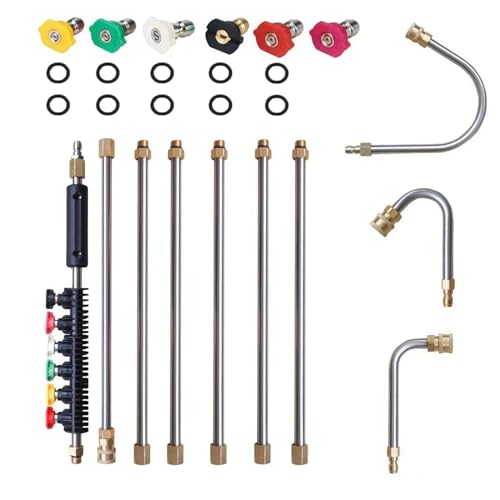
Gutter Cleaning Pressure Washer Wand Kit, 9 ft, 4000 PSI
ASIN B0H3W7BNCS • $52.99 • Sold by Knight-AU on Amazon AU
If you already own a pressure washer, this is the pick, and its #5 rank in Amazon AU's pressure washer lances category says plenty of people worked that out first. The kit is ten pieces: seven 15 inch stainless steel wand sections, a curved gutter rod, and connectors, assembling to roughly nine feet of reach through standard 1/4 inch quick-connect fittings. On the end you get six spray nozzle tips at different angles plus the curved rod with 30 degree, 90 degree and U-shaped positions, which is the part that gets water pointing down into the gutter while you stand on the ground. Rated to 4000 PSI, so the wand outlasts whatever domestic machine is pushing it.
The sectional build is more useful than a fixed pole in practice. You add sections until the height is right for each run of gutter, so the awkward low veranda gets a short stiff wand and the high gable gets the full stack. Stainless sections resist the corrosion that kills stored garden gear, and the ergonomic handle with the quick connector means it goes on and off the washer gun without tools. It's also not a one-job purchase: the same sections and nozzle tips do second-storey windows, eaves, the shed roof, solar panel frames and the driveway edges the trigger gun can't reach, which is a fair bit of utility hiding in a $53 box.
Understand what you're buying, though: force, not finesse. A pressure washer in a gutter throws everything the blockage was made of straight up and out, and some of it lands on you and the windows. It's the method for gutters that are genuinely blocked and gunked, where the brush picks below are the method for keeping cleared gutters clear. Wear glasses you don't mind getting filthy in, put on clothes that are already ruined, start at the downpipe end, and it makes genuinely short work of blockages the brush picks below would lose to.
Honest caveats: Useless without a pressure washer, and the 4000 PSI figure is the wand's rating, not a promise about your machine's output. Nine feet of sections whipping around under pressure takes some getting used to, and the spray-back is real: eye protection isn't optional, and keep it well clear of the power service drop.
Best for: Pressure washer owners with genuinely blocked single-storey gutters who want the muck gone rather than moved.
Price: $53 at time of writing • Type: Pressure washer extension wand with curved gutter rod • Reach: 7 x 15 inch sections, about 9 ft assembled (listed) • Fitting: 1/4 inch quick connect • Rating: 4000 PSI (listed) • Nozzles: 6 spray tips plus 30/90 degree and U-shaped rod positions • Material: Stainless steel • Seller: Knight-AU on Amazon AU, new • Rank: #5 in Pressure Washer Lances & Wands (Amazon AU)
View on Amazon AU
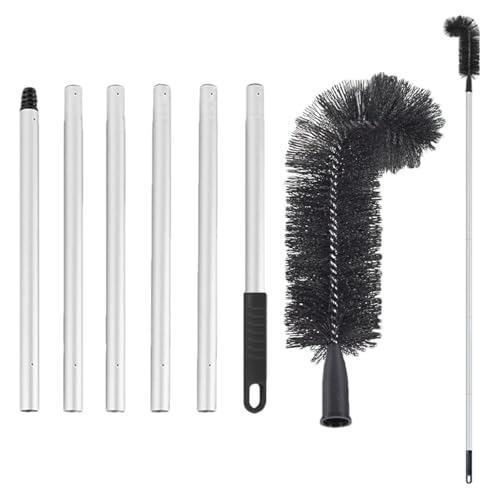
AIMALL 81.9in Gutter Cleaning Brush with Extendable Aluminium Poles
ASIN B0FC6BHTY8 • $38.60 • Sold by Aimallaustralia on Amazon AU
This is the tool for the maintenance pass, the ten-minute walk around the house that stops gutters ever reaching the blocked stage. Six aluminium sections of about 13 inches each build up to a listed 81.9 inches, near enough to 2.1 metres of pole, and every joint is a twist lock rather than a push fit, so the stack doesn’t work itself loose halfway along a run. What separates it from the other brush in this guide is the head: 11 inches of curved PET bristle, a wide sweep by the standards of this category, shaped to sit down along the gutter lip instead of skating across the top of it.
Bristles with steel wire cores are the detail worth paying for. Nylon heads go soft once they’ve been dragged through a season of wet leaf litter, and a soft head stops lifting debris and starts pushing it around. The wire cores keep these bristles working like bristles, and the wider head means fewer passes per metre of gutter, which matters more than it sounds like it should once the tool is held overhead. Aluminium keeps the whole thing light at full extension, and it won’t corrode the way bare steel does when the shed roof leaks on it through winter.
Be clear about the reach, because that is the honest limit here. 2.1 metres of pole plus your own arms puts the head at the gutter line of a low single-storey run, a carport, a veranda or a garage, and not much above it. If your gutters sit at full eave height, the Ranqisys below carries a bit over a metre more pole and is the one to buy. Where this one wins is the low run you actually clean often: the short stack flexes less, the wide head clears faster, and the tool is light enough that you finish the lap instead of giving up on the far corner. It doubles as the spider web and eave duster the rest of the year, which is most of what it does between storm seasons.
Honest caveats: The shortest reach of any pick in this guide at a listed 81.9 inches, so measure your gutter height before you buy. It is a prevention tool rather than a rescue tool: stiff bristles smear wet composted sludge instead of lifting it. Aimallaustralia is a marketplace storefront, so returns run through the seller, and #4290 in cleaning tools is honest but modest volume.
Best for: Low single-storey runs, carports and verandas, where a light pole and a wide stiff head clear the regular pass faster than extra reach ever would.
Price: $39 at time of writing • Type: Telescopic gutter brush • Reach: 6 sections of 13 in, 81.9 in assembled (listed) • Head: 11 in curved PET bristles, steel wire cores • Pole: Aluminium alloy, twist lock • Seller: Aimallaustralia on Amazon AU, new • Rank: #4290 in Cleaning Tools (Amazon AU)
View on Amazon AU
STARLYF Hydrocleaner 4m Telescopic Water-Powered Broom
ASIN B0BXM13652 • $127.95 • Sold by Global Shop Direct AU on Amazon AU
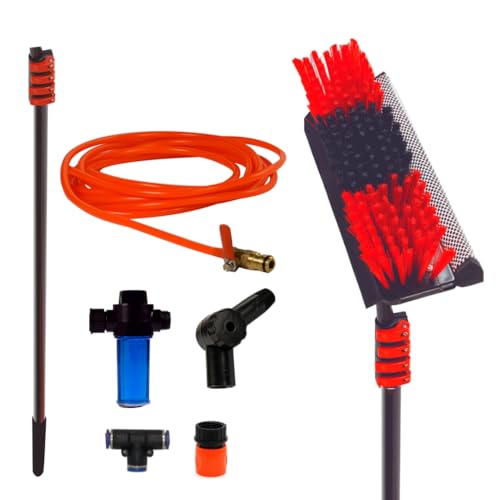
The Hydrocleaner is the pick for the house where gutters are only one line on the outdoor cleaning list. It's a telescopic aluminium water-fed broom with a listed reach of 4.6 metres, fed by an ordinary garden hose through the supplied connectors, with a brush head that integrates a sponge and a window squeegee and a soap dispenser built into the handle. That's second-storey window height and comfortably above single-storey gutter lines, off nothing but tap pressure. At $127.95 from Global Shop Direct's AU storefront it's the dearest pick here, and it's ranked #35 in its Amazon AU category, the strongest sales signal of the three brush-style tools in this guide.
For gutter work specifically, it rinses and scrubs rather than blasts: constant water flow at the head while you work the brush along the line, which shifts surface grime, washes fines toward the downpipe and shows you immediately whether the run drains. Because it's continuous flow rather than pressure, it's the tool of the three water options you can point at solar panels, awnings, cladding and glass without worrying about what the pressure is doing to seals and coatings. The angle adapter in the kit sets the head angle to suit each job, and the soap dispenser in the handle matters far more for the car and the windows than it ever will for the gutters.
The honest framing is that this is an outdoor cleaning system that happens to do gutters, rather than a dedicated gutter tool. If gutters are the only job, either brush pick does that one job for less than a third of the money. If the same purchase needs to cover panels, windows, eaves and the caravan, this is the one that earns its shed space, and its sales rank suggests plenty of households have already run that arithmetic. Buy it for the outdoor cleaning list; treat the gutter line as one of the jobs on it rather than the reason for it.
Honest caveats: Tap pressure rinses and scrubs; it will not shift a compacted blockage the way a pressure washer will. At 4-plus metres of wet aluminium the flex and weight are noticeable, and its #35 rank sits in the automotive brushes category, so read it as a popular washing brush that reaches gutters, not a gutter specialist.
Best for: One purchase covering gutters, solar panels, second-storey windows and the car, on tap pressure alone.
Price: $128 at time of writing • Type: Water-fed telescopic cleaning broom • Reach: 4.6m listed • Head: Brush with integrated sponge and window squeegee • Extras: Soap dispenser, hose connectors, angle adapter (listed) • Material: Aluminium • Seller: Global Shop Direct AU on Amazon AU, new • Rank: #35 in Automotive Brushes (Amazon AU)
View on Amazon AU
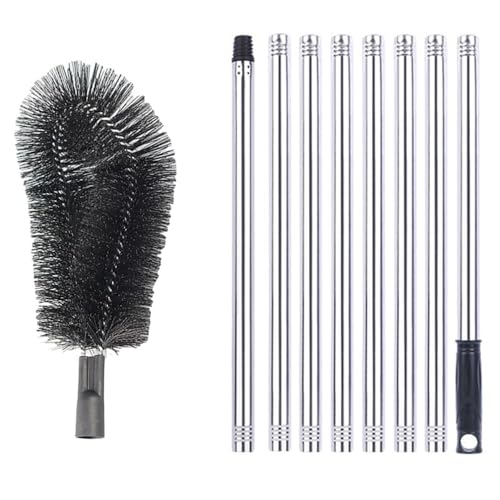
Ranqisys 3.2m Gutter Cleaning Brush with Extension Poles
ASIN B0FLJ52PKY • $36.66 • Sold by Randamai-AU on Amazon AU
The Ranqisys is the same idea as the AIMALL brush above with different material choices, and the materials are the reason it’s here. The listing runs stainless steel tubes, eight of them assembling to 3.2 metres, with the black nylon brush head welded to its mount rather than screwed or clipped. Welded matters on this tool specifically: the brush head takes the whole bending load every time you drag it along a loaded gutter, and the joint is where the pole-brush tools eventually let go. Steel tubes are also stiffer than aluminium at full stretch, which is exactly where a loaded brush head wants to bend. At $36.66 it’s within a couple of dollars of the AIMALL, so the choice between them is genuinely about reach and build rather than the budget.
The curved head geometry is aimed at the same work: hooking over the gutter lip from below and sweeping debris up and out, with the curve helping it reach into corners and around the brackets that a straight head bounces off. At 3.2 metres it covers standard single-storey gutter lines with a normal adult reach added, which is a bit over a metre more pole than the AIMALL gives you, so this is the brush to pick the moment your gutters sit at full eave height. The sectional assembly works the same way as its rival’s: build only the length the current run needs, because every unnecessary section adds flex and effort at the head end where the work happens.
The sales history backs it up better than the alternative does: #938 in cleaning tools against the AIMALL’s #4290, and both are marketplace storefronts rather than Amazon retail, so returns run through the seller either way. For a sub-$40 tool built from the right materials, that’s the trade I’d take. The split between the two brushes is simple enough. If your gutter runs sit at standard eave height, buy this one and use the extra metre of pole. If the runs you actually clean are low, and you’d rather have the wider head and the lighter pole over your shoulder, the AIMALL is the more pleasant tool to hold up there.
Honest caveats: It shares every bristle-tool limitation with wet compacted sludge, and at full 3.2 metre extension the flex at the head end is real, so the last section is often better left off. Marketplace seller means warranty and returns go through Randamai-AU, and the brand has no track record beyond this listing’s sales.
Best for: Standard-height single-storey gutter runs where the extra metre of pole matters: stainless tubes and a welded head under $40.
Price: $37 at time of writing • Type: Telescopic gutter brush • Reach: 8 tubes, 3.2m assembled (listed) • Head: Curved nylon brush, welded mount • Material: Stainless steel, PP, galvanised iron wire (listed) • Seller: Randamai-AU on Amazon AU, new • Rank: #938 in Cleaning Tools (Amazon AU)
View on Amazon AU
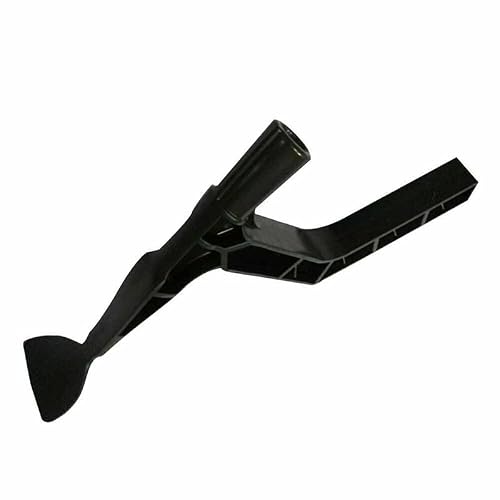
AIMALL Gutter Cleaning Spoon and Scoop with Hook
ASIN B0BXGRPLZW • $33.20 • Sold by Aimallaustralia on Amazon AU
Every gutter eventually accumulates the stuff brushes can't move: wet, composted sludge packed under the hangers and into the corners, heavy as potting mix and about as attached. The scoop is the tool for that annual dig-out, and the AIMALL is a well-shaped example at $33.20. The hook-shaped profile is designed to slide under gutter hangers and around brackets, which is exactly where the buildup concentrates and exactly where a straight trowel jams. At 204 grams it adds nothing to the effort, and the listing's cleverest touch is the integrated hook that hangs the tool, or the pole it's mounted on, off the ladder rung so both hands are free when you need them.
The feature that decides whether it suits you is the pole mount. It attaches to most standard extension poles, which are not included, so from the ground it becomes the dig-out head on whatever painter's pole is already in the shed, and from a step ladder it works handheld for the precision work around outlets and corners. Handheld is where a scoop is at its best: you feel the blockage through the tool, you get all of it rather than the top layer of it, and the downpipe outlet gets properly cleared instead of cosmetically tidied. The hook shape is what separates it from improvising with a garden trowel, which jams on the first gutter hanger it meets and gouges the gutter's protective coating on the way through.
Its #1445 rank in the huge cleaning tools category is modest, which is fair for a single-purpose tool most households buy once a decade. But as the $33 partner to either brush pick, it completes the method: brush for the regular pass, scoop for the annual excavation, hose to prove the flow. That trio, all in, still costs less than a single professional gutter clean, and it's the combination I'd point most single-storey households at. Just check the shed for a pole before you buy, because the pole is the half of this tool that isn't in the box.
Honest caveats: Extension pole not included, so budget for one or check the shed first, and pole fitment is "most poles" rather than guaranteed for yours. It's a single-purpose hand tool with modest sales history from a marketplace seller, and scoop work from a ladder still means observing every ladder rule the brush tools let you skip.
Best for: The annual dig-out of compacted gutter sludge that brushes smear and pressure washers redecorate the house with.
Price: $33 at time of writing • Type: Gutter scoop and spoon with hanger hook • Weight: 204g (listed) • Mount: Fits most extension poles, pole not included • Design: Hook profile slides under gutter hangers • Seller: Aimallaustralia on Amazon AU, new • Rank: #1445 in Cleaning Tools (Amazon AU)
View on Amazon AUSide-by-side comparison
| Product | Price | Best for |
|---|---|---|
| AIMALL Home Gutter Tool Gutter Cleaning… | ~$33.20 | |
| Ranqisys 3.2m Gutter Cleaning Tool with… | ~$30.06 | |
| AIMALL 81.9in Gutter Cleaning Brush with… | ~$38.60 | |
| Gutter Cleaning Tools from The Ground | ~$52.99 | |
| STARLYF Hydrocleaner 4m Telescopic Water… | ~$127.95 |
What we see fail at the bench: the electronics under the leak
We don't fix gutters, but we fix what blocked gutters do. Every storm season brings in a run of devices that were nowhere near a tap and are wet anyway: ceiling water found them. The pattern is so repeatable you can almost date the blockage from the corrosion. Here's what actually happens downstream of the gutter you didn't clean, from the bench that sees the end of the story.
The slow drip is worse than the flood
A dramatic ceiling failure gets everything unplugged and moved in minutes. The slow drip behind the TV cabinet or into the study wall runs for weeks before anyone notices, and slow moisture is the worst thing that can happen to powered electronics. Corrosion creeps across connectors and board traces while the device keeps running, electrolysis eats the copper, and by the time it misbehaves the damage is spread across everything conductive. A device that got wet, was unplugged fast and dried properly has decent odds. A device that ran damp for a month usually doesn't, and there's no cleaning that undoes dissolved traces.
Powerboards and sockets in the splash zone
The floor-level powerboard behind the entertainment unit sits directly under the most common ceiling leak path in the house, and water plus a live powerboard is how a leak becomes a tripped safety switch, scorched outlets, or worse. After any ceiling stain appears, check what's plugged in below it before you check the plaster. Anything that got wet while energised, board, plugpack or the socket itself, should be inspected before it's trusted again, and a wall socket that took water is an electrician's job, not a hairdryer's. The surge boards we recommend all sit off the floor for exactly this reason.
The ceiling cavity is an electronics enclosure now
Modern houses run more gear through the roof space than most owners realise: Wi-Fi access points, security camera wiring and their power supplies, solar inverter cabling, interconnected smoke alarm circuits, sometimes the NBN lead-in. Water tracking along a rafter finds all of it, and cavity failures are expensive precisely because nobody sees them happen. If your gutters have overflowed into the cavity even once, it's worth eyeballing what lives up there while it's dry, and moving plugpacks and joins up off the insulation onto something that stays dry the next time.
Decision tree: which one should you actually buy?
- Own a pressure washer and the gutters are properly blocked? → The wand kit at $53. Nine feet of stainless sections, the curved rod gets water into the gutter, and it clears compacted muck the brushes can't.
- Just want the simple regular pass on low runs, a carport or a veranda? → The AIMALL brush at $39: a light 2.1 metre pole and an 11 inch curved head. Ten minutes a season keeps the aggressive tools unnecessary.
- Gutters sitting at standard eave height? → The Ranqisys at $37: stainless poles, a welded head, and a bit over a metre more reach than the AIMALL.
- One tool to cover gutters, solar panels, windows and the car? → The STARLYF Hydrocleaner at $128. Tap-pressure water feed, 4.6m listed reach, gentle enough for panels and glass.
- Gutters full of composted sludge a brush just smears? → The AIMALL scoop at $33 on a pole you already own. It's the only pick that properly excavates the corners and outlets.
- Water already got in and something electronic copped it? → Unplug it, don't test it, and bring it into our Erina workshop. The sooner a wet device is looked at, the better its odds, and we'll tell you straight if it's a dry-out, a repair or an insurance photo.
Frequently asked questions
How often should gutters be cleaned?
For most Australian homes, twice a year: once after the main leaf drop finishes and once before summer storm season. Houses under heavy tree cover, especially gums that shed year round, need a look every three months or so. The regular pass with a brush takes ten minutes and prevents the compacted buildup that turns into a half-day job. The simplest schedule that works: clean them when the season changes, and always check them after any storm violent enough that you'd check the yard. A quick hose flush at the end tells you the downpipes flow, which is the part that actually matters.
Do gutter cleaning tools from the ground actually work?
For maintenance on a single-storey home, yes, genuinely. A telescopic brush handles dry leaves and loose debris well, and a pressure washer with a gutter wand clears most real blockages. Where ground tools are honestly weaker is wet, compacted sludge that's been sitting for a year or more; brushes smear it and even water power leaves the base layer. That's when the scoop comes out, worked from a step ladder at the problem spots rather than a full lap of the house. Ground tools shine at keeping cleared gutters clear, so the trick is starting the routine before the gutters are already a disaster.
Do I need a pressure washer for the wand kit?
Yes. The wand kit is an attachment, not a standalone tool: it's sections of stainless steel lance that go between your pressure washer's gun and the water, with a curved rod on the end to aim down into the gutter. It uses the standard 1/4 inch quick-connect fitting most domestic machines take, and its 4000 PSI rating just means the wand handles more than typical home washers put out. No pressure washer, no function. If you don't own one, the STARLYF runs off an ordinary garden hose instead, trading blasting power for tap-pressure rinsing and scrubbing.
Should I just install gutter guards instead?
Guards reduce cleaning, they don't end it, and quality of install decides everything. Properly measured and fitted mesh matched to your gutter profile and tree type keeps the bulk of debris out, but fines still get through, and gum leaf litter on top of mesh can mat into a blanket that sheds water straight over the edge, which is the exact failure you were preventing. Loose universal mesh laid in without fixing is mostly decorative. If your tree cover justifies guards, get a measured professional install and keep a brush for the maintenance passes. For everyone else, a $38 brush used twice a year does the same risk reduction for two percent of the money.
Is it safe to clean gutters from a ladder?
It can be done sensibly on a single storey with the right setup: a ladder rated for the work, firm level ground, the ladder angle right, someone home while you're up there, and your hips staying between the rails instead of reaching sideways. The reason this guide leans so hard on ground-based tools is that every one of those conditions gets skipped when the job feels quick. Anything two storeys, any sketchy ground, and anywhere near the electrical service drop is professional territory, full stop. The maths is simple enough: every tool in this guide combined costs less than one bad step.
Can a blocked gutter really damage electronics inside the house?
It's one of the most common water damage paths we see that isn't a dropped phone. Blocked gutters overflow backwards under the eaves, water tracks along the ceiling cavity and down inside walls, and it exits above whatever happens to be plugged in below: TVs, consoles, computers, the powerboard behind the cabinet. Because the leak is slow and hidden, gear often runs damp for weeks, which corrodes boards far worse than a quick soaking would. If a ceiling stain appears, unplug what's under it immediately and get anything that got wet inspected before trusting it again.
Related buying guides
Ceiling leak found your electronics first?
Water from a blocked gutter ends up in TVs, computers and powerboards more often than people expect, and the slow hidden drip does the worst damage. If something got wet, unplug it, don't power it up to check, and bring it in to Erina. We'll open it, assess the corrosion honestly and tell you whether it's a clean-up, a board repair or a write-off before you spend a dollar.
Visit our Erina workshop Book Online