
Prices from Amazon AU, updated daily. Swipe or use the arrows for more.
Disclosure: This article contains affiliate links to amazon.com.au. If you buy through one of these links iFix may earn a small commission at no extra cost to you. It doesn't change which products we recommend. We focus on what actually lasts based on 16 years of repair-shop experience.
Quick summary6 picks
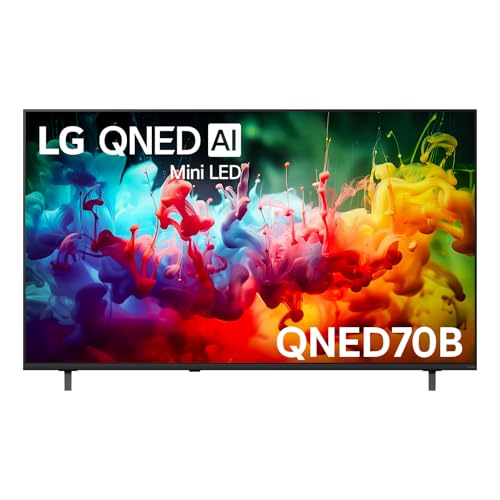
- Entry PickLG 65" QNED70B AI MINI LED 4K SMART TV 2026 about$98565" screen.
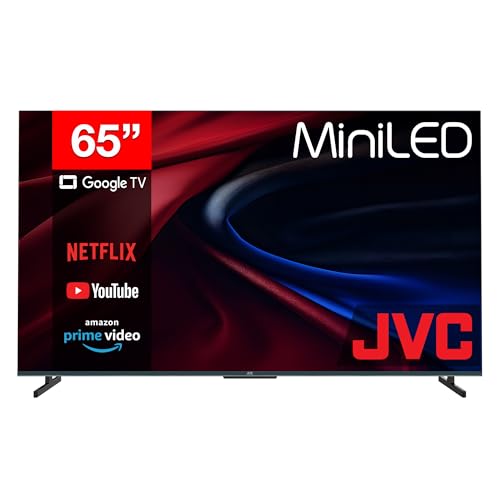
- JVC 65" 4K Mini LED 144Hz Google TV -… about$1,135144Hz refresh, 65" screen.
- SKYWORTH 65 Inch QD-Mini LED 4K Smart TV about$1,345120Hz refresh, QLED, 30W.
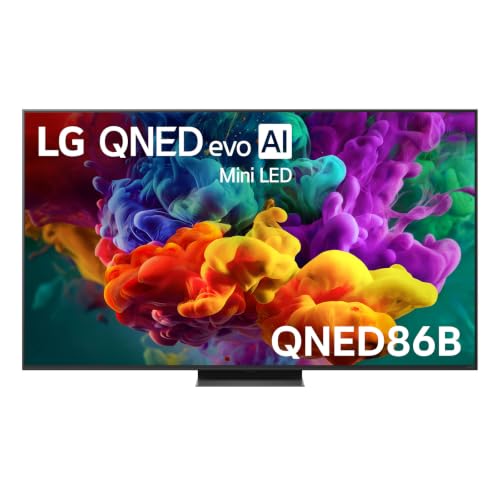
- LG QNED86B Evo AI Mini LED 4K Smart 2026… about$1,585144Hz refresh.
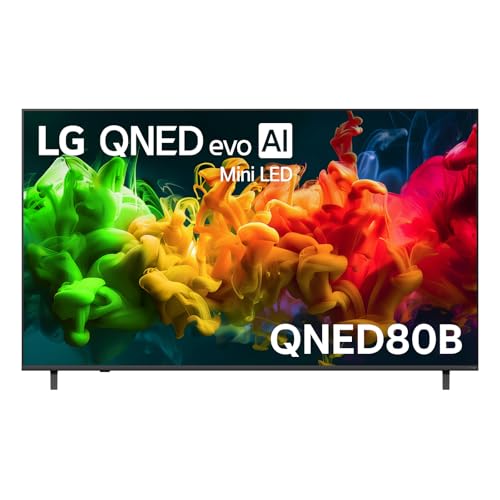
- LG 75" QNED80B EVO AI MINI LED 4K SMART TV… about$1,59975" screen.
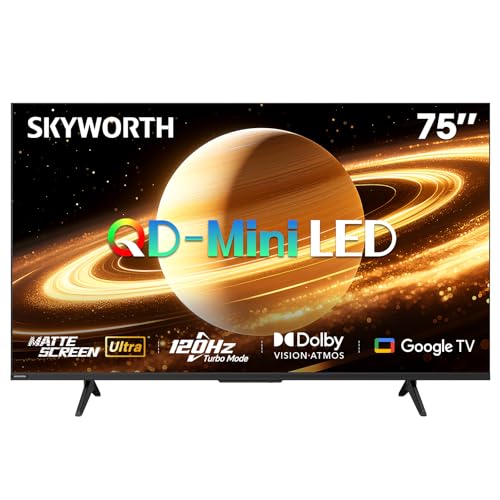
- Most PremiumSKYWORTH 75 Inch QD-Mini LED 4K Smart TV about$1,705120Hz refresh, QLED, 30W.
What a Mini LED TV actually is
A Mini LED TV is still an LCD TV. The picture is made by a liquid crystal layer that blocks or passes light, and behind it there's a backlight made of a very large number of tiny LEDs instead of a few dozen bigger ones. Those LEDs are grouped into zones that the TV can dim or brighten on their own, so dark parts of the picture get darker and bright parts get brighter. That's the whole difference between Mini LED and a standard LED TV, and it's a bigger improvement than the name suggests.
OLED works another way entirely. Every pixel on an OLED makes its own light and switches fully off for black, so there's no backlight at all. That gives OLED perfect blacks and no glow around bright objects, but it can't get as bright across the whole screen, and it costs more per inch at the sizes most families buy. Mini LED sits in between: much better contrast than a basic LED set, much more brightness than most OLEDs, and a lot more screen for the money.
Australian living rooms are the reason I think Mini LED suits a lot of people here. Big windows, afternoon sun and open-plan rooms that you can't make dark are where OLED struggles and where a bright backlight earns its keep. If you mostly watch in the evening with the lights down, an OLED is still worth a look, and our 65-inch TV guide covers both. If the TV faces a window, Mini LED is usually the safer bet.
Dimming zones and blooming
The number of dimming zones is the spec that matters most on a Mini LED TV, and frustratingly none of the five listings here state it. More zones means the TV can light a small bright object, like a moon or a line of subtitles, without lighting up the dark sky around it. Fewer zones means each zone covers a bigger patch of screen, so a bright object drags a bit of glow around with it. That glow is called blooming, and it's the main picture weakness of Mini LED against OLED.
You'll see blooming most on white text over black, like movie credits, and on starfields or night scenes in space films. In a normal bright scene it's practically invisible. The TV's processor does a lot of work here, deciding how bright each zone should be frame by frame, and that's why two TVs with similar backlights can look quite different. LG lists Mini LED Precision Dimming on the QNED86B, and that's the clearest hint on these listings that its dimming has had more attention than the QNED70B's.
My advice is to judge blooming in person if you can, with something dark playing, and not to buy on a zone count alone even when one is published. Turn the brightness down a notch in a dark room and most of the halo disappears. Picture modes like FILMMAKER Mode on the LGs also tend to be more careful with local dimming than the shop-floor vivid mode, which pushes the backlight hard to look impressive under fluorescent lights.
Brightness, glare and the room you've got
Brightness is where Mini LED earns its money, and it matters more in an Aussie lounge room than most reviews let on. A TV that looks great in a dim showroom can look washed out at 3pm with the blinds open, because sunlight on the screen lifts the blacks and drowns out colour. More backlight helps the picture fight back, but the screen surface matters just as much. A glossy screen reflects windows and lamps like a mirror, which is distracting even on a bright set.
The SKYWORTH 65X6600H is the only pick here that lists a matte anti-glare screen, and for a room with windows behind the couch that's a feature I'd rate highly. The listing says it reduces reflections from sunlight and lamps while keeping colour, and matte screens generally do cut glare noticeably, though they can make black look slightly grey in a dark room. The LG and JVC listings don't mention the screen finish, so look at one in a bright shop if glare is your main worry.
Placement helps more than people expect. If you can, put the TV on a wall at right angles to the windows rather than opposite them, and keep it out of direct sun, which also heats the back of the set. Heat is the enemy of LED backlights and power boards, and a TV baking in afternoon sun every day runs its parts harder than one in a shaded corner. If you're also adding sound, our Dolby Atmos soundbar picks pair well with any of these.
QNED, QD-Mini LED and other names
TV brands love a new name, and the Mini LED end of the market has plenty. LG calls its range QNED, and its listings say Dynamic QNED Colour replaces quantum dots for colour, with the QNED80B and QNED86B listing Dynamic QNED Colour Pro and 100 percent colour volume to DCI-P3. SKYWORTH calls its set QD-Mini LED, meaning a quantum dot layer in front of a Mini LED backlight. JVC just says Mini LED. Underneath, all five are LCD TVs with Mini LED backlights, and the names mostly describe how each brand gets its colour.
What I'd look at instead of the badge is the stuff that changes how the TV behaves. That's the refresh rate, which ranges from 120Hz on the SKYWORTH to 144Hz on the JVC and QNED86B, the HDR formats listed, and how long the software will be supported. SKYWORTH lists Dolby Vision and Dolby Atmos. The LG listings name HDR10 Pro and FILMMAKER Mode and don't mention Dolby Vision, so if that format matters to you, check LG's own spec sheet for the exact model before ordering.
Panel type is the other big unknown. LCD TVs use either VA panels, which have deeper blacks but narrower viewing angles, or IPS-type panels, which hold their colour better from the side but look greyer in the dark. None of these listings say which they use. If your couch wraps around the TV and people sit well off to the side, see the set in a shop from an angle, because that's where the difference shows up the most.
Gaming: 120Hz, 144Hz and the ports
For a PS5 or Xbox Series X, 120Hz is the number that matters, because that's what the consoles output in their performance modes. All five picks reach at least 120Hz by their listings. The JVC and the LG QNED86B go to 144Hz, which mostly matters if you're plugging in a gaming PC. The QNED86B also lists VRR, variable refresh rate, which keeps motion smooth when a game's frame rate wobbles, and that's the feature I'd want most for consoles after the 120Hz itself.
What the listings don't spell out is how many HDMI ports run at full 4K 120Hz, which is the HDMI 2.1 question. The JVC lists four HDMI inputs, one with ARC, plus optical out, three USB ports and Ethernet, but not which HDMI ports support the higher bandwidth. On many TVs only one or two do, and one of those is often the ARC port your soundbar wants. Check the manual or the brand's spec page before you buy if you plan to run two consoles and a soundbar.
Game mode is worth turning on with any of these, because it cuts input lag by skipping some of the picture processing. It also often changes how the local dimming behaves, so a scene can look a little different in game mode than in a movie mode. That's normal. If you're mainly a PC gamer at a desk rather than on the couch, our OLED gaming monitor picks are a better fit than a 65-inch TV.
Software and how long it'll be supported
A smart TV is a computer with a big screen, and the software is usually the first thing to feel old. Apps get updated for newer systems and eventually stop working on older ones, and that tends to happen years before the screen itself wears out. The LG listings are the most specific here: they state security updates until 31 December 2030 for the QNED70B and QNED80B, and supported system updates until 2030 for the QNED86B. That's a published end date, which I'd rather have than a vague promise.
The LGs run webOS with Google Cast and Apple AirPlay listed, which covers casting from most phones. The JVC and SKYWORTH run Google TV, with the JVC listing Google TV 3.0 and Google Cast built-in, and both come with a voice remote. Neither of those two listings states how long software updates will continue, so treat that as unknown. Google TV gets a lot of app support, which helps, but the TV maker still controls the updates.
If a TV's apps do stop working one day, a streaming stick plugged into a spare HDMI port fixes that for not much money, and it's often a better fix than replacing a TV with a perfectly good screen. Our streaming device picks cover the options. For that reason I wouldn't let the operating system decide between two TVs on its own, as long as the one you pick is getting updates today.
Size, distance and getting it on the wall
Four of the five picks are 65 inch, which is the size most families in Australia buy for a lounge room these days, and the QNED80B pick is 75 inch. As a rough guide, a 65-inch 4K TV suits a couch about two to three metres away, and a 75-inch suits a little further back, but people rarely regret going bigger. The LG QNED70B also comes in 55 and 85 inch on Amazon AU, which is handy if you like that model but need a different size.
Wall mounting is where I see TVs damaged that had nothing wrong with them. The listings here don't state VESA patterns or weights, so check the manual before you buy a bracket, and make sure the bracket is rated well above the TV's weight. Fix into studs or masonry, never just plasterboard, and get two people to lift it, because a 65-inch screen flexes if you carry it flat or by one corner. A cracked LCD panel almost always costs more to replace than the TV is worth.
Leave space behind and above it for air. Mini LED sets run their backlights hard, and the heat from the backlight and the power board has to escape through the vents in the back. A TV jammed into a tight cabinet recess runs hotter, and heat shortens the life of every part inside. If you're putting it in a cabinet, leave the gap the manual asks for and don't stack a set-top box or a game console right against its vents.
How I picked these five
I started from the Mini LED TVs selling on Amazon AU, kept new stock sold by Amazon AU or the brand's own Australian store, and dropped imports and anything bundled with a soundbar, because bundles make the TV's own price hard to compare. Hisense, TCL and Samsung Mini LED sets didn't turn up in new condition from AU sellers in my searches on Amazon AU, so they're not here. That's a supply gap rather than a judgement on those brands.
That left a price range of about $985 to $1,599 for 65 and 75 inch sets, which is lower than you might expect for Mini LED and reflects how quickly prices have come down. The ranks quoted on each card are Amazon AU TV category sales ranks checked on the same day as the prices. A few LG listings share one rank across sizes or models, and I've said so on those cards rather than pretend each set earned its own number.
All five list a one-year warranty, and Australian Consumer Law gives you rights beyond that for a major appliance that fails early. Keep the receipt and the box details. A TV that loses its picture after a storm, shows dark patches or goes into a restart loop is often a power board, backlight or software fault rather than a dead screen, and you can bring it into our Erina workshop to find out which before you buy a replacement.
I lead with the LG QNED70B because it's the best seller in the category at #2, it's sold by Amazon AU and it's the lowest priced Mini LED set here. The others each add something specific: 144Hz gaming on the JVC, a matte screen and Dolby Vision on the SKYWORTH, better dimming and VRR on the QNED86B, and a bigger screen on the QNED80B. Pick the one that matches your room and what you watch most.
The 5 picks, $985 to $1,599
Prices are Amazon AU at time of writing (31 October 2026) and move week to week. Ranks are Amazon AU category sales ranks, checked the same day.

LG 65 Inch QNED70B Mini LED 4K Smart TV 2026 (65QNED70BSA)
ASIN B0GN2K69DJ • $985.00 • Ships from Amazon AU
This is the Mini LED TV I'd point most people to first. It's the second best-selling TV on Amazon AU at #2 in the TVs category, it's sold by Amazon AU, and at $985 for 65 inches it's the lowest priced Mini LED set in this guide. That rank is shared by the 55 and 85-inch versions of the same model on Amazon AU, so it reflects the QNED70B range rather than this size alone. The model number on the listing is 65QNED70BSA, which matches the title. It runs LG's alpha 7 AI Processor Gen9, and the listing says Mini LED is there for clarity, brightness and contrast. It's sold and shipped by Amazon AU, so returns are simple.
Colour comes from what LG calls Dynamic QNED Colour Solution, which the listing says replaces quantum dots. Smart features run on webOS, with Google Gemini, Microsoft Copilot, Google Cast and Apple AirPlay all listed, so casting from an iPhone or an Android phone is straightforward without extra hardware. FILMMAKER Mode and HDR10 Pro are listed for movies. The detail I like most is the published software end date: the listing states security updates until 31 December 2030, which gives you a real idea of how long the apps should keep working. The warranty listed is one year, the same as every other pick here, so keep the receipt somewhere safe.
The listing doesn't state dimming zones, refresh rate, HDMI specs, panel type or Dolby Vision support, so check LG's spec sheet if any of those matter to you. As the entry Mini LED in LG's range, I'd expect its dimming to be simpler than the QNED86B's, which lists Precision Dimming. Keep it out of direct afternoon sun, both for glare and for the heat on the back of the set. Set it to FILMMAKER Mode for movies rather than vivid, which usually handles the backlight more gently. If you want a Mini LED picture from a well-known brand at the lowest price here, this is the one to buy.
Honest caveats: The listing gives no dimming zone count, refresh rate, HDMI 2.1 detail, panel type or Dolby Vision mention. Its #2 rank is shared with the 55 and 85-inch listings of the same model. As LG's entry Mini LED, expect simpler dimming than the QNED86B. The warranty is one year. Screen finish isn't stated, so check glare in a bright room.
Best for: Most households that want a Mini LED picture from a big brand, sold by Amazon AU, at the lowest price here.
Size: 65 inch, 4K • Backlight: Mini LED • Processor: alpha 7 AI Gen9 • HDR: HDR10 Pro, FILMMAKER Mode • Smart TV: webOS, Google Cast, AirPlay • Updates: Security updates to 31 Dec 2030 (listing) • Model: 65QNED70BSA • Warranty: 1 year (listing) • Rank: #2 in TVs (Amazon AU), listing shared with 55 and 85 inch
View on Amazon AU
JVC 65 Inch 4K Mini LED 144Hz Google TV (AV-A657155A)
ASIN B0DSPS8XTG • $1,135.26 • Ships from Amazon AU
The JVC is the gaming pick on a tight budget. It lists a 144Hz refresh rate in its title, which is more than a PS5 or Xbox Series X outputs and handy if you also plug in a gaming PC, and it costs $1,135 at the time of writing, only about $150 more than the LG QNED70B. It's sold by Amazon AU and ranks #45 in the TVs category. The model number AV-A657155A matches the title, and the listing states a one-year warranty. JVC TVs in Australia are a licensed brand rather than the Japanese JVC of old, and I'd judge this one on its listing rather than on the name. Delivery and returns go through Amazon AU.
The listing is short, but the useful part is its connections. It gives four HDMI inputs with one supporting ARC, three USB ports, Ethernet, an AV input, an antenna input, optical audio out and a headphone out. That's more than a lot of newer TVs bother with, and the headphone out is handy for late-night watching. It runs Google TV 3.0 with Google Cast built-in, and the voice remote has Google Assistant and shortcut buttons for streaming apps. Resolution is 4K UHD at 3840 by 2160, with a Mini LED panel listed. That's about all the listing says, so it's a thin one, and I'd want to see it running in a shop before paying full price.
What the listing doesn't give is dimming zones, brightness, HDR formats, VRR or which HDMI ports support full 4K 144Hz, and those are the details that decide how good a gaming TV is. Check the manual or JVC's spec page for the HDMI 2.1 details before you plan a two-console setup. Software update support isn't stated either. Turn on game mode for consoles, because it cuts input lag noticeably. Keep its vents clear if it's going into a cabinet, since gaming sessions run the backlight hard for hours. If you want a high refresh rate and lots of ports for the least money, it's a good fit.
Honest caveats: The listing is thin: no dimming zones, brightness, HDR formats, VRR or HDMI 2.1 detail are given. Software update support isn't stated. JVC TVs sold here are a licensed brand. The warranty is one year. Check which HDMI port runs at 144Hz before connecting a soundbar and consoles.
Best for: Gamers who want a 144Hz Mini LED TV with plenty of ports for not much more than the entry LG.
Size: 65 inch, 4K UHD 3840 x 2160 • Backlight: Mini LED • Refresh: 144Hz (listing title) • Smart TV: Google TV 3.0, Google Cast • HDMI: 4 inputs, 1 with ARC • Other ports: 3 USB, Ethernet, optical, headphone out • Model: AV-A657155A • Warranty: 1 year (listing) • Rank: #45 in TVs (Amazon AU)
View on Amazon AU
SKYWORTH 65 Inch QD-Mini LED 4K Google TV 65X6600H
ASIN B0H2LJ3X8W • $1,345.00 • Sold by SKYWORTH Australia on Amazon AU
This is the pick for a bright room. The SKYWORTH 65X6600H lists a matte anti-glare screen, the only one in this guide that does, and the listing says it cuts reflections from sunlight and lamps while keeping colour. For a lounge room with windows behind the couch, that can matter more than any backlight spec. It's sold by SKYWORTH Australia, the brand's own local store on Amazon, at $1,345, and it ranks #27 in the TVs category. The listing gives the model as 65X6600H and a one-year warranty. It's the only pick here that lists both Dolby Vision and Dolby Atmos. Buying from the brand's local store also means warranty claims go to a company here rather than overseas.
The backlight is what SKYWORTH calls QD-Mini LED, a quantum dot colour layer in front of a Mini LED backlight, and the listing mentions sapphire cooling materials and large lenses for stable performance. I can't verify those claims from a listing, but it's good to see a brand talk about backlight cooling at all, because heat is what wears LEDs out. It runs Google TV with a voice remote and Google Assistant, and there's a find-my-remote feature that makes the remote ring, which anyone with a couch full of cushions will appreciate. Sound is 30W with SKYWORTH's Total Sonics processing, which is decent for a TV, though a soundbar still does better.
Refresh is listed as 120Hz Turbo Mode, which covers consoles at 120Hz but stops short of the 144Hz on the JVC and the QNED86B. The listing gives no dimming zone count, HDMI detail or software update period, so check those on SKYWORTH's spec page. A matte screen can make blacks look slightly grey in a fully dark room, which is the trade-off for less glare during the day. Keep it out of direct sun anyway, because a matte finish doesn't stop the panel heating up. If glare is the main problem in your room, this is the one I'd buy.
Honest caveats: Refresh is 120Hz rather than 144Hz. No dimming zone count, HDMI 2.1 detail or software update period is listed. Matte screens can lift blacks slightly in a dark room. The sapphire cooling claim can't be checked from the listing. It's sold by SKYWORTH's Australian store, not by Amazon AU, and the warranty is one year.
Best for: Bright lounge rooms with windows facing the screen, and anyone who wants Dolby Vision and Atmos listed.
Size: 65 inch, 4K • Backlight: QD-Mini LED • Screen: Matte anti-glare • Refresh: 120Hz Turbo Mode • HDR and audio: Dolby Vision, Dolby Atmos, 30W • Smart TV: Google TV, voice remote • Model: 65X6600H • Seller: SKYWORTH Australia • Rank: #27 in TVs (Amazon AU)
View on Amazon AU
LG 65 Inch QNED86B Evo Mini LED 4K Smart TV 2026 (65QNED86BSA)
ASIN B0H5VWQRKX • $1,585.00 • Ships from Amazon AU
The QNED86B is the step up within LG's Mini LED range, and it's the one I'd pick if picture quality and gaming both matter. The listing names Mini LED Precision Dimming for enhanced contrast, which is the clearest sign on any of these listings that the backlight control has had real work, and that's what reduces blooming. It also lists 144Hz with VRR for gaming, the only pick here that lists both. It's sold by Amazon AU at $1,585 and ranks #30 in TVs, a rank it shares with the 75-inch listing of the same model and with LG's 75-inch QNED80B, so read it as a range figure. Amazon AU handles delivery and returns.
Colour is listed as Dynamic QNED Colour Pro with 100 percent colour volume, LG's higher colour tier over the QNED70B. The listing describes AI-powered picture and sound processing and states secured system updates until 2030, so like the other LGs you get a published software end date. The model number is 65QNED86BSA, matching the title, and the warranty listed is one year from the manufacturer. For a household that watches a lot of films at night, better dimming is the upgrade that shows up most, because it keeps subtitles and dark scenes cleaner. The 75-inch version of this TV sells for $2,289 at the time of writing, if you want the same picture on a bigger screen.
The listing is short and doesn't state dimming zone counts, brightness, HDMI 2.1 port details, panel type or Dolby Vision, so check LG's spec sheet for those. At $600 more than the QNED70B, it's worth paying for if you watch in a darker room or game on a console with VRR, and less so if the TV sits in a sunny room with the blinds open. Use FILMMAKER Mode for movies and game mode for consoles. Give it the same care as any big TV: clear vents, no direct sun and a surge-protected powerboard. For the best LG Mini LED picture here, this is it.
Honest caveats: The listing is short: no dimming zone count, brightness, HDMI 2.1 detail, panel type or Dolby Vision mention. Its #30 rank is shared with the 75-inch QNED86B and the 75-inch QNED80B listings. It costs about $600 more than the QNED70B. The warranty is one year.
Best for: Film watchers in darker rooms and console gamers who want LG's better dimming plus 144Hz with VRR.
Size: 65 inch, 4K • Backlight: Mini LED, Precision Dimming • Colour: Dynamic QNED Colour Pro, 100% colour volume • Refresh: 144Hz with VRR • Updates: System updates to 2030 (listing) • Model: 65QNED86BSA • Seller: Amazon AU • Warranty: 1 year (listing) • Rank: #30 in TVs (Amazon AU), listing shared with 75-inch QNED86B and QNED80B
View on Amazon AU
LG 75 Inch QNED80B Evo Mini LED 4K Smart TV 2026 (75QNED80BSA)
ASIN B0GN2PLWGZ • $1,599.00 • Ships from Amazon AU
If 65 inches feels small for your room, the QNED80B gets you to 75 inches for $1,599, only $14 more than the 65-inch QNED86B at the time of writing. That's the trade in a sentence: ten more inches of screen against the QNED86B's Precision Dimming and 144Hz VRR. It's sold by Amazon AU and ranks #30 in TVs, a rank it shares with the QNED86B listings, so read it as an LG range figure. The model number on the listing is 75QNED80BSA, which matches the title, and it lists a one-year limited warranty like the others. For a big open-plan room with the couch a long way back, the size usually matters more.
Picture processing is the same alpha 7 AI Processor Gen9 as the QNED70B, with Mini LED listed for clarity, brightness and contrast. Colour steps up to Dynamic QNED Colour Pro, which the listing says delivers 100 percent colour volume to DCI-P3, independently tested to Intertek's specification, so it shares the QNED86B's colour tier rather than the QNED70B's. It runs webOS with Google Gemini, Microsoft Copilot, Google Cast and Apple AirPlay. FILMMAKER Mode and HDR10 Pro are both listed for movies, and so is a published software date: security updates until 31 December 2030, the same as the QNED70B. That's the same update promise as the lower-priced set, which is good to know.
The listing doesn't state refresh rate, VRR, dimming zones, HDMI details, panel type or Dolby Vision, so I can't tell you it matches the QNED86B for gaming. Check LG's spec sheet if you plan to game on it. A 75-inch TV needs a properly rated wall bracket fixed into studs or masonry, and two people to lift it. Measure the cabinet or wall space before you order, because 75 inches is a lot wider than people picture. Keep it out of direct sun and leave its vents clear. If you want the biggest Mini LED screen here for the money, this is the one.
Honest caveats: The listing gives no refresh rate, VRR, dimming zone count, HDMI 2.1 detail, panel type or Dolby Vision mention. Its #30 rank is shared with the QNED86B listings. A 75-inch set needs a rated bracket, studs and two people to install. The warranty is one year.
Best for: Bigger lounge rooms that want a 75-inch Mini LED screen from LG for about the price of a 65-inch step-up.
Size: 75 inch, 4K • Backlight: Mini LED • Processor: alpha 7 AI Gen9 • Colour: Dynamic QNED Colour Pro, 100% DCI-P3 volume • Smart TV: webOS, Google Cast, AirPlay • Updates: Security updates to 31 Dec 2030 (listing) • Model: 75QNED80BSA • Warranty: 1 year (listing) • Rank: #30 in TVs (Amazon AU), listing shared with QNED86B
View on Amazon AUSide-by-side comparison
What we see fail in the workshop: Mini LED TVs
Most TVs that come in with no picture still have a perfectly good screen. The faults are usually in the power board, the backlight or the software, and a Mini LED set adds a few of its own because of how many LEDs and solder joints sit behind the panel. Knowing which is which spares you replacing a TV that only needed one board.
Power boards after storms and surges
The power board is the part that takes the knocks from the grid. After a summer storm we see TVs that won't turn on, or that click and restart, and it's usually a failed component on the power board rather than the main board or the screen. A surge-protected powerboard won't stop a direct lightning strike, but it does take the edge off the smaller spikes that wear these boards down over time. Plug the TV, the soundbar and any console into the same protected board so they all share one earth. Our surge powerboard guide explains what the ratings mean.
Backlight zones that go dark
A Mini LED backlight has a very large number of tiny LEDs on a board behind the LCD, and they're wired in groups. When one group or its driver fails, you see a darker patch, a stripe or a block that doesn't match the rest of the picture. The most common cause is heat: a set run at full brightness in a hot cabinet or in afternoon sun ages its LEDs and solder joints faster. Brightness turned down a little and clear vents go a long way. Backlight repairs are possible, but they mean taking the panel apart, so they're only worth it on a newer set.
Software faults that look like hardware
A TV stuck on its logo, rebooting by itself or dropping its Wi-Fi often has a software problem, not a broken part. Before anything else, unplug it at the wall for a full minute, then check for a system update. A factory reset clears most of the rest, though you'll need to sign back into every app. If it still won't boot past the logo, the main board's storage chip may have failed, which is a repair worth pricing before you write the TV off. Note any error codes or light patterns on the standby LED, because they help narrow it down.
Decision tree: which one should you actually buy?
- You want a Mini LED TV from a big brand for the least money? → The LG 65-inch QNED70B at about $985 is #2 in TVs on Amazon AU, sold by Amazon AU, with security updates listed to 2030.
- You game on a console or PC and want a high refresh rate? → The JVC 65-inch at about $1,135 lists 144Hz and four HDMI inputs, or step up to the LG QNED86B at about $1,585 for 144Hz with VRR.
- Your TV faces a window and glare is the problem? → The SKYWORTH 65X6600H at about $1,345 is the only pick with a matte anti-glare screen, and it lists Dolby Vision and Atmos too.
- You watch films at night and hate glow around subtitles? → The LG QNED86B at about $1,585 lists Mini LED Precision Dimming, the best sign here of tighter local dimming.
- You need a bigger screen than 65 inches? → The LG 75-inch QNED80B at about $1,599 costs almost the same as the 65-inch QNED86B.
- Your TV has no picture, dark patches or keeps restarting? → Unplug it for a minute and check for updates first, then bring it into our Erina workshop and we'll tell you whether it's the power board, backlight or software before you spend anything.
Frequently asked questions
Is Mini LED better than OLED?
It depends on your room and what you watch. Mini LED gets much brighter across the whole screen, which helps in sunny Australian lounge rooms, and it usually gives you more screen for the money. OLED has perfect blacks with no glow around bright objects, because each pixel makes its own light, so it looks better in a dark room. If your TV faces a window or you watch mostly during the day, Mini LED is usually the better pick. If you watch films at night with the lights off and can spend more, OLED is worth a look.
What is blooming on a Mini LED TV?
Blooming is a soft glow around bright objects on a dark background, like white subtitles or stars on a black sky. It happens because the backlight is split into zones, and each zone has to light up for the brightest thing in its patch of screen, which lights the dark area around it a little too. More dimming zones and better processing reduce it. You'll mostly notice it on credits and space scenes in a dark room. Turning the brightness down a step and using a movie mode instead of vivid usually makes it much less visible.
Is LG QNED the same as Mini LED?
Not always, but the three LG picks in this guide are all listed as Mini LED. QNED is LG's name for its colour technology, and the listings say Dynamic QNED Colour replaces quantum dots. LG has used the QNED name on both Mini LED and non-Mini LED sets over the years, so read the listing or spec sheet for the words Mini LED before you buy. The QNED70B, QNED80B and QNED86B listed here all state Mini LED in their titles and features.
Do I need 144Hz for a PS5 or Xbox?
No. The PS5 and Xbox Series X output up to 120Hz in their performance modes, so any of these TVs covers that by their listings. 144Hz mostly matters for gaming PCs. What helps consoles more is VRR, variable refresh rate, which keeps motion smooth when a game's frame rate drops, and an HDMI port that runs at full 4K 120Hz. The LG QNED86B lists 144Hz with VRR. The listings don't say which HDMI ports run at full speed, so check the manual before you connect two consoles and a soundbar.
How long will a smart TV keep getting updates?
It varies by brand and many don't say. The LG listings in this guide are unusually specific: the QNED70B and QNED80B state security updates until 31 December 2030, and the QNED86B states system updates until 2030. The JVC and SKYWORTH listings don't give an update period, so treat theirs as unknown. When a TV's apps eventually stop working, a streaming stick plugged into a spare HDMI port usually fixes it, which is far less than replacing a TV with a good screen.
Can a TV with no picture be repaired?
Often, yes. A TV with sound but no picture, dark patches, or one that won't turn on after a storm usually has a power board, backlight or software fault rather than a broken screen. Unplug it at the wall for a minute and check for a software update first, because that clears a surprising number of faults. If that doesn't work, it's worth getting it looked at before you replace it. A cracked screen is the exception: replacing an LCD panel almost always costs more than the TV is worth.
Related buying guides
TV gone dark, patchy or stuck on the logo?
Most TVs that lose their picture still have a good screen. It's usually the power board, a backlight zone or a software fault. Bring yours into our Erina workshop and we'll find which part failed and tell you whether it's worth fixing before you spend anything on a new TV.
Visit our Erina workshop Book Online