Prices from Amazon AU, updated daily. Swipe or use the arrows for more.
Disclosure: This article contains affiliate links to amazon.com.au. If you buy through one of these links iFix may earn a small commission at no extra cost to you. It doesn't change which products we recommend. We focus on what actually lasts based on 16 years of repair-shop experience.
Quick summary5 picks
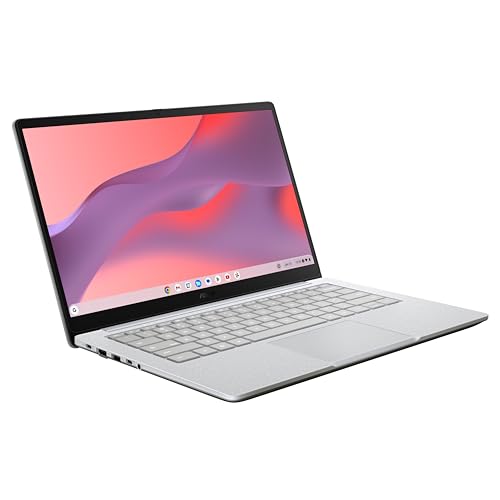
- Intel ChromebookASUS Chromebook CX14, Core 3 N355, 8GB about$588.578GB RAM, 128GB eMMC, 14" screen.
- Lenovo IdeaPad Slim 3 15AMN8 about$7998GB RAM, 512GB SSD, 15.6" screen.
- Lenovo Chromebook 14M8911 about$4878GB RAM, 128GB storage, 14" touch screen.
- Lenovo IdeaPad 5 2-in-1 14-Inch FHD Display… about$998512 GB SSD.
What $1,000 actually buys in 2026
The laptops that land on my bench with a 'this thing is useless' complaint are almost never faulty. They're three-year-old machines that were bought on price, with 4GB or 8GB of memory and a small drive, and they've simply run out of room to do their job. The hardware is fine. The spec was wrong on day one, and nobody told the buyer at the register. That's why this guide exists: between $700 and $1,000 you can now buy a laptop that won't hit that wall inside its natural life, but only if you read the spec line instead of the brand on the lid, because the brands in this band all sell both good and bad configurations side by side.
At this money you're choosing which compromise to accept, because you don't get to skip all of them, and anyone telling you otherwise is selling something. The Lenovo Chromebook 14M8911 is the easiest of the four to carry, with a 14-inch touch screen and 8GB behind it, but it runs ChromeOS rather than Windows and has just 128GB of storage. The Lenovo Slim 3 spends the extra $200 on Windows, a 15.6-inch panel and a 512GB drive, and caps you at 8GB. The IdeaPad 5 folds into a tablet and carries an H-class chip, and caps you at 8GB as well. Nothing on this page carries 16GB, because no 16GB Windows laptop passed my sourcing gates under $1,000 on Amazon AU the day I checked. None of these trade-offs is wrong. They just suit different people, and the whole job of this page is matching you to yours.
Every pick here is sold by Amazon AU itself, listed as condition New, and sat inside the top of its Amazon AU laptop category the day I checked. No marketplace sellers, no import versions, no grey stock with a warranty that lives in Hong Kong, no renewed units dressed up as new stock. Those gates knocked out more machines than they let through, which is the point of having them. If your ceiling is closer to $500 than $1,000, this band isn't for you, and I'd rather point you at the right page than stretch the picks to fit the wrong wallet.
RAM decides when the laptop dies
Memory is the spec that sets the useful life of a laptop, and it's the one buyers skim past on the way to the processor badge. A machine that feels quick in the shop with a fresh install slows down as browsers, Teams and Windows itself grow heavier every year, and 8GB is where that pressure shows first. Most of the 'slow laptop' jobs I see aren't failures at all, just machines swapping to disk because the memory filled, and I wrote up why laptops feel slow if you want the longer version with the Task Manager screenshots. Short version: the drive and the memory run out of headroom years before the CPU does.
The catch in 2026 is that you mostly can't fix it later. A lot of thin laptops solder the memory straight to the board, and listings in this band rarely tell you either way, which I'd call a quiet scandal if anyone asked. None of the four listings here says anything about upgrades, so the safe assumption is that what you buy is what you keep until the machine retires. Buying 16GB up front adds maybe $100 to the purchase. Discovering at year three that 8GB was a permanent ceiling costs you a whole laptop.
Among these four, none carries 16GB. Both Chromebooks and both Lenovo Windows machines carry 8GB, and that ceiling matters more than any of the processor badges do. For mail, browsing, streaming and documents an 8GB machine is fine today and will be for a while yet, which is why they are all here. But 16GB is the number to aim for if you're keeping the machine past a couple of years, and I'd weight it above any processor upgrade at the same price, so if that is you, the laptops under $1,500 guide is where the 16GB machines sit.
Storage fills faster than you think
A 256GB drive sounds like plenty until Windows takes its share. The operating system, an Office install, a browser cache and a year of updates will quietly eat 80 to 100GB before a single one of your files arrives, and Windows needs free space on top of that just to install its feature updates at all. Add a photo library, a few years of school work or one modern game and a 256GB machine is living above 90 per cent full within the first year. That's the point where updates start failing with cryptic errors and everything gets sluggish, and it's one of the most common walk-in complaints we get.
All four of these now carry a 512GB drive, which is the comfortable middle: big enough that most households never think about storage again, and the spec I wish every laptop in this band carried, because storage anxiety is the problem you never notice until it's yours, and then you think about it constantly. There is no 256GB machine left on this page, and that is deliberate. If you find yourself comparing one of these against a 256GB model somewhere else, count your gigabytes honestly before you let the lower number win.
A drive that's nearly full doesn't just cramp your files, it slows the whole machine down, because SSDs need empty cells to write into and garbage-collect around. If you're shopping for a student, size the drive for four years of coursework and a photo library, not for week one. My student laptop guide goes deeper on that trap, and the rule carries over here unchanged: buy the storage for the last year of ownership, not the first.
Screen size is the decision nobody plans for
Screen size is the spec people choose by accident and then live with for five years. These four machines span 14 inches to 15.6 inches, and in daily use that is a bigger difference than any of the processor gaps between them. A 15.6-inch panel gives you two documents open side by side at a size you can read without leaning in, and for anyone doing accounts, spreadsheets or a lot of reading, that is worth more than a faster chip. The catch is that it is less portable. It will crowd a tray table and it takes more room in a backpack than the 14-inch IdeaPad does.
Fifteen point six inches is the default for a reason: it is the size the parts supply is built around. Panels are common, inexpensive to source and quick to fit, and a 15.6-inch chassis has room for the ports and the cooling that thinner machines give up. Only the Lenovo Slim 3 sits in that middle here. Fourteen inches buys portability and, on the IdeaPad 5, the fold as well, at the cost of screen area you notice the moment a second document opens, and both the Chromebook and the IdeaPad 5 take that trade.
From the repair side, a touch panel changes the bill. A touch panel like the IdeaPad's costs more than a plain one because the digitiser and the glass are laminated to it. None of that should decide which machine you buy. It is worth knowing before you decide a sleeve is optional, rather than after the machine goes into a bag with a set of keys.
Hinges, screens and the plastic problem
Under $1,000 nearly every Windows laptop is plastic, and plastic itself isn't the issue. The issue is how the hinges anchor into it. The hinge screws bite into brass inserts that are heat-set into plastic bosses inside the lid and the base, and when a machine gets opened from one corner every day, or takes a knock while the lid is up, those bosses crack one by one. Once the first one lets go the load doubles on its neighbours, and a slightly wobbly lid turns into a lid that won't stay up inside a month or two. It's the most predictable failure sequence in this whole class of machine.
Screens themselves don't worry me in this band. A 15.6-inch FHD panel is a common part, held in with a bezel and a cable, and swapping one is routine work with sane parts pricing, usually done same-day when stock is on the shelf. You can see what that job costs across brands on our laptop screen replacement page before you ever need it, which is a better time to read it than after. Touch screens like the IdeaPad's add a laminated glass layer that raises the parts price.
Two free habits stretch the life of any of these: open the lid from the centre with two fingers, and never pick the machine up by the screen. If a hinge does start to click, grind or flop, get it seen early, because a modest hinge repair becomes a full lid-and-bezel rebuild once the cracked bosses start chewing the surrounding plastic. That's a job the workshop in Erina handles weekly, and the early arrivals always get the smaller bill.
Chargers and the USB-C port
The saddest laptop deaths I see start with a $19 replacement charger off a marketplace listing. A no-name brick with poor regulation feeds spikes straight into the charging circuit, and on a tightly integrated modern board that can take the machine with it, along with everything on the drive if you haven't backed up. I pulled a few of these bricks apart for a piece on what bad chargers actually do, and the photos of the missing filter components make the argument better than I can here. Buy the maker's charger or a known brand at the right wattage, every time, no exceptions.
Fast charging is now a standard listing bullet in this band. Lenovo quotes two hours of use from a 15-minute charge on the Slim 3, and that's genuinely handy on the mornings you forgot to plug in. Heat is the price of speed though, and lithium cells age faster warm than cool. If the machine spends its life on a desk near a wall socket, charging it slowly, or letting the maker's battery-care mode cap the charge at 80 per cent, will usually leave you with noticeably more battery capacity at year three than daily fast charges will. The feature is for travel days, not for every day.
Treat the charge port itself as a wear item. Cables levered sideways under the weight of the laptop, bricks yanked out by the lead, and school bags packed with the plug still in are what bring most charging complaints to our computer repair bench. On most of these machines a worn port is a repairable fault rather than a new-laptop event, but the job costs a lot less when it's just the connector and not the board tracks behind it, so fussy charging is a book-it-in symptom, not a live-with-it one.
How I picked these four
The gates were simple and I didn't bend them for anyone. Sold by Amazon AU directly, condition New, priced between $700 and $1,000 on the day, and selling well enough to rank inside an Amazon AU laptop category the same day, because a machine people are actually buying tells you something a spec sheet can't. Import versions and overseas marketplace sellers were out regardless of how good the price looked, because a warranty you have to post offshore isn't a warranty in any useful sense, and the AU keyboard and charger plug aren't details you want to discover missing on day one.
Plenty of machines fell at those gates, and one is worth describing because it's a useful lesson in reading listings. A $999 15-incher had a title that said one processor and spec bullets that said a completely different one, newer and better. I'm sure the laptop inside the box is fine, whichever chip it carries. But if a listing can't tell you plainly what you're buying, you can't compare it against anything else, and you certainly can't hold anyone to it afterwards, so it didn't make the page. Specs you can verify beat specs you have to guess, at any price.
If this band is more than you need, my budget laptop guide covers $449 to $949 including the configurations I'd actively avoid and why. If you want a machine that shrugs off five years of daily commuting and being dropped into bags, the business laptops guide covers the band above this one, where the extra money mostly buys build quality rather than speed. Between those two pages and this one, the whole sane laptop market under $2,000 is covered.
The 4 picks, $647 to $998
Prices are Amazon AU at time of writing (30 September 2026) and move week to week. Ranks are Amazon AU category sales ranks, checked the same day.

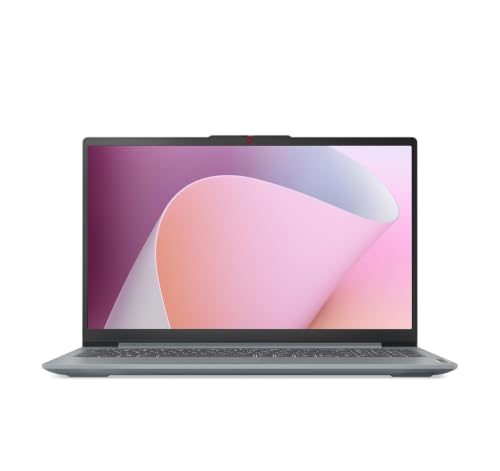
Lenovo IdeaPad Slim 3, Ryzen 5 7520U, 8GB, 512GB SSD
ASIN B0GN2SNW67 • $849.00 • Ships from Amazon AU
Spend about $200 more than the Chromebook and you move to a 15.6-inch Windows laptop with a 512GB drive underneath, and under $900 that pairing is rarer than it should be. The AMD Ryzen 5 7520U is a low-power chip that handles office work, a browser with a sane number of tabs and streaming without complaint, though it's not the chip you'd pick for crunching video. Lenovo puts it behind a 15.6-inch FHD panel in four-sided narrow bezels, so the screen fills more of the lid than the price suggests, and it was sitting at #108 in Amazon AU's Traditional Laptops the day I checked.
The money has gone into details that actually get used. There's a physical privacy shutter over the camera, a fingerprint reader, and full-function USB-C that carries power delivery, display output and data on the one port, so a single cable does the monitor and the charger at a desk. Dolby Audio comes through user-facing speakers rather than ones firing down into the desk, which sounds like a small thing until you compare it against a machine that does the opposite. Lenovo also quotes Rapid Charge Boost giving two hours of use from a 15-minute charge, and that is the kind of number that earns its keep on the mornings you forgot to plug in.
Buy this one if the budget is the constraint and the workload is ordinary. It will browse, stream, run Office and carry school work for years without complaint, and the 512GB drive means you are not managing storage in the first year or the third. What it will not do is grow. The 8GB is the ceiling, and if your tab count runs to dozens or your work lives in heavyweight applications, step up to a 16GB machine from the laptops under $1,500 guide instead of hoping.
Honest caveats: 8GB of RAM is the number that will age, and the listing says nothing about upgradeability, so assume it is fixed for the life of the machine. The Ryzen 5 7520U is a light-duty chip and sustained photo or video work will feel it. The case is plastic, so treat the hinges with the respect described above, and the listing states neither battery capacity nor a runtime figure, so don't assume all-day numbers.
Best for: A first laptop or a second household machine, where the budget sets the spec and the workload is ordinary.
CPU: AMD Ryzen 5 7520U • RAM: 8GB • Storage: 512GB SSD • Display: 15.6-inch FHD, four-sided narrow bezels • Camera: Up to FHD with privacy shutter • Security: Fingerprint reader • Charging: 2 hours of use from 15 min (listing claim) • OS: Windows 11 Home • Model: 82XQ00VCAU, Arctic Grey • Rank: #108 in Traditional Laptops (Amazon AU)
View on Amazon AU
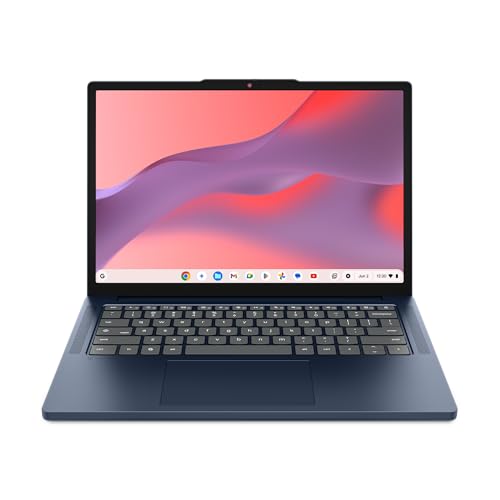
Lenovo Chromebook 14M8911 (Kompanio 540, 8GB)
ASIN B0GN2LD6ZL • $487.00 • Ships from Amazon AU
This is the odd one out on the page, and I would rather say so up front: it runs ChromeOS, not Windows. If your work lives in a browser, with Google Workspace or Microsoft 365 on the web, that is no hardship, and the 14-inch 1920x1200 touch screen is anti-glare and rated at 400 nits. Lenovo lists the machine as built to MIL-STD-810H durability testing, which is not something you usually see at this money. It was sitting at #32 in Amazon AU's Traditional Laptops the day I checked.
What you are really buying is a light, simple machine with 8GB of LPDDR5x behind it. The listing says that memory is soldered down, so 8GB is what it keeps for life, the same ceiling the Lenovo Windows machines here carry. The MediaTek Kompanio 540 is an eight-core Arm chip with integrated Mali graphics, which is the right answer for browsing, documents, video calls and streaming and the wrong answer for games or video editing.
Honest caveats: ChromeOS will not run Windows desktop software, so check any program you rely on before you buy. Storage is 128GB of UFS, the smallest drive on this page, so it suits cloud-first work rather than a big local photo library. The listing calls the battery long but gives no runtime figure, so do not assume all-day numbers from it.
Best for: A cloud-first user who wants a light, tough 14-inch touch screen and lives in a browser rather than in Windows programs.
CPU: MediaTek Kompanio 540 • RAM: 8GB LPDDR5x, soldered • Storage: 128GB UFS 2.2 • Display: 14-inch WUXGA (1920x1200) IPS touch • Graphics: Arm Mali-G57 MC2, integrated • OS: ChromeOS • Model: 83SX000MAU, Cosmic Blue • Rank: #32 in Traditional Laptops (Amazon AU)
View on Amazon AU
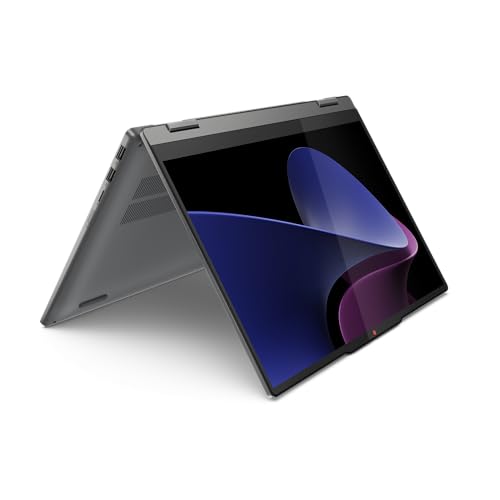
Lenovo IdeaPad 5 2-in-1 14, Core i5-13420H, 8GB, 512GB
ASIN B0DJCRQWCF • $954.00 • Ships from Amazon AU
The IdeaPad 5 2-in-1 is here for the people who'll actually use the fold, and there are more of them than laptop reviewers tend to admit. The 360-degree hinge and 10-point touch on the 14-inch FHD screen turn it into a tablet for the couch, a tent for recipes on the kitchen bench, or a flat slate for marking up documents in a meeting, and Lenovo has been building this convertible hinge across enough generations that it's one of the few I don't wince at when it comes through the door. At $954 it was #17 in Amazon AU's 2-in-1 Laptops category the day I checked, which for a niche category is a strong showing.
The processor is the quiet surprise on the spec sheet. The Core i5-13420H is an H-class chip, the family normally found in bigger and dearer machines, with performance cores boosting to 4.6GHz per the listing, and in practice that means it carries more sustained headroom than the U-class chips in the other three, which is not what the price order on this page would lead you to expect. The 512GB drive is the comfortable middle ground of this page, big enough that you won't be managing storage in year one or year three, and the Luna Grey finish is tidier in person than the price suggests. Windows 11 Home comes pre-installed, so it's working out of the box with no S-mode strings attached.
Buy it for the flexibility, but go in with clear eyes about the 8GB of memory, because it's the one number on this spec sheet that will age. For the browsing, streaming, mail and document life this machine is aimed at, 8GB works today and will for a while yet. It's the pick I'd steer away from if your tab count runs to dozens or your work lives in heavyweight apps, because the listing gives no indication the memory can ever be increased, and the safe assumption in this class is that it can't.
Honest caveats: 8GB of RAM is the ceiling fact on this machine and the listing says nothing about upgradeability, so assume it's fixed for life. Touch screens add a laminated glass layer, which makes a cracked screen dearer to fix than on the plain laptops here. No stylus is mentioned in the listing, so price one separately if you want to write on it.
Best for: The tablet-sometimes household that values the fold over raw headroom.
CPU: Intel Core i5-13420H • RAM: 8GB • Storage: 512GB SSD • Display: 14-inch FHD, 10-point touch • Hinge: 360 degree convertible • OS: Windows 11 Home • Model: 83KX0006AU, Luna Grey • Rank: #17 in 2 in 1 Laptops (Amazon AU)
View on Amazon AUSide-by-side comparison
| Product | Price | Best for |
|---|---|---|
| ASUS Chromebook CX14, Core 3 N355, 8GB | ~$588.57 | |
| Lenovo IdeaPad Slim 3 15AMN8 | ~$799 | |
| Lenovo Chromebook 14M8911 | ~$487 | |
| Lenovo IdeaPad 5 2-in-1 14-Inch FHD Display… | ~$998 |
What we see fail at the bench: laptops in this band
Sub-$1,000 laptops don't die of exotic causes. They die of the same three things, in roughly the same order, and all three are either preventable outright or quick and inexpensive to fix when they're caught early. The pattern below comes from what actually rolls through the door week after week, not from spec sheets or forum theory, and it's remarkably consistent across every brand on this page.
Hinges that tear out of the case
The hinge itself almost never breaks. What breaks is the plastic it's screwed into: brass inserts heat-set into bosses inside the lid and base, which crack under the twist of one-corner opening or a knock while the lid is up. The first symptom is a soft click when the lid moves, then wobble, then a corner of the case lifting visibly. Caught at the click stage it's a small, tidy repair. Caught at the lifting stage the surrounding plastic is usually chewed as well, and the job becomes rebuilding mounts or replacing the whole top case, at several times the price and the wait.
Batteries cooked by heat and habit
Lithium packs in this band mostly age out from living at 100 per cent charge on a warm desk, not from cycle count. A laptop that's docked and plugged in year-round holds its cells at full voltage, and full voltage plus warmth is precisely how you age lithium fastest. Most makers, ASUS and Lenovo included, ship a battery-care mode that caps charge around 80 per cent, and switching it on is the single best free thing you can do for year-three battery health. A swollen pack pushing up a trackpad or keyboard deck is the end state, and that's a stop-using-it-today fault, not a next-week one.
Charge ports and the bricks that kill them
Charging faults arrive two ways. Mechanical: the port worked loose from cables levered sideways or a bag packed with the plug still in, which stays a repairable fault when it's caught before the board tracks tear away. Electrical: a no-name replacement charger with poor regulation feeding the board spikes until something gives, which can mean anything from a dead charge circuit to a dead laptop with your unbacked-up photos on it. The first is bad luck and habit, and habits can change. The second is a $19 purchase that turns into a $400 lesson, and we see it often enough that I wrote a whole page about it.
Decision tree: which one should you actually buy?
- Want to spend the least and still get a 512GB drive? → The Lenovo IdeaPad Slim 3 at $849. A current Ryzen 5, a real SSD and a privacy shutter on the camera, as long as you can live inside 8GB.
- Want the lightest, toughest 14-inch machine and live in a browser? → The Lenovo Chromebook 14M8911 at $647. It runs ChromeOS, so no Windows programs, and the drive is 128GB, so it suits cloud-first work.
- Want a tablet for the couch and a laptop for the desk in one device? → The Lenovo IdeaPad 5 2-in-1 at $954. The 360-degree hinge and touch screen earn their keep, just accept the 8GB ceiling and keep the workload light.
- Planning to keep it five years or more? → Spend on capacity, not the badge: a 512GB drive like the Slim 3's will age better than a faster chip beside a small drive. If the machine also has to survive daily commuting, read the business laptops guide for the band above.
- Already got a laptop that's slow, won't charge or has a floppy hinge? → Don't buy anything yet. Bring it to our Erina repair bench first, because an SSD, a battery or a hinge repair is regularly a quarter the price of any laptop on this page.
Frequently asked questions
Is 8GB of RAM still enough in 2026?
For mail, browsing with a sensible number of tabs, streaming and documents, yes, and both Lenovos on this page are built for exactly that life. The problem is the trend line, not today: browsers and Windows itself get heavier every year, and 8GB machines are the ones arriving at our bench feeling slow at year three. If the laptop is a short-term tool, 8GB is fine. If you're buying for four or five years, 16GB is the safer number, and nothing on this page gives it to you, so look at the laptops under $1,500 guide if that matters.
Can I upgrade the RAM or storage later?
Assume no unless a listing says otherwise. Thin laptops in this band increasingly solder memory to the board, and none of the four listings here states that RAM is upgradeable. Storage is sometimes a standard M.2 drive that can be swapped, but again, none of these listings commits to it. That's exactly why I weight RAM and storage so heavily at purchase time: the config you buy is realistically the config you'll own on the day you retire the machine.
Is 256GB of storage enough for a family laptop?
Only with cloud discipline. Windows, Office and a year of updates take 80 to 100GB before your files arrive, and Windows needs free space beyond that to install feature updates. A 256GB machine holding local photo libraries is usually over 90 per cent full within a year, which slows the drive and starts breaking updates. If your files genuinely live in OneDrive or Google Drive it works fine. If you're not sure they do, they don't, and you want 512GB or more.
Is a 15.6-inch laptop too big for everyday use?
It depends entirely on whether it moves. On a desk, 15.6 inches is a comfortable step up from 14 for a long working day, because two documents fit side by side at a readable size and you stop leaning into the screen by three in the afternoon. Carried daily it's less friendly: it takes more room than a 14-inch machine, it won't fit most 14-inch sleeves, and it will crowd a tray table or a train seat. If the laptop lives in one place and travels occasionally, take the big screen. If it's in a backpack five days a week, the 14-inch Chromebook or the 14-inch IdeaPad will make you happier.
Are these grey imports or marketplace stock?
No. Every pick on this page was listed as sold by Amazon AU directly, condition New, on the day I checked, and I excluded import versions and overseas marketplace sellers regardless of price. That matters for two reasons: keyboard layout and charger plug are the AU versions, and warranty claims run through Amazon AU under Australian Consumer Law rather than through a seller in another country. Prices move week to week, so confirm the seller line on the listing before you buy.
What should I do with the old laptop I'm replacing?
Wipe it properly before it leaves the house, not just by deleting files. Sign out of accounts, turn off any activation locks, and do a full factory reset with drive encryption enabled so the old data is unrecoverable. If it's slow rather than broken, consider keeping it as a spare after an SSD or battery refresh, and if it won't power on at all, we can usually still recover the data off the drive before you recycle the chassis. Recycle through a proper e-waste program either way.
Related buying guides
Slow laptop? Ask us before you replace it
Most laptops that feel dead aren't. A tired drive, a full disk or a worn battery makes a three-year-old machine feel finished, and all three are routine fixes at a fraction of any price on this page. Bring it in to the Erina workshop and we'll tell you straight whether a repair makes sense or whether your money is better spent on a new machine, before you spend anything.
Visit our Erina workshop Book Online