Prices from Amazon AU, updated daily. Swipe or use the arrows for more.
Disclosure: This article contains affiliate links to amazon.com.au. If you buy through one of these links iFix may earn a small commission at no extra cost to you. It doesn't change which products we recommend. We focus on what actually lasts based on 16 years of repair-shop experience.
Quick summary8 picks
- Entry PickSunbeam ExpressBake Bread Maker | Bake… about$168.95
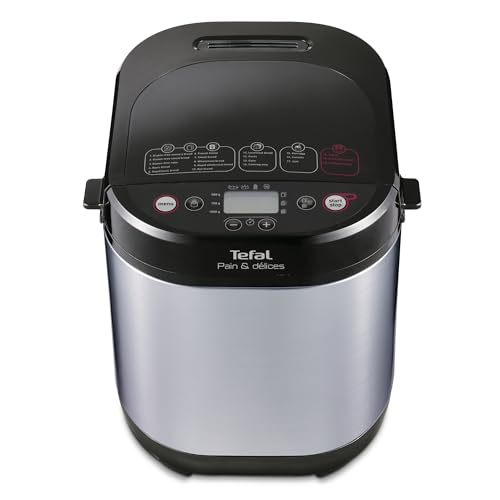
- Tefal Pain & Delices Bread Maker PF240E about$179
- Panasonic Automatic Compact Bread Maker… about$199.00
- Breville the Baker's Dozen Bread Maker about$199
- Panasonic Automatic Bread Maker with Fruit… about$289.00
- Panasonic Premium Automatic Bread Maker… about$299.95
- Panasonic Premium Automatic Bread Maker… about$318.95
- Most PremiumBreville the Custom Loaf Pro Bread Maker about$399
The loaf arithmetic, with the assumptions shown
A decent supermarket loaf sits somewhere between $4 and $7 now depending on how far past white sandwich bread you go, and it's the kind of price that crept rather than jumped, which is why it took the grocery basket running roughly 31 per cent above 2019 levels before most people did the sums. The ingredients in a 900 gram white loaf are flour, water, salt and yeast. Buy flour in five kilo bags and the ingredient cost per loaf lands around $1.20 to $1.80, with the spread depending mostly on the flour, so call the difference $2.50 to $4 a loaf against the shelf. A $199 machine at that rate pays for itself inside 50 to 80 loaves, and for a household getting through a loaf every couple of days, that's a few months rather than years, and the machine is still there earning after the payback line is crossed.
The machine's electricity barely moves that arithmetic. None of these five listings state wattage, so I won't invent a figure, but the physics is on your side: the baking cavity is the size of the loaf rather than the size of an oven, and the element only works hard during the bake phase of a three to four hour cycle. Log a full cycle on one of the metering smart plugs I wrote up if you want the exact number for your machine and tariff. What the arithmetic really depends on is using the thing, which is why the rest of this guide is about the features that decide whether a bread maker becomes routine or becomes cupboard filler by Easter, because an unused appliance saves nobody anything at any price.
The pan and paddle are consumables, so price them like it
Every bread maker on this list is a non-stick pan with a paddle on a drive shaft, and both wear out long before the motor does. The non-stick coating takes one scratch from a careless knife or a scouring pad and starts surrendering from there, and once bread begins to stick, people reach for tools that make it worse. Meanwhile the paddle shaft runs through a bushing and seal in the pan's base, and after a few hundred loaves the seal weeps, the bushing develops play, and you get either a slow seep of liquid under the pan or a grinding note during the knead. None of this is a defect, it's wear, the same way brake pads are wear, and it's why the spare pan question should be asked before you buy the machine rather than after it fails mid-knead on a Sunday morning.
This is where the brand names earn their margin. Panasonic states an Australian manufacturer's warranty on both of its machines here, and Panasonic and Breville both keep local spare parts channels for pans, paddles and seals; the generic machines that come and go on the marketplace mostly don't. A spare pan isn't free, but the alternative is binning an entire working appliance because one consumable died. It's the same logic I run on laptop batteries over at the computer side of the shop: the machine with a parts channel costs more on day one and less every year after, and the one without a parts channel has a countdown running from its first knead.
Programs: the four you'll use and the 27 you won't
The program count is this category's version of the megapixel war. The premium Panasonic states 31 programmes, the Breville Custom Loaf Pro adds nine custom slots on top of its automatic modes, and the Sunbeam gets by with 12. In practice most households settle on basic white, wholemeal, dough and maybe jam within the first month, and the rest of the menu sits unused. So don't buy on the count. Buy on whether the specific programs you'll actually run exist and run well: a gluten free mode if someone in the house eats gluten free, which all five machines here state; a dough-only mode if you'd rather shape and oven-bake; a rapid mode if the machine will get used at 4pm rather than overnight. The count is marketing, the coverage is the spec, and the coverage takes about two minutes to check against how your house actually eats.
Express modes are the one feature to buy sceptically. The Sunbeam's ExpressBake states a loaf in under an hour, and the trade is baked into the physics: less rise time means a denser loaf, and the recipes lean on extra yeast and warmer water to get there. Fine for a weeknight emergency, not the loaf you'd hand your mum. Delay timers are the opposite, undersold and quietly the best feature on the machine: load the pan at 10pm, set the finish for 6:30am, and wake up to fresh bread. The Sunbeam and both Panasonics state 13 hour delays and the Breville Baker's Dozen stretches to 15, which covers even an early-shift schedule with room to spare, and costs nothing to use once the habit of loading the pan at night settles in.
Dispensers and sensors, or what $349 buys over $169
The premium Panasonic SD-YR2550 holds rank 1 in Amazon AU's Bread Makers & Baking Appliances category, and the feature that justifies it is the pair of automatic dispensers: one for fruit and nuts, and one for yeast. The yeast dispenser matters more than it sounds. On a delay timer everything sits in the pan together for hours, and yeast in contact with salt and wet ingredients overnight gets a head start you didn't ask for; dropping it in at the right moment keeps an eight hour delay behaving like a fresh mix. The dual temperature sensors on both Panasonics read the room and the pan and stretch or shrink each programme step to suit, which is why the same recipe comes out the same in July and January. That's the quiet engineering a program count doesn't capture, and it's most of what the extra money at the top of the range is actually buying.
Breville's answer at the top end is control rather than automation. The Custom Loaf Pro's collapsible kneading blade mixes fully, then folds flat before the bake, so the finished loaf doesn't have the trademark hole torn out of its base on removal. Its nine custom program slots let you set knead, rise and bake times yourself, which is the feature the sourdough-adjacent tinkerers actually want. The Baker's Dozen at $199 keeps the essentials, 13 programs, three loaf sizes, a fruit and nut dispenser and power interruption protection, and skips the exotica. Between the four brand-name machines the spread is $169 to $389, and the honest summary is that they all bake bread; the top half of the band buys consistency and convenience, not a different food, so buy the behaviour you'll actually lean on rather than the biggest number in the column.
Loaf sizes, crusts and the vertical-loaf reality
Every machine here bakes a vertical loaf, taller than it is long, and slices from it come out squarish and a little bigger than supermarket sandwich bread, with a slightly more open crumb. The size settings are the spec to check against your household: the Sunbeam does 680 and 900 gram loaves, the Breville Baker's Dozen adds a 450 gram option, which is the small-household setting the others skip, and the premium Panasonic runs medium, large and extra large. A 900 gram loaf is a lot of bread for two people, and stale bread is the quiet killer of the whole economic case, so match the loaf size down rather than up if you're in doubt, because a smaller loaf baked more often always beats a big one going hard in the workshoptop.
Crust control appears on all five, three shades from light to dark, and it does what it says. A fruit and nut dispenser is stated on four of the five; the compact Panasonic SD-PN100 leaves it out, so raisin bread there means adding mix-ins at the beep the old-fashioned way, which is a minor chore same-day and a real gap on an overnight delay. None of this is exotic engineering, but it's the difference between a machine that fits how your house actually eats and one that bakes impressive loaves nobody finishes. If half of every bake ends up frozen anyway, slice it first and seal it in halves, which is the workflow the vacuum sealer write-up covers, and home bread keeps for weeks instead of days.
Blackouts, steam and where the machine lives
A bread maker runs three to four hours per loaf, which on a coastal grid is long enough to meet a power interruption at least once a winter. What happens next depends on the machine: the Breville Baker's Dozen states power interruption protection, meaning a short dropout resumes the cycle instead of abandoning a half-risen loaf, and the other four listings don't state their behaviour, so assume the worst and keep long bakes away from stormy evenings. If outages are a regular feature of your street, the wider fix lives in the UPS guide, though a UPS sized to carry a heating element is a serious box; for the bread maker itself, the stated resume feature is the practical answer, and it's on the $199 machine rather than the $389 one, which says something about how features get distributed in this category.
On the electrical side these are well-mannered appliances: plug straight into the wall like anything with a heating element, don't share a powerboard with the kettle and toaster, and give the vents clearance because the cabinet exhausts real heat in the bake phase. Steam is the quieter enemy. Parked under a kitchen cupboard, a bread maker vents moisture into the cabinetry above it on every bake, and its own controls sit right beside that vent, so stuck buttons on machines that live under the overheads are a known pattern. Pull it forward when it runs and dry the lid and panel afterwards, and the electronics will comfortably outlast the pan, which is the way around you want that race to run.
How I picked the five
All five are sold by Amazon AU itself, condition New, inside the $100 to $500 band I set for the category, and I sorted the survivors by Amazon AU's Bread Makers & Baking Appliances sales rank. The result is unusually clean: the picks hold ranks 1, 2, 4, 5 and 13 in the category at the time of writing, so this list is close to a photograph of what Australians are actually buying right now. Rank isn't a quality verdict, and I say so in every guide in this series, but in a mature category with two dominant local brands it mostly tracks the machines that don't come back. Panasonic and Breville take four of the five slots between them, and that isn't me playing favourites, that's the sales data doing it, and it lines up with which brands still sell the spare parts.
The band's floor matters as much as its ceiling. There are bread makers under $100 on the marketplace from brands you won't recognise, and the pan-and-paddle consumable problem is exactly why I left them out: a machine with no spare parts channel is disposable from the day its seal starts weeping, whatever the sticker price says. If the machine earns its keep, flour becomes the routine purchase and the habit starts compounding with the rest of the kitchen: the batch cooking covered in the pressure cooker guide fills the freezer, the bread maker covers the other half of the shopping basket, and the grocery arithmetic starts moving in your favour week after week instead of once.
The 5 picks, $169 to $389
Prices are Amazon AU at time of writing (9 September 2026) and move week to week. Ranks are Amazon AU category sales ranks, checked the same day.

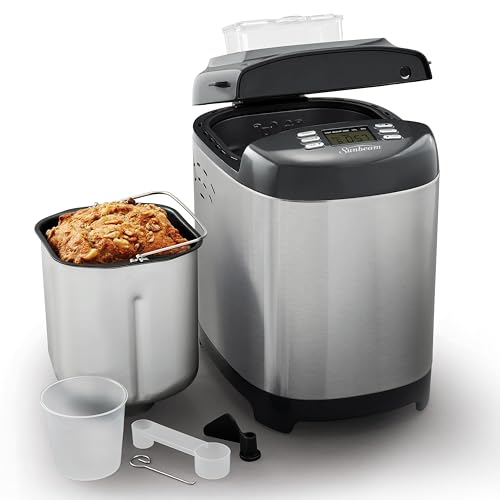
Sunbeam ExpressBake Bread Maker BMM4000SS
ASIN B0CTJ5BJF5 • $168.95 • Ships from Amazon AU
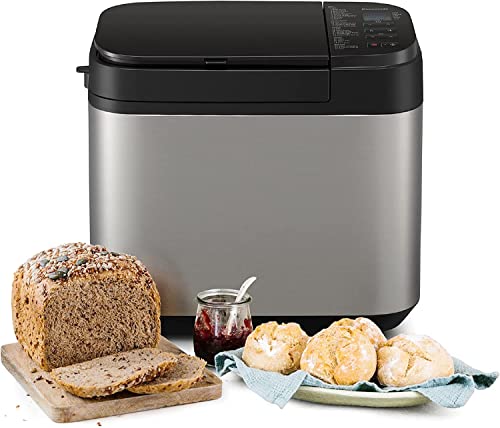
The Sunbeam ExpressBake BMM4000SS is the least expensive machine on the list and covers more of the feature sheet than its price suggests: 12 settings including a gluten free program the listing notes is endorsed by Coeliac Australia and New Zealand, two loaf sizes at 680 and 900 grams, three crust shades, an automatic fruit and nut dispenser and a 13 hour delay timer. It's sold by Amazon AU at $169 at the time of writing and sits at rank 13 in Bread Makers & Baking Appliances. The headline ExpressBake mode is the namesake trick: a finished loaf in under an hour, for the afternoons when the delay timer should have been set the night before and wasn't.
The dispenser at this price is the standout inclusion. Mix-ins added at the start get pulverised by the knead, and machines without a dispenser interrupt you with a beep mid-cycle instead; the Sunbeam drops fruit and nuts in whole at the right point automatically, which was a premium-tier feature not long ago. An auto warm setting holds the finished loaf for up to 60 minutes, useful when the timer maths misses breakfast by a bit. The stainless housing keeps it looking like the dearer machines, and the control set stays simple: pick a program, a size and a crust, then walk away. For a first bread maker in a household that will genuinely eat 900 gram loaves, the case is easy to make.
What the $29 step up to the compact Panasonic buys is sensor-driven consistency and a stated Australian warranty; what staying at $169 keeps is the dispenser the Panasonic lacks, plus the express mode. If your baking will be mostly basic loaves with the occasional fruit loaf, the Sunbeam's feature spread fits better than its price tier suggests. It's the machine I'd put in a share house or a first kitchen: enough capability to build the habit, and if the habit doesn't stick, at least it wasn't a $389 lesson in how the household actually eats.
Honest caveats: ExpressBake loaves come out denser than the full-length cycle's, which is physics rather than a fault, so judge the machine on its standard programs. Wattage isn't stated on the listing. There's no 450 gram option, so two-person households will be freezing half of most bakes or watching bread go stale.
Best for: First-time buyers and bigger households that want a dispenser, gluten free program and delay timer at the entry price.
Settings: 12, including gluten free (Coeliac Australia and NZ endorsed, per listing) • Loaf sizes: 680 g and 900 g • Crust: Light, medium, dark • Dispenser: Automatic fruit and nut • Delay timer: Up to 13 hours • Keep warm: Up to 60 minutes • Express: Loaf in under 1 hour (stated) • Price: $169 at time of writing • Rank: #13 in Bread Makers & Baking Appliances (Amazon AU)
View on Amazon AU
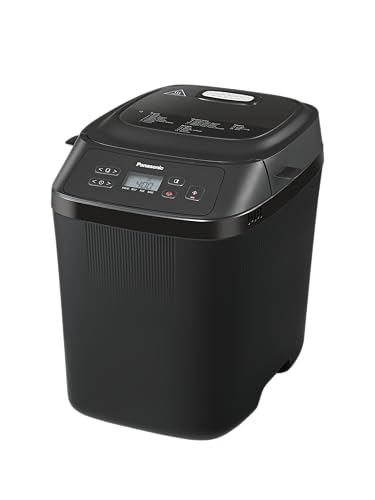
Panasonic Automatic Compact Bread Maker SD-PN100KST
ASIN B0FPBW9DD6 • $198.00 • Ships from Amazon AU
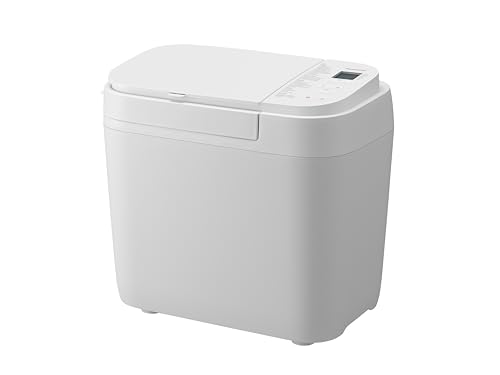
The compact Panasonic SD-PN100 is the machine for people who want one thing: the same good loaf every time, from a footprint that can stay in the workshoptop. It's sold by Amazon AU at $198 and holds rank 5 in the category. The listing gives it 18 automatic programmes split across seven bread, four gluten free, four dough and four sweet settings, driven by the feature that does the real work: two temperature sensors, one internal and one external, adjusting each stage of the programme as it runs. That's the difference between a machine executing a fixed script and one that compensates when your kitchen is 12 °C at 5am in July. Panasonic's artisan-style kneading, a shaped blade working against ribs in the pan, is stated here as well.
The programme spread covers more ground than the count suggests: gluten free bread, cake and pasta each get modes of their own, pizza dough is in there too, and the 13 hour delay timer handles the overnight loaf. What's deliberately missing is the fruit and nut dispenser, so mix-ins go in by hand at the beep. The other listing line worth real weight is the Australian plug and Australian manufacturer's warranty, stated plainly, which combined with Panasonic's local parts channel answers the consumables question better than any spec could: when the pan's non-stick eventually gives up, a replacement pan exists and can be bought. In a category where the pan is the wear item, buying from the brand that will still sell you one in five years is half the decision.
Pick it over the Sunbeam if consistency beats convenience, because the sensors and the kneading system are aimed squarely at loaf quality, and the trade is the missing dispenser and express mode. Pick it over its bigger sibling at $349 if the yeast dispenser and 31 programmes read as more machine than your household needs, since the core baking engine of dual sensors and artisan kneading is the same idea in a smaller, simpler box. For a two-to-four person house baking a few times a week that wants the result predictable, this is the sweet spot.
Honest caveats: No fruit and nut dispenser and no express mode, so raisin bread means answering the mid-cycle beep yourself. Wattage isn't stated on the listing, and loaf size options aren't spelled out in the feature text either, so check the current listing if you need a specific capacity before ordering.
Best for: Households that bake often, want the same loaf every time and value Panasonic's local warranty and parts channel.
Programmes: 18: 7 bread, 4 gluten free, 4 dough, 4 sweet • Sensors: Dual, internal and external temperature • Kneading: Artisan-style blade and ribbed pan (stated) • Delay timer: Up to 13 hours • Crust: Browning control (stated) • Warranty: Australian manufacturer's warranty (stated) • Dispenser: None • Price: $198 at time of writing • Rank: #5 in Bread Makers & Baking Appliances (Amazon AU)
View on Amazon AU
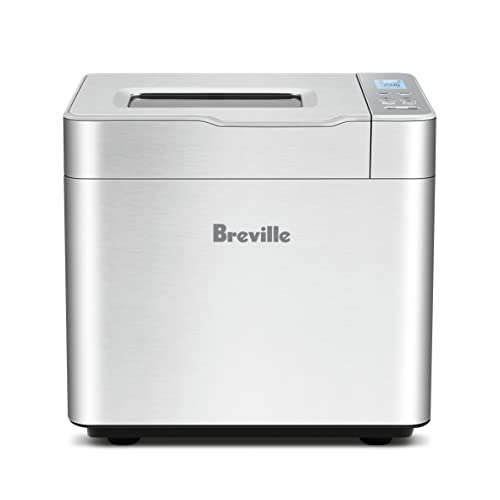
Breville the Baker's Dozen Bread Maker LBM250BSS
ASIN B0B9M2WHFJ • $199.00 • Ships from Amazon AU
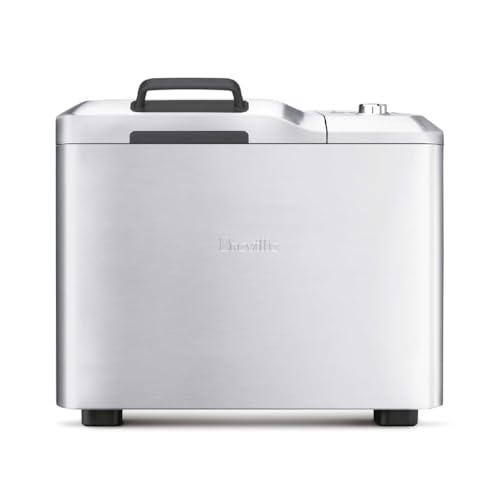
The Baker's Dozen is the number 2 machine in Amazon AU's bread maker rankings, and at $199 it's not hard to see why: it covers nearly every feature that matters without reaching premium money. Thirteen preset programs include the staples plus yeast free, continental, yoghurt and jam; loaf sizes run 450, 680 and 900 grams, making it the only machine here with a proper small loaf; and the fruit and nut dispenser, LCD screen, three crust shades and express options for both larger sizes round out a spec sheet that reads like the category's greatest hits. The delay timer stretches to 15 hours, the longest on the list, and an hour of auto keep warm covers the gap between the beep and breakfast.
The line on the listing I'd underline is power interruption protection. A bake cycle runs three-plus hours, and on a coastal winter grid a brief dropout inside that window isn't rare; a machine that resumes where it stopped saves the loaf and the flour, and it's the only machine of the five that states the feature. The non-stick pan has a removable kneading blade, which makes cleaning simpler and turns blade replacement into a parts order rather than a pan replacement, and Breville's local spare parts channel means both are actually obtainable. The 450 gram loaf size deserves a second mention because it changes who the machine suits: a couple can bake twice a week and finish every loaf fresh, which is where the ingredient arithmetic works hardest.
This is the machine I'd recommend by default when someone asks which bread maker to buy and gives me nothing else to work with. It has the small loaf both Panasonics skip, the dispenser the compact Panasonic skips, the longest delay timer here and the only stated blackout resume, all at $199. What the premium machines add over it is automation depth, the yeast dispenser and custom programming, and what it holds over the Sunbeam is the third loaf size, two extra delay hours and the interruption protection. Rank 2 suggests plenty of buyers ran the same comparison and landed the same way.
Honest caveats: Wattage isn't stated, and neither is the warranty term in the listing text, so check the current listing for both. The express modes carry the usual dense-loaf trade-off of every fast bake. Thirteen presets means no custom slots, so tinkerers who want to script their own knead and rise belong two rungs up.
Best for: The default recommendation: small loaves for couples, blackout resume, a dispenser and the longest delay timer, at $199.
Programs: 13 presets including yeast free, yoghurt, jam • Loaf sizes: 450 g, 680 g, 900 g • Dispenser: Fruit and nut • Delay timer: Up to 15 hours • Keep warm: 1 hour auto • Protection: Power interruption protection (stated) • Pan: Non-stick with removable kneading blade • Price: $199 at time of writing • Rank: #2 in Bread Makers & Baking Appliances (Amazon AU)
View on Amazon AU
Panasonic Premium Bread Maker with Yeast Dispenser SD-YR2550SST
ASIN B09899CNJX • $349.00 • Ships from Amazon AU
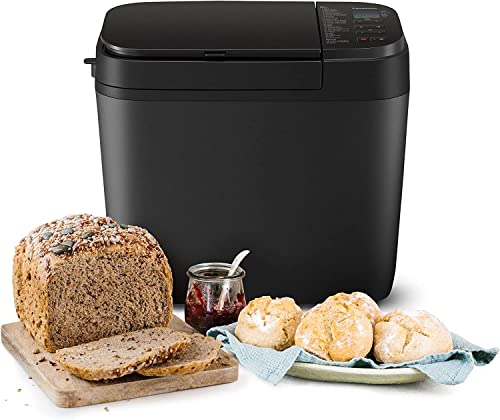
The SD-YR2550 is the number 1 bread maker on Amazon AU by sales rank, sold by Amazon AU at $349, and it's the machine to buy if the delay timer is your main way of using one. The feature doing the heavy lifting is the automatic yeast dispenser, backed by a second dispenser for fruit and nuts. With the yeast held separately and dropped at the optimal moment, an overnight delay behaves like a fresh mix instead of an eight hour head start for the yeast, and the loaf that greets you at 6:30am is the loaf the programme intended. Thirty-one programmes cover bread, bread mixes, gluten free, cake, jam and bake-only modes, and the same dual temperature sensor system as the compact Panasonic adjusts every stage to the room.
Crust control runs light to medium dark and loaf sizes span medium, large and extra large, so it's built for households that eat bread daily rather than occasionally. The stated Australian plug and manufacturer's warranty carries the same weight it does on the compact model: Panasonic still selling pans, paddles and seals locally is what makes a $349 machine a long-term proposition rather than a dearer disposable. Nothing about it is flashy, which is very Panasonic. The case for the machine is that every source of loaf-to-loaf variation the engineers could automate away has been automated away, and what's left for you is measuring flour and water. Rank 1 in a category this established is hard to argue with.
Buy it if the machine will run four or more times a week on the timer and the household is big enough for extra large loaves, because the automation earns its premium through repetition. Step down to the compact SD-PN100 if the dispensers and programme depth outrun your actual baking, since the core engine is shared. Against the Breville Custom Loaf Pro at $389 the split is philosophy: the Panasonic automates decisions away, the Breville hands them to you. Households that want bread as infrastructure pick this one; hobbyists who want a workshop pick the Breville.
Honest caveats: No 450 gram small loaf, so it's oversized for one or two people. Wattage isn't stated on the listing, and neither is power interruption protection, so keep long bakes away from storm fronts. At $349 the payback stretches to a bit over 100 loaves on the arithmetic from the top of this guide.
Best for: Daily-bread households running the overnight timer as the default, who want the yeast dispenser doing the thinking.
Programmes: 31, including gluten free, cake, jam, bake only • Dispensers: Automatic yeast, plus fruit and nut • Sensors: Double temperature sensors • Delay timer: Up to 13 hours • Loaf sizes: Medium, large, extra large • Crust: Light to medium dark • Warranty: Australian manufacturer's warranty (stated) • Price: $349 at time of writing • Rank: #1 in Bread Makers & Baking Appliances (Amazon AU)
View on Amazon AU
Breville the Custom Loaf Pro Bread Maker BBM800BSS
ASIN B075RZHWKG • $389.00 • Ships from Amazon AU
The Custom Loaf Pro is the enthusiast's pick, rank 4 in the category at $389 from Amazon AU, and it answers the two complaints bakers level at these machines. The first is the hole: a standard paddle stays in the loaf through the bake and tears a chunk out of the base on removal, while Breville's collapsible kneading blade mixes thoroughly and then folds flat before baking, so the finished loaf slices clean to the bottom. The second is control: alongside automatic programs including gluten free, yeast free, crusty loaf, dough, pasta and jam, there are nine custom slots where you set your own knead, rise and bake stages, which turns the machine from an appliance into a programmable proofing and baking station.
The smart LCD makes that programming legible rather than a button-mashing exercise, a fruit and nut dispenser handles mix-ins on the automatic modes, and the 13 hour delay timer covers overnight bakes. The custom slots are the reason it holds rank 4 despite the price: recipes that fight fixed programs, heavier wholemeal doughs, long rises in a cold kitchen, a bake-only run for dough proofed elsewhere, all of it gets a slot with your own numbers on it. Breville's local parts channel covers the pan and blade, which matters more here than usual, because the collapsible blade has a hinge working in dough and heat and it's the part I'd expect to buy first, well before anything electrical complains.
Buy it if you'll actually use the custom slots, or if clean-sliced loaves matter enough to pay for the collapsing blade. It's the wrong machine for set-and-forget households, not because it can't do that job, but because $40 less buys the Panasonic whose entire design is set-and-forget, yeast dispensing included. The two buyer profiles barely overlap: one machine wants to disappear into the kitchen routine, and this one wants a hobbyist's attention and rewards it. Rank 4 at nearly $400 says those hobbyists exist in numbers, and if the last three paragraphs read like your kitchen, you're one of them.
Honest caveats: The collapsible blade is cleverer and busier than a fixed paddle, with a hinge working in dough and heat, so clean it properly and expect it to be the first part you replace. Wattage and warranty term aren't stated in the listing text. No stated power interruption protection, and no yeast dispenser despite the price.
Best for: Bakers who want custom knead, rise and bake control, and loaves without the paddle hole in the base.
Programs: Automatic modes plus 9 custom slots • Modes: Gluten free, yeast free, crusty loaf, dough, pasta, jam • Blade: Collapsible kneading blade • Dispenser: Fruit and nut • Delay timer: Up to 13 hours • Display: Programmable smart LCD • Price: $389 at time of writing • Rank: #4 in Bread Makers & Baking Appliances (Amazon AU)
View on Amazon AUSide-by-side comparison
What we see fail at the bench: bread makers
Bread makers are honest machines mechanically: a motor, a belt, a heating element and a pan, all working inside a hot, damp, flour-dusted box. The ones that reach our bench, and the ones customers describe when they ask whether a repair is worth doing, fail in a short list of ways, and most announce themselves early if you know the sounds. Three patterns cover nearly everything, and only one of them should retire the machine.
Pan seals and paddle bushings
The pan is the consumable, and its base is where it dies. The paddle's drive shaft passes through a bushing and a seal, and hundreds of kneads of wet dough eventually work moisture past the seal and into the bushing. Early signs are a dark weep under the pan after baking and a paddle that wobbles on its shaft; the late stage is liquid under the machine and a grinding knead. The fix is a new pan or, on some models, a seal kit, and this is exactly why the guide leans toward brands with parts channels. Swapping a pan takes two minutes. On marketplace machines with no parts listing, the same wear writes off the whole appliance.
Belts, and the knead that gave up
Between the motor and the pan drive there's generally a toothed belt, and belts stretch and glaze with age and heat, with flour dust that sneaks past the pan doing them no favours. The classic symptom is a motor that hums while the paddle barely turns, or a rhythmic slap under load. A slipping belt shows up first on stiff doughs, wholemeal and low-hydration recipes, while a basic white loaf still kneads fine, which sends people chasing recipe problems instead of hardware ones. It's a replaceable part on most machines and not a dear one; the labour is opening the base and setting tension. If the motor spins and the paddle doesn't, get it looked at before binning anything.
Elements, thermal cutouts and dead displays
A machine that kneads and rises but never bakes has element or thermal-cutout trouble, the same family of faults as every heating appliance we open: a one-shot thermal fuse that's gone open circuit, a cutout that's drifted, or an element cracked at a terminal. The reverse fault, a dead display on a machine that's otherwise fine, is often steam's slow work on the control board, especially on machines parked under kitchen cupboards where the vent's exhaust washes over the panel on every bake. Both faults are diagnosable in minutes with the housing open and a multimeter on the element, and neither is automatically terminal on a machine whose pan and parts still exist.
Decision tree: which one should you actually buy?
- First machine, real features, minimal spend? → The Sunbeam ExpressBake at $169. A dispenser, a gluten free program, a 13 hour delay timer and the under-an-hour express mode, at the bottom of the band.
- Two people and tired of throwing out half a loaf? → The Breville Baker's Dozen at $199. It's the only machine here with a 450 gram loaf size, and the 15 hour delay timer is the longest on the list.
- Same loaf every time with no fuss? → The compact Panasonic SD-PN100 at $198. Dual temperature sensors adjust the programme to your kitchen, and the Australian warranty and parts channel are stated on the listing.
- Overnight timer as the default in a house full of bread eaters? → The Panasonic SD-YR2550 at $349. The automatic yeast dispenser keeps a long delay behaving like a fresh mix, and it holds rank 1 in the category.
- Want to program your own knead, rise and bake? → The Breville Custom Loaf Pro at $389. Nine custom slots, the collapsible blade and a proper LCD make it the only real tinkerer's machine of the five.
- Machine hums but the paddle won't turn, or it stopped baking? → That's a belt, element or thermal cutout in most cases, and all three are worth a look before you rebuy. Bring it to our Erina workshop and we'll tell you what failed and whether the fix beats replacement before you spend a dollar.
Frequently asked questions
Does a bread maker actually save money?
Only if it gets used, and the arithmetic is worth doing with your own numbers. Flour bought in five kilo bags puts the ingredients for a 900 gram loaf around $1.20 to $1.80, against $4 to $7 for a comparable supermarket loaf, so the machine claws back roughly $2.50 to $4 per bake. A $199 machine breaks even inside 50 to 80 loaves, which is a few months for a daily-bread household and never for a machine that bakes six loaves and moves to the cupboard. Electricity barely changes the sums, because the cavity is loaf-sized and the element only works hard in the bake phase. The honest variable isn't the hardware, it's whether baking becomes routine.
How long does a bread maker last?
The motor and electronics generally outlast the pan by years. The pan's non-stick coating and the paddle shaft's seal and bushing are the true consumables, wearing out over a few hundred loaves, and at that point a machine's lifespan depends entirely on whether a replacement pan exists. Panasonic and Breville both keep local parts channels, which is why a decade from one of their machines mostly means buying a pan or a paddle somewhere along the way. The marketplace machines with no parts listing end when their first consumable does, whatever the motor thinks about it.
Why does my loaf have a hole in the bottom?
The kneading paddle sits inside the loaf during the bake, and when you turn the loaf out, the paddle either stays behind on its shaft and tears a slot, or comes out buried in the crumb. It's normal, not a fault. The workarounds are pulling the paddle out at the final-rise beep on machines that allow it, or buying around the problem: the Breville Custom Loaf Pro's collapsible blade folds flat before the bake, so its loaves slice clean to the base. A paddle that suddenly starts leaving bigger, rougher holes, or wobbles on its shaft, is a different story and usually means the pan bushing is wearing.
Can I use the delay timer overnight?
That's what it's for, with two conditions. Stick to shelf-stable ingredients, flour, water, salt, yeast and oil, and skip recipes with milk, eggs or butter on a long delay, because they'll sit warm in the pan for hours. And layer the pan so the yeast stays dry and away from the salt until kneading starts, dry ingredients over the liquid with yeast in a well on top. The premium Panasonic SD-YR2550 sidesteps that second condition entirely with its automatic yeast dispenser, which drops the yeast in at the right moment, and it's the main reason to pay $349 if the overnight loaf is your default way of baking.
What's the difference between the $198 and $349 Panasonic?
The baking engine is the same idea in both: dual temperature sensors reading the room and the pan, and Panasonic's artisan-style kneading against a ribbed pan. The $349 SD-YR2550 adds the automatic yeast dispenser, a fruit and nut dispenser, 31 programmes against 18, and larger loaf options up to extra large. The yeast dispenser is the meaningful one, because it's what keeps a 13 hour delay behaving like a freshly mixed loaf. If you bake same-day and add mix-ins by hand without resentment, the compact SD-PN100 at $198 gets you the consistency for $151 less.
My bread maker stopped kneading. Is it worth repairing?
Usually worth a look before it's binned. A motor that hums while the paddle sits still is most often a stretched or slipped drive belt, a replaceable part on the majority of machines, and a paddle that grinds or wobbles points at the pan's bushing and seal, which is fixed by a new pan on the brands that sell them. The machines not worth reviving are the ones whose makers sell no parts at all, where even a belt becomes a scavenger hunt. Bring it in, and if the numbers favour a new machine we'll say so straight out.
Related buying guides
Before you replace a dead bread maker
The faults that kill these machines, worn pan seals, slipped belts, opened thermal cutouts, are mostly small parts in awkward places. Bring the machine in to the shop in Erina and we'll open it, put a meter on it and tell you what failed and what the fix costs. If replacement is the smarter move, we'll say exactly that before you've spent anything either way.
Visit our Erina workshop Book Online